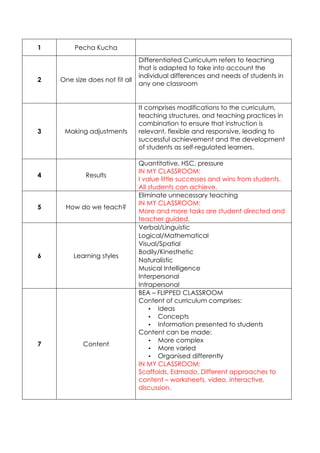
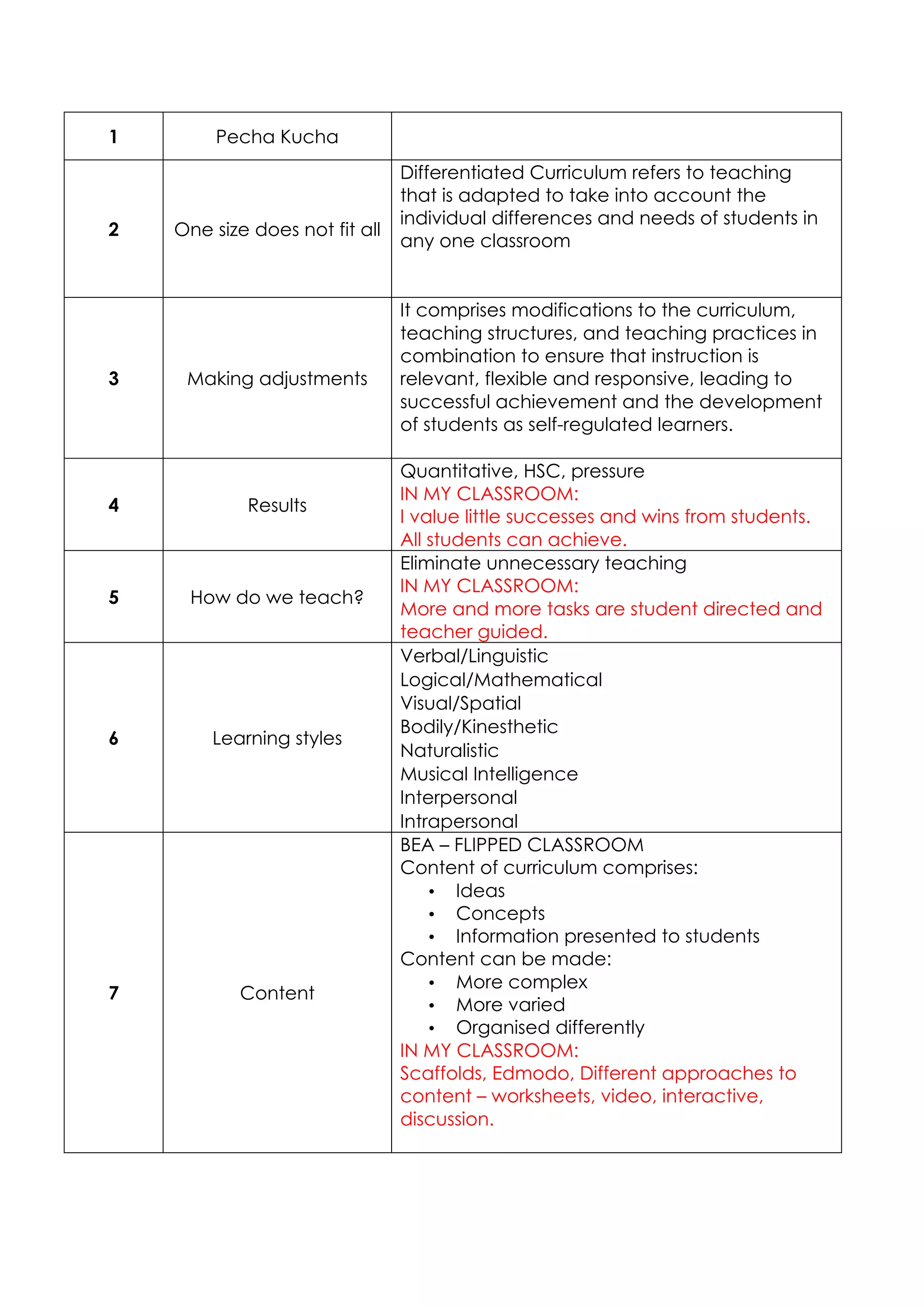
1        Pecha Kucha
                                Differentiated Curriculum refers to teaching
                                that is adapted to take into account the
                                individual differences and needs of students in
2   One size does not fit all
                                any one classroom


                                It comprises modifications to the curriculum,
                                teaching structures, and teaching practices in
                                combination to ensure that instruction is
3    Making adjustments         relevant, flexible and responsive, leading to
                                successful achievement and the development
                                of students as self-regulated learners.

                                Quantitative, HSC, pressure
                                IN MY CLASSROOM:
4           Results
                                I value little successes and wins from students.
                                All students can achieve.
                                Eliminate unnecessary teaching
                                IN MY CLASSROOM:
5    How do we teach?
                                More and more tasks are student directed and
                                teacher guided.
                                Verbal/Linguistic
                                Logical/Mathematical
                                Visual/Spatial
                                Bodily/Kinesthetic
6       Learning styles
                                Naturalistic
                                Musical Intelligence
                                Interpersonal
                                Intrapersonal
                                BEA – FLIPPED CLASSROOM
                                Content of curriculum comprises:
                                    • Ideas
                                    • Concepts
                                    • Information presented to students
                                Content can be made:
                                    • More complex
7          Content
                                    • More varied
                                    • Organised differently
                                IN MY CLASSROOM:
                                Scaffolds, Edmodo, Different approaches to
                                content – worksheets, video, interactive,
                                discussion.
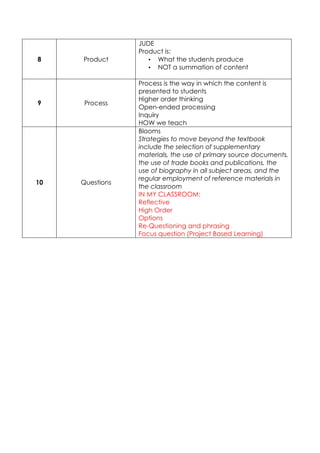
JUDE
                 Product is:
8    Product        • What the students produce
                    • NOT a summation of content


                 Process is the way in which the content is
                 presented to students
                 Higher order thinking
9     Process
                 Open-ended processing
                 Inquiry
                 HOW we teach
                 Blooms
                 Strategies to move beyond the textbook
                 include the selection of supplementary
                 materials, the use of primary source documents,
                 the use of trade books and publications, the
                 use of biography in all subject areas, and the
                 regular employment of reference materials in
10   Questions
                 the classroom
                 IN MY CLASSROOM:
                 Reflective
                 High Order
                 Options
                 Re-Questioning and phrasing
                 Focus question (Project Based Learning)
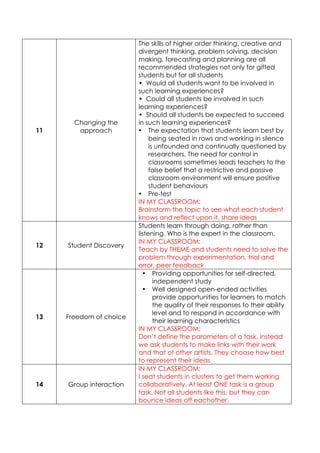
The skills of higher order thinking, creative and
                         divergent thinking, problem solving, decision
                         making, forecasting and planning are all
                         recommended strategies not only for gifted
                         students but for all students
                         • Would all students want to be involved in
                         such learning experiences?
                         • Could all students be involved in such
                         learning experiences?
                         • Should all students be expected to succeed
       Changing the      in such learning experiences?
11      approach         • The expectation that students learn best by
                              being seated in rows and working in silence
                              is unfounded and continually questioned by
                              researchers. The need for control in
                              classrooms sometimes leads teachers to the
                              false belief that a restrictive and passive
                              classroom environment will ensure positive
                              student behaviours
                         • Pre-test
                         IN MY CLASSROOM:
                         Brainstorm the topic to see what each student
                         knows and reflect upon it, share ideas
                         Students learn through doing, rather than
                         listening. Who is the expert in the classroom.
                         IN MY CLASSROOM:
12   Student Discovery
                         Teach by THEME and students need to solve the
                         problem through experimentation, trial and
                         error, peer feedback
                           • Providing opportunities for self-directed,
                                independent study
                           • Well designed open-ended activities
                                provide opportunities for learners to match
                                the quality of their responses to their ability
                                level and to respond in accordance with
13   Freedom of choice
                                their learning characteristics
                         IN MY CLASSROOM:
                         Don’t define the parameters of a task, instead
                         we ask students to make links with their work
                         and that of other artists. They choose how best
                         to represent their ideas
                         IN MY CLASSROOM:
                         I seat students in clusters to get them working
14   Group interaction   collaboratively. At least ONE task is a group
                         task. Not all students like this, but they can
                         bounce ideas off eachother.
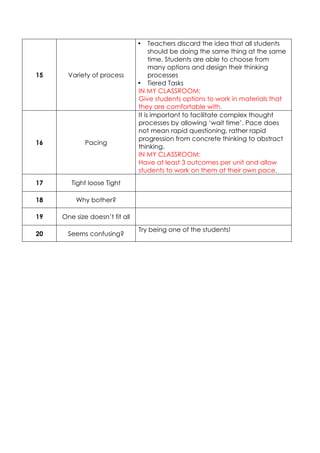
•    Teachers discard the idea that all students
                                     should be doing the same thing at the same
                                     time. Students are able to choose from
                                     many options and design their thinking
15     Variety of process            processes
                                • Tiered Tasks
                                IN MY CLASSROOM:
                                Give students options to work in materials that
                                they are comfortable with.
                                It is important to facilitate complex thought
                                processes by allowing ‘wait time’. Pace does
                                not mean rapid questioning, rather rapid
                                progression from concrete thinking to abstract
16           Pacing
                                thinking.
                                IN MY CLASSROOM:
                                Have at least 3 outcomes per unit and allow
                                students to work on them at their own pace.
17      Tight loose Tight

18       Why bother?

19   One size doesn’t fit all
                                Try being one of the students!
20     Seems confusing?

Teachingnotes pechakucha

  • 1.
    1 Pecha Kucha Differentiated Curriculum refers to teaching that is adapted to take into account the individual differences and needs of students in 2 One size does not fit all any one classroom It comprises modifications to the curriculum, teaching structures, and teaching practices in combination to ensure that instruction is 3 Making adjustments relevant, flexible and responsive, leading to successful achievement and the development of students as self-regulated learners. Quantitative, HSC, pressure IN MY CLASSROOM: 4 Results I value little successes and wins from students. All students can achieve. Eliminate unnecessary teaching IN MY CLASSROOM: 5 How do we teach? More and more tasks are student directed and teacher guided. Verbal/Linguistic Logical/Mathematical Visual/Spatial Bodily/Kinesthetic 6 Learning styles Naturalistic Musical Intelligence Interpersonal Intrapersonal BEA – FLIPPED CLASSROOM Content of curriculum comprises: • Ideas • Concepts • Information presented to students Content can be made: • More complex 7 Content • More varied • Organised differently IN MY CLASSROOM: Scaffolds, Edmodo, Different approaches to content – worksheets, video, interactive, discussion.
  • 2.
    JUDE Product is: 8 Product • What the students produce • NOT a summation of content Process is the way in which the content is presented to students Higher order thinking 9 Process Open-ended processing Inquiry HOW we teach Blooms Strategies to move beyond the textbook include the selection of supplementary materials, the use of primary source documents, the use of trade books and publications, the use of biography in all subject areas, and the regular employment of reference materials in 10 Questions the classroom IN MY CLASSROOM: Reflective High Order Options Re-Questioning and phrasing Focus question (Project Based Learning)
  • 3.
    The skills ofhigher order thinking, creative and divergent thinking, problem solving, decision making, forecasting and planning are all recommended strategies not only for gifted students but for all students • Would all students want to be involved in such learning experiences? • Could all students be involved in such learning experiences? • Should all students be expected to succeed Changing the in such learning experiences? 11 approach • The expectation that students learn best by being seated in rows and working in silence is unfounded and continually questioned by researchers. The need for control in classrooms sometimes leads teachers to the false belief that a restrictive and passive classroom environment will ensure positive student behaviours • Pre-test IN MY CLASSROOM: Brainstorm the topic to see what each student knows and reflect upon it, share ideas Students learn through doing, rather than listening. Who is the expert in the classroom. IN MY CLASSROOM: 12 Student Discovery Teach by THEME and students need to solve the problem through experimentation, trial and error, peer feedback • Providing opportunities for self-directed, independent study • Well designed open-ended activities provide opportunities for learners to match the quality of their responses to their ability level and to respond in accordance with 13 Freedom of choice their learning characteristics IN MY CLASSROOM: Don’t define the parameters of a task, instead we ask students to make links with their work and that of other artists. They choose how best to represent their ideas IN MY CLASSROOM: I seat students in clusters to get them working 14 Group interaction collaboratively. At least ONE task is a group task. Not all students like this, but they can bounce ideas off eachother.
  • 4.
    Teachers discard the idea that all students should be doing the same thing at the same time. Students are able to choose from many options and design their thinking 15 Variety of process processes • Tiered Tasks IN MY CLASSROOM: Give students options to work in materials that they are comfortable with. It is important to facilitate complex thought processes by allowing ‘wait time’. Pace does not mean rapid questioning, rather rapid progression from concrete thinking to abstract 16 Pacing thinking. IN MY CLASSROOM: Have at least 3 outcomes per unit and allow students to work on them at their own pace. 17 Tight loose Tight 18 Why bother? 19 One size doesn’t fit all Try being one of the students! 20 Seems confusing?