MOHAMED
GABR
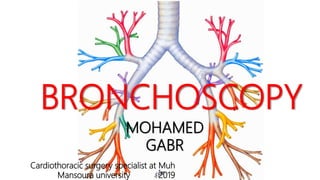
BRONCHOSCOPY
Cardiothoracic surgery specialist at Muh
Mansoura university 2019
History of Bronchoscopy
1885: Kirstein visualized the interior of a patient’s larynx directly with
O’Dwyer’s tube.
1897: Gustav Killian known as the ‘father of bronchoscopy’
1905: Chevalier Jackson established bronchoscopy as a standard diagnostic
tool.
1907: Inokichi Kubo was the first to practice bronchoscopy.
1967: Shigeto Ikeda introduced the first flexible FOB.
Types of Broncho.
1- RIGID
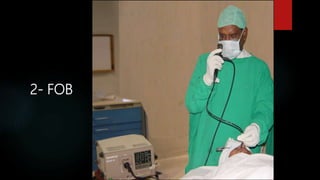
2- FOB
FOBRigid Bronchoscope
Advantages
- Flexible
- Can be done at bedside
- High navigational power
- (complete airway survey)
- No need for general anesthesia
- can be used through ETT
- can be used in truama
- Cheap
- Available
- Wide lumen of working channel
- Larger size accessories
- allows larger biopsies
- Ventilating
- FOB can be done through it
Disadvantages
- Expensive
- Cann`t protect airway
- Non ventilating
- Not easily available
- Low navigational power
- Requires general anesthesia (OR)
- cann`t be used in trauma
Indications
1- Diagnostic indications:
- investigation of unexplained cough, localized wheeze
or stridor
- diagnosis bronchogenic carcinoma
- evaluation of tracheal stenosis
- biopsy in mediastinal, lung masses (EBUS & TBNA)
- staging of bronchogenic carcinoma
- to exclude endobronchial lesions
- evaluation lung lesion of unknown etiology on CXR
- investigation unexplained hemoptysis
- evaluation airway trauma
- obtain BAL for microbiological analysis
- evaluation suspected TOF
- evaluation suspected BPF
- evaluation unexplained pleural effusions
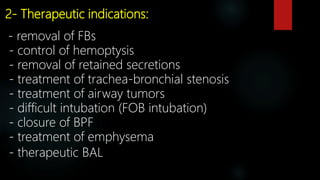
2- Therapeutic indications:
- removal of FBs
- control of hemoptysis
- removal of retained secretions
- treatment of trachea-bronchial stenosis
- treatment of airway tumors
- difficult intubation (FOB intubation)
- closure of BPF
- treatment of emphysema
- therapeutic BAL
Complications:
- Hypoxia
- Pneumothorax
- Airway injury
- Bleeding
- Respiratory failure
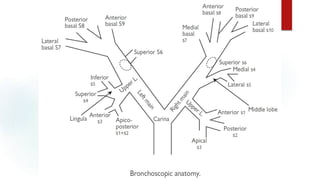
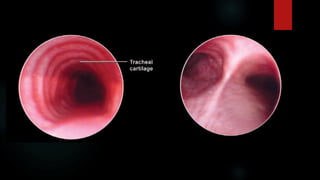
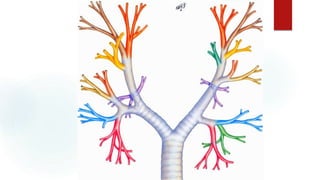
Anatomy
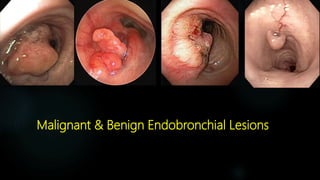
Malignant & Benign Endobronchial Lesions
Airway Stricture LASER dilatation Recurrence Silic. Stenting
Electrocautary of Granulation t. distal to bronchial stent
Tracheal Stenosis: 0 – 50% 51-70%
71 – 99% 100% ???
Post-intubation Tracheal Stenosis
Stenosis Normal
Tracheal Stenting in Tracheomalacia
Questions:
1- Compare between rigid and flexible bronchoscopes
2- Indications of rigid bronchoscope
3- Diagnostic indications of bronchoscope
4- Therapeutic indications of bronchoscope
Thank you


Bronchoscopy

  • 1.
  • 2.
    History of Bronchoscopy 1885:Kirstein visualized the interior of a patient’s larynx directly with O’Dwyer’s tube. 1897: Gustav Killian known as the ‘father of bronchoscopy’ 1905: Chevalier Jackson established bronchoscopy as a standard diagnostic tool. 1907: Inokichi Kubo was the first to practice bronchoscopy. 1967: Shigeto Ikeda introduced the first flexible FOB.
  • 3.
  • 5.
  • 6.
    FOBRigid Bronchoscope Advantages - Flexible -Can be done at bedside - High navigational power - (complete airway survey) - No need for general anesthesia - can be used through ETT - can be used in truama - Cheap - Available - Wide lumen of working channel - Larger size accessories - allows larger biopsies - Ventilating - FOB can be done through it Disadvantages - Expensive - Cann`t protect airway - Non ventilating - Not easily available - Low navigational power - Requires general anesthesia (OR) - cann`t be used in trauma
  • 7.
    Indications 1- Diagnostic indications: -investigation of unexplained cough, localized wheeze or stridor - diagnosis bronchogenic carcinoma - evaluation of tracheal stenosis - biopsy in mediastinal, lung masses (EBUS & TBNA) - staging of bronchogenic carcinoma - to exclude endobronchial lesions - evaluation lung lesion of unknown etiology on CXR - investigation unexplained hemoptysis - evaluation airway trauma - obtain BAL for microbiological analysis - evaluation suspected TOF - evaluation suspected BPF - evaluation unexplained pleural effusions
  • 8.
    2- Therapeutic indications: -removal of FBs - control of hemoptysis - removal of retained secretions - treatment of trachea-bronchial stenosis - treatment of airway tumors - difficult intubation (FOB intubation) - closure of BPF - treatment of emphysema - therapeutic BAL
  • 9.
    Complications: - Hypoxia - Pneumothorax -Airway injury - Bleeding - Respiratory failure
  • 15.
  • 20.
    Malignant & BenignEndobronchial Lesions
  • 21.
    Airway Stricture LASERdilatation Recurrence Silic. Stenting
  • 22.
    Electrocautary of Granulationt. distal to bronchial stent
  • 23.
    Tracheal Stenosis: 0– 50% 51-70% 71 – 99% 100% ???
  • 24.
  • 25.
    Tracheal Stenting inTracheomalacia
  • 27.
    Questions: 1- Compare betweenrigid and flexible bronchoscopes 2- Indications of rigid bronchoscope 3- Diagnostic indications of bronchoscope 4- Therapeutic indications of bronchoscope
  • 28.