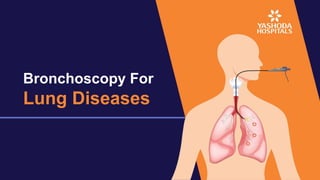
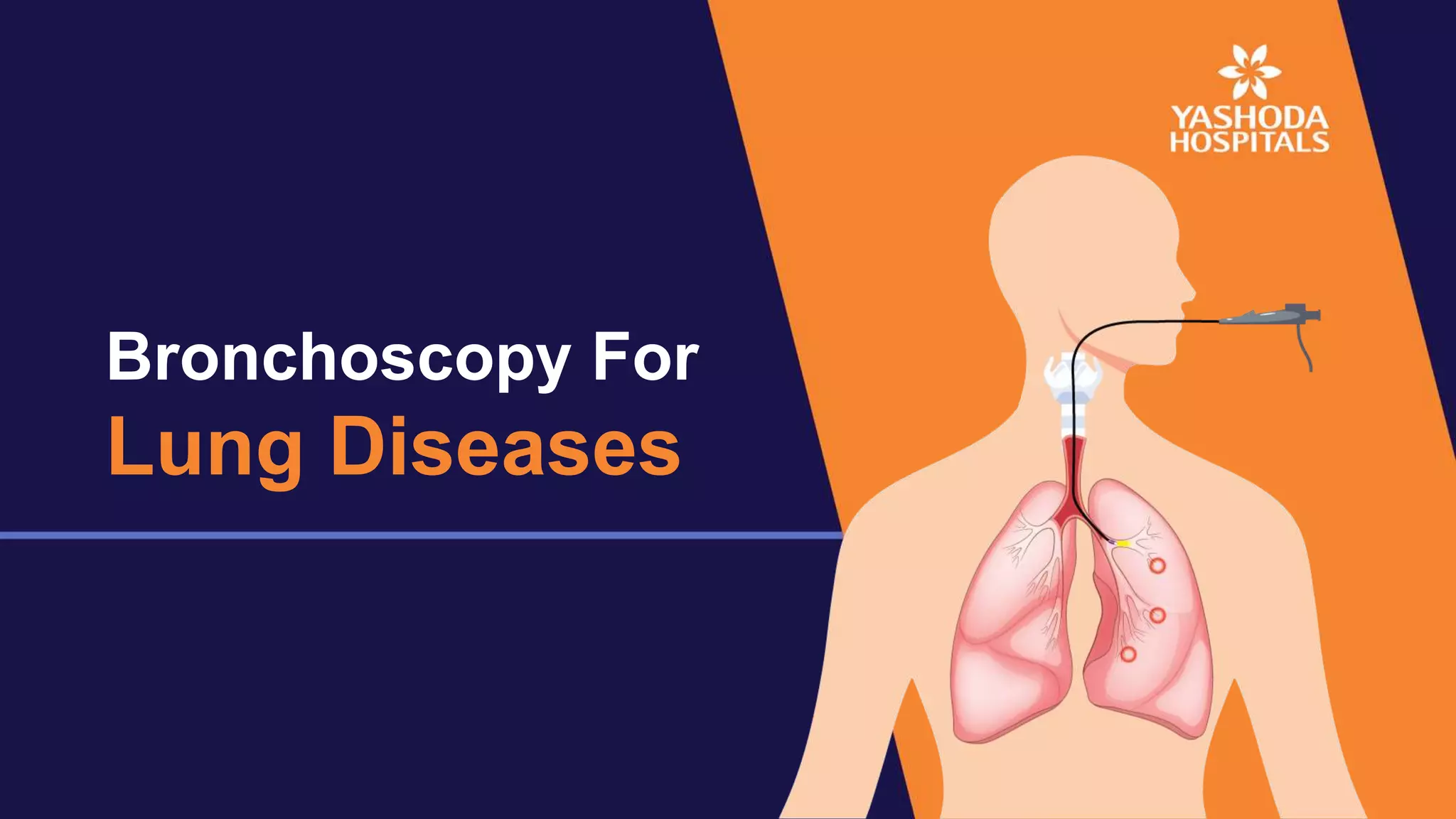


Bronchoscopy For
Lung Diseases
What Is Bronchoscopy?
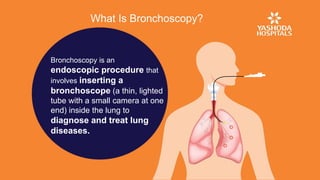
Bronchoscopy is an
endoscopic procedure that
involves inserting a
bronchoscope (a thin, lighted
tube with a small camera at one
end) inside the lung to
diagnose and treat lung
diseases.
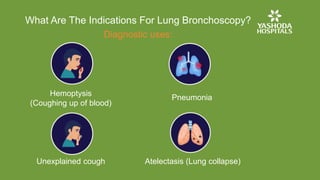
What Are The Indications For Lung Bronchoscopy?
Diagnostic uses:
Hemoptysis
(Coughing up of blood)
Pneumonia
Unexplained cough Atelectasis (Lung collapse)
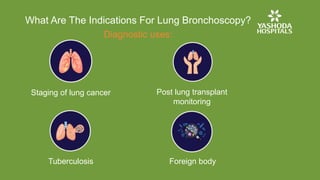
What Are The Indications For Lung Bronchoscopy?
Diagnostic uses:
Staging of lung cancer Post lung transplant
monitoring
Tuberculosis Foreign body
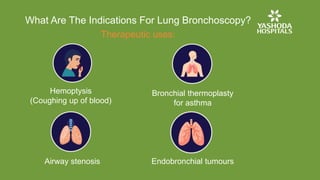
What Are The Indications For Lung Bronchoscopy?
Therapeutic uses:
Hemoptysis
(Coughing up of blood)
Bronchial thermoplasty
for asthma
Airway stenosis Endobronchial tumours
Types Of Bronchoscopy
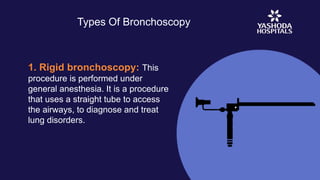
1. Rigid bronchoscopy: This
procedure is performed under
general anesthesia. It is a procedure
that uses a straight tube to access
the airways, to diagnose and treat
lung disorders.
Types Of Bronchoscopy
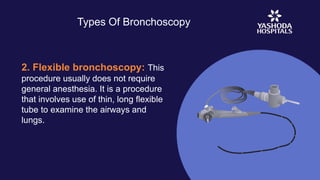
2. Flexible bronchoscopy: This
procedure usually does not require
general anesthesia. It is a procedure
that involves use of thin, long flexible
tube to examine the airways and
lungs.
Types Of Bronchoscopy
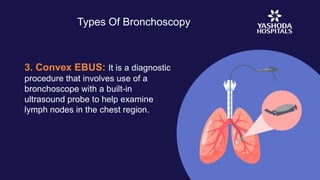
3. Convex EBUS: It is a diagnostic
procedure that involves use of a
bronchoscope with a built-in
ultrasound probe to help examine
lymph nodes in the chest region.
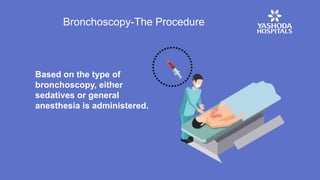
Based on the type of
bronchoscopy, either
sedatives or general
anesthesia is administered.
Bronchoscopy-The Procedure
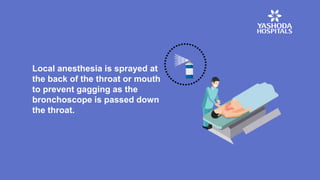
Local anesthesia is sprayed at
the back of the throat or mouth
to prevent gagging as the
bronchoscope is passed down
the throat.
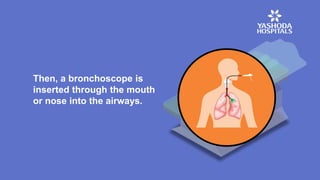
Then, a bronchoscope is
inserted through the mouth
or nose into the airways.
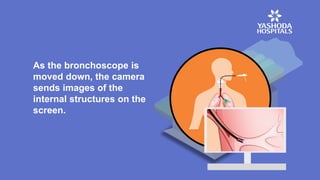
As the bronchoscope is
moved down, the camera
sends images of the
internal structures on the
screen.
Once the exact area is
located, specialized
surgical tools are passed
through the bronchoscope
to collect the tissue or fluid
sample.
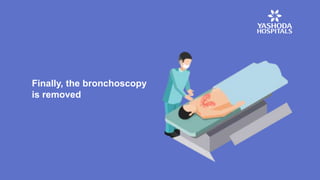
Finally, the bronchoscopy
is removed
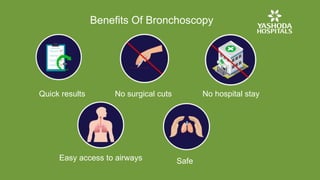
Benefits Of Bronchoscopy
Quick results No surgical cuts No hospital stay
Easy access to airways Safe
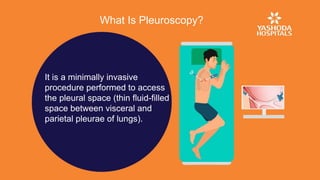
What Is Pleuroscopy?
It is a minimally invasive
procedure performed to access
the pleural space (thin fluid-filled
space between visceral and
parietal pleurae of lungs).
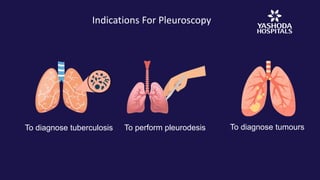
Indications For Pleuroscopy
To diagnose tuberculosis To perform pleurodesis To diagnose tumours
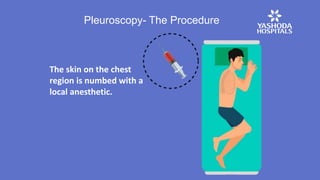
Pleuroscopy- The Procedure
The skin on the chest
region is numbed with a
local anesthetic.
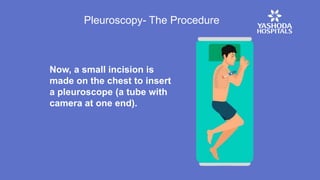
Pleuroscopy- The Procedure
Now, a small incision is
made on the chest to insert
a pleuroscope (a tube with
camera at one end).
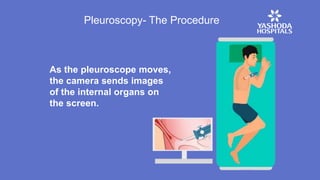
As the pleuroscope moves,
the camera sends images
of the internal organs on
the screen.
Pleuroscopy- The Procedure
The surgeon views the
pleural cavity and inserts
surgical tools to collect
tissue and fluid sample
from the pleural cavity.
Pleuroscopy- The Procedure
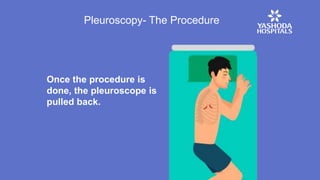
Once the procedure is
done, the pleuroscope is
pulled back.
Pleuroscopy- The Procedure
Benefits Of Pleuroscopy
Quick results Safe
Bronchoscopy For Lung Diseases

Bronchoscopy For Lung Diseases

  • 1.
  • 2.
    What Is Bronchoscopy? Bronchoscopyis an endoscopic procedure that involves inserting a bronchoscope (a thin, lighted tube with a small camera at one end) inside the lung to diagnose and treat lung diseases.
  • 3.
    What Are TheIndications For Lung Bronchoscopy? Diagnostic uses: Hemoptysis (Coughing up of blood) Pneumonia Unexplained cough Atelectasis (Lung collapse)
  • 4.
    What Are TheIndications For Lung Bronchoscopy? Diagnostic uses: Staging of lung cancer Post lung transplant monitoring Tuberculosis Foreign body
  • 5.
    What Are TheIndications For Lung Bronchoscopy? Therapeutic uses: Hemoptysis (Coughing up of blood) Bronchial thermoplasty for asthma Airway stenosis Endobronchial tumours
  • 6.
    Types Of Bronchoscopy 1.Rigid bronchoscopy: This procedure is performed under general anesthesia. It is a procedure that uses a straight tube to access the airways, to diagnose and treat lung disorders.
  • 7.
    Types Of Bronchoscopy 2.Flexible bronchoscopy: This procedure usually does not require general anesthesia. It is a procedure that involves use of thin, long flexible tube to examine the airways and lungs.
  • 8.
    Types Of Bronchoscopy 3.Convex EBUS: It is a diagnostic procedure that involves use of a bronchoscope with a built-in ultrasound probe to help examine lymph nodes in the chest region.
  • 9.
    Based on thetype of bronchoscopy, either sedatives or general anesthesia is administered. Bronchoscopy-The Procedure
  • 10.
    Local anesthesia issprayed at the back of the throat or mouth to prevent gagging as the bronchoscope is passed down the throat.
  • 11.
    Then, a bronchoscopeis inserted through the mouth or nose into the airways.
  • 12.
    As the bronchoscopeis moved down, the camera sends images of the internal structures on the screen.
  • 13.
    Once the exactarea is located, specialized surgical tools are passed through the bronchoscope to collect the tissue or fluid sample.
  • 14.
  • 15.
    Benefits Of Bronchoscopy Quickresults No surgical cuts No hospital stay Easy access to airways Safe
  • 16.
    What Is Pleuroscopy? Itis a minimally invasive procedure performed to access the pleural space (thin fluid-filled space between visceral and parietal pleurae of lungs).
  • 17.
    Indications For Pleuroscopy Todiagnose tuberculosis To perform pleurodesis To diagnose tumours
  • 18.
    Pleuroscopy- The Procedure Theskin on the chest region is numbed with a local anesthetic.
  • 19.
    Pleuroscopy- The Procedure Now,a small incision is made on the chest to insert a pleuroscope (a tube with camera at one end).
  • 20.
    As the pleuroscopemoves, the camera sends images of the internal organs on the screen. Pleuroscopy- The Procedure
  • 21.
    The surgeon viewsthe pleural cavity and inserts surgical tools to collect tissue and fluid sample from the pleural cavity. Pleuroscopy- The Procedure
  • 22.
    Once the procedureis done, the pleuroscope is pulled back. Pleuroscopy- The Procedure
  • 23.