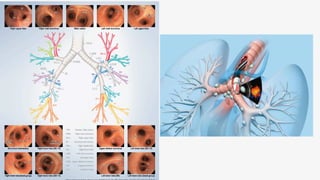
What is a bronchoscopy?
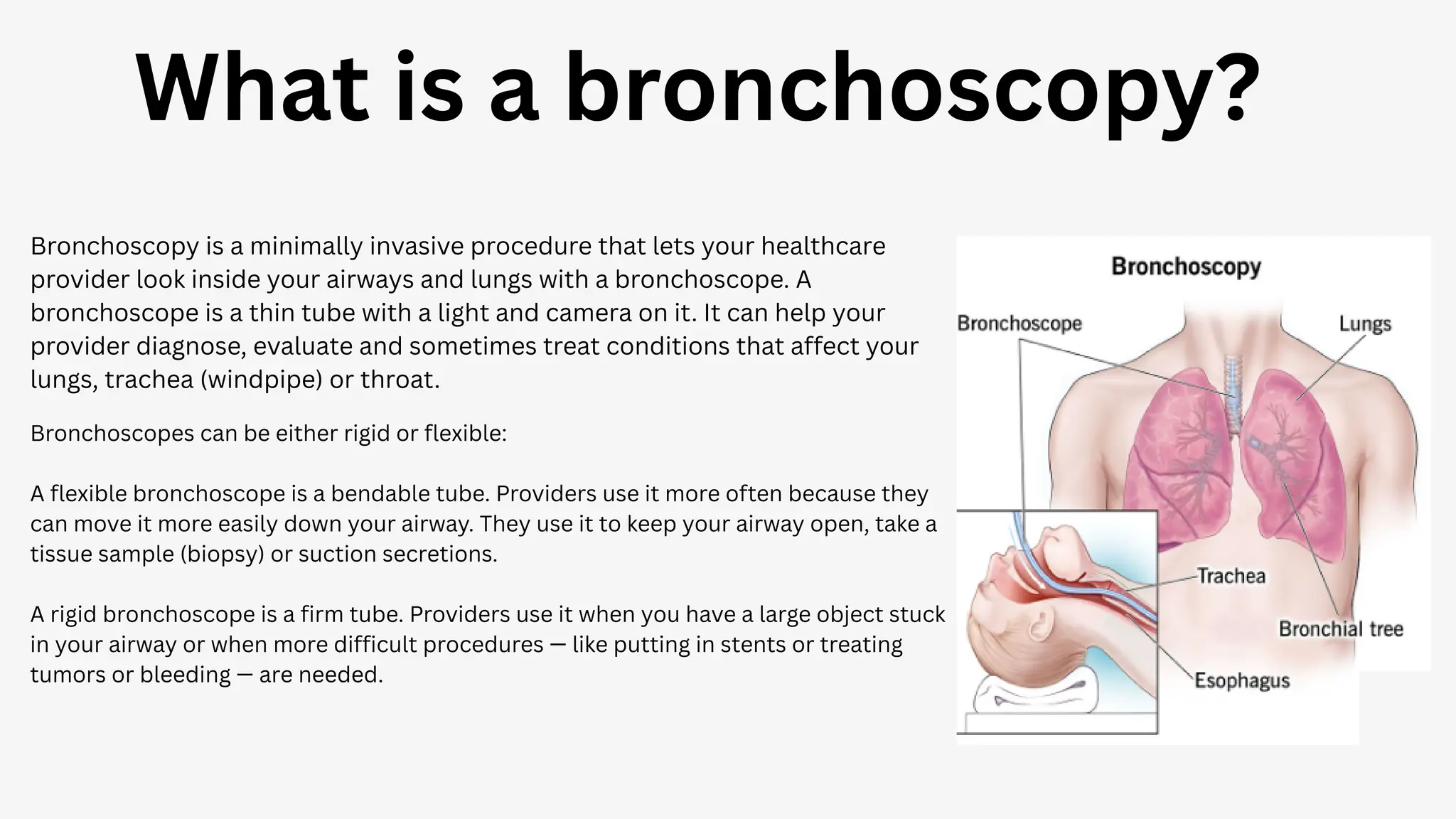
Bronchoscopy is a minimally invasive procedure that lets your healthcare
provider look inside your airways and lungs with a bronchoscope. A
bronchoscope is a thin tube with a light and camera on it. It can help your
provider diagnose, evaluate and sometimes treat conditions that affect your
lungs, trachea (windpipe) or throat.
Bronchoscopes can be either rigid or flexible:
A flexible bronchoscope is a bendable tube. Providers use it more often because they
can move it more easily down your airway. They use it to keep your airway open, take a
tissue sample (biopsy) or suction secretions.
A rigid bronchoscope is a firm tube. Providers use it when you have a large object stuck
in your airway or when more difficult procedures — like putting in stents or treating
tumors or bleeding — are needed.
What does a bronchoscopy diagnose?
A healthcare provider may recommend bronchoscopy to find the cause of lung problems you
may be experiencing. Some of the most common are:
Diagnosing lung disease or other causes of symptoms like excessive coughing, coughing up
blood or shortness of breath.
Following up after an X-ray or CT scan (computed tomography scan) showed possible signs
of cancer.
Assessing and removing blockages or treating narrowed areas in your airways.
Determining causes of infection or inflammation in your lungs.
Taking samples of mucus or tissue to send to a lab for analysis.
Placing a stent (small tube) to keep your airway open.
What happens during a bronchoscopy?
You’re typically given some medication to be sleepy and comfortable. Rigid bronchoscopy
and many procedures that involve biopsies may require general anesthesia (being asleep).
You should discuss which kind of anesthesia your procedure will require with your
healthcare provider.
In most cases, a bronchoscopy follows these steps:
Your provider inserts an IV into your arm to deliver a sedative to help you relax.
You lie on a bed or table with your head propped up.
Your provider may apply a numbing spray to your mouth (or nose) and throat. This helps with any discomfort you may feel
when they insert the bronchoscope.
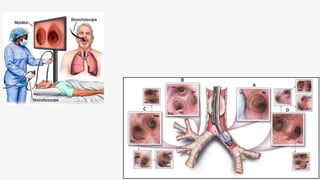
Once the area is numb and you’re under sedation, your provider inserts the bronchoscope through your nose or mouth or
through a tube, while you’re under anesthesia, and down into your windpipe to your lungs.
Your provider may suction saliva (spit) from your mouth since you won’t be able to swallow.
After the procedure, your provider gently removes the bronchoscope. Your healthcare team monitors your condition until
you’re fully awake.
What is a bronchoscopy? test live videos

What is a bronchoscopy? test live videos

  • 1.
    What is abronchoscopy? Bronchoscopy is a minimally invasive procedure that lets your healthcare provider look inside your airways and lungs with a bronchoscope. A bronchoscope is a thin tube with a light and camera on it. It can help your provider diagnose, evaluate and sometimes treat conditions that affect your lungs, trachea (windpipe) or throat. Bronchoscopes can be either rigid or flexible: A flexible bronchoscope is a bendable tube. Providers use it more often because they can move it more easily down your airway. They use it to keep your airway open, take a tissue sample (biopsy) or suction secretions. A rigid bronchoscope is a firm tube. Providers use it when you have a large object stuck in your airway or when more difficult procedures — like putting in stents or treating tumors or bleeding — are needed.
  • 2.
    What does abronchoscopy diagnose? A healthcare provider may recommend bronchoscopy to find the cause of lung problems you may be experiencing. Some of the most common are: Diagnosing lung disease or other causes of symptoms like excessive coughing, coughing up blood or shortness of breath. Following up after an X-ray or CT scan (computed tomography scan) showed possible signs of cancer. Assessing and removing blockages or treating narrowed areas in your airways. Determining causes of infection or inflammation in your lungs. Taking samples of mucus or tissue to send to a lab for analysis. Placing a stent (small tube) to keep your airway open.
  • 3.
    What happens duringa bronchoscopy? You’re typically given some medication to be sleepy and comfortable. Rigid bronchoscopy and many procedures that involve biopsies may require general anesthesia (being asleep). You should discuss which kind of anesthesia your procedure will require with your healthcare provider. In most cases, a bronchoscopy follows these steps: Your provider inserts an IV into your arm to deliver a sedative to help you relax. You lie on a bed or table with your head propped up. Your provider may apply a numbing spray to your mouth (or nose) and throat. This helps with any discomfort you may feel when they insert the bronchoscope. Once the area is numb and you’re under sedation, your provider inserts the bronchoscope through your nose or mouth or through a tube, while you’re under anesthesia, and down into your windpipe to your lungs. Your provider may suction saliva (spit) from your mouth since you won’t be able to swallow. After the procedure, your provider gently removes the bronchoscope. Your healthcare team monitors your condition until you’re fully awake.