BREAK EVEN ANALYSIS
BACHELAR OF COMMERCE
BANKING AND INSURANCE
SEMISTER- 3
ACADEMIC YEAR- 2013-14
PRESENTED BY GROUP 2
MANAGEMENT ACCOUNTING
Group Members
NAMES
Mansi
Trushna desai
Aswini gije
Maheshwari gummapu
Gauri
Anuradha joshi
Kunal kadam
Roll no's
208
209
210
211
212
213
214
Introduction
Break even calculator
Uses of break even analysis
Formula
Key terminology
Margin of safety
Example
Target profit
Limitation
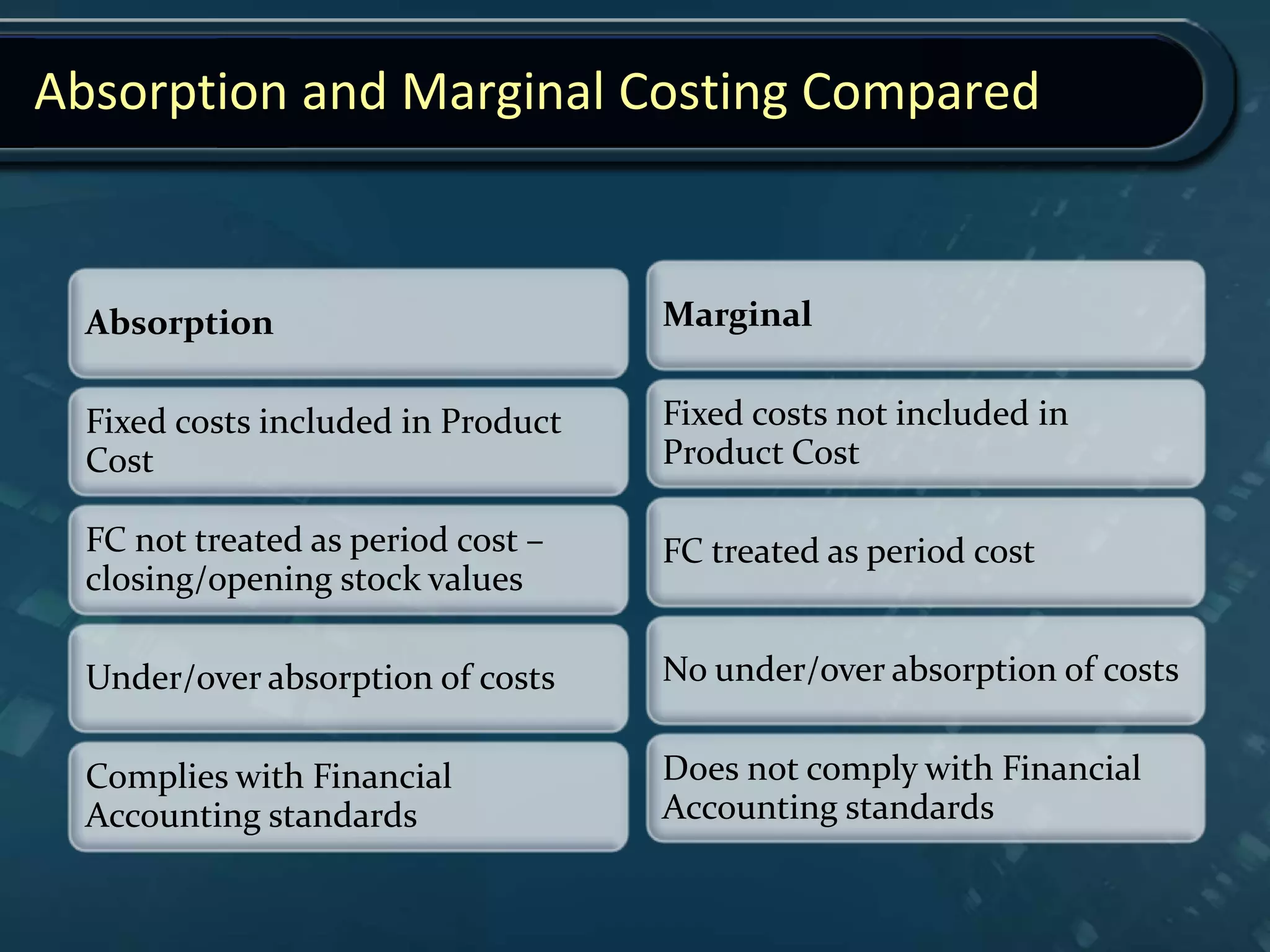
Absorption v/s marginal costing
CONTENTS
As an entrepreneur, what you want to know
• How many goods do
we have to sell before
we start making money
If we sell 1,00,000 units.
what will our profit be?
What will be more profitable?
make or buy?
The answer to all of these is…..
Breakeven Analysis:
A decision making aid that enables
a manager to determine whether a
particular volume of sales will result
in losses or profits.
Introduction
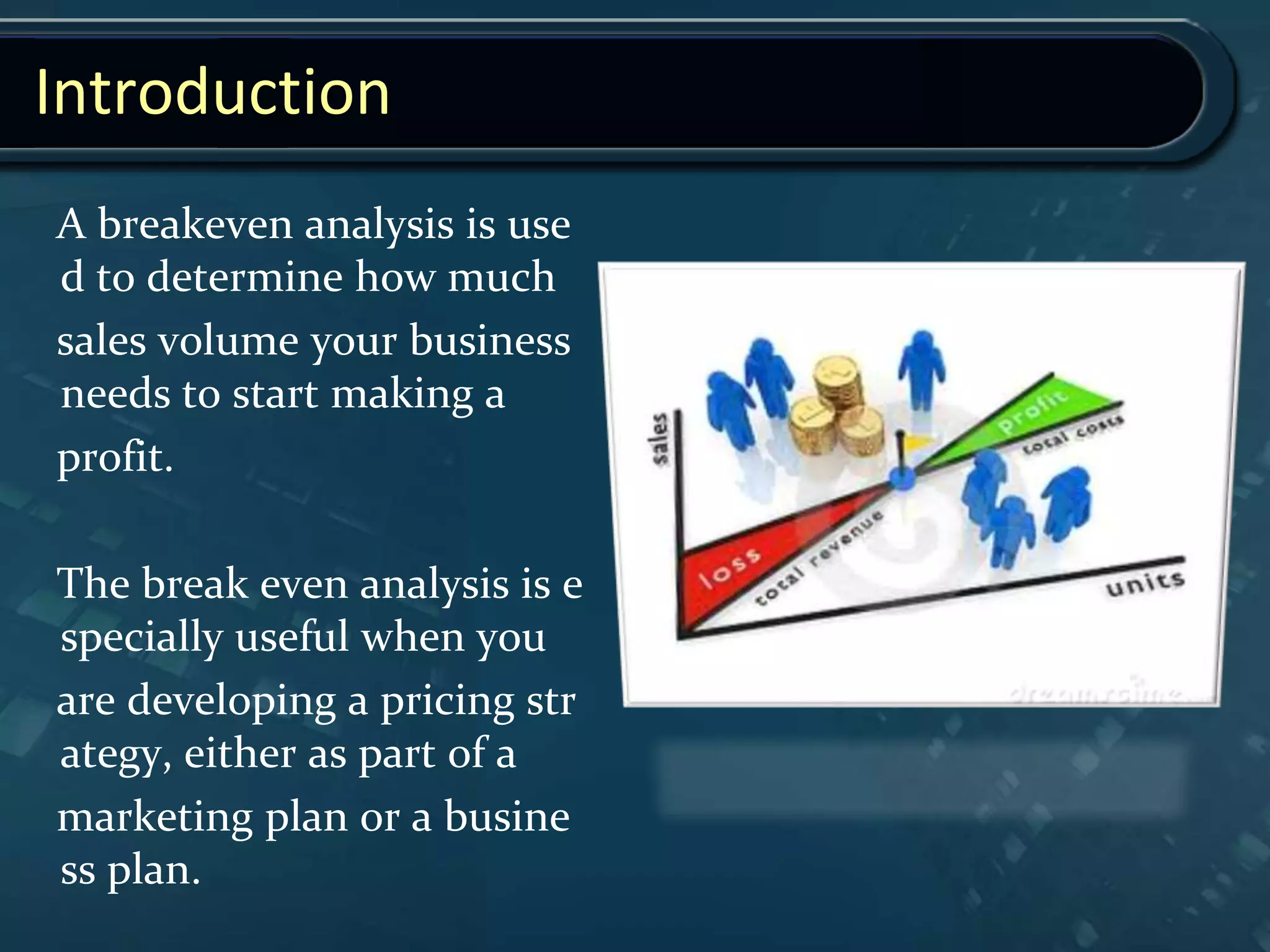
A breakeven analysis is use
d to determine how much
sales volume your business
needs to start making a
profit.
The break even analysis is e
specially useful when you
are developing a pricing str
ategy, either as part of a
marketing plan or a busine
ss plan.
Break even analysis
• It is a planning and control technique.
1)Planning: Make informed decisions.
2)Control: Constant Checks.
Cost
• Fixed (Indirect/Overheads) – are not influenced
by the amount produced but can change in the long run e.g., insu
rance costs, administration, rent, some types of labour costs (sala
ries), some types of energy costs, equipment and machinery, buil
dings, advertising
and promotion costs
• Variable (Direct) – vary directly with the amount produced, e.g.
, raw material costs, some direct labour costs, some direct energy
costs
• Semi-fixed – where costs not directly attributable to either of the
above, for example, some types of energy and labour costs
Uses of Breakeven Analysis
• C-V-P analysis is an important tool in terms of short
-term planning and decision making
• It looks at the relationship between costs, revenue, o
utput levels and profit
• Short run decisions where C-V-P is used include
choice of sales mix, pricing policy etc.
Break-even Analysis
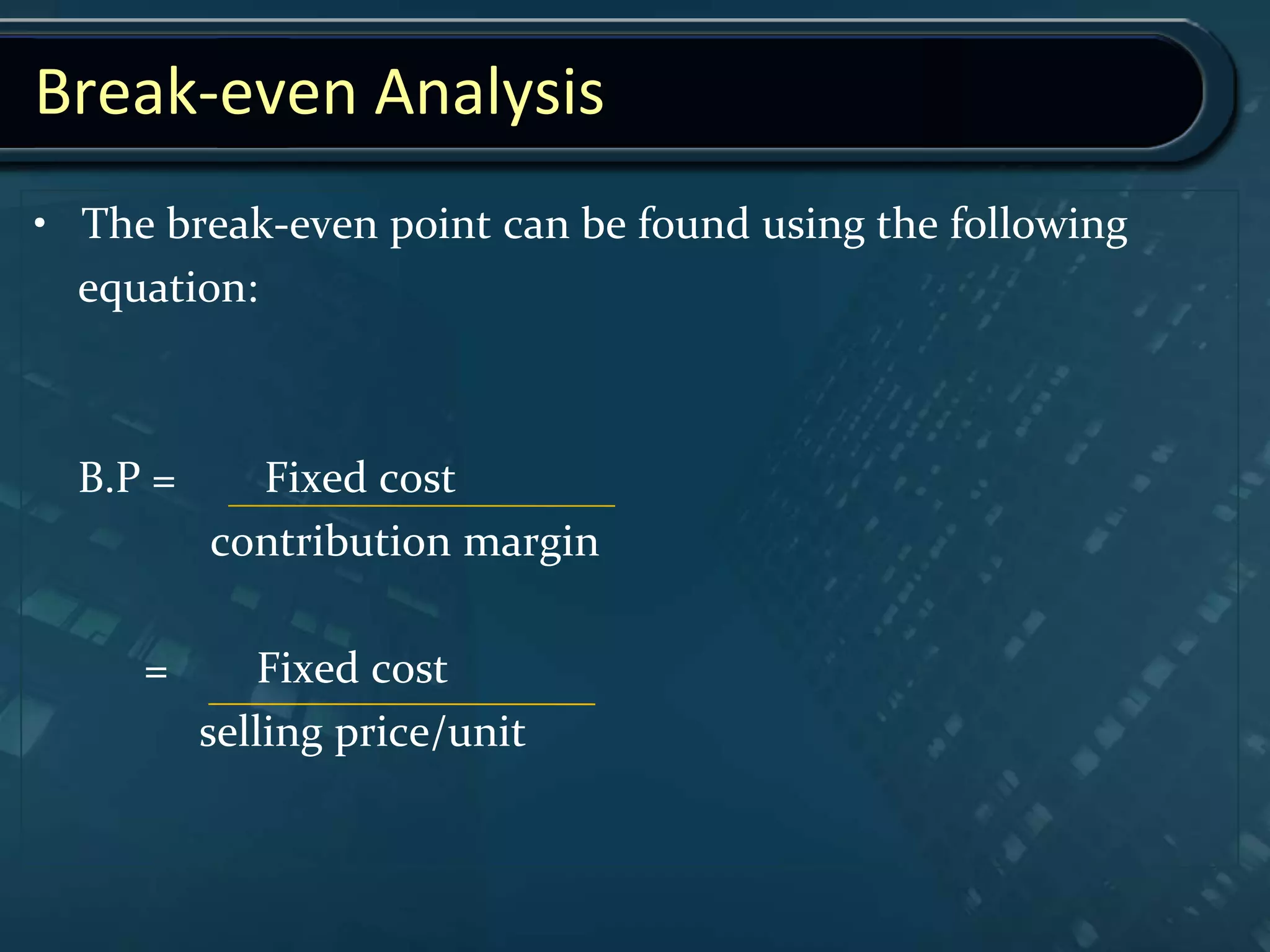
• The break-even point can be found using the following
equation:
B.P = Fixed cost
contribution margin
= Fixed cost
selling price/unit
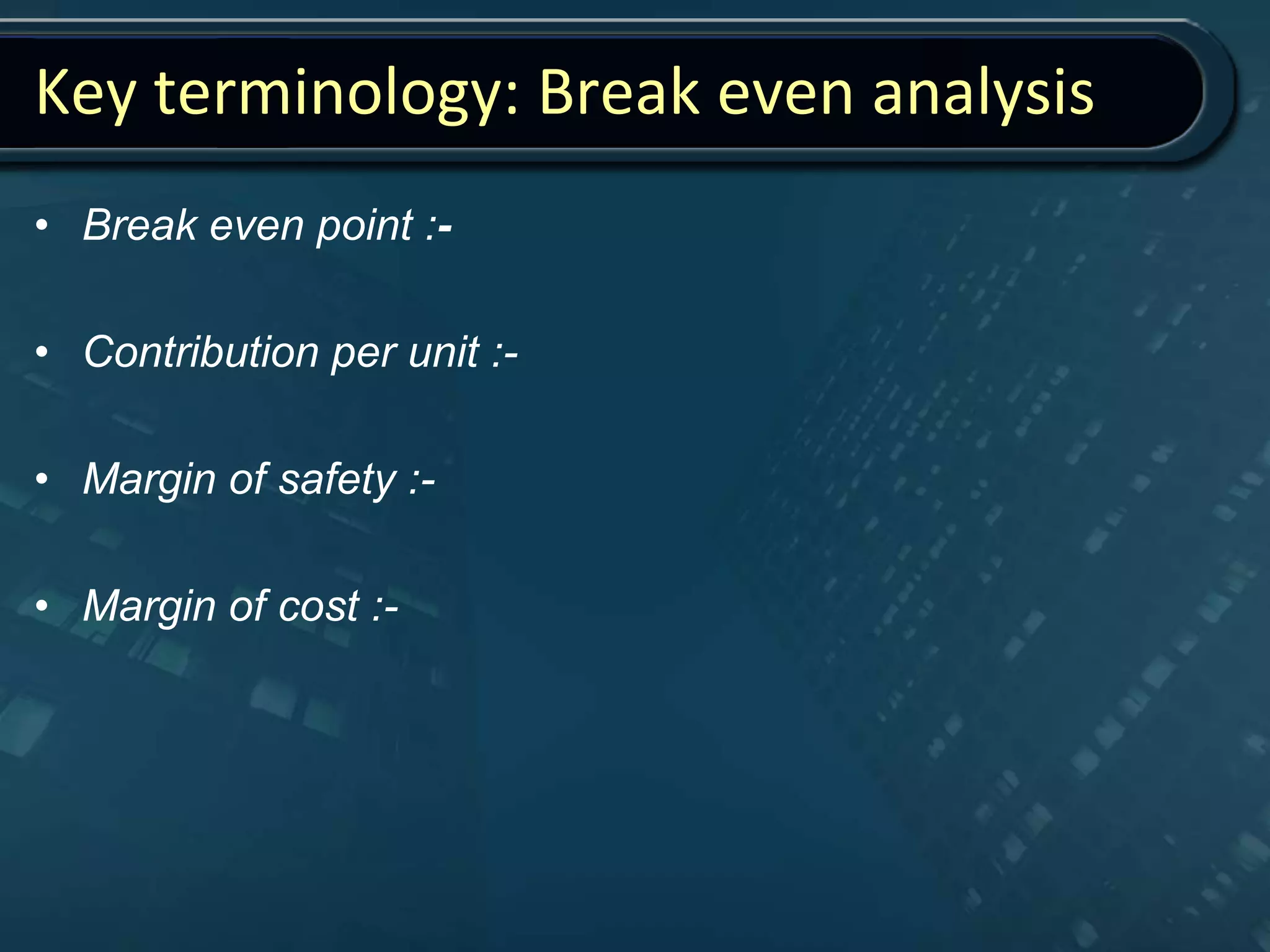
Key terminology: Break even analysis
• Break even point :-
• Contribution per unit :-
• Margin of safety :-
• Margin of cost :-
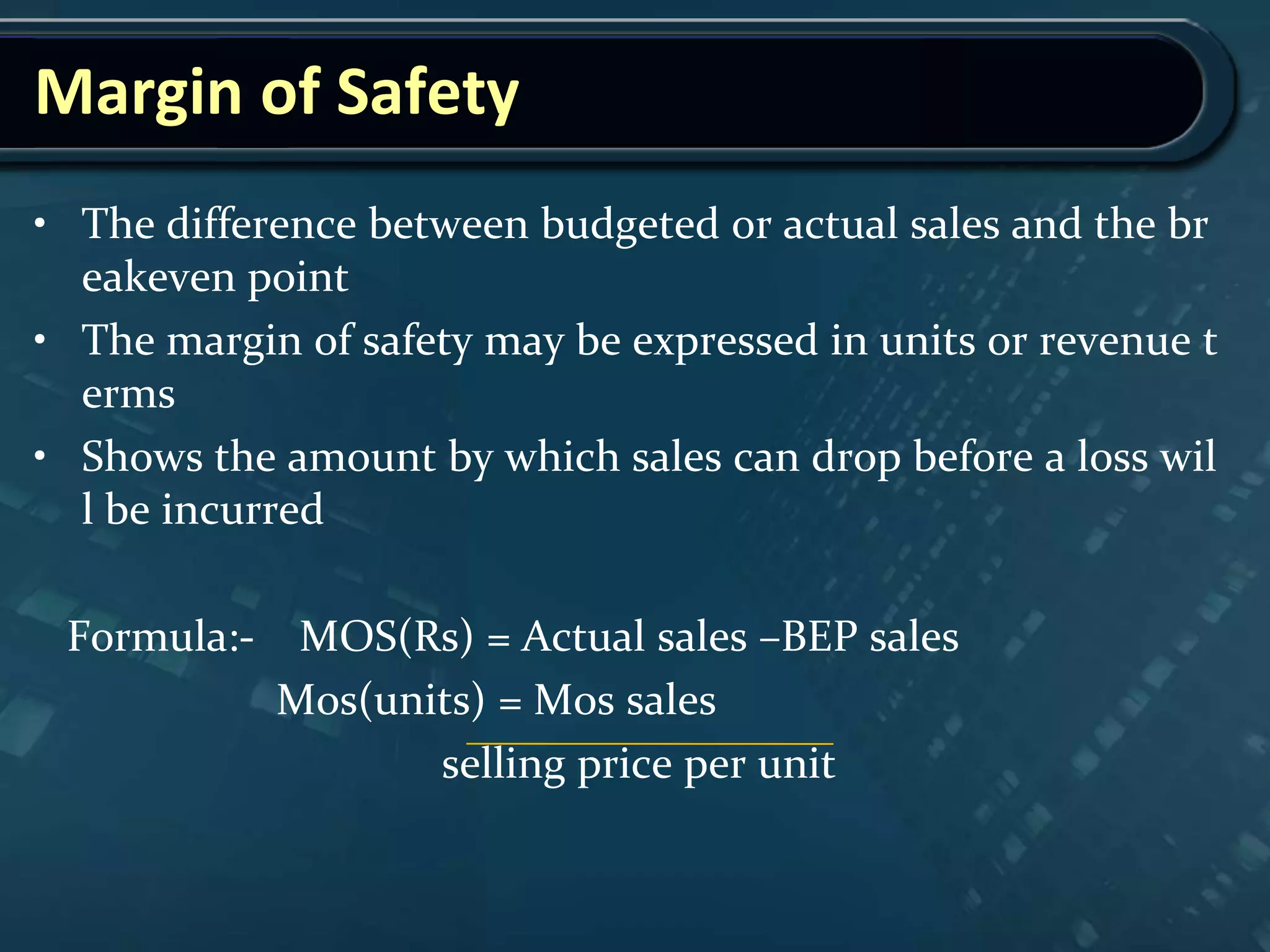
Margin of Safety
• The difference between budgeted or actual sales and the br
eakeven point
• The margin of safety may be expressed in units or revenue t
erms
• Shows the amount by which sales can drop before a loss wil
l be incurred
Formula:- MOS(Rs) = Actual sales –BEP sales
Mos(units) = Mos sales
selling price per unit
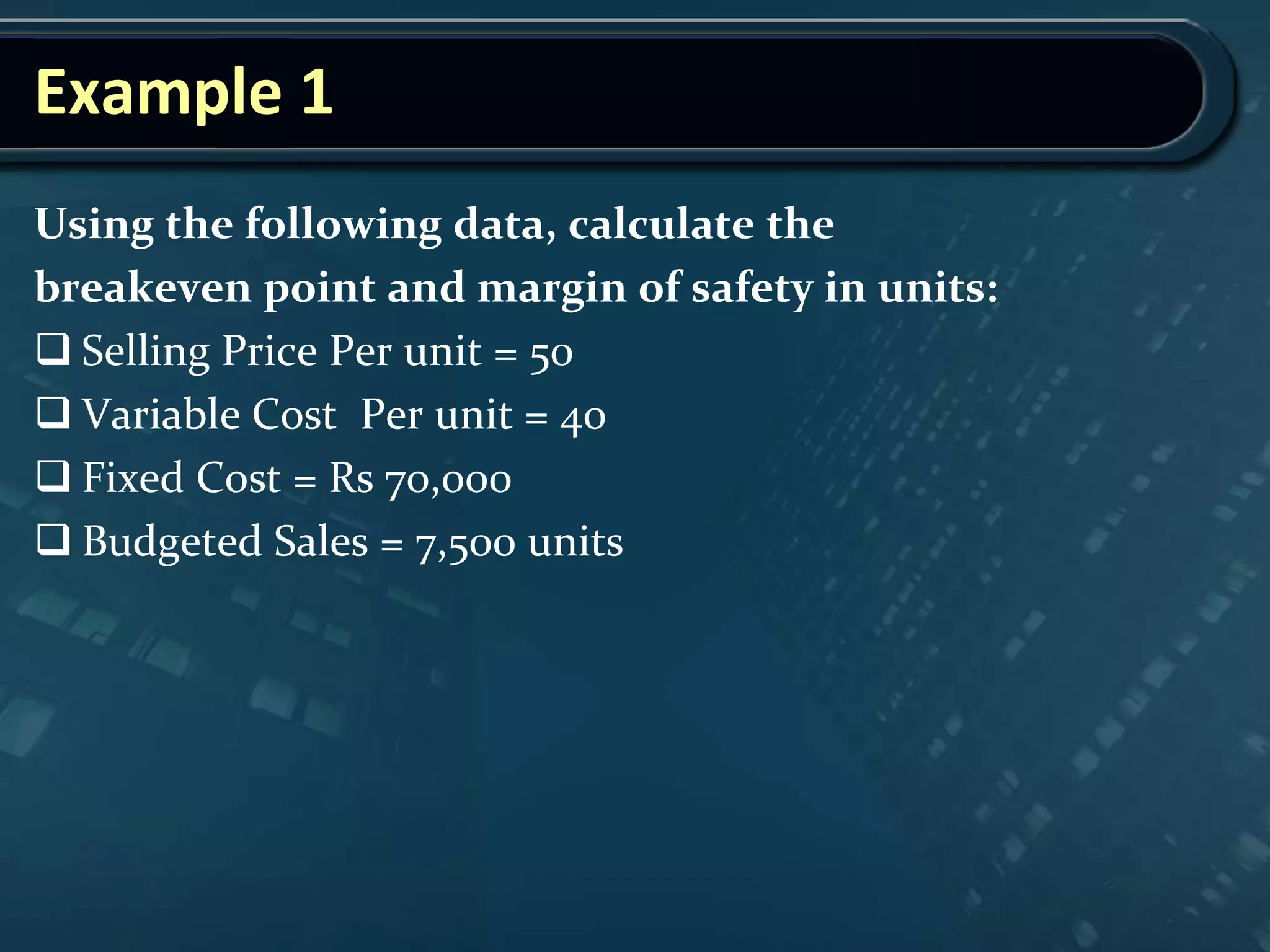
Example 1
Using the following data, calculate the
breakeven point and margin of safety in units:
 Selling Price Per unit = 50
 Variable Cost Per unit = 40
 Fixed Cost = Rs 70,000
 Budgeted Sales = 7,500 units
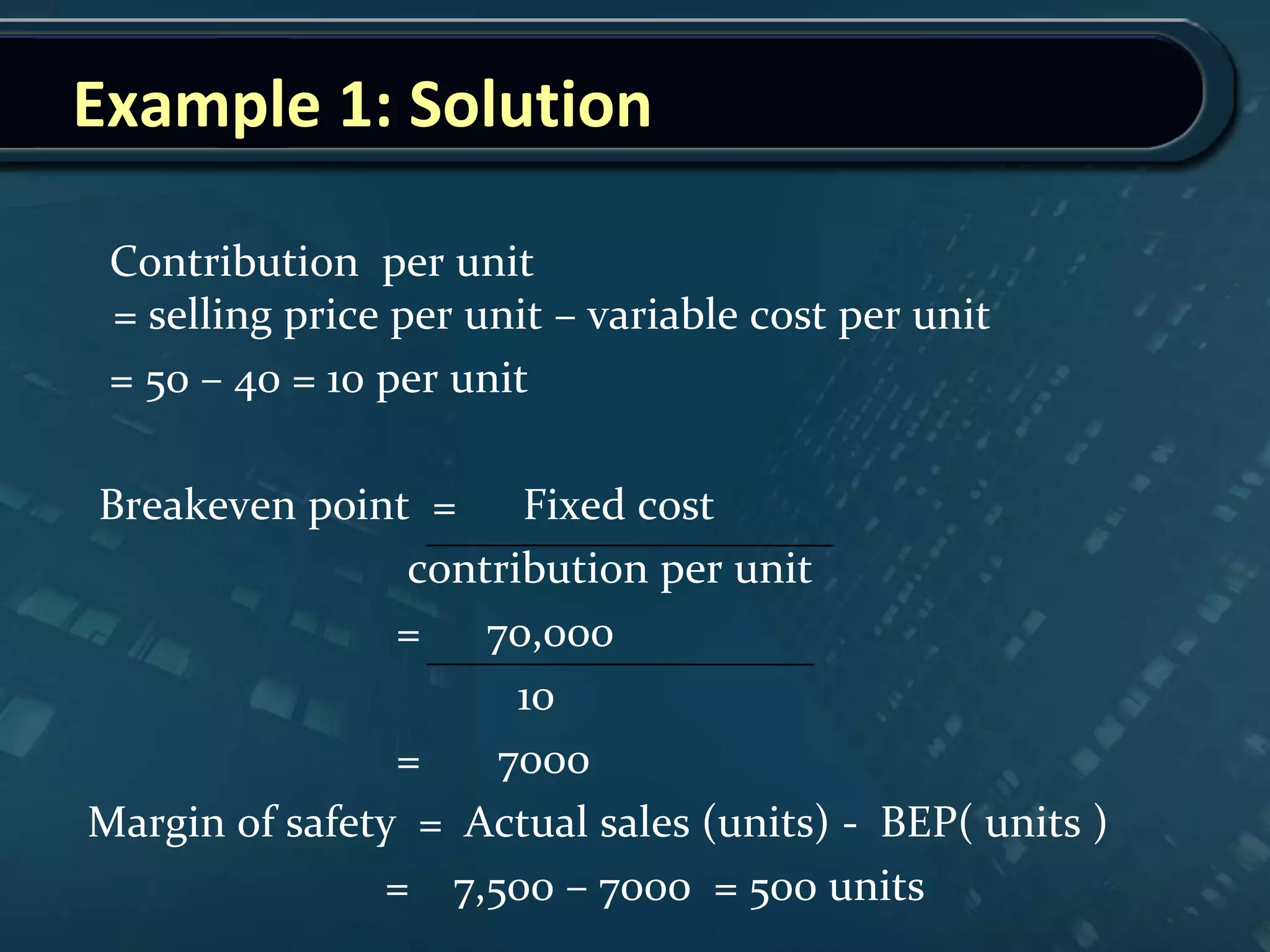
Example 1: Solution
Contribution per unit
= selling price per unit – variable cost per unit
= 50 – 40 = 10 per unit
Breakeven point = Fixed cost
contribution per unit
= 70,000
10
= 7000
Margin of safety = Actual sales (units) - BEP( units )
= 7,500 – 7000 = 500 units
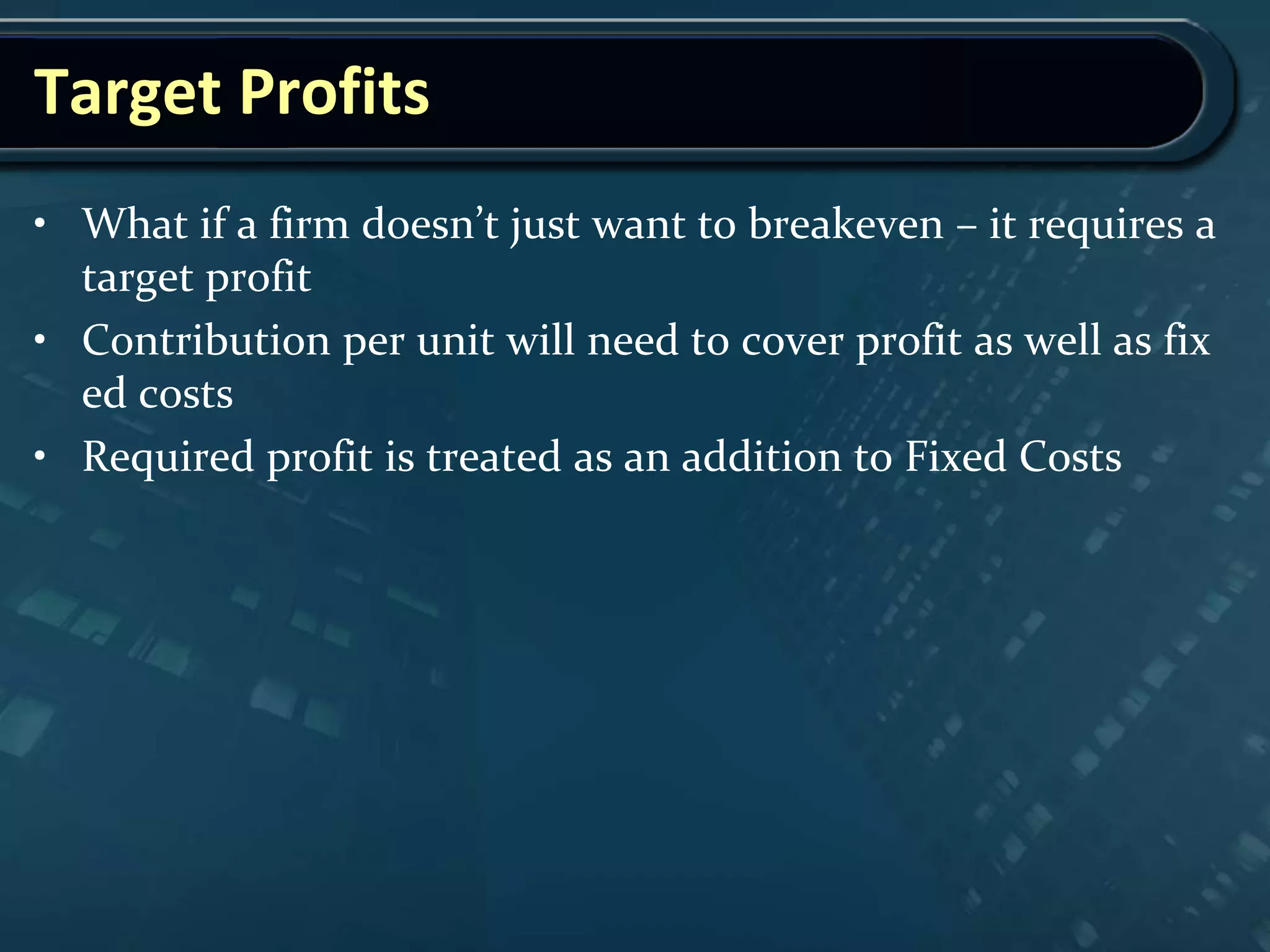
Target Profits
• What if a firm doesn’t just want to breakeven – it requires a
target profit
• Contribution per unit will need to cover profit as well as fix
ed costs
• Required profit is treated as an addition to Fixed Costs
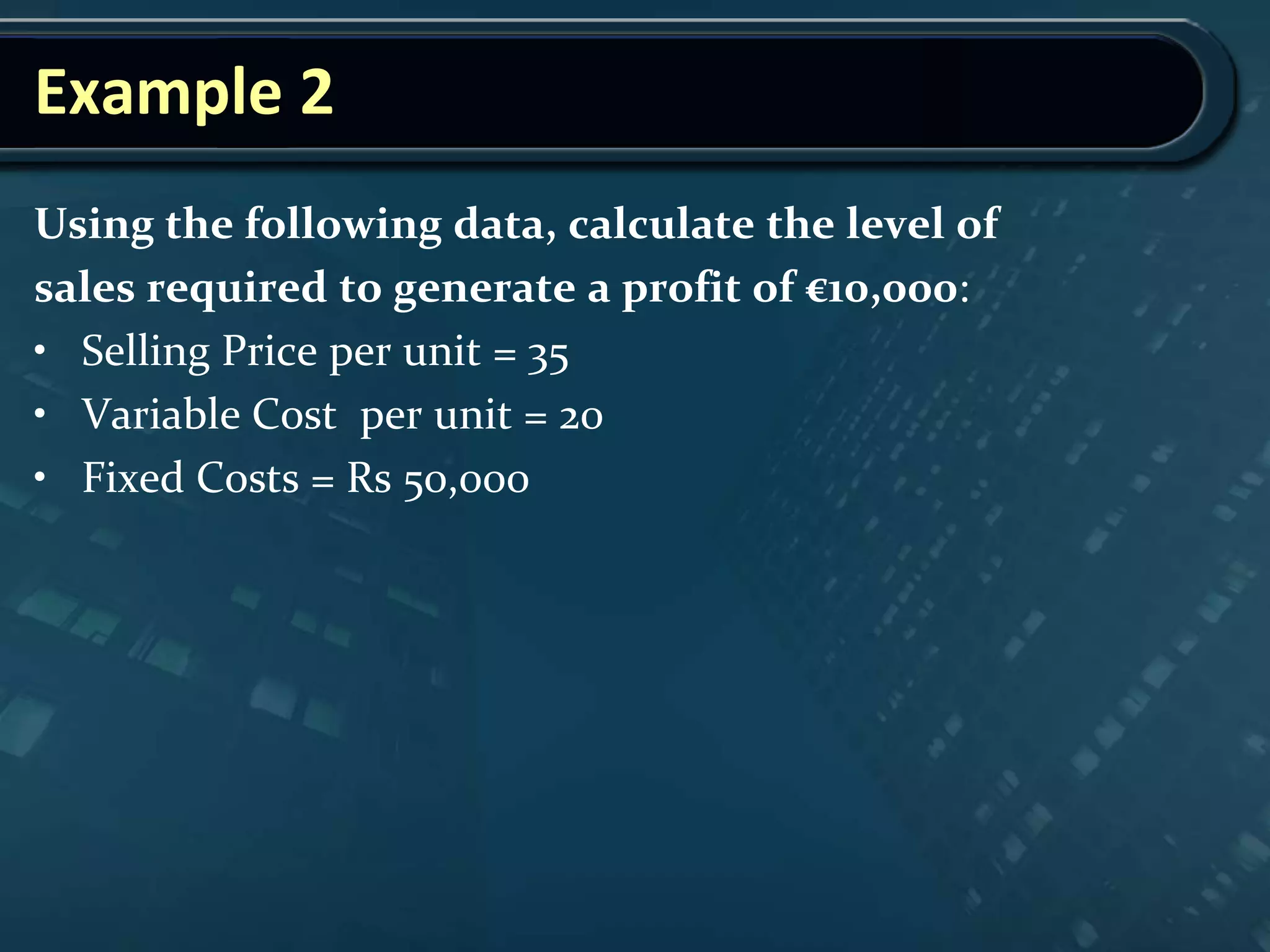
Example 2
Using the following data, calculate the level of
sales required to generate a profit of €10,000:
• Selling Price per unit = 35
• Variable Cost per unit = 20
• Fixed Costs = Rs 50,000
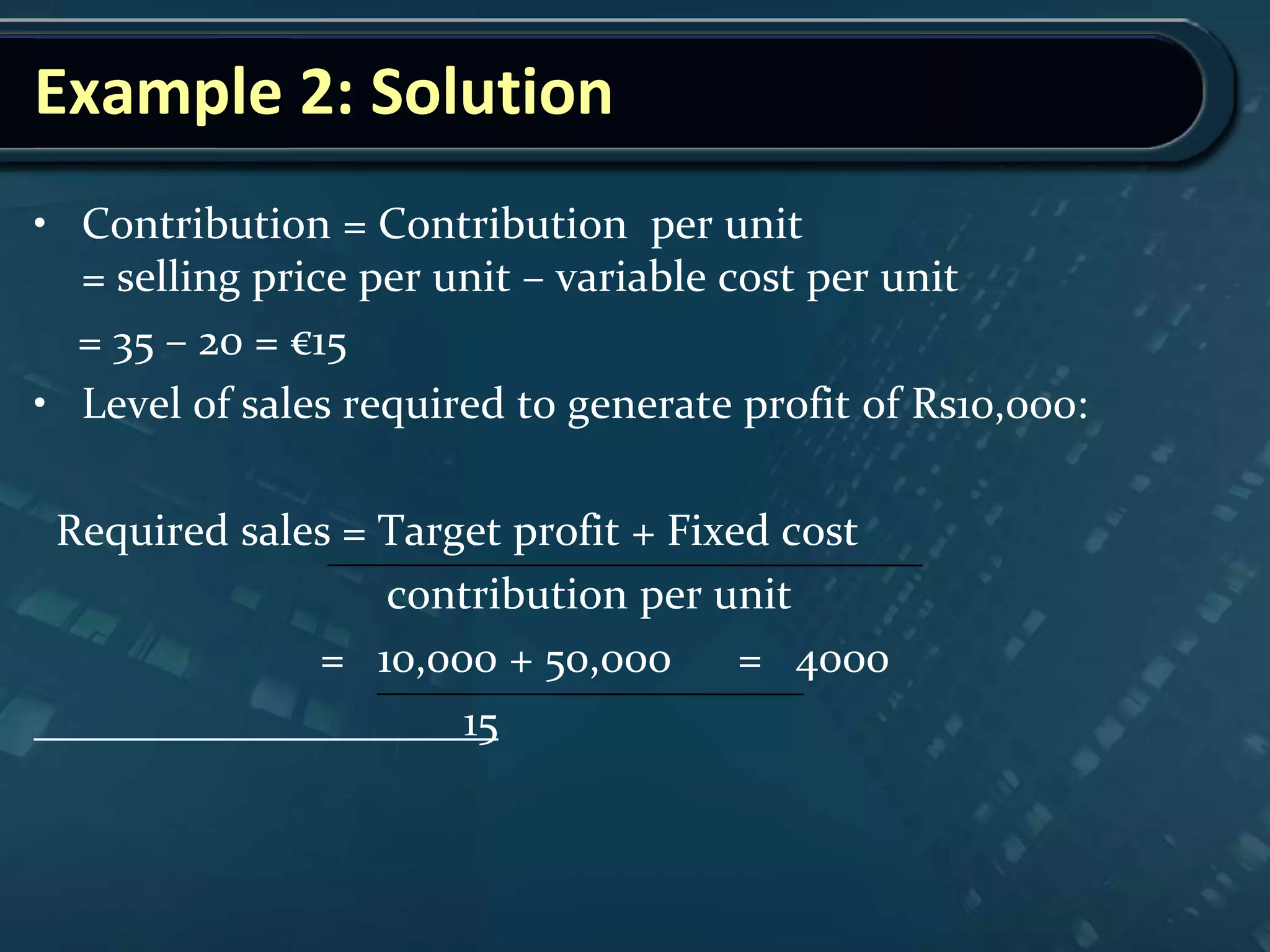
Example 2: Solution
• Contribution = Contribution per unit
= selling price per unit – variable cost per unit
= 35 – 20 = €15
• Level of sales required to generate profit of Rs10,000:
Required sales = Target profit + Fixed cost
contribution per unit
= 10,000 + 50,000 = 4000
15
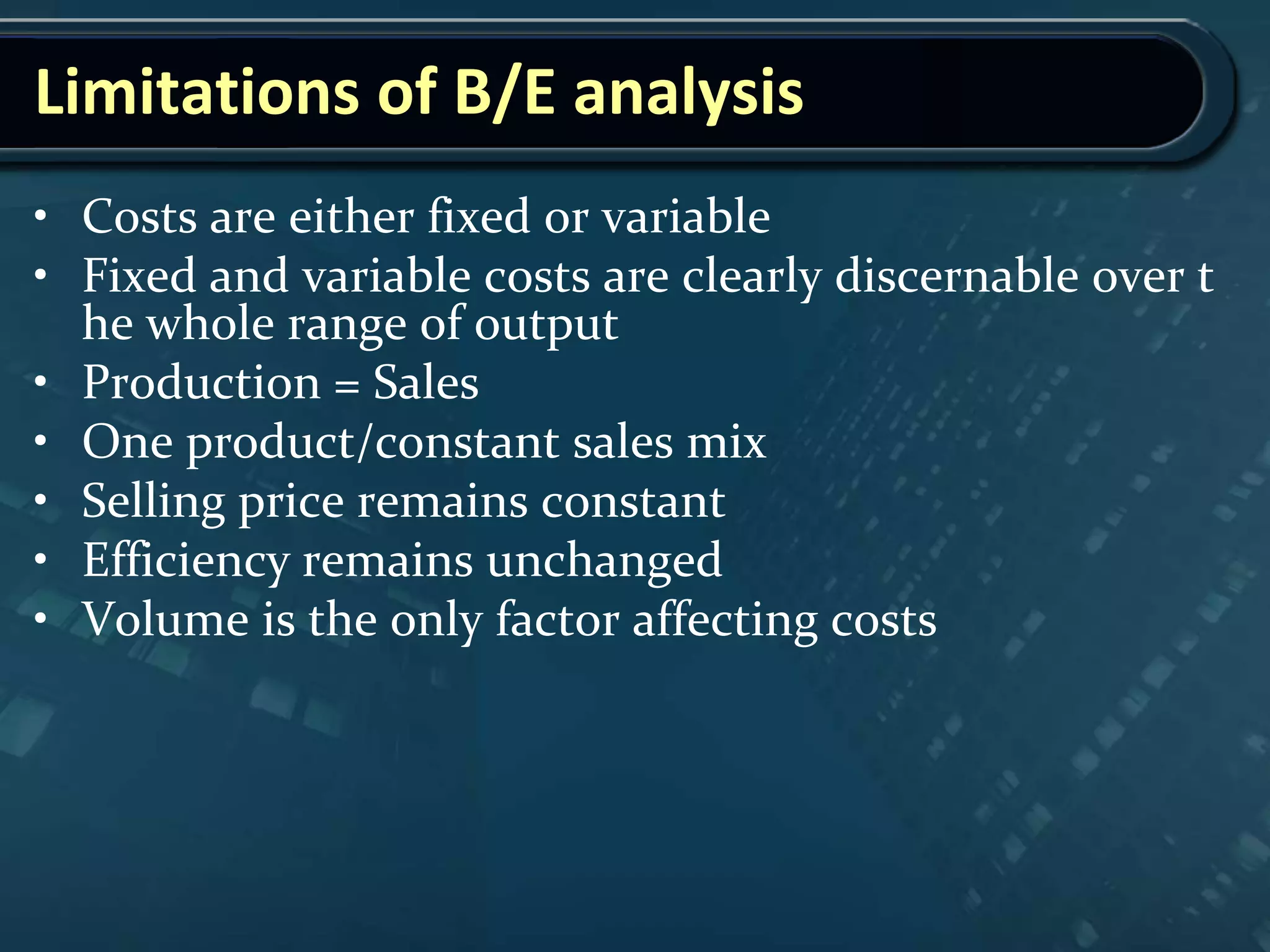
Limitations of B/E analysis
• Costs are either fixed or variable
• Fixed and variable costs are clearly discernable over t
he whole range of output
• Production = Sales
• One product/constant sales mix
• Selling price remains constant
• Efficiency remains unchanged
• Volume is the only factor affecting costs
Absorption
Fixed costs included in Product
Cost
FC not treated as period cost –
closing/opening stock values
Under/over absorption of costs
Complies with Financial
Accounting standards
Marginal
Fixed costs not included in
Product Cost
FC treated as period cost
No under/over absorption of costs
Does not comply with Financial
Accounting standards
Absorption and Marginal Costing Compared
Break even analysis

Break even analysis

  • 1.
    BREAK EVEN ANALYSIS BACHELAROF COMMERCE BANKING AND INSURANCE SEMISTER- 3 ACADEMIC YEAR- 2013-14 PRESENTED BY GROUP 2 MANAGEMENT ACCOUNTING
  • 2.
    Group Members NAMES Mansi Trushna desai Aswinigije Maheshwari gummapu Gauri Anuradha joshi Kunal kadam Roll no's 208 209 210 211 212 213 214
  • 3.
    Introduction Break even calculator Usesof break even analysis Formula Key terminology Margin of safety Example Target profit Limitation Absorption v/s marginal costing CONTENTS
  • 4.
    As an entrepreneur,what you want to know • How many goods do we have to sell before we start making money If we sell 1,00,000 units. what will our profit be? What will be more profitable? make or buy?
  • 5.
    The answer toall of these is….. Breakeven Analysis: A decision making aid that enables a manager to determine whether a particular volume of sales will result in losses or profits.
  • 6.
    Introduction A breakeven analysisis use d to determine how much sales volume your business needs to start making a profit. The break even analysis is e specially useful when you are developing a pricing str ategy, either as part of a marketing plan or a busine ss plan.
  • 7.
    Break even analysis •It is a planning and control technique. 1)Planning: Make informed decisions. 2)Control: Constant Checks.
  • 8.
    Cost • Fixed (Indirect/Overheads)– are not influenced by the amount produced but can change in the long run e.g., insu rance costs, administration, rent, some types of labour costs (sala ries), some types of energy costs, equipment and machinery, buil dings, advertising and promotion costs • Variable (Direct) – vary directly with the amount produced, e.g. , raw material costs, some direct labour costs, some direct energy costs • Semi-fixed – where costs not directly attributable to either of the above, for example, some types of energy and labour costs
  • 9.
    Uses of BreakevenAnalysis • C-V-P analysis is an important tool in terms of short -term planning and decision making • It looks at the relationship between costs, revenue, o utput levels and profit • Short run decisions where C-V-P is used include choice of sales mix, pricing policy etc.
  • 10.
    Break-even Analysis • Thebreak-even point can be found using the following equation: B.P = Fixed cost contribution margin = Fixed cost selling price/unit
  • 11.
    Key terminology: Breakeven analysis • Break even point :- • Contribution per unit :- • Margin of safety :- • Margin of cost :-
  • 12.
    Margin of Safety •The difference between budgeted or actual sales and the br eakeven point • The margin of safety may be expressed in units or revenue t erms • Shows the amount by which sales can drop before a loss wil l be incurred Formula:- MOS(Rs) = Actual sales –BEP sales Mos(units) = Mos sales selling price per unit
  • 13.
    Example 1 Using thefollowing data, calculate the breakeven point and margin of safety in units:  Selling Price Per unit = 50  Variable Cost Per unit = 40  Fixed Cost = Rs 70,000  Budgeted Sales = 7,500 units
  • 14.
    Example 1: Solution Contributionper unit = selling price per unit – variable cost per unit = 50 – 40 = 10 per unit Breakeven point = Fixed cost contribution per unit = 70,000 10 = 7000 Margin of safety = Actual sales (units) - BEP( units ) = 7,500 – 7000 = 500 units
  • 15.
    Target Profits • Whatif a firm doesn’t just want to breakeven – it requires a target profit • Contribution per unit will need to cover profit as well as fix ed costs • Required profit is treated as an addition to Fixed Costs
  • 16.
    Example 2 Using thefollowing data, calculate the level of sales required to generate a profit of €10,000: • Selling Price per unit = 35 • Variable Cost per unit = 20 • Fixed Costs = Rs 50,000
  • 17.
    Example 2: Solution •Contribution = Contribution per unit = selling price per unit – variable cost per unit = 35 – 20 = €15 • Level of sales required to generate profit of Rs10,000: Required sales = Target profit + Fixed cost contribution per unit = 10,000 + 50,000 = 4000 15
  • 18.
    Limitations of B/Eanalysis • Costs are either fixed or variable • Fixed and variable costs are clearly discernable over t he whole range of output • Production = Sales • One product/constant sales mix • Selling price remains constant • Efficiency remains unchanged • Volume is the only factor affecting costs
  • 19.
    Absorption Fixed costs includedin Product Cost FC not treated as period cost – closing/opening stock values Under/over absorption of costs Complies with Financial Accounting standards Marginal Fixed costs not included in Product Cost FC treated as period cost No under/over absorption of costs Does not comply with Financial Accounting standards Absorption and Marginal Costing Compared