
.
By:- Bapi kumar
das,
Pranav Anand,
Vivek krishnan
.
Nestlé
.
Table Of Contents
 Introduction
 History
 Mission & vision
 Brands & products
 Major brands
 Ad & Campaigns
 Marketing Tactics
 Swat analysis
 Conclusion
.
INTRODUCTION
 “Nestlé” isaSwiss-German word which means“LittleNest” which is
itstrademark
 Today, Nestléistheworld'slargest and most diversified food
company.
 It hasaround 2,50,000 employees, 500 factoriesand 8000 rangeof
productsacrosstheglobe.
 It isoneof themain shareholdersof L'Oreal, theworldslargest
cosmeticscompany.
 Nestlé'srelationship with Indiadatesback to 1912, when it began
trading asTheNestléAnglo-SwissCondensed Milk Company (Export)
Limited, importing and selling finished productsin theIndian market.
.
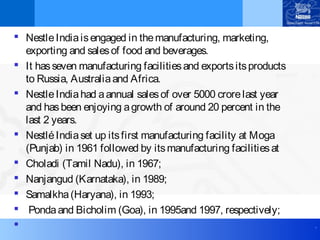
 NestleIndiaisengaged in themanufacturing, marketing,
exporting and salesof food and beverages.
 It hasseven manufacturing facilitiesand exportsitsproducts
to Russia, Australiaand Africa.
 NestleIndiahad aannual salesof over 5000 crorelast year
and hasbeen enjoying agrowth of around 20 percent in the
last 2 years.
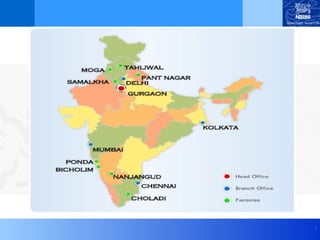
 NestléIndiaset up itsfirst manufacturing facility at Moga
(Punjab) in 1961 followed by itsmanufacturing facilitiesat
 Choladi (Tamil Nadu), in 1967;
 Nanjangud (Karnataka), in 1989;
 Samalkha(Haryana), in 1993;
 Pondaand Bicholim (Goa), in 1995and 1997, respectively;

.
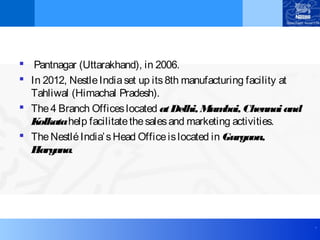
 Pantnagar (Uttarakhand), in 2006.
 In 2012, NestleIndiaset up its8th manufacturing facility at
Tahliwal (Himachal Pradesh). 
 The4 Branch Officeslocated atDelhi, Mumbai, Chennaiand
Kolkatahelp facilitatethesalesand marketing activities.
 TheNestléIndia’sHead Officeislocated in Gurgaon,
Haryana.
.
.
Board of Directors
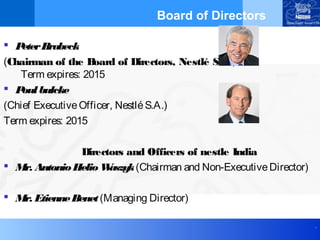
 PeterBrabeck
(Chairman of the Board of Directors, Nestlé S.A.)
Term expires: 2015
 Poulbulcke
(Chief ExecutiveOfficer, NestléS.A.)
Term expires: 2015
Directors and Officers of nestle India
 Mr. AntonioHelioWaszyk(Chairman and Non-ExecutiveDirector)
 Mr. EtienneBenet(Managing Director)
.
History
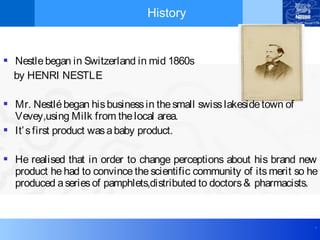
 Nestlebegan in Switzerland in mid 1860s
by HENRI NESTLE
 Mr. Nestlébegan hisbusinessin thesmall swisslakesidetown of
Vevey,using Milk from thelocal area.
 It’sfirst product wasababy product.
 He realised that in order to change perceptions about his brand new
product he had to convince the scientific community of its merit so he
produced aseriesof pamphlets,distributed to doctors& pharmacists.
.
 Mr. Nestlerecognised theimportanceof branding from thevery
beginning.
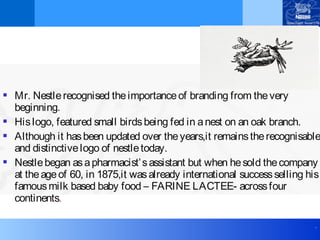
 Hislogo, featured small birdsbeing fed in anest on an oak branch.
 Although it hasbeen updated over theyears,it remainstherecognisable
and distinctivelogo of nestletoday.
 Nestlebegan asapharmacist’sassistant but when hesold thecompany
at theageof 60, in 1875,it wasalready international successselling his
famousmilk based baby food – FARINE LACTEE- acrossfour
continents.
.
 In 1905 it merged with itsbiggest competitor anglo-swiss
condensed milk company.
 Nescafewasdeveloped in 1930 and it becomeabeveragefor
theAmerican serving in Europeand Asia.
 Nestlewasthefirst to expand into chocolateactivity.
 Nestleistheworld’sbiggest food and beveragecompany.
.
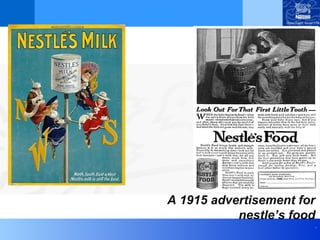
A 1915 advertisement for
nestle’s food
.
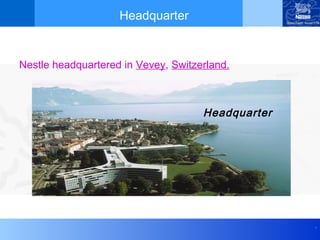
Headquarter
Nestle headquartered in Vevey, Switzerland.
Headquarter
.
MISSION
 Nestleisdedicated to providing thebest foodsto people
throughout their day, throughout their lives, throughout the
world
 Nestlecontributesto your well being and enhancesyour
quality of life
VISION
 To betheleading food and beveragecompany in theworld
providing customerswith healthy food at affordableprices
.
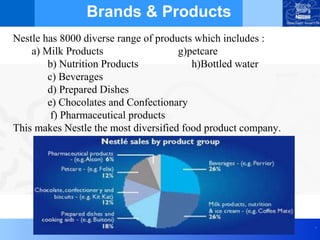
Brands & Products
Nestle has 8000 diverse range of products which includes :
a) Milk Products g)petcare
b) Nutrition Products h)Bottled water
c) Beverages
d) Prepared Dishes
e) Chocolates and Confectionary
f) Pharmaceutical products
This makes Nestle the most diversified food product company.
.
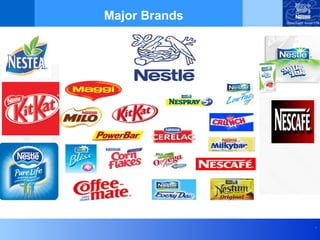
Major Brands
.
Nestlé Ad Campaigns
NESTLÉ MUNCH Ad by Virat Kohli as Balakrishnan Vali
.
Funny squirrel- Nestle KIT- KAT Ad Break Banta
Hai
.
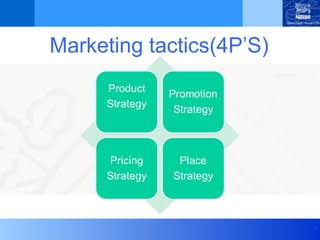
Marketing tactics(4P’S)
.
Product strategy
 No matter how effectivethepromotion & packaging,afirm will find
avery difficult to market aproduct which failsto satisfy a
consumer’sneed.
 Example-: “kit-kat”wasintroducetwo products likefour finger
chocolatebar, it’ssalewasat corner shops& newsagent, but two
finger sold in supermarket.
Promotion strategy
 Nestle use Television Commercial & poster.
 Example:- kit-kat offer included free bar in the multibar family
packs & instant win deal with burger king in 1996..
.
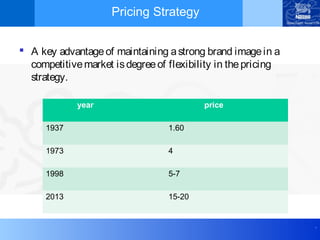
Pricing Strategy
 A key advantageof maintaining astrong brand imagein a
competitivemarket isdegreeof flexibility in thepricing
strategy.
year price
1937 1.60
1973 4
1998 5-7
2013 15-20
.
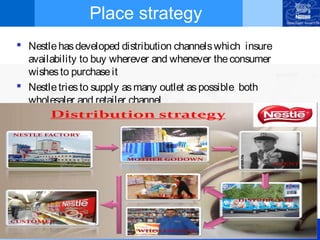
Place strategy
 Nestlehasdeveloped distribution channelswhich insure
availability to buy wherever and whenever theconsumer
wishesto purchaseit
 Nestletriesto supply asmany outlet aspossible both
wholesaler and retailer channel
.
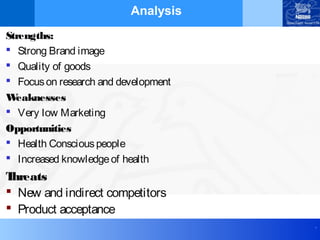
Analysis
Strengths:
 Strong Brand image
 Quality of goods
 Focuson research and development
Weaknesses
 Very low Marketing
Opportunities
 Health Consciouspeople
 Increased knowledgeof health
Threats
 New and indirect competitors
 Product acceptance
.
.

Brand,nestle

  • 1.
    . By:- Bapi kumar das, PranavAnand, Vivek krishnan
  • 2.
  • 3.
    . Table Of Contents Introduction  History  Mission & vision  Brands & products  Major brands  Ad & Campaigns  Marketing Tactics  Swat analysis  Conclusion
  • 4.
    . INTRODUCTION  “Nestlé” isaSwiss-Germanword which means“LittleNest” which is itstrademark  Today, Nestléistheworld'slargest and most diversified food company.  It hasaround 2,50,000 employees, 500 factoriesand 8000 rangeof productsacrosstheglobe.  It isoneof themain shareholdersof L'Oreal, theworldslargest cosmeticscompany.  Nestlé'srelationship with Indiadatesback to 1912, when it began trading asTheNestléAnglo-SwissCondensed Milk Company (Export) Limited, importing and selling finished productsin theIndian market.
  • 5.
    .  NestleIndiaisengaged inthemanufacturing, marketing, exporting and salesof food and beverages.  It hasseven manufacturing facilitiesand exportsitsproducts to Russia, Australiaand Africa.  NestleIndiahad aannual salesof over 5000 crorelast year and hasbeen enjoying agrowth of around 20 percent in the last 2 years.  NestléIndiaset up itsfirst manufacturing facility at Moga (Punjab) in 1961 followed by itsmanufacturing facilitiesat  Choladi (Tamil Nadu), in 1967;  Nanjangud (Karnataka), in 1989;  Samalkha(Haryana), in 1993;  Pondaand Bicholim (Goa), in 1995and 1997, respectively; 
  • 6.
    .  Pantnagar (Uttarakhand),in 2006.  In 2012, NestleIndiaset up its8th manufacturing facility at Tahliwal (Himachal Pradesh).   The4 Branch Officeslocated atDelhi, Mumbai, Chennaiand Kolkatahelp facilitatethesalesand marketing activities.  TheNestléIndia’sHead Officeislocated in Gurgaon, Haryana.
  • 7.
  • 8.
    . Board of Directors PeterBrabeck (Chairman of the Board of Directors, Nestlé S.A.) Term expires: 2015  Poulbulcke (Chief ExecutiveOfficer, NestléS.A.) Term expires: 2015 Directors and Officers of nestle India  Mr. AntonioHelioWaszyk(Chairman and Non-ExecutiveDirector)  Mr. EtienneBenet(Managing Director)
  • 9.
    . History  Nestlebegan inSwitzerland in mid 1860s by HENRI NESTLE  Mr. Nestlébegan hisbusinessin thesmall swisslakesidetown of Vevey,using Milk from thelocal area.  It’sfirst product wasababy product.  He realised that in order to change perceptions about his brand new product he had to convince the scientific community of its merit so he produced aseriesof pamphlets,distributed to doctors& pharmacists.
  • 10.
    .  Mr. Nestlerecognisedtheimportanceof branding from thevery beginning.  Hislogo, featured small birdsbeing fed in anest on an oak branch.  Although it hasbeen updated over theyears,it remainstherecognisable and distinctivelogo of nestletoday.  Nestlebegan asapharmacist’sassistant but when hesold thecompany at theageof 60, in 1875,it wasalready international successselling his famousmilk based baby food – FARINE LACTEE- acrossfour continents.
  • 11.
    .  In 1905it merged with itsbiggest competitor anglo-swiss condensed milk company.  Nescafewasdeveloped in 1930 and it becomeabeveragefor theAmerican serving in Europeand Asia.  Nestlewasthefirst to expand into chocolateactivity.  Nestleistheworld’sbiggest food and beveragecompany.
  • 12.
    . A 1915 advertisementfor nestle’s food
  • 13.
    . Headquarter Nestle headquartered inVevey, Switzerland. Headquarter
  • 14.
    . MISSION  Nestleisdedicated toproviding thebest foodsto people throughout their day, throughout their lives, throughout the world  Nestlecontributesto your well being and enhancesyour quality of life VISION  To betheleading food and beveragecompany in theworld providing customerswith healthy food at affordableprices
  • 15.
    . Brands & Products Nestlehas 8000 diverse range of products which includes : a) Milk Products g)petcare b) Nutrition Products h)Bottled water c) Beverages d) Prepared Dishes e) Chocolates and Confectionary f) Pharmaceutical products This makes Nestle the most diversified food product company.
  • 16.
  • 17.
    . Nestlé Ad Campaigns NESTLÉMUNCH Ad by Virat Kohli as Balakrishnan Vali
  • 18.
    . Funny squirrel- NestleKIT- KAT Ad Break Banta Hai
  • 19.
  • 20.
    . Product strategy  Nomatter how effectivethepromotion & packaging,afirm will find avery difficult to market aproduct which failsto satisfy a consumer’sneed.  Example-: “kit-kat”wasintroducetwo products likefour finger chocolatebar, it’ssalewasat corner shops& newsagent, but two finger sold in supermarket. Promotion strategy  Nestle use Television Commercial & poster.  Example:- kit-kat offer included free bar in the multibar family packs & instant win deal with burger king in 1996..
  • 21.
    . Pricing Strategy  Akey advantageof maintaining astrong brand imagein a competitivemarket isdegreeof flexibility in thepricing strategy. year price 1937 1.60 1973 4 1998 5-7 2013 15-20
  • 22.
    . Place strategy  Nestlehasdevelopeddistribution channelswhich insure availability to buy wherever and whenever theconsumer wishesto purchaseit  Nestletriesto supply asmany outlet aspossible both wholesaler and retailer channel
  • 23.
    . Analysis Strengths:  Strong Brandimage  Quality of goods  Focuson research and development Weaknesses  Very low Marketing Opportunities  Health Consciouspeople  Increased knowledgeof health Threats  New and indirect competitors  Product acceptance
  • 24.
  • 25.