DIGITAL 
MULTIMETER(DMM) 
By PresenterMedia.com
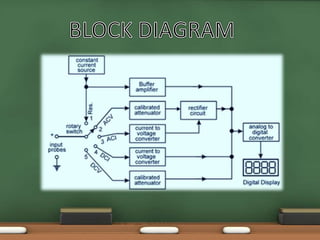
What is a Digital Multimeter? 
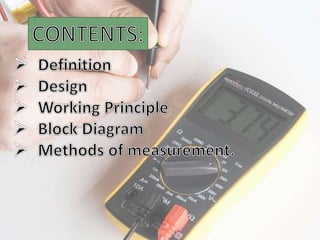
It is a common & important laboratory instrument. It 
is used to measure AC/DC voltage, AC/DC current and 
resistance with digital display. It gives digital output, 
which is very accurate. As the name suggests, multimeter 
are those measuring instruments which can be used to 
calculate multiple circuit characteristics.
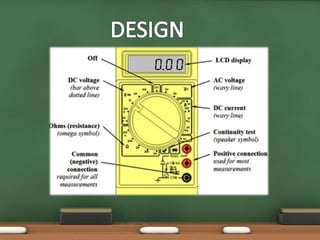
A multimeter has three parts: 
• Display 
• Selection Knob 
• Ports
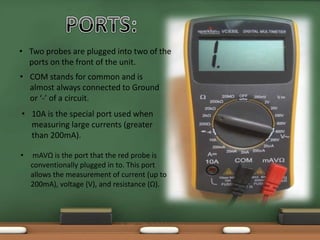
• Two probes are plugged into two of the 
ports on the front of the unit. 
• COM stands for common and is 
almost always connected to Ground 
or ‘-’ of a circuit. 
• 10A is the special port used when 
measuring large currents (greater 
than 200mA). 
• mAVΩ is the port that the red probe is 
conventionally plugged in to. This port 
allows the measurement of current (up to 
200mA), voltage (V), and resistance (Ω).
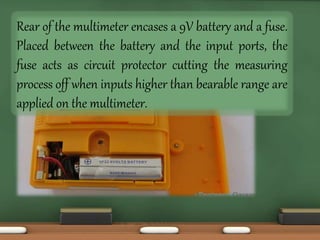
Rear of the multimeter encases a 9V battery and a fuse. 
Placed between the battery and the input ports, the 
fuse acts as circuit protector cutting the measuring 
process off when inputs higher than bearable range are 
applied on the multimeter.
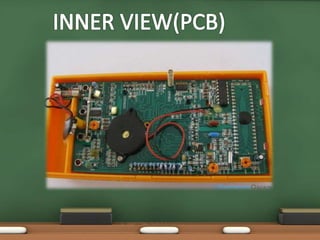
The PCB contains an assortment of various 
components including various types of resistors, 
capacitors, diodes and integrated circuits. Also, it 
hosts the battery, crystal oscillator, PTC, LCD and 
the buzzer which tests the continuity of device 
under test .
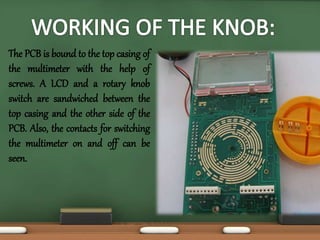
The PCB is bound to the top casing of 
the multimeter with the help of 
screws. A LCD and a rotary knob 
switch are sandwiched between the 
top casing and the other side of the 
PCB. Also, the contacts for switching 
the multimeter on and off can be 
seen.
• Some multimeter employ the rotary switch to handle the 
switching ON and OFF options while some require a slider 
switch. 
• The selection knob allows the user to set the multimeter to 
read different things such as milliamps (mA) of current, 
voltage (V) and resistance (Ω).
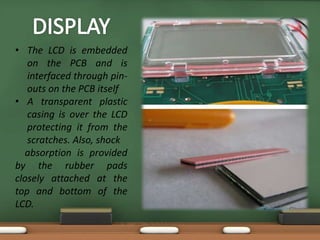
• The LCD is embedded 
on the PCB and is 
interfaced through pin-outs 
on the PCB itself 
• A transparent plastic 
casing is over the LCD 
protecting it from the 
scratches. Also, shock 
absorption is provided 
by the rubber pads 
closely attached at the 
top and bottom of the 
LCD.
• The display usually has four digits and the 
ability to display a negative sign. A few 
multimeter have illuminated displays for better 
viewing in low light situations.
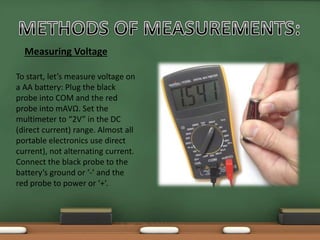
Measuring Voltage 
To start, let’s measure voltage on 
a AA battery: Plug the black 
probe into COM and the red 
probe into mAVΩ. Set the 
multimeter to “2V” in the DC 
(direct current) range. Almost all 
portable electronics use direct 
current), not alternating current. 
Connect the black probe to the 
battery’s ground or ‘-’ and the 
red probe to power or ‘+’.
Digital multimeters

Digital multimeters

  • 1.
    DIGITAL MULTIMETER(DMM) ByPresenterMedia.com
  • 3.
    What is aDigital Multimeter? It is a common & important laboratory instrument. It is used to measure AC/DC voltage, AC/DC current and resistance with digital display. It gives digital output, which is very accurate. As the name suggests, multimeter are those measuring instruments which can be used to calculate multiple circuit characteristics.
  • 4.
    A multimeter hasthree parts: • Display • Selection Knob • Ports
  • 6.
    • Two probesare plugged into two of the ports on the front of the unit. • COM stands for common and is almost always connected to Ground or ‘-’ of a circuit. • 10A is the special port used when measuring large currents (greater than 200mA). • mAVΩ is the port that the red probe is conventionally plugged in to. This port allows the measurement of current (up to 200mA), voltage (V), and resistance (Ω).
  • 7.
    Rear of themultimeter encases a 9V battery and a fuse. Placed between the battery and the input ports, the fuse acts as circuit protector cutting the measuring process off when inputs higher than bearable range are applied on the multimeter.
  • 9.
    The PCB containsan assortment of various components including various types of resistors, capacitors, diodes and integrated circuits. Also, it hosts the battery, crystal oscillator, PTC, LCD and the buzzer which tests the continuity of device under test .
  • 10.
    The PCB isbound to the top casing of the multimeter with the help of screws. A LCD and a rotary knob switch are sandwiched between the top casing and the other side of the PCB. Also, the contacts for switching the multimeter on and off can be seen.
  • 11.
    • Some multimeteremploy the rotary switch to handle the switching ON and OFF options while some require a slider switch. • The selection knob allows the user to set the multimeter to read different things such as milliamps (mA) of current, voltage (V) and resistance (Ω).
  • 12.
    • The LCDis embedded on the PCB and is interfaced through pin-outs on the PCB itself • A transparent plastic casing is over the LCD protecting it from the scratches. Also, shock absorption is provided by the rubber pads closely attached at the top and bottom of the LCD.
  • 13.
    • The displayusually has four digits and the ability to display a negative sign. A few multimeter have illuminated displays for better viewing in low light situations.
  • 15.
    Measuring Voltage Tostart, let’s measure voltage on a AA battery: Plug the black probe into COM and the red probe into mAVΩ. Set the multimeter to “2V” in the DC (direct current) range. Almost all portable electronics use direct current), not alternating current. Connect the black probe to the battery’s ground or ‘-’ and the red probe to power or ‘+’.