NESTLEStrategic ManagementPresented to:PARAKHIYA VASANT
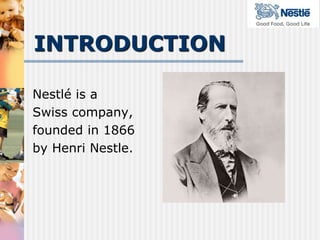
INTRODUCTIONNestlé is aSwiss company,founded in 1866by Henri Nestle.
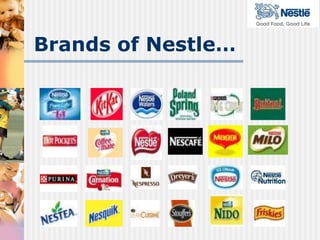
Brands of Nestle…
Did you know …Nestlé markets its products in 130 countries across the worldNestlé manufactures around 10000 different products and employs some 250000 peopleNestlé sells over a billion products everyday
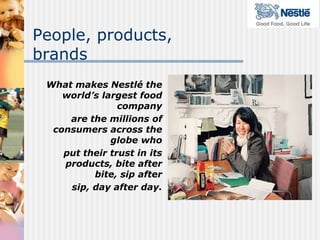
People, products,brandsWhat makes Nestlé the world’s largest food companyare the millions of consumers across the globe whoput their trust in its products, bite after bite, sip aftersip, day after day.
Nestle Indiaa subsidiary of Nestle S.A. of SwitzerlandIncepted in 1962manufactures a variety of food products such as infant food, milk products, beverages, prepared dishes & cooking aids, and chocolates & confectionaryPresently the world's largest and most diversified food company
VISIONBeing the best in everything they touch & handle
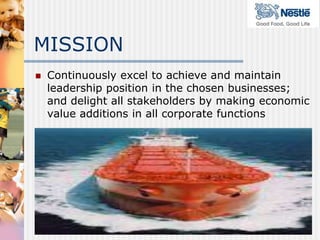
Continuously excel to achieve and maintain leadership position in the chosen businesses; and delight all stakeholders by making economic value additions in all corporate functionsMISSION
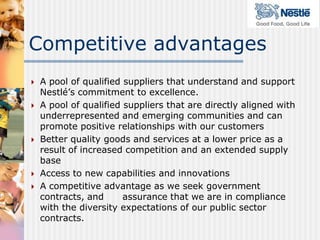
 Competitive advantagesA pool of qualified suppliers that understand and support Nestlé’s commitment to excellence.
A pool of qualified suppliers that are directly aligned with underrepresented and emerging communities and can promote positive relationships with our customers
Better quality goods and services at a lower price as a result of increased competition and an extended supply base
Access to new capabilities and innovations
A competitive advantage as we seek government contracts, and      assurance that we are in compliance with the diversity expectations of our public sector contracts.Major CompetitorsAMULCADBURYBRU
The Internal Assessment
Nestlé describes itself as a food, nutrition, health, and wellness company. Recently they created Nestlé Nutrition, a global business organization designed to strengthen the focus on their core nutrition business. They believe strengthening their leadership in this market is the key element of their corporate strategy.
In order to reinforce their competitive advantage in this area, Nestlé created Nestlé Nutrition as an autonomous global business unit within the organization, and charged it with the operational and profit and loss responsibility for the claim-based business of Infant Nutrition, HealthCare Nutrition, and Performance Nutrition.
The Corporate Wellness Unit       was designed to integrate nutritional value-added in their food and beverage businesses. This unit is responsible for coordinating horizontal, cross-business projects that address current customer concerns as well as anticipating future consumer trends.
Nestlé’s competitive strategies are associated mainly with foreign direct investment in dairy and other food businesses. Nestlé aims to balance sales between low risk but low growth countries of the developed world and high risk and potentially high growth markets of Africa and Latin America.
When operating in a developed market, Nestlé strives to grow and gain economies of scale through foreign direct investment in big companies.In the developing markets, Nestlé grows by manipulating ingredients or processing technology for local conditions, and employ the appropriate brand.
Another strategy that has been successful for Nestlé involves striking strategic partnerships with other large companies. In the early 1990s, Nestlé entered into an alliance with Coca Cola in ready-to-drink teas and coffees in order to benefit from Coca Cola’s worldwide bottling system and expertise in prepared beverages.
In Asia, Nestlé’s strategy hasbeen to acquire local companies in order to form a group of autonomous regional managers who know more about the culture of the local markets than Americans or Europeans.Nestlé’s strong cash flow and comfortable debt-equity ratio leave it with ample muscle for takeovers.
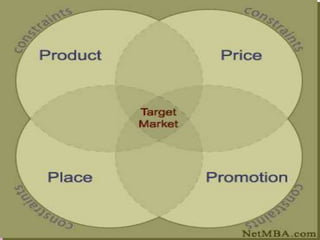
MarketingTarget Market  Male and Female; Have many brands and products to meat the taste of  each type of consumers.Have high allocation of advertising budget for endorser contract, TVC, print ads, and sponsorship activities. Have top endorsers who have a good image in the soap industry.
DistributionNestle has worldwide distribution lineNestle has good distribution line to retailerNestle has new ordering system, named Futures Ordering Program
STRENGTHSstrong support from its parent companythe world’s largest processed food and beverage companya presence in almost every countrystrong brands like Nescafe, Maggi and Cerelaccontinuously introducing new products for its Indian patrons on a frequent basis, thus expanding its product offerings
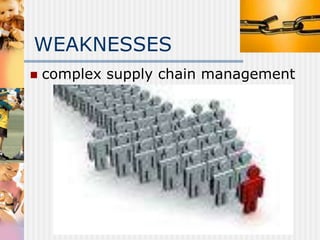
complex supply chain managementWEAKNESSES

Nestle

  • 1.
  • 2.
    INTRODUCTIONNestlé is aSwisscompany,founded in 1866by Henri Nestle.
  • 3.
  • 4.
    Did you know…Nestlé markets its products in 130 countries across the worldNestlé manufactures around 10000 different products and employs some 250000 peopleNestlé sells over a billion products everyday
  • 5.
    People, products,brandsWhat makesNestlé the world’s largest food companyare the millions of consumers across the globe whoput their trust in its products, bite after bite, sip aftersip, day after day.
  • 6.
    Nestle Indiaa subsidiaryof Nestle S.A. of SwitzerlandIncepted in 1962manufactures a variety of food products such as infant food, milk products, beverages, prepared dishes & cooking aids, and chocolates & confectionaryPresently the world's largest and most diversified food company
  • 7.
    VISIONBeing the bestin everything they touch & handle
  • 8.
    Continuously excel toachieve and maintain leadership position in the chosen businesses; and delight all stakeholders by making economic value additions in all corporate functionsMISSION
  • 9.
    Competitive advantagesApool of qualified suppliers that understand and support Nestlé’s commitment to excellence.
  • 10.
    A pool ofqualified suppliers that are directly aligned with underrepresented and emerging communities and can promote positive relationships with our customers
  • 11.
    Better quality goodsand services at a lower price as a result of increased competition and an extended supply base
  • 12.
    Access to newcapabilities and innovations
  • 13.
    A competitive advantageas we seek government contracts, and assurance that we are in compliance with the diversity expectations of our public sector contracts.Major CompetitorsAMULCADBURYBRU
  • 14.
  • 16.
    Nestlé describes itselfas a food, nutrition, health, and wellness company. Recently they created Nestlé Nutrition, a global business organization designed to strengthen the focus on their core nutrition business. They believe strengthening their leadership in this market is the key element of their corporate strategy.
  • 17.
    In order toreinforce their competitive advantage in this area, Nestlé created Nestlé Nutrition as an autonomous global business unit within the organization, and charged it with the operational and profit and loss responsibility for the claim-based business of Infant Nutrition, HealthCare Nutrition, and Performance Nutrition.
  • 18.
    The Corporate WellnessUnit was designed to integrate nutritional value-added in their food and beverage businesses. This unit is responsible for coordinating horizontal, cross-business projects that address current customer concerns as well as anticipating future consumer trends.
  • 19.
    Nestlé’s competitive strategiesare associated mainly with foreign direct investment in dairy and other food businesses. Nestlé aims to balance sales between low risk but low growth countries of the developed world and high risk and potentially high growth markets of Africa and Latin America.
  • 20.
    When operating ina developed market, Nestlé strives to grow and gain economies of scale through foreign direct investment in big companies.In the developing markets, Nestlé grows by manipulating ingredients or processing technology for local conditions, and employ the appropriate brand.
  • 21.
    Another strategy thathas been successful for Nestlé involves striking strategic partnerships with other large companies. In the early 1990s, Nestlé entered into an alliance with Coca Cola in ready-to-drink teas and coffees in order to benefit from Coca Cola’s worldwide bottling system and expertise in prepared beverages.
  • 22.
    In Asia, Nestlé’sstrategy hasbeen to acquire local companies in order to form a group of autonomous regional managers who know more about the culture of the local markets than Americans or Europeans.Nestlé’s strong cash flow and comfortable debt-equity ratio leave it with ample muscle for takeovers.
  • 23.
    MarketingTarget Market Male and Female; Have many brands and products to meat the taste of each type of consumers.Have high allocation of advertising budget for endorser contract, TVC, print ads, and sponsorship activities. Have top endorsers who have a good image in the soap industry.
  • 24.
    DistributionNestle has worldwidedistribution lineNestle has good distribution line to retailerNestle has new ordering system, named Futures Ordering Program
  • 26.
    STRENGTHSstrong support fromits parent companythe world’s largest processed food and beverage companya presence in almost every countrystrong brands like Nescafe, Maggi and Cerelaccontinuously introducing new products for its Indian patrons on a frequent basis, thus expanding its product offerings
  • 27.
    complex supply chainmanagementWEAKNESSES