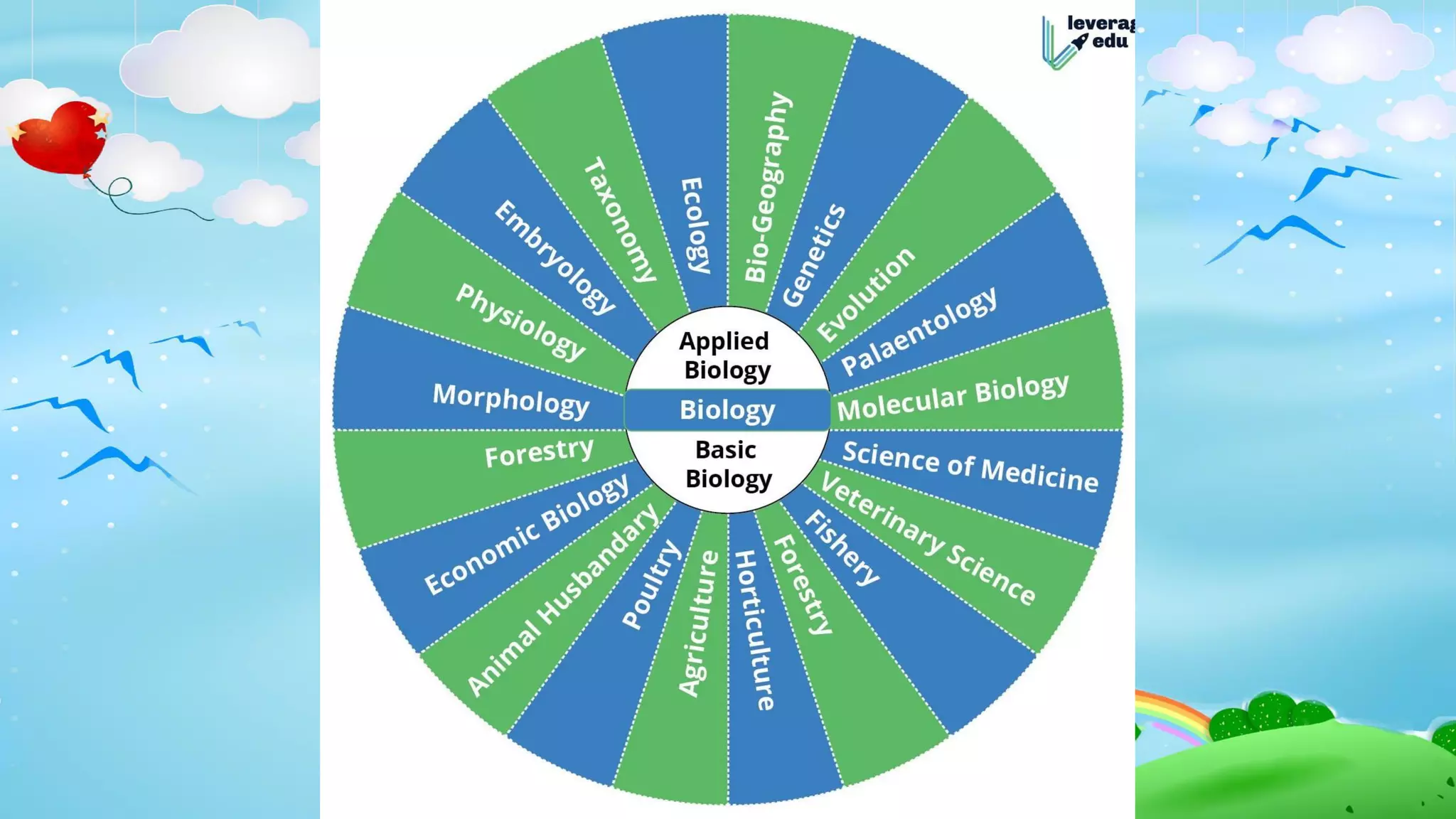
Main
Branches of
Biology
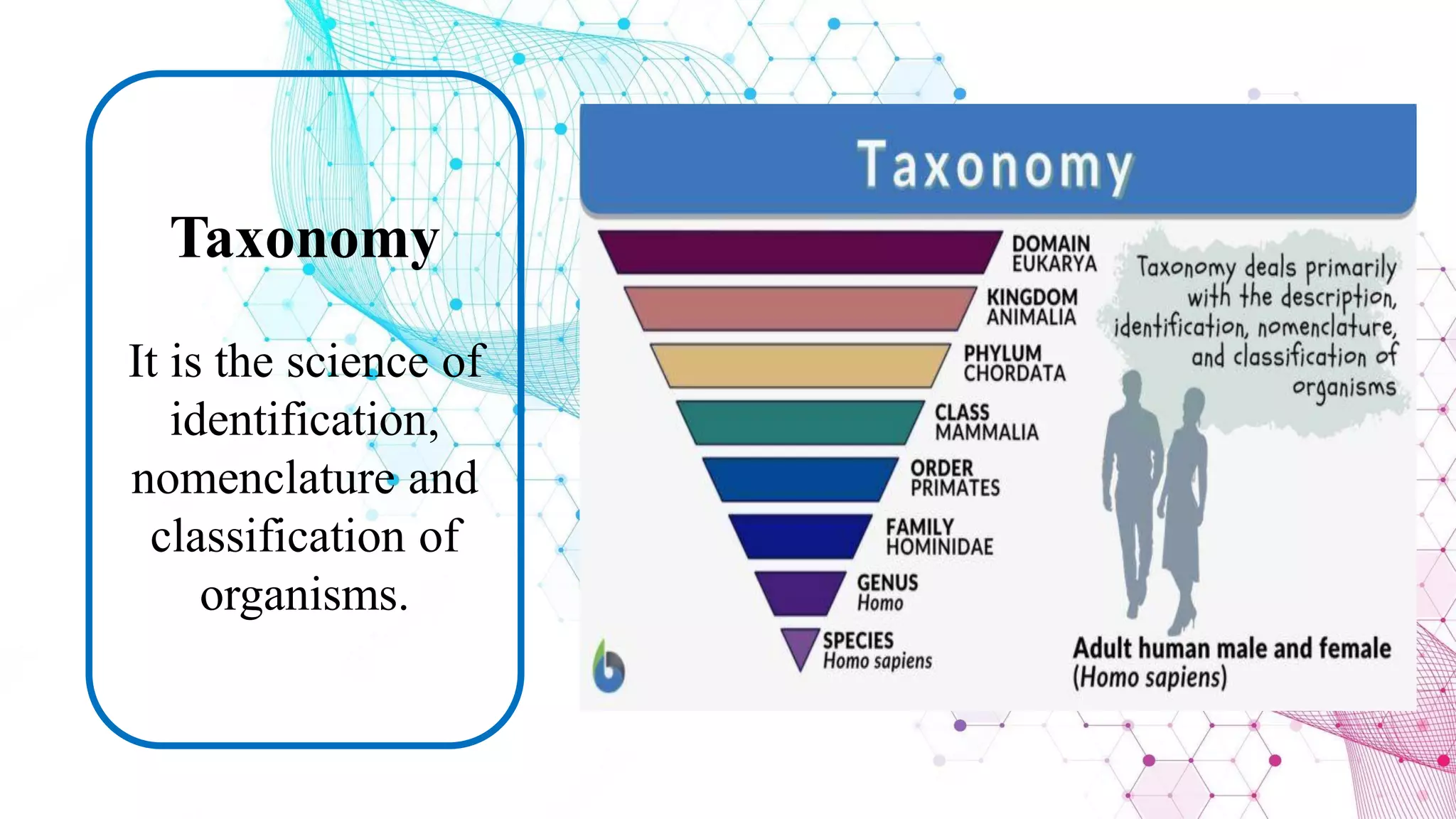
Taxonomy
It is the science of
identification,
nomenclature and
classification of
organisms.
Morphology
It is the study of
external form, size,
shape, colour,
structure and
relative position of
various living organ
of living beings.
Anatomy
It is the study of
internal structure
which can be
observed with
unaided eye after
dissection.
Histology
It is the study of
tissue organization
and structure as
observed through
light microscope.
Cytology
It is the study of
form and structure
of cells including
the behavior of
nucleus and other
organelles.
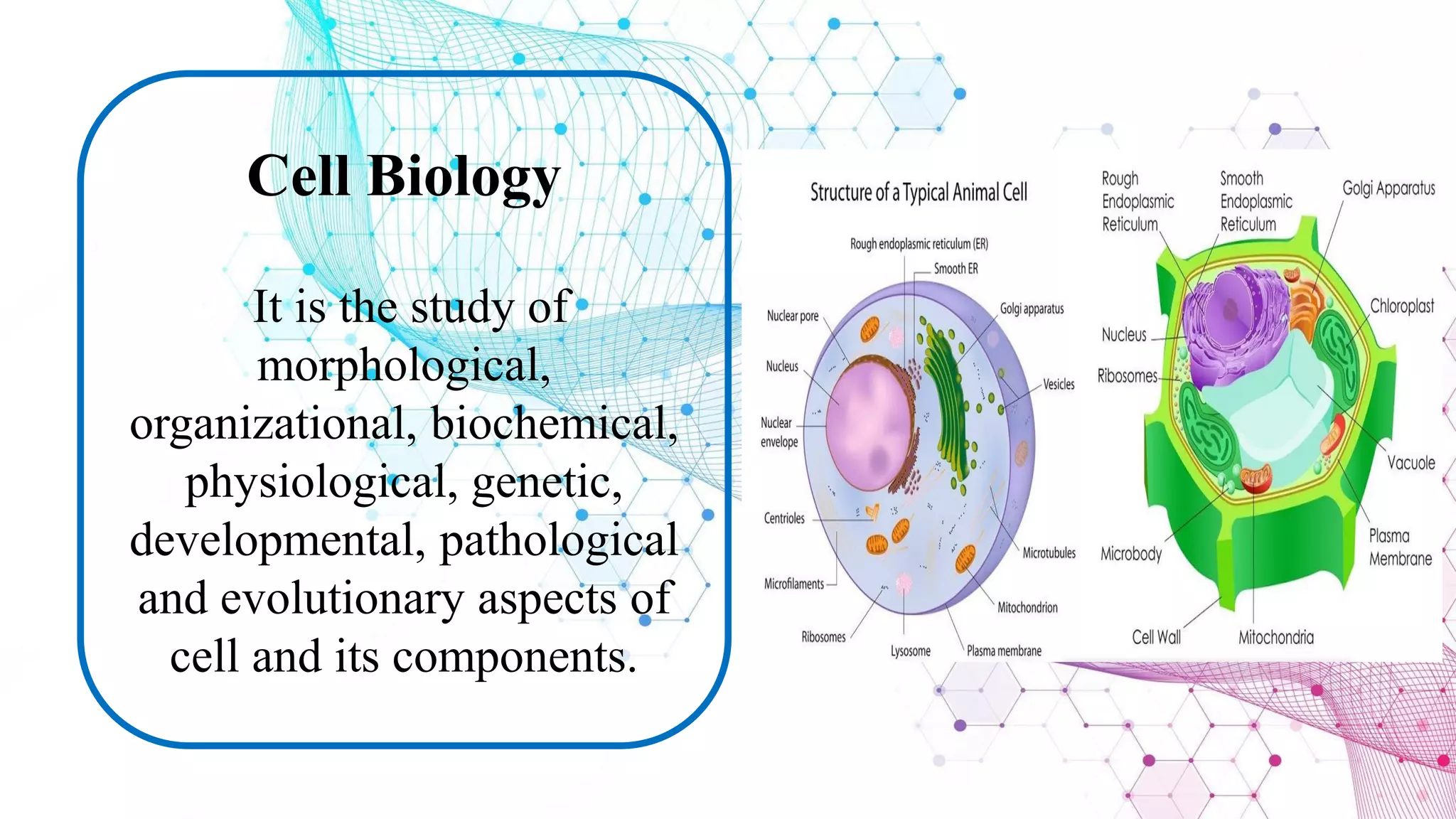
Cell Biology
It is the study of
morphological,
organizational, biochemical,
physiological, genetic,
developmental, pathological
and evolutionary aspects of
cell and its components.
Molecular Biology
It is the study of the
nature,
physicochemical
organization, synthesis
working and
interaction of
bio-molecules that
bring about and control
various activities of the
protoplasm.
Physiology
It is the study of
different types of
body functions and
processes.
Embryology
It is the study of
fertilization, growth,
division and
differentiation of the
zygote into embryo or
early development of
living beings before the
attainment of structure
and size of the offspring.
Ecology
It is the study of
living organisms is
relation to other
organism and their
environment.
Genetics
It is the study of
inheritance of
characters or
heredity and
variations. Heredity
is the study of
expression and
transmission of
traits from parents
to offspring.
Eugenics
It is the science
which deals
with factors related
to improvement or
impairment of race,
especially that of
human beings.
Evolution
It studies the origin
of life as well as new
types of organism
from the previous
ones by
modifications
involving genetic
changes and
adaptations.
Paleontology
It deals with the
study of fossils or
remains and
impressions of past
organisms present
in the rocks of
different ages.
Exobiology
It is the branch of
scientific inquiry
dealing with the
possibility of life
in
the outer space.
Virology
It is the study of
viruses in all their
aspects.

Branches of Biology.pdf

  • 1.
  • 3.
    Taxonomy It is thescience of identification, nomenclature and classification of organisms.
  • 4.
    Morphology It is thestudy of external form, size, shape, colour, structure and relative position of various living organ of living beings.
  • 5.
    Anatomy It is thestudy of internal structure which can be observed with unaided eye after dissection.
  • 6.
    Histology It is thestudy of tissue organization and structure as observed through light microscope.
  • 7.
    Cytology It is thestudy of form and structure of cells including the behavior of nucleus and other organelles.
  • 8.
    Cell Biology It isthe study of morphological, organizational, biochemical, physiological, genetic, developmental, pathological and evolutionary aspects of cell and its components.
  • 9.
    Molecular Biology It isthe study of the nature, physicochemical organization, synthesis working and interaction of bio-molecules that bring about and control various activities of the protoplasm.
  • 10.
    Physiology It is thestudy of different types of body functions and processes.
  • 11.
    Embryology It is thestudy of fertilization, growth, division and differentiation of the zygote into embryo or early development of living beings before the attainment of structure and size of the offspring.
  • 12.
    Ecology It is thestudy of living organisms is relation to other organism and their environment.
  • 13.
    Genetics It is thestudy of inheritance of characters or heredity and variations. Heredity is the study of expression and transmission of traits from parents to offspring.
  • 14.
    Eugenics It is thescience which deals with factors related to improvement or impairment of race, especially that of human beings.
  • 15.
    Evolution It studies theorigin of life as well as new types of organism from the previous ones by modifications involving genetic changes and adaptations.
  • 16.
    Paleontology It deals withthe study of fossils or remains and impressions of past organisms present in the rocks of different ages.
  • 17.
    Exobiology It is thebranch of scientific inquiry dealing with the possibility of life in the outer space.
  • 18.
    Virology It is thestudy of viruses in all their aspects.