The Nervous System The Brain and Behavior
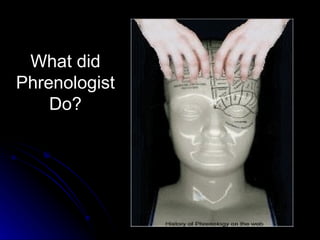
What did Phrenologist Do?
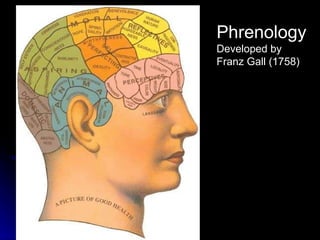
Phrenology Developed by Franz Gall (1758)
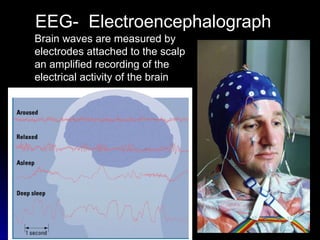
EEG-  Electroencephalograph Brain waves are measured by electrodes attached to the scalp an amplified recording of the electrical activity of the brain
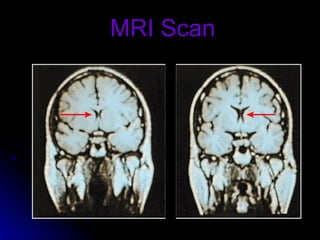
MRI Scan
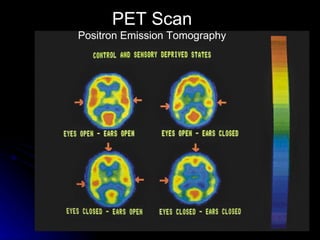
PET Scan Positron Emission Tomography
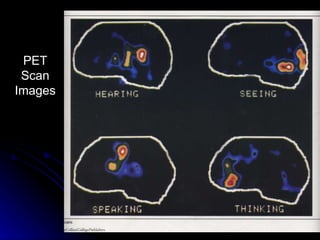
PET Scan Images


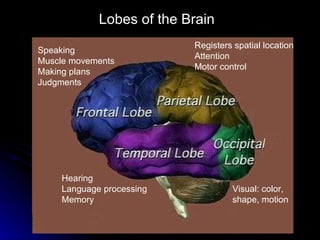
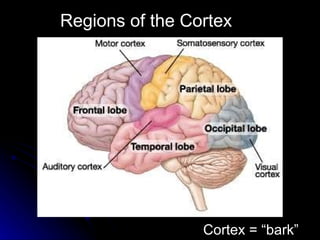
Lobes of the Brain Speaking Muscle movements Making plans Judgments Registers spatial location Attention Motor control Hearing Language processing Memory Visual: color,  shape, motion
Regions of the Cortex Cortex = “bark”
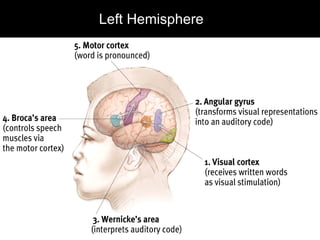
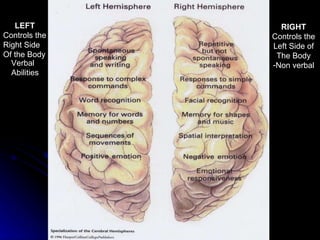
Left Hemisphere
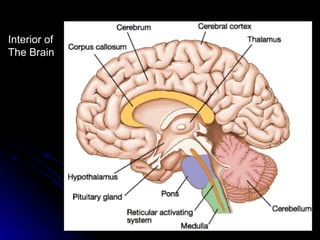
Interior of The Brain
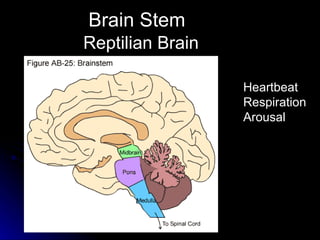
Reptilian Brain Heartbeat Respiration Arousal Brain Stem
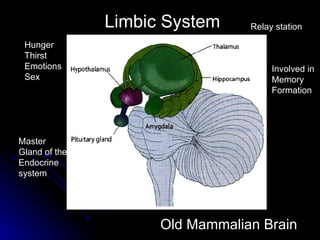
Limbic System Hunger Thirst Emotions Sex Old Mammalian Brain Master Gland of the Endocrine  system Relay station Involved in  Memory  Formation
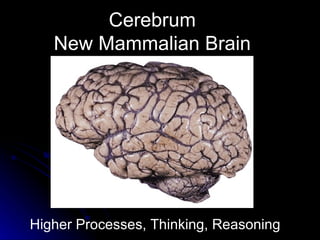
Cerebrum New Mammalian Brain Higher Processes, Thinking, Reasoning
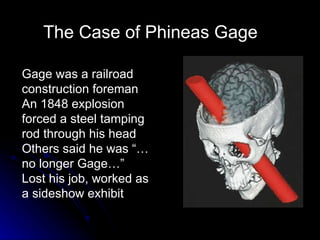
Gage was a railroad construction foreman An 1848 explosion forced a steel tamping rod through his head Others said he was “…no longer Gage…” Lost his job, worked as a sideshow exhibit The Case of Phineas Gage
 
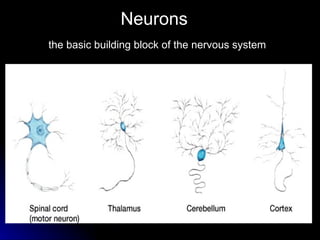
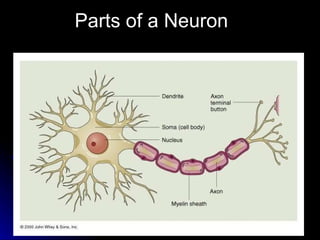
Neurons the basic building block of the nervous system
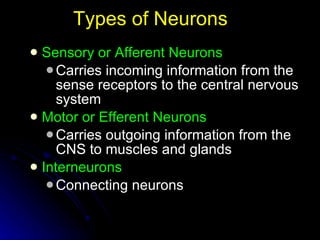
Types of Neurons Sensory or Afferent Neurons  Carries incoming information from the sense receptors to the central nervous system Motor or Efferent Neurons Carries outgoing information from the CNS to muscles and glands Interneurons  Connecting neurons
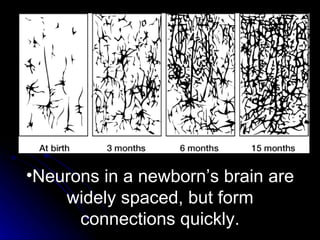
Neurons in a newborn’s brain are widely spaced, but form connections quickly.
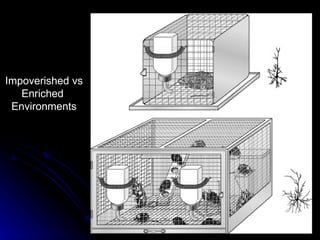
Impoverished vs Enriched  Environments
Parts of a Neuron
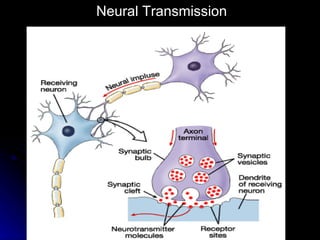
Neural Transmission
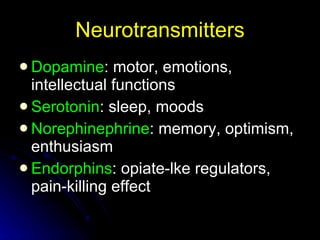
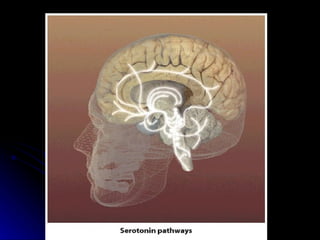
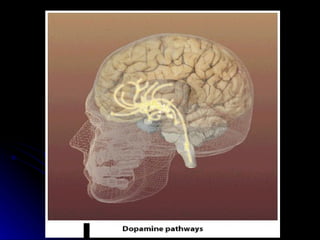
Neurotransmitters Dopamine : motor, emotions, intellectual functions Serotonin : sleep, moods Norephinephrine : memory, optimism, enthusiasm Endorphins : opiate-lke regulators, pain-killing effect
 
 
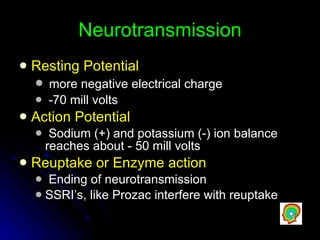
Neurotransmission Resting Potential more negative electrical charge -70 mill volts Action Potential Sodium (+) and potassium (-) ion balance reaches about - 50 mill volts Reuptake or Enzyme action Ending of neurotransmission SSRI’s, like Prozac interfere with reuptake
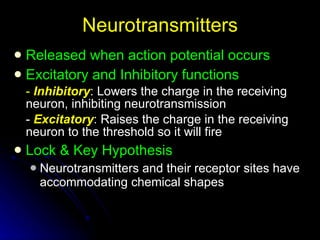
Neurotransmitters Released when action potential occurs Excitatory and Inhibitory functions -  Inhibitory : Lowers the charge in the receiving neuron, inhibiting neurotransmission -  Excitatory : Raises the charge in the receiving neuron to the threshold so it will fire Lock & Key Hypothesis Neurotransmitters and their receptor sites have accommodating chemical shapes
LEFT Controls the Right Side Of the Body RIGHT Controls the Left Side of The Body Non verbal Verbal Abilities
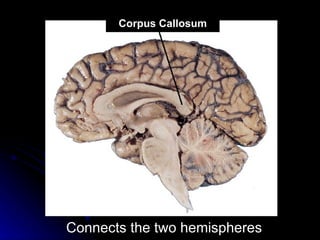
Connects the two hemispheres Corpus Callosum
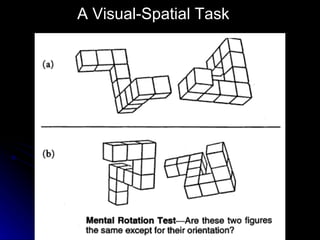
A Visual-Spatial Task
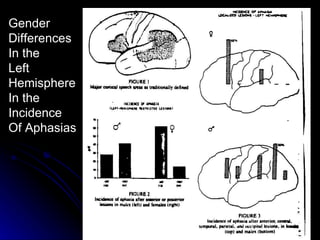
Gender Differences In the Left  Hemisphere In the  Incidence Of Aphasias
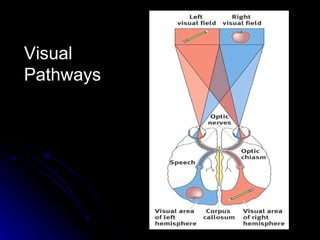
Visual  Pathways
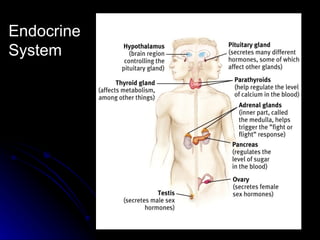
Endocrine System

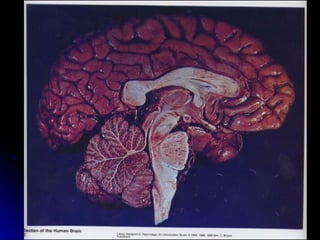
Brain Slides