
Welcome to
INTRODUCTION TO SOCIOLOGY
(SOC 211)
John Bradford, Ph.D.
What is Sociology?
• Socius (Latin) = ‘associate’ as in society;
• logy (Greek) = ‘study’ of
SOCIO-LOGY = the study of SOCIETY.
What is Sociology?
• Definition: Sociology is the scientific study of
interactions and relations among human beings.
– Sociology studies and explains how people influence one
another.
– Sociology studies and explains the intended and
unintended consequences of human interaction.
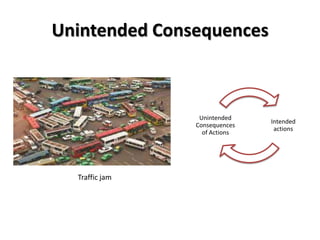
Unintended Consequences

Unintended
Consequences
of Actions

Traffic jam

Intended
actions
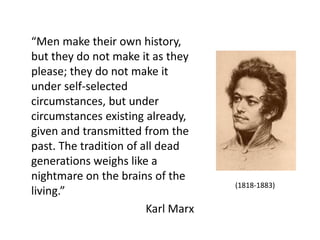
“Men make their own history,
but they do not make it as they
please; they do not make it
under self-selected
circumstances, but under
circumstances existing already,
given and transmitted from the
past. The tradition of all dead
generations weighs like a
nightmare on the brains of the
living.”
Karl Marx

(1818-1883)
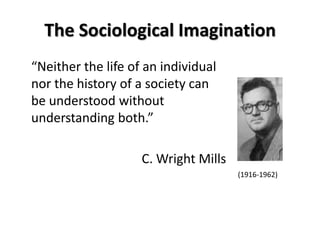
The Sociological Imagination
“Neither the life of an individual
nor the history of a society can
be understood without
understanding both.”
C. Wright Mills
(1916-1962)
What is Sociology?
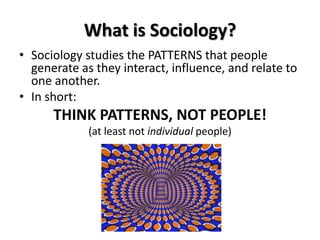
• Sociology studies the PATTERNS that people
generate as they interact, influence, and relate to
one another.
• In short:

THINK PATTERNS, NOT PEOPLE!
(at least not individual people)
HOMOPHILY
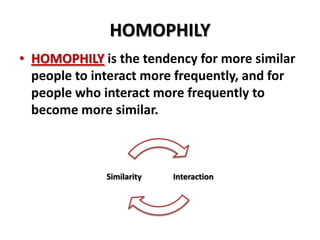
• HOMOPHILY is the tendency for more similar
people to interact more frequently, and for
people who interact more frequently to
become more similar.

Similarity

Interaction
HOMOPHILY
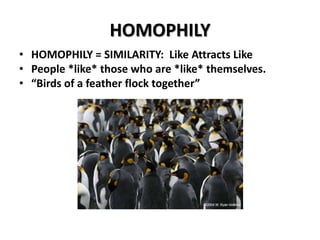
• HOMOPHILY = SIMILARITY: Like Attracts Like
• People *like* those who are *like* themselves.
• “Birds of a feather flock together”
HOMOPHILY
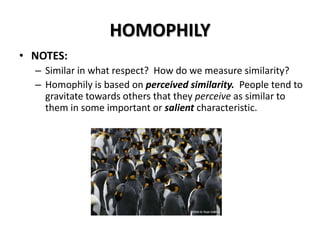
• NOTES:
– Similar in what respect? How do we measure similarity?
– Homophily is based on perceived similarity. People tend to
gravitate towards others that they perceive as similar to
them in some important or salient characteristic.
HOMOPHILY
• Examples:
– 1987 Study, only 8% of people in US have
someone of another race that they “discuss
important matters with”
– 2006 study: Interracial marriages. 1% of white
marriages, 5% of black marriages, 14% of Asian
marriages.
– Closest friend: 10% of men name a woman; 37%
of women name a man.
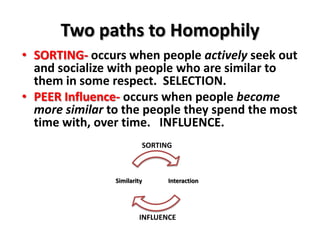
Two paths to Homophily
• SORTING- occurs when people actively seek out
and socialize with people who are similar to
them in some respect. SELECTION.
• PEER Influence- occurs when people become
more similar to the people they spend the most
time with, over time. INFLUENCE.
SORTING

Similarity

Interaction

INFLUENCE
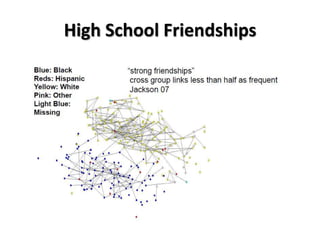
SORTING
High School Friendships
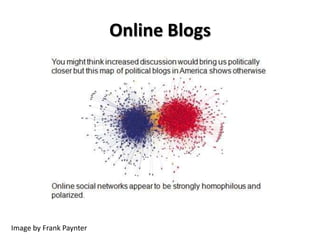
Online Blogs

Image by Frank Paynter
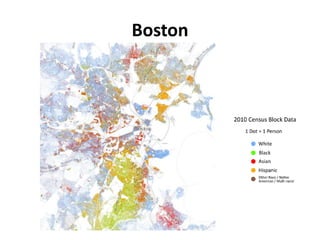
Boston
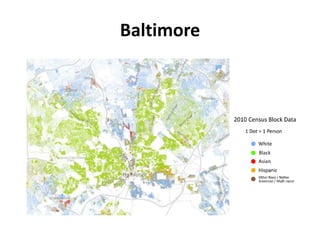
Baltimore
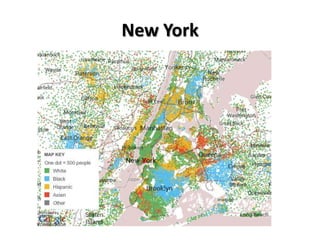
New York
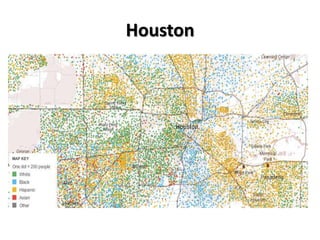
Houston
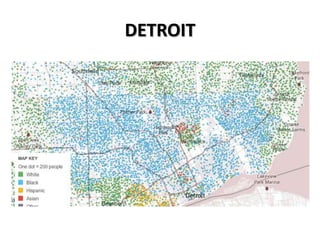
DETROIT
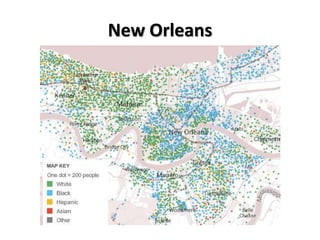
New Orleans
Unintended Sorting?
• Neighborhood Sorting:
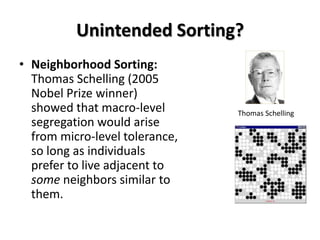
Thomas Schelling (2005
Nobel Prize winner)
showed that macro-level
segregation would arise
from micro-level tolerance,
so long as individuals
prefer to live adjacent to
some neighbors similar to
them.

Thomas Schelling
Unintended Sorting?
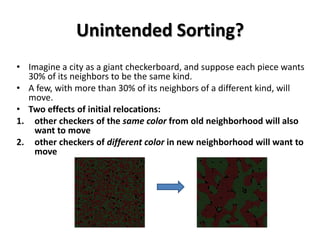
• Imagine a city as a giant checkerboard, and suppose each piece wants
30% of its neighbors to be the same kind.
• A few, with more than 30% of its neighbors of a different kind, will
move.
• Two effects of initial relocations:
1. other checkers of the same color from old neighborhood will also
want to move
2. other checkers of different color in new neighborhood will want to
move
PEER INFLUENCE
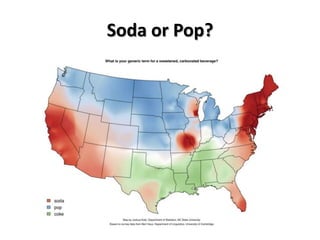
Soda or Pop?
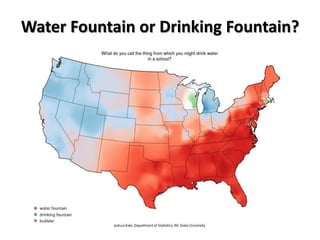
Water Fountain or Drinking Fountain?
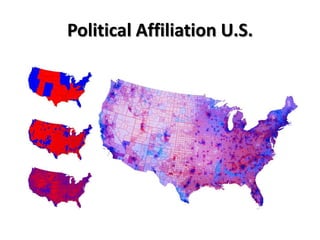
Political Affiliation U.S.
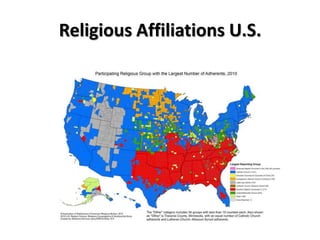
Religious Affiliations U.S.
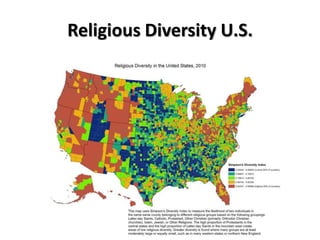
Religious Diversity U.S.
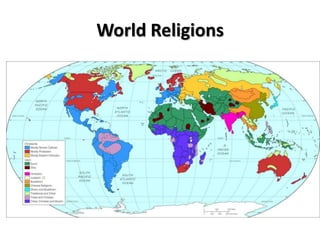
World Religions
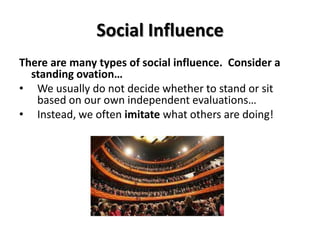
Social Influence
There are many types of social influence. Consider a
standing ovation…
• We usually do not decide whether to stand or sit
based on our own independent evaluations…
• Instead, we often imitate what others are doing!
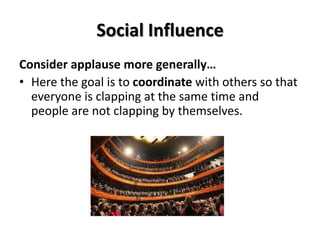
Social Influence
Consider applause more generally…
• Here the goal is to coordinate with others so that
everyone is clapping at the same time and
people are not clapping by themselves.

Bradford sp 2014 week1 2 sorting peer influence

  • 1.
    Welcome to INTRODUCTION TOSOCIOLOGY (SOC 211) John Bradford, Ph.D.
  • 2.
    What is Sociology? •Socius (Latin) = ‘associate’ as in society; • logy (Greek) = ‘study’ of SOCIO-LOGY = the study of SOCIETY.
  • 3.
    What is Sociology? •Definition: Sociology is the scientific study of interactions and relations among human beings. – Sociology studies and explains how people influence one another. – Sociology studies and explains the intended and unintended consequences of human interaction.
  • 4.
  • 5.
    “Men make theirown history, but they do not make it as they please; they do not make it under self-selected circumstances, but under circumstances existing already, given and transmitted from the past. The tradition of all dead generations weighs like a nightmare on the brains of the living.” Karl Marx (1818-1883)
  • 6.
    The Sociological Imagination “Neitherthe life of an individual nor the history of a society can be understood without understanding both.” C. Wright Mills (1916-1962)
  • 7.
    What is Sociology? •Sociology studies the PATTERNS that people generate as they interact, influence, and relate to one another. • In short: THINK PATTERNS, NOT PEOPLE! (at least not individual people)
  • 8.
    HOMOPHILY • HOMOPHILY isthe tendency for more similar people to interact more frequently, and for people who interact more frequently to become more similar. Similarity Interaction
  • 9.
    HOMOPHILY • HOMOPHILY =SIMILARITY: Like Attracts Like • People *like* those who are *like* themselves. • “Birds of a feather flock together”
  • 10.
    HOMOPHILY • NOTES: – Similarin what respect? How do we measure similarity? – Homophily is based on perceived similarity. People tend to gravitate towards others that they perceive as similar to them in some important or salient characteristic.
  • 11.
    HOMOPHILY • Examples: – 1987Study, only 8% of people in US have someone of another race that they “discuss important matters with” – 2006 study: Interracial marriages. 1% of white marriages, 5% of black marriages, 14% of Asian marriages. – Closest friend: 10% of men name a woman; 37% of women name a man.
  • 12.
    Two paths toHomophily • SORTING- occurs when people actively seek out and socialize with people who are similar to them in some respect. SELECTION. • PEER Influence- occurs when people become more similar to the people they spend the most time with, over time. INFLUENCE. SORTING Similarity Interaction INFLUENCE
  • 13.
  • 14.
  • 15.
    Online Blogs Image byFrank Paynter
  • 16.
  • 17.
  • 18.
  • 19.
  • 20.
  • 21.
  • 22.
    Unintended Sorting? • NeighborhoodSorting: Thomas Schelling (2005 Nobel Prize winner) showed that macro-level segregation would arise from micro-level tolerance, so long as individuals prefer to live adjacent to some neighbors similar to them. Thomas Schelling
  • 23.
    Unintended Sorting? • Imaginea city as a giant checkerboard, and suppose each piece wants 30% of its neighbors to be the same kind. • A few, with more than 30% of its neighbors of a different kind, will move. • Two effects of initial relocations: 1. other checkers of the same color from old neighborhood will also want to move 2. other checkers of different color in new neighborhood will want to move
  • 24.
  • 25.
  • 26.
    Water Fountain orDrinking Fountain?
  • 27.
  • 28.
  • 29.
  • 30.
  • 31.
    Social Influence There aremany types of social influence. Consider a standing ovation… • We usually do not decide whether to stand or sit based on our own independent evaluations… • Instead, we often imitate what others are doing!
  • 32.
    Social Influence Consider applausemore generally… • Here the goal is to coordinate with others so that everyone is clapping at the same time and people are not clapping by themselves.

Editor's Notes

  • #3 Here are some definitions found in textbooks on sociology [You do not need to remember these!]:“Scientific study of ‘Society’” [But what is ‘society’?]“systematic study of human groups.”“scientific study of human groups”“scientific study of human behavior, social groups, and society”“systematic study of society and human behavior.”
  • #24 If we assume homogeneity of preferences (i.e. each individual has the same threshold dissatisfaction, say 30%), then about as many new moves are caused as the number of initial moves, displacements. We get significantly more sorting or segregation than any particular individual wanted! The amount of segregation goes up even more, however, if we assume heterogeneity, i.e. each person has a different movement rule.
  • #39 The cat and the dog here are clearly communicating something, namely their emotional states, and we can infer what might have caused those emotional states, but they are not engaging in symbolic or referential communication, to be defined below.
  • #42 The generic categories of predator calls seem to be innate, but the specific vocalizations are learned.Oddly, there seems to be more referential or symbolic vocalizations found in monkeys than in apes, at least in the wild. Little research has been done, however, on gestural communication (like body posture, hand signals, etc.) of apes in the wild.
  • #50 #2. For example: a rate genetic defect that prevents people from metabolizing copper can lead normal lives by taking medication that helps them get rid of the copper.#3The two social traits that have the highest resemblance between parents and children are: religious sect, and political party. Is there are gene for Episcopalianism??? Or for voting Republican??? (Nor does ‘genetic’ necessarily mean inherited! Although it usually does. Things in the environment, like radiation, or diet, can actually cause changes in genes and genetic expression!)
  • #55 Nor does ‘genetic’ necessarily mean inherited! Although it usually does. Things in the environment, like radiation, or diet, can actually cause changes in genes and genetic expression!
  • #58 The ‘triple helix’ model is a visual metaphor depicting how three variables can interact with one another.