Presented by:
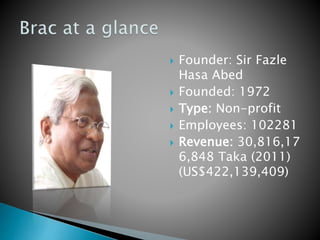
 Founder: Sir Fazle
Hasa Abed
 Founded: 1972
 Type: Non-profit
 Employees: 102281
 Revenue: 30,816,17
6,848 Taka (2011)
(US$422,139,409)
 Vision
A world free from all forms of exploitation and
discrimination where everyone has the
opportunity to realize their potential.
 Mission
To empower people and communities in
situations of poverty, illiteracy, disease and social
injustice. Our interventions aim to achieve large
scale, positive changes through economic and
social programs that enable men and women to
realize their potential.
 Innovation
 Integrity
 Inclusiveness
 Effectiveness
 Economic development
 Education
 Public health
 Social development
 Disaster relief
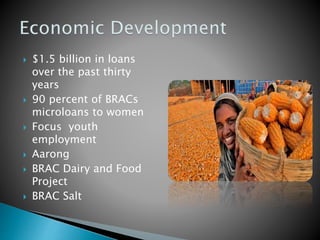
 $1.5 billion in loans
over the past thirty
years
 90 percent of BRACs
microloans to women
 Focus youth
employment
 Aarong
 BRAC Dairy and Food
Project
 BRAC Salt
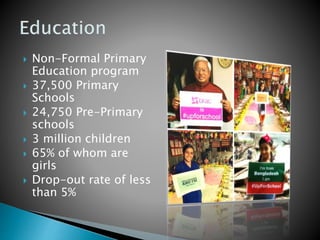
 Non-Formal Primary
Education program
 37,500 Primary
Schools
 24,750 Pre-Primary
schools
 3 million children
 65% of whom are
girls
 Drop-out rate of less
than 5%
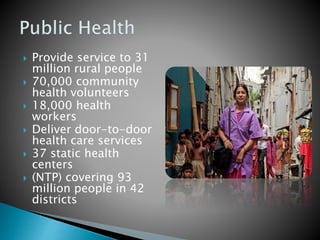
 Provide service to 31
million rural people
 70,000 community
health volunteers
 18,000 health
workers
 Deliver door-to-door
health care services
 37 static health
centers
 (NTP) covering 93
million people in 42
districts
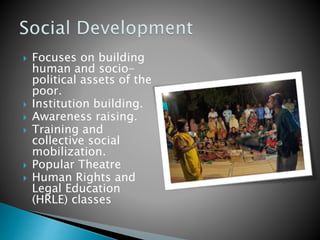
 Focuses on building
human and socio-
political assets of the
poor.
 Institution building.
 Awareness raising.
 Training and
collective social
mobilization.
 Popular Theatre
 Human Rights and
Legal Education
(HRLE) classes
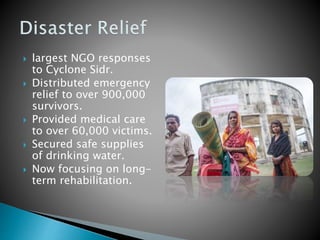
 largest NGO responses
to Cyclone Sidr.
 Distributed emergency
relief to over 900,000
survivors.
 Provided medical care
to over 60,000 victims.
 Secured safe supplies
of drinking water.
 Now focusing on long-
term rehabilitation.
 BRAC Primary School (BPS)
 BRAC Adolescent Primary School (BAPS)
 Educational Support Program (ESP)
 Urban Cluater School (UCS)
 Education for Indigenous Children School
(EICS)
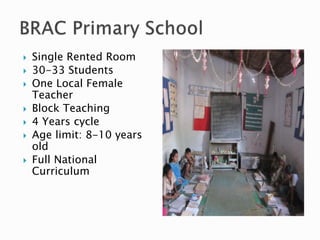
 Single Rented Room
 30-33 Students
 One Local Female
Teacher
 Block Teaching
 4 Years cycle
 Age limit: 8-10 years
old
 Full National
Curriculum
 Age Limit: 11-14 years old children
 Target Group: Drop-out Children
 30-33 students in one class
 Single Local Female Teacher
 Started at 1991 with
other NGOs
 Target Group:
Disadvantaged
Children who are not
covered by BEP
 Schools are usually
operated to remote
areas with higher
concentration of ethnic
students
 Cluster Schools for urban areas
 Were designed as BPS or BAPS Schools
 Classes are held in Shift--- Morning and
Afternoon
 Ensures hygienic environment, clean water
and toilet facilities as most of the slums have
no proper sanitation system
 Established at 2001
 Adapted BPS model
 Model suits the needs of the indigenous
communities
 Their language of instructions is the native
language of the students
 Employs two teacher, one from each
community
 Before setting up schools cooperation from
the community is needed in
 selection of location,
 hiring or building school house,
 selection of the right kind of people.
 Two formal ways to involve community with
BRAC school---
 Participation of parents in monthly parents’ meeting
 School Management Committee
Brac ppt

Brac ppt

  • 1.
  • 2.
     Founder: SirFazle Hasa Abed  Founded: 1972  Type: Non-profit  Employees: 102281  Revenue: 30,816,17 6,848 Taka (2011) (US$422,139,409)
  • 3.
     Vision A worldfree from all forms of exploitation and discrimination where everyone has the opportunity to realize their potential.  Mission To empower people and communities in situations of poverty, illiteracy, disease and social injustice. Our interventions aim to achieve large scale, positive changes through economic and social programs that enable men and women to realize their potential.
  • 4.
     Innovation  Integrity Inclusiveness  Effectiveness
  • 5.
     Economic development Education  Public health  Social development  Disaster relief
  • 6.
     $1.5 billionin loans over the past thirty years  90 percent of BRACs microloans to women  Focus youth employment  Aarong  BRAC Dairy and Food Project  BRAC Salt
  • 7.
     Non-Formal Primary Educationprogram  37,500 Primary Schools  24,750 Pre-Primary schools  3 million children  65% of whom are girls  Drop-out rate of less than 5%
  • 8.
     Provide serviceto 31 million rural people  70,000 community health volunteers  18,000 health workers  Deliver door-to-door health care services  37 static health centers  (NTP) covering 93 million people in 42 districts
  • 9.
     Focuses onbuilding human and socio- political assets of the poor.  Institution building.  Awareness raising.  Training and collective social mobilization.  Popular Theatre  Human Rights and Legal Education (HRLE) classes
  • 10.
     largest NGOresponses to Cyclone Sidr.  Distributed emergency relief to over 900,000 survivors.  Provided medical care to over 60,000 victims.  Secured safe supplies of drinking water.  Now focusing on long- term rehabilitation.
  • 19.
     BRAC PrimarySchool (BPS)  BRAC Adolescent Primary School (BAPS)  Educational Support Program (ESP)  Urban Cluater School (UCS)  Education for Indigenous Children School (EICS)
  • 20.
     Single RentedRoom  30-33 Students  One Local Female Teacher  Block Teaching  4 Years cycle  Age limit: 8-10 years old  Full National Curriculum
  • 21.
     Age Limit:11-14 years old children  Target Group: Drop-out Children  30-33 students in one class  Single Local Female Teacher
  • 22.
     Started at1991 with other NGOs  Target Group: Disadvantaged Children who are not covered by BEP  Schools are usually operated to remote areas with higher concentration of ethnic students
  • 23.
     Cluster Schoolsfor urban areas  Were designed as BPS or BAPS Schools  Classes are held in Shift--- Morning and Afternoon  Ensures hygienic environment, clean water and toilet facilities as most of the slums have no proper sanitation system
  • 24.
     Established at2001  Adapted BPS model  Model suits the needs of the indigenous communities  Their language of instructions is the native language of the students  Employs two teacher, one from each community
  • 25.
     Before settingup schools cooperation from the community is needed in  selection of location,  hiring or building school house,  selection of the right kind of people.  Two formal ways to involve community with BRAC school---  Participation of parents in monthly parents’ meeting  School Management Committee