BOWEL
ELIMINATION
Presented by: Neha Bharti
ELIMINATION
 Elimination is the complete removal or destruction
of something.
OR
 The expulsion of waste from body is known as
elimination
DEFINITION BOWEL
ELIMINATION
 It is also known as defecation. Bowel elimination
is a natural process critical to human functioning
in which body excretes waste products of
digestion. It is a essential component of the
healthy body functioning.
OR
 Defecation (bowel elimination) is the act of
expelling feces (stool) from the body. To do so, all
structures of the gastrointestinal tract, especially
the components of the large intestine must
function in a coordinated manner
Review of Physiology of Bowel
Elimination
 GI tract also known as alimentary canal. It is a hollow
muscular tube that extend from the mouth to the anus.
 Food is broken down in the stomach in to a semiliquid
mass called chyme.
 Chyme leaves the stomach and enter in to the small
intestine which is divided in to three part i.e Duodenum
(10 inches long. Receive bile and pancreatic enzyme),
Jejunum (it mixes with digestive enzyme and most
nutrients are absorbed) and ileum (unabsorbed chyme
enters in to the intestine through ileum).
CONT…
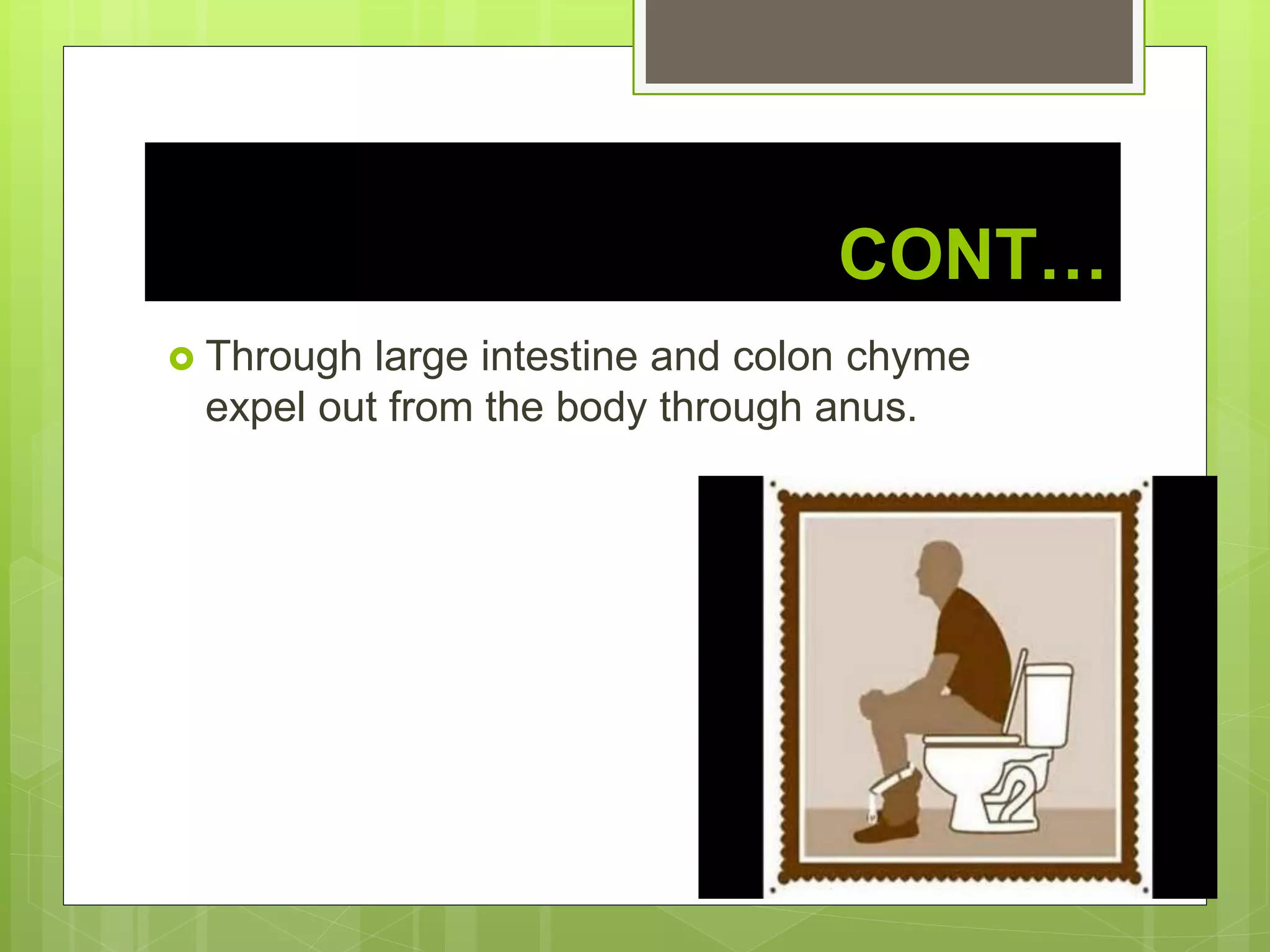
 Through large intestine and colon chyme
expel out from the body through anus.
 Peristalsis means the rhythmic contractions
of intestinal smooth muscle that facilitate
defecation (movement of bowel).
 Peristalsis moves fiber, water, and nutritional
wastes along the ascending, transverse,
descending, and sigmoid colon toward the
rectum.
 Peristalsis becomes even more active during
eating..
INABILITY TO
SQUAT
ELIMINATION PATTERNS
 Because various elimination patterns can be
normal, it is essential to determine the client's
usual patterns, including characterstics,
frequency of elimination, effort required to
expel stool, and what elimination aids, if any,
he or she uses.
COMMON ALTERATIONS IN
BOWEL ELIMINATION
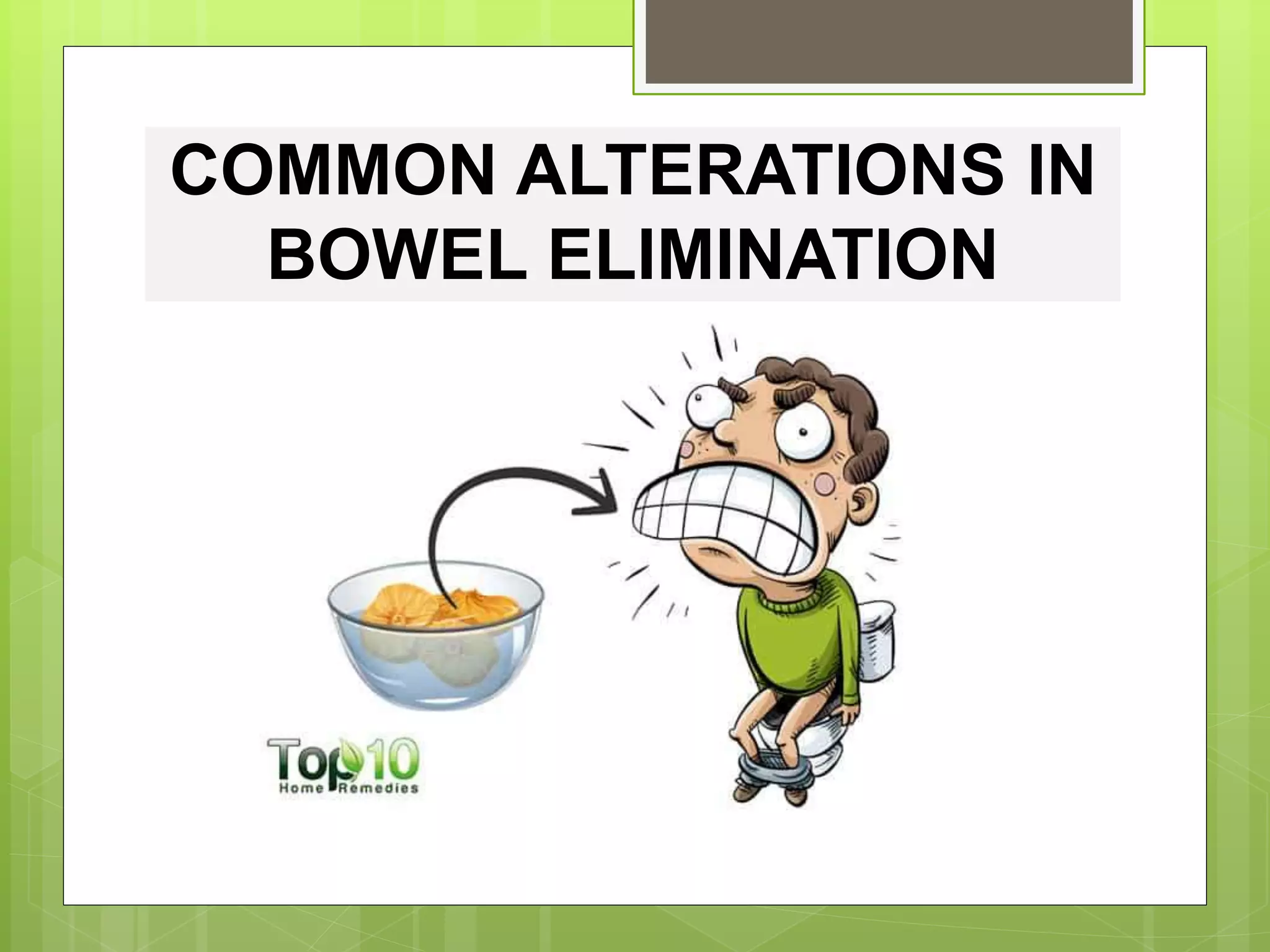
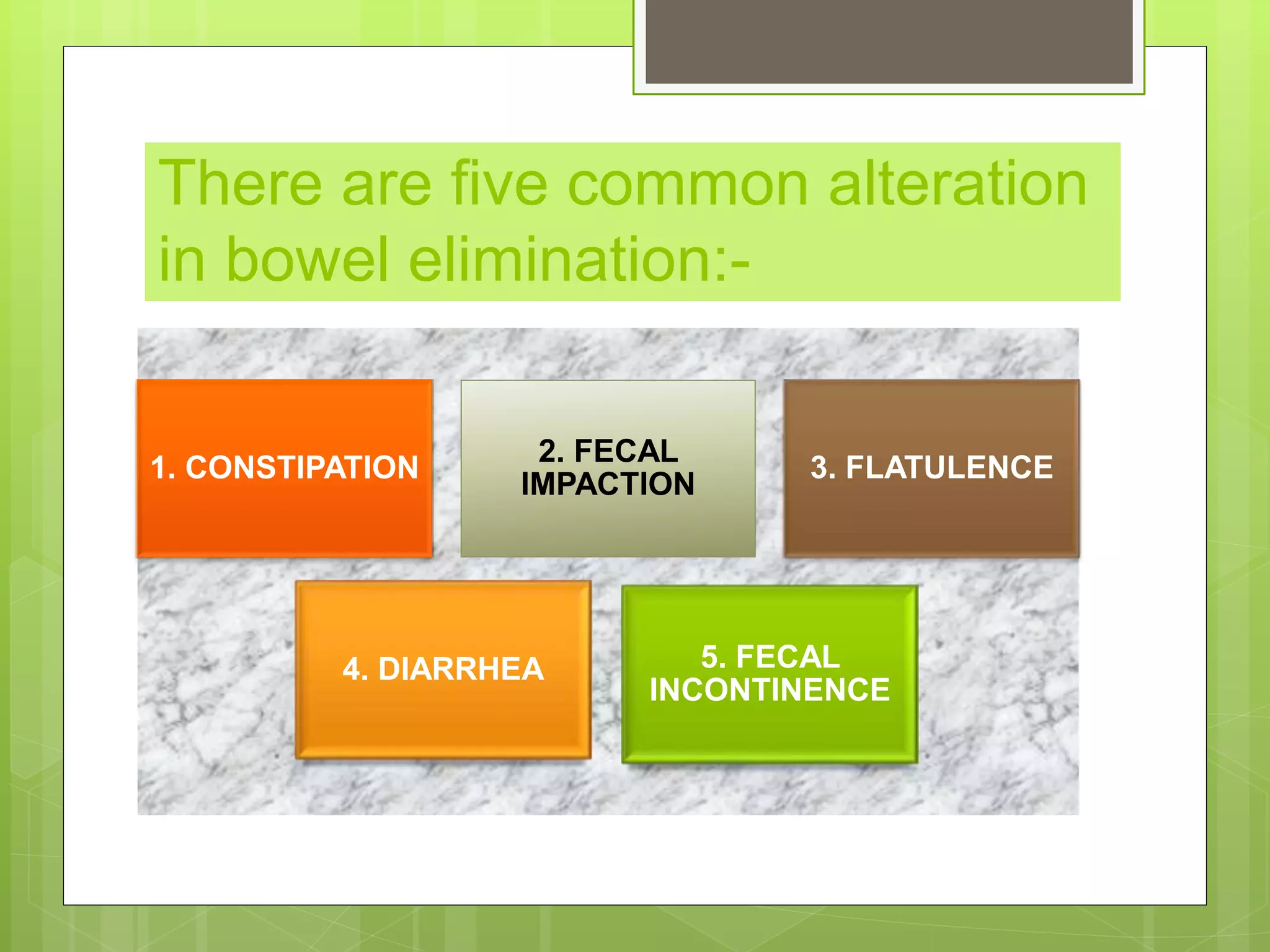
There are five common alteration
in bowel elimination:-
1. CONSTIPATION
2. FECAL
IMPACTION
3. FLATULENCE
4. DIARRHEA 5. FECAL
INCONTINENCE
1. CONSTIPATION
Constipation is an elimination problem
characterized by dry, hard stool that is difficult to
pass. Various accompanying signs and symptoms
include the following:
Complaints of abdominal fullness or bloating
Abdominal distention
CONT…
 Complaints of rectal fullness or pressure
 Pain on defecation
 Decreased frequency of bowel movements
 Inability to pass stool
 Changes in stool characteristics such as hard
small stool
Constipation is classified into one
of four distinct types
 Primary
 Secondary
 Iatrogenic and
 Pseudoconstipation
1.PRIMARY OR SIMPLE
CONSTIPATION
Primary or simple constipation is well within the
treatment domain of nurses. It results from
lifestyle factors such as inactivity, inadequate
intake of fiber, insufficient fluid intake, or
ignoring the urge to defecate
2.SECONDARY CONSTIPATION
Secondary constipation is a consequence of a
pathologic disorder such as a partial bowel
obstruction. It usually resolves when the primary
cause is treated.
3.IATROGENIC CONSTIPATION
Iatrogenic constipation occurs as a
consequence of other medical treatment. For
example, prolonged use of narcotic analgesia
tends to cause constipation.
These and other drugs slow peristalsis, delaying
transit time. The longer the stool remains in the
colon, the drier it becomes, making it more
difficult to pass.
4.PSEUDOCONSTIPATION
Pseudoconstipation, also referred to as
perceived constipation, is a term used when
clients believe themselves to be constipated
even though they are not.
2. FECAL IMPACTION
Hardened stool that is stuck in the rectum
or lower colon due to chronic
constipation. It occurs in that people
who’ve been constipated for a long time.
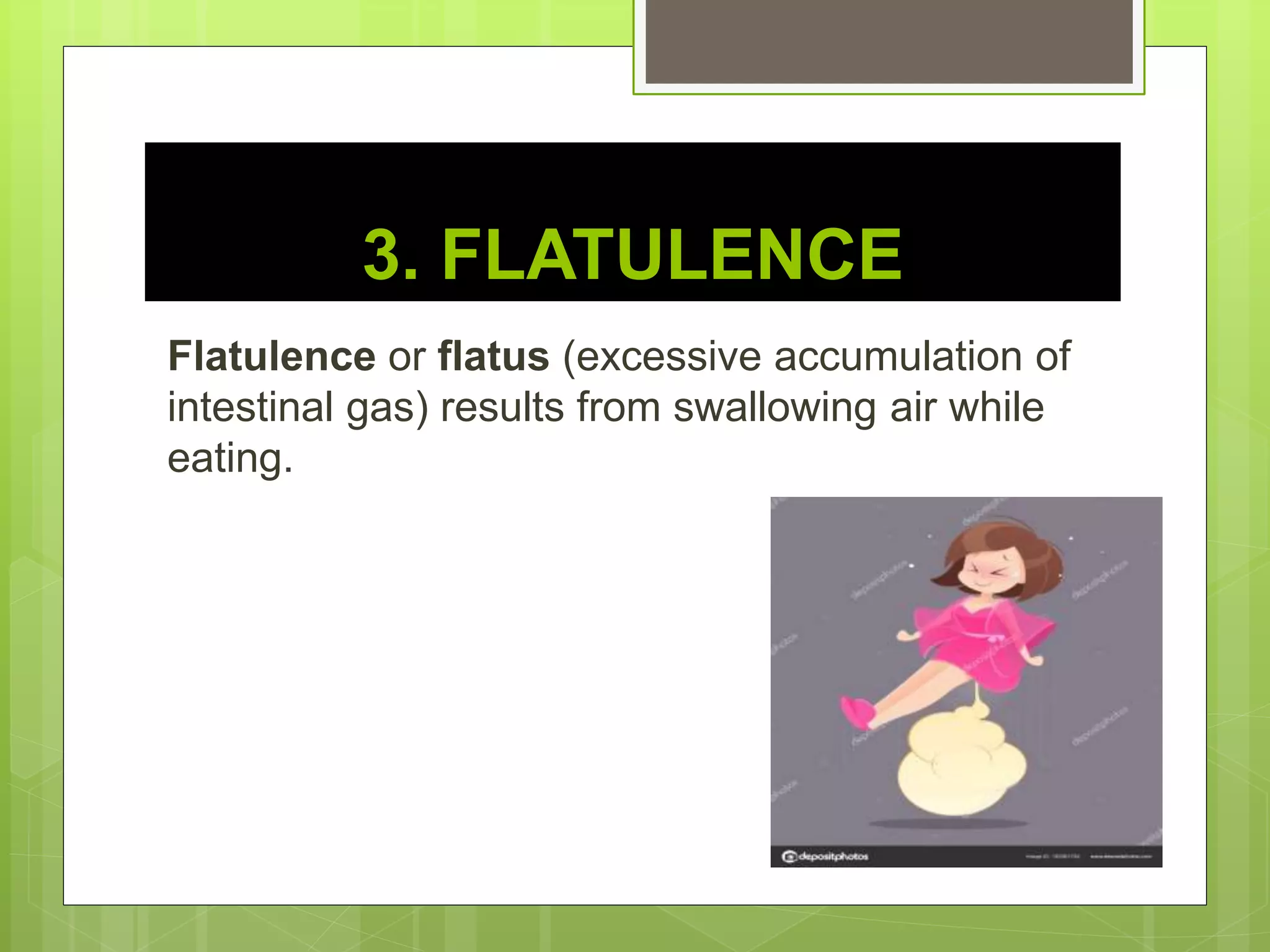
3. FLATULENCE
Flatulence or flatus (excessive accumulation of
intestinal gas) results from swallowing air while
eating.
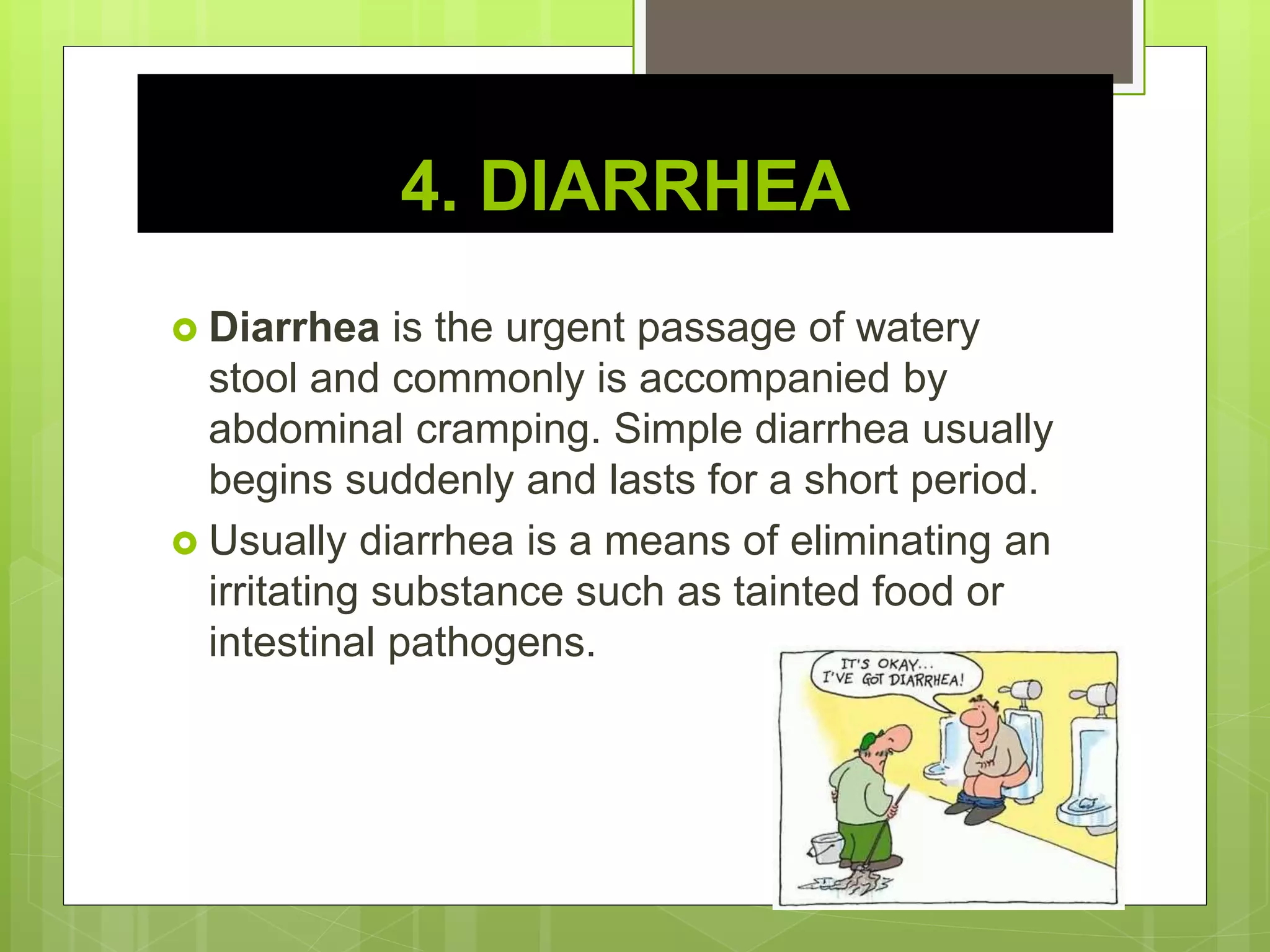
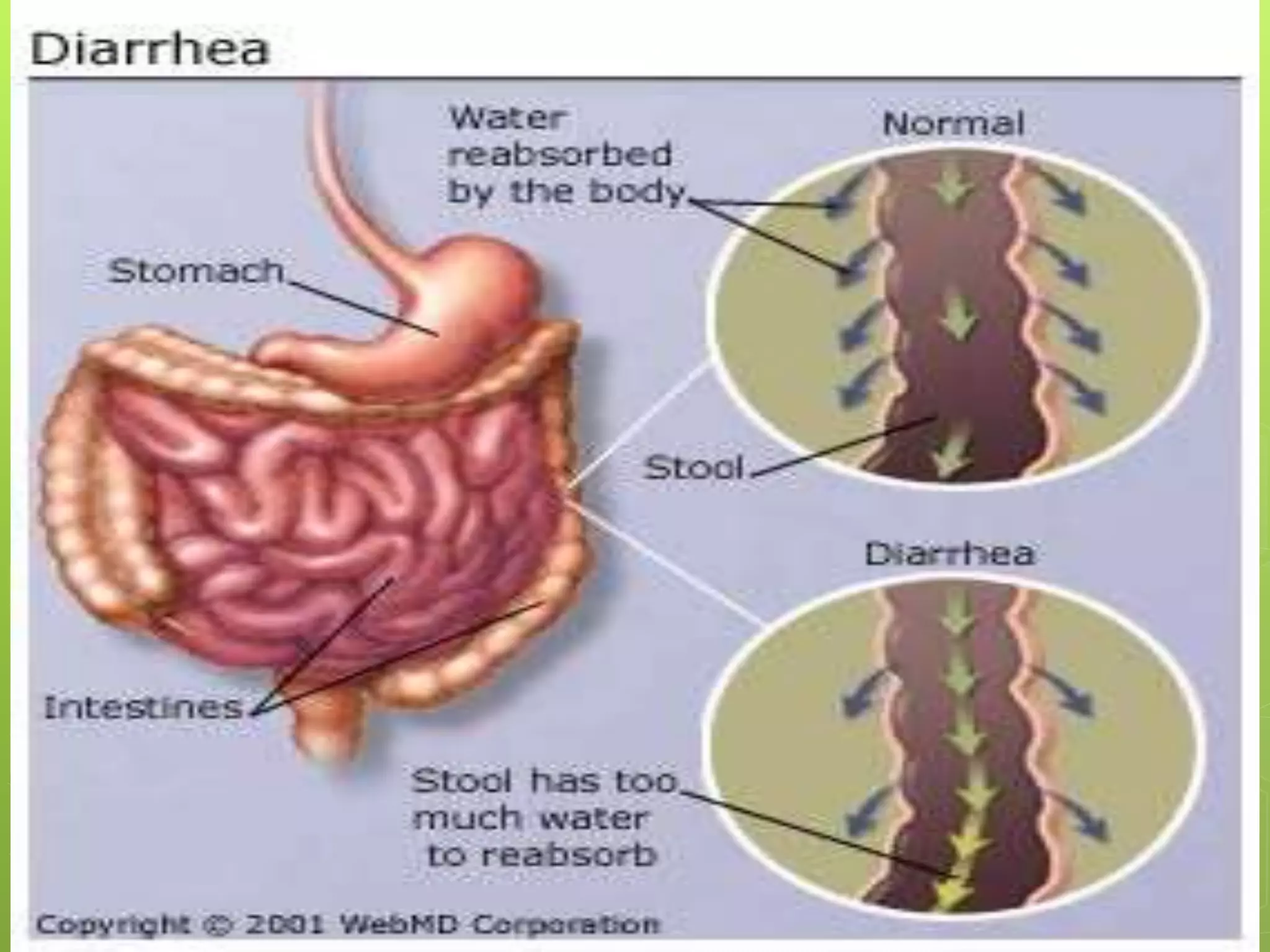
4. DIARRHEA
 Diarrhea is the urgent passage of watery
stool and commonly is accompanied by
abdominal cramping. Simple diarrhea usually
begins suddenly and lasts for a short period.
 Usually diarrhea is a means of eliminating an
irritating substance such as tainted food or
intestinal pathogens.
5. FECAL INCONTINENCE
 Fecal incontinence is the inability to control
the elimination of stool.
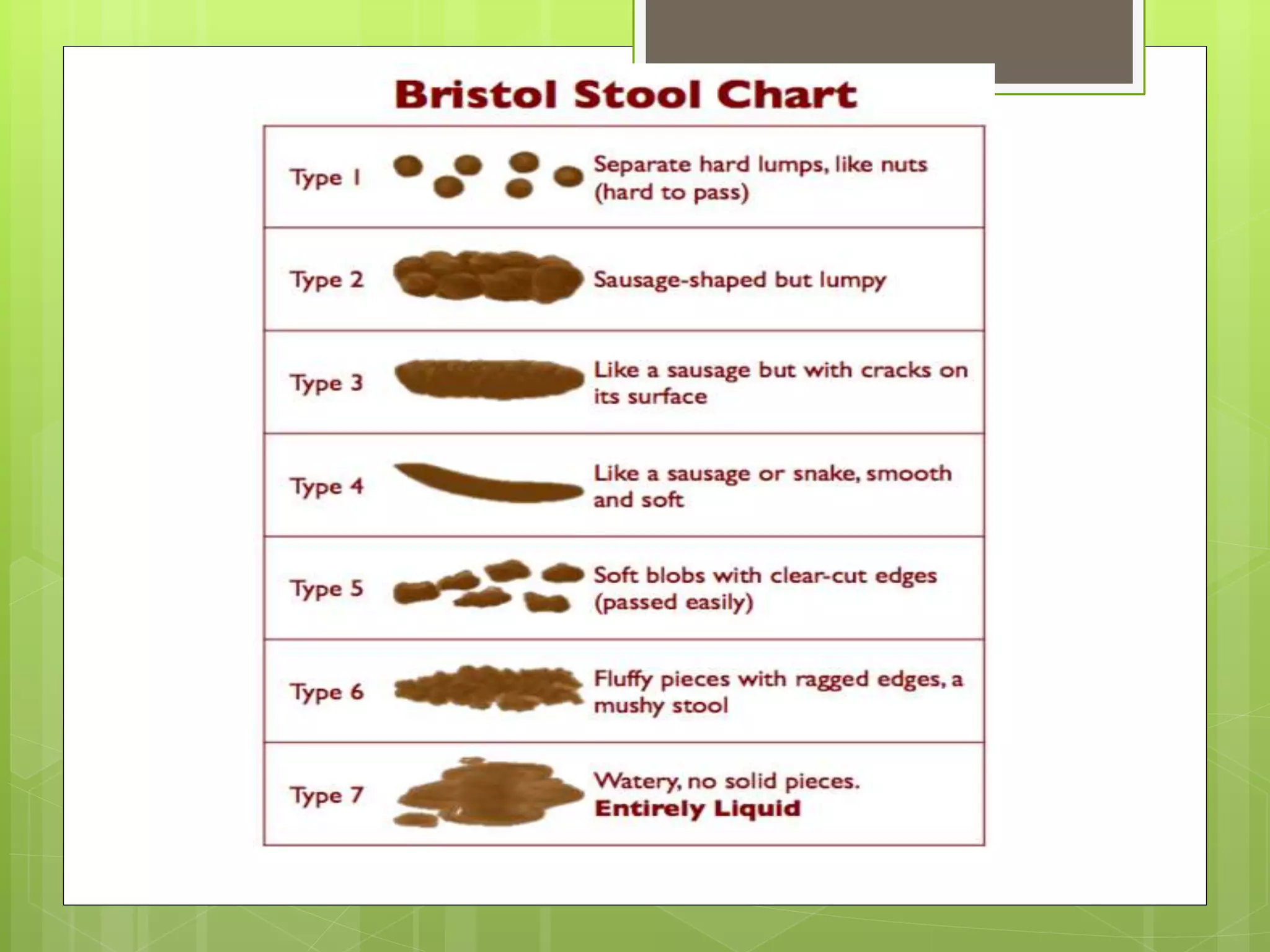
1.HEALTH HISTORY
Elimination habits:-
 Determine patient’s usual pattern of bowel
elimination.
 Determine the frequency and time
 Find out the characteristics of the stool like
stool is watery, soft, hard and typical color.
2. PHYSICAL EXAMINATION
 Mental status examination:- It can be evaluated by
listening to the client’s responses to questions and
by observing interaction with others
 Mobility & Dexterity:- Mobility may be evaluated by
observing the client undress or move onto a table,
chair or bed. Dexterity assessed by observing the
client remove clothing; particular attention paid to
the manipulation of zippers, buttons, shoestrings
and snaps.
CONT…
 Inspection:- Rectal examination are
particularly important for both men and
women. The cheeks of the buttocks should be
pulled apart and the anus & surrounding area
visually inspected.
 The client may asked to bear down and anus
inspected for prolapse gapping, indicating
significant weakness of anal sphincters.
3. DIAGNOSTIC TEST
 Defecography:- X-rays images of rectum and anal
sphincter obtained during defecation
.
 Anorectal ultrasonography:- It is vital accepted
popular imaging motility for evaluating lower
rectum, inner sphincter and pelvic floor in patient
with various anorectal disease
 Colonoscopy:- It is used to visualization of the
colon
CONT…
2. AVOID ALCOHOL AND SMOKING
 Avoid alcohol and smoking because alcohol
irritates the intestine and bowel, causing
inflammation. This effect causes increased
elimination of fluid into the stool, resulting
diarrhea.
 Smoking stimulates the bowel through the
action of nicotine caused increased bowel
tone and motility result is diarrhea.
3. STRESS MANAGEMENT
4. POSITIONING
5. REGULAR EXERCISE
CONT….
6. Elimination habits:- maintain your
elimination habbit.
There are three methods:-
1. ENEMAS
2. RECTAL SUPPOSITORIES
3. COLOSTOMIES
1. ENEMA
DEFINITION OF ENEMA:-
 A procedure in which liquid or gas is injected
in to the rectum, to expel its contents or to
introduce drugs like Anti- helminthic.
OR
 An enema is the injection of fluid into the
lower bowel by way of the rectum.
USES OF EMENA
 To relieve constipation.
 For bowel cleansing before a medical.
examination or procedure.
 To administer drugs.
 To relieve the gaseous distension of abdomen
TYPES OF ENEMA
1. EVACUANT ENEMA
2. RETAINED ENEMA
1. EVACUANT ENEMA
It is designed to prompt the bowel to expel
faecal matter or flatus, together with the
contents of the enema.
Evacuant enema is classified into three
parts:-
1. SIMPLE EVACUANT ENEMA
2. MEDICATED EVACUANT ENEMA
3. COLD EVACUANT ENEMA
1. SIMPLE EVACUANT ENEMA
It is used to remove fecal martial and gaseous
distension. It is also used to clean the bowel and
rectum before investigations, surgeries and
childbirth.
Solution:- Soap water or normal saline are used
Quantity:-
For adult:- 500-1000ml solution is used.
For children:- 250-500ml solution is used
For infant:- <250ml is used.
2. MEDICATED EVACUANT ENEMA
It is used to administration of medication
through the rectum. It is classified into five
parts:-
1. Oil enema
2. Astringent enema
3. Purgative enema
4. Anti- helminthic enema
5. Carminative enema
Contd…
1. Oil enema:- it is used to soften the feces
and relief the constipation.
2. Astringent enema:- it is used to reduce
inflammation, bleeding and mucus discharge
in colon eg:- Dysentery. 2% silver nitrate with
tannic acid and alum solution must be used
in this enema
Contd…
3. Purgative enema:- It helps to improve
peristalsis to empty the bowel.
Solution:- Glycerin, castor oil and water
4. Antihelminthic enema:- It is used to kill
intestinal parasitic worms.
Solution:- Soap water and hypertonic saline
solution
Contd…
5. Carminative enema:- It is also known as
antispasmodic anema, it is used to remove the
gaseous accumulation in abdomen.
Solution:- Milk, asafetida in soap water and
turpentine.
3. COLD EVACUANT ENEMA
It is used to reduce the body temperature during
high fever.
2. RETAINED ENEMA
 It means injecting a solution into the rectum
specially in sigmoid colon and holding for a
specific period of time.
Retained enema is classified
into five parts:-
Stimulant Sedative Emollient
Anesthetic Nutrient
S.NO. TYPES OF
RETAINED
ENEMA
USES SOLUTION
1. STIMULANT
ENEMA
Shock, Collapse And Some
Poisoning Cases
Black coffee/ Brandy -300ml
with water and tea spoon of
coffee powder
2. SEDATIVE
ENEMA
Induce Sleep Or Sedation Paraldehyde and Potassium
Bromide
3. EMOLLIENT
ENEMA
Soften a hardened fecal
mass
Oil based fluid- 250 ml
4. ANESTHETIC
ENEMA
Produce anesthetic effect in
patient
Avertin- 150 to 300mg/kg
5. NUTRIENT
ENEMA
Administration of intent of
nutrition when normal
eating is not possible
ARTICLES USED IN ENEMA
 Catheter size according to patient need
 Lubricant
 Selected solution
 Left lateral position
2. RECTAL SUPPOSITORIES
 It is a solid dosage that is inserted into the rectum,
where it dissolved or melts and exerts local or systemic
effect.
 The effect usually results in a bowel movement with in
15-60 minutes.
 Glycerin belongs to a class of drugs known as
hyperosonate laxatives. It is used to relief constipation
and hemorrhoids.
3. COLOSTOMIES
A colostomy is a surgical procedure in which an
opening (stoma) is formed by drawing the
healthy end of the large intestine or colon
through an incision in the anterior abdominal
wall.
 During this procedure, one end of the colon is
diverted throgh an incision in the abdominal
wall to create a stoma. A stoma is the opening
in the skin where a pouch for collecting feces I
attached.
PURPOSE OF COLOSTOMY
 Blockage
 Injury
 Colorectal cancer
 Colonic polyps
TYPES OF COLOSTOMY
1. SIGMOID
COLOSTOMY
2.
DESCENDING
COLOSTOMY
3.
TRANSVERSE
COLOSTOMY
4.
ASCENDING
COLOSTOMY
5.
ILEOSTOMY
PROVIDING PERISTOMAL CARE
 Preventing skin breakdown is a major
challenge in ostomy care. Enzymes in stool
can quickly cause excoriation (chemical
injury of skin).
 Washing the stoma and surrounding skin with
mild soap and water and patting it dry can
preserve skin integrity.
Bowel elimination
Bowel elimination

Bowel elimination

  • 1.
  • 3.
    ELIMINATION  Elimination isthe complete removal or destruction of something. OR  The expulsion of waste from body is known as elimination
  • 5.
    DEFINITION BOWEL ELIMINATION  Itis also known as defecation. Bowel elimination is a natural process critical to human functioning in which body excretes waste products of digestion. It is a essential component of the healthy body functioning. OR  Defecation (bowel elimination) is the act of expelling feces (stool) from the body. To do so, all structures of the gastrointestinal tract, especially the components of the large intestine must function in a coordinated manner
  • 6.
    Review of Physiologyof Bowel Elimination  GI tract also known as alimentary canal. It is a hollow muscular tube that extend from the mouth to the anus.  Food is broken down in the stomach in to a semiliquid mass called chyme.  Chyme leaves the stomach and enter in to the small intestine which is divided in to three part i.e Duodenum (10 inches long. Receive bile and pancreatic enzyme), Jejunum (it mixes with digestive enzyme and most nutrients are absorbed) and ileum (unabsorbed chyme enters in to the intestine through ileum).
  • 7.
    CONT…  Through largeintestine and colon chyme expel out from the body through anus.
  • 11.
     Peristalsis meansthe rhythmic contractions of intestinal smooth muscle that facilitate defecation (movement of bowel).  Peristalsis moves fiber, water, and nutritional wastes along the ascending, transverse, descending, and sigmoid colon toward the rectum.  Peristalsis becomes even more active during eating..
  • 19.
  • 21.
    ELIMINATION PATTERNS  Becausevarious elimination patterns can be normal, it is essential to determine the client's usual patterns, including characterstics, frequency of elimination, effort required to expel stool, and what elimination aids, if any, he or she uses.
  • 24.
  • 25.
    There are fivecommon alteration in bowel elimination:- 1. CONSTIPATION 2. FECAL IMPACTION 3. FLATULENCE 4. DIARRHEA 5. FECAL INCONTINENCE
  • 26.
    1. CONSTIPATION Constipation isan elimination problem characterized by dry, hard stool that is difficult to pass. Various accompanying signs and symptoms include the following: Complaints of abdominal fullness or bloating Abdominal distention
  • 27.
    CONT…  Complaints ofrectal fullness or pressure  Pain on defecation  Decreased frequency of bowel movements  Inability to pass stool  Changes in stool characteristics such as hard small stool
  • 29.
    Constipation is classifiedinto one of four distinct types  Primary  Secondary  Iatrogenic and  Pseudoconstipation
  • 30.
    1.PRIMARY OR SIMPLE CONSTIPATION Primaryor simple constipation is well within the treatment domain of nurses. It results from lifestyle factors such as inactivity, inadequate intake of fiber, insufficient fluid intake, or ignoring the urge to defecate
  • 31.
    2.SECONDARY CONSTIPATION Secondary constipationis a consequence of a pathologic disorder such as a partial bowel obstruction. It usually resolves when the primary cause is treated.
  • 32.
    3.IATROGENIC CONSTIPATION Iatrogenic constipationoccurs as a consequence of other medical treatment. For example, prolonged use of narcotic analgesia tends to cause constipation. These and other drugs slow peristalsis, delaying transit time. The longer the stool remains in the colon, the drier it becomes, making it more difficult to pass.
  • 33.
    4.PSEUDOCONSTIPATION Pseudoconstipation, also referredto as perceived constipation, is a term used when clients believe themselves to be constipated even though they are not.
  • 34.
    2. FECAL IMPACTION Hardenedstool that is stuck in the rectum or lower colon due to chronic constipation. It occurs in that people who’ve been constipated for a long time.
  • 36.
    3. FLATULENCE Flatulence orflatus (excessive accumulation of intestinal gas) results from swallowing air while eating.
  • 37.
    4. DIARRHEA  Diarrheais the urgent passage of watery stool and commonly is accompanied by abdominal cramping. Simple diarrhea usually begins suddenly and lasts for a short period.  Usually diarrhea is a means of eliminating an irritating substance such as tainted food or intestinal pathogens.
  • 39.
    5. FECAL INCONTINENCE Fecal incontinence is the inability to control the elimination of stool.
  • 41.
    1.HEALTH HISTORY Elimination habits:- Determine patient’s usual pattern of bowel elimination.  Determine the frequency and time  Find out the characteristics of the stool like stool is watery, soft, hard and typical color.
  • 43.
    2. PHYSICAL EXAMINATION Mental status examination:- It can be evaluated by listening to the client’s responses to questions and by observing interaction with others  Mobility & Dexterity:- Mobility may be evaluated by observing the client undress or move onto a table, chair or bed. Dexterity assessed by observing the client remove clothing; particular attention paid to the manipulation of zippers, buttons, shoestrings and snaps.
  • 44.
    CONT…  Inspection:- Rectalexamination are particularly important for both men and women. The cheeks of the buttocks should be pulled apart and the anus & surrounding area visually inspected.  The client may asked to bear down and anus inspected for prolapse gapping, indicating significant weakness of anal sphincters.
  • 45.
    3. DIAGNOSTIC TEST Defecography:- X-rays images of rectum and anal sphincter obtained during defecation .  Anorectal ultrasonography:- It is vital accepted popular imaging motility for evaluating lower rectum, inner sphincter and pelvic floor in patient with various anorectal disease  Colonoscopy:- It is used to visualization of the colon
  • 49.
  • 52.
    2. AVOID ALCOHOLAND SMOKING
  • 53.
     Avoid alcoholand smoking because alcohol irritates the intestine and bowel, causing inflammation. This effect causes increased elimination of fluid into the stool, resulting diarrhea.  Smoking stimulates the bowel through the action of nicotine caused increased bowel tone and motility result is diarrhea.
  • 54.
  • 55.
  • 56.
  • 57.
    CONT…. 6. Elimination habits:-maintain your elimination habbit.
  • 59.
    There are threemethods:- 1. ENEMAS 2. RECTAL SUPPOSITORIES 3. COLOSTOMIES
  • 60.
    1. ENEMA DEFINITION OFENEMA:-  A procedure in which liquid or gas is injected in to the rectum, to expel its contents or to introduce drugs like Anti- helminthic. OR  An enema is the injection of fluid into the lower bowel by way of the rectum.
  • 61.
    USES OF EMENA To relieve constipation.  For bowel cleansing before a medical. examination or procedure.  To administer drugs.  To relieve the gaseous distension of abdomen
  • 62.
    TYPES OF ENEMA 1.EVACUANT ENEMA 2. RETAINED ENEMA
  • 63.
    1. EVACUANT ENEMA Itis designed to prompt the bowel to expel faecal matter or flatus, together with the contents of the enema.
  • 64.
    Evacuant enema isclassified into three parts:- 1. SIMPLE EVACUANT ENEMA 2. MEDICATED EVACUANT ENEMA 3. COLD EVACUANT ENEMA
  • 65.
    1. SIMPLE EVACUANTENEMA It is used to remove fecal martial and gaseous distension. It is also used to clean the bowel and rectum before investigations, surgeries and childbirth. Solution:- Soap water or normal saline are used Quantity:- For adult:- 500-1000ml solution is used. For children:- 250-500ml solution is used For infant:- <250ml is used.
  • 66.
    2. MEDICATED EVACUANTENEMA It is used to administration of medication through the rectum. It is classified into five parts:- 1. Oil enema 2. Astringent enema 3. Purgative enema 4. Anti- helminthic enema 5. Carminative enema
  • 67.
    Contd… 1. Oil enema:-it is used to soften the feces and relief the constipation. 2. Astringent enema:- it is used to reduce inflammation, bleeding and mucus discharge in colon eg:- Dysentery. 2% silver nitrate with tannic acid and alum solution must be used in this enema
  • 68.
    Contd… 3. Purgative enema:-It helps to improve peristalsis to empty the bowel. Solution:- Glycerin, castor oil and water 4. Antihelminthic enema:- It is used to kill intestinal parasitic worms. Solution:- Soap water and hypertonic saline solution
  • 69.
    Contd… 5. Carminative enema:-It is also known as antispasmodic anema, it is used to remove the gaseous accumulation in abdomen. Solution:- Milk, asafetida in soap water and turpentine.
  • 70.
    3. COLD EVACUANTENEMA It is used to reduce the body temperature during high fever.
  • 71.
    2. RETAINED ENEMA It means injecting a solution into the rectum specially in sigmoid colon and holding for a specific period of time.
  • 72.
    Retained enema isclassified into five parts:- Stimulant Sedative Emollient Anesthetic Nutrient
  • 73.
    S.NO. TYPES OF RETAINED ENEMA USESSOLUTION 1. STIMULANT ENEMA Shock, Collapse And Some Poisoning Cases Black coffee/ Brandy -300ml with water and tea spoon of coffee powder 2. SEDATIVE ENEMA Induce Sleep Or Sedation Paraldehyde and Potassium Bromide 3. EMOLLIENT ENEMA Soften a hardened fecal mass Oil based fluid- 250 ml 4. ANESTHETIC ENEMA Produce anesthetic effect in patient Avertin- 150 to 300mg/kg 5. NUTRIENT ENEMA Administration of intent of nutrition when normal eating is not possible
  • 74.
    ARTICLES USED INENEMA  Catheter size according to patient need  Lubricant  Selected solution  Left lateral position
  • 75.
    2. RECTAL SUPPOSITORIES It is a solid dosage that is inserted into the rectum, where it dissolved or melts and exerts local or systemic effect.  The effect usually results in a bowel movement with in 15-60 minutes.  Glycerin belongs to a class of drugs known as hyperosonate laxatives. It is used to relief constipation and hemorrhoids.
  • 77.
    3. COLOSTOMIES A colostomyis a surgical procedure in which an opening (stoma) is formed by drawing the healthy end of the large intestine or colon through an incision in the anterior abdominal wall.
  • 78.
     During thisprocedure, one end of the colon is diverted throgh an incision in the abdominal wall to create a stoma. A stoma is the opening in the skin where a pouch for collecting feces I attached.
  • 79.
    PURPOSE OF COLOSTOMY Blockage  Injury  Colorectal cancer  Colonic polyps
  • 80.
    TYPES OF COLOSTOMY 1.SIGMOID COLOSTOMY 2. DESCENDING COLOSTOMY 3. TRANSVERSE COLOSTOMY 4. ASCENDING COLOSTOMY 5. ILEOSTOMY
  • 87.
    PROVIDING PERISTOMAL CARE Preventing skin breakdown is a major challenge in ostomy care. Enzymes in stool can quickly cause excoriation (chemical injury of skin).  Washing the stoma and surrounding skin with mild soap and water and patting it dry can preserve skin integrity.