Compiled by:-
Vikas Kumar
Enrollment No.- 101405105
Objectives:-
 To allow the multiplication of two signed
binary numbers in 2’s complement form.
ADVANTAGE –
Booth’s algorithm facilitates the process of
multiplying signed numbers.
CONTEXT
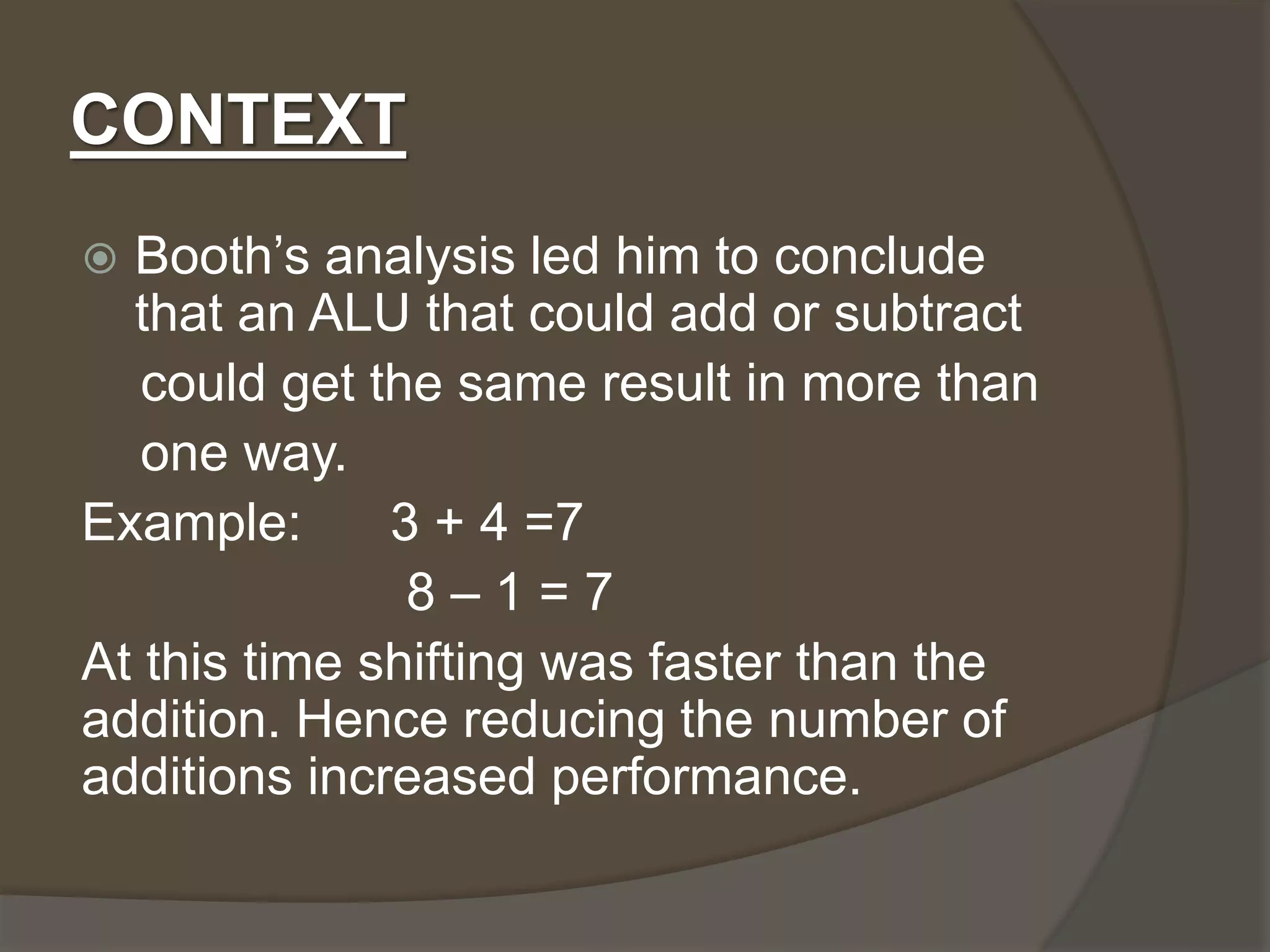
 Booth’s analysis led him to conclude
that an ALU that could add or subtract
could get the same result in more than
one way.
Example: 3 + 4 =7
8 – 1 = 7
At this time shifting was faster than the
addition. Hence reducing the number of
additions increased performance.
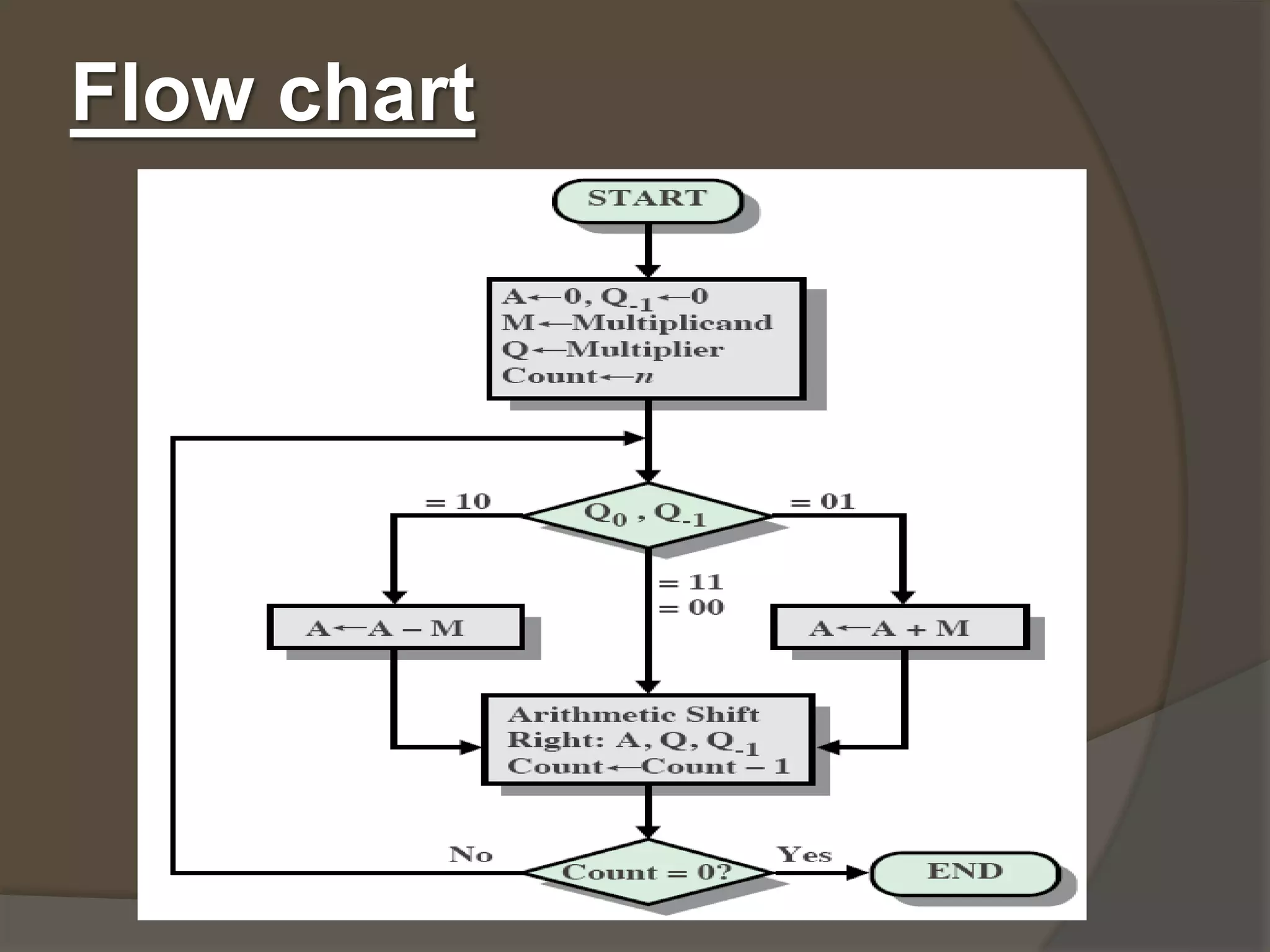
Flow chart
Points to remember(for
unsigned)
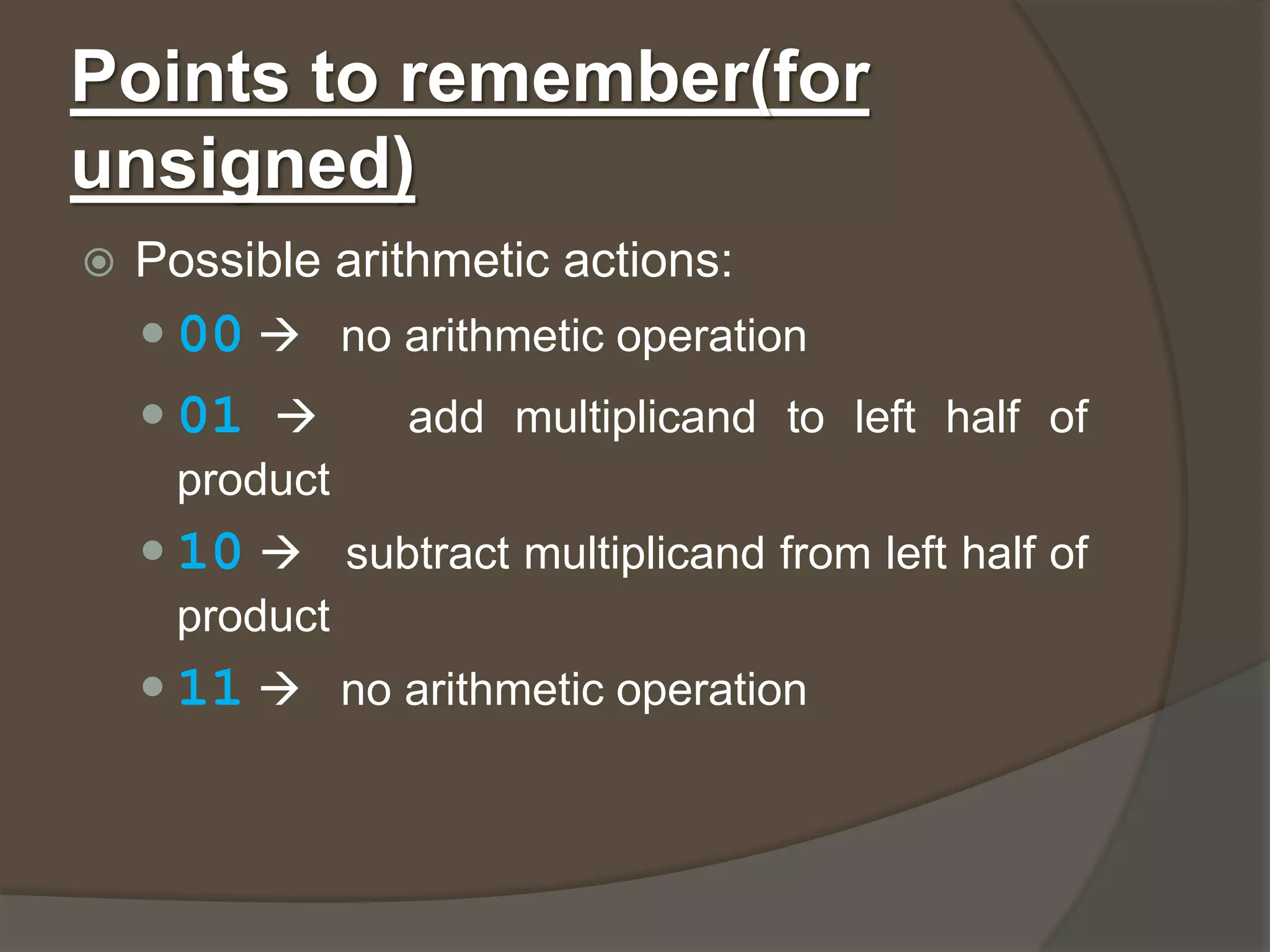
 Possible arithmetic actions:
 00  no arithmetic operation
 01  add multiplicand to left half of
product
 10  subtract multiplicand from left half of
product
 11  no arithmetic operation
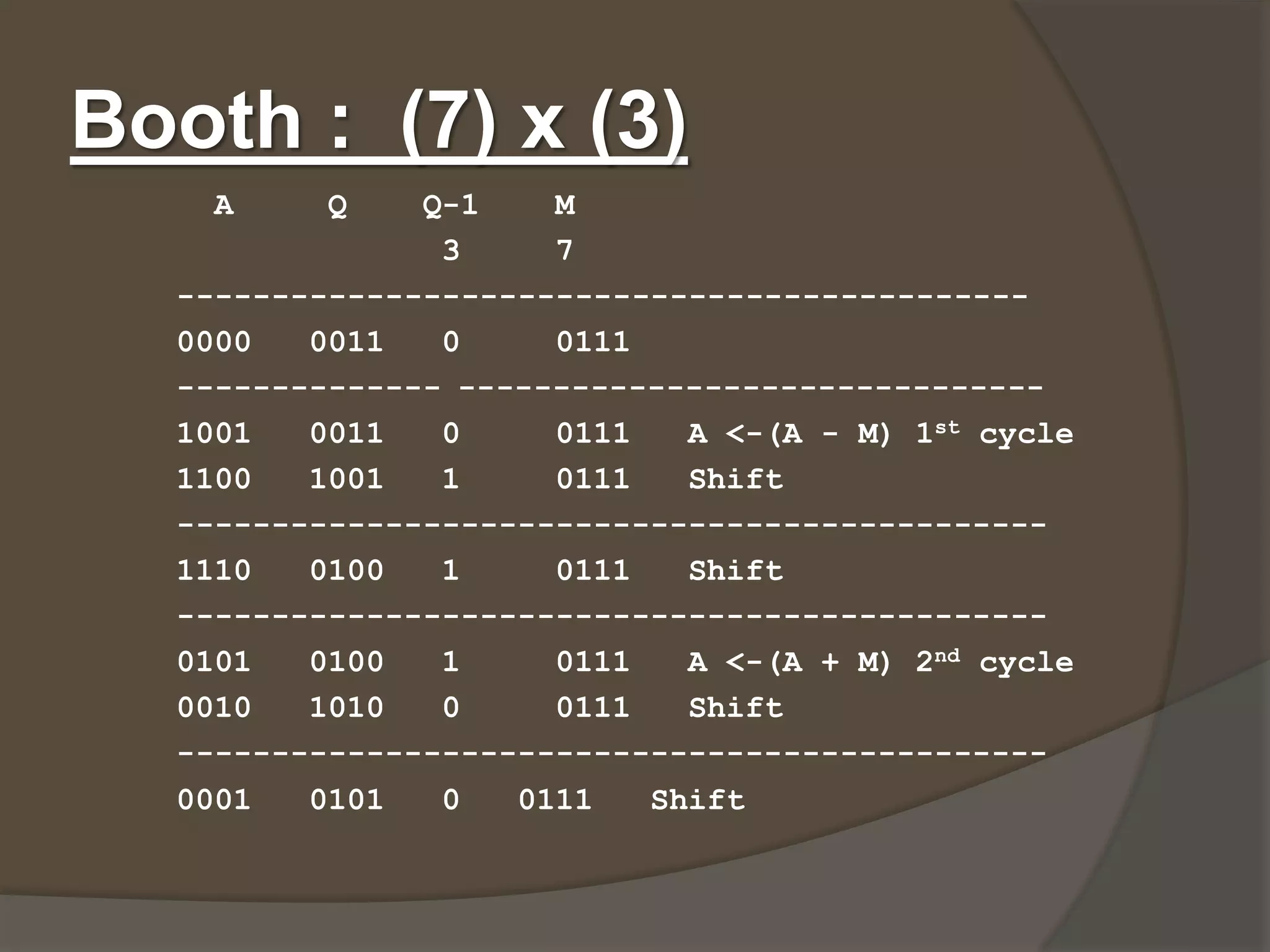
Booth : (7) x (3)
A Q Q-1 M
3 7
---------------------------------------------
0000 0011 0 0111
-------------- -------------------------------
1001 0011 0 0111 A <-(A - M) 1st cycle
1100 1001 1 0111 Shift
----------------------------------------------
1110 0100 1 0111 Shift
----------------------------------------------
0101 0100 1 0111 A <-(A + M) 2nd cycle
0010 1010 0 0111 Shift
----------------------------------------------
0001 0101 0 0111 Shift
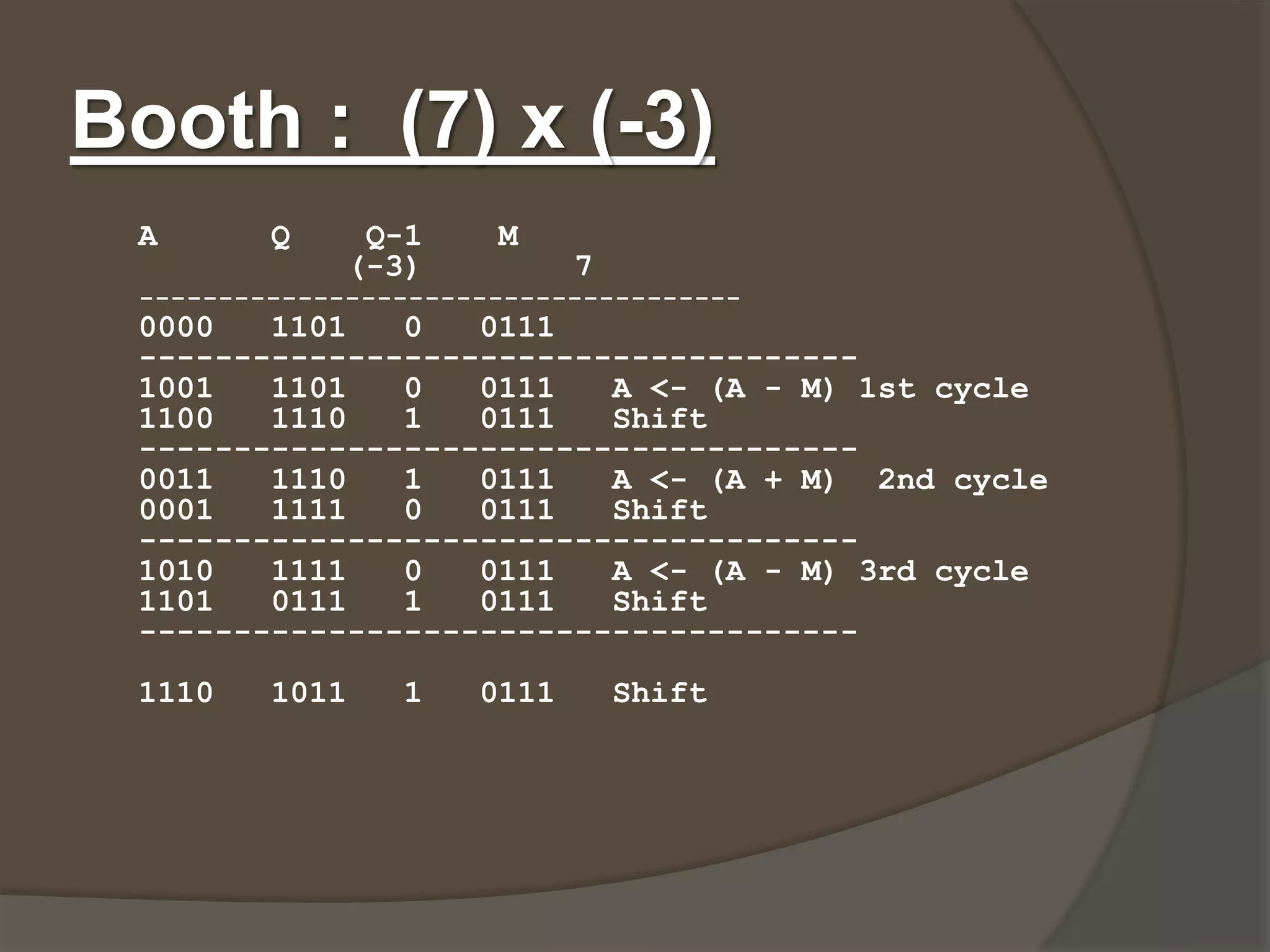
Booth : (7) x (-3)
A Q Q-1 M
(-3) 7
--------------------------------------
0000 1101 0 0111
--------------------------------------
1001 1101 0 0111 A <- (A - M) 1st cycle
1100 1110 1 0111 Shift
--------------------------------------
0011 1110 1 0111 A <- (A + M) 2nd cycle
0001 1111 0 0111 Shift
--------------------------------------
1010 1111 0 0111 A <- (A - M) 3rd cycle
1101 0111 1 0111 Shift
--------------------------------------
1110 1011 1 0111 Shift
THANK YOU 

Booths algorithm for Multiplication

  • 1.
  • 2.
    Objectives:-  To allowthe multiplication of two signed binary numbers in 2’s complement form. ADVANTAGE – Booth’s algorithm facilitates the process of multiplying signed numbers.
  • 3.
    CONTEXT  Booth’s analysisled him to conclude that an ALU that could add or subtract could get the same result in more than one way. Example: 3 + 4 =7 8 – 1 = 7 At this time shifting was faster than the addition. Hence reducing the number of additions increased performance.
  • 4.
  • 5.
    Points to remember(for unsigned) Possible arithmetic actions:  00  no arithmetic operation  01  add multiplicand to left half of product  10  subtract multiplicand from left half of product  11  no arithmetic operation
  • 6.
    Booth : (7)x (3) A Q Q-1 M 3 7 --------------------------------------------- 0000 0011 0 0111 -------------- ------------------------------- 1001 0011 0 0111 A <-(A - M) 1st cycle 1100 1001 1 0111 Shift ---------------------------------------------- 1110 0100 1 0111 Shift ---------------------------------------------- 0101 0100 1 0111 A <-(A + M) 2nd cycle 0010 1010 0 0111 Shift ---------------------------------------------- 0001 0101 0 0111 Shift
  • 7.
    Booth : (7)x (-3) A Q Q-1 M (-3) 7 -------------------------------------- 0000 1101 0 0111 -------------------------------------- 1001 1101 0 0111 A <- (A - M) 1st cycle 1100 1110 1 0111 Shift -------------------------------------- 0011 1110 1 0111 A <- (A + M) 2nd cycle 0001 1111 0 0111 Shift -------------------------------------- 1010 1111 0 0111 A <- (A - M) 3rd cycle 1101 0111 1 0111 Shift -------------------------------------- 1110 1011 1 0111 Shift
  • 8.