BONY PELVIS
Dr. Mathew Joseph MBBS,MD(2nd Year),BCCPM
Junior Resident
Department of Anatomy
All India Institute of Medical Sciences - Rishikesh
Learning Objectives
Bony Pelvis:
1. Introduction.
2. Importance of pelvis.
3. Anatomical position.
4. Divisions of pelvis.
5. Diameters of pelvis.
6. Sex difference of adult pelvis.
7. Types of female pelvis.
8. Applied anatomy of pelvis.
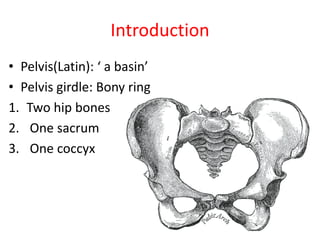
Introduction
• Pelvis(Latin): ‘ a basin’
• Pelvis girdle: Bony ring
1. Two hip bones
2. One sacrum
3. One coccyx
Functions of pelvis
1. Locomotion
2. Weight transmission
3. Provides areas for the attachments of
muscles
4. Protection of pelvic viscera
5. Plays important role in parturition.
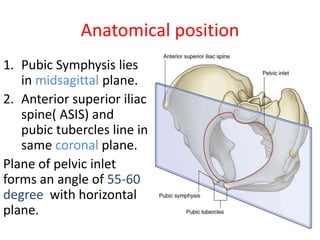
Anatomical position
1. Pubic Symphysis lies
in midsagittal plane.
2. Anterior superior iliac
spine( ASIS) and
pubic tubercles line in
same coronal plane.
Plane of pelvic inlet
forms an angle of 55-60
degree with horizontal
plane.
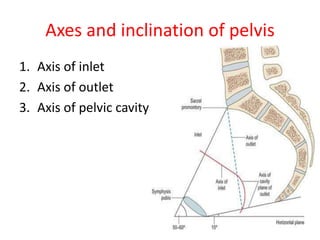
Axes and inclination of pelvis
1. Axis of inlet
2. Axis of outlet
3. Axis of pelvic cavity
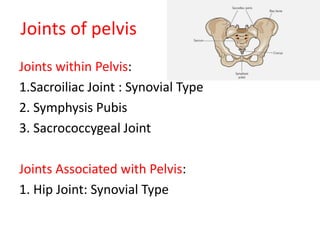
Joints of pelvis
Joints within Pelvis:
1.Sacroiliac Joint : Synovial Type
2. Symphysis Pubis
3. Sacrococcygeal Joint
Joints Associated with Pelvis:
1. Hip Joint: Synovial Type
Divisions of pelvis
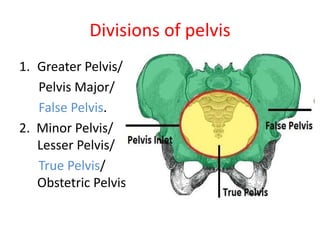
1. Greater Pelvis/
Pelvis Major/
False Pelvis.
2. Minor Pelvis/
Lesser Pelvis/
True Pelvis/
Obstetric Pelvis
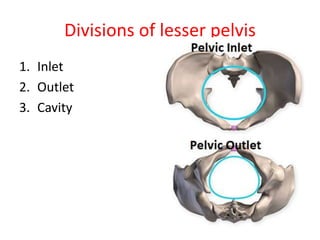
Divisions of lesser pelvis
1. Inlet
2. Outlet
3. Cavity
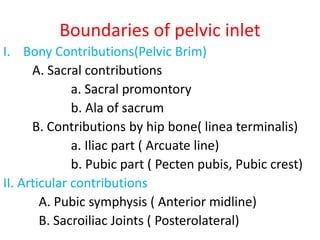
Boundaries of pelvic inlet
I. Bony Contributions(Pelvic Brim)
A. Sacral contributions
a. Sacral promontory
b. Ala of sacrum
B. Contributions by hip bone( linea terminalis)
a. Iliac part ( Arcuate line)
b. Pubic part ( Pecten pubis, Pubic crest)
II. Articular contributions
A. Pubic symphysis ( Anterior midline)
B. Sacroiliac Joints ( Posterolateral)
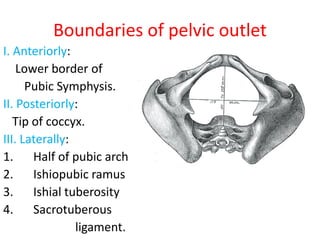
Boundaries of pelvic outlet
I. Anteriorly:
Lower border of
Pubic Symphysis.
II. Posteriorly:
Tip of coccyx.
III. Laterally:
1. Half of pubic arch
2. Ishiopubic ramus
3. Ishial tuberosity
4. Sacrotuberous
ligament.
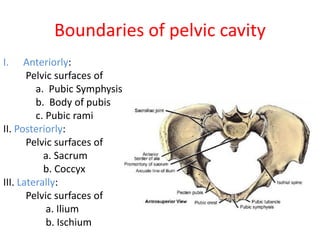
Boundaries of pelvic cavity
I. Anteriorly:
Pelvic surfaces of
a. Pubic Symphysis
b. Body of pubis
c. Pubic rami
II. Posteriorly:
Pelvic surfaces of
a. Sacrum
b. Coccyx
III. Laterally:
Pelvic surfaces of
a. Ilium
b. Ischium
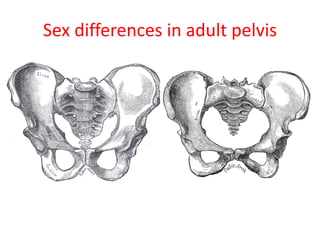
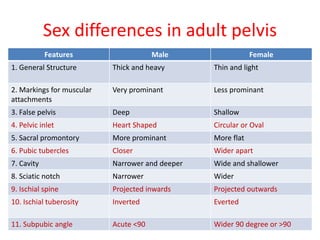
Sex differences in adult pelvis
Features Male Female
1. General Structure Thick and heavy Thin and light
2. Markings for muscular
attachments
Very prominant Less prominant
3. False pelvis Deep Shallow
4. Pelvic inlet Heart Shaped Circular or Oval
5. Sacral promontory More prominant More flat
6. Pubic tubercles Closer Wider apart
7. Cavity Narrower and deeper Wide and shallower
8. Sciatic notch Narrower Wider
9. Ischial spine Projected inwards Projected outwards
10. Ischial tuberosity Inverted Everted
11. Subpubic angle Acute <90 Wider 90 degree or >90
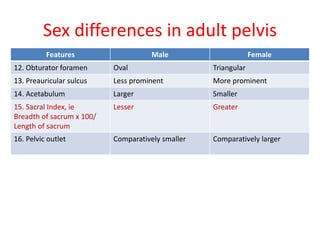
Sex differences in adult pelvis
Features Male Female
12. Obturator foramen Oval Triangular
13. Preauricular sulcus Less prominent More prominent
14. Acetabulum Larger Smaller
15. Sacral Index, ie
Breadth of sacrum x 100/
Length of sacrum
Lesser Greater
16. Pelvic outlet Comparatively smaller Comparatively larger
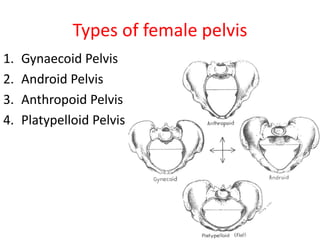
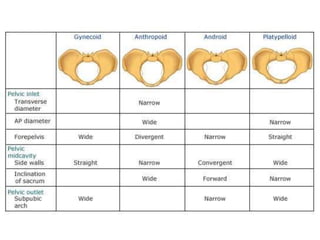
Types of female pelvis
1. Gynaecoid Pelvis
2. Android Pelvis
3. Anthropoid Pelvis
4. Platypelloid Pelvis
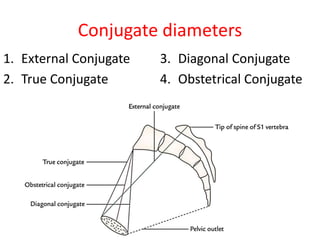
Conjugate diameters
1. External Conjugate
2. True Conjugate
3. Diagonal Conjugate
4. Obstetrical Conjugate
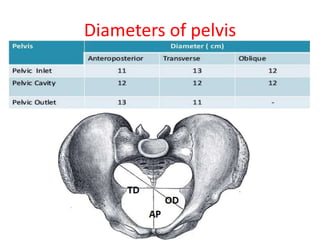
Diameters of pelvis
Applied anatomy
1. Diameters of the pelvic inlet in females are very
important due to obstetrical reasons (to
evaluate cephalopelvic dispropotion:CPD).
2. Interspinous diameter (least pelvic diameter)
can be estimated by palpating sacrospinous
ligament through vagina.The length of this
ligament is equal to the half interspinous
diameter.
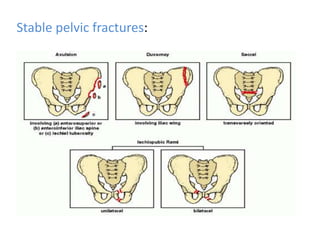
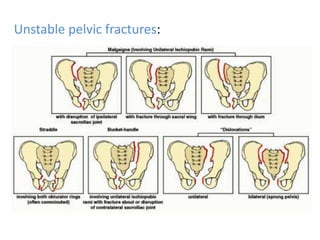
3. Pelvic Fracture:
i. Stable fracture: Intact pelvic ring.
ii. Unstable fracture: Disrupted pelvic ring.
iii. Complicated fracture:
Associated with visceral damage: Urinary bladder
and Urethra are most vulnerable viscera.
Stable pelvic fractures:
Unstable pelvic fractures:
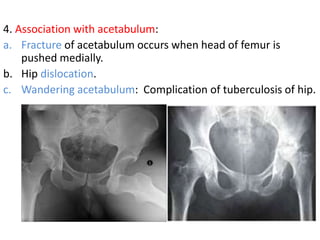
4. Association with acetabulum:
a. Fracture of acetabulum occurs when head of femur is
pushed medially.
b. Hip dislocation.
c. Wandering acetabulum: Complication of tuberculosis of hip.
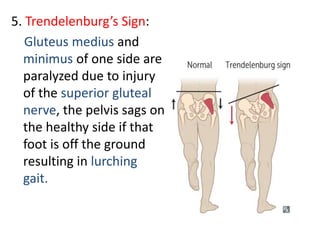
5. Trendelenburg’s Sign:
Gluteus medius and
minimus of one side are
paralyzed due to injury
of the superior gluteal
nerve, the pelvis sags on
the healthy side if that
foot is off the ground
resulting in lurching
gait.
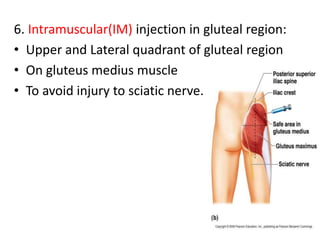
6. Intramuscular(IM) injection in gluteal region:
• Upper and Lateral quadrant of gluteal region
• On gluteus medius muscle
• To avoid injury to sciatic nerve.
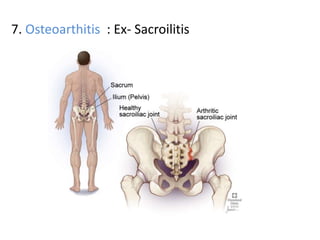
7. Osteoarthitis : Ex- Sacroilitis
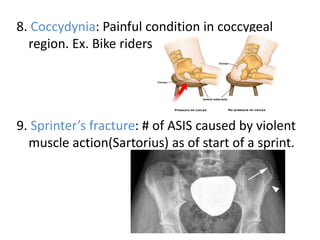
8. Coccydynia: Painful condition in coccygeal
region. Ex. Bike riders
9. Sprinter’s fracture: # of ASIS caused by violent
muscle action(Sartorius) as of start of a sprint.
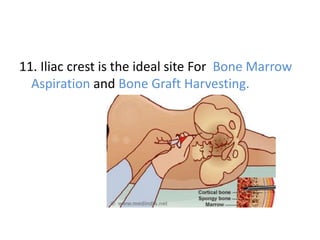
11. Iliac crest is the ideal site For Bone Marrow
Aspiration and Bone Graft Harvesting.
Thank You
Trendel

Bony pelvis

  • 1.
    BONY PELVIS Dr. MathewJoseph MBBS,MD(2nd Year),BCCPM Junior Resident Department of Anatomy All India Institute of Medical Sciences - Rishikesh
  • 2.
    Learning Objectives Bony Pelvis: 1.Introduction. 2. Importance of pelvis. 3. Anatomical position. 4. Divisions of pelvis. 5. Diameters of pelvis. 6. Sex difference of adult pelvis. 7. Types of female pelvis. 8. Applied anatomy of pelvis.
  • 3.
    Introduction • Pelvis(Latin): ‘a basin’ • Pelvis girdle: Bony ring 1. Two hip bones 2. One sacrum 3. One coccyx
  • 4.
    Functions of pelvis 1.Locomotion 2. Weight transmission 3. Provides areas for the attachments of muscles 4. Protection of pelvic viscera 5. Plays important role in parturition.
  • 5.
    Anatomical position 1. PubicSymphysis lies in midsagittal plane. 2. Anterior superior iliac spine( ASIS) and pubic tubercles line in same coronal plane. Plane of pelvic inlet forms an angle of 55-60 degree with horizontal plane.
  • 6.
    Axes and inclinationof pelvis 1. Axis of inlet 2. Axis of outlet 3. Axis of pelvic cavity
  • 7.
    Joints of pelvis Jointswithin Pelvis: 1.Sacroiliac Joint : Synovial Type 2. Symphysis Pubis 3. Sacrococcygeal Joint Joints Associated with Pelvis: 1. Hip Joint: Synovial Type
  • 8.
    Divisions of pelvis 1.Greater Pelvis/ Pelvis Major/ False Pelvis. 2. Minor Pelvis/ Lesser Pelvis/ True Pelvis/ Obstetric Pelvis
  • 9.
    Divisions of lesserpelvis 1. Inlet 2. Outlet 3. Cavity
  • 10.
    Boundaries of pelvicinlet I. Bony Contributions(Pelvic Brim) A. Sacral contributions a. Sacral promontory b. Ala of sacrum B. Contributions by hip bone( linea terminalis) a. Iliac part ( Arcuate line) b. Pubic part ( Pecten pubis, Pubic crest) II. Articular contributions A. Pubic symphysis ( Anterior midline) B. Sacroiliac Joints ( Posterolateral)
  • 11.
    Boundaries of pelvicoutlet I. Anteriorly: Lower border of Pubic Symphysis. II. Posteriorly: Tip of coccyx. III. Laterally: 1. Half of pubic arch 2. Ishiopubic ramus 3. Ishial tuberosity 4. Sacrotuberous ligament.
  • 12.
    Boundaries of pelviccavity I. Anteriorly: Pelvic surfaces of a. Pubic Symphysis b. Body of pubis c. Pubic rami II. Posteriorly: Pelvic surfaces of a. Sacrum b. Coccyx III. Laterally: Pelvic surfaces of a. Ilium b. Ischium
  • 13.
    Sex differences inadult pelvis
  • 14.
    Sex differences inadult pelvis Features Male Female 1. General Structure Thick and heavy Thin and light 2. Markings for muscular attachments Very prominant Less prominant 3. False pelvis Deep Shallow 4. Pelvic inlet Heart Shaped Circular or Oval 5. Sacral promontory More prominant More flat 6. Pubic tubercles Closer Wider apart 7. Cavity Narrower and deeper Wide and shallower 8. Sciatic notch Narrower Wider 9. Ischial spine Projected inwards Projected outwards 10. Ischial tuberosity Inverted Everted 11. Subpubic angle Acute <90 Wider 90 degree or >90
  • 15.
    Sex differences inadult pelvis Features Male Female 12. Obturator foramen Oval Triangular 13. Preauricular sulcus Less prominent More prominent 14. Acetabulum Larger Smaller 15. Sacral Index, ie Breadth of sacrum x 100/ Length of sacrum Lesser Greater 16. Pelvic outlet Comparatively smaller Comparatively larger
  • 16.
    Types of femalepelvis 1. Gynaecoid Pelvis 2. Android Pelvis 3. Anthropoid Pelvis 4. Platypelloid Pelvis
  • 18.
    Conjugate diameters 1. ExternalConjugate 2. True Conjugate 3. Diagonal Conjugate 4. Obstetrical Conjugate
  • 19.
  • 20.
    Applied anatomy 1. Diametersof the pelvic inlet in females are very important due to obstetrical reasons (to evaluate cephalopelvic dispropotion:CPD). 2. Interspinous diameter (least pelvic diameter) can be estimated by palpating sacrospinous ligament through vagina.The length of this ligament is equal to the half interspinous diameter.
  • 21.
    3. Pelvic Fracture: i.Stable fracture: Intact pelvic ring. ii. Unstable fracture: Disrupted pelvic ring. iii. Complicated fracture: Associated with visceral damage: Urinary bladder and Urethra are most vulnerable viscera.
  • 22.
  • 23.
  • 24.
    4. Association withacetabulum: a. Fracture of acetabulum occurs when head of femur is pushed medially. b. Hip dislocation. c. Wandering acetabulum: Complication of tuberculosis of hip.
  • 25.
    5. Trendelenburg’s Sign: Gluteusmedius and minimus of one side are paralyzed due to injury of the superior gluteal nerve, the pelvis sags on the healthy side if that foot is off the ground resulting in lurching gait.
  • 26.
    6. Intramuscular(IM) injectionin gluteal region: • Upper and Lateral quadrant of gluteal region • On gluteus medius muscle • To avoid injury to sciatic nerve.
  • 27.
    7. Osteoarthitis :Ex- Sacroilitis
  • 28.
    8. Coccydynia: Painfulcondition in coccygeal region. Ex. Bike riders 9. Sprinter’s fracture: # of ASIS caused by violent muscle action(Sartorius) as of start of a sprint.
  • 29.
    11. Iliac crestis the ideal site For Bone Marrow Aspiration and Bone Graft Harvesting.
  • 30.
  • 31.