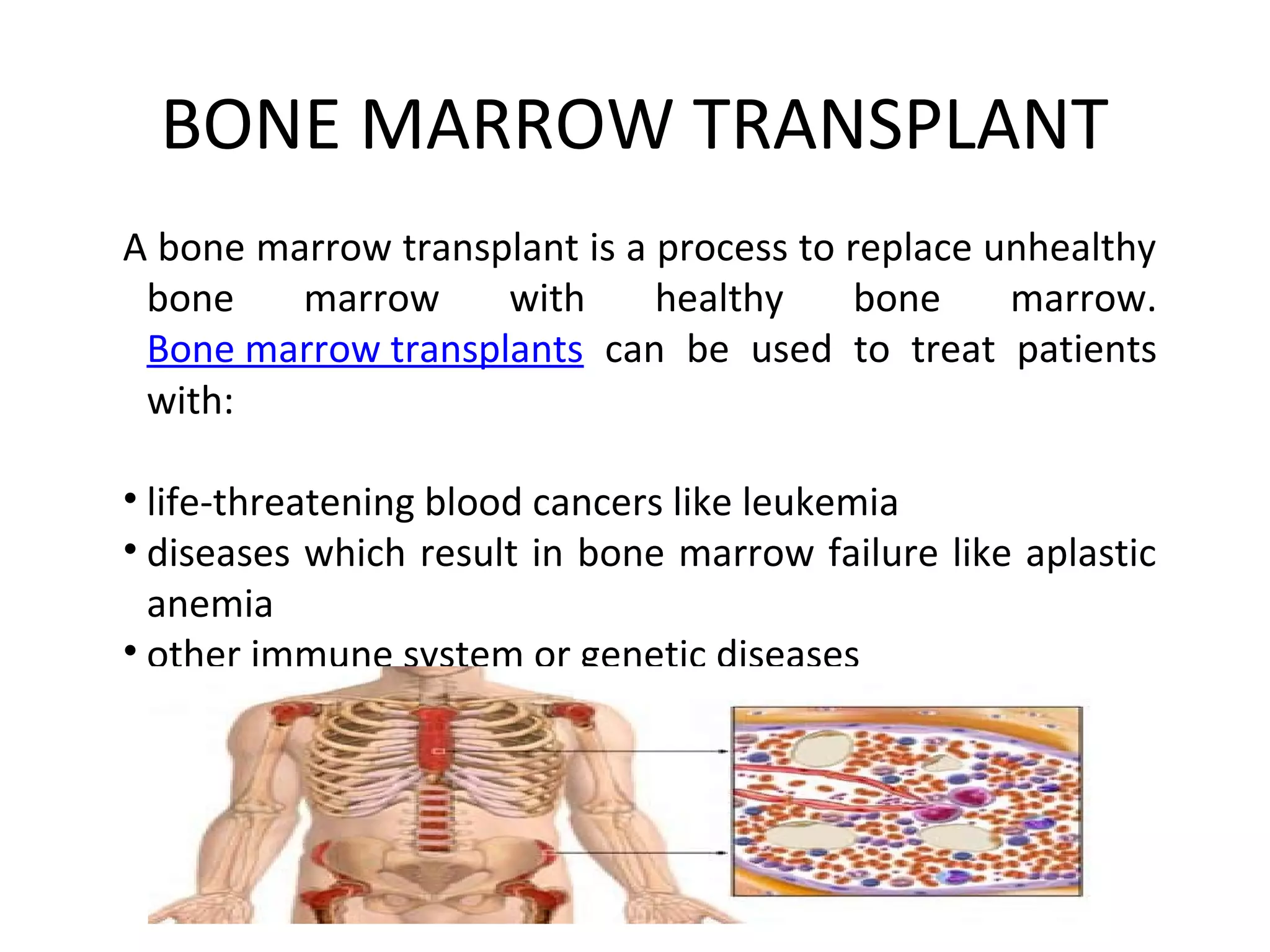
Autologous bone marrow transplant involves harvesting a patient's own bone marrow stem cells, storing them, and later re-infusing them after high-dose chemotherapy or radiation treatment to destroy cancerous cells. The stem cells help repopulate the bone marrow and restore the immune system. Complications can include infections during the neutropenic phase, graft-versus-host disease, and mucositis. Long term effects may include secondary cancers or sterility. Autologous transplants are commonly used to treat blood cancers like lymphoma or multiple myeloma.