Agents of anaerobe infections   Clostridia
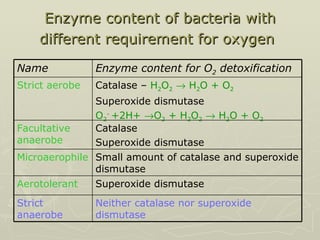
General gropes of bacteria with respect to oxygen requirements Obligate (strict) aerobes Obligate (strict) anaerobes Facultative anaerobes Microaerophiles Aerotolerant microorganisms  Capnophiles
Obligate anaerobes  There are microorganisms that cannot multiply is any oxygen is present.   Some members are actually killed by traces of oxygen because they cannot modify the toxic forms of oxygen produced in metabolism. Among the more important anaerobic pathogens are some species of  Clostridium, Bacteroides
Enzyme content of bacteria with different requirement for oxygen   Neither catalase nor superoxide dismutase Strict anaerobe Superoxide dismutase Aerotolerant Small amount of catalase and superoxide dismutase Microaerophile Catalase  Superoxide dismutase Facultative anaerobe  Catalase –  H 2 O 2     H 2 O + O 2 Superoxide dismutase O 2 -  +2H+   O 2  + H 2 O 2     H 2 O + O 2 Strict aerobe Enzyme content for O 2  detoxification Name
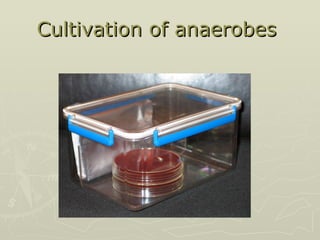
Cultivation of anaerobes
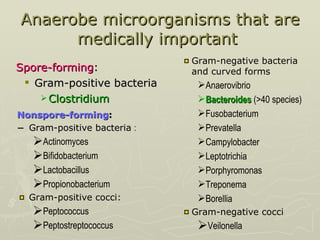
Anaerobe microorganisms that are medically important  Spore-forming : Gram-positive bacteria Clostridium Nonspore-forming : Gram-positive bacteria   : Actinomyces Bifidobacterium Lactobacillus Propionobacterium Gram-positive cocci : Peptococcus Peptostreptococcus Gram-negative bacteria and curved forms Anaerovibrio Bacteroides   (>40 species) Fusobacterium Prevatella Campylobacter Leptotrichia Porphyromonas  Treponema Borellia Gram-negative cocci Veilonella
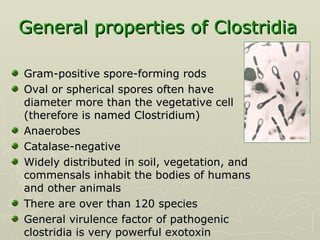
General properties of Clostridia   Gram-positive spore-forming rods Oval or spherical spores often have diameter more than the vegetative cell (therefore is named Clostridium) Anaerobes  Catalase-negative Widely distributed in soil, vegetation, and commensals inhabit the bodies of humans and other animals There are over than 120 species General virulence factor of pathogenic clostridia is very powerful exotoxin
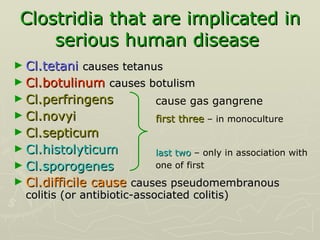
Clostridia that are implicated in serious human disease   Cl.tetani   causes tetanus   Cl.botulinum   causes botulism   Cl.perfringens Cl.novyi Cl.septicum Cl.histolyticum Cl.sporogenes Cl.difficile cause  causes pseudomembranous colitis (or antibiotic-associated colitis) cause gas gangrene  first three  – in monoculture last two  – only in association with one of first
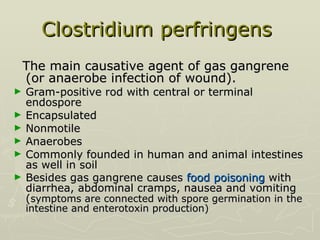
Clostridium perfringens   The main causative agent of gas gangrene (or anaerobe infection of wound). Gram-positive rod with central or terminal endospore Encapsulated Nonmotile  Anaerobes  Commonly founded in human and animal intestines as well in soil Besides gas gangrene causes  food poisoning  with diarrhea, abdominal cramps, nausea and vomiting ( symptoms are connected with spore germination in the intestine and enterotoxin production)
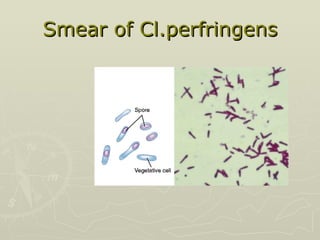
Smear of Cl.perfringens
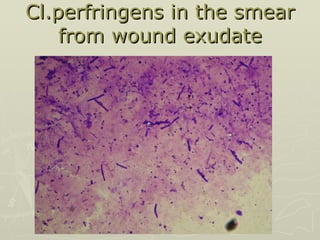
Cl.perfringens in the smear from wound exudate
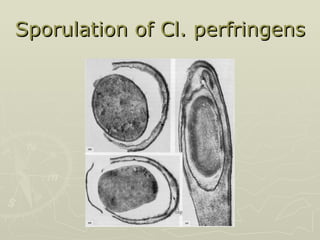
Sporulation of   Cl. perfringens
Five different types of Cl.perfringens are recognized, depend on which toxins they produce – A, B, C, D, E
Cl.perfringens virulence factors    exotoxin  - lecithinase (the most potent one) kills leukocytes, causes red blood cell rupture, edema and tissue destruction by degrading the lecithin component of their membranes. On blood agar causes     -hemolysis    exotoxin  causes   -hemolysis on the blood agar Enzymes:  Collagenase Hyaluronidase  DNase
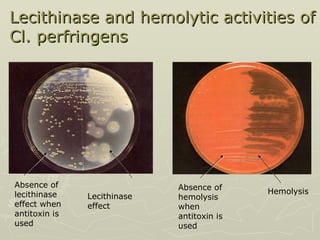
Lecithinase and hemolytic activities of Cl. perfringens Absence of lecithinase effect when antitoxin is used  Hemolysis  Lecithinase effect   Absence of hemolysis when antitoxin is used
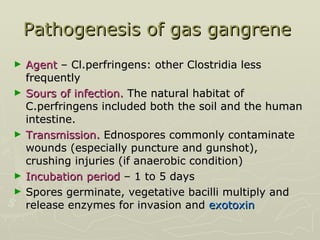
Pathogenesis of gas gangrene  Agent  – Cl.perfringens: other Clostridia less frequently  Sours of infection.  The natural habitat of C.perfringens included both the soil and the human intestine. Transmission.  Ednospores commonly contaminate wounds (especially puncture and gunshot), crushing injuries (if anaerobic condition) Incubation period  – 1 to 5 days Spores germinate, vegetative bacilli multiply and release enzymes for invasion and  exotoxin
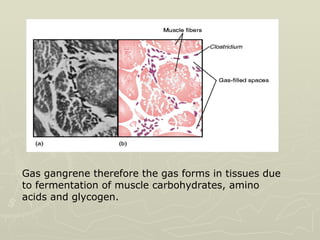
Gas gangrene therefore the gas forms in tissues due to fermentation of muscle carbohydrates, amino acids and glycogen.
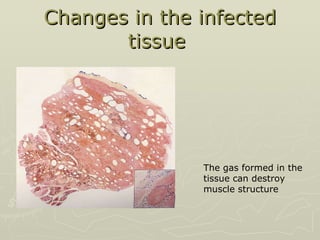
Changes in the infected tissue  The gas formed in the tissue can destroy muscle structure
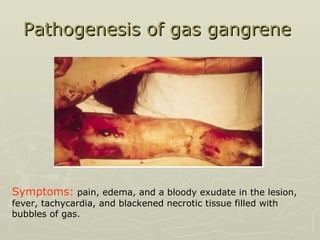
Pathogenesis of gas gangrene  Symptoms:  pain, edema, and a bloody exudate in the lesion, fever, tachycardia, and blackened necrotic tissue filled with bubbles of gas.
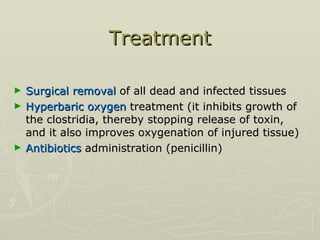
Treatment  Surgical removal  of all dead and infected tissues Hyperbaric oxygen  treatment (it inhibits growth of the clostridia, thereby stopping release of toxin, and it also improves oxygenation of injured tissue) Antibiotics  administration (penicillin)
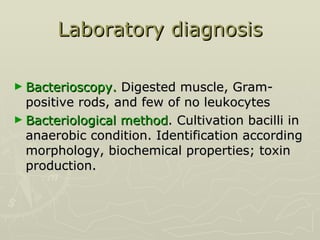
Laboratory diagnosis Bacterioscopy.  Digested muscle, Gram-positive rods, and few of no leukocytes  Bacteriological method . Cultivation bacilli in anaerobic condition. Identification according morphology, biochemical properties; toxin production.
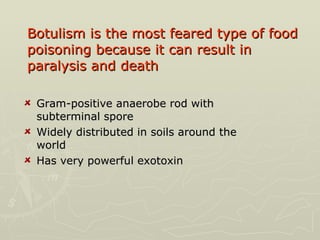
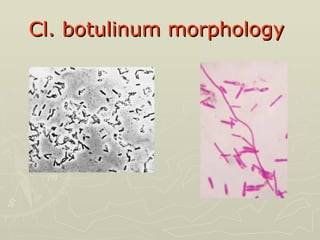
Botulism is the most feared type of food poisoning because it can result in paralysis and death Gram-positive anaerobe rod with subterminal spore Widely distributed in soils around the world Has very powerful exotoxin
Cl. botulinum morphology
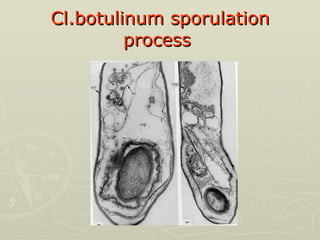
Cl.botulinum sporulation process
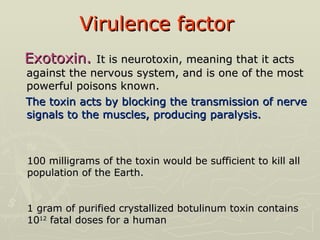
Virulence factor   Exotoxin.   It is neurotoxin, meaning that it acts against the nervous system, and is one of the most powerful poisons known.  The toxin acts by blocking the transmission of nerve signals to the muscles, producing paralysis. 100 milligrams of the toxin would be sufficient to kill all population of the Earth.  1 gram of purified crystallized botulinum toxin contains 10 12  fatal doses for a human
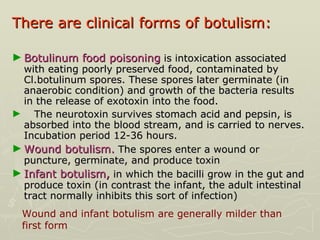
There are clinical forms of botulism:  Botulinum food poisoning  is intoxication associated with eating poorly preserved food, contaminated by Cl.botulinum spores. These spores later germinate (in anaerobic condition) and growth of the bacteria results in the release of exotoxin into the food.  The neurotoxin survives stomach acid and pepsin, is absorbed into the blood stream, and is carried to nerves. Incubation period 12-36 hours. Wound botulism.  The spores enter a wound or puncture, germinate, and produce toxin Infant botulism,  in which the bacilli grow in the gut and produce toxin (in contrast the infant, the adult intestinal tract normally inhibits this sort of infection) Wound and infant botulism are generally milder than first form
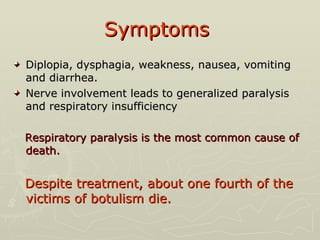
Symptoms   Diplopia, dysphagia, weakness, nausea, vomiting and diarrhea. Nerve involvement leads to generalized paralysis and respiratory insufficiency Respiratory paralysis is the most common cause of death.  Despite treatment, about one fourth of the victims of botulism die.
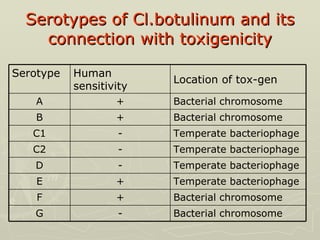
Serotypes of   Cl.botulinum and its connection with toxigenicity Bacterial chromosome - G Bacterial chromosome + F Temperate bacteriophage + E Temperate bacteriophage - D Temperate bacteriophage - С2 Temperate bacteriophage  - С1 Bacterial chromosome + В Bacterial chromosome  + А Location of tox-gen Human sensitivity  Serotype
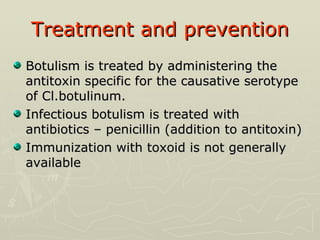
Treatment and prevention Botulism is treated by administering the antitoxin specific for the causative serotype of Cl.botulinum. Infectious botulism is treated with antibiotics – penicillin (addition to antitoxin) Immunization with toxoid is not generally available
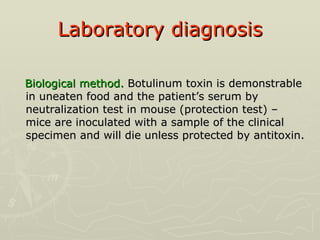
Laboratory diagnosis Biological method.  Botulinum toxin is demonstrable in uneaten food and the patient’s serum by neutralization test in mouse (protection test) – mice are inoculated with a sample of the clinical specimen and will die unless protected by antitoxin.
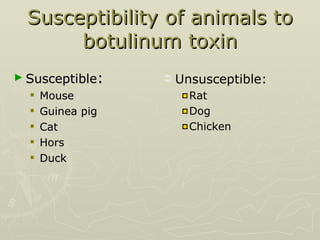
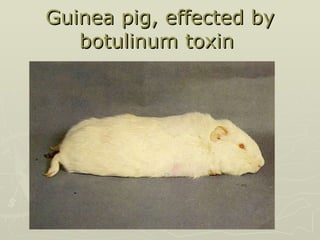
Susceptibility of animals to botulinum toxin Susceptible : Mouse  Guinea pig Cat  Hors  Duck Unsusceptible : Rat Dog  Chicken
Guinea pig, effected by botulinum toxin
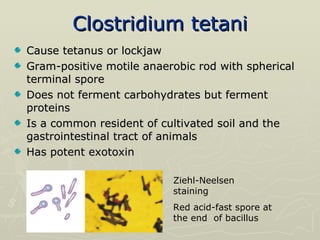
Clostridium tetani Cause tetanus or lockjaw Gram-positive motile anaerobic rod with spherical terminal spore Does not ferment carbohydrates but ferment proteins  Is a common resident of cultivated soil and the gastrointestinal tract of animals Has potent exotoxin Ziehl-Neelsen staining  Red acid-fast spore at the end  of bacillus
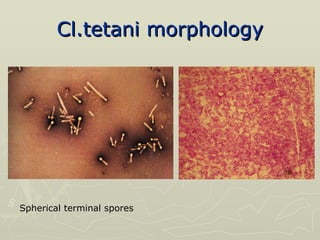
Cl.tetani morphology Spherical terminal spores
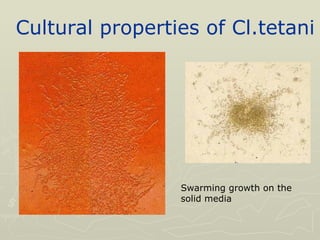
Cultural   properties of Cl.tetani Swarming growth on the solid media
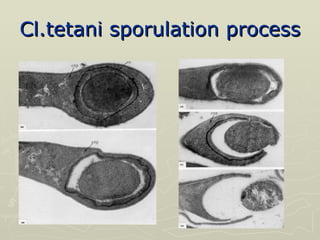
Cl.tetani sporulation process
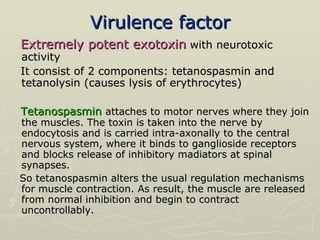
Virulence factor Extremely potent exotoxin  with neurotoxic activity  It consist of 2 components: tetanospasmin and tetanolysin (causes lysis of erythrocytes) Tetanospasmin   attaches to motor nerves where they join the muscles. The toxin is taken into the nerve by endocytosis and is carried intra-axonally to the central nervous system, where it binds to ganglioside receptors and blocks release of inhibitory madiators at spinal synapses.  So tetanospasmin alters the usual regulation mechanisms for muscle contraction. As result, the muscle are released from normal inhibition and begin to contract uncontrollably.
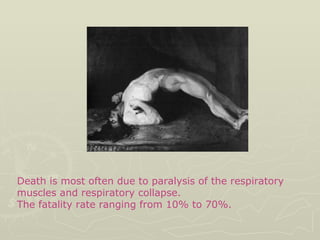
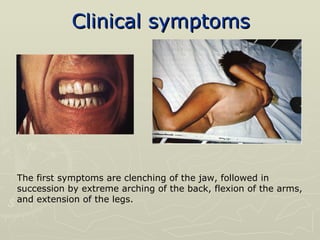
Clinical symptoms The first symptoms are clenching of the jaw, followed in succession by extreme arching of the back, flexion of the arms, and extension of the legs.
Death is most often due to paralysis of the respiratory muscles and respiratory collapse.  The fatality rate ranging from 10% to 70%.
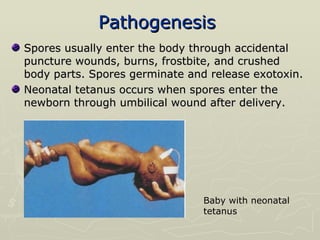
Pathogenesis   Spores usually enter the body through accidental puncture wounds, burns, frostbite, and crushed body parts. Spores germinate and release exotoxin. Neonatal tetanus occurs when spores enter the newborn through umbilical wound after delivery.  Baby with neonatal tetanus
Laboratory diagnosis   has limited value Bacteriological method. Biological method. Infecting of mouse causes tetanus and death. Neutralization test in mice can be used – mice protected by antitoxin (antibodies to botulinum exotoxin) remain live.
Tetanus in animals
Treatment  and prevention Tetanus is treated by administering tetanus antitoxin to neutralize any toxin not yet attached to motor nerve cells An antibiotics such as penicillin For prevention use toxoid  (formaldehyde-treated exotoxin)
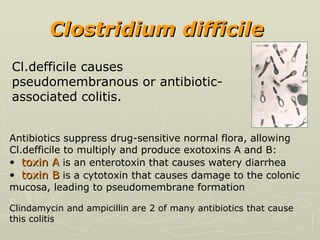
C lostridium  difficile   Cl.defficile causes pseudomembranous or antibiotic-associated colitis.  Antibiotics suppress drug-sensitive normal flora, allowing Cl.defficile to multiply and produce exotoxins A and B: toxin A  is an enterotoxin that causes watery diarrhea  toxin B  is a cytotoxin that causes damage to the colonic mucosa, leading to pseudomembrane formation Clindamycin and ampicillin are 2 of many antibiotics that cause this colitis
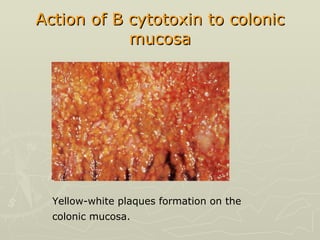
Action of B cytotoxin to colonic mucosa Yellow-white plaques formation on the  colonic mucosa.
Diagnosis, treatment, prevention Diagnosis.   Exotoxin B is detected in filtrates of stool samples by its cytotoxin effect on cultured cells. It is identified by inhibition of cytotoxicity by specific antibody. An ELISA (immuno-enzyme test) is available for detection both exotoxins A and B. Treatment.  The causative antibiotics should be withdrawn. Oral metronidazole should be given and fluids replaced.  Prevention.  There are no vaccines

Bohomolets Microbiology Lecture #21

  • 1.
    Agents of anaerobeinfections Clostridia
  • 2.
    General gropes ofbacteria with respect to oxygen requirements Obligate (strict) aerobes Obligate (strict) anaerobes Facultative anaerobes Microaerophiles Aerotolerant microorganisms Capnophiles
  • 3.
    Obligate anaerobes There are microorganisms that cannot multiply is any oxygen is present. Some members are actually killed by traces of oxygen because they cannot modify the toxic forms of oxygen produced in metabolism. Among the more important anaerobic pathogens are some species of Clostridium, Bacteroides
  • 4.
    Enzyme content ofbacteria with different requirement for oxygen Neither catalase nor superoxide dismutase Strict anaerobe Superoxide dismutase Aerotolerant Small amount of catalase and superoxide dismutase Microaerophile Catalase Superoxide dismutase Facultative anaerobe Catalase – H 2 O 2  H 2 O + O 2 Superoxide dismutase O 2 - +2H+  O 2 + H 2 O 2  H 2 O + O 2 Strict aerobe Enzyme content for O 2 detoxification Name
  • 5.
  • 6.
    Anaerobe microorganisms thatare medically important Spore-forming : Gram-positive bacteria Clostridium Nonspore-forming : Gram-positive bacteria : Actinomyces Bifidobacterium Lactobacillus Propionobacterium Gram-positive cocci : Peptococcus Peptostreptococcus Gram-negative bacteria and curved forms Anaerovibrio Bacteroides (>40 species) Fusobacterium Prevatella Campylobacter Leptotrichia Porphyromonas Treponema Borellia Gram-negative cocci Veilonella
  • 7.
    General properties ofClostridia Gram-positive spore-forming rods Oval or spherical spores often have diameter more than the vegetative cell (therefore is named Clostridium) Anaerobes Catalase-negative Widely distributed in soil, vegetation, and commensals inhabit the bodies of humans and other animals There are over than 120 species General virulence factor of pathogenic clostridia is very powerful exotoxin
  • 8.
    Clostridia that areimplicated in serious human disease Cl.tetani causes tetanus Cl.botulinum causes botulism Cl.perfringens Cl.novyi Cl.septicum Cl.histolyticum Cl.sporogenes Cl.difficile cause causes pseudomembranous colitis (or antibiotic-associated colitis) cause gas gangrene first three – in monoculture last two – only in association with one of first
  • 9.
    Clostridium perfringens The main causative agent of gas gangrene (or anaerobe infection of wound). Gram-positive rod with central or terminal endospore Encapsulated Nonmotile Anaerobes Commonly founded in human and animal intestines as well in soil Besides gas gangrene causes food poisoning with diarrhea, abdominal cramps, nausea and vomiting ( symptoms are connected with spore germination in the intestine and enterotoxin production)
  • 10.
  • 11.
    Cl.perfringens in thesmear from wound exudate
  • 12.
    Sporulation of Cl. perfringens
  • 13.
    Five different typesof Cl.perfringens are recognized, depend on which toxins they produce – A, B, C, D, E
  • 14.
    Cl.perfringens virulence factors exotoxin - lecithinase (the most potent one) kills leukocytes, causes red blood cell rupture, edema and tissue destruction by degrading the lecithin component of their membranes. On blood agar causes  -hemolysis  exotoxin causes  -hemolysis on the blood agar Enzymes: Collagenase Hyaluronidase DNase
  • 15.
    Lecithinase and hemolyticactivities of Cl. perfringens Absence of lecithinase effect when antitoxin is used Hemolysis Lecithinase effect Absence of hemolysis when antitoxin is used
  • 16.
    Pathogenesis of gasgangrene Agent – Cl.perfringens: other Clostridia less frequently Sours of infection. The natural habitat of C.perfringens included both the soil and the human intestine. Transmission. Ednospores commonly contaminate wounds (especially puncture and gunshot), crushing injuries (if anaerobic condition) Incubation period – 1 to 5 days Spores germinate, vegetative bacilli multiply and release enzymes for invasion and exotoxin
  • 17.
    Gas gangrene thereforethe gas forms in tissues due to fermentation of muscle carbohydrates, amino acids and glycogen.
  • 18.
    Changes in theinfected tissue The gas formed in the tissue can destroy muscle structure
  • 19.
    Pathogenesis of gasgangrene Symptoms: pain, edema, and a bloody exudate in the lesion, fever, tachycardia, and blackened necrotic tissue filled with bubbles of gas.
  • 20.
    Treatment Surgicalremoval of all dead and infected tissues Hyperbaric oxygen treatment (it inhibits growth of the clostridia, thereby stopping release of toxin, and it also improves oxygenation of injured tissue) Antibiotics administration (penicillin)
  • 21.
    Laboratory diagnosis Bacterioscopy. Digested muscle, Gram-positive rods, and few of no leukocytes Bacteriological method . Cultivation bacilli in anaerobic condition. Identification according morphology, biochemical properties; toxin production.
  • 22.
    Botulism is themost feared type of food poisoning because it can result in paralysis and death Gram-positive anaerobe rod with subterminal spore Widely distributed in soils around the world Has very powerful exotoxin
  • 23.
  • 24.
  • 25.
    Virulence factor Exotoxin. It is neurotoxin, meaning that it acts against the nervous system, and is one of the most powerful poisons known. The toxin acts by blocking the transmission of nerve signals to the muscles, producing paralysis. 100 milligrams of the toxin would be sufficient to kill all population of the Earth. 1 gram of purified crystallized botulinum toxin contains 10 12 fatal doses for a human
  • 26.
    There are clinicalforms of botulism: Botulinum food poisoning is intoxication associated with eating poorly preserved food, contaminated by Cl.botulinum spores. These spores later germinate (in anaerobic condition) and growth of the bacteria results in the release of exotoxin into the food. The neurotoxin survives stomach acid and pepsin, is absorbed into the blood stream, and is carried to nerves. Incubation period 12-36 hours. Wound botulism. The spores enter a wound or puncture, germinate, and produce toxin Infant botulism, in which the bacilli grow in the gut and produce toxin (in contrast the infant, the adult intestinal tract normally inhibits this sort of infection) Wound and infant botulism are generally milder than first form
  • 27.
    Symptoms Diplopia, dysphagia, weakness, nausea, vomiting and diarrhea. Nerve involvement leads to generalized paralysis and respiratory insufficiency Respiratory paralysis is the most common cause of death. Despite treatment, about one fourth of the victims of botulism die.
  • 28.
    Serotypes of Cl.botulinum and its connection with toxigenicity Bacterial chromosome - G Bacterial chromosome + F Temperate bacteriophage + E Temperate bacteriophage - D Temperate bacteriophage - С2 Temperate bacteriophage - С1 Bacterial chromosome + В Bacterial chromosome + А Location of tox-gen Human sensitivity Serotype
  • 29.
    Treatment and preventionBotulism is treated by administering the antitoxin specific for the causative serotype of Cl.botulinum. Infectious botulism is treated with antibiotics – penicillin (addition to antitoxin) Immunization with toxoid is not generally available
  • 30.
    Laboratory diagnosis Biologicalmethod. Botulinum toxin is demonstrable in uneaten food and the patient’s serum by neutralization test in mouse (protection test) – mice are inoculated with a sample of the clinical specimen and will die unless protected by antitoxin.
  • 31.
    Susceptibility of animalsto botulinum toxin Susceptible : Mouse Guinea pig Cat Hors Duck Unsusceptible : Rat Dog Chicken
  • 32.
    Guinea pig, effectedby botulinum toxin
  • 33.
    Clostridium tetani Causetetanus or lockjaw Gram-positive motile anaerobic rod with spherical terminal spore Does not ferment carbohydrates but ferment proteins Is a common resident of cultivated soil and the gastrointestinal tract of animals Has potent exotoxin Ziehl-Neelsen staining Red acid-fast spore at the end of bacillus
  • 34.
  • 35.
    Cultural properties of Cl.tetani Swarming growth on the solid media
  • 36.
  • 37.
    Virulence factor Extremelypotent exotoxin with neurotoxic activity It consist of 2 components: tetanospasmin and tetanolysin (causes lysis of erythrocytes) Tetanospasmin attaches to motor nerves where they join the muscles. The toxin is taken into the nerve by endocytosis and is carried intra-axonally to the central nervous system, where it binds to ganglioside receptors and blocks release of inhibitory madiators at spinal synapses. So tetanospasmin alters the usual regulation mechanisms for muscle contraction. As result, the muscle are released from normal inhibition and begin to contract uncontrollably.
  • 38.
    Clinical symptoms Thefirst symptoms are clenching of the jaw, followed in succession by extreme arching of the back, flexion of the arms, and extension of the legs.
  • 39.
    Death is mostoften due to paralysis of the respiratory muscles and respiratory collapse. The fatality rate ranging from 10% to 70%.
  • 40.
    Pathogenesis Spores usually enter the body through accidental puncture wounds, burns, frostbite, and crushed body parts. Spores germinate and release exotoxin. Neonatal tetanus occurs when spores enter the newborn through umbilical wound after delivery. Baby with neonatal tetanus
  • 41.
    Laboratory diagnosis has limited value Bacteriological method. Biological method. Infecting of mouse causes tetanus and death. Neutralization test in mice can be used – mice protected by antitoxin (antibodies to botulinum exotoxin) remain live.
  • 42.
  • 43.
    Treatment andprevention Tetanus is treated by administering tetanus antitoxin to neutralize any toxin not yet attached to motor nerve cells An antibiotics such as penicillin For prevention use toxoid (formaldehyde-treated exotoxin)
  • 44.
    C lostridium difficile Cl.defficile causes pseudomembranous or antibiotic-associated colitis. Antibiotics suppress drug-sensitive normal flora, allowing Cl.defficile to multiply and produce exotoxins A and B: toxin A is an enterotoxin that causes watery diarrhea toxin B is a cytotoxin that causes damage to the colonic mucosa, leading to pseudomembrane formation Clindamycin and ampicillin are 2 of many antibiotics that cause this colitis
  • 45.
    Action of Bcytotoxin to colonic mucosa Yellow-white plaques formation on the colonic mucosa.
  • 46.
    Diagnosis, treatment, preventionDiagnosis. Exotoxin B is detected in filtrates of stool samples by its cytotoxin effect on cultured cells. It is identified by inhibition of cytotoxicity by specific antibody. An ELISA (immuno-enzyme test) is available for detection both exotoxins A and B. Treatment. The causative antibiotics should be withdrawn. Oral metronidazole should be given and fluids replaced. Prevention. There are no vaccines

Editor's Notes

  • #3 Bacteria can be classified into some divisions based upon their requirments for gaseous oxygen or air, which contain 20% oxygen.
  • #5 Why are some anaerobes killed in the presence of O 2 , but others can tolerate in even though they cannot use it? Oxygen can be converted into a number of forms that are highly toxic. Some of these toxic forms, such as hydrogen peroxide (H 2 O 2 ), are formed by metabolic processes involving O 2 . Other toxic compounds, such as superoxide O 2 -), are produced as a chemical reaction on light. Cells that are not killed in the presence of oxygen contain enzymes that can convert these toxic compounds to nontoxic forms.
  • #8 Therefore clostridia are anaerobes, they need special condition of growing in host orgamism (without oxygen) and this feature influence to pathogenesis – as usual, bacterium must infect wound
  • #11 Spores are not sensitive to Gram-staining and are shown as uncolored space in the vegetative cell or separately situated uncolored oval cells.
  • #15 Theta toxin
  • #16 The enzymatic activity of  toxin can be demonstrated by growing the organism on a media containing egg yolk. It hydrolyses lecithin in the egg yolk and changes its color.
  • #17 Almost every sample of soil and dusty surface has spores of the gas gangrene bacillus. However, only rarely does contamination of a wound result in gas gangrene. The low oxygen condition results from the presence of aerobic bacteria that deplete oxygen. Such condition stimulate spore germination, rapid vegetative growth in the dead tissue, and release of exotoxins.
  • #21 Surgical removal of infected tissue is of primary importance. If treatment is not indicated early, the disease if invariably fatal.
  • #22 Diagnosis depends mostly on patient’s symptoms
  • #28 Diplopia – double vision Dyphagia – cannot swallow
  • #29 Cl.Botulinum species has 8 distinctly different types (A, B, C1, C2, D, E, F, G), which vary in distribution among animals, regions of the world, and the type of exotoxin. Human disease is usually associated with types A, B, E, and F, and animal disease with types A, B, C, D, E. In C, D, F strains, toxin production results from lysogenic conversion
  • #30 The toxin is moderately inactivated by boiling contaminated food for 15 minutes. The antitoxin only neutralizes toxin circulating in the blood stream, and the nerves already affected by it recover slowly, requiring weeks or months.
  • #31 The most available method is identification of toxin in patient’s blood and food.
  • #34 Tetanus is a neuromuscular disease whose alternate name, lockjaw, refers to an early effect of the disease on the jaw muscle.
  • #35 Cl.tetani shows 2 striking features. The first feature is the spherical endospore that forms at the end of the bacillus, in contrast to the oval endospore that develops near the center the center of the rods in other pathogenic species of Cl.
  • #36 The second feature is its swarming growth that spreads to cover the entire surface of solid media.
  • #42 Laboratory diagnosis has limited value. The main position – clinical symptoms of tetanus is so striking and high specific than do not require laboratory conformation. Isolation of Cl.tetani from wounds does not prove that a person has tetanus. Conversely, failure to find the organism in a patient’s wound cultures does not eliminate the possibility of tetanus. False negative results occur in up to 2 thirds of patients. The reasons for these observations are that tetanus exdopsores may contaminate sounds that are not sufficiently anaerobic to allow germination and toxin production, or the person may simply be immune to the toxin by prior vaccination.
  • #43 Paralysis develops since lower extremities and tail to upper part of body. In human - on the contrary, tetanus develop since back of the head and go down to extremities.
  • #44 Tetanus has a high mortality but is easily prevented by immunization.
  • #45 Cl.defficile is part of the flora of the gastrointestinal tract approximately 3% of the general population.