Presentation Title
Your company information
Body Fluid And Acid BAse
BAlAnce•
Presented to: Ms. AyeshA
huMAyun
Presented By: FAisAl shAhzAd
14-Arid-2022
evening B grouP
PMAs rAWAlPnidi
Body Fluids
Total amount of fluid in the body is
Approximately 70% of body weight
Body fluid has been divided into two
compartments
1-Intracellular fluid (ICF)
Inside the cells
55% of total body water
2-Extracellular fluid (ECF)
Outside the cells
45% of total body water
Composition of Body Fluids
Electrolytes
Cations: sodium, potassium, calcium hydrogen
and magnesium
Anions: chloride, bicarbonate, phosphate and
sulfate
Non-electrolytes
Glucose
Urea
Protein and lipid
Body Fluid Compartments
Extracellular fluid includ
Interstitial fluid
Present between the cells
Approximately 80%
Plasma
Present in blood
Approximately 20% of ECF
Also includes
Lymph
synovial fluid and cerebrospinal fluid
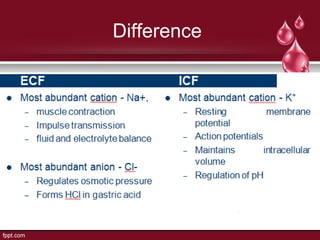
Difference
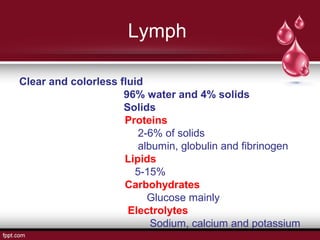
Lymph
Clear and colorless fluid
96% water and 4% solids
Solids
Proteins
2-6% of solids
albumin, globulin and fibrinogen
Lipids
5-15%
Carbohydrates
Glucose mainly
Electrolytes
Sodium, calcium and potassium
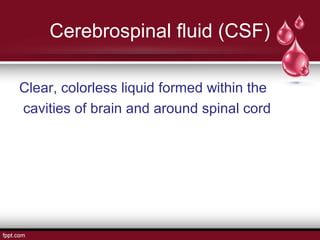
Cerebrospinal fluid (CSF)
Clear, colorless liquid formed within the
cavities of brain and around spinal cord
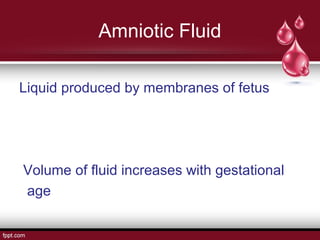
Amniotic Fluid
Liquid produced by membranes of fetus
Volume of fluid increases with gestational
age
Milk
Secreted by mammary glands
Complete natural food
83-87% water and 13-17% solids
Solids
Carbohydrates
Lactose
Lipids
Triacylglyerols
Proteins
Caesin (80%), Lactalbumin
Minerals
Ca, Mg, P, Na, K, Cl
Vitamins
Fat and water soluble vitamins
Tears
Produced by lachrymal glands
Isotonic but becomes hypertonic due to
evaporation as fluid passes over the cornea
ACID BASE
BANALANCE
ACID BASE BANALANCE
Normal range of pH
7.38 – 7.42
Controlled by systems which maintain H+
levels:
1-Buffering Systems
2-Ventilation Rates
3-Renal Function
1-Buffering Systems
Any molecule capable of picking up H ion can
act as a buffer: such as ammonia (NH3)
Buffering System 1. Bicarbonate buffering system
Buffering System 2. Phosphate buffering system
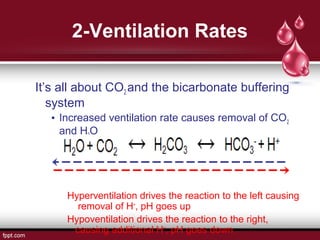
2-Ventilation Rates
It’s all about CO2 and the bicarbonate buffering
system
• Increased ventilation rate causes removal of CO2
and H2O
Hyperventilation drives the reaction to the left causing
removal of H+
, pH goes up
Hypoventilation drives the reaction to the right,
causing additional H+
, pH goes down
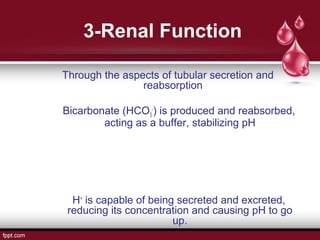
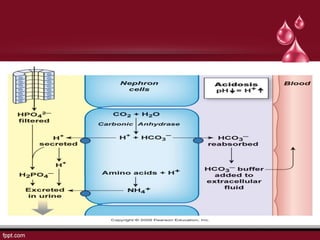
3-Renal Function
Through the aspects of tubular secretion and
reabsorption
Bicarbonate (HCO3
-
) is produced and reabsorbed,
acting as a buffer, stabilizing pH
H+
is capable of being secreted and excreted,
reducing its concentration and causing pH to go
up.
What happens when there is an
abundance (or lack) of H+
?
Acid Base Imbalances
Acidosis = too much H+
causing pH to drop
Alkalosis = too little H+
causing pH to rise
The urinary and respiratory systems work together to
control and maintain pH within homeostatic parameters
The systems will compensate for each other if
needed
Body fluid and acid base balance

Body fluid and acid base balance

  • 1.
  • 2.
    Body Fluid AndAcid BAse BAlAnce• Presented to: Ms. AyeshA huMAyun Presented By: FAisAl shAhzAd 14-Arid-2022 evening B grouP PMAs rAWAlPnidi
  • 3.
    Body Fluids Total amountof fluid in the body is Approximately 70% of body weight Body fluid has been divided into two compartments 1-Intracellular fluid (ICF) Inside the cells 55% of total body water 2-Extracellular fluid (ECF) Outside the cells 45% of total body water
  • 4.
    Composition of BodyFluids Electrolytes Cations: sodium, potassium, calcium hydrogen and magnesium Anions: chloride, bicarbonate, phosphate and sulfate Non-electrolytes Glucose Urea Protein and lipid
  • 5.
    Body Fluid Compartments Extracellularfluid includ Interstitial fluid Present between the cells Approximately 80% Plasma Present in blood Approximately 20% of ECF Also includes Lymph synovial fluid and cerebrospinal fluid
  • 6.
  • 7.
    Lymph Clear and colorlessfluid 96% water and 4% solids Solids Proteins 2-6% of solids albumin, globulin and fibrinogen Lipids 5-15% Carbohydrates Glucose mainly Electrolytes Sodium, calcium and potassium
  • 8.
    Cerebrospinal fluid (CSF) Clear,colorless liquid formed within the cavities of brain and around spinal cord
  • 9.
    Amniotic Fluid Liquid producedby membranes of fetus Volume of fluid increases with gestational age
  • 10.
    Milk Secreted by mammaryglands Complete natural food 83-87% water and 13-17% solids Solids Carbohydrates Lactose Lipids Triacylglyerols Proteins Caesin (80%), Lactalbumin Minerals Ca, Mg, P, Na, K, Cl Vitamins Fat and water soluble vitamins
  • 11.
    Tears Produced by lachrymalglands Isotonic but becomes hypertonic due to evaporation as fluid passes over the cornea
  • 12.
  • 13.
    ACID BASE BANALANCE Normalrange of pH 7.38 – 7.42 Controlled by systems which maintain H+ levels: 1-Buffering Systems 2-Ventilation Rates 3-Renal Function
  • 14.
    1-Buffering Systems Any moleculecapable of picking up H ion can act as a buffer: such as ammonia (NH3) Buffering System 1. Bicarbonate buffering system Buffering System 2. Phosphate buffering system
  • 15.
    2-Ventilation Rates It’s allabout CO2 and the bicarbonate buffering system • Increased ventilation rate causes removal of CO2 and H2O Hyperventilation drives the reaction to the left causing removal of H+ , pH goes up Hypoventilation drives the reaction to the right, causing additional H+ , pH goes down
  • 16.
    3-Renal Function Through theaspects of tubular secretion and reabsorption Bicarbonate (HCO3 - ) is produced and reabsorbed, acting as a buffer, stabilizing pH H+ is capable of being secreted and excreted, reducing its concentration and causing pH to go up.
  • 18.
    What happens whenthere is an abundance (or lack) of H+ ?
  • 19.
    Acid Base Imbalances Acidosis= too much H+ causing pH to drop Alkalosis = too little H+ causing pH to rise The urinary and respiratory systems work together to control and maintain pH within homeostatic parameters The systems will compensate for each other if needed