Spin-off technologies from 2nd generation biofuel:
Potential to transform fodder quality of crop
residues
Michael Blümmel, Sharma, G. V. M., Ravindranath, K., Padmakumar, V. and Christopher Jones
2018 Global Nutrition Symposium, January 2018, Addis Ababa, Ethiopia
aInternational Livestock Research Institute
bCSIR-Indian Institute for Chemical Technology
27 Annual Conference of the Ethiopian Society of Animal Production (ESAP)
EIAR, Addis Ababa, 29–31 August 2019
• Importance of straws and stover as feed resources
• Why research 2nd generation biofuel technologies for upgrading
the feeding value of straws and stover
• Effect of three potential spin-off technologies on laboratory
fodder quality traits
• Effect of two potential spin-off technologies on performance of
sheep fed TMRs containing 70% untreated and treated rice
straw
• Conclusions and way forward
Structure of Presentation
Summary of Feed Resources in India
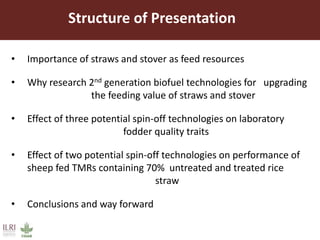
Feed resource in India in 2012 Contribution to overall feed resources (%)
Greens from CRP, forests, grazing 8.0
Planted forages 15.1
Crop residues 70.6
Concentrates 6.3
Deficit: feed availability versus feed requirement (%)
Dry matter (i.e. crop residue quantity) -6
Digestible crude protein -61
Total digestible nutrients -50
(Modified from NIANP, 2012; Blümmel et al., 2014a)
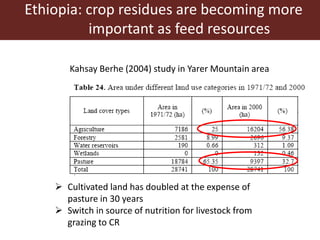
Ethiopia: crop residues are becoming more
important as feed resources
Kahsay Berhe (2004) study in Yarer Mountain area
 Cultivated land has doubled at the expense of
pasture in 30 years
 Switch in source of nutrition for livestock from
grazing to CR
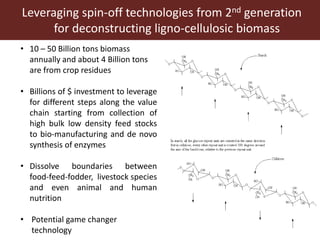
Leveraging spin-off technologies from 2nd generation
for deconstructing ligno-cellulosic biomass
• 10 – 50 Billion tons biomass
annually and about 4 Billion tons
are from crop residues
• Billions of $ investment to leverage
for different steps along the value
chain starting from collection of
high bulk low density feed stocks
to bio-manufacturing and de novo
synthesis of enzymes
• Dissolve boundaries between
food-feed-fodder, livestock species
and even animal and human
nutrition
• Potential game changer
technology
 Efficient harvest and collection of high volume-low density
biomass
 Balance central versus decentralized approach
 Optimize physical form-transport-susceptibility to pre- treatment-
voluntary feed intake
 Swell and disrupt hemicellulose-cellulose-lignin matrix
 Partially hydrolyze xylan structure
 Increase surface and porocity of fiber structure
 Unclear benefit for ruminant nutrition, more research with new
enzymes/enzyme cocktails needed
 Demand/potential for monogastric nutrition
 “One pot” complete enzymatic conversions
Biomass: Straws and Stovers
Ethanol Fermentation
Distillation
Pre-treatment
Pre- treated Biomass
Pentoses
Rumen microbial
digestion
External Enzymes
GLUCOSE
LivestockNutrition
Sucrose Juice or
Molasses
Yeast
Ethanol
Stillage
Ruminants
Monogastrics
EthanolPathway
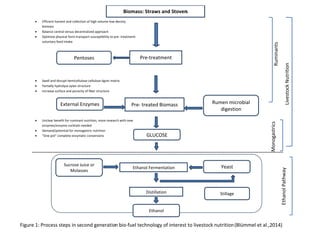
Figure 1: Process steps in second generation bio-fuel technology of interest to livestock nutrition(Blümmel et al.,2014)
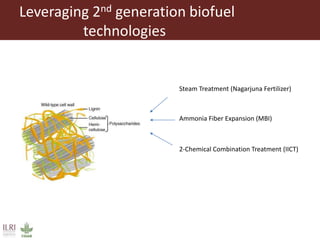
Leveraging 2nd generation biofuel
technologies
Steam Treatment (Nagarjuna Fertilizer)
Ammonia Fiber Expansion (MBI)
2-Chemical Combination Treatment (IICT)
Approaches: Steam treatment
Steam Treatment: Maize stover from 1 superior
dual purpose hybrid, 1 superior dual purpose
sorghum variety and 2 sorghum stovers purchased
from fodder market were steam-treated using
intermittent live steam injection to heat stovers to
160°C for 10 minutes. After 10 min the stovers were
exploded into a receiver tank, collected dried and
ground
.
Approaches: AFEX Treatment
Ammonia Fiber Expansion: During AFEX treatment, ammonia
vapor is added to the biomass under moderate pressure (100
to 400 psi) and temperature (90-100°C) before rapidly
releasing the pressure and recovering more than 95% of the
ammonia used in the process. 10 cereal straws and stovers
from India consisting of 2 rice straws, 3 sorghum stovers, 1
wheat straw (nondescript purchased from a fodder market), 2
pearl millet stovers and 2 maize stovers
Approaches: Two Chemical Combination
Treatment
Two Chemical Combination Treatment: Developed
by the Indian Institute for Chemical Technology (IICT)
for biofuel production and is currently prepared as a
joint IICT-ILRI patent application. The approach is
therefore only described as 2 Chemical Combination
Treatment (2CCT). 4 pearl millets stovers, 3 sorghum
stover, 2 maize stover and 2 non-descript wheat
straws (New Delhi fodder market, Uttrakhand farmer
field) were investigated.
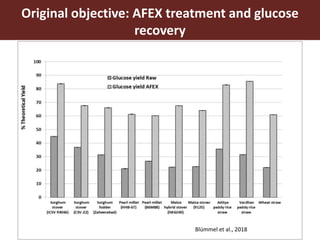
Original objective: AFEX treatment and glucose
recovery
Blümmel et al., 2018
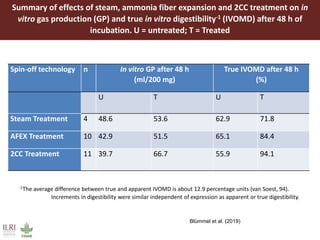
Spin-off technology n In vitro GP after 48 h
(ml/200 mg)
True IVOMD after 48 h
(%)
U T U T
Steam Treatment 4 48.6 53.6 62.9 71.8
AFEX Treatment 10 42.9 51.5 65.1 84.4
2CC Treatment 11 39.7 66.7 55.9 94.1
Summary of effects of steam, ammonia fiber expansion and 2CC treatment on in
vitro gas production (GP) and true in vitro digestibility-1 (IVOMD) after 48 h of
incubation. U = untreated; T = Treated
-1The average difference between true and apparent IVOMD is about 12.9 percentage units (van Soest, 94).
Increments in digestibility were similar independent of expression as apparent or true digestibility.
Blümmel et al. (2019)
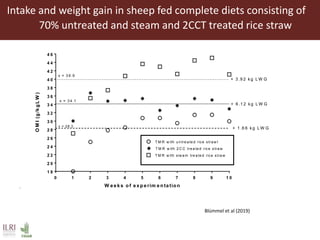
Intake and weight gain in sheep fed complete diets consisting of
70% untreated and steam and 2CCT treated rice straw
-
0 1 2 3 4 5 6 7 8 9 1 0
1 8
2 0
2 2
2 4
2 6
2 8
3 0
3 2
3 4
3 6
3 8
4 0
4 2
4 4
4 6
W e e k s o f e x p e rim e n ta tio n
OMI(g/kgLW)
T M R w ith 2 C C tre a te d rice s tra w
T M R w ith ste a m tre a te d rice s tra w
T M R w ith u n tre a te d rice stra w l
x = 3 4 .1
x = 3 9 .9
x = 28.3
+ 3 .9 2 k g L W G
+ 6 .1 2 k g L W G
+ 1 .6 6 k g L W G
R e s p o n s e o f s h e e p fe d to ta l m ix e d ra tio n s c o n ta in in g 7 0 % o f u n tre a te d , 2 C C T
tre a te d a n d s te a m tre a te d ric e s tra w
( Unpublished ILRI-IICT data)
Blümmel et al (2019)l
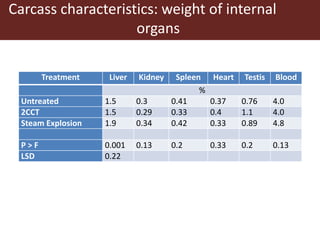
Treatment Liver Kidney Spleen Heart Testis Blood
%
Untreated 1.5 0.3 0.41 0.37 0.76 4.0
2CCT 1.5 0.29 0.33 0.4 1.1 4.0
Steam Explosion 1.9 0.34 0.42 0.33 0.89 4.8
P > F 0.001 0.13 0.2 0.33 0.2 0.13
LSD 0.22
Carcass characteristics: weight of internal
organs
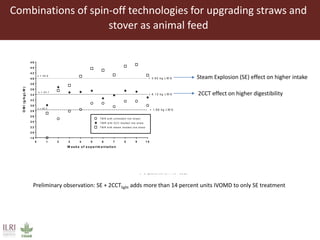
Combinations of spin-off technologies for upgrading straws and
stover as animal feed
0 1 2 3 4 5 6 7 8 9 1 0
1 8
2 0
2 2
2 4
2 6
2 8
3 0
3 2
3 4
3 6
3 8
4 0
4 2
4 4
4 6
W e e k s o f e x p e rim e n ta tio n
OMI(g/kgLW)
T M R w ith 2 C C tre a te d rice s tra w
T M R w ith ste a m tre a te d rice s tra w
T M R w ith u n tre a te d rice stra w l
x = 3 4 .1
x = 3 9 .9
x = 28.3
+ 3 .9 2 k g L W G
+ 6 .1 2 k g L W G
+ 1 .6 6 k g L W G
R e s p o n s e o f s h e e p fe d to ta l m ix e d ra tio n s c o n ta in in g 7 0 % o f u n tre a te d , 2 C C T
tre a te d a n d s te a m tre a te d ric e s tra w
( Unpublished ILRI-IICT data)
Steam Explosion (SE) effect on higher intake
2CCT effect on higher digestibility
Preliminary observation: SE + 2CCTlight adds more than 14 percent units IVOMD to only SE treatment
Conclusions and way forward
• Leveraging spin-off technologies from 2nd gen biofuel (developed for a
completely different objective) provide exiting opportunities for
upgrading feeding values of straws and stover
• It will not be farmer technologies but embedded into private sector
entrepreneurship offering a win-win situation:
 Increase availability of affordable off-farm produced feed
 Generate income and employment opportunities through SMEs
• Preliminary cost: benefit analysis about 1: 2
• Business models currently theoretically explored: 500 kg/d to 10 t/d
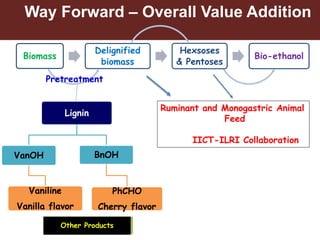
Biomass
Delignified
biomass
Hexsoses
& Pentoses
Bio-ethanol
Ruminant and Monogastric Animal
Feed
IICT-ILRI Collaboration
Lignin
VanOH
Vaniline
Vanilla flavor
BnOH
PhCHO
Cherry flavor
Other Products
Way Forward – Overall Value Addition
Pretreatment

Spin-off technologies from 2nd generation biofuel: Potential to transform fodder quality of crop residues

  • 1.
    Spin-off technologies from2nd generation biofuel: Potential to transform fodder quality of crop residues Michael Blümmel, Sharma, G. V. M., Ravindranath, K., Padmakumar, V. and Christopher Jones 2018 Global Nutrition Symposium, January 2018, Addis Ababa, Ethiopia aInternational Livestock Research Institute bCSIR-Indian Institute for Chemical Technology 27 Annual Conference of the Ethiopian Society of Animal Production (ESAP) EIAR, Addis Ababa, 29–31 August 2019
  • 2.
    • Importance ofstraws and stover as feed resources • Why research 2nd generation biofuel technologies for upgrading the feeding value of straws and stover • Effect of three potential spin-off technologies on laboratory fodder quality traits • Effect of two potential spin-off technologies on performance of sheep fed TMRs containing 70% untreated and treated rice straw • Conclusions and way forward Structure of Presentation
  • 3.
    Summary of FeedResources in India Feed resource in India in 2012 Contribution to overall feed resources (%) Greens from CRP, forests, grazing 8.0 Planted forages 15.1 Crop residues 70.6 Concentrates 6.3 Deficit: feed availability versus feed requirement (%) Dry matter (i.e. crop residue quantity) -6 Digestible crude protein -61 Total digestible nutrients -50 (Modified from NIANP, 2012; Blümmel et al., 2014a)
  • 4.
    Ethiopia: crop residuesare becoming more important as feed resources Kahsay Berhe (2004) study in Yarer Mountain area  Cultivated land has doubled at the expense of pasture in 30 years  Switch in source of nutrition for livestock from grazing to CR
  • 5.
    Leveraging spin-off technologiesfrom 2nd generation for deconstructing ligno-cellulosic biomass • 10 – 50 Billion tons biomass annually and about 4 Billion tons are from crop residues • Billions of $ investment to leverage for different steps along the value chain starting from collection of high bulk low density feed stocks to bio-manufacturing and de novo synthesis of enzymes • Dissolve boundaries between food-feed-fodder, livestock species and even animal and human nutrition • Potential game changer technology
  • 6.
     Efficient harvestand collection of high volume-low density biomass  Balance central versus decentralized approach  Optimize physical form-transport-susceptibility to pre- treatment- voluntary feed intake  Swell and disrupt hemicellulose-cellulose-lignin matrix  Partially hydrolyze xylan structure  Increase surface and porocity of fiber structure  Unclear benefit for ruminant nutrition, more research with new enzymes/enzyme cocktails needed  Demand/potential for monogastric nutrition  “One pot” complete enzymatic conversions Biomass: Straws and Stovers Ethanol Fermentation Distillation Pre-treatment Pre- treated Biomass Pentoses Rumen microbial digestion External Enzymes GLUCOSE LivestockNutrition Sucrose Juice or Molasses Yeast Ethanol Stillage Ruminants Monogastrics EthanolPathway Figure 1: Process steps in second generation bio-fuel technology of interest to livestock nutrition(Blümmel et al.,2014)
  • 7.
    Leveraging 2nd generationbiofuel technologies Steam Treatment (Nagarjuna Fertilizer) Ammonia Fiber Expansion (MBI) 2-Chemical Combination Treatment (IICT)
  • 8.
    Approaches: Steam treatment SteamTreatment: Maize stover from 1 superior dual purpose hybrid, 1 superior dual purpose sorghum variety and 2 sorghum stovers purchased from fodder market were steam-treated using intermittent live steam injection to heat stovers to 160°C for 10 minutes. After 10 min the stovers were exploded into a receiver tank, collected dried and ground .
  • 9.
    Approaches: AFEX Treatment AmmoniaFiber Expansion: During AFEX treatment, ammonia vapor is added to the biomass under moderate pressure (100 to 400 psi) and temperature (90-100°C) before rapidly releasing the pressure and recovering more than 95% of the ammonia used in the process. 10 cereal straws and stovers from India consisting of 2 rice straws, 3 sorghum stovers, 1 wheat straw (nondescript purchased from a fodder market), 2 pearl millet stovers and 2 maize stovers
  • 10.
    Approaches: Two ChemicalCombination Treatment Two Chemical Combination Treatment: Developed by the Indian Institute for Chemical Technology (IICT) for biofuel production and is currently prepared as a joint IICT-ILRI patent application. The approach is therefore only described as 2 Chemical Combination Treatment (2CCT). 4 pearl millets stovers, 3 sorghum stover, 2 maize stover and 2 non-descript wheat straws (New Delhi fodder market, Uttrakhand farmer field) were investigated.
  • 11.
    Original objective: AFEXtreatment and glucose recovery Blümmel et al., 2018
  • 12.
    Spin-off technology nIn vitro GP after 48 h (ml/200 mg) True IVOMD after 48 h (%) U T U T Steam Treatment 4 48.6 53.6 62.9 71.8 AFEX Treatment 10 42.9 51.5 65.1 84.4 2CC Treatment 11 39.7 66.7 55.9 94.1 Summary of effects of steam, ammonia fiber expansion and 2CC treatment on in vitro gas production (GP) and true in vitro digestibility-1 (IVOMD) after 48 h of incubation. U = untreated; T = Treated -1The average difference between true and apparent IVOMD is about 12.9 percentage units (van Soest, 94). Increments in digestibility were similar independent of expression as apparent or true digestibility. Blümmel et al. (2019)
  • 13.
    Intake and weightgain in sheep fed complete diets consisting of 70% untreated and steam and 2CCT treated rice straw - 0 1 2 3 4 5 6 7 8 9 1 0 1 8 2 0 2 2 2 4 2 6 2 8 3 0 3 2 3 4 3 6 3 8 4 0 4 2 4 4 4 6 W e e k s o f e x p e rim e n ta tio n OMI(g/kgLW) T M R w ith 2 C C tre a te d rice s tra w T M R w ith ste a m tre a te d rice s tra w T M R w ith u n tre a te d rice stra w l x = 3 4 .1 x = 3 9 .9 x = 28.3 + 3 .9 2 k g L W G + 6 .1 2 k g L W G + 1 .6 6 k g L W G R e s p o n s e o f s h e e p fe d to ta l m ix e d ra tio n s c o n ta in in g 7 0 % o f u n tre a te d , 2 C C T tre a te d a n d s te a m tre a te d ric e s tra w ( Unpublished ILRI-IICT data) Blümmel et al (2019)l
  • 14.
    Treatment Liver KidneySpleen Heart Testis Blood % Untreated 1.5 0.3 0.41 0.37 0.76 4.0 2CCT 1.5 0.29 0.33 0.4 1.1 4.0 Steam Explosion 1.9 0.34 0.42 0.33 0.89 4.8 P > F 0.001 0.13 0.2 0.33 0.2 0.13 LSD 0.22 Carcass characteristics: weight of internal organs
  • 15.
    Combinations of spin-offtechnologies for upgrading straws and stover as animal feed 0 1 2 3 4 5 6 7 8 9 1 0 1 8 2 0 2 2 2 4 2 6 2 8 3 0 3 2 3 4 3 6 3 8 4 0 4 2 4 4 4 6 W e e k s o f e x p e rim e n ta tio n OMI(g/kgLW) T M R w ith 2 C C tre a te d rice s tra w T M R w ith ste a m tre a te d rice s tra w T M R w ith u n tre a te d rice stra w l x = 3 4 .1 x = 3 9 .9 x = 28.3 + 3 .9 2 k g L W G + 6 .1 2 k g L W G + 1 .6 6 k g L W G R e s p o n s e o f s h e e p fe d to ta l m ix e d ra tio n s c o n ta in in g 7 0 % o f u n tre a te d , 2 C C T tre a te d a n d s te a m tre a te d ric e s tra w ( Unpublished ILRI-IICT data) Steam Explosion (SE) effect on higher intake 2CCT effect on higher digestibility Preliminary observation: SE + 2CCTlight adds more than 14 percent units IVOMD to only SE treatment
  • 16.
    Conclusions and wayforward • Leveraging spin-off technologies from 2nd gen biofuel (developed for a completely different objective) provide exiting opportunities for upgrading feeding values of straws and stover • It will not be farmer technologies but embedded into private sector entrepreneurship offering a win-win situation:  Increase availability of affordable off-farm produced feed  Generate income and employment opportunities through SMEs • Preliminary cost: benefit analysis about 1: 2 • Business models currently theoretically explored: 500 kg/d to 10 t/d
  • 17.
    Biomass Delignified biomass Hexsoses & Pentoses Bio-ethanol Ruminant andMonogastric Animal Feed IICT-ILRI Collaboration Lignin VanOH Vaniline Vanilla flavor BnOH PhCHO Cherry flavor Other Products Way Forward – Overall Value Addition Pretreatment