




International Conference on Pulses
For Health, Nutrition and Sustainable Agriculture in Dry Areas
Marrakech, Morocco, 18 - 20 April, 2016
Pulses in Dry Areas:
Importance, Challenges and Potential
Mahmoud El Solh
Director General
ICARDA
Outline
 Importance of Pulses;
 Status of Pulses Production and
Consumption;
 Challenges facing pulses production
in dry areas;
 What science can do to address
these challenges;
 Large scale impact of research
investment;
 Conclusion.
Importance of Pulse Crops
3
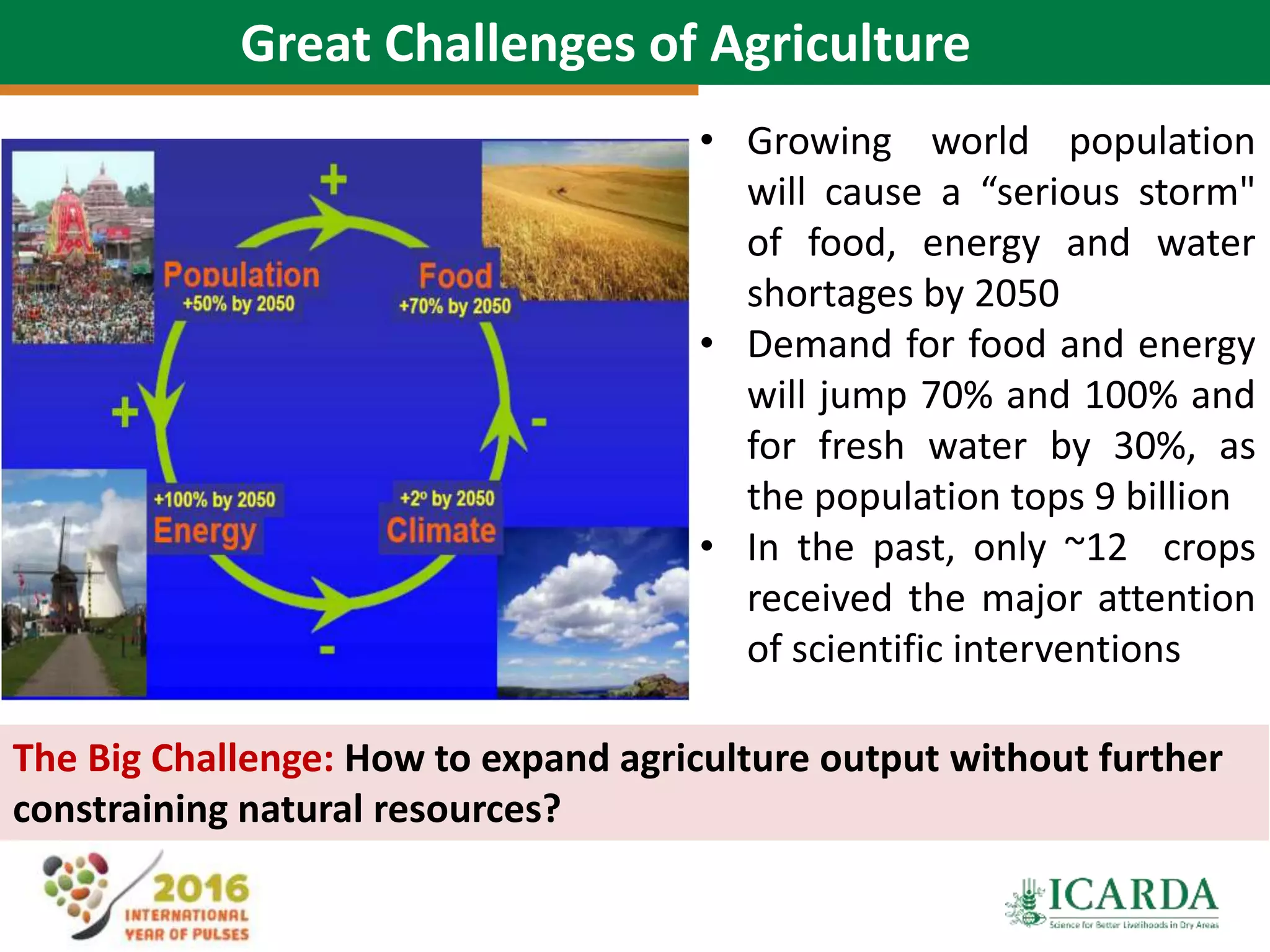
Great Challenges of Agriculture
• Growing world population
will cause a “serious storm"
of food, energy and water
shortages by 2050
• Demand for food and energy
will jump 70% and 100% and
for fresh water by 30%, as
the population tops 9 billion
• In the past, only ~12 crops
received the major attention
of scientific interventions
The Big Challenge: How to expand agriculture output without further
constraining natural resources?
4
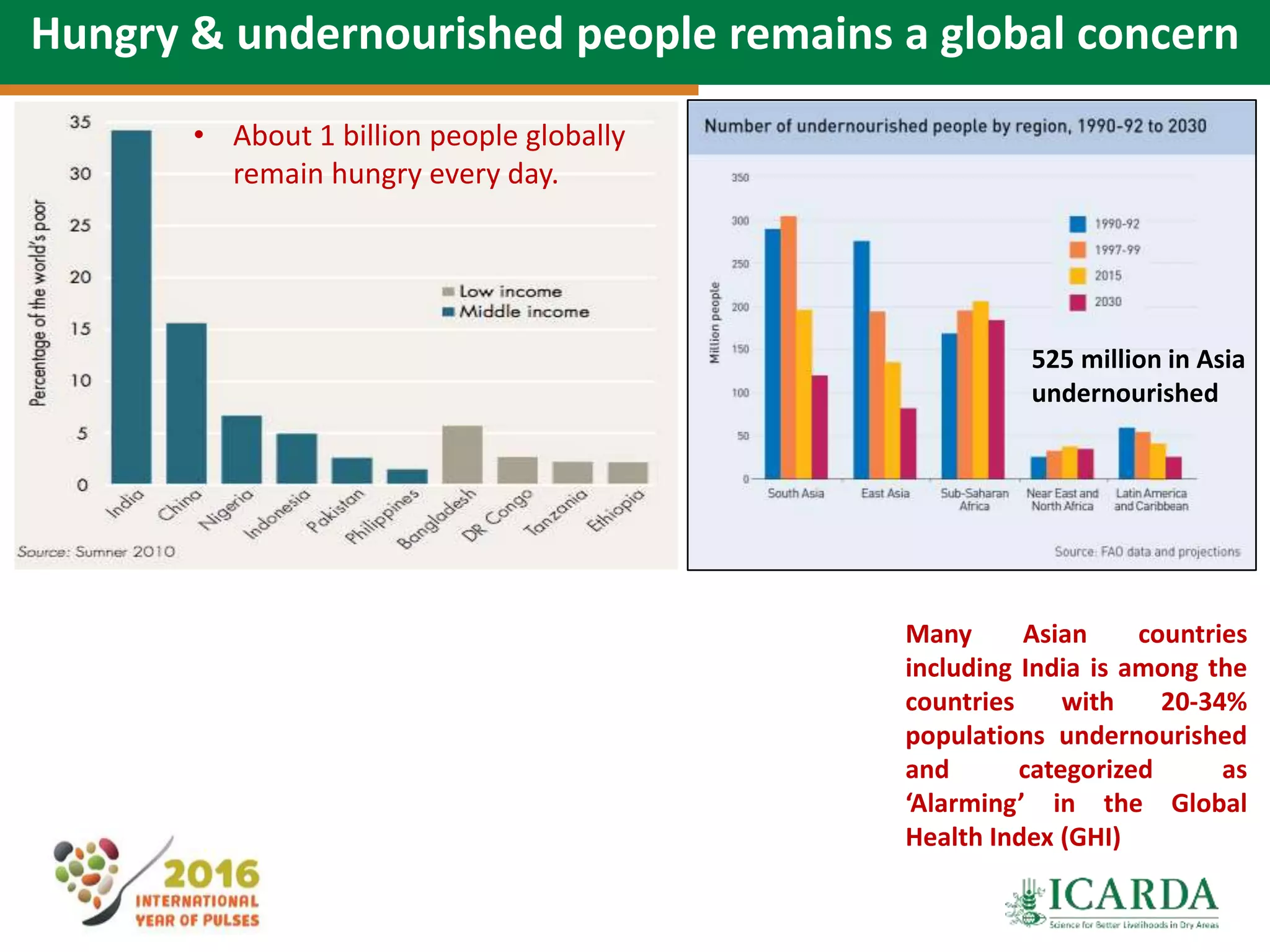
Hungry & undernourished people remains a global concern
• About 1 billion people globally
remain hungry every day.
Many Asian countries
including India is among the
countries with 20-34%
populations undernourished
and categorized as
‘Alarming’ in the Global
Health Index (GHI)
525 million in Asia
undernourished
5
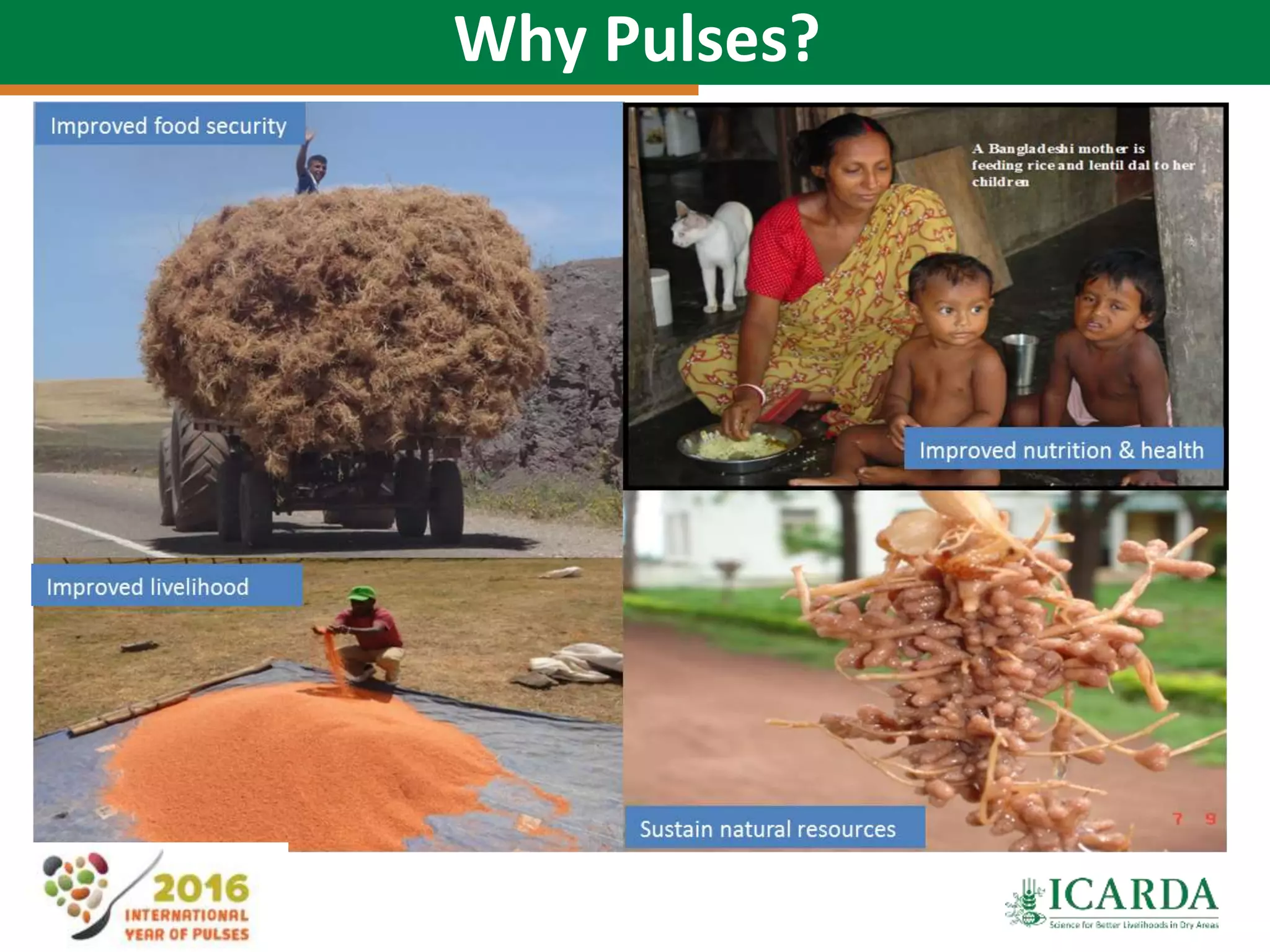
Why Pulses?
6
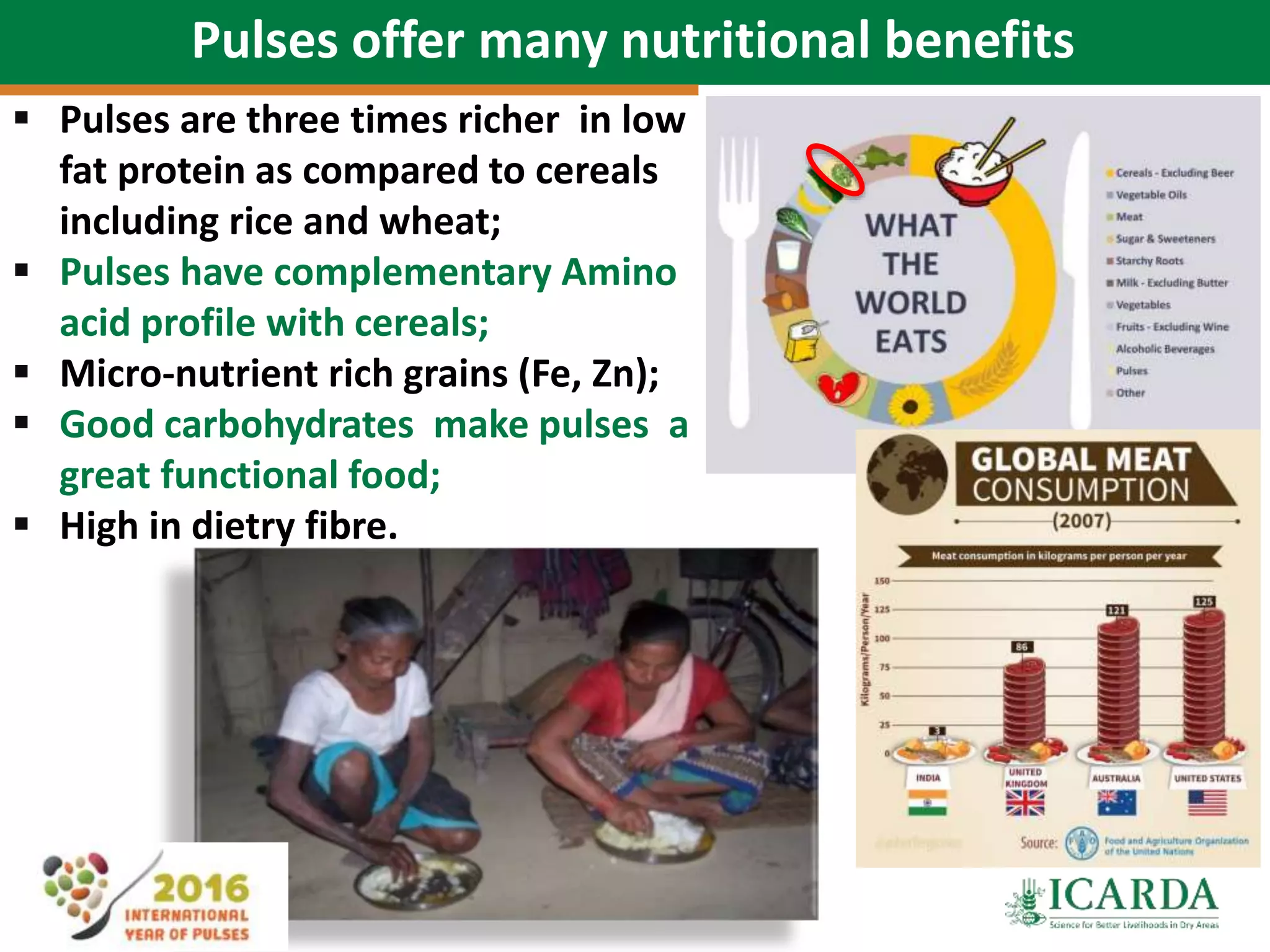
Pulses offer many nutritional benefits
 Pulses are three times richer in low
fat protein as compared to cereals
including rice and wheat;
 Pulses have complementary Amino
acid profile with cereals;
 Micro-nutrient rich grains (Fe, Zn);
 Good carbohydrates make pulses a
great functional food;
 High in dietry fibre.
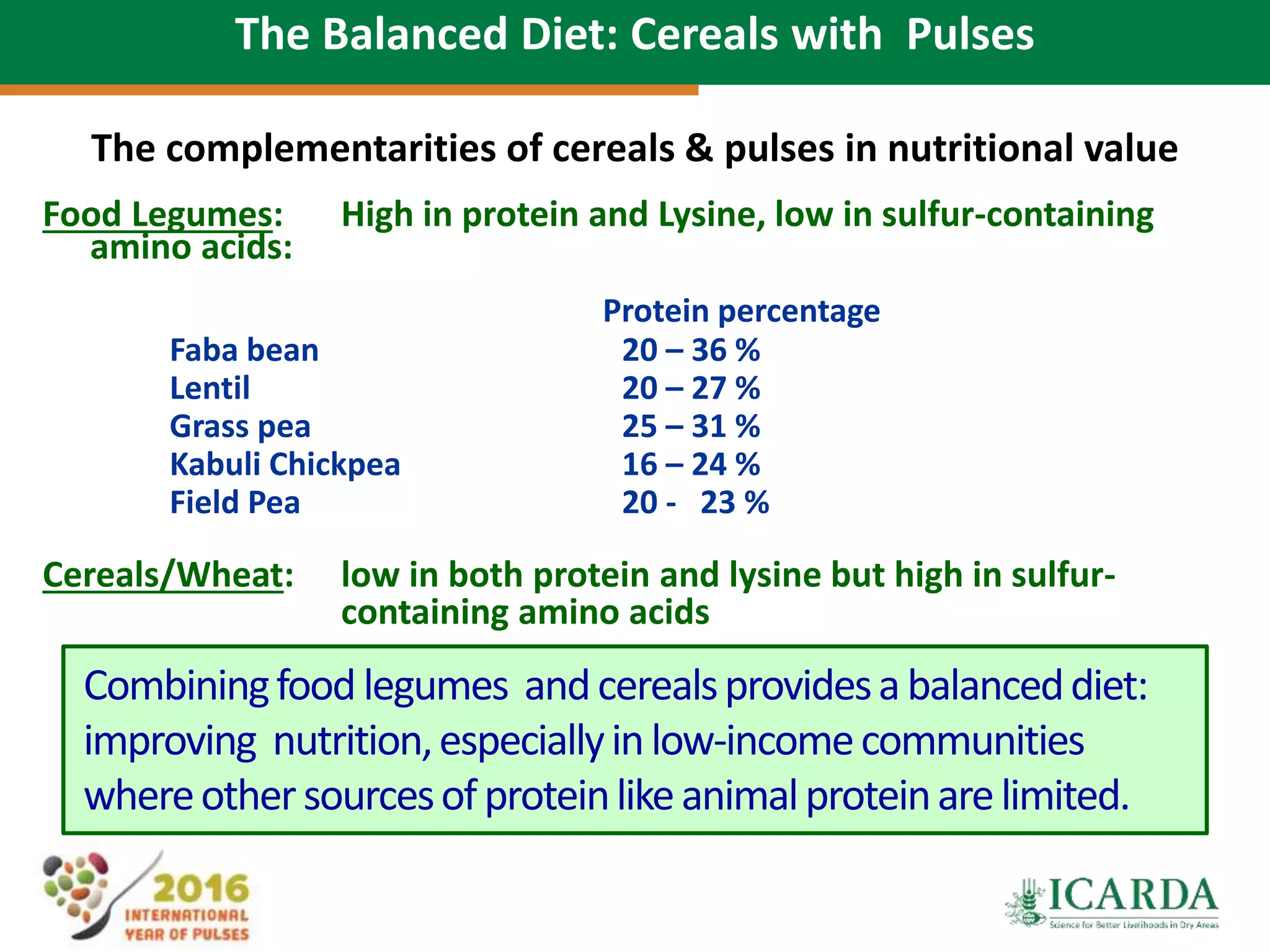
The Balanced Diet: Cereals with Pulses
The complementarities of cereals & pulses in nutritional value
Food Legumes: High in protein and Lysine, low in sulfur-containing
amino acids:
Protein percentage
Faba bean 20 – 36 %
Lentil 20 – 27 %
Grass pea 25 – 31 %
Kabuli Chickpea 16 – 24 %
Field Pea 20 - 23 %
Cereals/Wheat: low in both protein and lysine but high in sulfur-
containing amino acids
Combiningfood legumes andcerealsprovidesabalanceddiet:
improving nutrition,especiallyinlow-incomecommunities
whereothersourcesofproteinlikeanimalproteinarelimited.
8
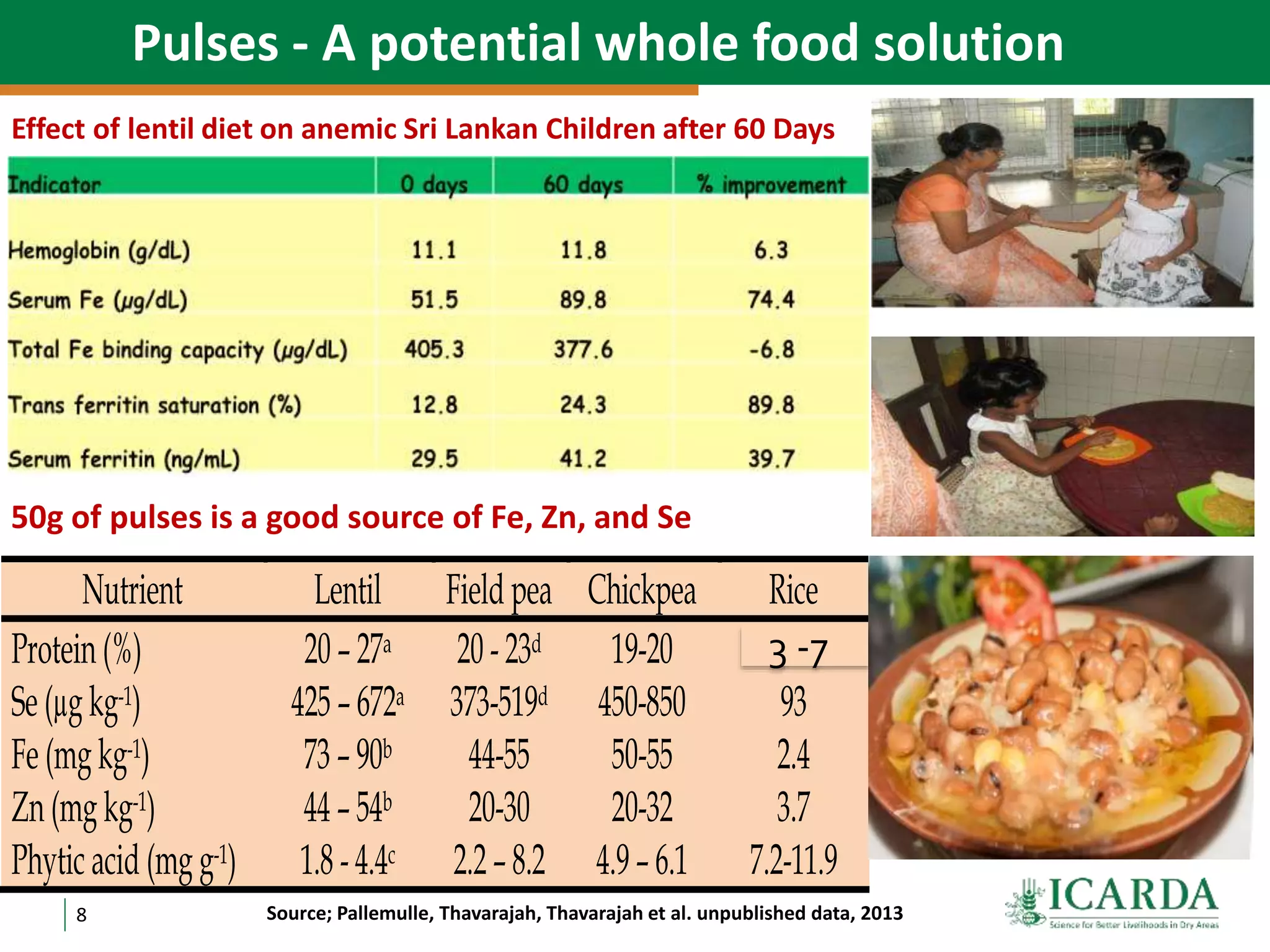
Pulses - A potential whole food solution
Source; Pallemulle, Thavarajah, Thavarajah et al. unpublished data, 2013
Nutrient Lentil Field pea Chickpea Rice
Protein (%) 20 –27a 20 -23d 19-20 2.9
Se (µg kg-1) 425 –672a 373-519d 450-850 93
Fe (mg kg-1) 73 –90b 44-55 50-55 2.4
Zn (mg kg-1) 44 –54b 20-30 20-32 3.7
Phytic acid (mg g-1) 1.8 -4.4c 2.2 –8.2 4.9 –6.1 7.2-11.9
50g of pulses is a good source of Fe, Zn, and Se
Effect of lentil diet on anemic Sri Lankan Children after 60 Days
3 -7
9
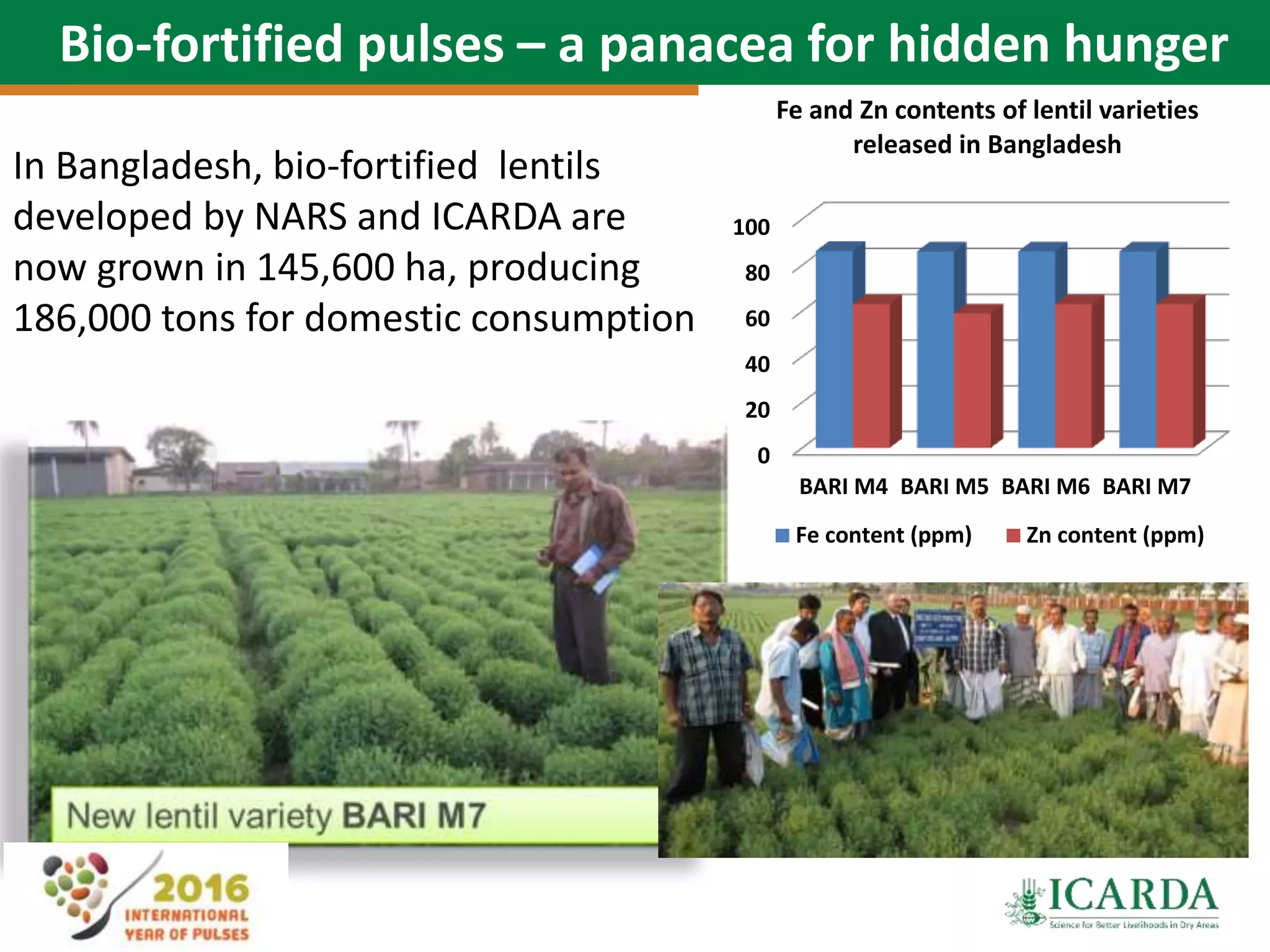
Bio-fortified pulses – a panacea for hidden hunger
0
20
40
60
80
100
BARI M4 BARI M5 BARI M6 BARI M7
Fe and Zn contents of lentil varieties
released in Bangladesh
Fe content (ppm) Zn content (ppm)
In Bangladesh, bio-fortified lentils
developed by NARS and ICARDA are
now grown in 145,600 ha, producing
186,000 tons for domestic consumption
10
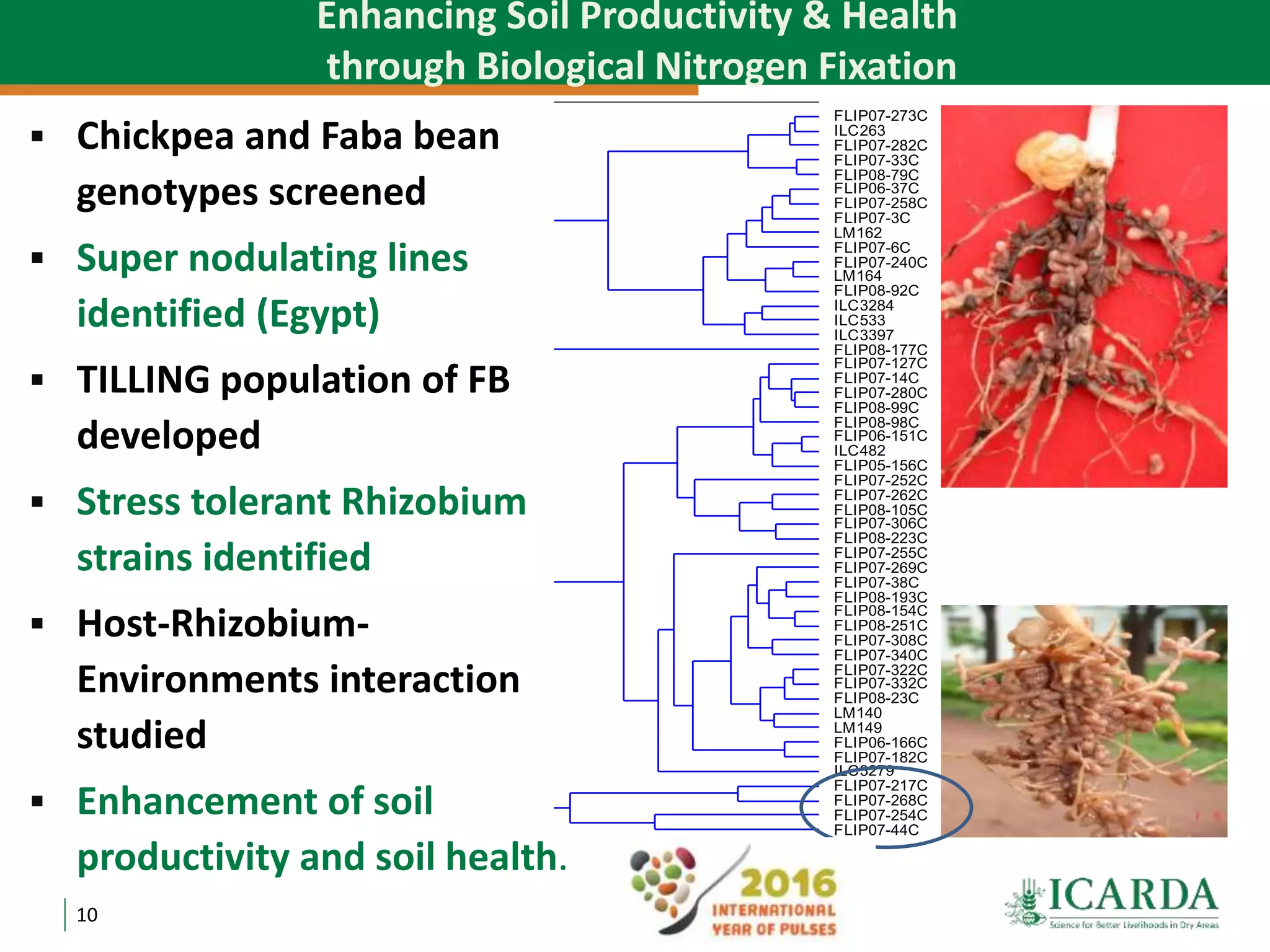
Enhancing Soil Productivity & Health
through Biological Nitrogen Fixation0612182430364248
-0.96
-0.84
-0.72
-0.6
-0.48
-0.36
-0.24
-0.12
Similarity
FLIP07-273C
ILC263
FLIP07-282C
FLIP07-33C
FLIP08-79C
FLIP06-37C
FLIP07-258C
FLIP07-3C
LM162
FLIP07-6C
FLIP07-240C
LM164
FLIP08-92C
ILC3284
ILC533
ILC3397
FLIP08-177C
FLIP07-127C
FLIP07-14C
FLIP07-280C
FLIP08-99C
FLIP08-98C
FLIP06-151C
ILC482
FLIP05-156C
FLIP07-252C
FLIP07-262C
FLIP08-105C
FLIP07-306C
FLIP08-223C
FLIP07-255C
FLIP07-269C
FLIP07-38C
FLIP08-193C
FLIP08-154C
FLIP08-251C
FLIP07-308C
FLIP07-340C
FLIP07-322C
FLIP07-332C
FLIP08-23C
LM140
LM149
FLIP06-166C
FLIP07-182C
ILC3279
FLIP07-217C
FLIP07-268C
FLIP07-254C
FLIP07-44C
 Chickpea and Faba bean
genotypes screened
 Super nodulating lines
identified (Egypt)
 TILLING population of FB
developed
 Stress tolerant Rhizobium
strains identified
 Host-Rhizobium-
Environments interaction
studied
 Enhancement of soil
productivity and soil health.
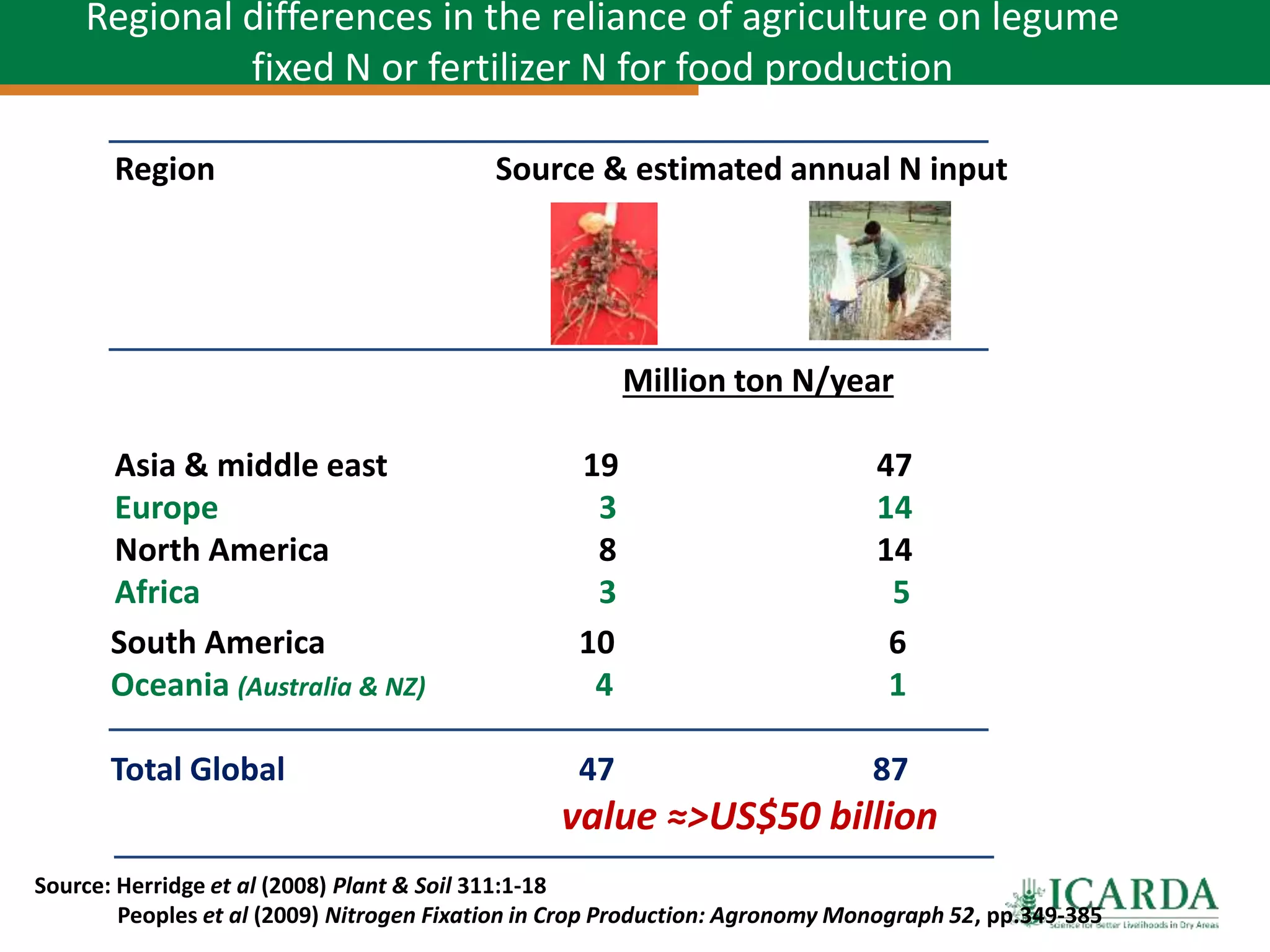
Regional differences in the reliance of agriculture on legume
fixed N or fertilizer N for food production
Region Source & estimated annual N input
Million ton N/year
Asia & middle east 19 47
Europe 3 14
North America 8 14
Africa 3 5
South America 10 6
Oceania (Australia & NZ) 4 1
Total Global 47 87
value ≈>US$50 billion
Source: Herridge et al (2008) Plant & Soil 311:1-18
Peoples et al (2009) Nitrogen Fixation in Crop Production: Agronomy Monograph 52, pp.349-385
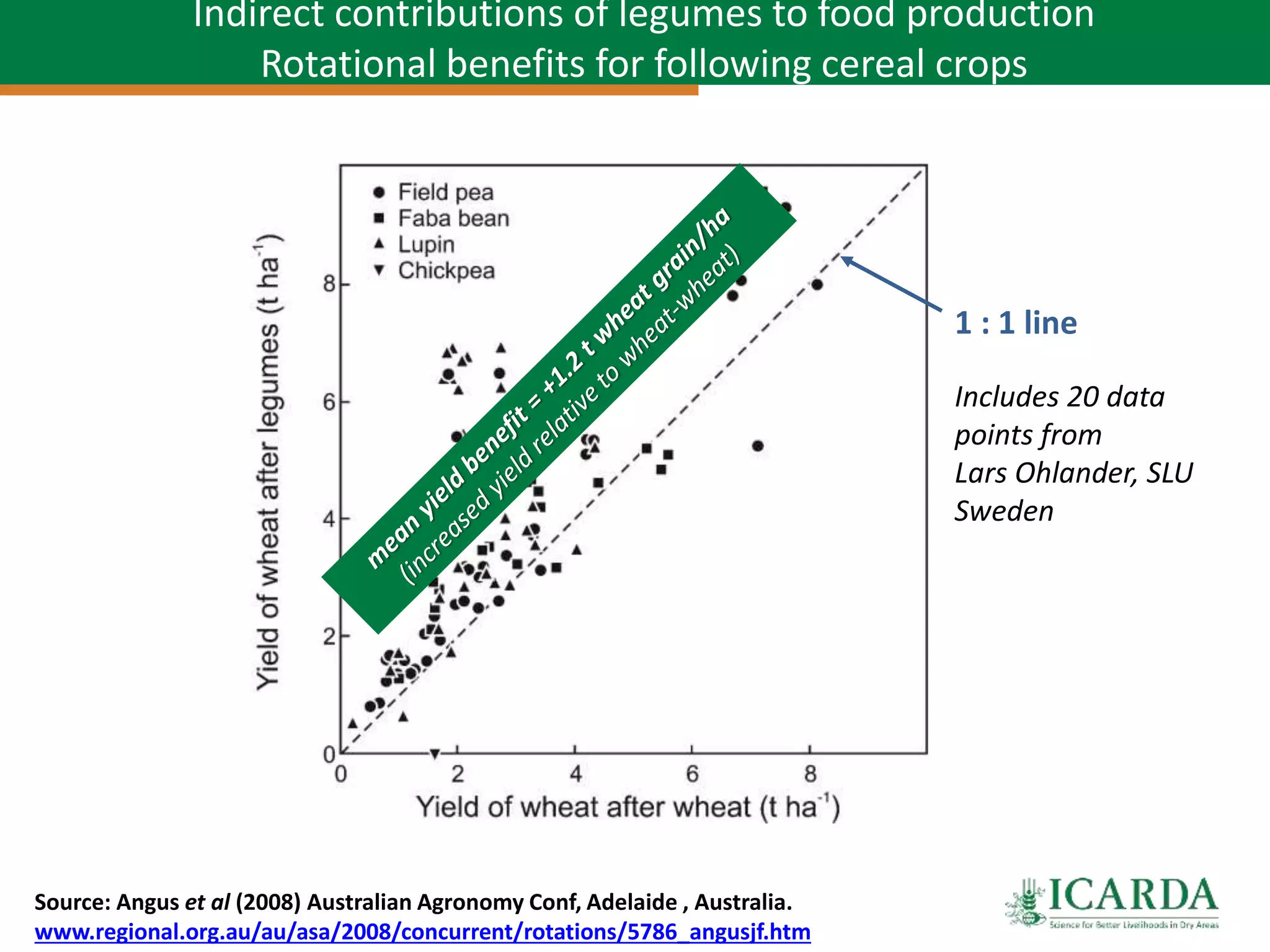
1 : 1 line
Includes 20 data
points from
Lars Ohlander, SLU
Sweden
Source: Angus et al (2008) Australian Agronomy Conf, Adelaide , Australia.
www.regional.org.au/au/asa/2008/concurrent/rotations/5786_angusjf.htm
Indirect contributions of legumes to food production
Rotational benefits for following cereal crops
13
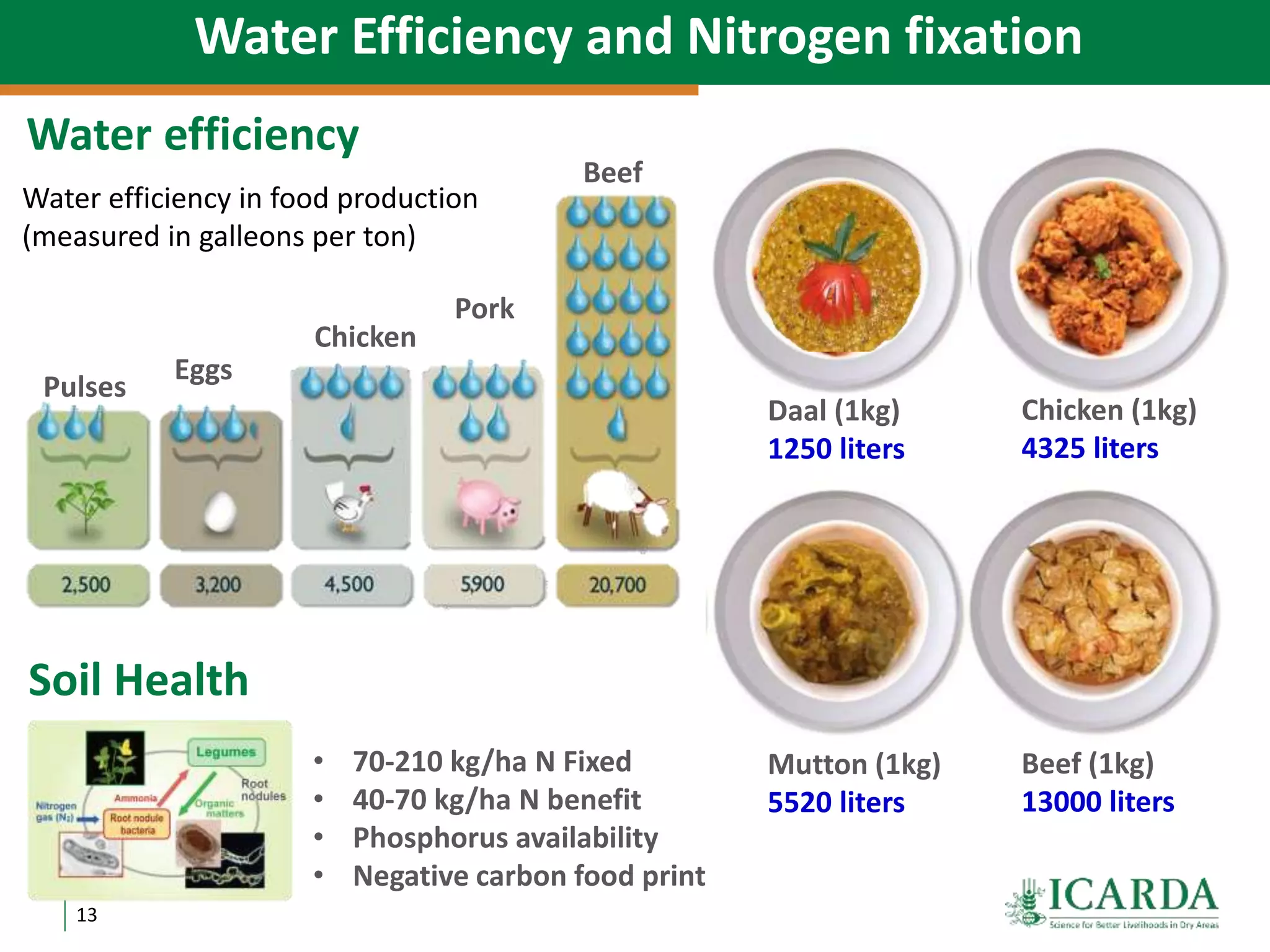
Pulses
Eggs
Chicken
Pork
Beef
Water efficiency in food production
(measured in galleons per ton)
Daal (1kg)
1250 liters
Chicken (1kg)
4325 liters
Mutton (1kg)
5520 liters
Beef (1kg)
13000 liters
• 70-210 kg/ha N Fixed
• 40-70 kg/ha N benefit
• Phosphorus availability
• Negative carbon food print
Water efficiency
Soil Health
Water Efficiency and Nitrogen fixation
14
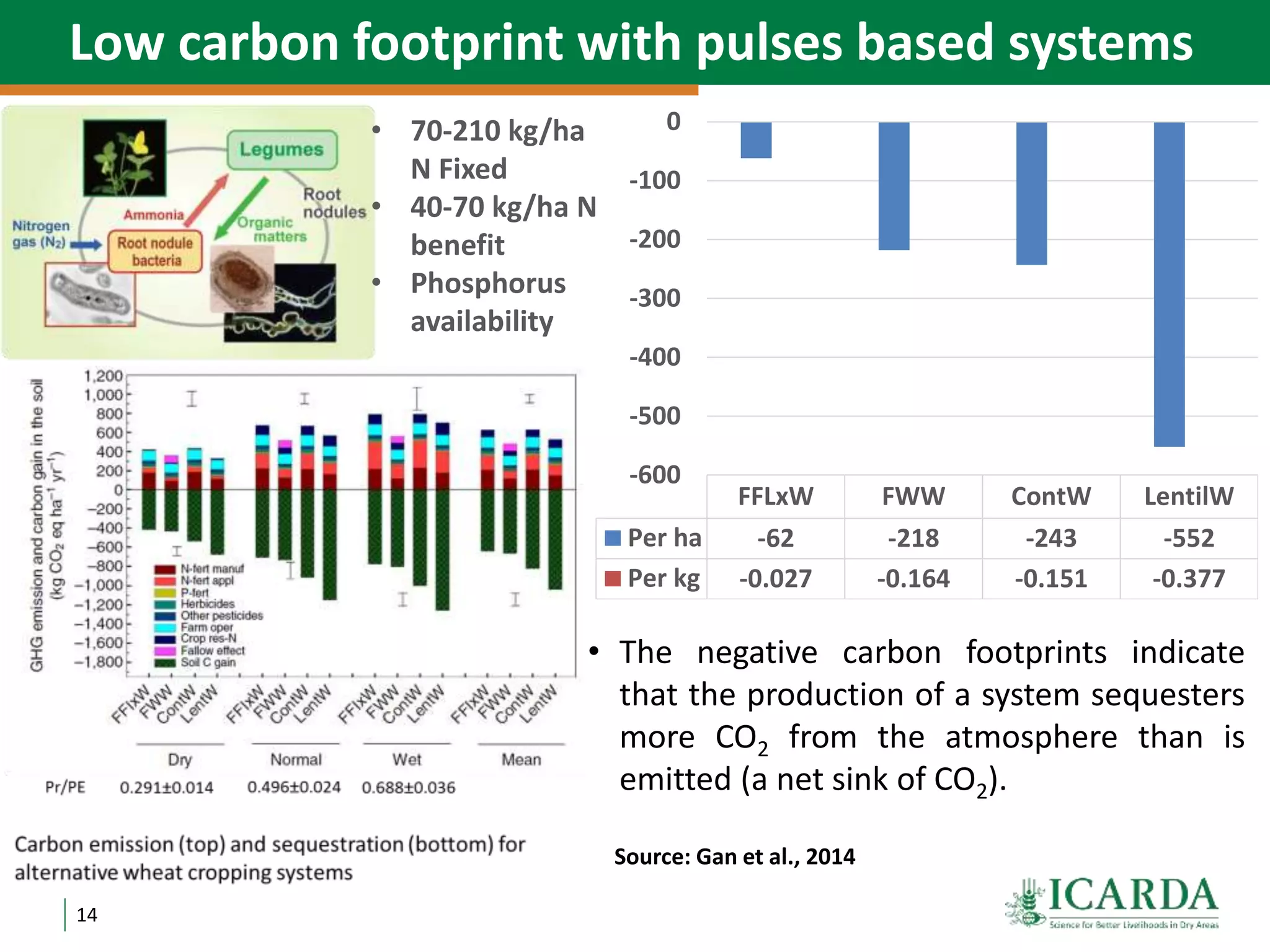
Low carbon footprint with pulses based systems
Source: Gan et al., 2014
• The negative carbon footprints indicate
that the production of a system sequesters
more CO2 from the atmosphere than is
emitted (a net sink of CO2).
FFLxW FWW ContW LentilW
Per ha -62 -218 -243 -552
Per kg -0.027 -0.164 -0.151 -0.377
-600
-500
-400
-300
-200
-100
0• 70-210 kg/ha
N Fixed
• 40-70 kg/ha N
benefit
• Phosphorus
availability
15
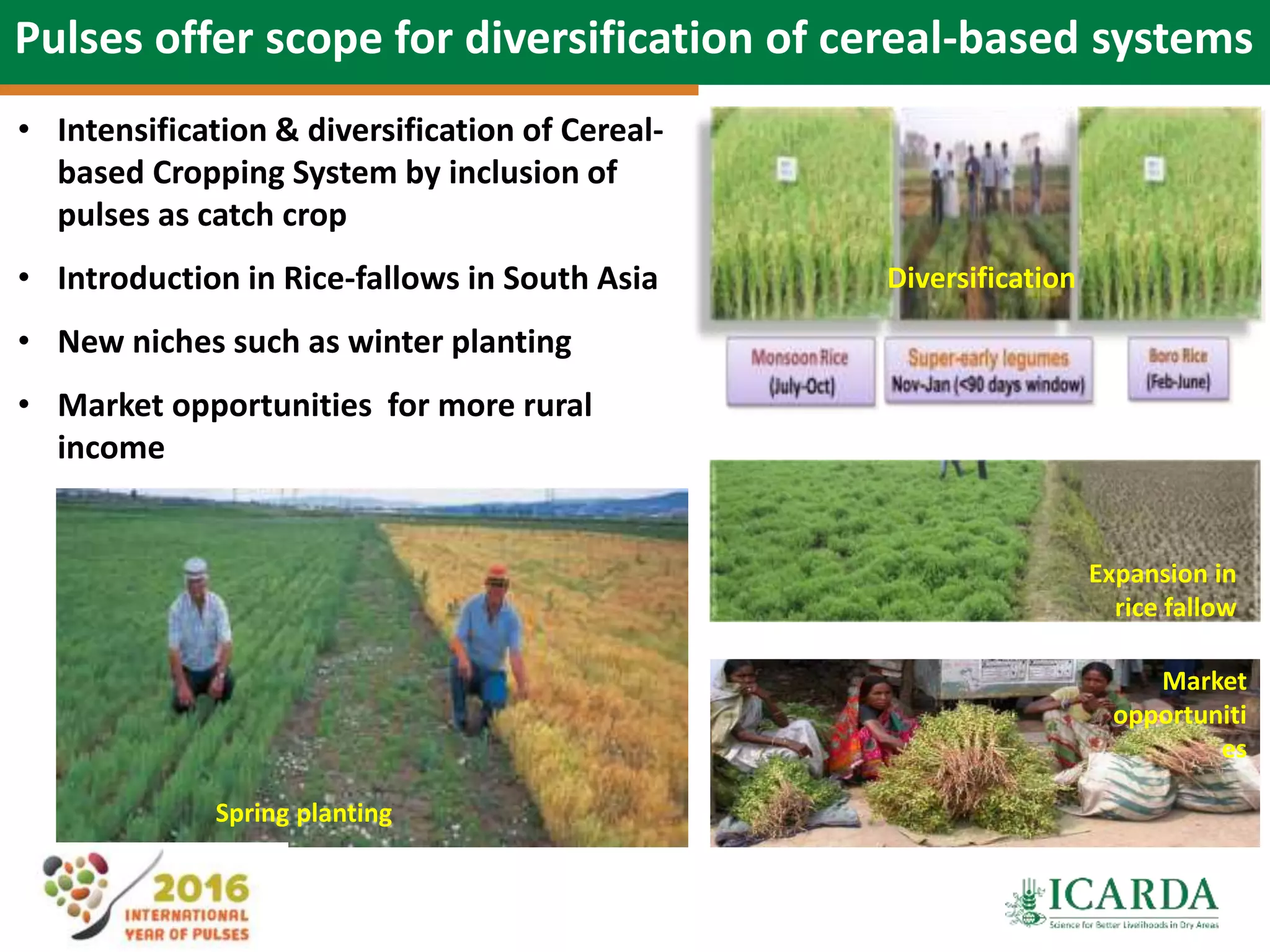
Pulses offer scope for diversification of cereal-based systems
Early varieties
Diversification
Expansion in
rice fallow
Spring planting
• Intensification & diversification of Cereal-
based Cropping System by inclusion of
pulses as catch crop
• Introduction in Rice-fallows in South Asia
• New niches such as winter planting
• Market opportunities for more rural
income
Market
opportuniti
es
16
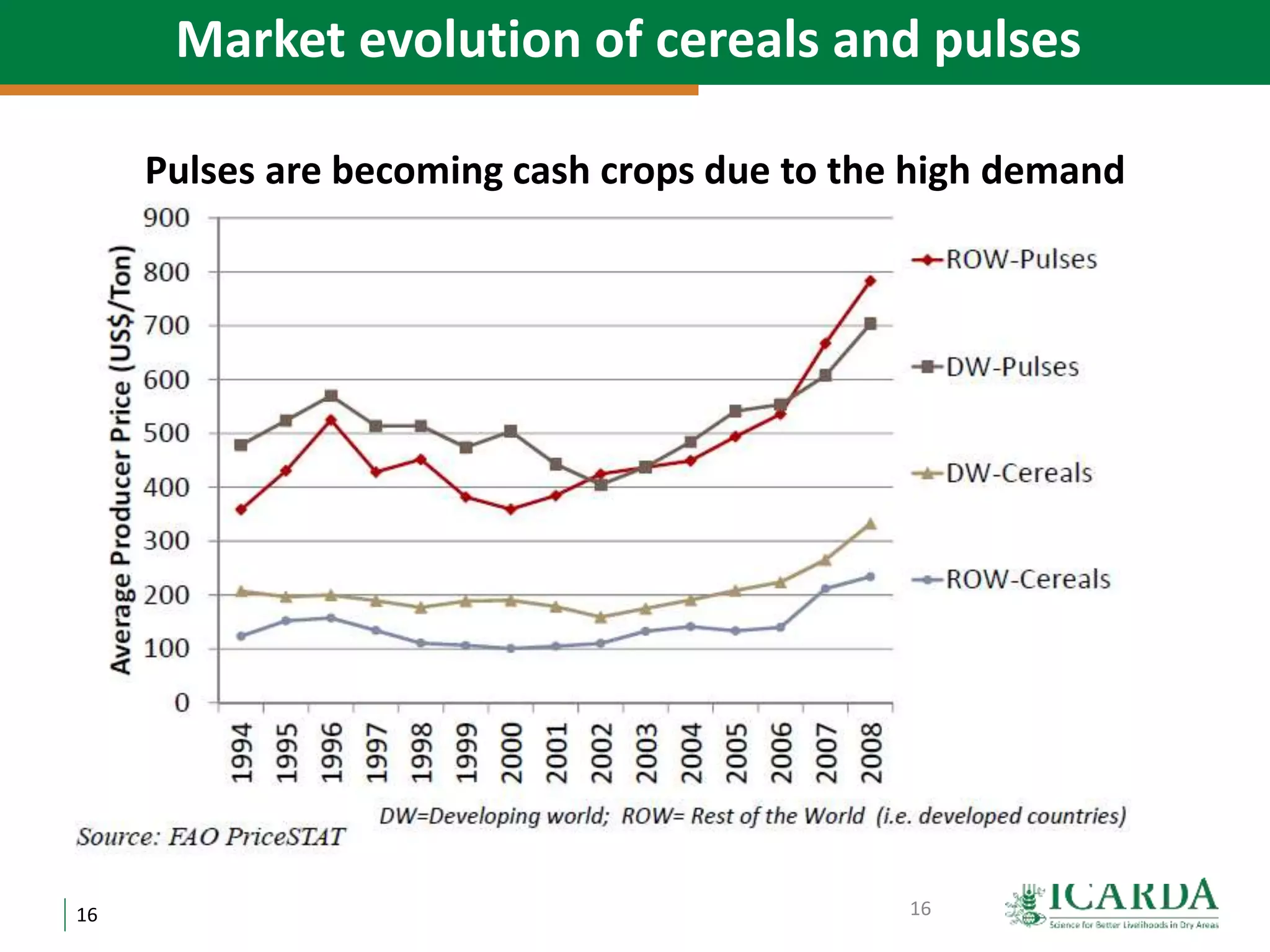
Market evolution of cereals and pulses
Pulses are becoming cash crops due to the high demand
16
17
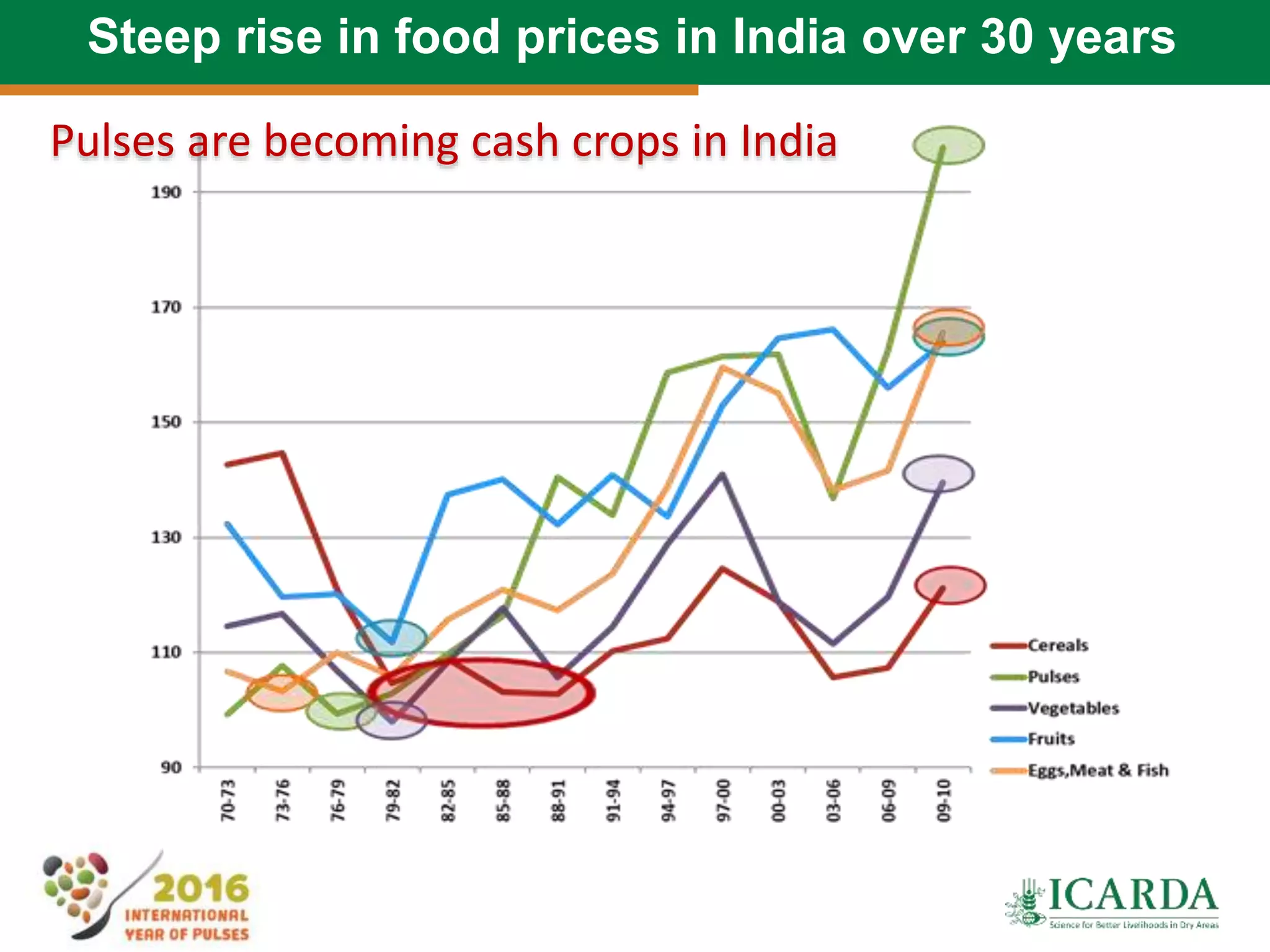
Steep rise in food prices in India over 30 years
Pulses are becoming cash crops in India
Challenges Facing Enhancing Pulses
Productivity and Production
19
Challenges to Pulse Productivity & Production
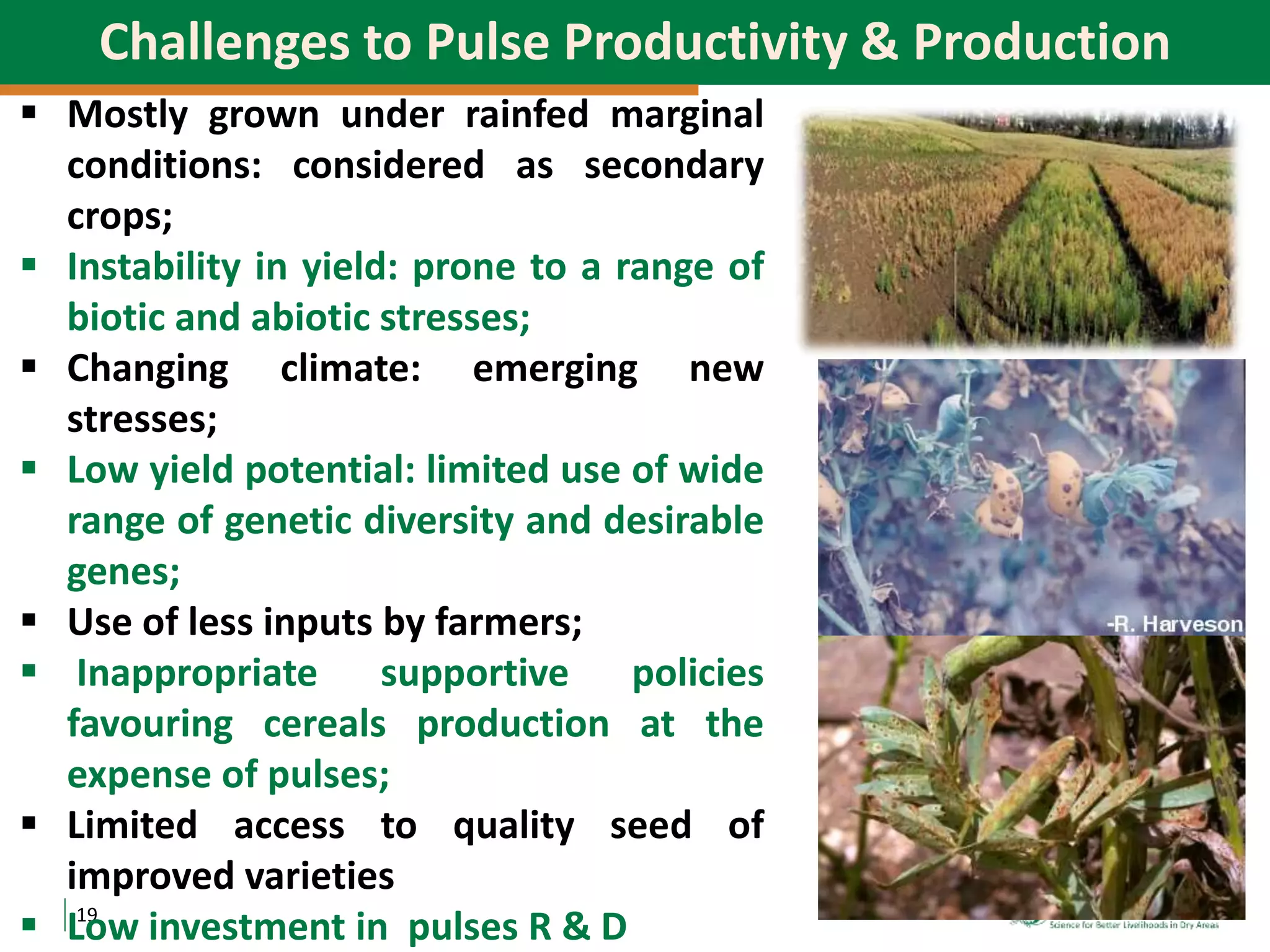
 Mostly grown under rainfed marginal
conditions: considered as secondary
crops;
 Instability in yield: prone to a range of
biotic and abiotic stresses;
 Changing climate: emerging new
stresses;
 Low yield potential: limited use of wide
range of genetic diversity and desirable
genes;
 Use of less inputs by farmers;
 Inappropriate supportive policies
favouring cereals production at the
expense of pulses;
 Limited access to quality seed of
improved varieties
 Low investment in pulses R & D
20
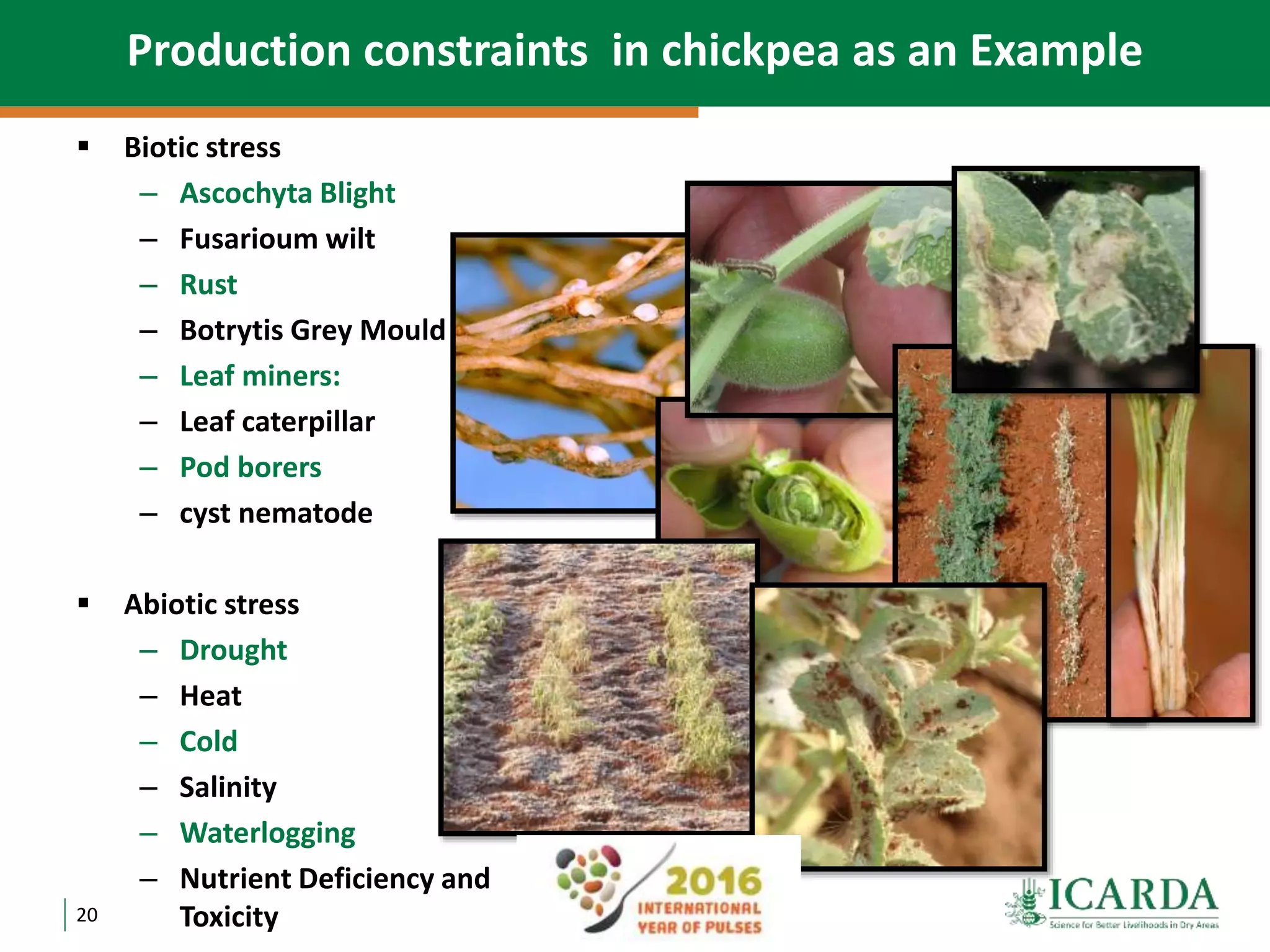
Production constraints in chickpea as an Example
 Biotic stress
– Ascochyta Blight
– Fusarioum wilt
– Rust
– Botrytis Grey Mould
– Leaf miners:
– Leaf caterpillar
– Pod borers
– cyst nematode
 Abiotic stress
– Drought
– Heat
– Cold
– Salinity
– Waterlogging
– Nutrient Deficiency and
Toxicity
21
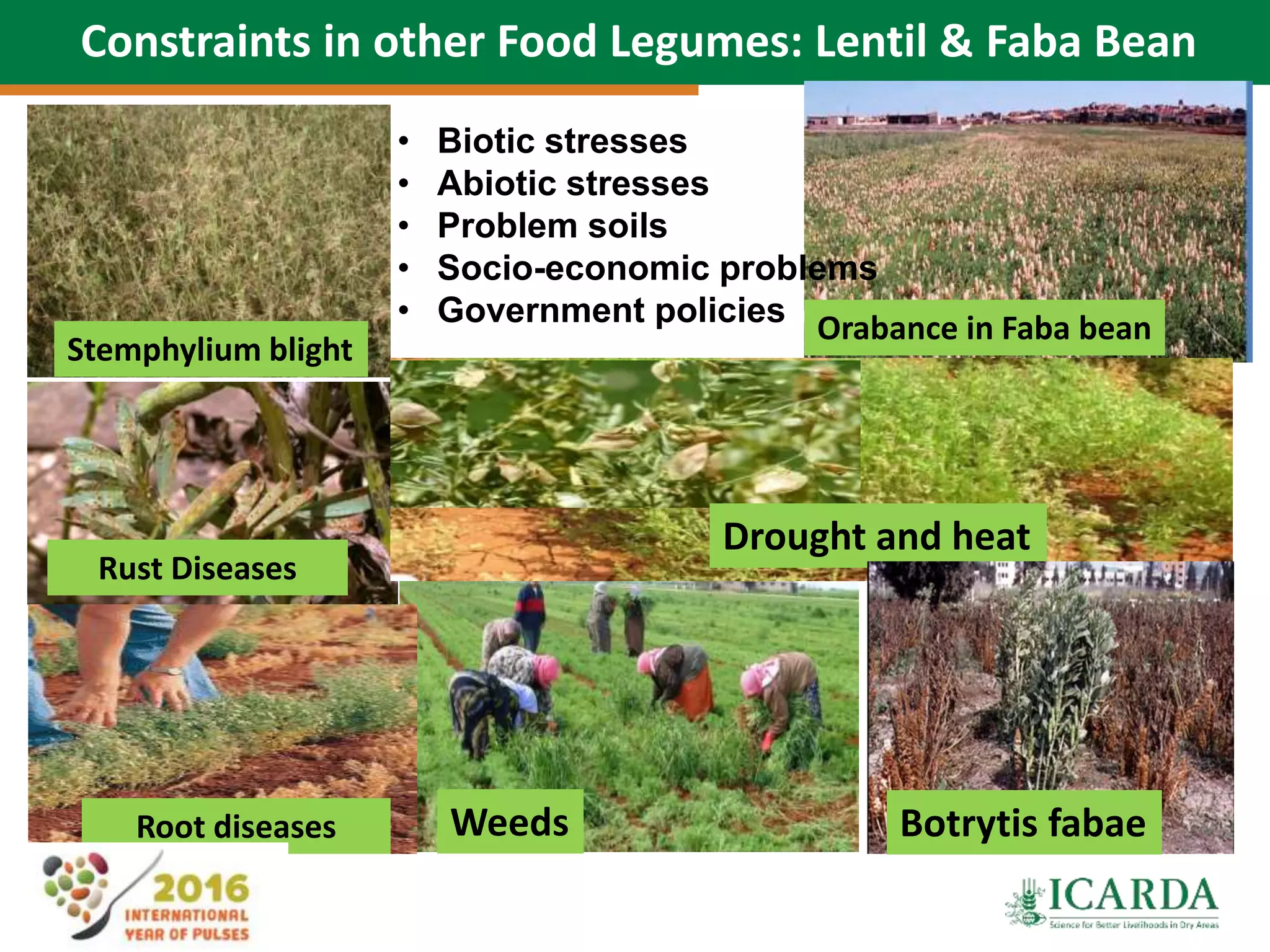
Constraints in other Food Legumes: Lentil & Faba Bean
Stemphylium blight
Rust Diseases
Root diseases
Drought and heat
Weeds
• Biotic stresses
• Abiotic stresses
• Problem soils
• Socio-economic problems
• Government policies
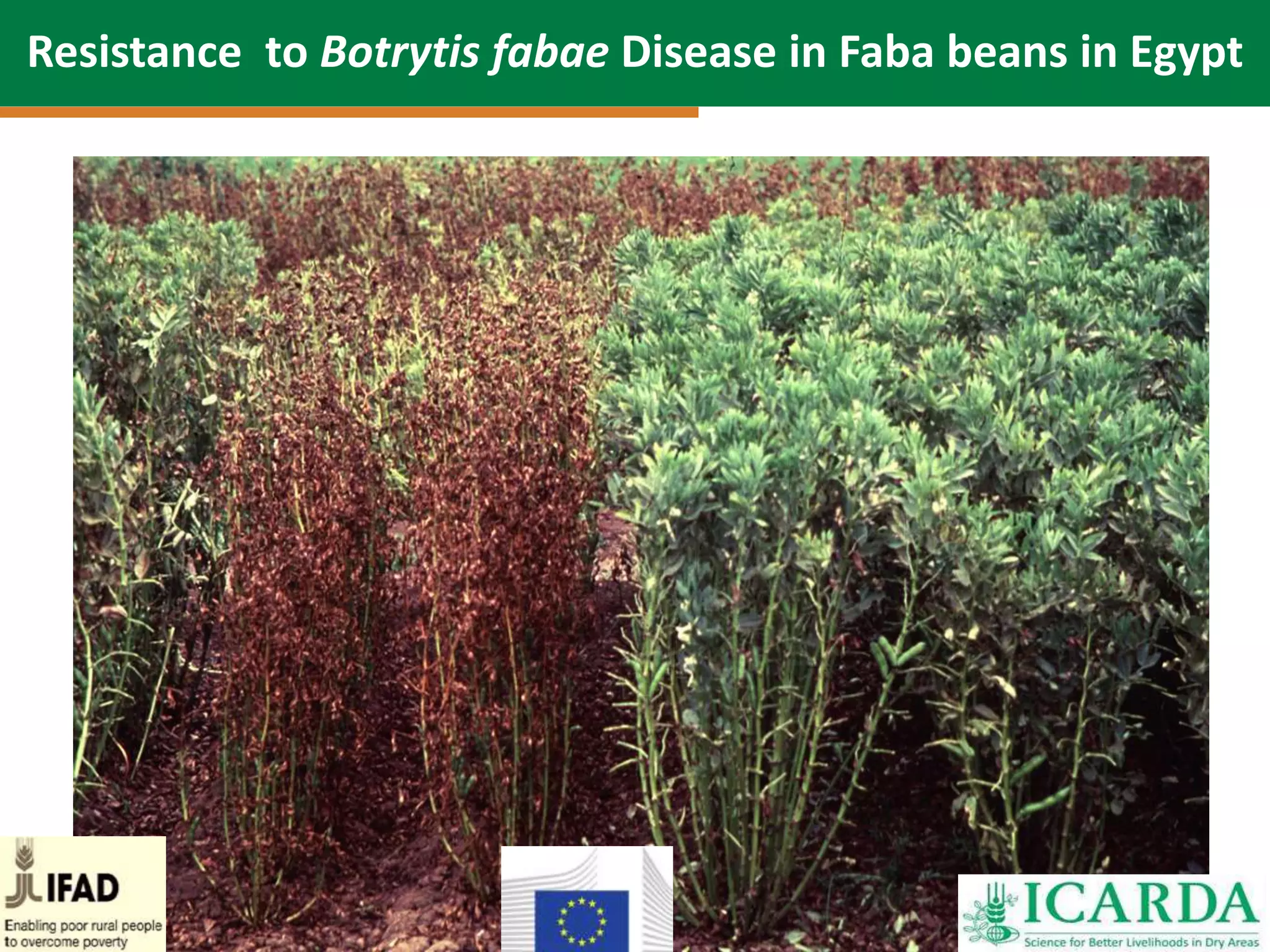
Botrytis fabae
Orabance in Faba bean
What Science can do to Explore the Potential of Pulses
to Enhance their Productivity and Yield Stability
23
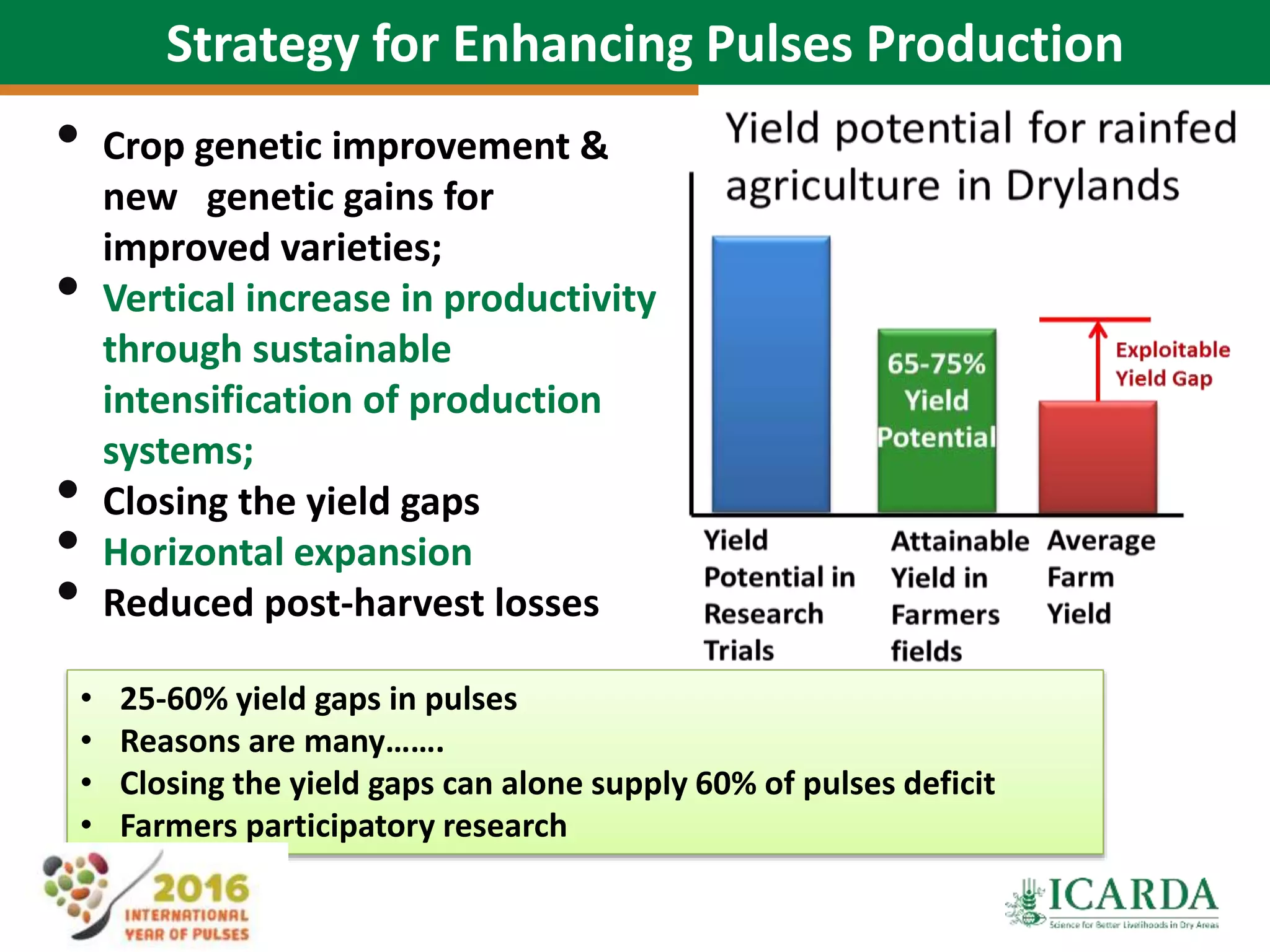
Strategy for Enhancing Pulses Production
• Crop genetic improvement &
new genetic gains for
improved varieties;
• Vertical increase in productivity
through sustainable
intensification of production
systems;
• Closing the yield gaps
• Horizontal expansion
• Reduced post-harvest losses
• 25-60% yield gaps in pulses
• Reasons are many…….
• Closing the yield gaps can alone supply 60% of pulses deficit
• Farmers participatory research
24
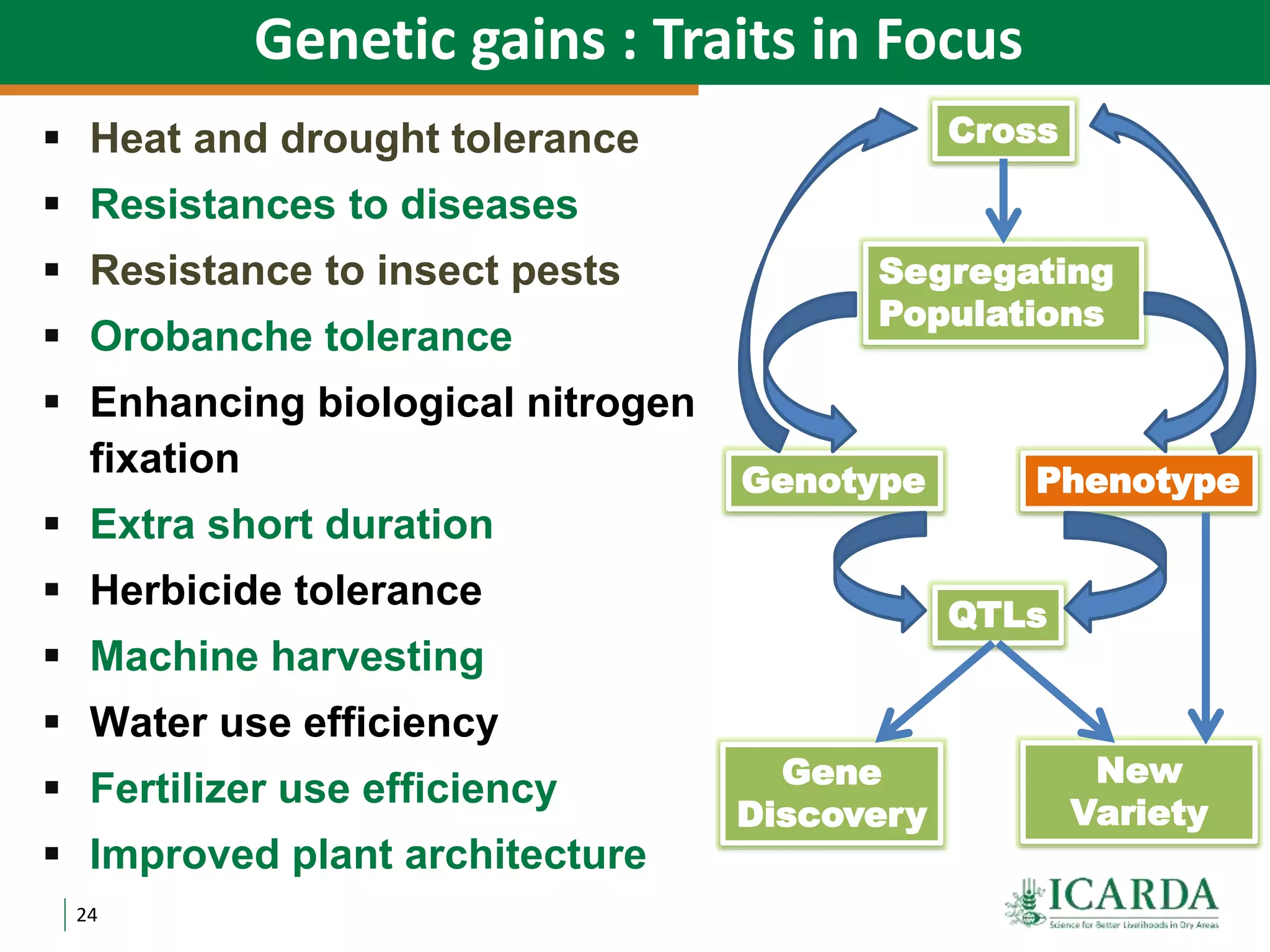
Genetic gains : Traits in Focus
 Heat and drought tolerance
 Resistances to diseases
 Resistance to insect pests
 Orobanche tolerance
 Enhancing biological nitrogen
fixation
 Extra short duration
 Herbicide tolerance
 Machine harvesting
 Water use efficiency
 Fertilizer use efficiency
 Improved plant architecture
Cross
Segregating
Populations
Genotype Phenotype
QTLs
Gene
Discovery
New
Variety
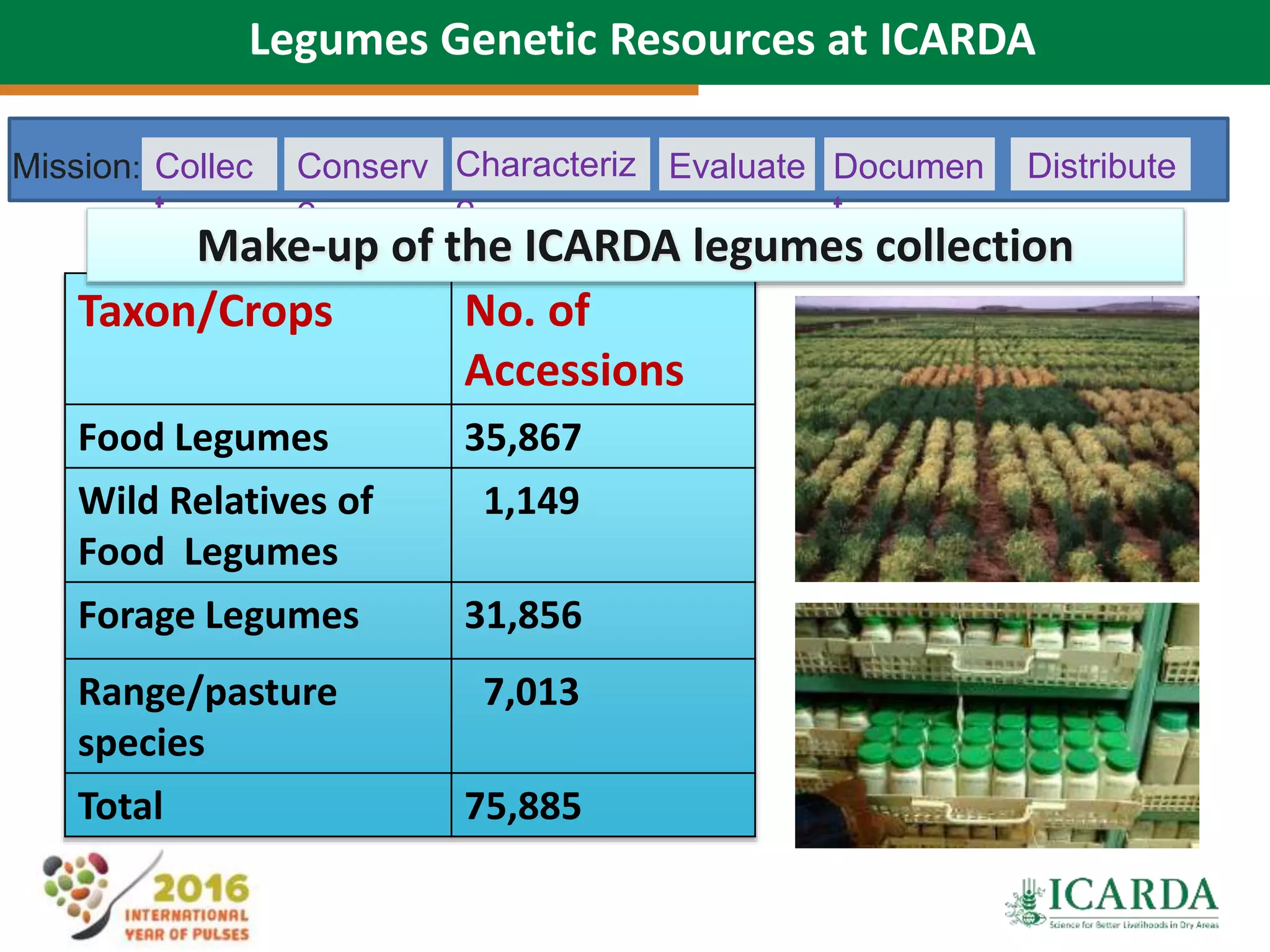
Collec
t
Mission: Conserv
e
Characteriz
e
Evaluate Documen
t
Distribute
Taxon/Crops No. of
Accessions
Food Legumes 35,867
Wild Relatives of
Food Legumes
1,149
Forage Legumes 31,856
Range/pasture
species
7,013
Total 75,885
Make-up of the ICARDA legumes collection
Legumes Genetic Resources at ICARDA
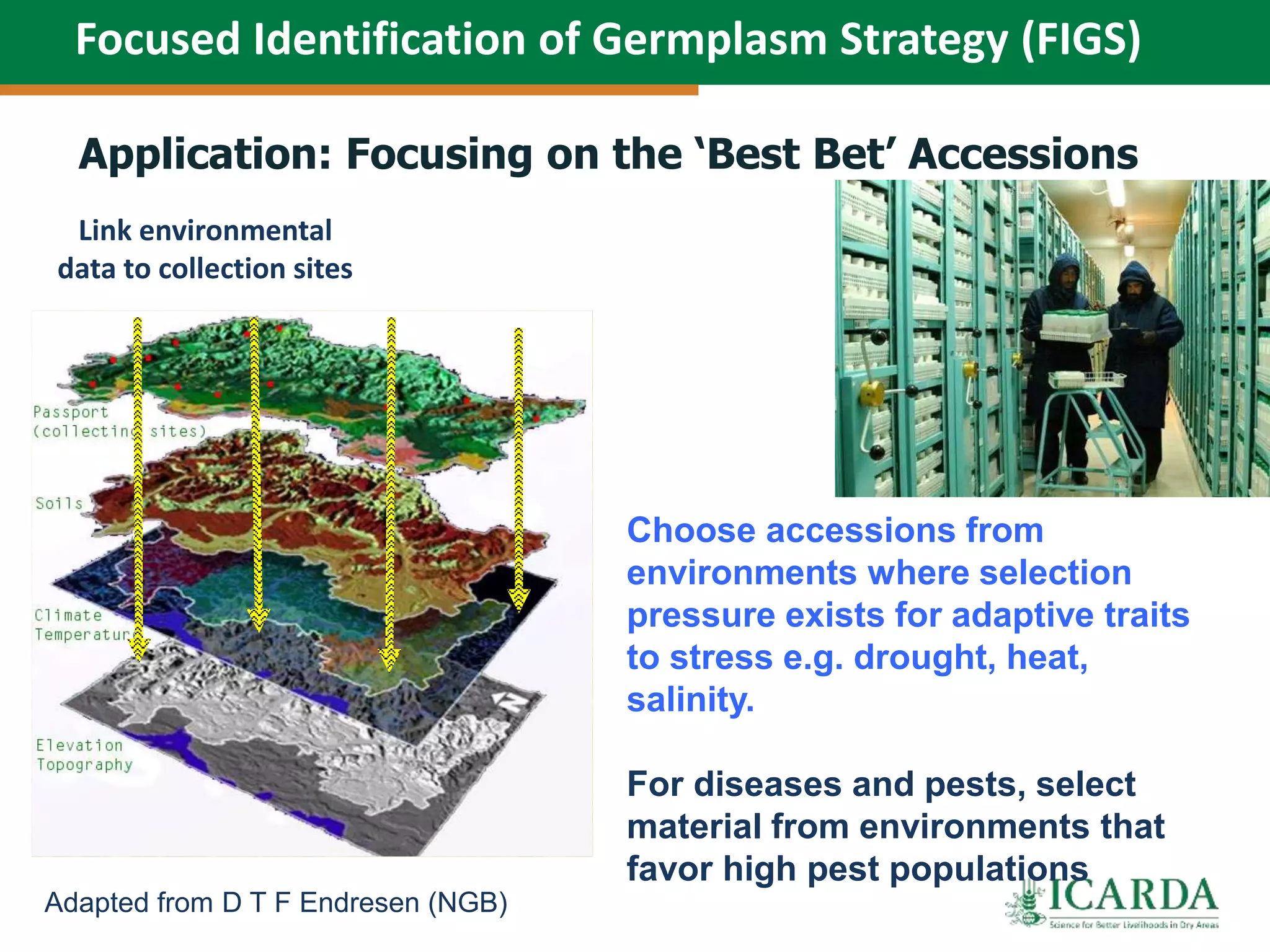
Link environmental
data to collection sites
Adapted from D T F Endresen (NGB)
Choose accessions from
environments where selection
pressure exists for adaptive traits
to stress e.g. drought, heat,
salinity.
For diseases and pests, select
material from environments that
favor high pest populations
Focused Identification of Germplasm Strategy (FIGS)
Application: Focusing on the ‘Best Bet’ Accessions
27
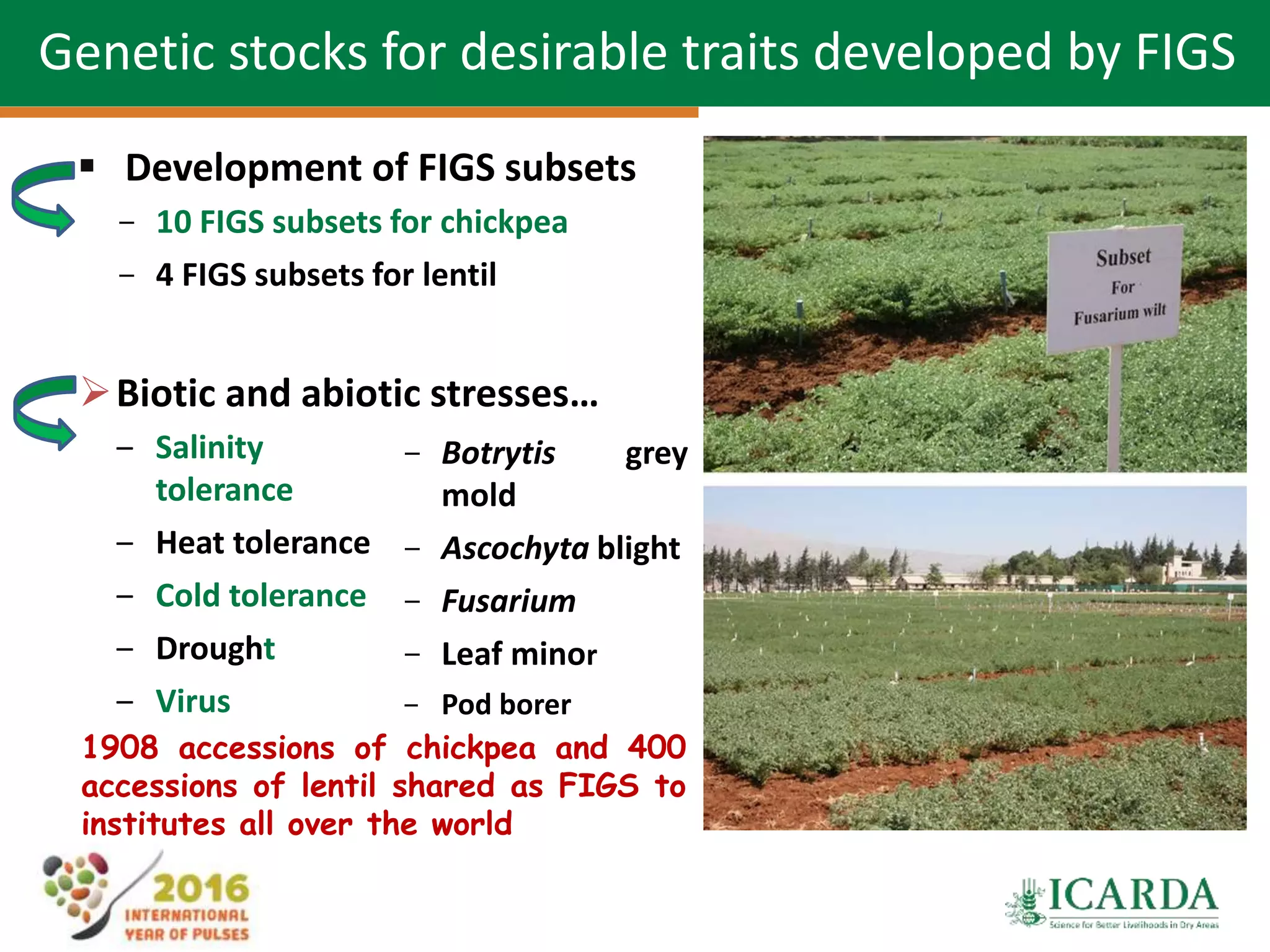
Genetic stocks for desirable traits developed by FIGS
 Development of FIGS subsets
- 10 FIGS subsets for chickpea
- 4 FIGS subsets for lentil
Biotic and abiotic stresses…
- Botrytis grey
mold
- Ascochyta blight
- Fusarium
- Leaf minor
- Pod borer
‒ Salinity
tolerance
‒ Heat tolerance
‒ Cold tolerance
‒ Drought
‒ Virus
1908 accessions of chickpea and 400
accessions of lentil shared as FIGS to
institutes all over the world
28
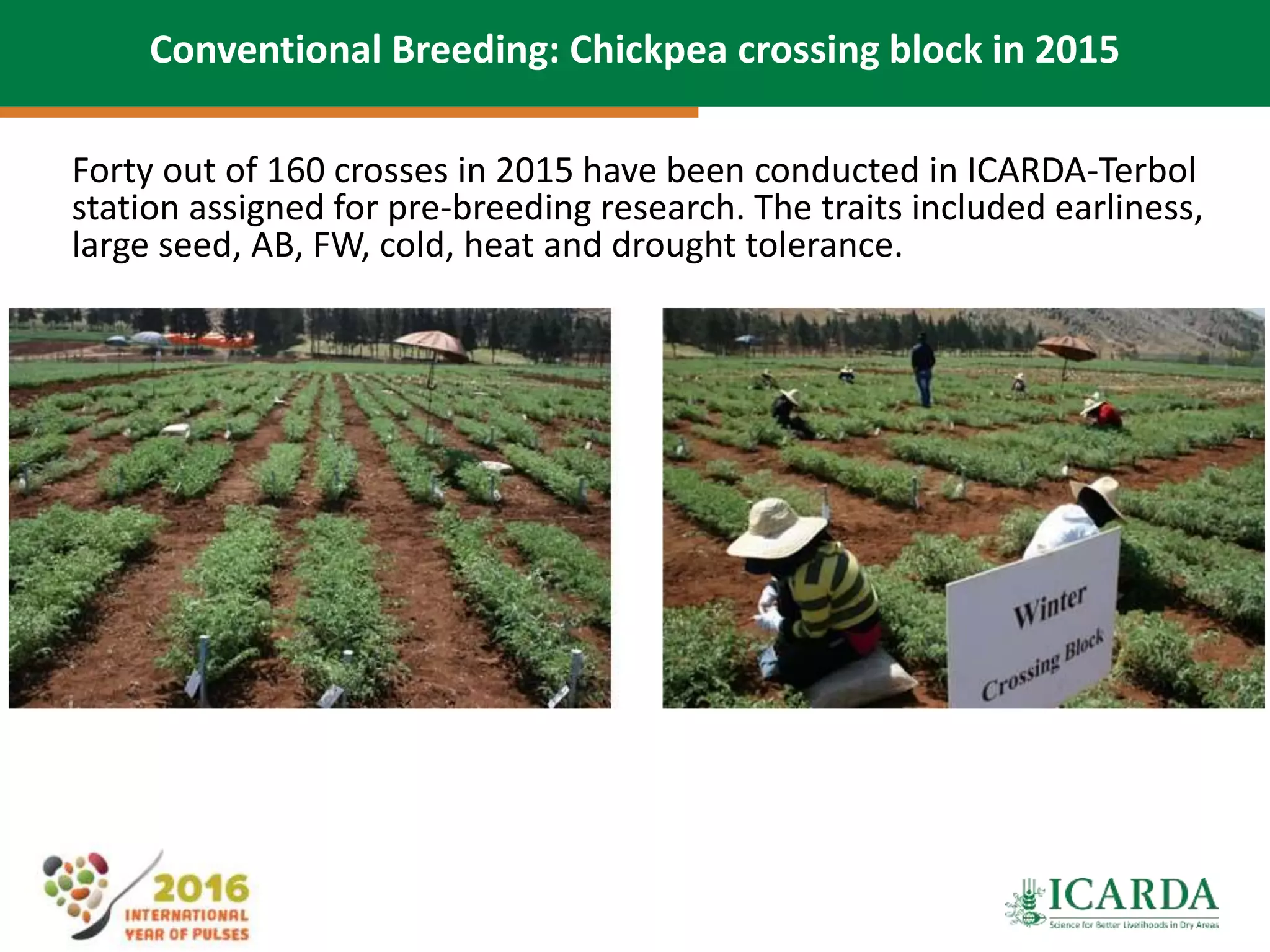
Forty out of 160 crosses in 2015 have been conducted in ICARDA-Terbol
station assigned for pre-breeding research. The traits included earliness,
large seed, AB, FW, cold, heat and drought tolerance.
Conventional Breeding: Chickpea crossing block in 2015
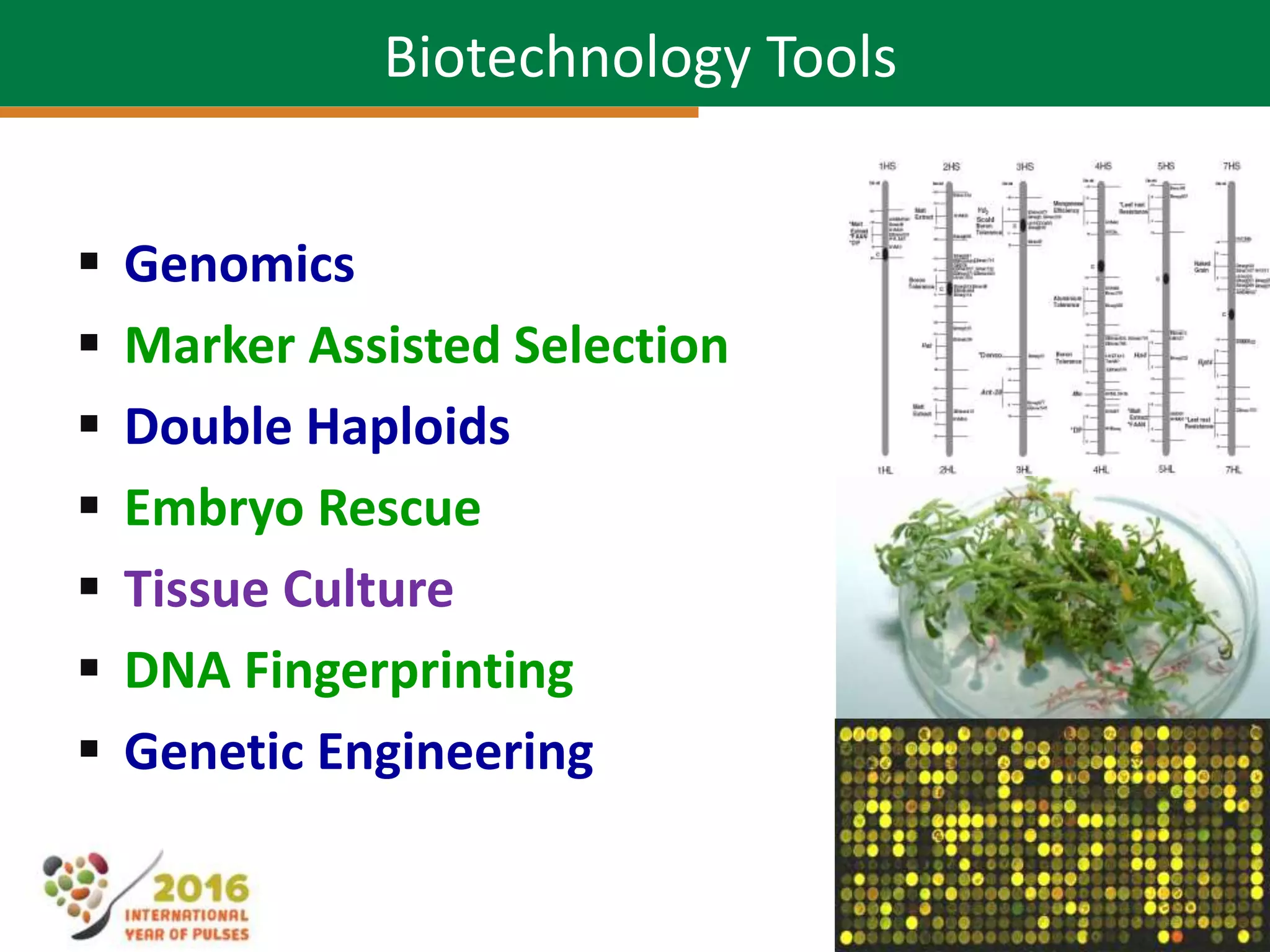
 Genomics
 Marker Assisted Selection
 Double Haploids
 Embryo Rescue
 Tissue Culture
 DNA Fingerprinting
 Genetic Engineering
Biotechnology Tools
30
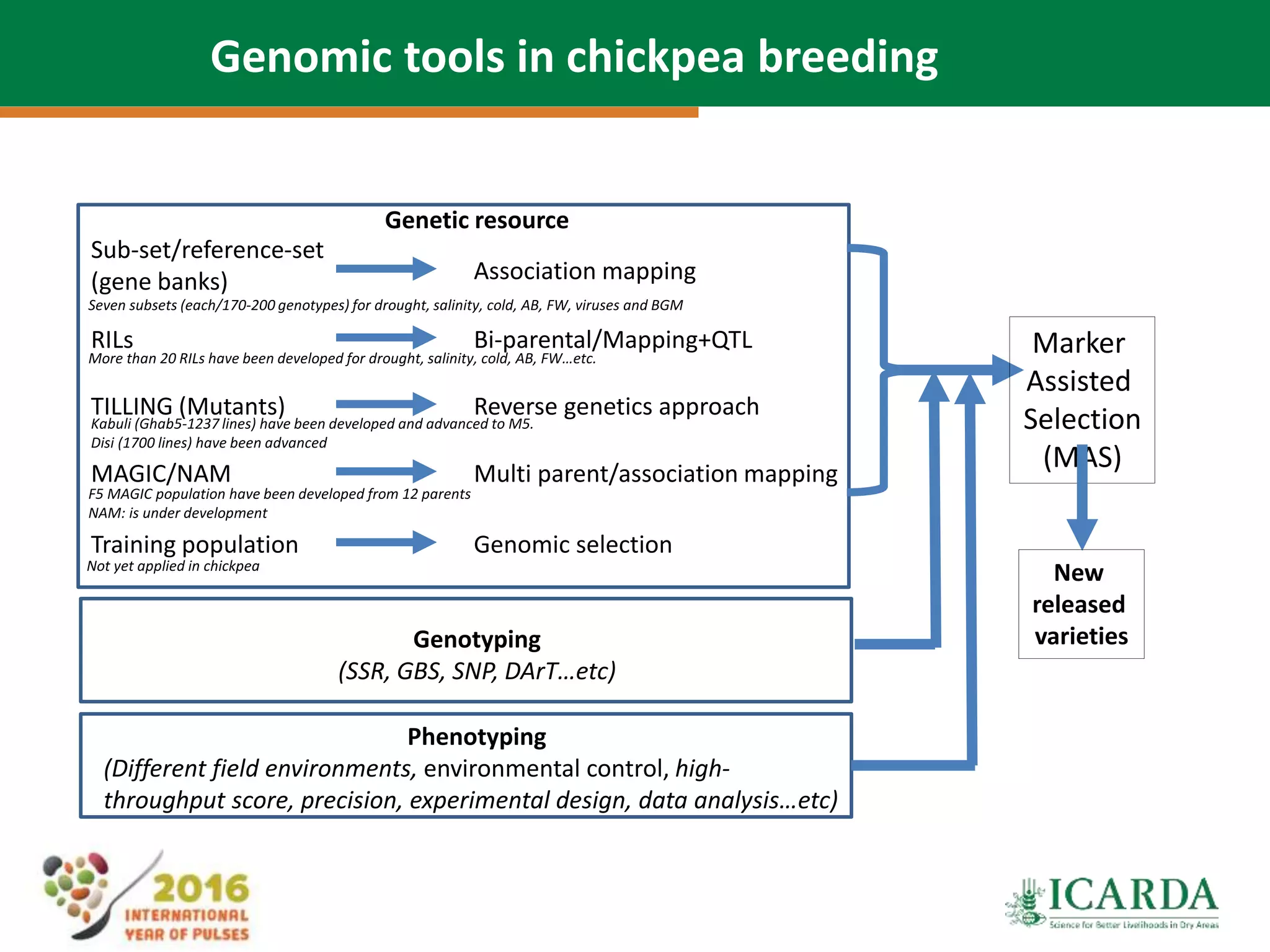
Genomic tools in chickpea breeding
Sub-set/reference-set
(gene banks)
RILs
TILLING (Mutants)
MAGIC/NAM
Training population
Association mapping
Bi-parental/Mapping+QTL
Reverse genetics approach
Multi parent/association mapping
Genomic selection
Genotyping
(SSR, GBS, SNP, DArT…etc)
Phenotyping
(Different field environments, environmental control, high-
throughput score, precision, experimental design, data analysis…etc)
Marker
Assisted
Selection
(MAS)
New
released
varieties
Seven subsets (each/170-200 genotypes) for drought, salinity, cold, AB, FW, viruses and BGM
More than 20 RILs have been developed for drought, salinity, cold, AB, FW…etc.
Kabuli (Ghab5-1237 lines) have been developed and advanced to M5.
Disi (1700 lines) have been advanced
F5 MAGIC population have been developed from 12 parents
NAM: is under development
Not yet applied in chickpea
Genetic resource
31
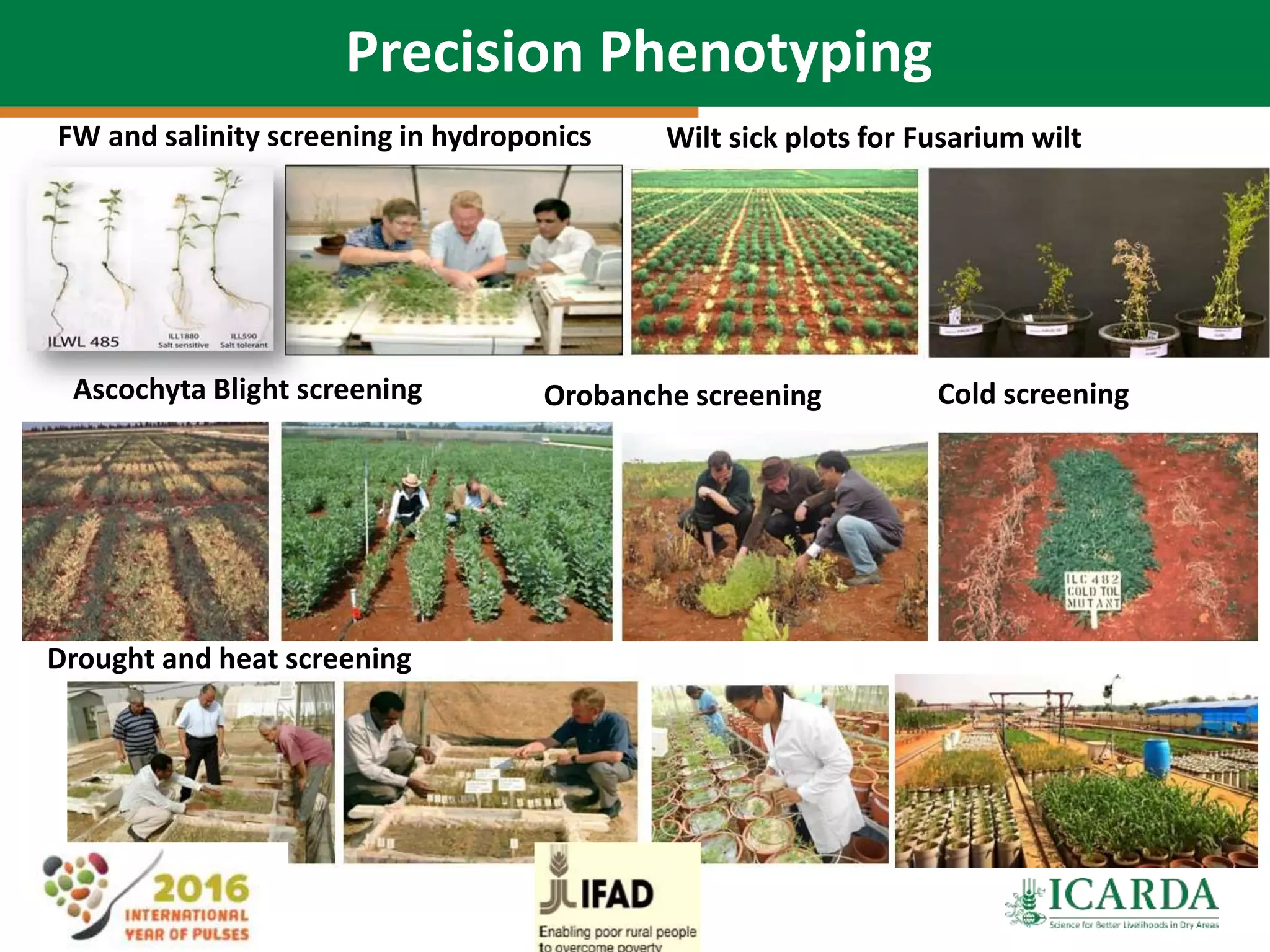
Precision Phenotyping
FW and salinity screening in hydroponics Wilt sick plots for Fusarium wilt
Orobanche screeningAscochyta Blight screening
Drought and heat screening
Cold screening
32
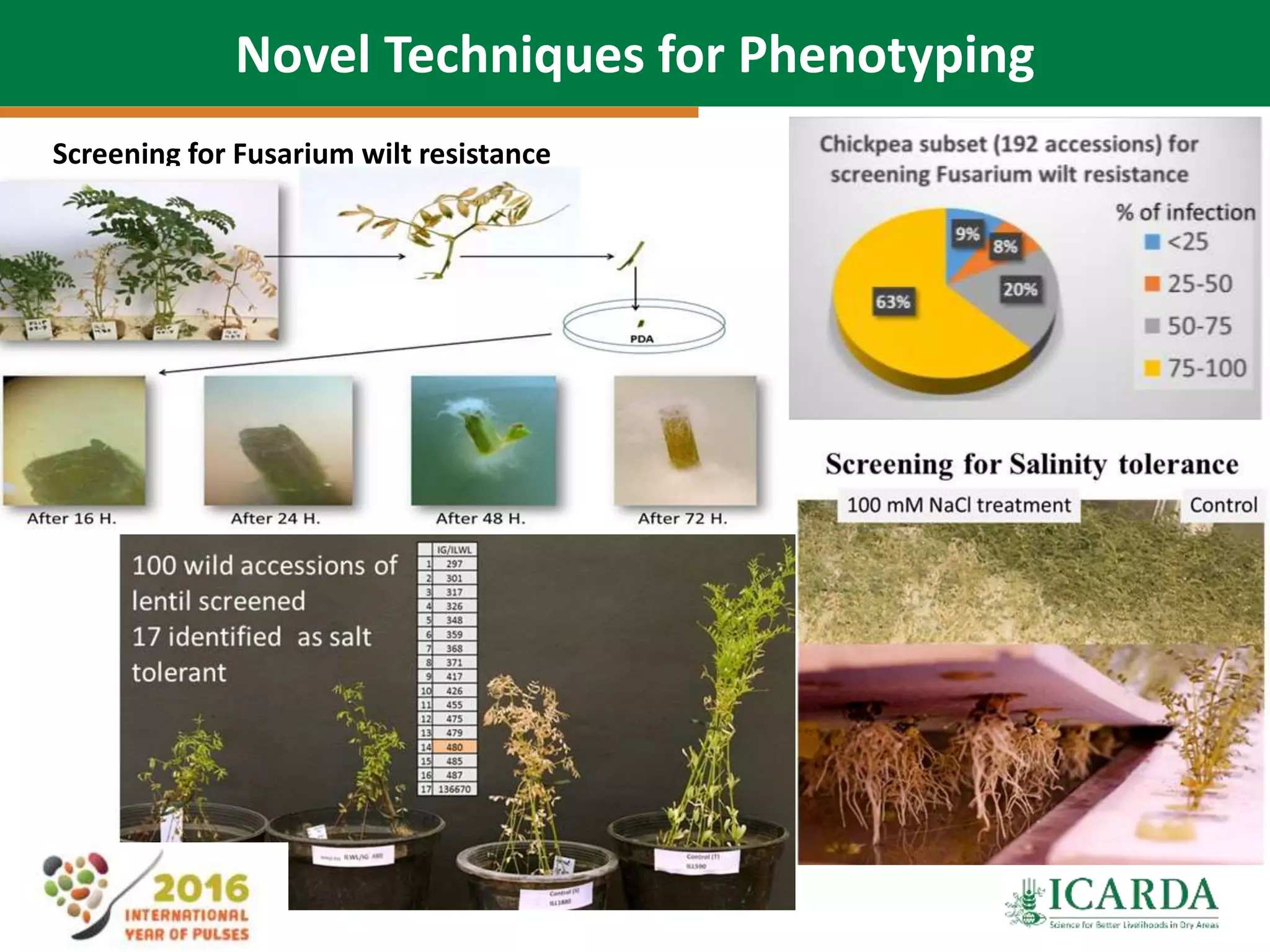
Novel Techniques for Phenotyping
Screening for Fusarium wilt resistance
33
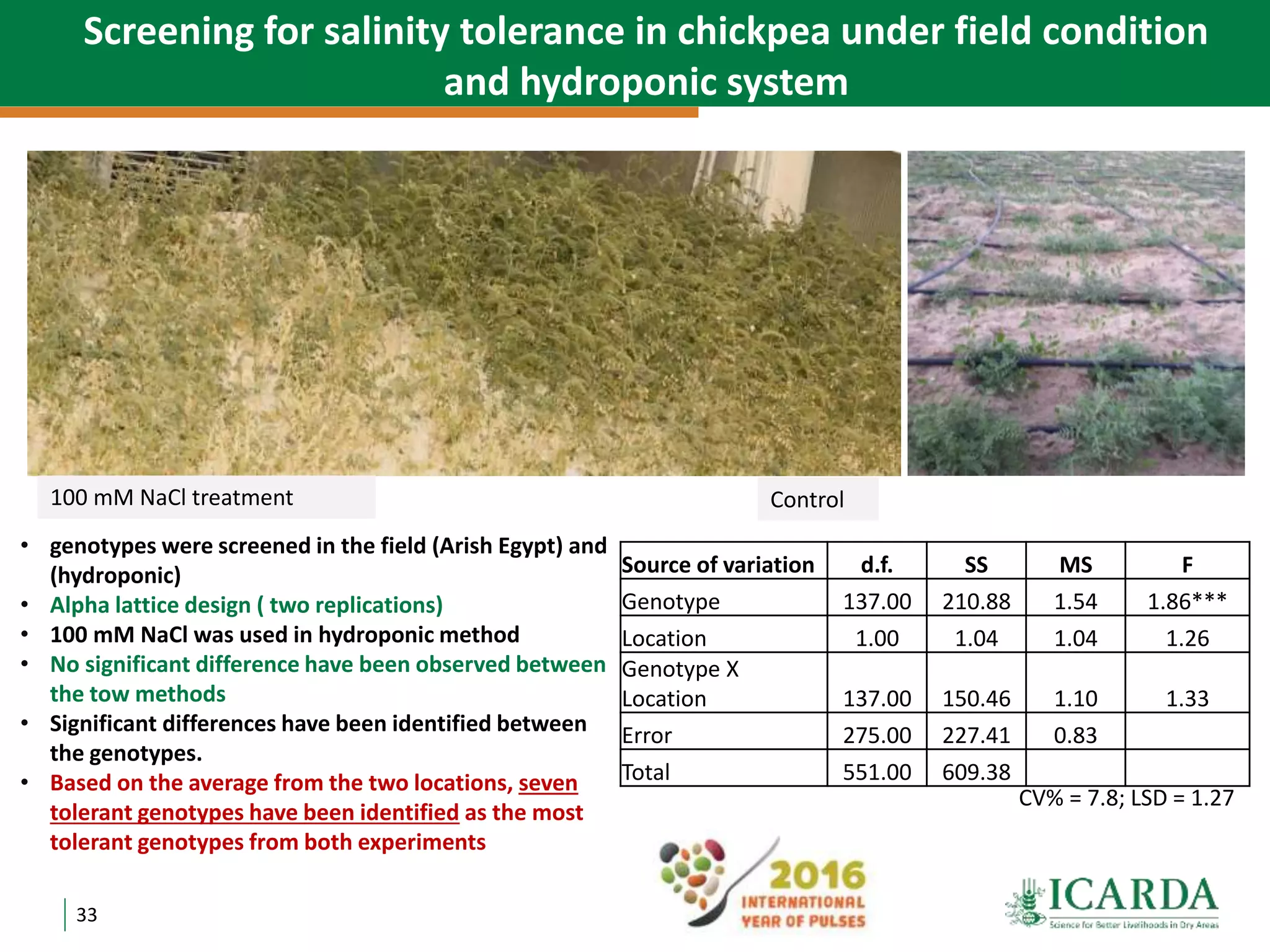
Source of variation d.f. SS MS F
Genotype 137.00 210.88 1.54 1.86***
Location 1.00 1.04 1.04 1.26
Genotype X
Location 137.00 150.46 1.10 1.33
Error 275.00 227.41 0.83
Total 551.00 609.38
• genotypes were screened in the field (Arish Egypt) and
(hydroponic)
• Alpha lattice design ( two replications)
• 100 mM NaCl was used in hydroponic method
• No significant difference have been observed between
the tow methods
• Significant differences have been identified between
the genotypes.
• Based on the average from the two locations, seven
tolerant genotypes have been identified as the most
tolerant genotypes from both experiments
CV% = 7.8; LSD = 1.27
100 mM NaCl treatment Control
Screening for salinity tolerance in chickpea under field condition
and hydroponic system
34
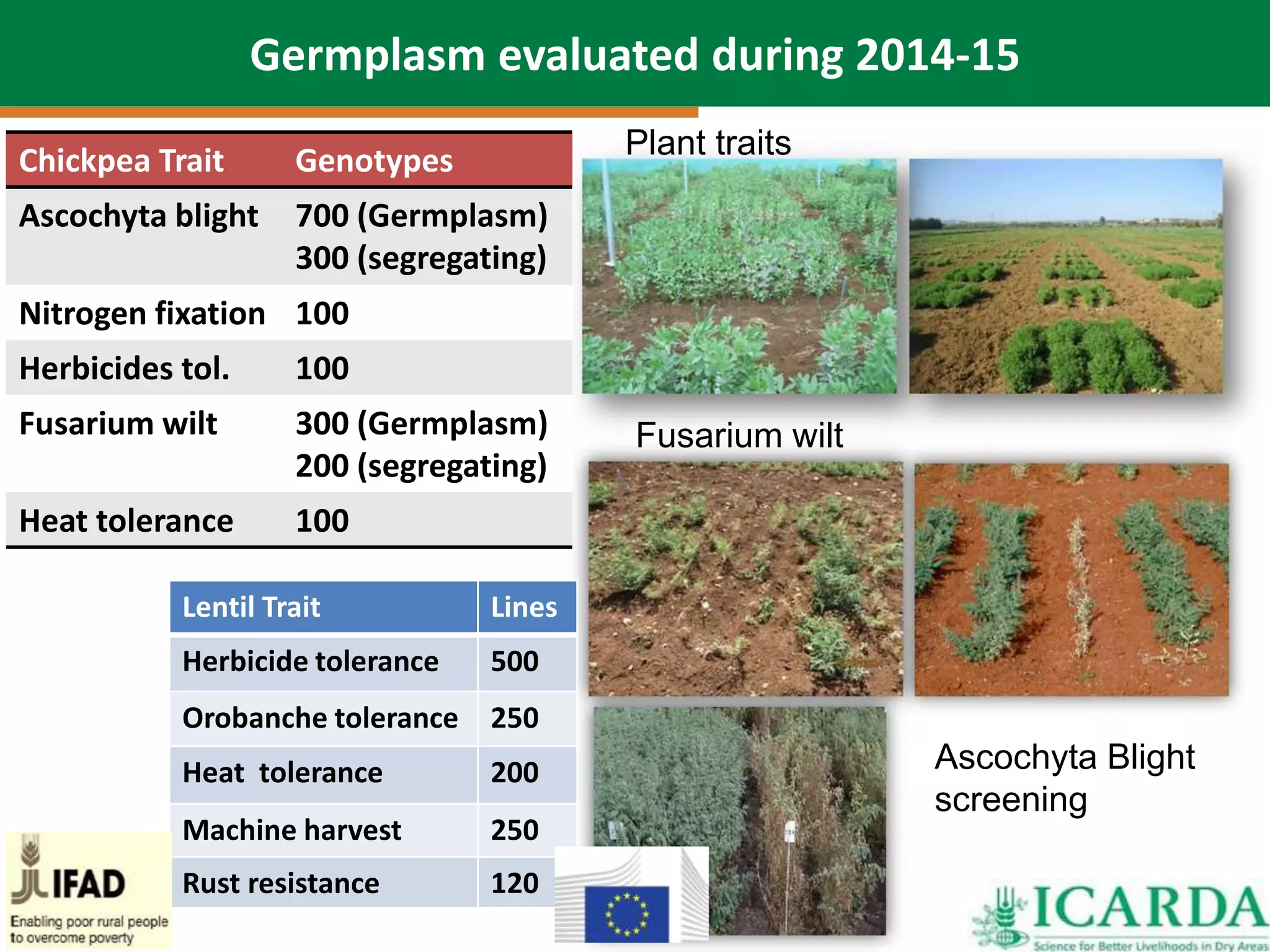
Germplasm evaluated during 2014-15
620 lentil accessions
365 chickpea accessions
Fusarium wilt
Ascochyta Blight
screening
Chickpea Trait Genotypes
Ascochyta blight 700 (Germplasm)
300 (segregating)
Nitrogen fixation 100
Herbicides tol. 100
Fusarium wilt 300 (Germplasm)
200 (segregating)
Heat tolerance 100
Plant traits
Lentil Trait Lines
Herbicide tolerance 500
Orobanche tolerance 250
Heat tolerance 200
Machine harvest 250
Rust resistance 120
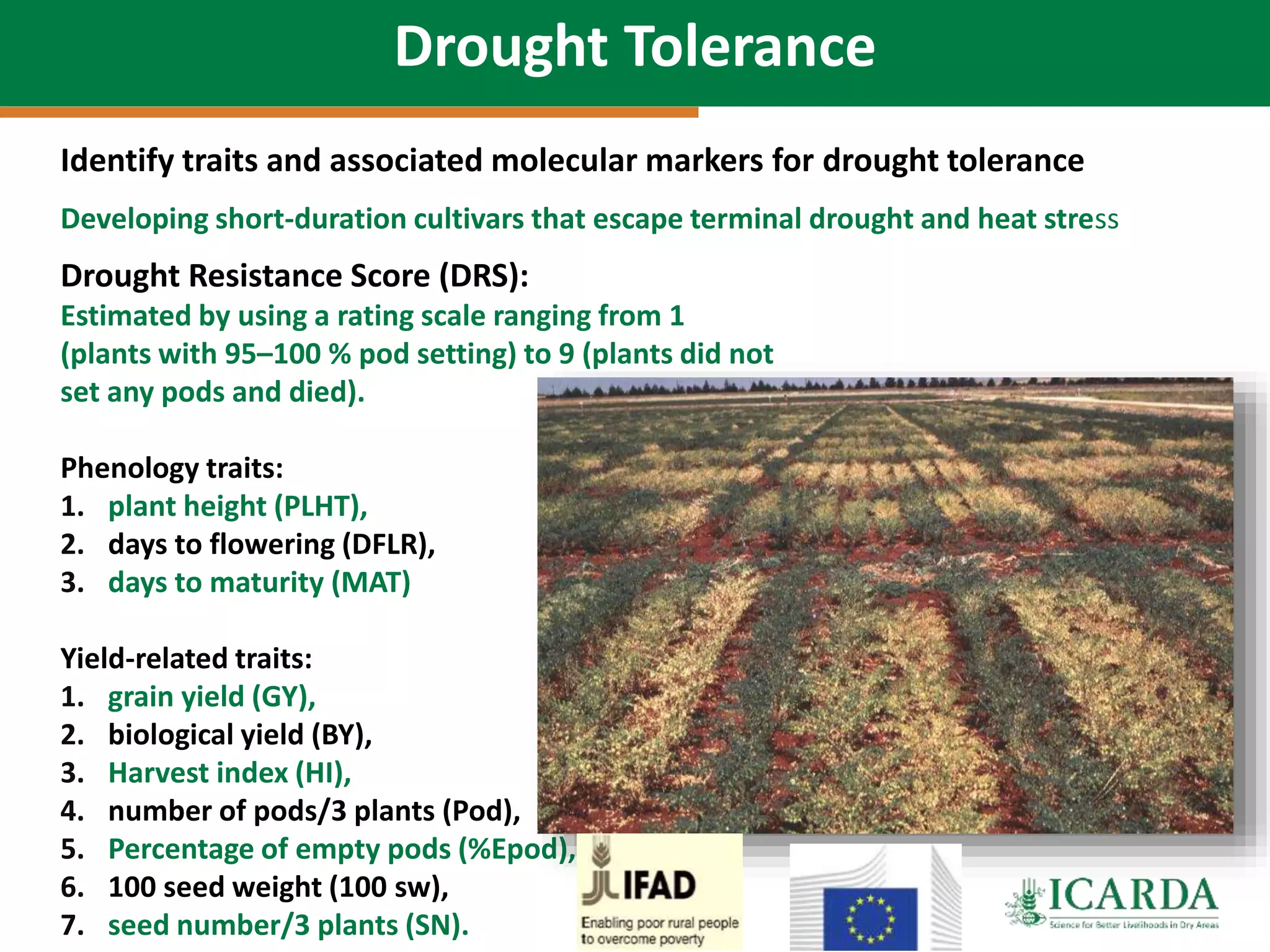
Identify traits and associated molecular markers for drought tolerance
Drought Resistance Score (DRS):
Estimated by using a rating scale ranging from 1
(plants with 95–100 % pod setting) to 9 (plants did not
set any pods and died).
Phenology traits:
1. plant height (PLHT),
2. days to flowering (DFLR),
3. days to maturity (MAT)
Yield-related traits:
1. grain yield (GY),
2. biological yield (BY),
3. Harvest index (HI),
4. number of pods/3 plants (Pod),
5. Percentage of empty pods (%Epod),
6. 100 seed weight (100 sw),
7. seed number/3 plants (SN).
Developing short-duration cultivars that escape terminal drought and heat stress
Drought Tolerance
LG4LG3
TA-34
H5H-032
TS-19
H3F-08
STMS-10
STMS-21
H1F-14
TR-31
H3H-04
GA-119
H1E-06
H4G-07
H6C-07
H1P-092
H1B-04
20.4
20.4
24.0
13.3
4.4
7.9
12.1
19.1
20.6
26.0
3.5
0.7
0.6
14.6
2
A B Scy17
H1B-17
TA-72
NCPGR-74
H3D-09
H5G-01
H1G-20
TA-146
SCEA19
H1A-12
TS-104
H4G-11
H5H-02
H1H-15
TR-20
10.3
17.4
13.2
14.7
12.2
6.9
7.0
7.8
15.9
17.1
5.3
1.4
2.0
11.2
1
A
B
YP
YP
YP
SN
SN
SN
SN
POD
POD
POD
SW
SW
PB
PB
PLHT
PLHT
HI
HI
HTSMAT
EPOD
EPOD
BY
BY
FDFLR
DFLR
DFLR
FLRD
GFIL
D
GFILD
GFILD
GFILD
HTS
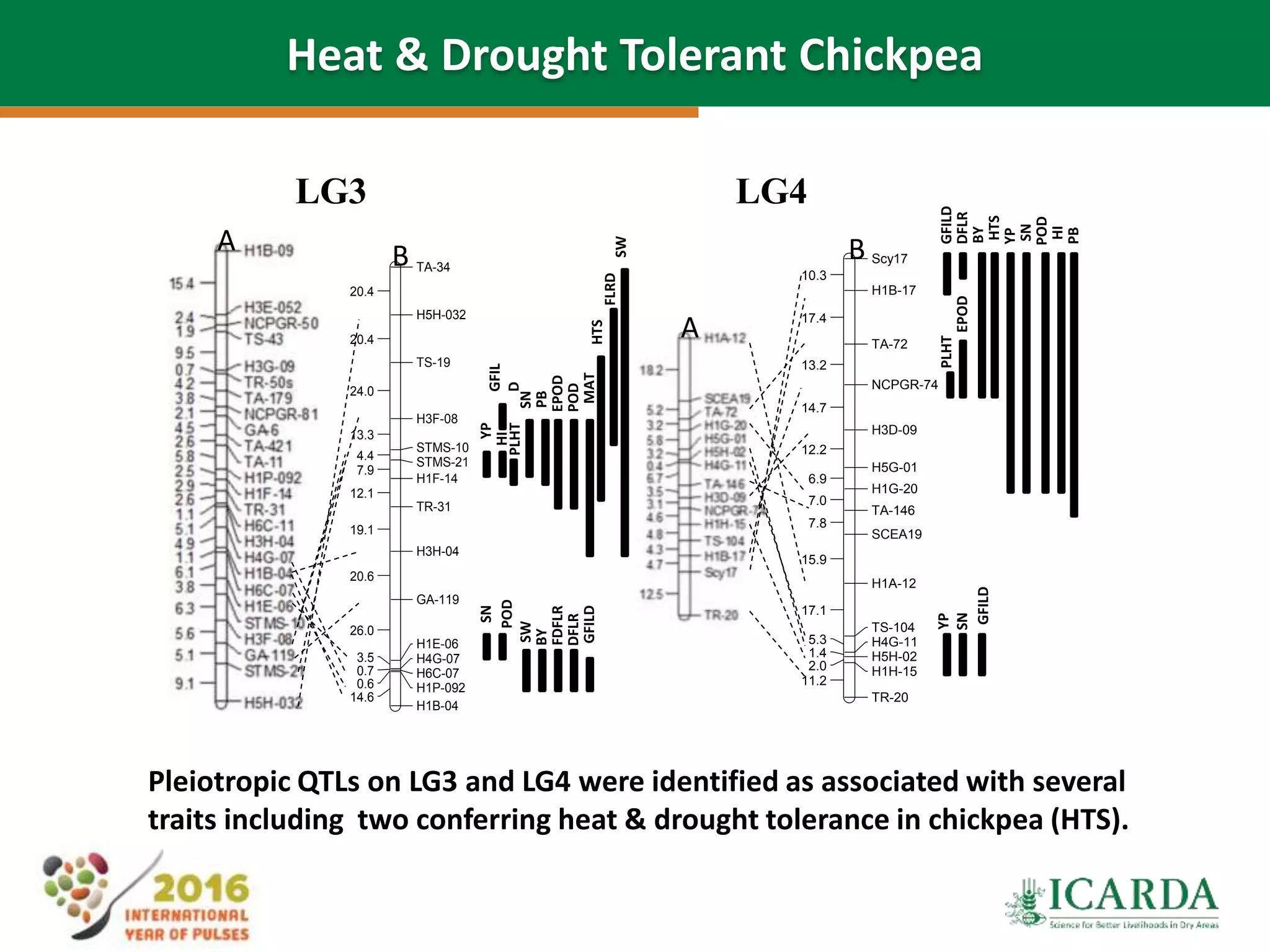
Pleiotropic QTLs on LG3 and LG4 were identified as associated with several
traits including two conferring heat & drought tolerance in chickpea (HTS).
Heat & Drought Tolerant Chickpea
37
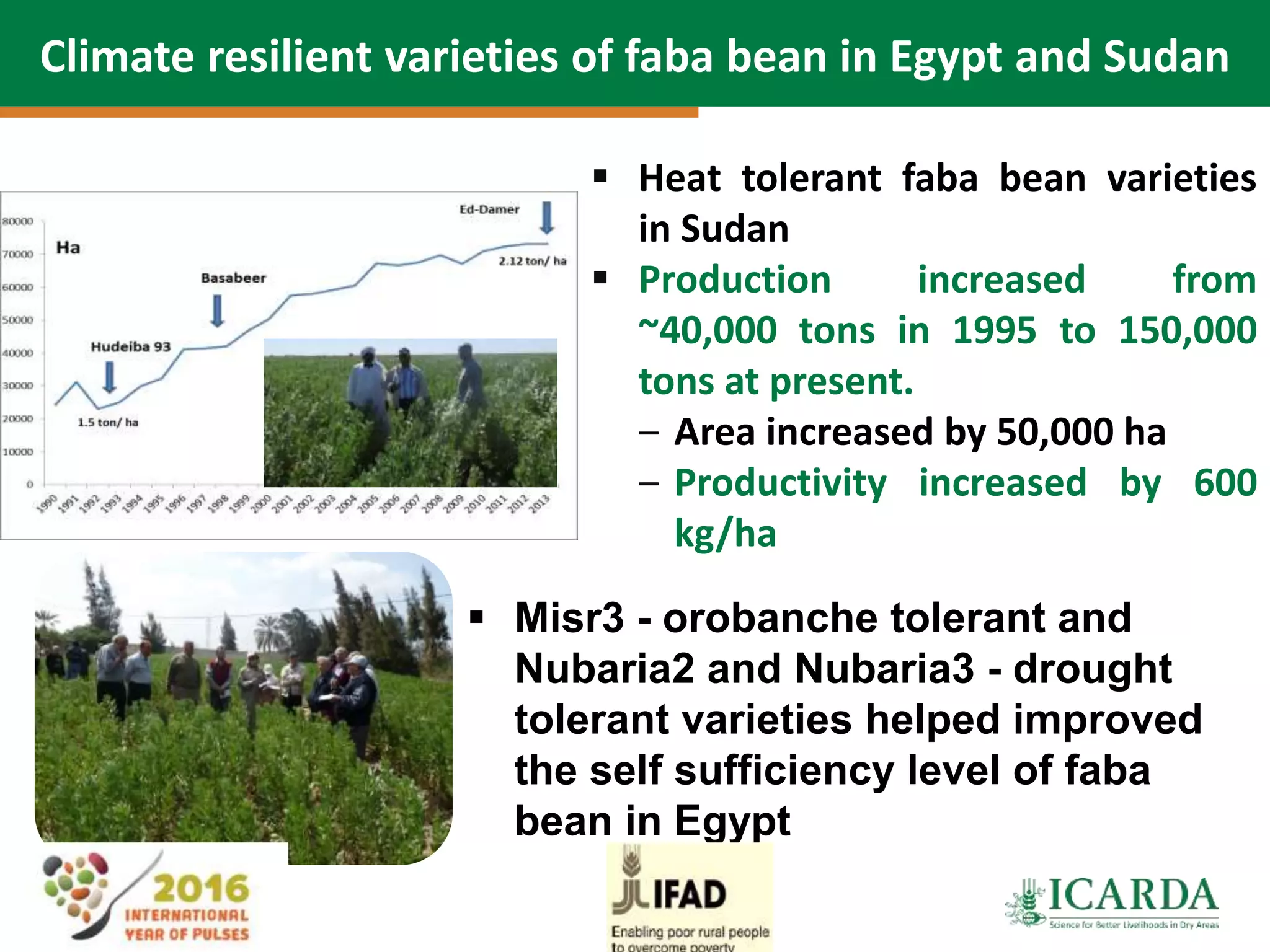
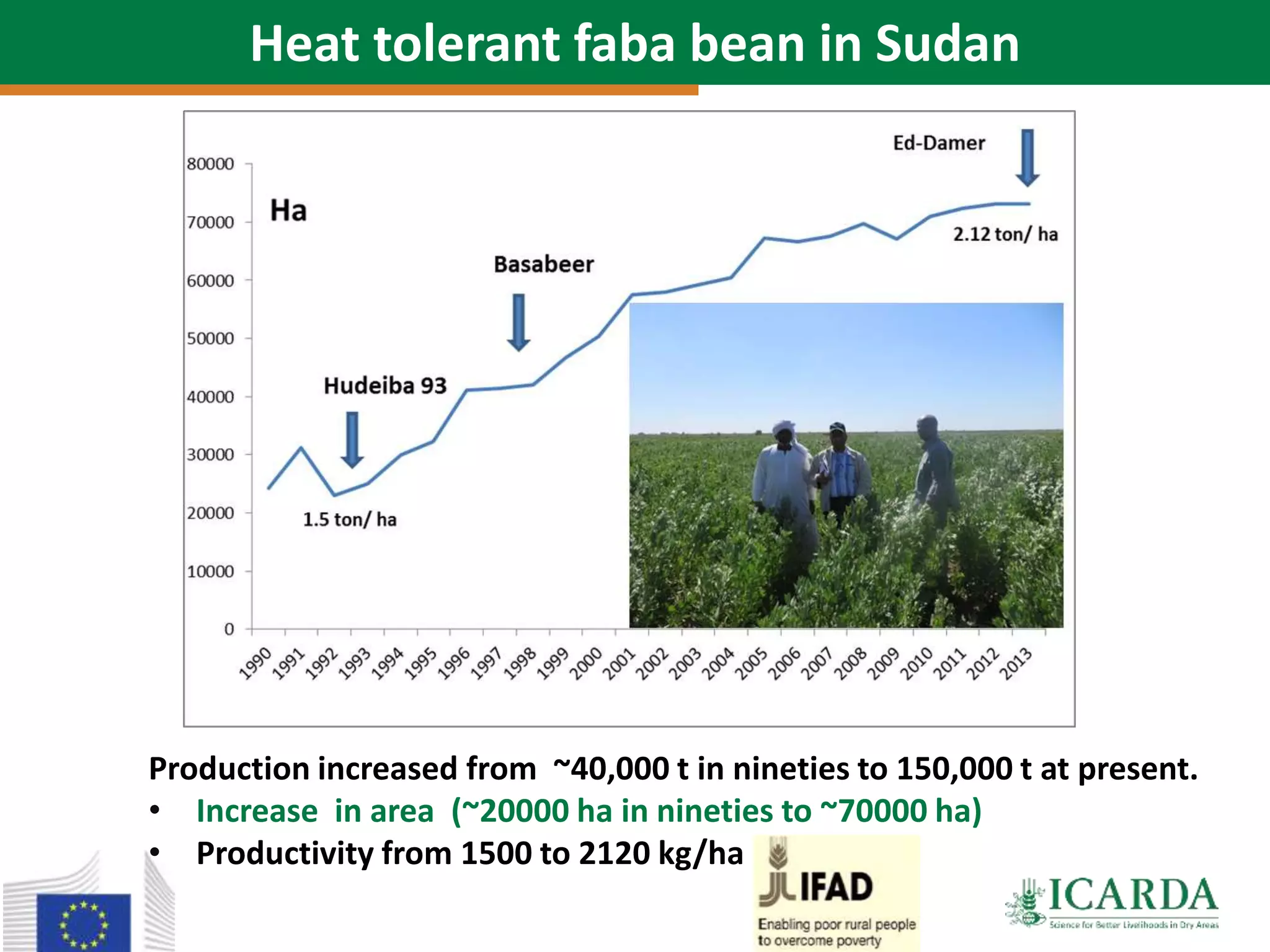
 Heat tolerant faba bean varieties
in Sudan
 Production increased from
~40,000 tons in 1995 to 150,000
tons at present.
‒ Area increased by 50,000 ha
‒ Productivity increased by 600
kg/ha
 Misr3 - orobanche tolerant and
Nubaria2 and Nubaria3 - drought
tolerant varieties helped improved
the self sufficiency level of faba
bean in Egypt
Climate resilient varieties of faba bean in Egypt and Sudan
38
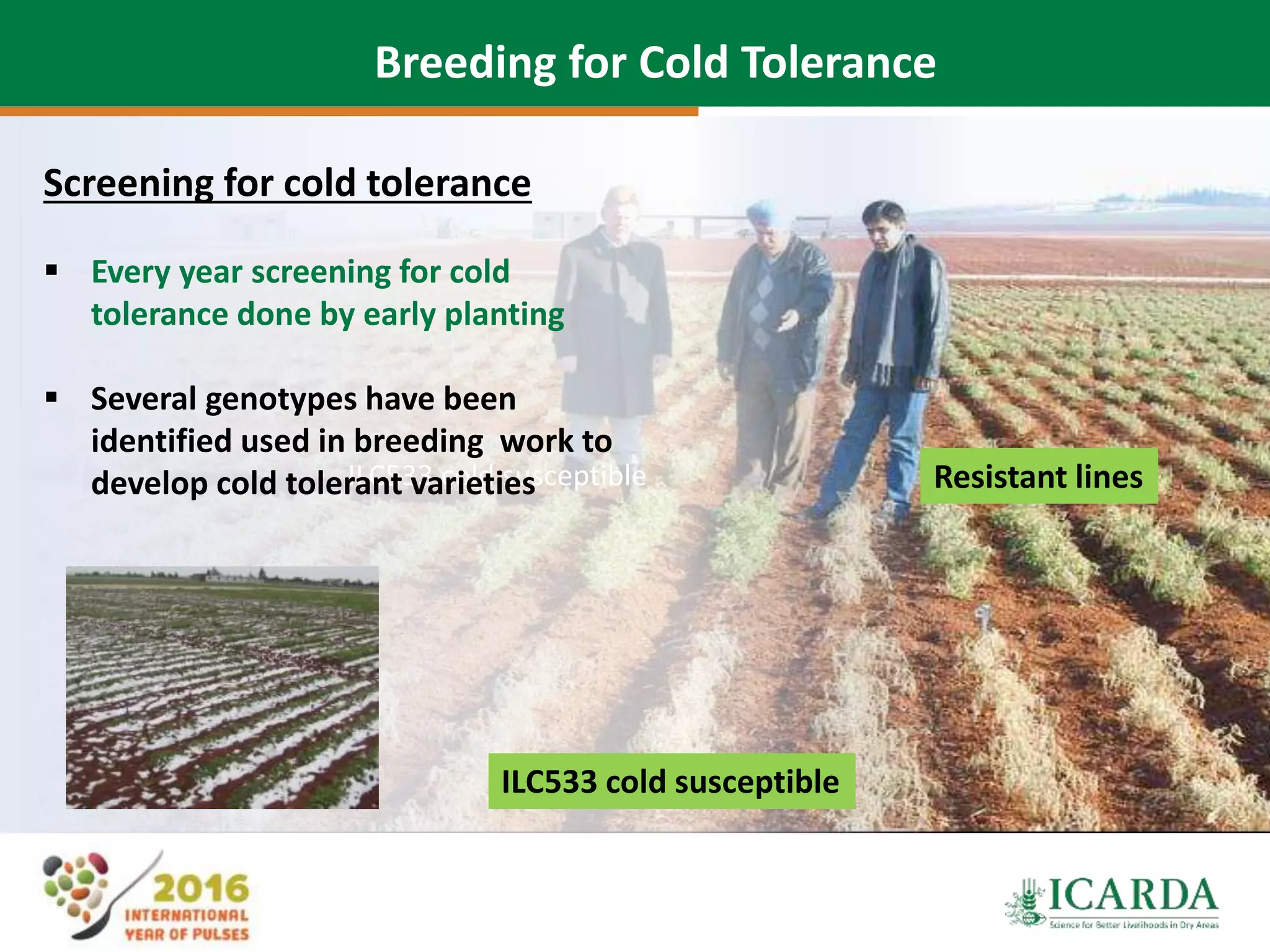
ILC533 cold susceptible
Screening for cold tolerance
 Every year screening for cold
tolerance done by early planting
 Several genotypes have been
identified used in breeding work to
develop cold tolerant varieties
Breeding for Cold Tolerance
ILC533 cold susceptible
Resistant lines
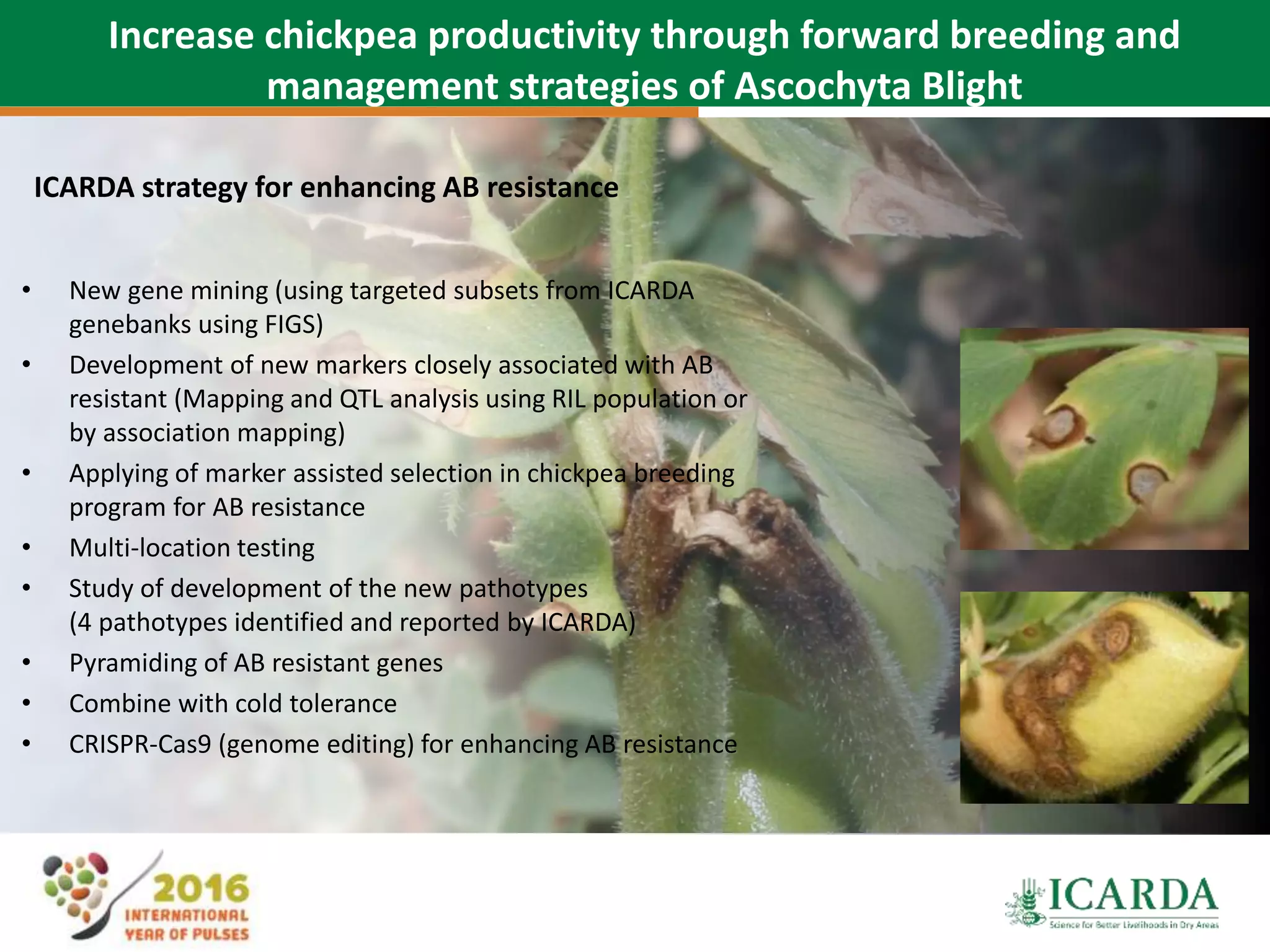
Increase chickpea productivity through forward breeding and
management strategies of Ascochyta Blight
• New gene mining (using targeted subsets from ICARDA
genebanks using FIGS)
• Development of new markers closely associated with AB
resistant (Mapping and QTL analysis using RIL population or
by association mapping)
• Applying of marker assisted selection in chickpea breeding
program for AB resistance
• Multi-location testing
• Study of development of the new pathotypes
(4 pathotypes identified and reported by ICARDA)
• Pyramiding of AB resistant genes
• Combine with cold tolerance
• CRISPR-Cas9 (genome editing) for enhancing AB resistance
ICARDA strategy for enhancing AB resistance
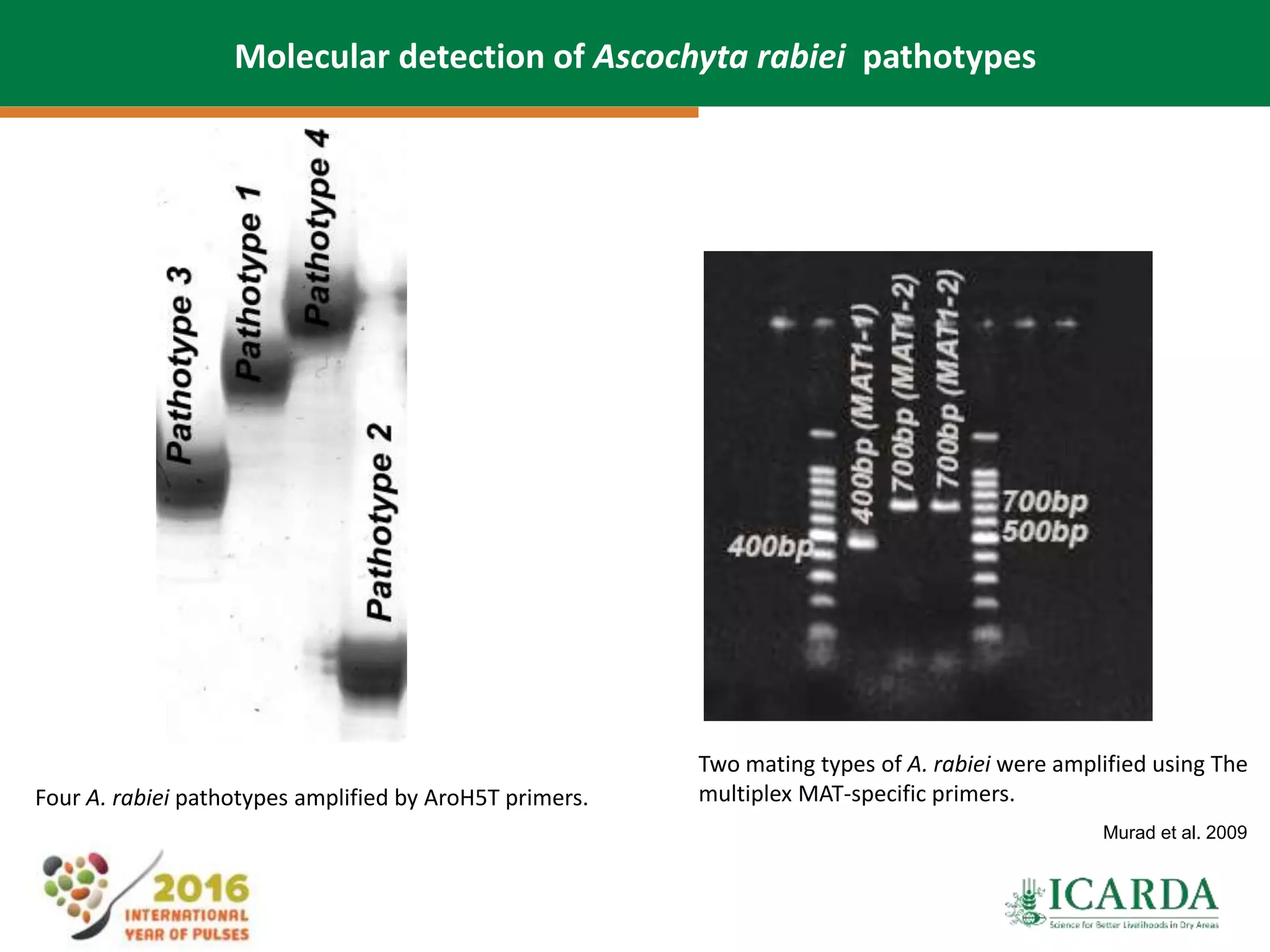
Four A. rabiei pathotypes amplified by AroH5T primers.
Two mating types of A. rabiei were amplified using The
multiplex MAT-specific primers.
Murad et al. 2009
Molecular detection of Ascochyta rabiei pathotypes
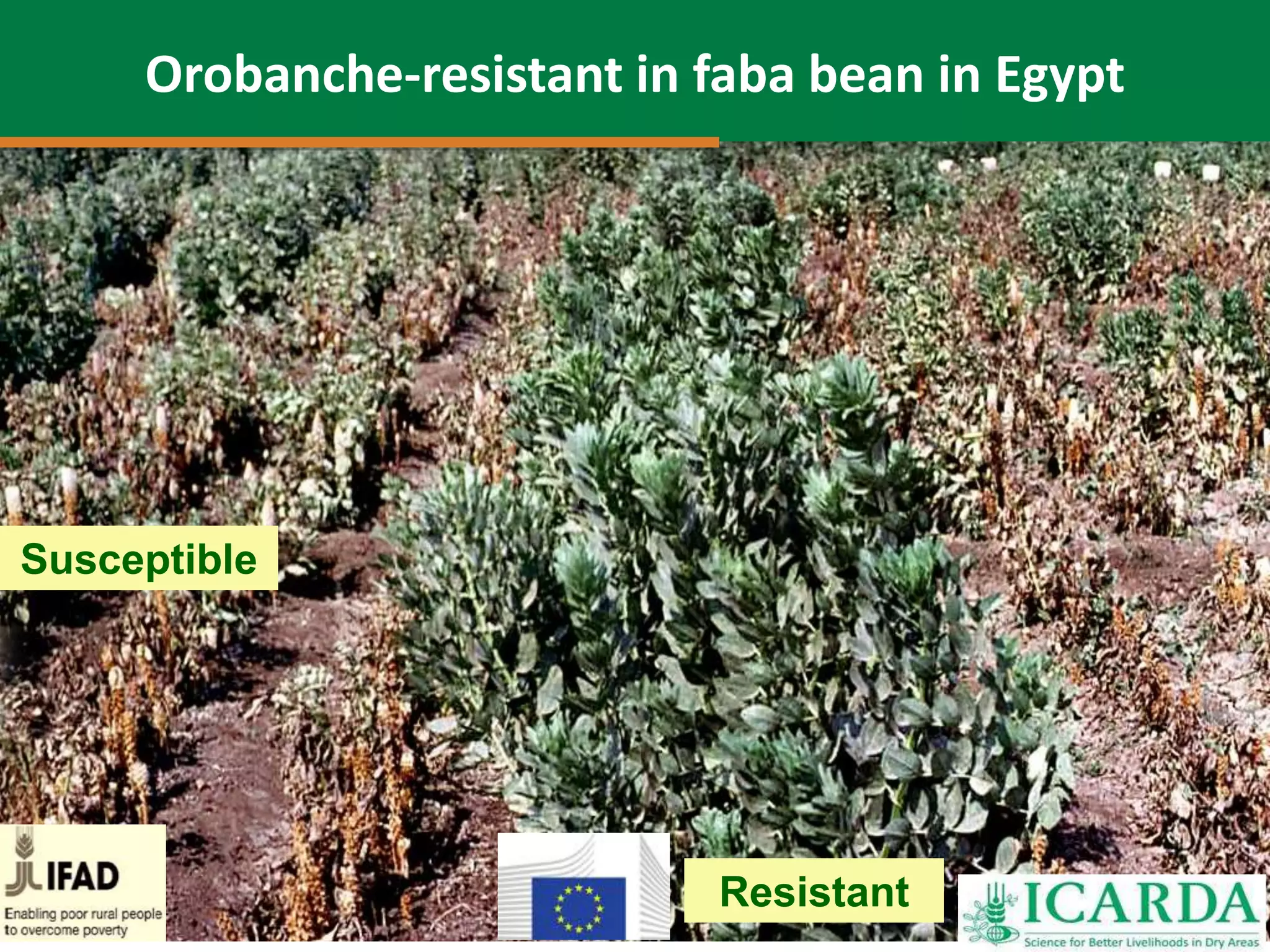
Resistant
Susceptible
Orobanche-resistant in faba bean in Egypt
Resistance to Botrytis fabae Disease in Faba beans in Egypt
43
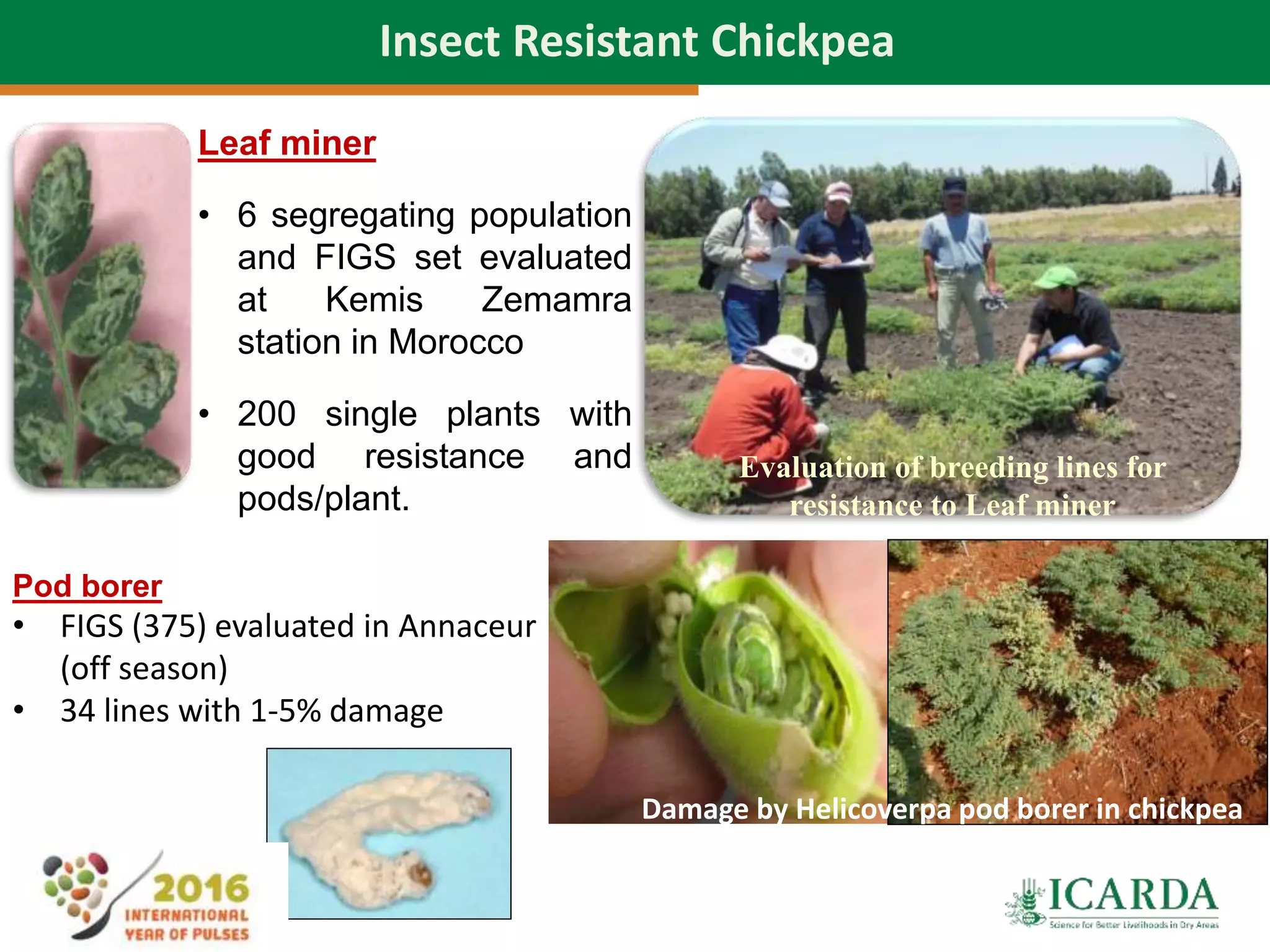
Insect Resistant Chickpea
Leaf miner
• 6 segregating population
and FIGS set evaluated
at Kemis Zemamra
station in Morocco
• 200 single plants with
good resistance and
pods/plant.
Evaluation of breeding lines for
resistance to Leaf miner
Damage by Helicoverpa pod borer in chickpea
Pod borer
• FIGS (375) evaluated in Annaceur
(off season)
• 34 lines with 1-5% damage
44
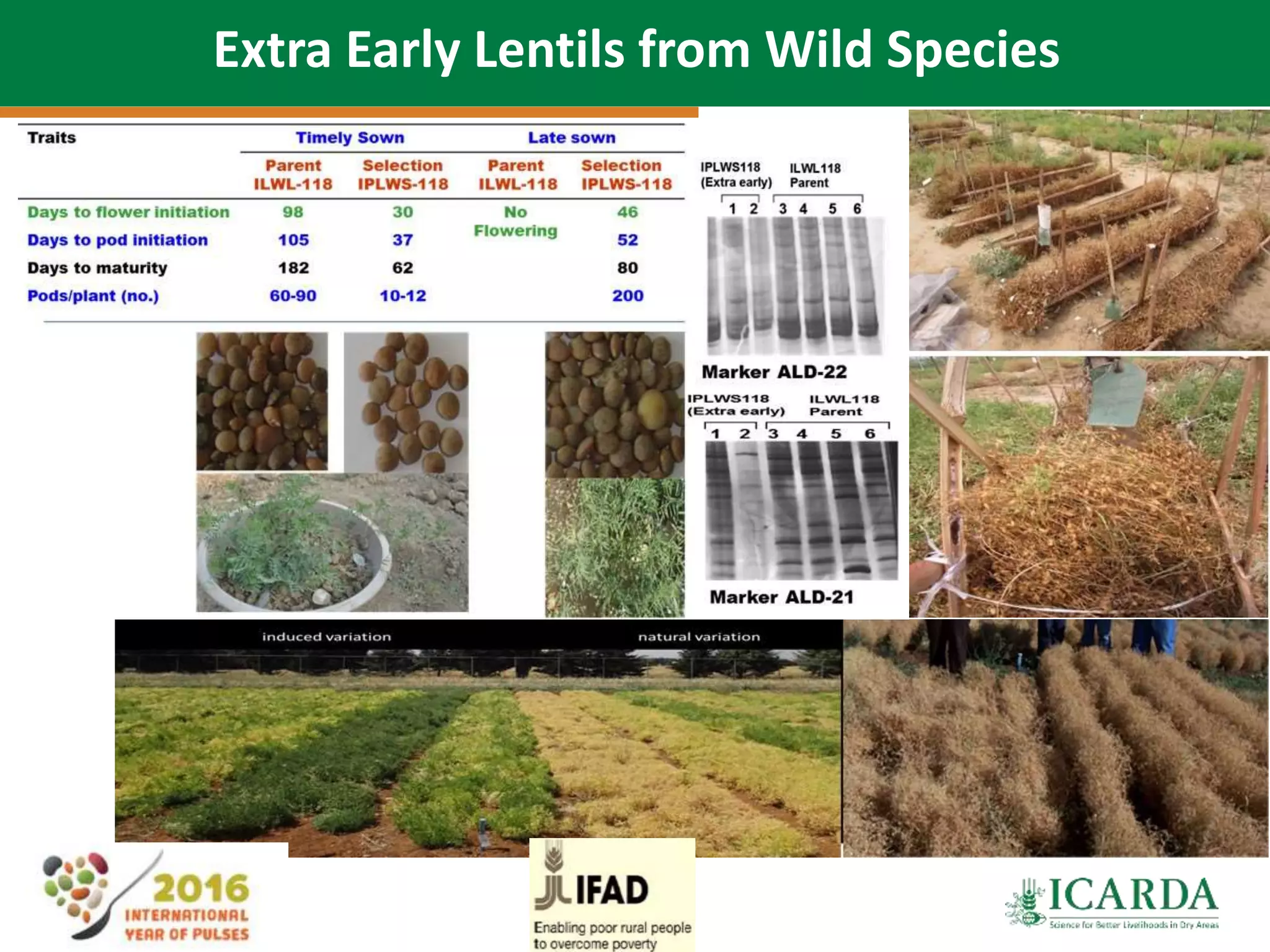
Extra Early Lentils from Wild Species
45
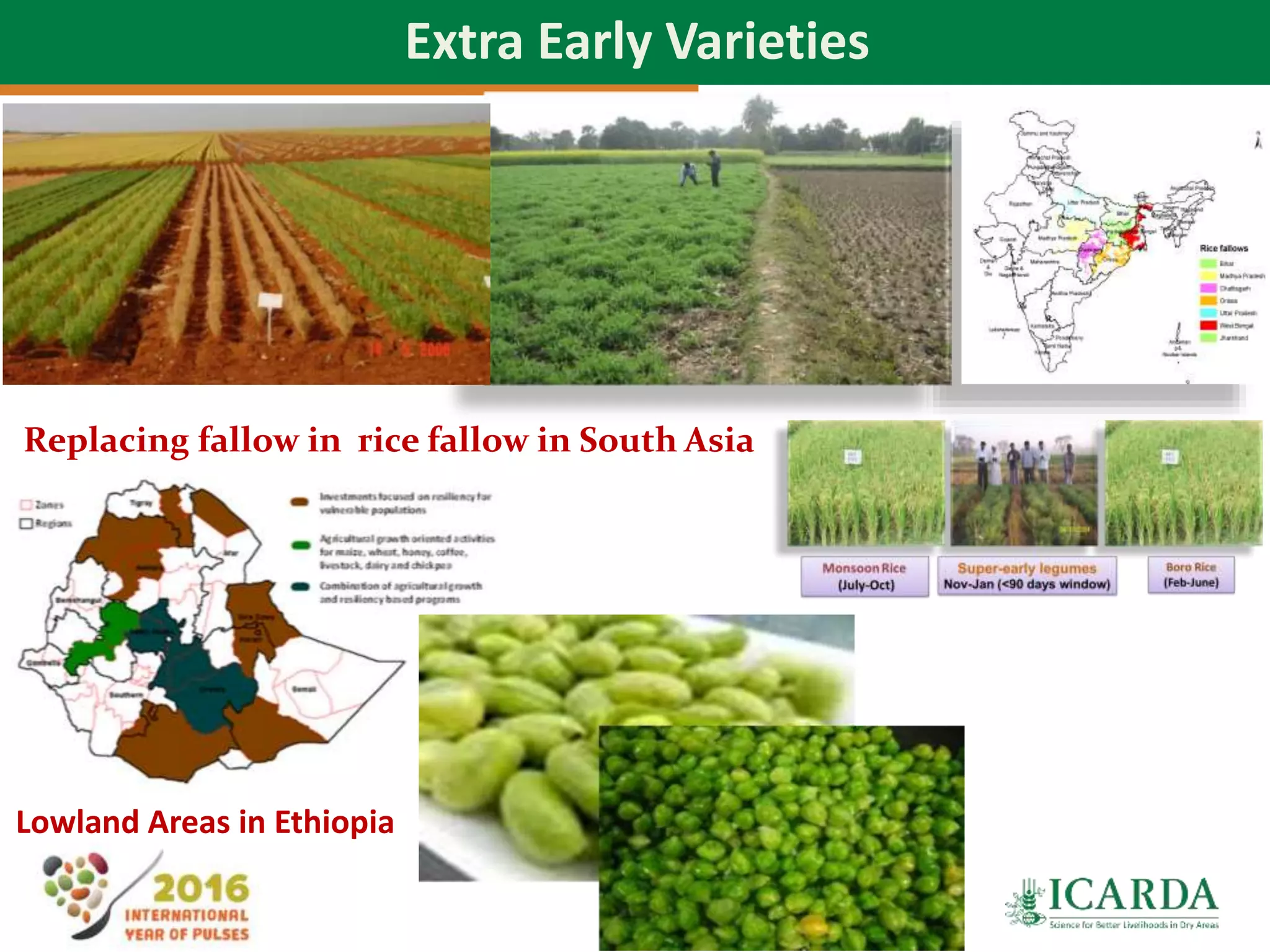
Extra Early Varieties
Replacing fallow in rice fallow in South Asia
Lowland Areas in Ethiopia
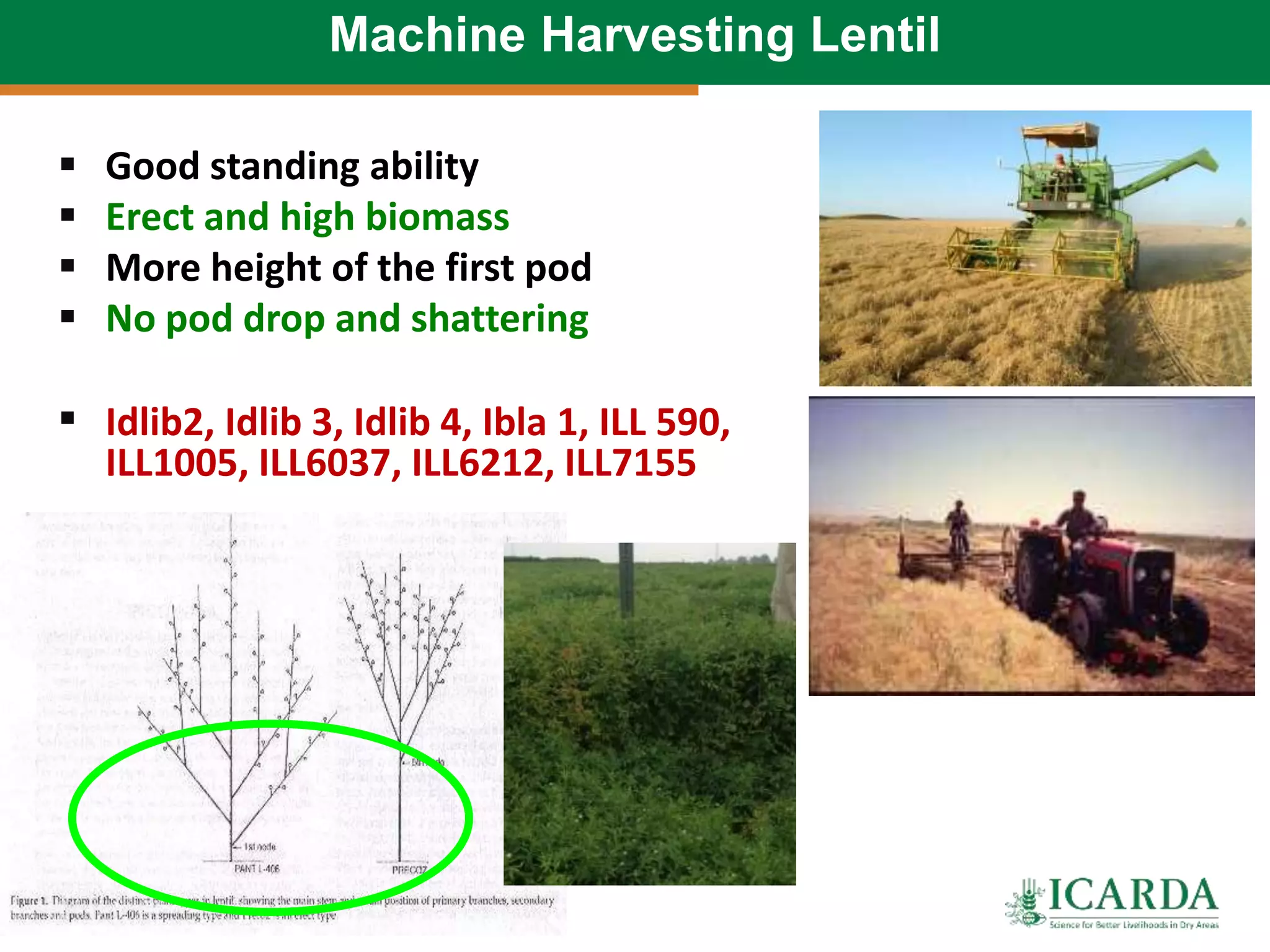
Machine Harvesting Lentil
 Good standing ability
 Erect and high biomass
 More height of the first pod
 No pod drop and shattering
 Idlib2, Idlib 3, Idlib 4, Ibla 1, ILL 590,
ILL1005, ILL6037, ILL6212, ILL7155
47
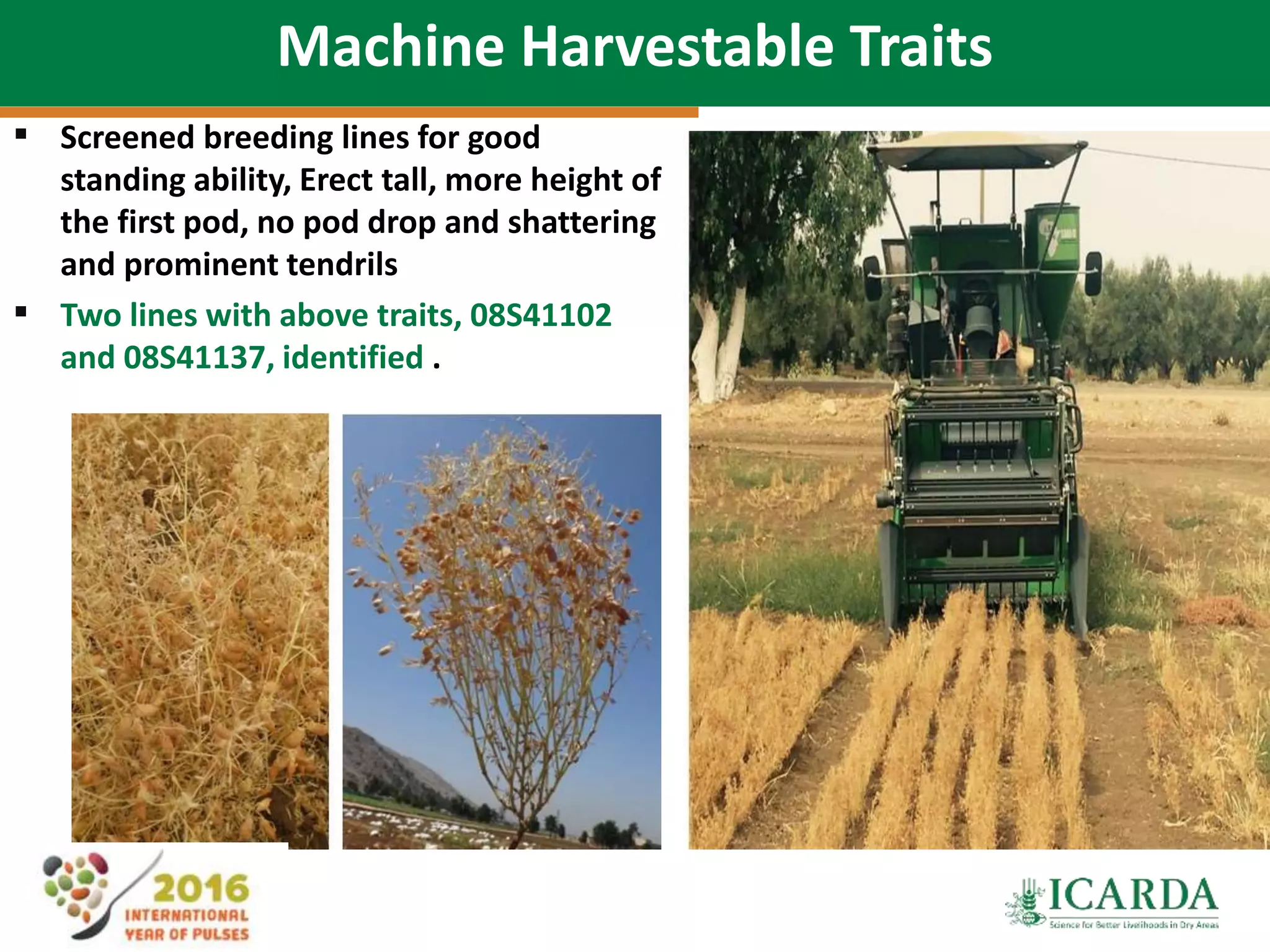
Machine Harvestable Traits
 Screened breeding lines for good
standing ability, Erect tall, more height of
the first pod, no pod drop and shattering
and prominent tendrils
 Two lines with above traits, 08S41102
and 08S41137, identified .
48
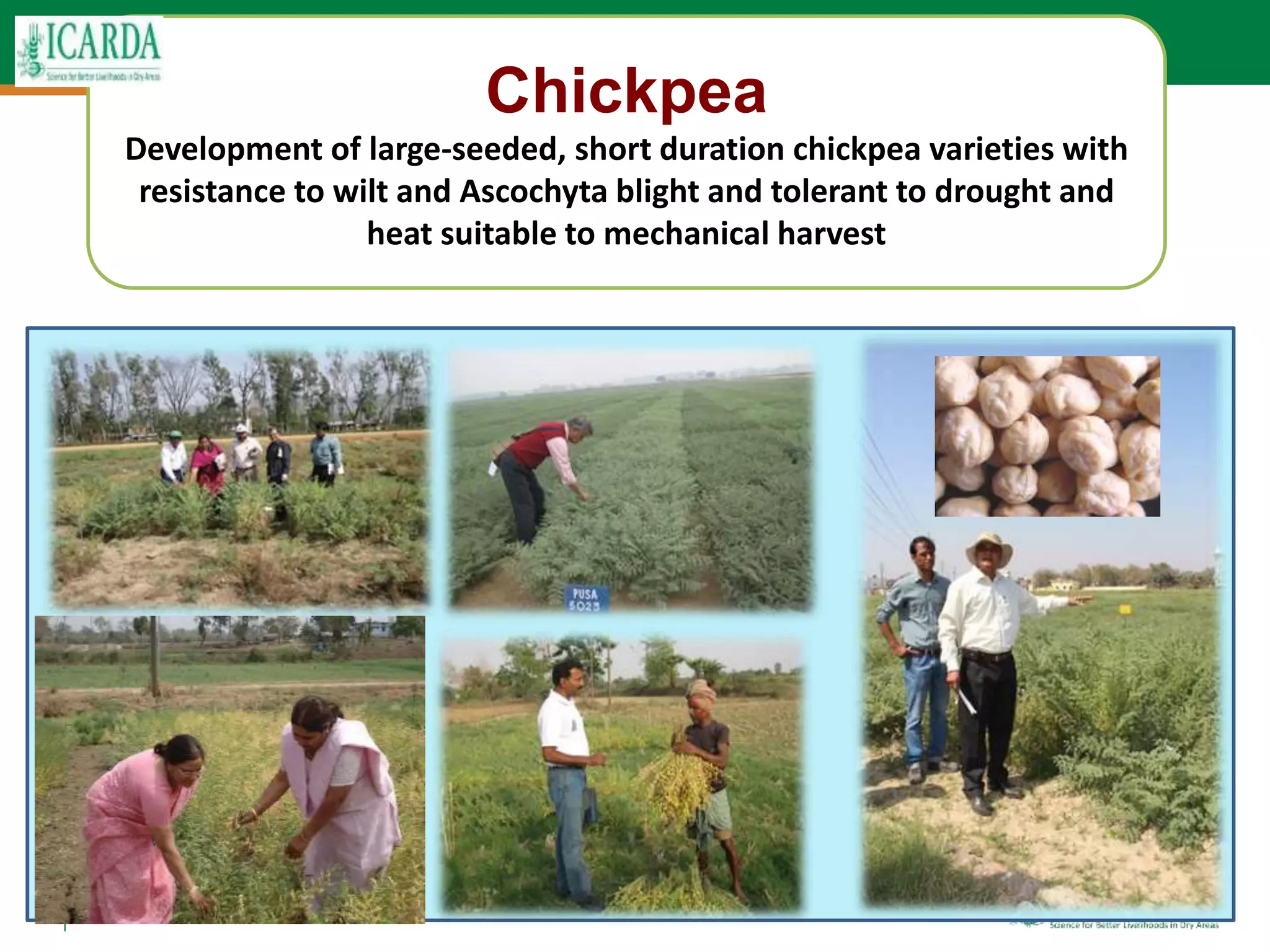
Chickpea
Development of large-seeded, short duration chickpea varieties with
resistance to wilt and Ascochyta blight and tolerant to drought and
heat suitable to mechanical harvest
49
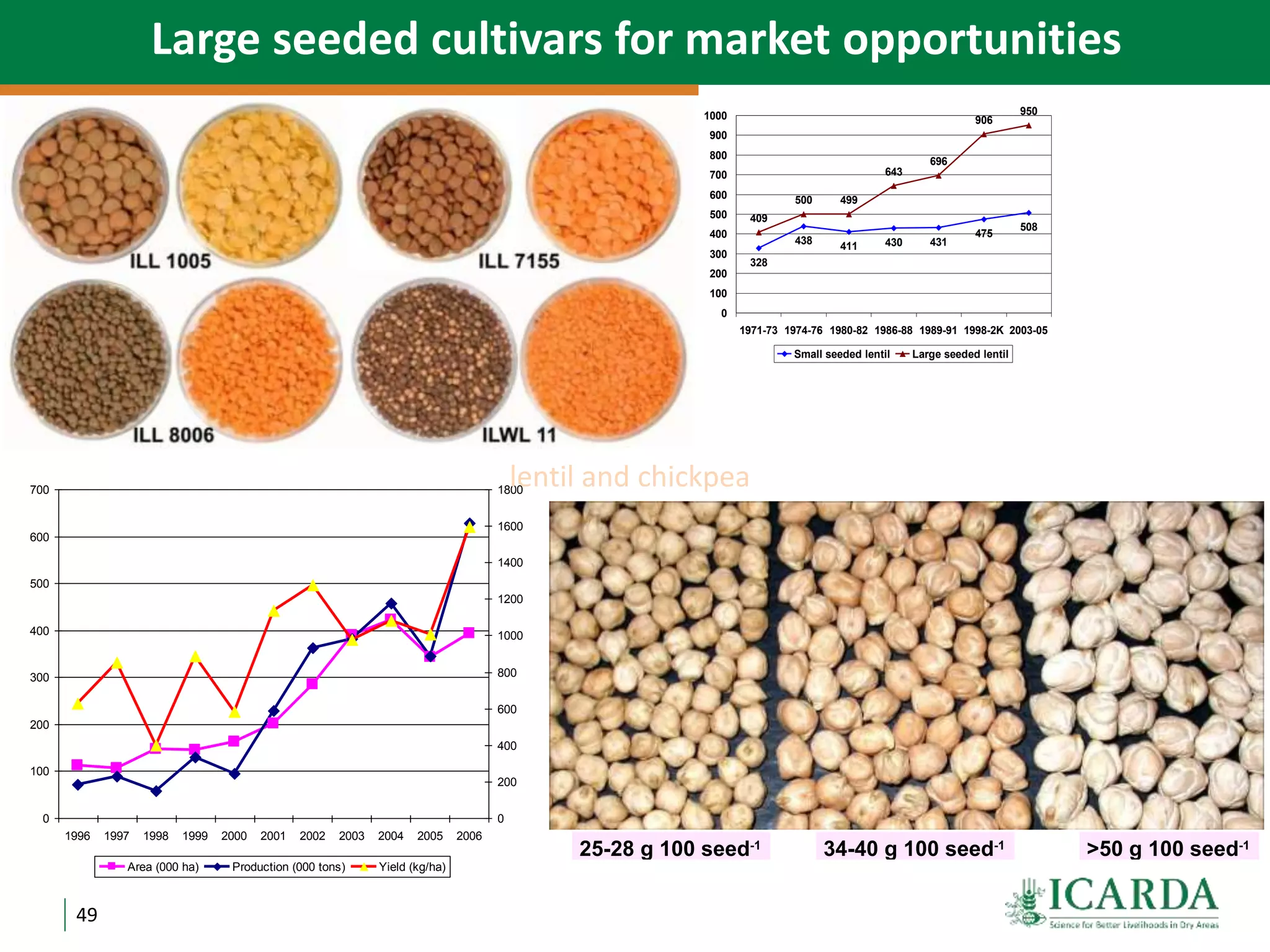
Large seeded cultivars for market opportunities
0
100
200
300
400
500
600
700
1996 1997 1998 1999 2000 2001 2002 2003 2004 2005 2006
0
200
400
600
800
1000
1200
1400
1600
1800
Area (000 ha) Production (000 tons) Yield (kg/ha)
328
438 411 430 431
475
508
409
500 499
643
696
906
950
0
100
200
300
400
500
600
700
800
900
1000
1971-73 1974-76 1980-82 1986-88 1989-91 1998-2K 2003-05
Small seeded lentil Large seeded lentil
Development of large-seeded Kabuli chickpea varieties
25-28 g 100 seed-1
34-40 g 100 seed-1
>50 g 100 seed-1
Before 2000
Target of
the project
After 2000
lentil and chickpea
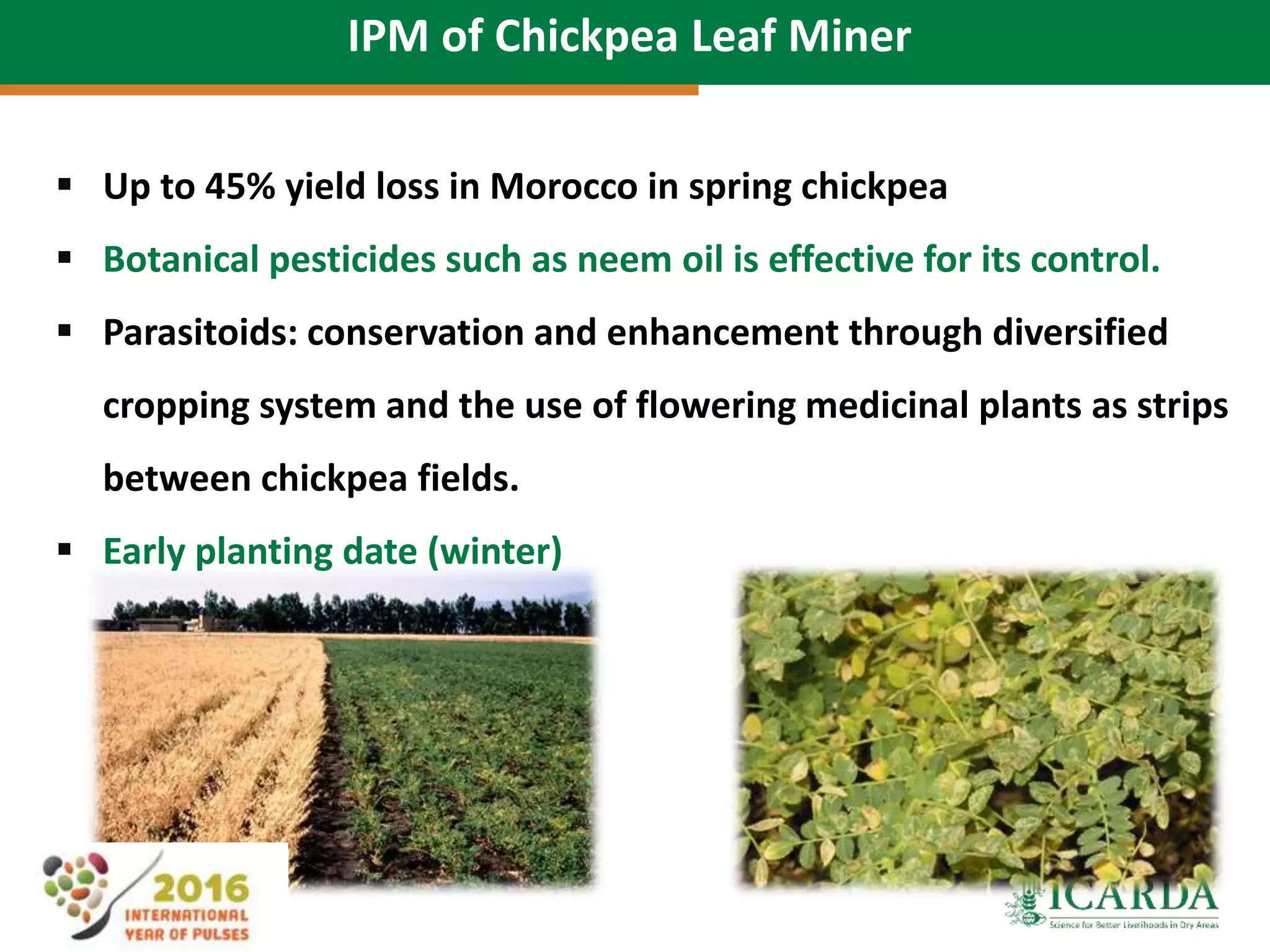
IPM of Chickpea Leaf Miner
 Up to 45% yield loss in Morocco in spring chickpea
 Botanical pesticides such as neem oil is effective for its control.
 Parasitoids: conservation and enhancement through diversified
cropping system and the use of flowering medicinal plants as strips
between chickpea fields.
 Early planting date (winter)
Large Scale Impact of Research Investment
in Pulses
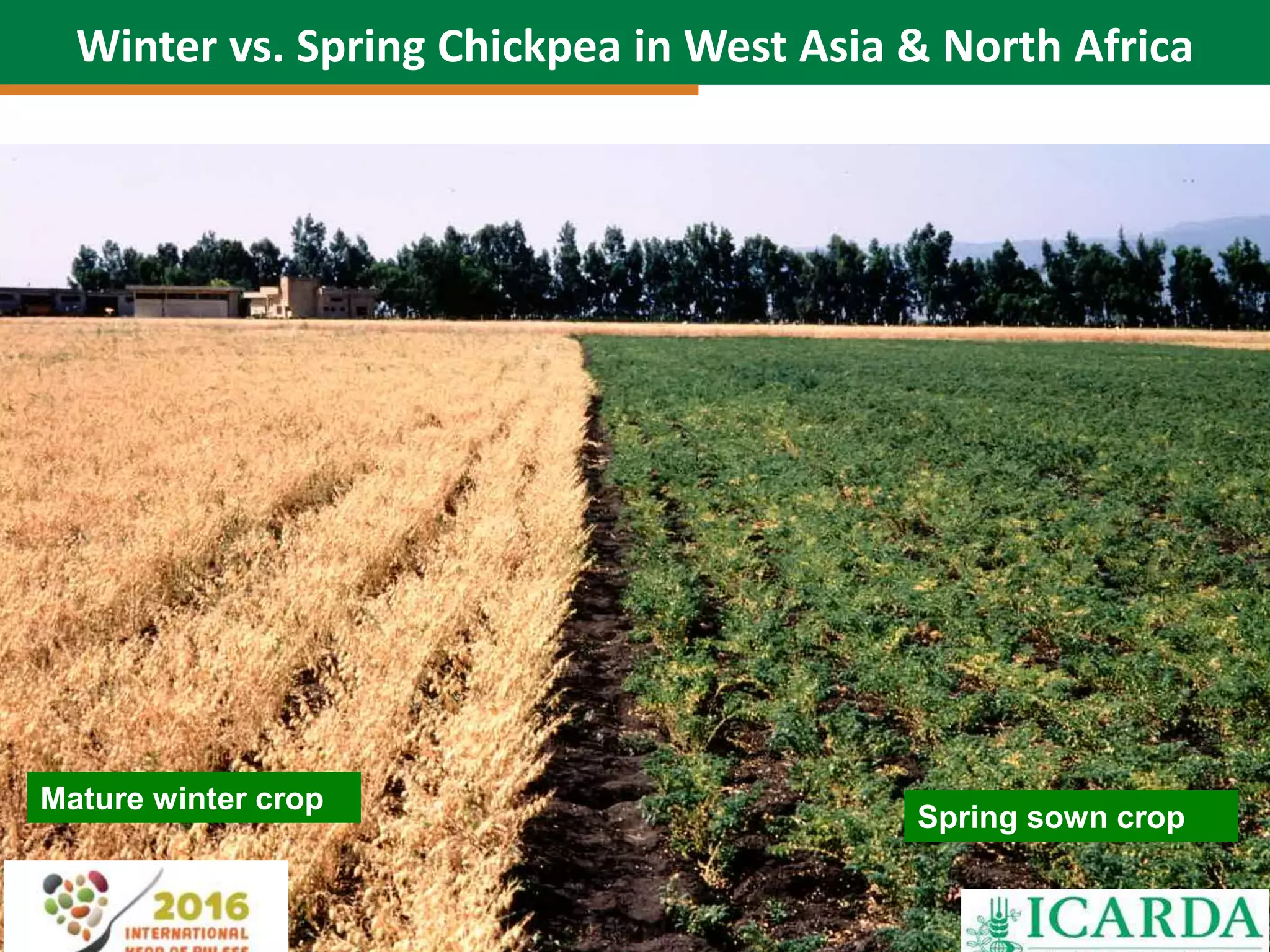
Winter vs. Spring Chickpea in West Asia & North Africa
Mature winter crop
Spring sown crop
53
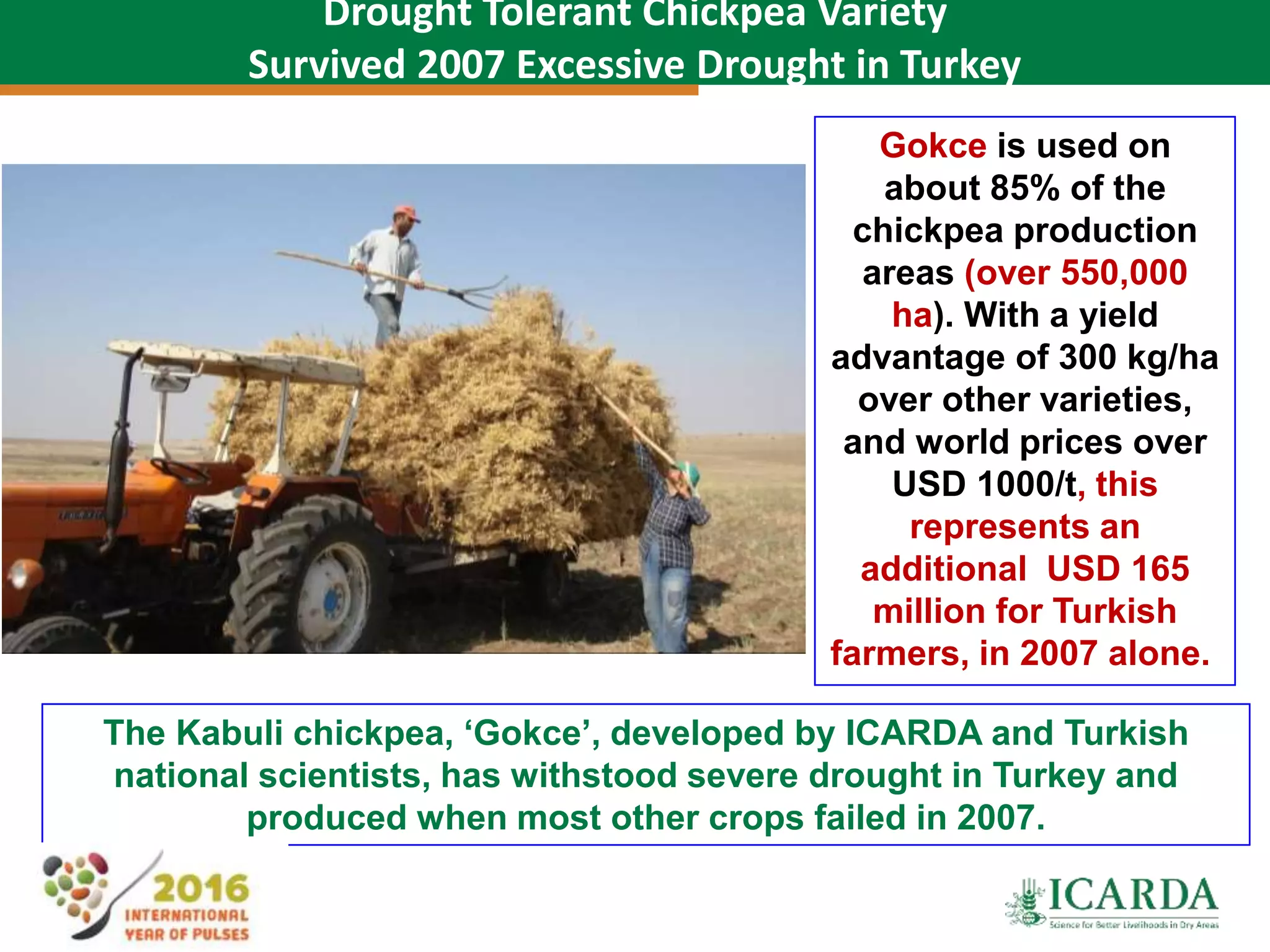
Drought Tolerant Chickpea Variety
Survived 2007 Excessive Drought in Turkey
The Kabuli chickpea, ‘Gokce’, developed by ICARDA and Turkish
national scientists, has withstood severe drought in Turkey and
produced when most other crops failed in 2007.
Gokce is used on
about 85% of the
chickpea production
areas (over 550,000
ha). With a yield
advantage of 300 kg/ha
over other varieties,
and world prices over
USD 1000/t, this
represents an
additional USD 165
million for Turkish
farmers, in 2007 alone..
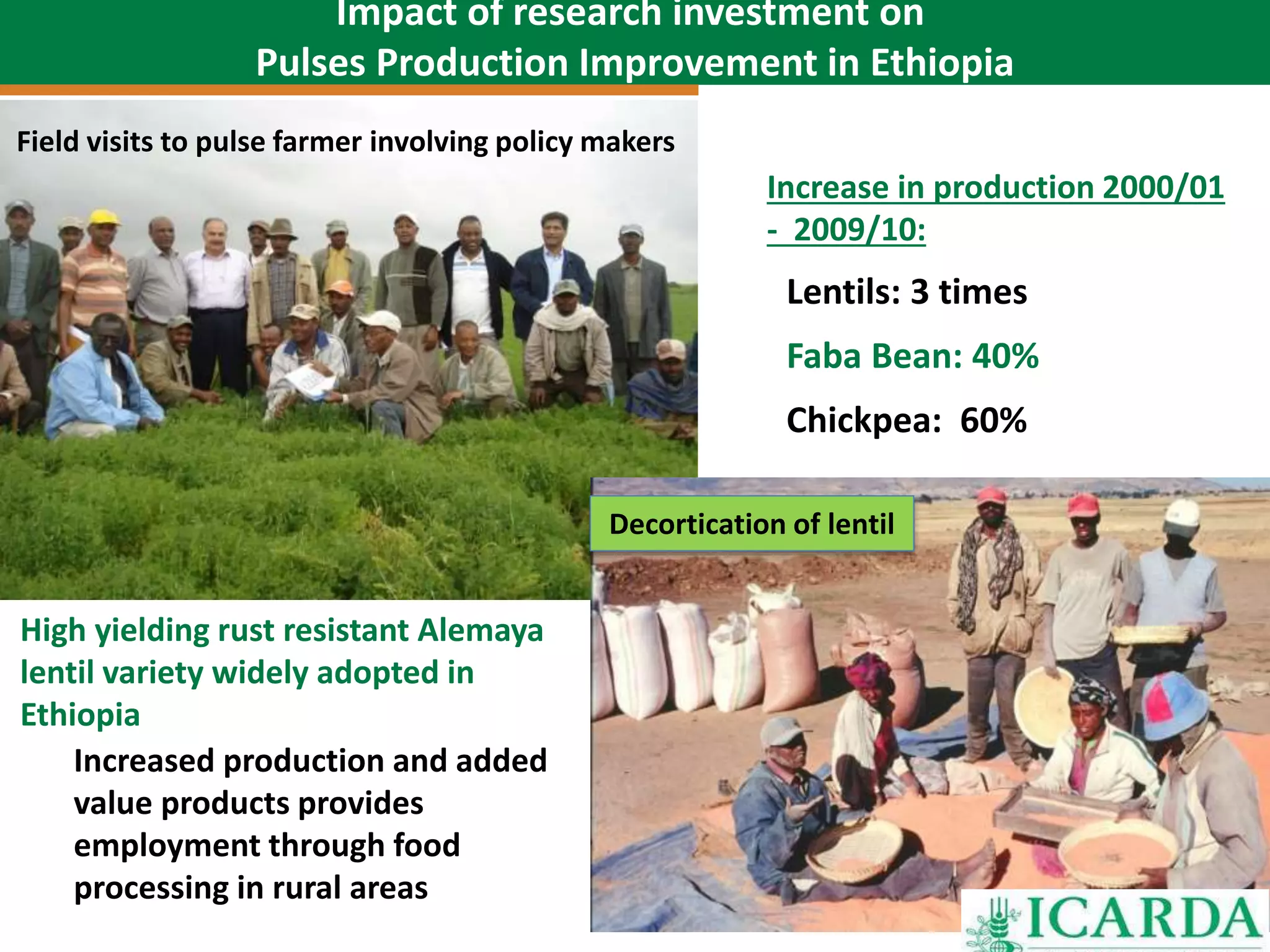
Impact of research investment on
Pulses Production Improvement in Ethiopia
High yielding rust resistant Alemaya
lentil variety widely adopted in
Ethiopia
Increase in production 2000/01
- 2009/10:
•Lentils: 3 times
•Faba Bean: 40%
•Chickpea: 60%
Increased production and added
value products provides
employment through food
processing in rural areas
Field visits to pulse farmer involving policy makers
Decortication of lentil
55
Research Impact on Pulses in Ethiopia
 Chickpea production was doubled
between 2000 and 2015.
 Kabuli Chickpeas – Expanding in
Central Highlands
 Export 54,000 tons Chickpea and
18,000 tons lentil
 Drought tolerant and Orobanche
resistant faba bean with farmers
 Pulses contribute >90 million USD
to Ethiopia foreign exchange
56
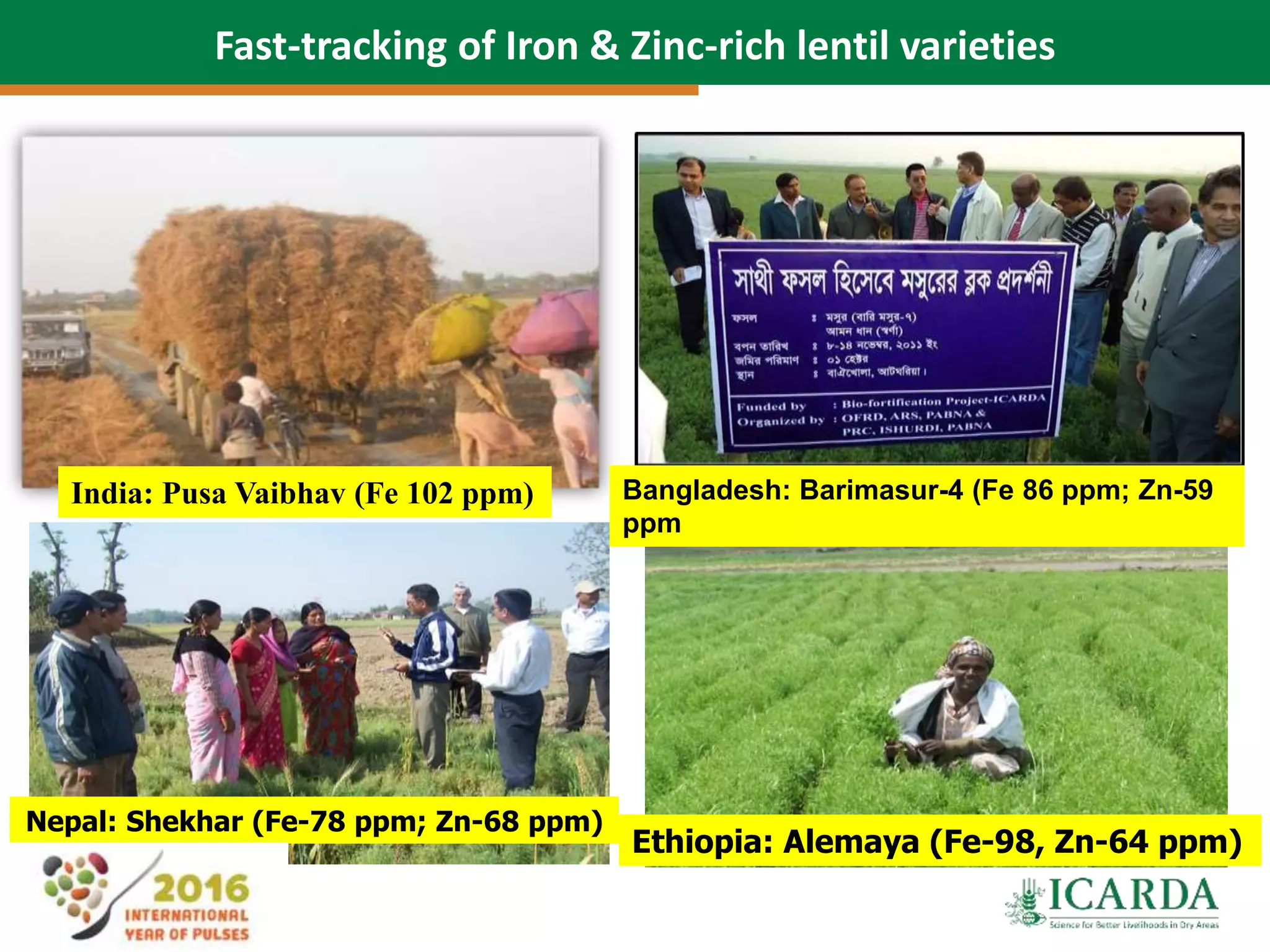
Fast-tracking of Iron & Zinc-rich lentil varieties
India: Pusa Vaibhav (Fe 102 ppm) Bangladesh: Barimasur-4 (Fe 86 ppm; Zn-59
ppm
Ethiopia: Alemaya (Fe-98, Zn-64 ppm)
Nepal: Shekhar (Fe-78 ppm; Zn-68 ppm)
Lentil cultivars with high concentration of Fe & Zn
are in ‘fast-tracking’ seed dissemination
 Ethiopia: Alemaya
 Bangladesh: Barimasur-4,
Barimasur-5 and Barimasur-6,
Barimasur-7, Binamasur-7
 India: Pusa Vaibhav
 Nepal: Sisir, Shital, Shekhar,
Khajurah-1, Khajurah-2
 Syria: Idlib-2, Idlib-3
and Idlib-4
 Turkey: Myveci-2001
 Portugal: Beleza
58
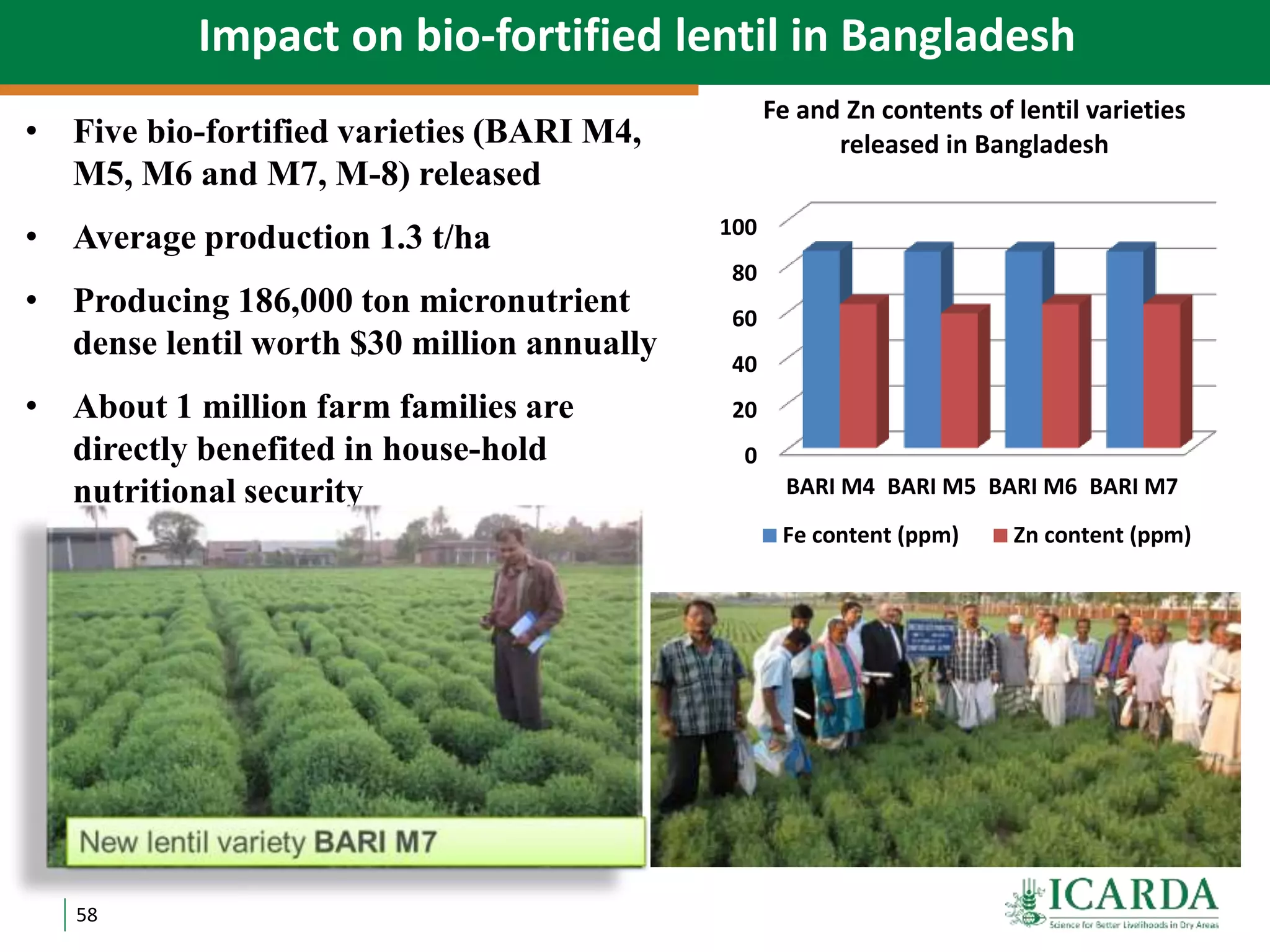
Impact on bio-fortified lentil in Bangladesh
0
20
40
60
80
100
BARI M4 BARI M5 BARI M6 BARI M7
Fe and Zn contents of lentil varieties
released in Bangladesh
Fe content (ppm) Zn content (ppm)
• Five bio-fortified varieties (BARI M4,
M5, M6 and M7, M-8) released
• Average production 1.3 t/ha
• Producing 186,000 ton micronutrient
dense lentil worth $30 million annually
• About 1 million farm families are
directly benefited in house-hold
nutritional security
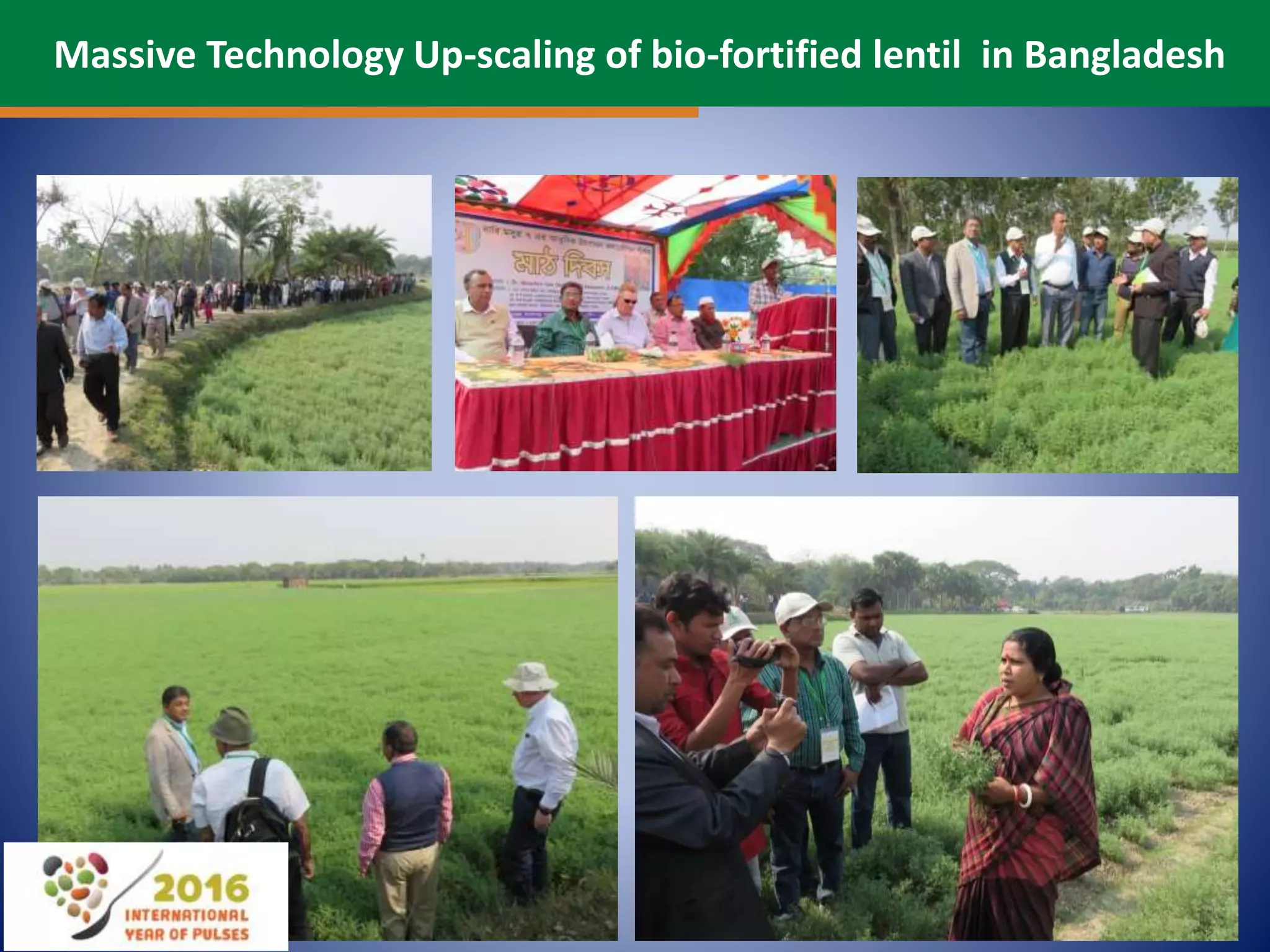
Massive Technology Up-scaling of bio-fortified lentil in Bangladesh
60
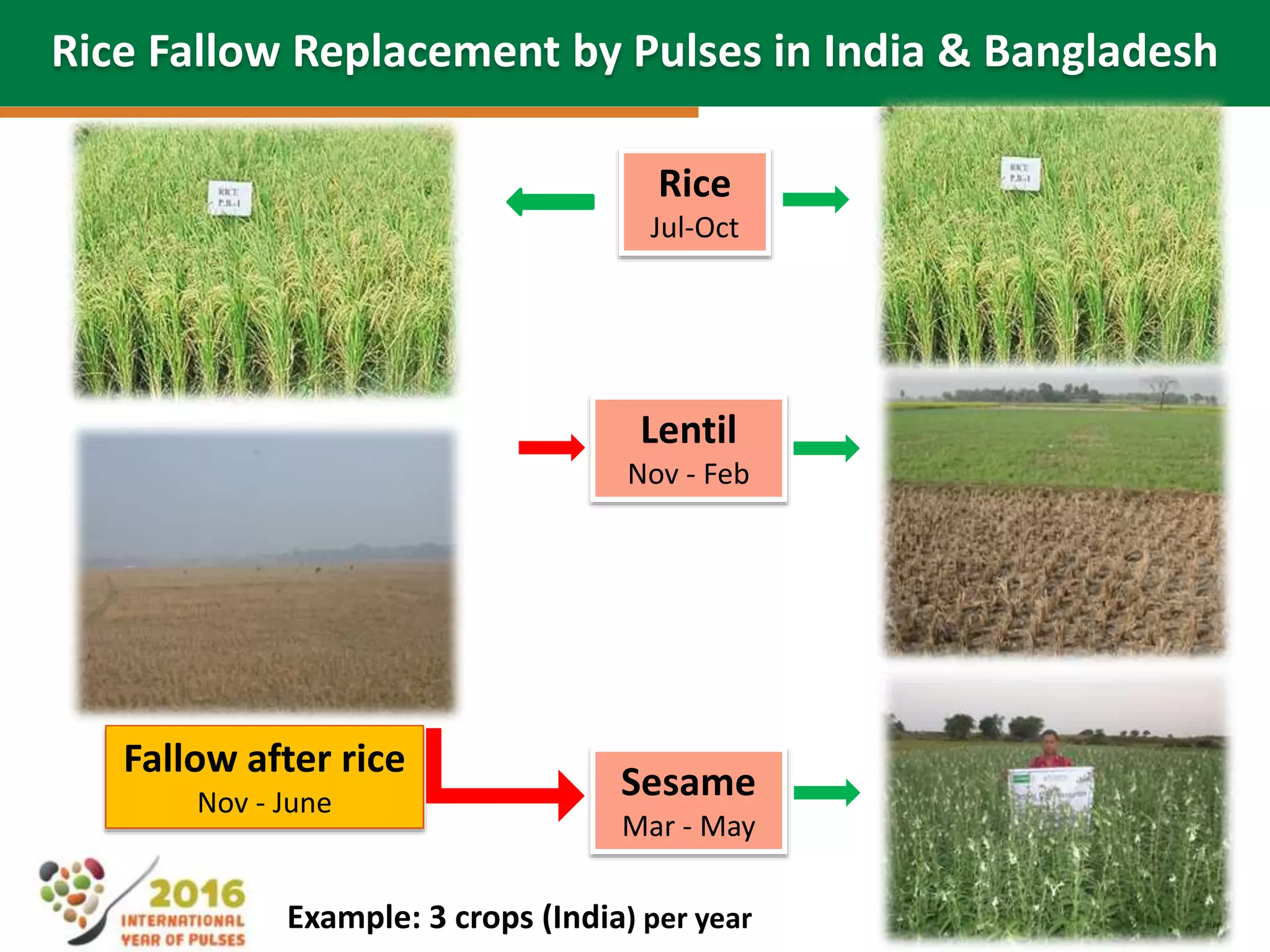
Rice
Jul-Oct
Lentil
Nov - Feb
Sesame
Mar - May
Fallow after rice
Nov - June
Example: 3 crops (India) per year
Rice Fallow Replacement by Pulses in India & Bangladesh
(Biradar and Xiao, 2011) (Biradar et al., 2012*)
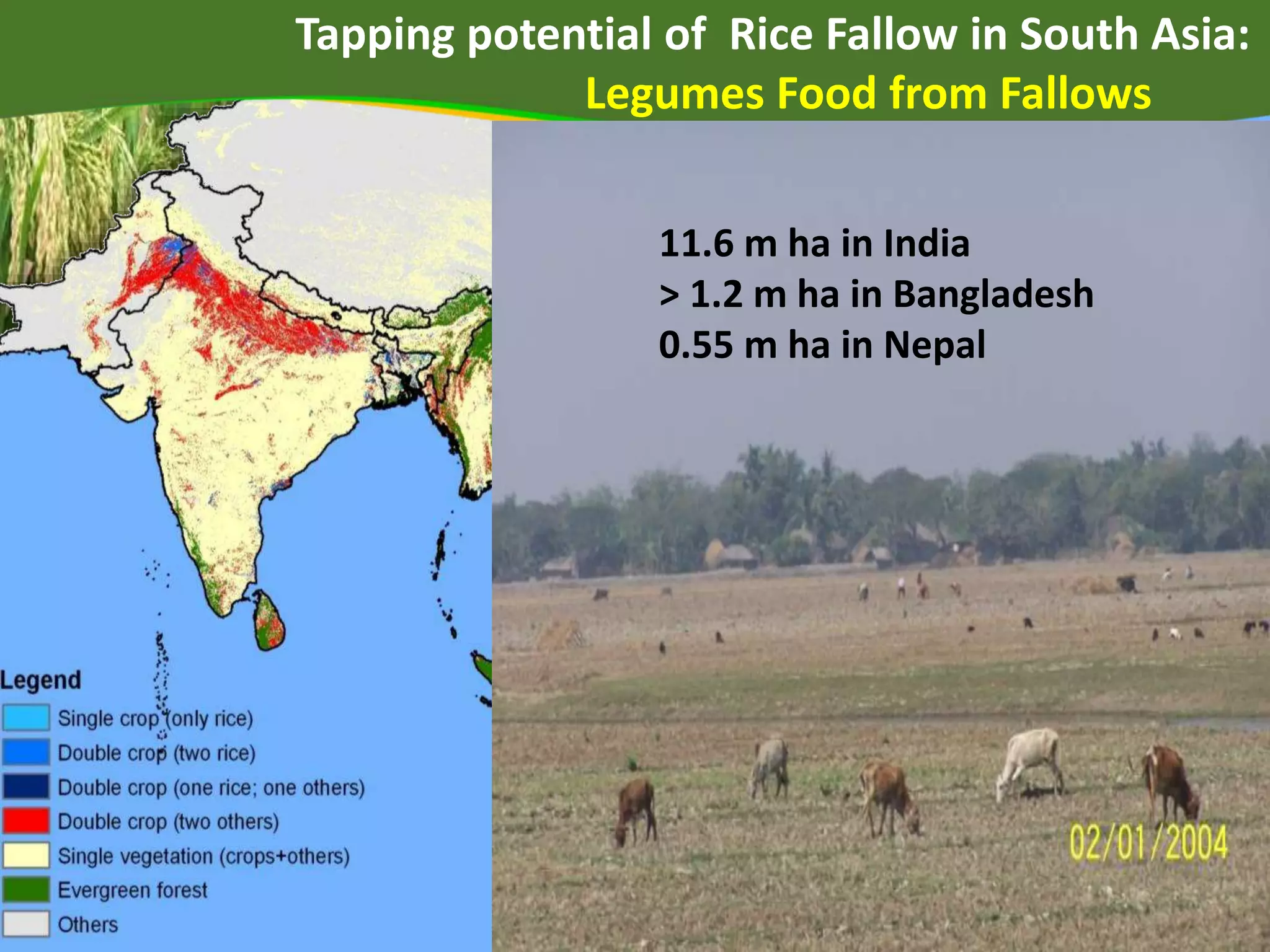
Tapping potential of Rice Fallow in South Asia:
Legumes Food from Fallows
11.6 m ha in India
> 1.2 m ha in Bangladesh
0.55 m ha in Nepal
63
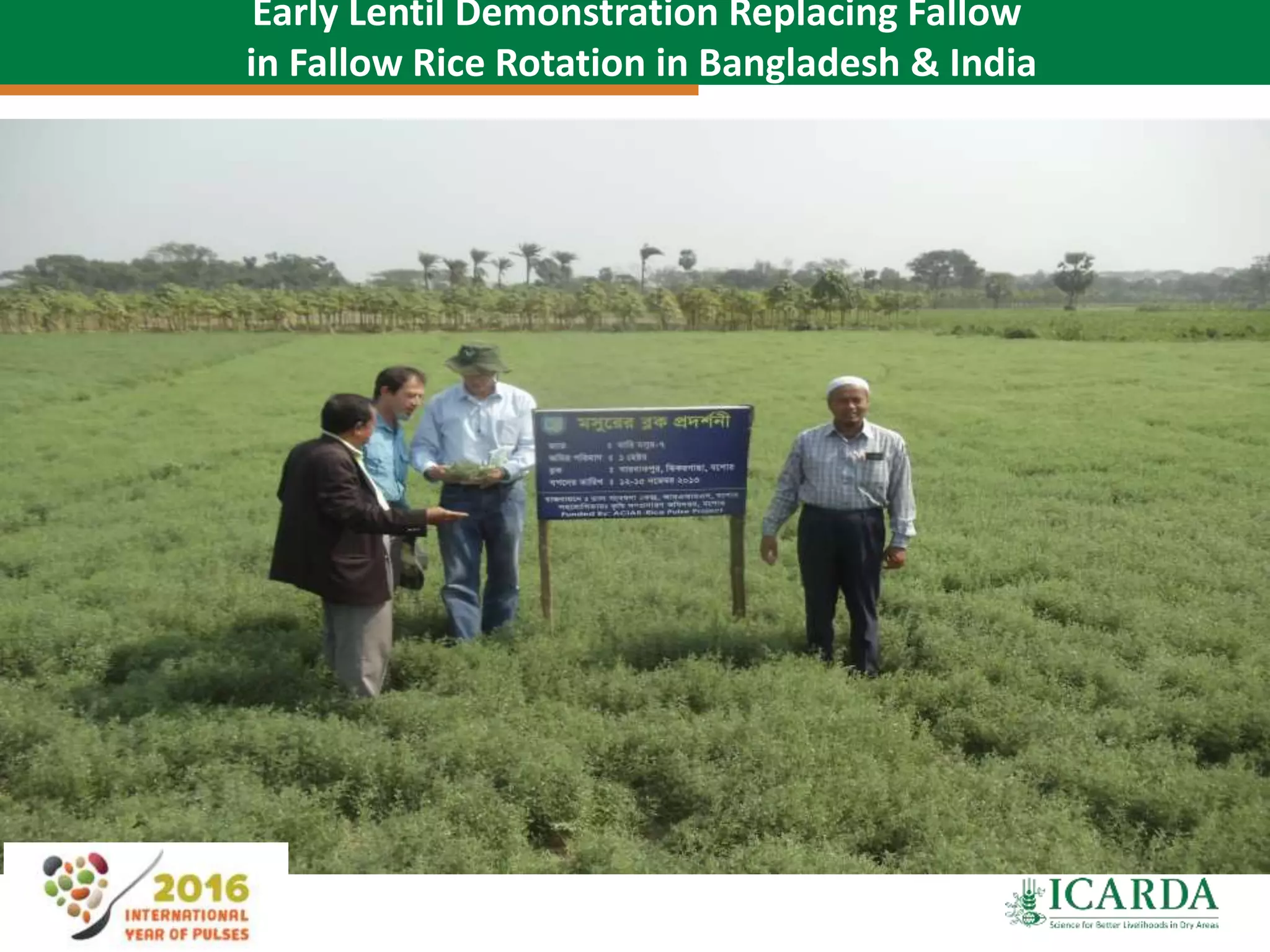
Early Lentil Demonstration Replacing Fallow
in Fallow Rice Rotation in Bangladesh & India
64
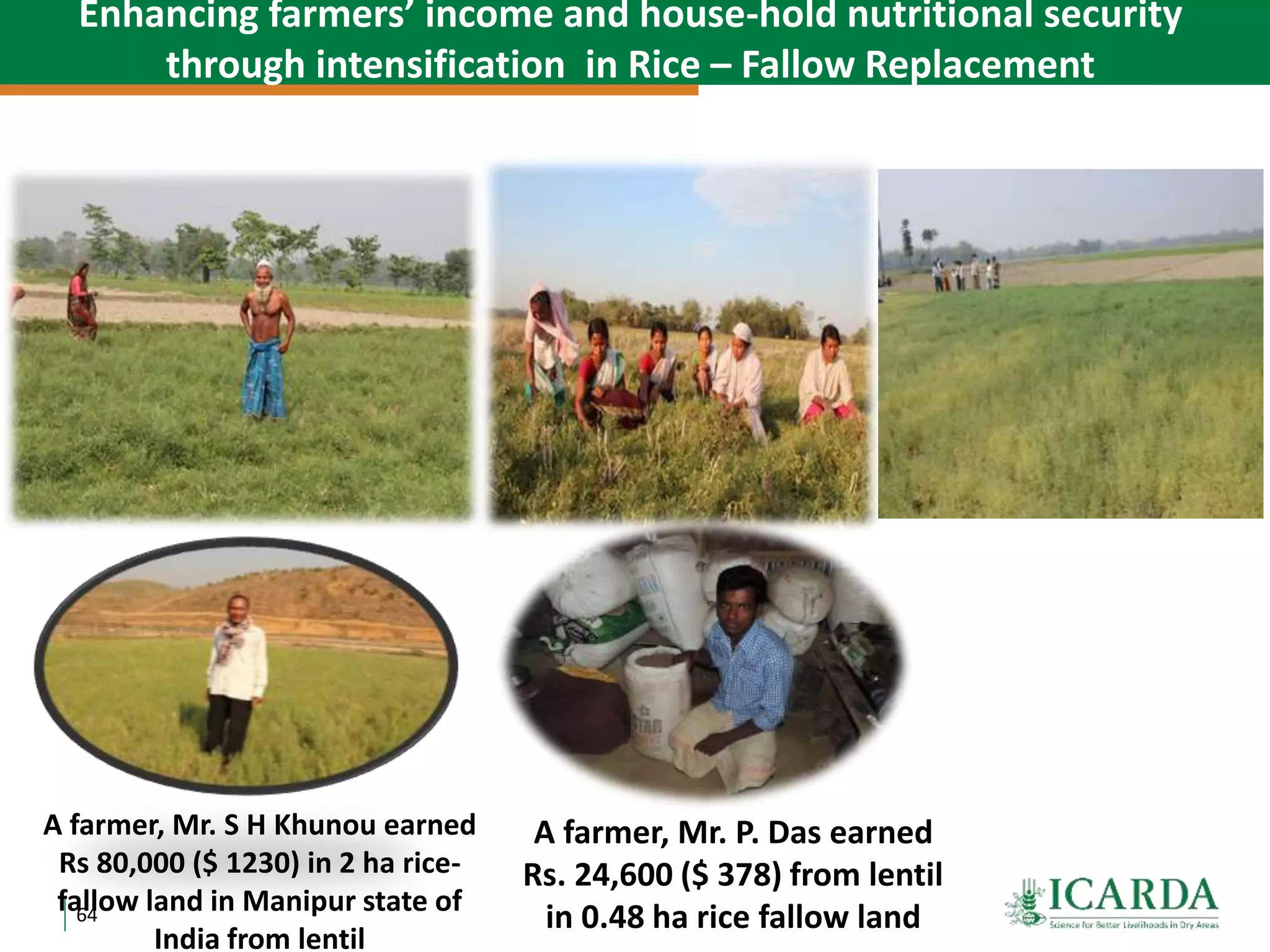
Enhancing farmers’ income and house-hold nutritional security
through intensification in Rice – Fallow Replacement
A farmer, Mr. S H Khunou earned
Rs 80,000 ($ 1230) in 2 ha rice-
fallow land in Manipur state of
India from lentil
A farmer, Mr. P. Das earned
Rs. 24,600 ($ 378) from lentil
in 0.48 ha rice fallow land
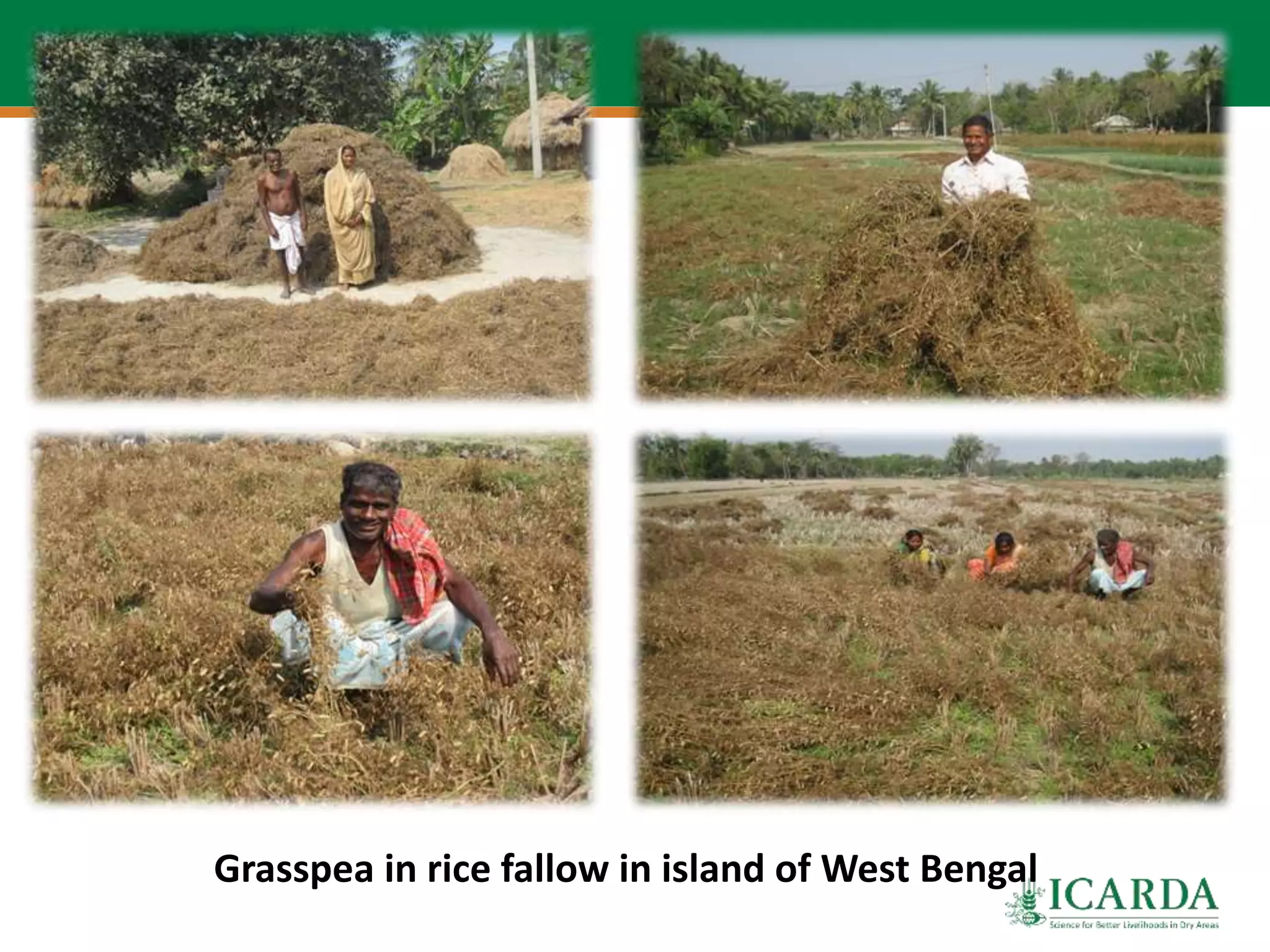
Grasspea in rice fallow in island of West Bengal
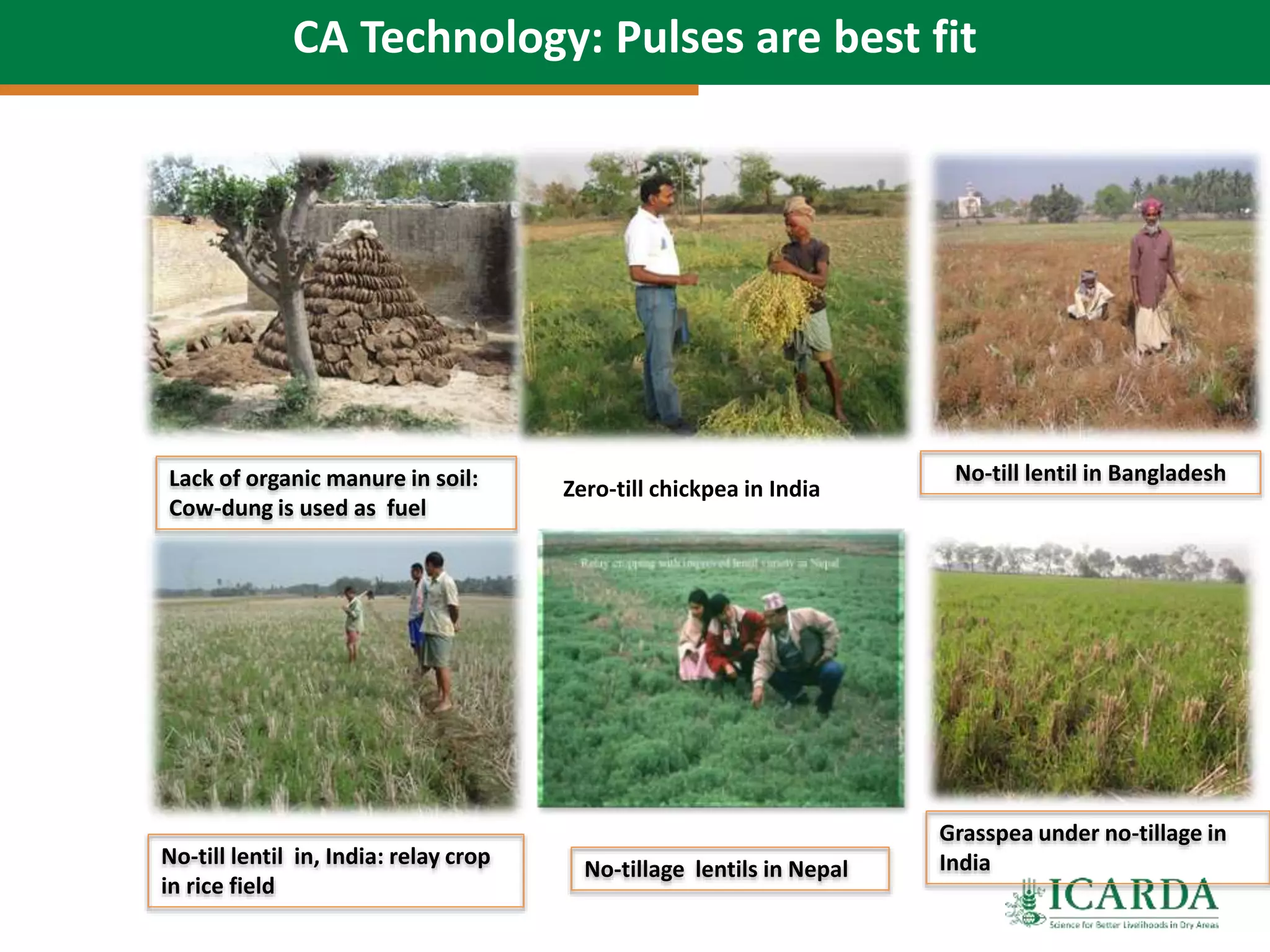
Lack of organic manure in soil:
Cow-dung is used as fuel
No-till lentil in Bangladesh
No-till lentil in, India: relay crop
in rice field
No-tillage lentils in Nepal
Grasspea under no-tillage in
India
Zero-till chickpea in India
CA Technology: Pulses are best fit
67
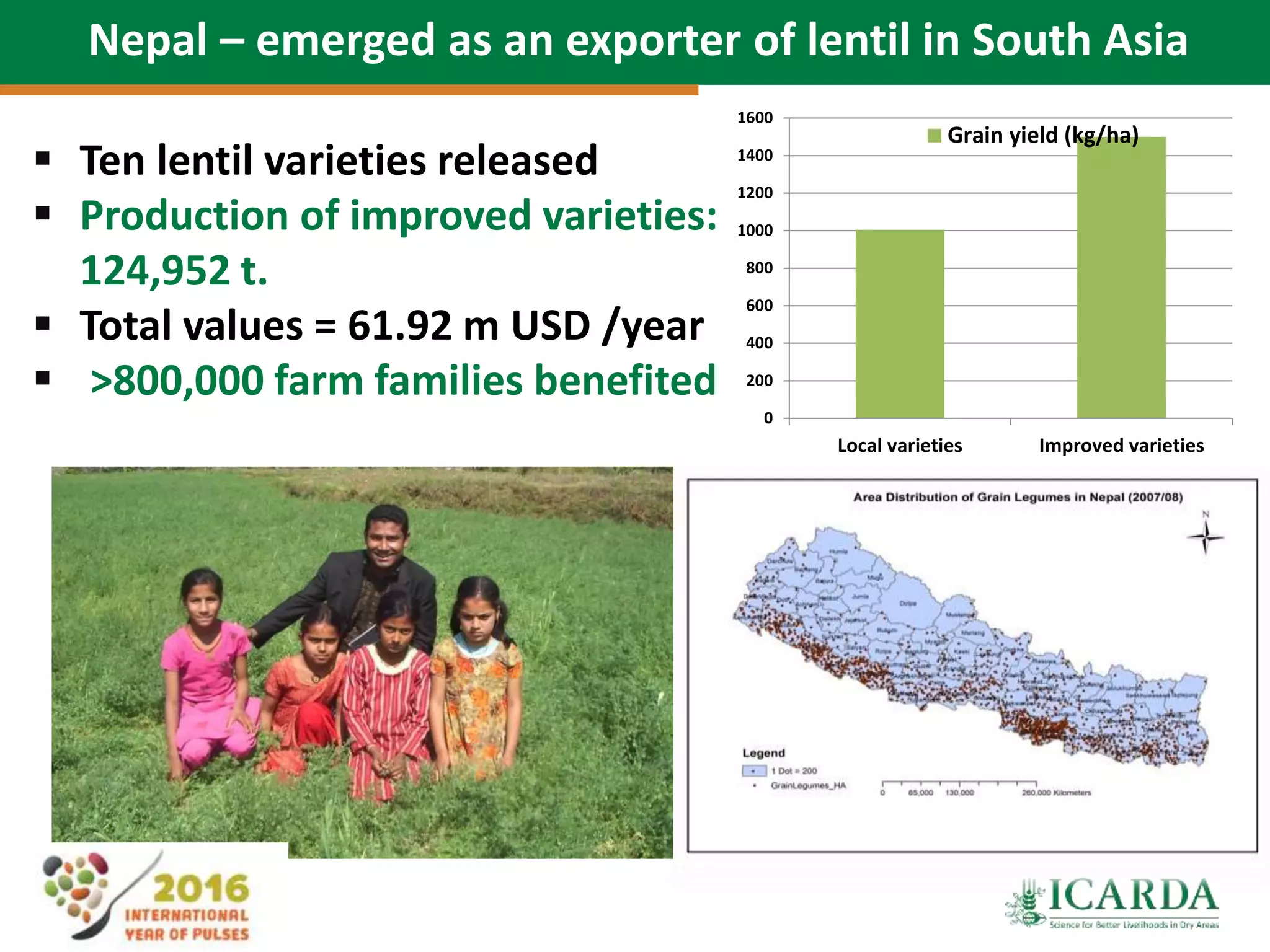
Nepal – emerged as an exporter of lentil in South Asia
 Ten lentil varieties released
 Production of improved varieties:
124,952 t.
 Total values = 61.92 m USD /year
 >800,000 farm families benefited
0
200
400
600
800
1000
1200
1400
1600
Local varieties Improved varieties
Grain yield (kg/ha)
68
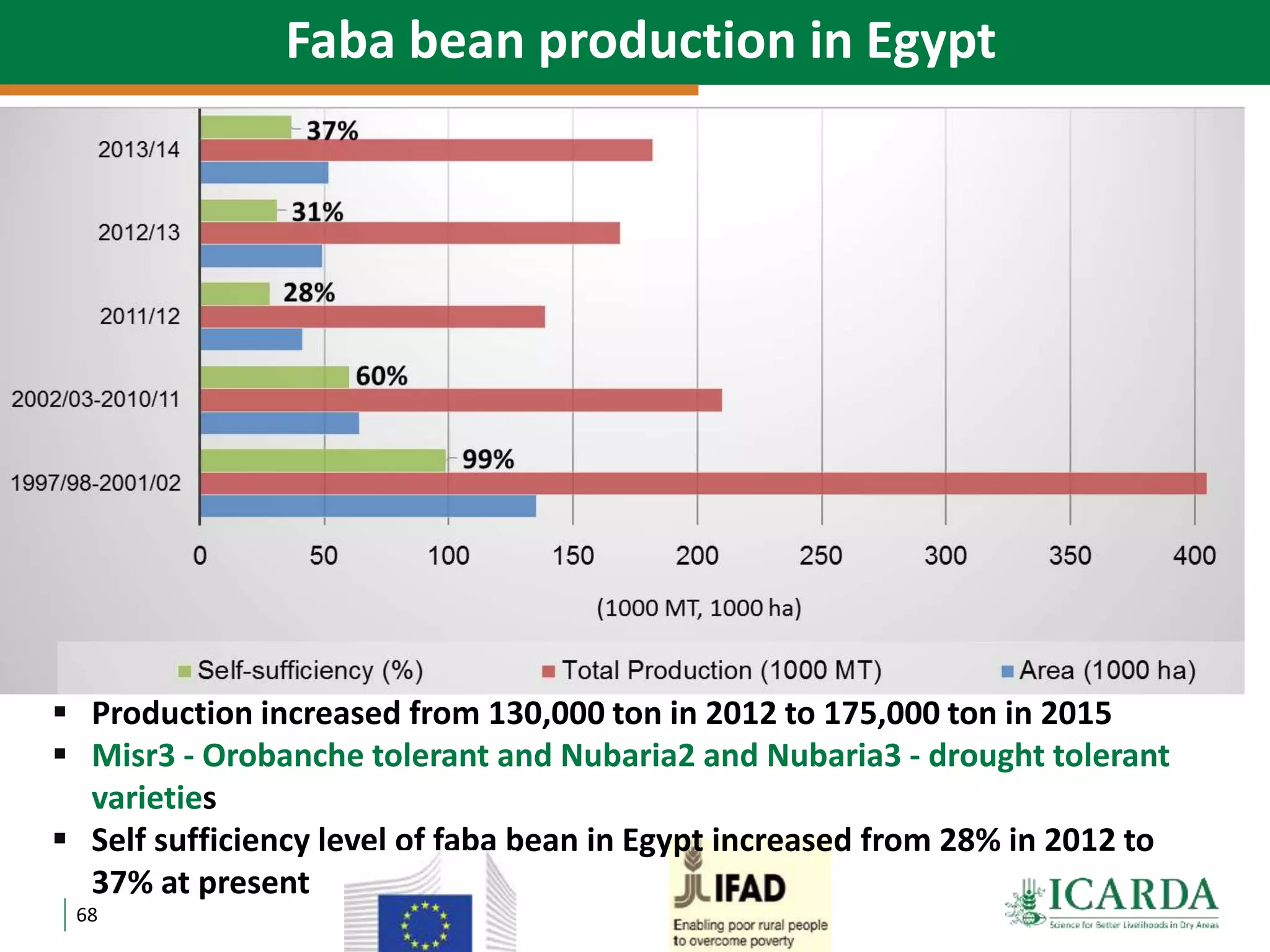
Faba bean production in Egypt
 Production increased from 130,000 ton in 2012 to 175,000 ton in 2015
 Misr3 - Orobanche tolerant and Nubaria2 and Nubaria3 - drought tolerant
varieties
 Self sufficiency level of faba bean in Egypt increased from 28% in 2012 to
37% at present
69
Heat tolerant faba bean in Sudan
Production increased from ~40,000 t in nineties to 150,000 t at present.
• Increase in area (~20000 ha in nineties to ~70000 ha)
• Productivity from 1500 to 2120 kg/ha
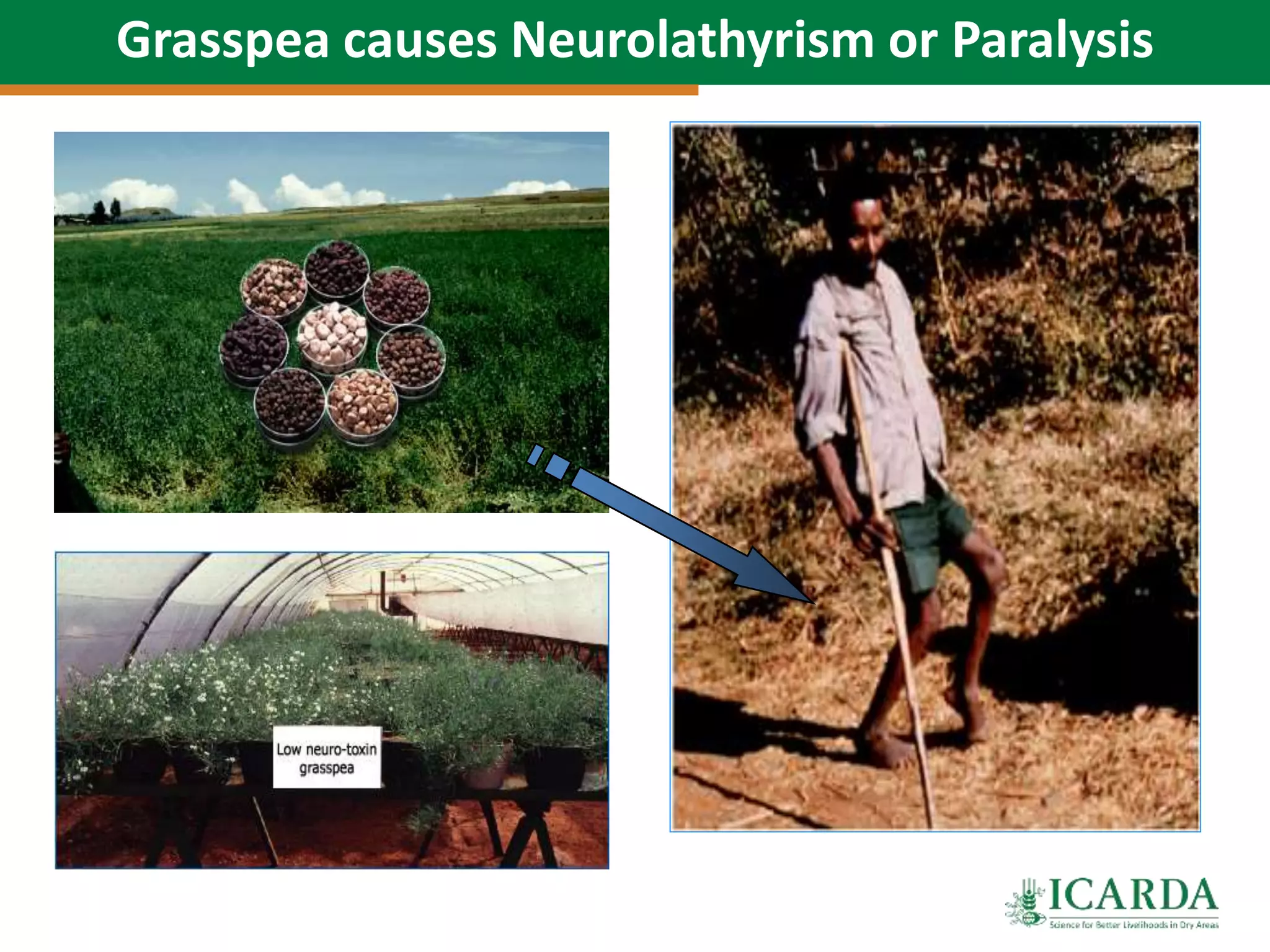
Grasspea causes Neurolathyrism or Paralysis
71
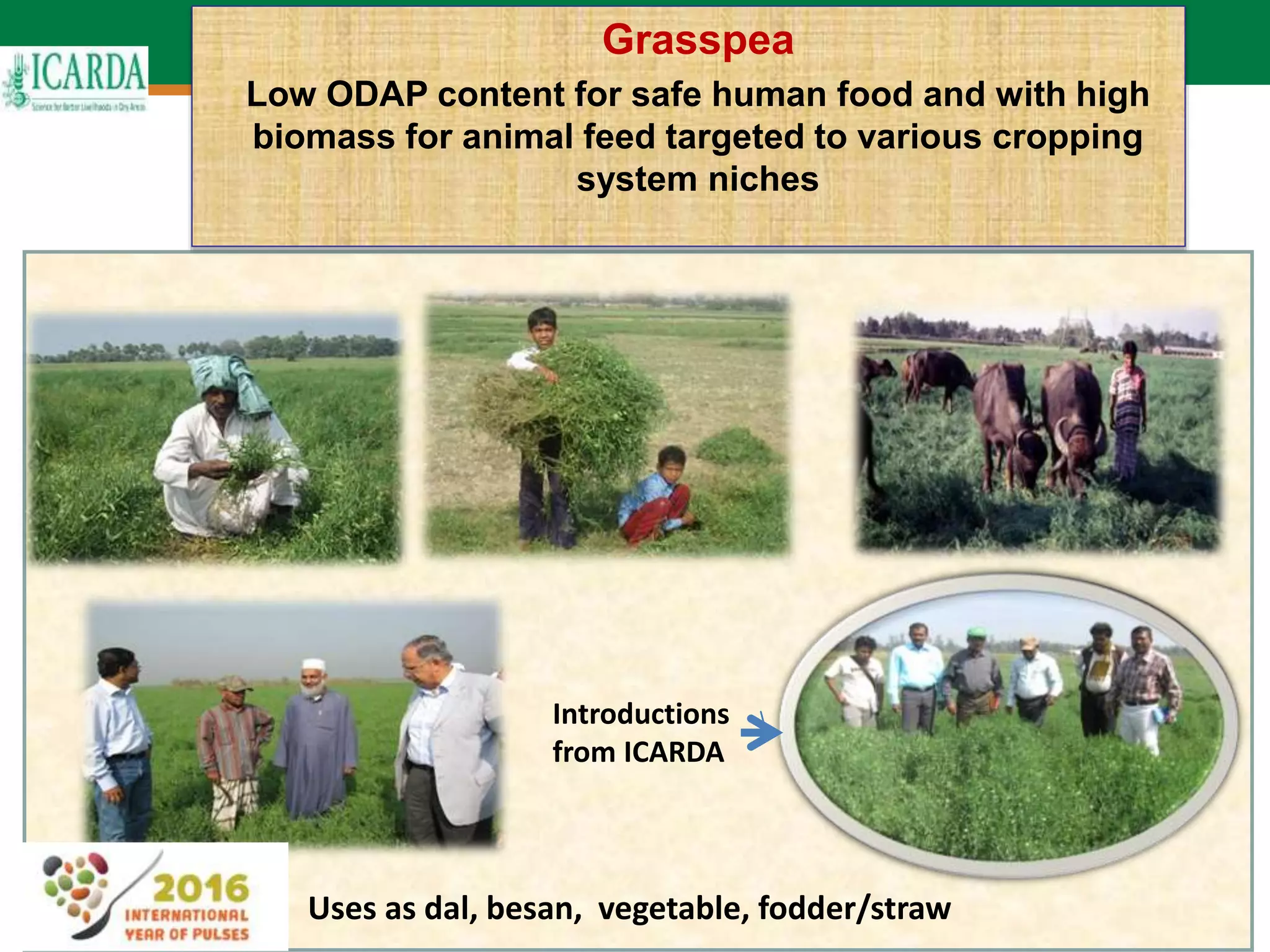
Grasspea
Low ODAP content for safe human food and with high
biomass for animal feed targeted to various cropping
system niches
Uses as dal, besan, vegetable, fodder/straw
Introductions
from ICARDA
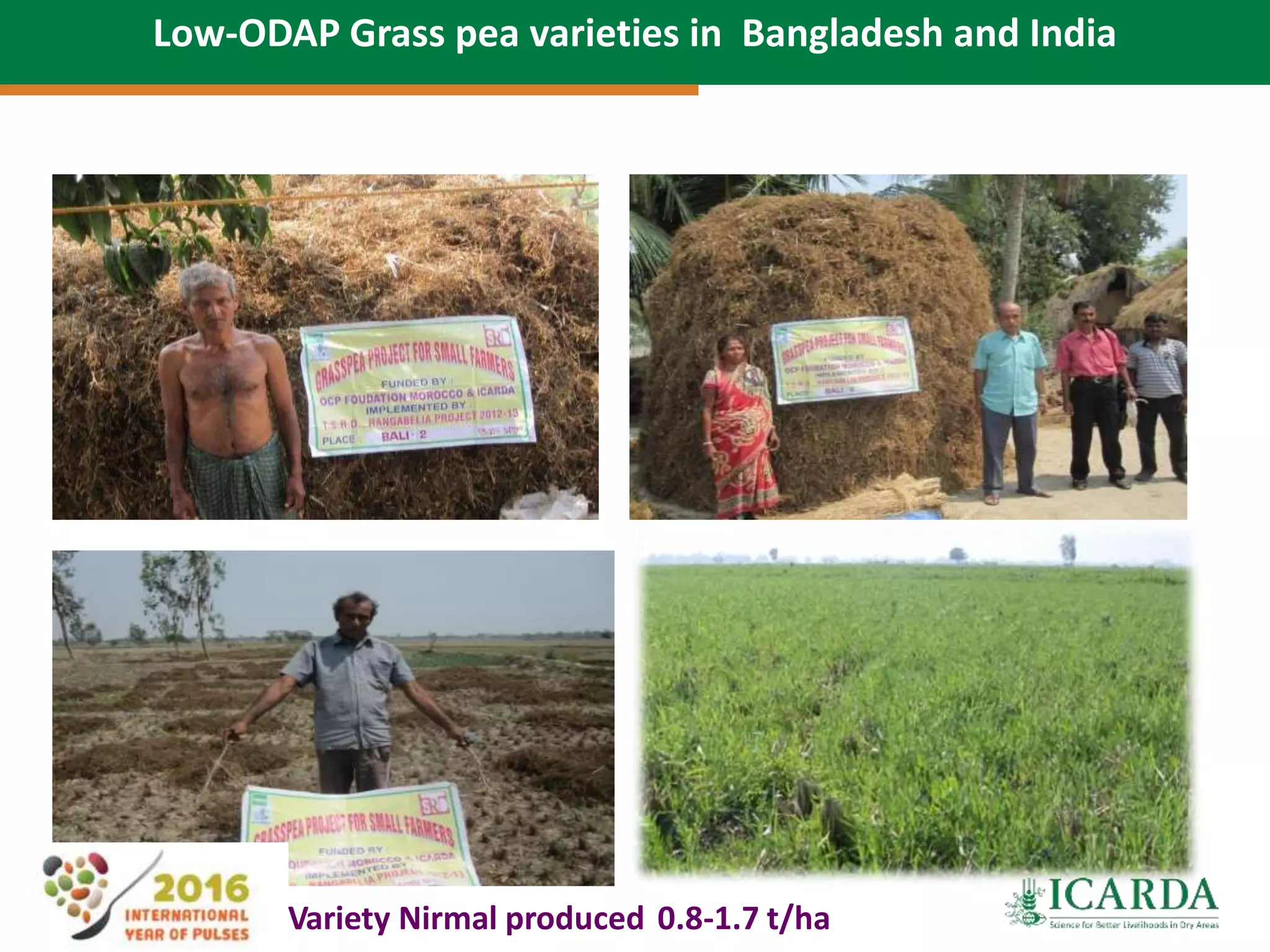
Variety Nirmal produced 0.8-1.7 t/ha
Low-ODAP Grass pea varieties in Bangladesh and India
Recommendations & Conclusion
74
How to raise awareness about pulse benefit?
 Inclusion pulses benefits in school curriculum among
children;
 Innovations in pulse products and ready to eat products;
 Messages by celebrities and eminent personalities about
the benefits of pulses in electronic media and print;
 National, regional and global events involving
participation of general public and celebrities;
 Short documentary films on benefits on pulses.
75
Recommendations & Conclusions
 Pulses for Food Security
 Pulses contribute to global food and nutritional security both
directly & indirectly through high protein content.
 Major source of micro nutrients
 Important source of dietary fibre;.
 The protein content of legumes is not as affected by e[CO2] as
cereals & grasses –
 Pulses for Environmental Benefits and Mitigation of Climate
Change
 Pulse production enhance soil N content and soil productivity
and health;
 Production of pulses has lower greenhouse gas emissions than
crops that require N-fertilization;.
 Lower fossil energy costs than crops that needs N-fertilization;
76
Recommendations & Conclusions (cont’d)
 Pulses for Environmental Benefits and Mitigation of Climate Change (cont’d)
 The inclusion of legumes in farming systems appears to accelerate soil C
sequestration promote soil health since it breaks the disease and insect
cycles in soil created by the prevailed cereal mono-culture .
 Considering the nutritional and environmental benefits of pulses, it is
essential that pulses consumption is well encouraged;
 It is important to bridge the gap between production and consumption at
both national and global levels;
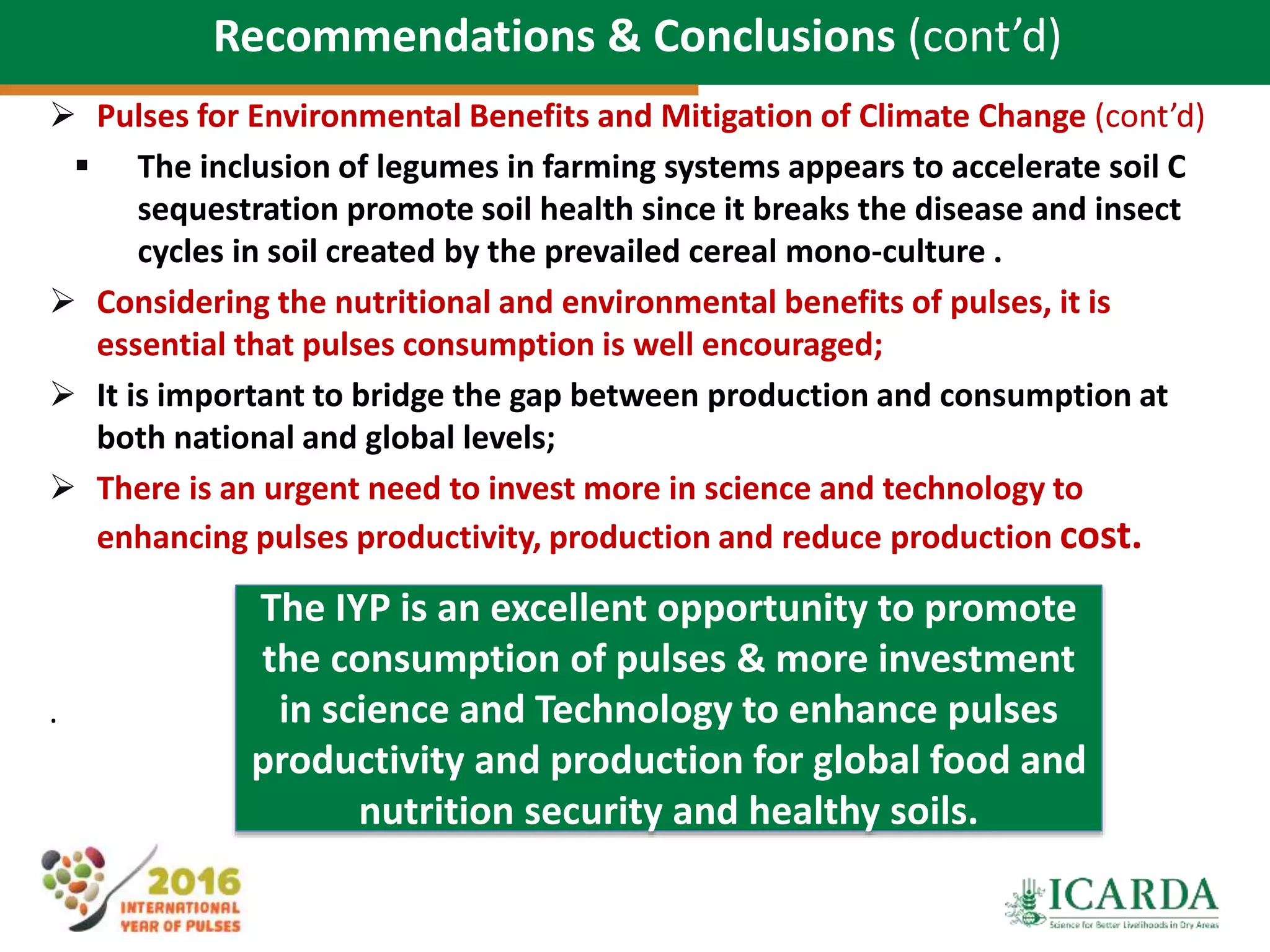
 There is an urgent need to invest more in science and technology to
enhancing pulses productivity, production and reduce production cost.
.
The IYP is an excellent opportunity to promote
the consumption of pulses & more investment
in science and Technology to enhance pulses
productivity and production for global food and
nutrition security and healthy soils.
77
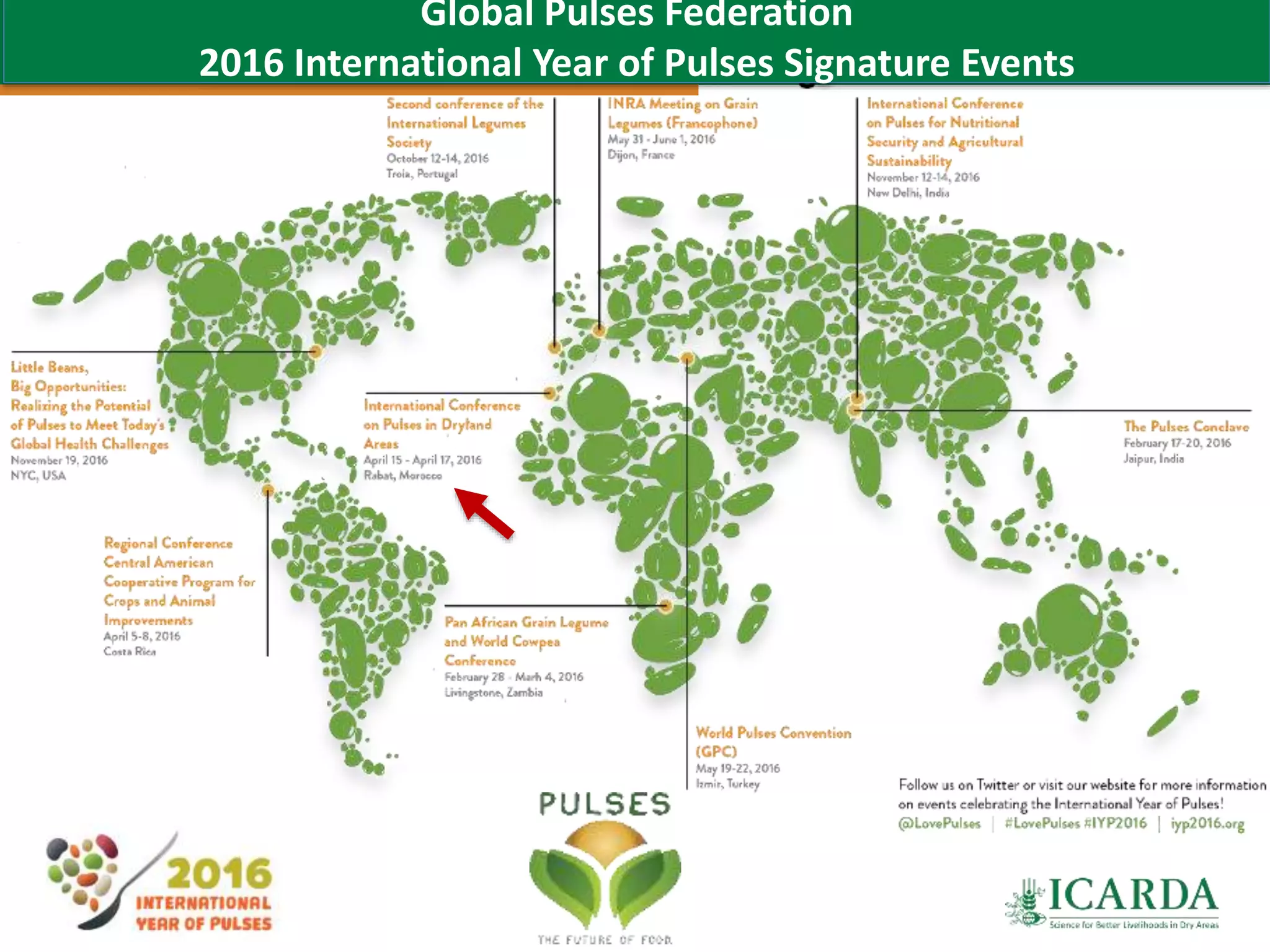
Global Pulses Federation
2016 International Year of Pulses Signature Events
United States of America (USAD &
USDA)
World Bank
Germany
United Kingdom
IFAD
Italy
The Netherlands
European Commission
Arab Fund for Economic & Social
Development (AFESD)
Canada
Sweden
Australia (ACIAR & GRDC)
Norway
CGIAR
Desertification Trust Fund
Iran
Denmark
Japan
UNDP
IDRC
OPEC Fund for International
Development (OFID)
Egypt
France
Ford Foundation
Syria
Switzerland
Austria
Pakistan
Asian Development Bank
Spain
Belgium
FAO
Yemen
Saudi Arabia
Gulf Cooperation Council (GCC)
India
Morocco
Turkey
Tunisia
China
UNEP
Global Mechanism-UNCCD
Ethiopia
Finland
Cornell University
Global Crop Diversity Trust
Libya
South Africa
Sudan
Harvest Plus
OCP Foundation Morocco
CRP Grain Legumes
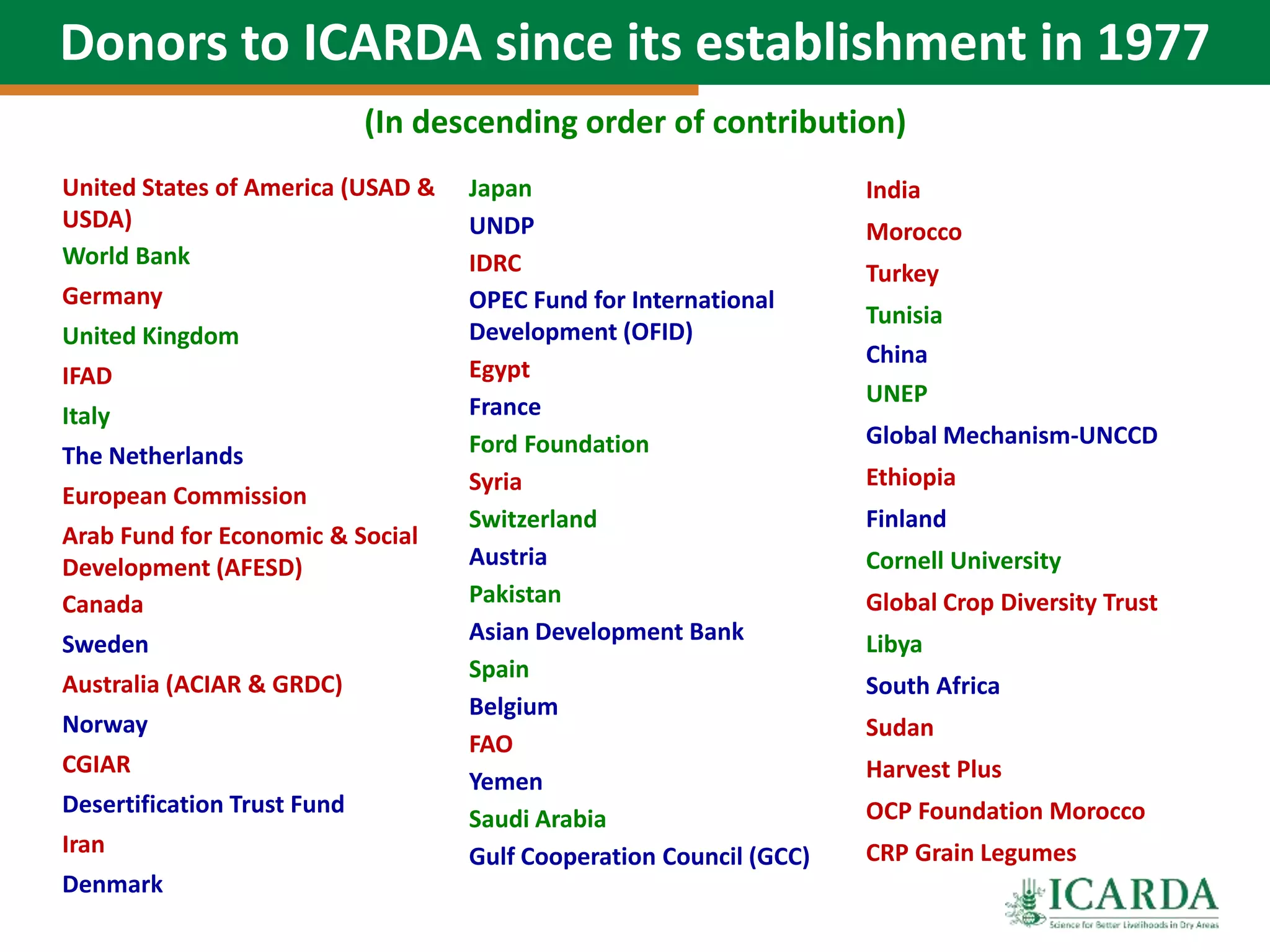
Donors to ICARDA since its establishment in 1977
(In descending order of contribution)
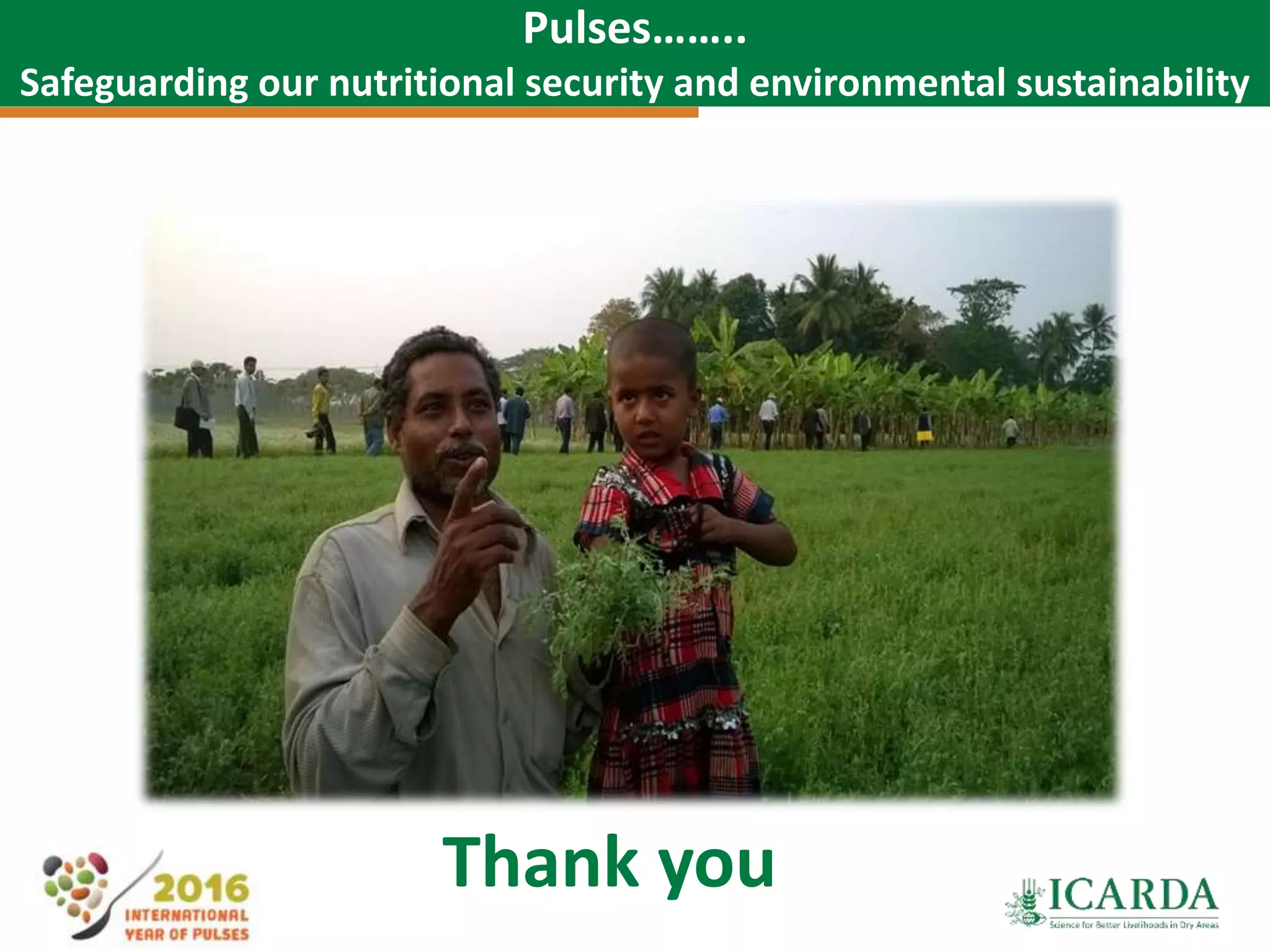
Pulses……..
Safeguarding our nutritional security and environmental sustainability
Thank you

Pulses in Dry Areas: Importance, Challenges and Potential

  • 1.
    International Conference onPulses For Health, Nutrition and Sustainable Agriculture in Dry Areas Marrakech, Morocco, 18 - 20 April, 2016 Pulses in Dry Areas: Importance, Challenges and Potential Mahmoud El Solh Director General ICARDA
  • 2.
    Outline  Importance ofPulses;  Status of Pulses Production and Consumption;  Challenges facing pulses production in dry areas;  What science can do to address these challenges;  Large scale impact of research investment;  Conclusion.
  • 3.
  • 4.
    3 Great Challenges ofAgriculture • Growing world population will cause a “serious storm" of food, energy and water shortages by 2050 • Demand for food and energy will jump 70% and 100% and for fresh water by 30%, as the population tops 9 billion • In the past, only ~12 crops received the major attention of scientific interventions The Big Challenge: How to expand agriculture output without further constraining natural resources?
  • 5.
    4 Hungry & undernourishedpeople remains a global concern • About 1 billion people globally remain hungry every day. Many Asian countries including India is among the countries with 20-34% populations undernourished and categorized as ‘Alarming’ in the Global Health Index (GHI) 525 million in Asia undernourished
  • 6.
  • 7.
    6 Pulses offer manynutritional benefits  Pulses are three times richer in low fat protein as compared to cereals including rice and wheat;  Pulses have complementary Amino acid profile with cereals;  Micro-nutrient rich grains (Fe, Zn);  Good carbohydrates make pulses a great functional food;  High in dietry fibre.
  • 8.
    The Balanced Diet:Cereals with Pulses The complementarities of cereals & pulses in nutritional value Food Legumes: High in protein and Lysine, low in sulfur-containing amino acids: Protein percentage Faba bean 20 – 36 % Lentil 20 – 27 % Grass pea 25 – 31 % Kabuli Chickpea 16 – 24 % Field Pea 20 - 23 % Cereals/Wheat: low in both protein and lysine but high in sulfur- containing amino acids Combiningfood legumes andcerealsprovidesabalanceddiet: improving nutrition,especiallyinlow-incomecommunities whereothersourcesofproteinlikeanimalproteinarelimited.
  • 9.
    8 Pulses - Apotential whole food solution Source; Pallemulle, Thavarajah, Thavarajah et al. unpublished data, 2013 Nutrient Lentil Field pea Chickpea Rice Protein (%) 20 –27a 20 -23d 19-20 2.9 Se (µg kg-1) 425 –672a 373-519d 450-850 93 Fe (mg kg-1) 73 –90b 44-55 50-55 2.4 Zn (mg kg-1) 44 –54b 20-30 20-32 3.7 Phytic acid (mg g-1) 1.8 -4.4c 2.2 –8.2 4.9 –6.1 7.2-11.9 50g of pulses is a good source of Fe, Zn, and Se Effect of lentil diet on anemic Sri Lankan Children after 60 Days 3 -7
  • 10.
    9 Bio-fortified pulses –a panacea for hidden hunger 0 20 40 60 80 100 BARI M4 BARI M5 BARI M6 BARI M7 Fe and Zn contents of lentil varieties released in Bangladesh Fe content (ppm) Zn content (ppm) In Bangladesh, bio-fortified lentils developed by NARS and ICARDA are now grown in 145,600 ha, producing 186,000 tons for domestic consumption
  • 11.
    10 Enhancing Soil Productivity& Health through Biological Nitrogen Fixation0612182430364248 -0.96 -0.84 -0.72 -0.6 -0.48 -0.36 -0.24 -0.12 Similarity FLIP07-273C ILC263 FLIP07-282C FLIP07-33C FLIP08-79C FLIP06-37C FLIP07-258C FLIP07-3C LM162 FLIP07-6C FLIP07-240C LM164 FLIP08-92C ILC3284 ILC533 ILC3397 FLIP08-177C FLIP07-127C FLIP07-14C FLIP07-280C FLIP08-99C FLIP08-98C FLIP06-151C ILC482 FLIP05-156C FLIP07-252C FLIP07-262C FLIP08-105C FLIP07-306C FLIP08-223C FLIP07-255C FLIP07-269C FLIP07-38C FLIP08-193C FLIP08-154C FLIP08-251C FLIP07-308C FLIP07-340C FLIP07-322C FLIP07-332C FLIP08-23C LM140 LM149 FLIP06-166C FLIP07-182C ILC3279 FLIP07-217C FLIP07-268C FLIP07-254C FLIP07-44C  Chickpea and Faba bean genotypes screened  Super nodulating lines identified (Egypt)  TILLING population of FB developed  Stress tolerant Rhizobium strains identified  Host-Rhizobium- Environments interaction studied  Enhancement of soil productivity and soil health.
  • 12.
    Regional differences inthe reliance of agriculture on legume fixed N or fertilizer N for food production Region Source & estimated annual N input Million ton N/year Asia & middle east 19 47 Europe 3 14 North America 8 14 Africa 3 5 South America 10 6 Oceania (Australia & NZ) 4 1 Total Global 47 87 value ≈>US$50 billion Source: Herridge et al (2008) Plant & Soil 311:1-18 Peoples et al (2009) Nitrogen Fixation in Crop Production: Agronomy Monograph 52, pp.349-385
  • 13.
    1 : 1line Includes 20 data points from Lars Ohlander, SLU Sweden Source: Angus et al (2008) Australian Agronomy Conf, Adelaide , Australia. www.regional.org.au/au/asa/2008/concurrent/rotations/5786_angusjf.htm Indirect contributions of legumes to food production Rotational benefits for following cereal crops
  • 14.
    13 Pulses Eggs Chicken Pork Beef Water efficiency infood production (measured in galleons per ton) Daal (1kg) 1250 liters Chicken (1kg) 4325 liters Mutton (1kg) 5520 liters Beef (1kg) 13000 liters • 70-210 kg/ha N Fixed • 40-70 kg/ha N benefit • Phosphorus availability • Negative carbon food print Water efficiency Soil Health Water Efficiency and Nitrogen fixation
  • 15.
    14 Low carbon footprintwith pulses based systems Source: Gan et al., 2014 • The negative carbon footprints indicate that the production of a system sequesters more CO2 from the atmosphere than is emitted (a net sink of CO2). FFLxW FWW ContW LentilW Per ha -62 -218 -243 -552 Per kg -0.027 -0.164 -0.151 -0.377 -600 -500 -400 -300 -200 -100 0• 70-210 kg/ha N Fixed • 40-70 kg/ha N benefit • Phosphorus availability
  • 16.
    15 Pulses offer scopefor diversification of cereal-based systems Early varieties Diversification Expansion in rice fallow Spring planting • Intensification & diversification of Cereal- based Cropping System by inclusion of pulses as catch crop • Introduction in Rice-fallows in South Asia • New niches such as winter planting • Market opportunities for more rural income Market opportuniti es
  • 17.
    16 Market evolution ofcereals and pulses Pulses are becoming cash crops due to the high demand 16
  • 18.
    17 Steep rise infood prices in India over 30 years Pulses are becoming cash crops in India
  • 19.
    Challenges Facing EnhancingPulses Productivity and Production
  • 20.
    19 Challenges to PulseProductivity & Production  Mostly grown under rainfed marginal conditions: considered as secondary crops;  Instability in yield: prone to a range of biotic and abiotic stresses;  Changing climate: emerging new stresses;  Low yield potential: limited use of wide range of genetic diversity and desirable genes;  Use of less inputs by farmers;  Inappropriate supportive policies favouring cereals production at the expense of pulses;  Limited access to quality seed of improved varieties  Low investment in pulses R & D
  • 21.
    20 Production constraints inchickpea as an Example  Biotic stress – Ascochyta Blight – Fusarioum wilt – Rust – Botrytis Grey Mould – Leaf miners: – Leaf caterpillar – Pod borers – cyst nematode  Abiotic stress – Drought – Heat – Cold – Salinity – Waterlogging – Nutrient Deficiency and Toxicity
  • 22.
    21 Constraints in otherFood Legumes: Lentil & Faba Bean Stemphylium blight Rust Diseases Root diseases Drought and heat Weeds • Biotic stresses • Abiotic stresses • Problem soils • Socio-economic problems • Government policies Botrytis fabae Orabance in Faba bean
  • 23.
    What Science cando to Explore the Potential of Pulses to Enhance their Productivity and Yield Stability
  • 24.
    23 Strategy for EnhancingPulses Production • Crop genetic improvement & new genetic gains for improved varieties; • Vertical increase in productivity through sustainable intensification of production systems; • Closing the yield gaps • Horizontal expansion • Reduced post-harvest losses • 25-60% yield gaps in pulses • Reasons are many……. • Closing the yield gaps can alone supply 60% of pulses deficit • Farmers participatory research
  • 25.
    24 Genetic gains :Traits in Focus  Heat and drought tolerance  Resistances to diseases  Resistance to insect pests  Orobanche tolerance  Enhancing biological nitrogen fixation  Extra short duration  Herbicide tolerance  Machine harvesting  Water use efficiency  Fertilizer use efficiency  Improved plant architecture Cross Segregating Populations Genotype Phenotype QTLs Gene Discovery New Variety
  • 26.
    Collec t Mission: Conserv e Characteriz e Evaluate Documen t Distribute Taxon/CropsNo. of Accessions Food Legumes 35,867 Wild Relatives of Food Legumes 1,149 Forage Legumes 31,856 Range/pasture species 7,013 Total 75,885 Make-up of the ICARDA legumes collection Legumes Genetic Resources at ICARDA
  • 27.
    Link environmental data tocollection sites Adapted from D T F Endresen (NGB) Choose accessions from environments where selection pressure exists for adaptive traits to stress e.g. drought, heat, salinity. For diseases and pests, select material from environments that favor high pest populations Focused Identification of Germplasm Strategy (FIGS) Application: Focusing on the ‘Best Bet’ Accessions
  • 28.
    27 Genetic stocks fordesirable traits developed by FIGS  Development of FIGS subsets - 10 FIGS subsets for chickpea - 4 FIGS subsets for lentil Biotic and abiotic stresses… - Botrytis grey mold - Ascochyta blight - Fusarium - Leaf minor - Pod borer ‒ Salinity tolerance ‒ Heat tolerance ‒ Cold tolerance ‒ Drought ‒ Virus 1908 accessions of chickpea and 400 accessions of lentil shared as FIGS to institutes all over the world
  • 29.
    28 Forty out of160 crosses in 2015 have been conducted in ICARDA-Terbol station assigned for pre-breeding research. The traits included earliness, large seed, AB, FW, cold, heat and drought tolerance. Conventional Breeding: Chickpea crossing block in 2015
  • 30.
     Genomics  MarkerAssisted Selection  Double Haploids  Embryo Rescue  Tissue Culture  DNA Fingerprinting  Genetic Engineering Biotechnology Tools
  • 31.
    30 Genomic tools inchickpea breeding Sub-set/reference-set (gene banks) RILs TILLING (Mutants) MAGIC/NAM Training population Association mapping Bi-parental/Mapping+QTL Reverse genetics approach Multi parent/association mapping Genomic selection Genotyping (SSR, GBS, SNP, DArT…etc) Phenotyping (Different field environments, environmental control, high- throughput score, precision, experimental design, data analysis…etc) Marker Assisted Selection (MAS) New released varieties Seven subsets (each/170-200 genotypes) for drought, salinity, cold, AB, FW, viruses and BGM More than 20 RILs have been developed for drought, salinity, cold, AB, FW…etc. Kabuli (Ghab5-1237 lines) have been developed and advanced to M5. Disi (1700 lines) have been advanced F5 MAGIC population have been developed from 12 parents NAM: is under development Not yet applied in chickpea Genetic resource
  • 32.
    31 Precision Phenotyping FW andsalinity screening in hydroponics Wilt sick plots for Fusarium wilt Orobanche screeningAscochyta Blight screening Drought and heat screening Cold screening
  • 33.
    32 Novel Techniques forPhenotyping Screening for Fusarium wilt resistance
  • 34.
    33 Source of variationd.f. SS MS F Genotype 137.00 210.88 1.54 1.86*** Location 1.00 1.04 1.04 1.26 Genotype X Location 137.00 150.46 1.10 1.33 Error 275.00 227.41 0.83 Total 551.00 609.38 • genotypes were screened in the field (Arish Egypt) and (hydroponic) • Alpha lattice design ( two replications) • 100 mM NaCl was used in hydroponic method • No significant difference have been observed between the tow methods • Significant differences have been identified between the genotypes. • Based on the average from the two locations, seven tolerant genotypes have been identified as the most tolerant genotypes from both experiments CV% = 7.8; LSD = 1.27 100 mM NaCl treatment Control Screening for salinity tolerance in chickpea under field condition and hydroponic system
  • 35.
    34 Germplasm evaluated during2014-15 620 lentil accessions 365 chickpea accessions Fusarium wilt Ascochyta Blight screening Chickpea Trait Genotypes Ascochyta blight 700 (Germplasm) 300 (segregating) Nitrogen fixation 100 Herbicides tol. 100 Fusarium wilt 300 (Germplasm) 200 (segregating) Heat tolerance 100 Plant traits Lentil Trait Lines Herbicide tolerance 500 Orobanche tolerance 250 Heat tolerance 200 Machine harvest 250 Rust resistance 120
  • 36.
    Identify traits andassociated molecular markers for drought tolerance Drought Resistance Score (DRS): Estimated by using a rating scale ranging from 1 (plants with 95–100 % pod setting) to 9 (plants did not set any pods and died). Phenology traits: 1. plant height (PLHT), 2. days to flowering (DFLR), 3. days to maturity (MAT) Yield-related traits: 1. grain yield (GY), 2. biological yield (BY), 3. Harvest index (HI), 4. number of pods/3 plants (Pod), 5. Percentage of empty pods (%Epod), 6. 100 seed weight (100 sw), 7. seed number/3 plants (SN). Developing short-duration cultivars that escape terminal drought and heat stress Drought Tolerance
  • 37.
  • 38.
    37  Heat tolerantfaba bean varieties in Sudan  Production increased from ~40,000 tons in 1995 to 150,000 tons at present. ‒ Area increased by 50,000 ha ‒ Productivity increased by 600 kg/ha  Misr3 - orobanche tolerant and Nubaria2 and Nubaria3 - drought tolerant varieties helped improved the self sufficiency level of faba bean in Egypt Climate resilient varieties of faba bean in Egypt and Sudan
  • 39.
    38 ILC533 cold susceptible Screeningfor cold tolerance  Every year screening for cold tolerance done by early planting  Several genotypes have been identified used in breeding work to develop cold tolerant varieties Breeding for Cold Tolerance ILC533 cold susceptible Resistant lines
  • 40.
    Increase chickpea productivitythrough forward breeding and management strategies of Ascochyta Blight • New gene mining (using targeted subsets from ICARDA genebanks using FIGS) • Development of new markers closely associated with AB resistant (Mapping and QTL analysis using RIL population or by association mapping) • Applying of marker assisted selection in chickpea breeding program for AB resistance • Multi-location testing • Study of development of the new pathotypes (4 pathotypes identified and reported by ICARDA) • Pyramiding of AB resistant genes • Combine with cold tolerance • CRISPR-Cas9 (genome editing) for enhancing AB resistance ICARDA strategy for enhancing AB resistance
  • 41.
    Four A. rabieipathotypes amplified by AroH5T primers. Two mating types of A. rabiei were amplified using The multiplex MAT-specific primers. Murad et al. 2009 Molecular detection of Ascochyta rabiei pathotypes
  • 42.
  • 43.
    Resistance to Botrytisfabae Disease in Faba beans in Egypt
  • 44.
    43 Insect Resistant Chickpea Leafminer • 6 segregating population and FIGS set evaluated at Kemis Zemamra station in Morocco • 200 single plants with good resistance and pods/plant. Evaluation of breeding lines for resistance to Leaf miner Damage by Helicoverpa pod borer in chickpea Pod borer • FIGS (375) evaluated in Annaceur (off season) • 34 lines with 1-5% damage
  • 45.
    44 Extra Early Lentilsfrom Wild Species
  • 46.
    45 Extra Early Varieties Replacingfallow in rice fallow in South Asia Lowland Areas in Ethiopia
  • 47.
    Machine Harvesting Lentil Good standing ability  Erect and high biomass  More height of the first pod  No pod drop and shattering  Idlib2, Idlib 3, Idlib 4, Ibla 1, ILL 590, ILL1005, ILL6037, ILL6212, ILL7155
  • 48.
    47 Machine Harvestable Traits Screened breeding lines for good standing ability, Erect tall, more height of the first pod, no pod drop and shattering and prominent tendrils  Two lines with above traits, 08S41102 and 08S41137, identified .
  • 49.
    48 Chickpea Development of large-seeded,short duration chickpea varieties with resistance to wilt and Ascochyta blight and tolerant to drought and heat suitable to mechanical harvest
  • 50.
    49 Large seeded cultivarsfor market opportunities 0 100 200 300 400 500 600 700 1996 1997 1998 1999 2000 2001 2002 2003 2004 2005 2006 0 200 400 600 800 1000 1200 1400 1600 1800 Area (000 ha) Production (000 tons) Yield (kg/ha) 328 438 411 430 431 475 508 409 500 499 643 696 906 950 0 100 200 300 400 500 600 700 800 900 1000 1971-73 1974-76 1980-82 1986-88 1989-91 1998-2K 2003-05 Small seeded lentil Large seeded lentil Development of large-seeded Kabuli chickpea varieties 25-28 g 100 seed-1 34-40 g 100 seed-1 >50 g 100 seed-1 Before 2000 Target of the project After 2000 lentil and chickpea
  • 51.
    IPM of ChickpeaLeaf Miner  Up to 45% yield loss in Morocco in spring chickpea  Botanical pesticides such as neem oil is effective for its control.  Parasitoids: conservation and enhancement through diversified cropping system and the use of flowering medicinal plants as strips between chickpea fields.  Early planting date (winter)
  • 52.
    Large Scale Impactof Research Investment in Pulses
  • 53.
    Winter vs. SpringChickpea in West Asia & North Africa Mature winter crop Spring sown crop
  • 54.
    53 Drought Tolerant ChickpeaVariety Survived 2007 Excessive Drought in Turkey The Kabuli chickpea, ‘Gokce’, developed by ICARDA and Turkish national scientists, has withstood severe drought in Turkey and produced when most other crops failed in 2007. Gokce is used on about 85% of the chickpea production areas (over 550,000 ha). With a yield advantage of 300 kg/ha over other varieties, and world prices over USD 1000/t, this represents an additional USD 165 million for Turkish farmers, in 2007 alone..
  • 55.
    Impact of researchinvestment on Pulses Production Improvement in Ethiopia High yielding rust resistant Alemaya lentil variety widely adopted in Ethiopia Increase in production 2000/01 - 2009/10: •Lentils: 3 times •Faba Bean: 40% •Chickpea: 60% Increased production and added value products provides employment through food processing in rural areas Field visits to pulse farmer involving policy makers Decortication of lentil
  • 56.
    55 Research Impact onPulses in Ethiopia  Chickpea production was doubled between 2000 and 2015.  Kabuli Chickpeas – Expanding in Central Highlands  Export 54,000 tons Chickpea and 18,000 tons lentil  Drought tolerant and Orobanche resistant faba bean with farmers  Pulses contribute >90 million USD to Ethiopia foreign exchange
  • 57.
    56 Fast-tracking of Iron& Zinc-rich lentil varieties India: Pusa Vaibhav (Fe 102 ppm) Bangladesh: Barimasur-4 (Fe 86 ppm; Zn-59 ppm Ethiopia: Alemaya (Fe-98, Zn-64 ppm) Nepal: Shekhar (Fe-78 ppm; Zn-68 ppm)
  • 58.
    Lentil cultivars withhigh concentration of Fe & Zn are in ‘fast-tracking’ seed dissemination  Ethiopia: Alemaya  Bangladesh: Barimasur-4, Barimasur-5 and Barimasur-6, Barimasur-7, Binamasur-7  India: Pusa Vaibhav  Nepal: Sisir, Shital, Shekhar, Khajurah-1, Khajurah-2  Syria: Idlib-2, Idlib-3 and Idlib-4  Turkey: Myveci-2001  Portugal: Beleza
  • 59.
    58 Impact on bio-fortifiedlentil in Bangladesh 0 20 40 60 80 100 BARI M4 BARI M5 BARI M6 BARI M7 Fe and Zn contents of lentil varieties released in Bangladesh Fe content (ppm) Zn content (ppm) • Five bio-fortified varieties (BARI M4, M5, M6 and M7, M-8) released • Average production 1.3 t/ha • Producing 186,000 ton micronutrient dense lentil worth $30 million annually • About 1 million farm families are directly benefited in house-hold nutritional security
  • 60.
    Massive Technology Up-scalingof bio-fortified lentil in Bangladesh
  • 61.
    60 Rice Jul-Oct Lentil Nov - Feb Sesame Mar- May Fallow after rice Nov - June Example: 3 crops (India) per year Rice Fallow Replacement by Pulses in India & Bangladesh
  • 62.
    (Biradar and Xiao,2011) (Biradar et al., 2012*) Tapping potential of Rice Fallow in South Asia: Legumes Food from Fallows 11.6 m ha in India > 1.2 m ha in Bangladesh 0.55 m ha in Nepal
  • 64.
    63 Early Lentil DemonstrationReplacing Fallow in Fallow Rice Rotation in Bangladesh & India
  • 65.
    64 Enhancing farmers’ incomeand house-hold nutritional security through intensification in Rice – Fallow Replacement A farmer, Mr. S H Khunou earned Rs 80,000 ($ 1230) in 2 ha rice- fallow land in Manipur state of India from lentil A farmer, Mr. P. Das earned Rs. 24,600 ($ 378) from lentil in 0.48 ha rice fallow land
  • 66.
    Grasspea in ricefallow in island of West Bengal
  • 67.
    Lack of organicmanure in soil: Cow-dung is used as fuel No-till lentil in Bangladesh No-till lentil in, India: relay crop in rice field No-tillage lentils in Nepal Grasspea under no-tillage in India Zero-till chickpea in India CA Technology: Pulses are best fit
  • 68.
    67 Nepal – emergedas an exporter of lentil in South Asia  Ten lentil varieties released  Production of improved varieties: 124,952 t.  Total values = 61.92 m USD /year  >800,000 farm families benefited 0 200 400 600 800 1000 1200 1400 1600 Local varieties Improved varieties Grain yield (kg/ha)
  • 69.
    68 Faba bean productionin Egypt  Production increased from 130,000 ton in 2012 to 175,000 ton in 2015  Misr3 - Orobanche tolerant and Nubaria2 and Nubaria3 - drought tolerant varieties  Self sufficiency level of faba bean in Egypt increased from 28% in 2012 to 37% at present
  • 70.
    69 Heat tolerant fababean in Sudan Production increased from ~40,000 t in nineties to 150,000 t at present. • Increase in area (~20000 ha in nineties to ~70000 ha) • Productivity from 1500 to 2120 kg/ha
  • 71.
  • 72.
    71 Grasspea Low ODAP contentfor safe human food and with high biomass for animal feed targeted to various cropping system niches Uses as dal, besan, vegetable, fodder/straw Introductions from ICARDA
  • 73.
    Variety Nirmal produced0.8-1.7 t/ha Low-ODAP Grass pea varieties in Bangladesh and India
  • 74.
  • 75.
    74 How to raiseawareness about pulse benefit?  Inclusion pulses benefits in school curriculum among children;  Innovations in pulse products and ready to eat products;  Messages by celebrities and eminent personalities about the benefits of pulses in electronic media and print;  National, regional and global events involving participation of general public and celebrities;  Short documentary films on benefits on pulses.
  • 76.
    75 Recommendations & Conclusions Pulses for Food Security  Pulses contribute to global food and nutritional security both directly & indirectly through high protein content.  Major source of micro nutrients  Important source of dietary fibre;.  The protein content of legumes is not as affected by e[CO2] as cereals & grasses –  Pulses for Environmental Benefits and Mitigation of Climate Change  Pulse production enhance soil N content and soil productivity and health;  Production of pulses has lower greenhouse gas emissions than crops that require N-fertilization;.  Lower fossil energy costs than crops that needs N-fertilization;
  • 77.
    76 Recommendations & Conclusions(cont’d)  Pulses for Environmental Benefits and Mitigation of Climate Change (cont’d)  The inclusion of legumes in farming systems appears to accelerate soil C sequestration promote soil health since it breaks the disease and insect cycles in soil created by the prevailed cereal mono-culture .  Considering the nutritional and environmental benefits of pulses, it is essential that pulses consumption is well encouraged;  It is important to bridge the gap between production and consumption at both national and global levels;  There is an urgent need to invest more in science and technology to enhancing pulses productivity, production and reduce production cost. . The IYP is an excellent opportunity to promote the consumption of pulses & more investment in science and Technology to enhance pulses productivity and production for global food and nutrition security and healthy soils.
  • 78.
    77 Global Pulses Federation 2016International Year of Pulses Signature Events
  • 79.
    United States ofAmerica (USAD & USDA) World Bank Germany United Kingdom IFAD Italy The Netherlands European Commission Arab Fund for Economic & Social Development (AFESD) Canada Sweden Australia (ACIAR & GRDC) Norway CGIAR Desertification Trust Fund Iran Denmark Japan UNDP IDRC OPEC Fund for International Development (OFID) Egypt France Ford Foundation Syria Switzerland Austria Pakistan Asian Development Bank Spain Belgium FAO Yemen Saudi Arabia Gulf Cooperation Council (GCC) India Morocco Turkey Tunisia China UNEP Global Mechanism-UNCCD Ethiopia Finland Cornell University Global Crop Diversity Trust Libya South Africa Sudan Harvest Plus OCP Foundation Morocco CRP Grain Legumes Donors to ICARDA since its establishment in 1977 (In descending order of contribution)
  • 80.
    Pulses…….. Safeguarding our nutritionalsecurity and environmental sustainability Thank you