By – Dr. SWATI SAHU
(MDS FELLOW)
DEPT OF ORAL & MAXILLOFACIAL SURGERY
NEW HORIZON DENTAL COLLAGE , BILASPUR
• Composition & functions of blood.
• Specific gravity, Packed cell volume, factors affecting & methods of
determination.
• Plasma proteins - Types, concentration, functions & variations.
• Erythrocyte - Morphology, functions & variations. Erythropoiesis & factors
affecting erythropoiesis.
• ESR- Methods of estimation, factors affecting, variations & significance.
• Haemoglobin - Normal concentration, method of determination & variation in
concentration.
• Blood Indices - MCV, MCH, MCHC - definition, normal values, variation.
• Anaemia - Definition, classification, life span of RBC’s destruction of RBC’s ,
formation & fate of bile Pigments
• Jaundice - types
• Leucocytes : Classification, number, percentage, distribution morphology,
properties, functions & variation. Role of lymphocytes in immunity ,
leucopoiesis life span & fate of leucocytes.
• Thromobocytes - Morphology, , number, variations, function & thrombopoiesis.
• Haemostatsis - Role of vasoconstriction, platelet plug formation in haemostasis,
coagulation factors, intrinsic & extrinsic pathways of coagulation, clot
retraction.
• Tests of haemostatic function, platelet count, clotting time, bleeding time,
prothrombin time – normal values, method & variations.
• Anticoagulants - mechanism of action. Bleeding disorders.
• Blood groups: ABO & Rh system, method of determination, importance,indications &
dangers of blood transfusion, blood substitutes.
• Blood volume: Normal values, variations.
• Body fluids : distribution of total body water, intracellular & extracellular
compartments, major anions & cations in intra and extra cellular fluid.
• Tissue fluids & lymph : Formation of tissue fluid, composition, circulation & functions of
lymph.
• Oedema - causes
• Functions of reticulo endothelial system.
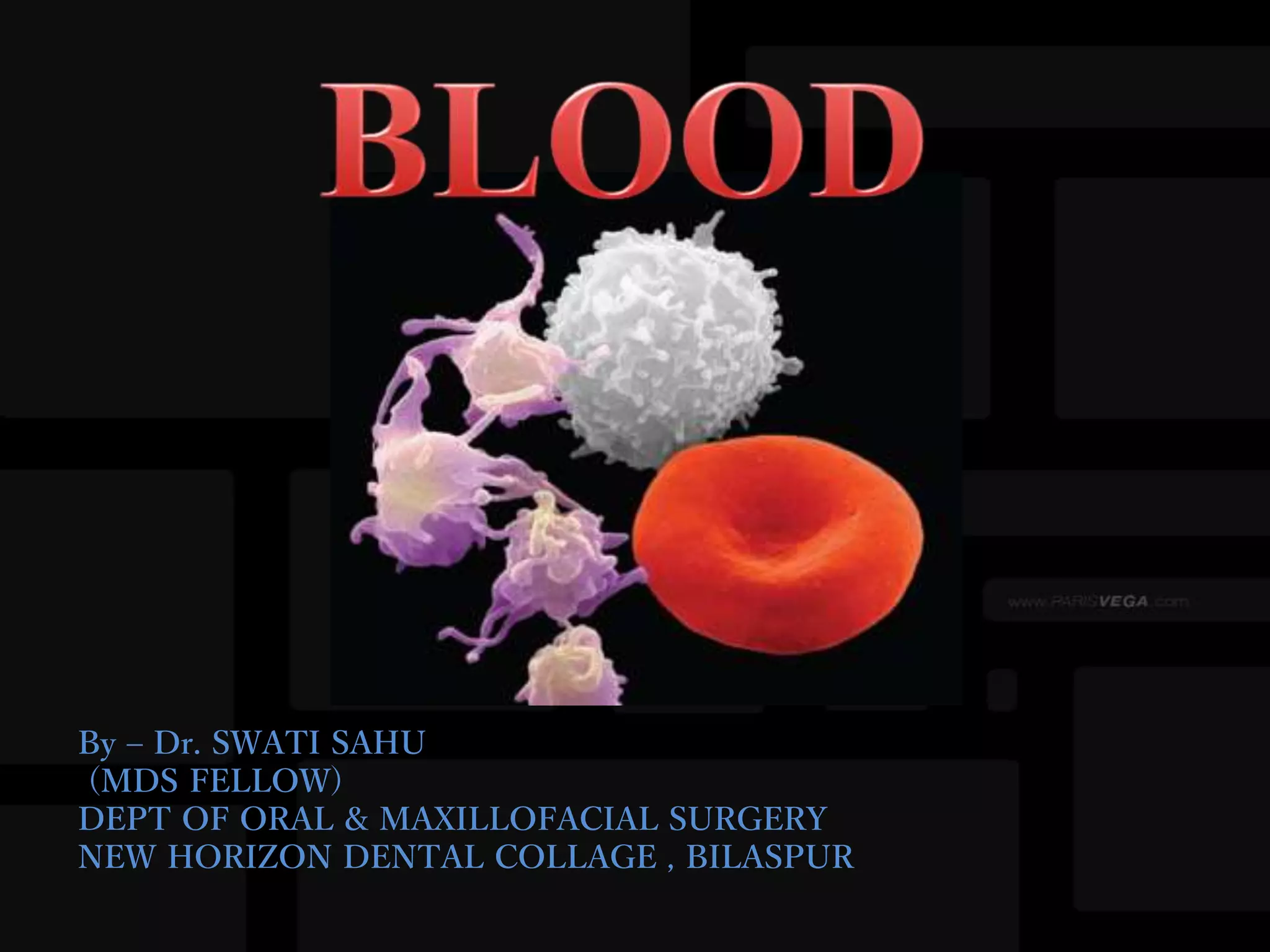
• Blood is a connective tissue in fluid form
• FLUID OF LIFE –
carries oxygen from lungs to all parts of body & carbon Dioxide from all parts of
body to lungs
• FLUID OF GROWTH –
Carries nutritive substances from the digestive system & hormones from endocrine
gland to all the tissues
• FLUID OF HEALTH –
protects the body against the diseases & gets rid of the waste products & unwanted
substances by transporting them to the excretory organs like kidney
• Color – red ; Arterial blood – scarlet red (contains more oxygen)
Venous blood – purple red ( contains more carbon dioxide)
• Total Blood Volume – 5-6 ltrs
• Specific gravity – 1050 - 1060
• Viscosity - 4-5 times that of water
• pH – 7.4 +/- 0.05; alkaline
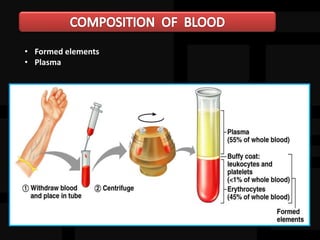
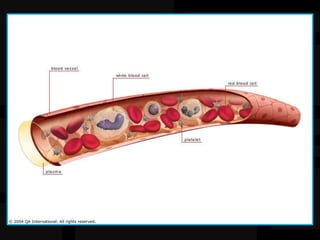
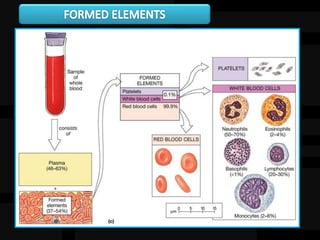
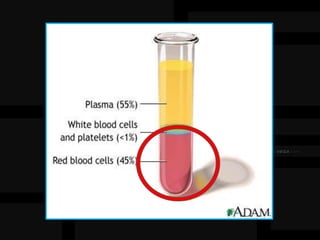
• Formed elements
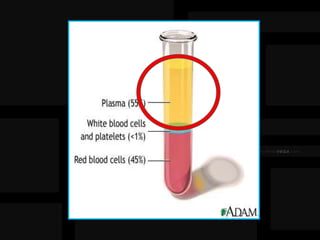
• Plasma
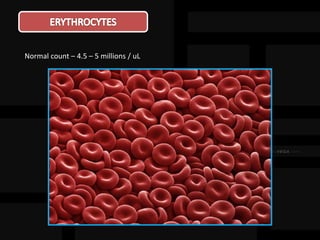
Normal count – 4.5 – 5 millions / uL
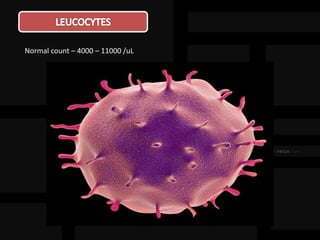
Normal count – 4000 – 11000 /uL
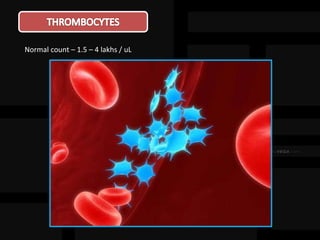
Normal count – 1.5 – 4 lakhs / uL
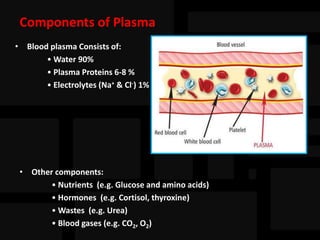
Components of Plasma
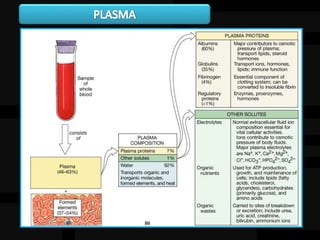
• Blood plasma Consists of:
• Water 90%
• Plasma Proteins 6-8 %
• Electrolytes (Na+ & Cl-) 1%
• Other components:
• Nutrients (e.g. Glucose and amino acids)
• Hormones (e.g. Cortisol, thyroxine)
• Wastes (e.g. Urea)
• Blood gases (e.g. CO2, O2)
Functions of Plasma Proteins
1. Maintaining colloid osmotic balance (albumins)
2. Buffering pH changes
3. Transport of materials through blood (such as water
insoluble hormones)
4. Antibodies (e.g. gamma globulins, immunoglobulins)
5. Clotting factors (e.g. fibrinogen)
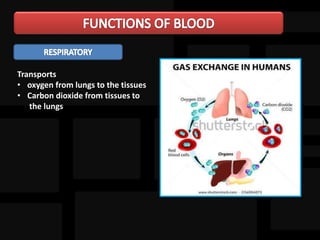
Transports
• oxygen from lungs to the tissues
• Carbon dioxide from tissues to
the lungs
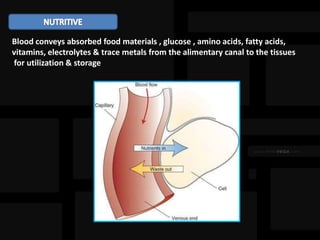
Blood conveys absorbed food materials , glucose , amino acids, fatty acids,
vitamins, electrolytes & trace metals from the alimentary canal to the tissues
for utilization & storage
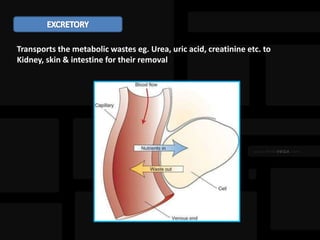
Transports the metabolic wastes eg. Urea, uric acid, creatinine etc. to
Kidney, skin & intestine for their removal
• Blood forms internal environment of the cell i.e, MILLIEU INTERIOR in terms of
Volume, composition, concentration, pH & temperature, which is regulated to
normal physiological limits.
• This mechanism is called HOMEOSTASIS (W.B. Cannon)
• Buffering power of Hb helps to maintain constancy of blood pH
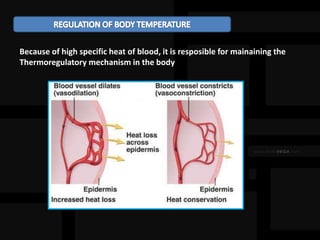
Because of high specific heat of blood, it is resposible for mainaining the
Thermoregulatory mechanism in the body
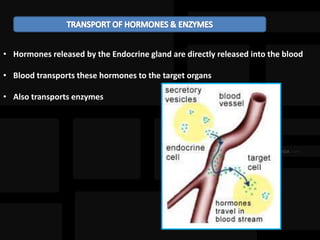
• Hormones released by the Endocrine gland are directly released into the blood
• Blood transports these hormones to the target organs
• Also transports enzymes
• Blood acts as store house of water & substances like proteins, glucose, sodium
& Potassium
• These substances are taken from blood during starvation, fluid loss,
electrolyte loss, etc
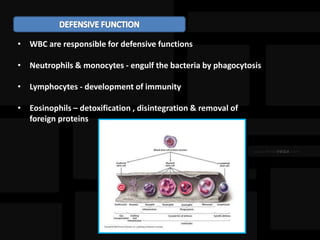
• WBC are responsible for defensive functions
• Neutrophils & monocytes - engulf the bacteria by phagocytosis
• Lymphocytes - development of immunity
• Eosinophils – detoxification , disintegration & removal of
foreign proteins
• Water content in blood is freely interchangable with interstitial fluid
• The plasma proteins are –
1. Albumin
2. Globulin
3. Fibrinogen
• Serum contains only Albumin & Globulin ; hence called as SERUM ALBUMIN
& SERUM GLOBULIN
• Fibrinogen is absent in serum because it is converted into fibrin during
blood clotting
• Total Plasma Protein concentration – 6.4 – 8.3 gm/dl of blood
• Albumin – 3-5gm/dl (avg. 4.8 gm/dl)
• Globulin – 2-3 gm/dl (2.3 gm/dl)
• Fibrinogen – 200 - 450 mg/dl
• The ratio between plasma level of albumin & globulin is called A/G ratio
• Normal A/G ratio – 2:1
1. TOTAL PROTEIN (Hyperproteinemia)
• Dehydration
• Haemolysis
• Acute infections like Acute hepatitis & Acute nephritis
• Respiratory distress syndrome
• Excess of glucocorticoid
• Leukemia
• Rhematoid fever
• Alcoholism
2. ALBUMIN
• Dehydration
• Excess of glucocorticoid
• Congestive cardiac failure
3. GLOBULIN
• Cirrhosis of liver
• Chronic infections
• Nephrosis
• Rheumatoid athritis
4. FIBRINOGEN
• Acute infections
• Rheumatoid arthritis
• Glomerulonephritis
• Myocardial infection
• Stroke
• Trauma
5. A/G RATIO
• Hypothyroidism
• Excess of glucocorticoid
• Hypogammaglobulinemia
• Intake of high carbohydrate or protein diet
1. TOTAL PROTEIN (Hypoproteinemia)
• Diarrhea
• Haemorrhage
• Burns
• Pregnancy
• Malnutrition
• Prolonged Starvation
• Cirrhosis of liver
• Chronic infections like Chronic hepetitis
2. ALBUMIN
• Malnutrition
• Cirrhosis of liver
• Burns
• Hypothyroidism
• Nephrosis
• Excessive intake of water
3. GLOBULIN
• Emphysema
• Acute haemolytic anemia
• Glomerulonephritis
• Hypogammaglobulinemia
4. FIBRINOGEN
• Liver dysfunction
• Use of anabolic steroids
• Use of phenobarbital
5. A/G RATIO
• Liver dysfunction
• Nephrosis
Due to presence of fibrinogen, prothrombin & other coagulation factors
which are protein in nature
 The viscousity of protein depends upon –
• Shape of the protein molecules
• Size of the protein molecules
 Less symmetrical the molecule (i.e. fibrinogen) – greater is its viscousity
 80% of total plasma protein concentration is due to albumin & fibrinogen
is present in traces, blood viscousity is maintained at low levels.
 Normal viscousity of blood is 4-5 times that of water
• At the capillary level, most of the substances are exchanged b/w the blood & tissues
• Plasma proteins have large size – cannot pass through capillary membrane easily
& remain in the blood.
• In the blood, these proteins exert the colloidal osmotic pressure
• Osmotic pressure exerted by plasma proteins is about 25 mmHg
• Albumin exert maximum pressure – concentration is more than other plasma proteins
• Albumin > Globulin > Fibrinogen
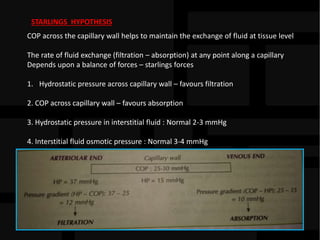
STARLINGS HYPOTHESIS
COP across the capillary wall helps to maintain the exchange of fluid at tissue level
The rate of fluid exchange (filtration – absorption) at any point along a capillary
Depends upon a balance of forces – starlings forces
1. Hydrostatic pressure across capillary wall – favours filtration
2. COP across capillary wall – favours absorption
3. Hydrostatic pressure in interstitial fluid : Normal 2-3 mmHg
4. Interstitial fluid osmotic pressure : Normal 3-4 mmHg
• Provides stabilty to blood due to presence of globulin & fibrinogen
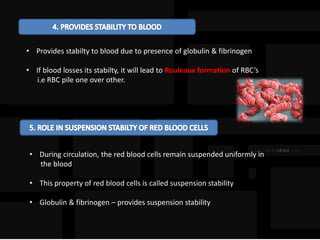
• If blood losses its stabilty, it will lead to Rouleaux formation of RBC’s
i.e RBC pile one over other.
• During circulation, the red blood cells remain suspended uniformly in
the blood
• This property of red blood cells is called suspension stability
• Globulin & fibrinogen – provides suspension stability
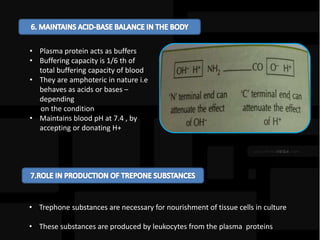
• Plasma protein acts as buffers
• Buffering capacity is 1/6 th of
total buffering capacity of blood
• They are amphoteric in nature i.e
behaves as acids or bases –
depending
on the condition
• Maintains blood pH at 7.4 , by
accepting or donating H+
• Trephone substances are necessary for nourishment of tissue cells in culture
• These substances are produced by leukocytes from the plasma proteins
Gamma globulin produce antibodies which provide immunity to the body
• Plasma proteins are essential for the transport of various substances in the blood
• Albumin, alpha globulin & beta globulin are responsible for the transport of the
hormones, enzymes, etc
• Plasma protein combine loosely with many agents , eg.
- hormones
- drugs
- metals
• During fasting , inadequate food intake or inadequate protein intake,the plasma
proteins are utilized by the body tissues as the last source of energy
• The plasma proteins are split into amino acids by the tissue macrophages
• The amino acids are taken back by blood &distributed throughout the body to
form cellular protein molecules
• Because of this,the plasma proteins are called – RESERVE PROTEINS
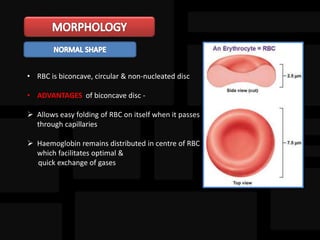
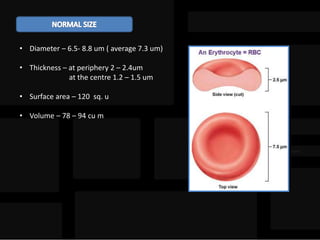
• RBC is biconcave, circular & non-nucleated disc
• ADVANTAGES of biconcave disc -
 Allows easy folding of RBC on itself when it passes
through capillaries
 Haemoglobin remains distributed in centre of RBC
which facilitates optimal &
quick exchange of gases
• RBC is non –nucleated formed element in blood
• Absence of nucleus – DNA is also absent
• Other organells – mitochondria & golgi apparatus are also absent
• Absence of mitochondia – energy is produced from glycolytic process
• Red cells doesnot have insulin receptors – glucose uptake by RBC is not controlled
by insulin
• RBC has special type of cytoskeleton made up of – actin & spectrin
• Both the proteins are anchorded to transmembrane proteins by means of another
protein called ankyrin
• 62.5 % water
• 35 % haemoglobin
• 2.5 %
a. Sugar – glucose
b. Lipids – cephalin, cholestrol & lacithin
c. Protein – Glutathiones, albumin like insoluble protein, acts as reducing agent,
prevents damage of haemoglobin
d. Enzymes of glycolytic system; carbonic anhydrase & catalase
e. vitamin derivatives
f. Ions – Na+, K+, Ca 2+ , Phosphates & Sulphates
• Diameter – 6.5- 8.8 um ( average 7.3 um)
• Thickness – at periphery 2 – 2.4um
at the centre 1.2 – 1.5 um
• Surface area – 120 sq. u
• Volume – 78 – 94 cu m
• At birth – 6-7millions/uL
• Adults – Male : 5-6millions/uL
Female : 4.5 – 5.5millions/ul
• 120 days
• Site of distruction - Tissue macrophage system
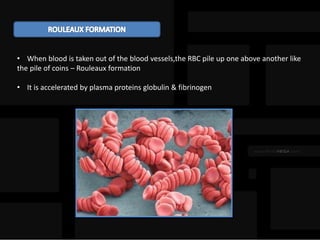
• When blood is taken out of the blood vessels,the RBC pile up one above another like
the pile of coins – Rouleaux formation
• It is accelerated by plasma proteins globulin & fibrinogen
• Hb in RBC combines with oxygen to form oxyhaemoglobin
• About 97% of oxygen is transported in blood in the form of oxyhaemoglobin
• Hb combines with carbon dioxide & form carbhameoglobin
• About 30% of carbon dioxide is transported in this form
• RBC contains a large amount of the carbonic anhydrase. This enzyme is necessary
for the formation of bicarbonate from water & carbon dioxide
• Thus, it helps to transport carbon dioxide in the form of bicarbonate from tissues
to lungs. About 63% of carbon dioxide is transported in this form
• Haemoglobin functions as a good buffer
• Regulates H+ ion concentration & maintainence acid base balance
• RBC carry the blood group antigen like A antigen ,B antigen & Rh factor
• This helps in determination of blood group & enables to prevent reactions
due to incompatible blood transfusion
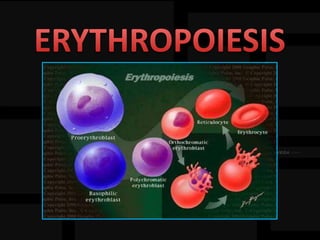
• Erythropoiesis - process of the origin, development & maturation of erythrocytes
• Haemopoiesis – process of origin, development & maturation of all the blood cells
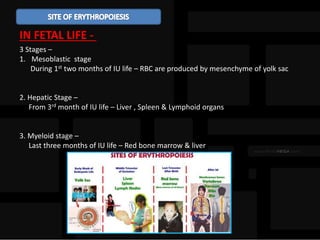
IN FETAL LIFE -
3 Stages –
1. Mesoblastic stage
During 1st two months of IU life – RBC are produced by mesenchyme of yolk sac
2. Hepatic Stage –
From 3rd month of IU life – Liver , Spleen & Lymphoid organs
3. Myeloid stage –
Last three months of IU life – Red bone marrow & liver
IN NEWBORN BABIES, CHILDREN & ADULTS -
• From Red bone marrow
• Upto 20 years of age – Erythropoiesis occurs in :
1. All bones with red bone marrow
2. Liver
3. Spleen
• After 20 years of age – Erythropoiesis occurs in :
1. Ends of long bones like humerous & femur
2. Skull
3. Vertebrae
4. Ribs
5. Sternum
6. Pelvis
• After 20 years – shaft of long bone becomes yellow bone marrow – due to fat
deposition & looses erythropoietic function
• If marrow gets destroyed – Liver & Spleen becomes site of blood formation
 STEM CELLS -
• Stem cells – primary cells capable of self renewal differentiating into specialized cells
• Hemopoietic stem cells – primitive cells in bone marrow which gives rise to blood cells
• Haemopoietic stem cells – in bone marrow k/a Uncommited pluripotent
haemopoietic stem cells (PHSC)
• PHBC – in early stages, not designes to form particular types of blood cells – hence
called uncommited
• PHBC , when designed to form a paticular type of blood cells- uncommited becomes
commited
• Commited PHBC – cell which is restricted to give rise to one group of blood cells
• Commited PHBC – two types :
 Lymphoid stem cells (LSC) – give rise to lymphocytes & Natural killer (NK) cells
 Colony forming Blastocytes – give rise to myeloid cells ; when grown in culture, they
form colonies
• Different units of colony forming cells –
1. Colony forming Units – Erythrocytes (CFU-E) : develop into erythrocytes
2. Colony Forming Units – Granulocytes/ Monocytes (CFU – GM) : Give rise to
Granulocytes ( neutrophils, basophils & eosinophils) & monocytes
3. Colony Forming Unit – Megakaryocytes (CFU-M) : give rise to Platelets
 CHANGES DURING ERYTHROPOIESIS -
• Cells of CFU-E pass through different stages & finally becomes – Matured RBCs
• Following changes are noticed during these stages –
1. Reduction in size of cell
2. Disappearence of nucleoli & nucleus
3. Appearance of Haemoglobin
4. Change in staining properties of cytoplasm
1. HAEMOCYTOBLAST (STEM CELLS) -
• Cell size – 19-23 um
• Nucleus – very big – occupies almost whole of the cell with open chromatin
, containing 4 – 5 nucleoli & deep basophilic
• Cytoplasm - Rim all around the nucleus; deep basophilic
• Haemoglobin – absent
• Mitosis - present
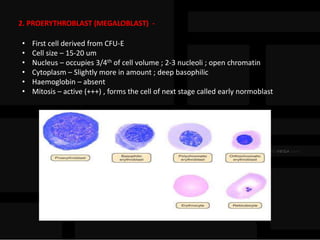
2. PROERYTHROBLAST (MEGALOBLAST) -
• First cell derived from CFU-E
• Cell size – 15-20 um
• Nucleus – occupies 3/4th of cell volume ; 2-3 nucleoli ; open chromatin
• Cytoplasm – Slightly more in amount ; deep basophilic
• Haemoglobin – absent
• Mitosis – active (+++) , forms the cell of next stage called early normoblast
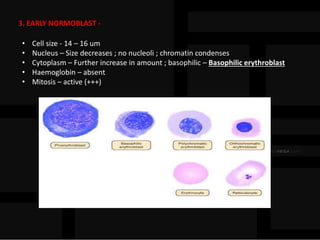
3. EARLY NORMOBLAST -
• Cell size - 14 – 16 um
• Nucleus – Size decreases ; no nucleoli ; chromatin condenses
• Cytoplasm – Further increase in amount ; basophilic – Basophilic erythroblast
• Haemoglobin – absent
• Mitosis – active (+++)
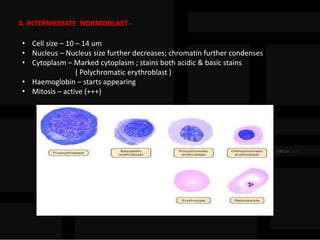
4. INTERMEDIATE NORMOBLAST -
• Cell size – 10 – 14 um
• Nucleus – Nucleus size further decreases; chromatin further condenses
• Cytoplasm – Marked cytoplasm ; stains both acidic & basic stains
( Polychromatic erythroblast )
• Haemoglobin – starts appearing
• Mitosis – active (+++)
5. LATE NORMOBLAST -
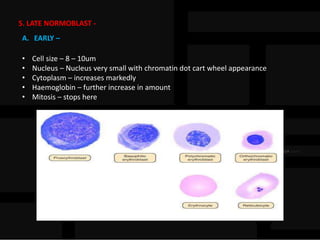
A. EARLY –
• Cell size – 8 – 10um
• Nucleus – Nucleus very small with chromatin dot cart wheel appearance
• Cytoplasm – increases markedly
• Haemoglobin – further increase in amount
• Mitosis – stops here
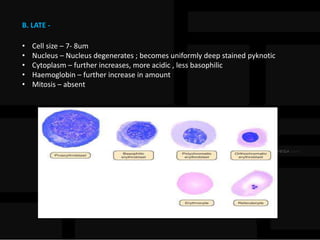
B. LATE -
• Cell size – 7- 8um
• Nucleus – Nucleus degenerates ; becomes uniformly deep stained pyknotic
• Cytoplasm – further increases, more acidic , less basophilic
• Haemoglobin – further increase in amount
• Mitosis – absent
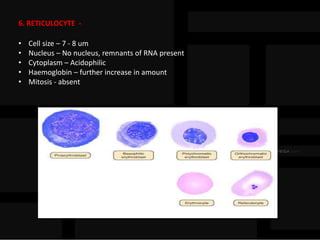
6. RETICULOCYTE -
• Cell size – 7 - 8 um
• Nucleus – No nucleus, remnants of RNA present
• Cytoplasm – Acidophilic
• Haemoglobin – further increase in amount
• Mitosis - absent
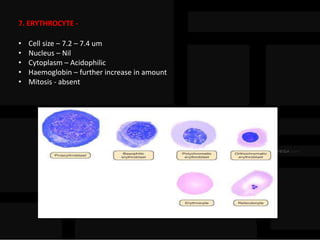
7. ERYTHROCYTE -
• Cell size – 7.2 – 7.4 um
• Nucleus – Nil
• Cytoplasm – Acidophilic
• Haemoglobin – further increase in amount
• Mitosis - absent
1. Erythropoietin
2. Thyroxine
3. Haemopoietic growth factor
4. Vitamins
1.Erythropoietin
• Also called haemopoietin or Erythrocyte stimulating factor
• SOURCE OF SECRETION –
Major quantity – peritubular capillaries of kidney
Also secreted by liver & brain
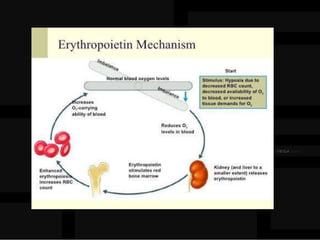
• STIMULANT FOR SECRETION – hypoxia
• ACTIONS –
Causes formation & release of new RBCs into circulation
After secretion – takes 4 – 5days to show its action
• Erythropoietin promotes following processes –
 Production of pro-erythroblasts from CFU-E of the bone marrow
 Development of pro-erythroblasts into matured RBCs through several stages –
early normoblast , intermediate normoblast, late normoblast & reticulocyte
 Release of matured erythrocytes into blood
2. THYROXINE –
• Being a general metabolic hormone – THYROXINE accelerates the process of
Erythropoiesis at many levels
• Polycythemia is common in hyperthyroidism
3. HAEMOPOIETIC GROWTH FACTOR -
• Interleukins & stem cell factor (steel factor)
• These factors induce the proliferation of PHBCs
• Interleukins (IL) - glycoproteins which belong to cytokines family
• Interleukins involved in erythropoiesis are –
A. IL -3 – secreted by T cells
B. IL – 6 secreted by T cells , endothelial cells & macrophages
C. IL – 11 secreted by osteoblast
4. VITAMINS –
Vitamins necessary for erythropoiesis are –
• Vitamin B – deficiency causes Anemia & Pellagra
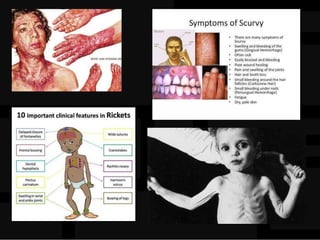
• Vitamin C – Deficiency causes Anemia & Scurvy
• Vitamin D – Deficiency causes Anemia & rickets
• Vitamin E – Deficiency causes Anemia & Malnutrition
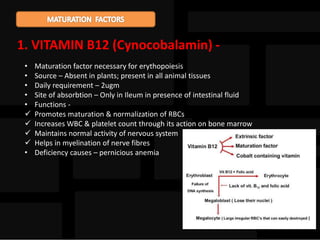
1. VITAMIN B12 (Cynocobalamin) -
• Maturation factor necessary for erythopoiesis
• Source – Absent in plants; present in all animal tissues
• Daily requirement – 2ugm
• Site of absorbtion – Only in Ileum in presence of intestinal fluid
• Functions -
 Promotes maturation & normalization of RBCs
 Increases WBC & platelet count through its action on bone marrow
 Maintains normal activity of nervous system
 Helps in myelination of nerve fibres
• Deficiency causes – pernicious anemia
2. INTRINSIC FACTOR OF CASTLE -
• Produced in Gastric mucosa in parietal cells of gastric glands
• Essential for absorption of Vitamin B12 from intestine
• In absence of intrinsic factor – Vitamin B12 is not absorbed from intestine
• Leads to Pernicious Anemia
• Deficiency occurs in –
- Severe gastritis
- Ulcer
- Gastrectomy
• Intrinsic + Extrinsic factor – called as Hematinic factor (maturation factor)
3. FOLIC ACID -
• Essential for maturation
• Required for synthesis of DNA
• In absence of Folic acid – DNA synthesis decreases – causing failure of maturation
• Leads to megaloblastic anemia
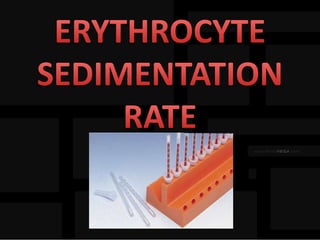
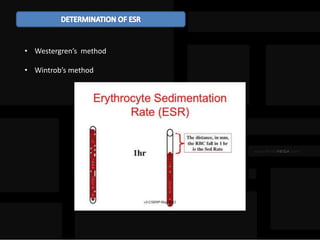
• Rate at which erythrocytes settle down is known as ESR
• Suspension stabilty of RBC – RBCs remains suspended uniformly in circulation
• Blood mixed with anticoagulant
Allowed to stand on a vertical tube
RBCs settle down due to gravity with a supernatent layer of clear plasma
• SYNONYMS –
Sedimentation rate , Sed rate , Biernacki reaction
• Westergren’s method
• Wintrob’s method
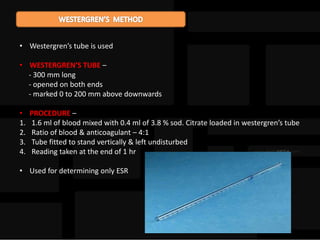
• Westergren’s tube is used
• WESTERGREN’S TUBE –
- 300 mm long
- opened on both ends
- marked 0 to 200 mm above downwards
• PROCEDURE –
1. 1.6 ml of blood mixed with 0.4 ml of 3.8 % sod. Citrate loaded in westergren’s tube
2. Ratio of blood & anticoagulant – 4:1
3. Tube fitted to stand vertically & left undisturbed
4. Reading taken at the end of 1 hr
• Used for determining only ESR
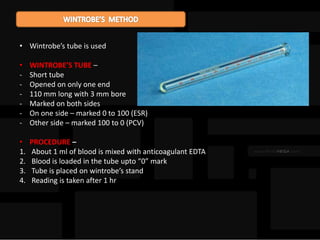
• Wintrobe’s tube is used
• WINTROBE’S TUBE –
- Short tube
- Opened on only one end
- 110 mm long with 3 mm bore
- Marked on both sides
- On one side – marked 0 to 100 (ESR)
- Other side – marked 100 to 0 (PCV)
• PROCEDURE –
1. About 1 ml of blood is mixed with anticoagulant EDTA
2. Blood is loaded in the tube upto “0” mark
3. Tube is placed on wintrobe’s stand
4. Reading is taken after 1 hr
• BY WESTERGREN’S METHOD
o Males – 3 to 7 mm in 1 hr
o Females – 5 to 9 mm in 1 hr
o Infants – 0 to 2 mm in 1 hr
• BY WINTROBE’S METHOD
o Males – 0 to 9 mm in 1 hr
o Females – 0 to 15 mm in 1 hr
o Infants – 0 to 5 mm in 1 hr
• AGE – less in childrens & infants because of more number of RBCs
• SEX – more in females than in males due to less number of RBCs
• MENSTRUATION - increases due to loss of blood & RBCs
• PREGNANCY - from 3rd month to parturition , ESR increases due to haemodilution
ESR increases in –
• Tuberculosis
• All type of anemia except Sickle cell anemia
• Malignant tumours
• Rheumatoid arthritis
• Rheumatic fever
• Liver diseases
ESR decreases in –
• Allergic conditions
• Sickle cell diseases
• Peptone shock
• Polycythemia
• Severe leucocytosis
• Helps in diagnosis as well as prognosis
• Nonspecific – it cannot indicate the exact location or cause of disease
• Helps to confirm the diagnosis
• Helpful in assessing the progress of patients treated for certain chronic inflammatory
disorders such as
1. Pulmonary tuberculosis
2. Rheumatoid arthritis
3. Polymyalgia rheumatica
4. Temporal arthritis
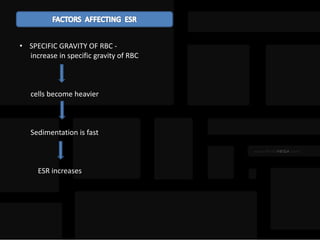
• SPECIFIC GRAVITY OF RBC -
increase in specific gravity of RBC
cells become heavier
Sedimentation is fast
ESR increases
• ROULEAUX FORMATION – increases ESR
• INCREASE IN SIZE OF RBC – size of RBC increases, ESR also increases
• VISCOUSITY OF BLOOD – viscousity offers more resistance for settling of RBC
viscousity increases –ESR decreases
• RBC COUNT –
RBC count increases
Viscousity increases
ESR decreases

BLOOD

  • 1.
    By – Dr.SWATI SAHU (MDS FELLOW) DEPT OF ORAL & MAXILLOFACIAL SURGERY NEW HORIZON DENTAL COLLAGE , BILASPUR
  • 2.
    • Composition &functions of blood. • Specific gravity, Packed cell volume, factors affecting & methods of determination. • Plasma proteins - Types, concentration, functions & variations. • Erythrocyte - Morphology, functions & variations. Erythropoiesis & factors affecting erythropoiesis. • ESR- Methods of estimation, factors affecting, variations & significance. • Haemoglobin - Normal concentration, method of determination & variation in concentration. • Blood Indices - MCV, MCH, MCHC - definition, normal values, variation. • Anaemia - Definition, classification, life span of RBC’s destruction of RBC’s , formation & fate of bile Pigments • Jaundice - types
  • 3.
    • Leucocytes :Classification, number, percentage, distribution morphology, properties, functions & variation. Role of lymphocytes in immunity , leucopoiesis life span & fate of leucocytes. • Thromobocytes - Morphology, , number, variations, function & thrombopoiesis. • Haemostatsis - Role of vasoconstriction, platelet plug formation in haemostasis, coagulation factors, intrinsic & extrinsic pathways of coagulation, clot retraction. • Tests of haemostatic function, platelet count, clotting time, bleeding time, prothrombin time – normal values, method & variations. • Anticoagulants - mechanism of action. Bleeding disorders.
  • 4.
    • Blood groups:ABO & Rh system, method of determination, importance,indications & dangers of blood transfusion, blood substitutes. • Blood volume: Normal values, variations. • Body fluids : distribution of total body water, intracellular & extracellular compartments, major anions & cations in intra and extra cellular fluid. • Tissue fluids & lymph : Formation of tissue fluid, composition, circulation & functions of lymph. • Oedema - causes • Functions of reticulo endothelial system.
  • 5.
    • Blood isa connective tissue in fluid form • FLUID OF LIFE – carries oxygen from lungs to all parts of body & carbon Dioxide from all parts of body to lungs • FLUID OF GROWTH – Carries nutritive substances from the digestive system & hormones from endocrine gland to all the tissues • FLUID OF HEALTH – protects the body against the diseases & gets rid of the waste products & unwanted substances by transporting them to the excretory organs like kidney
  • 6.
    • Color –red ; Arterial blood – scarlet red (contains more oxygen) Venous blood – purple red ( contains more carbon dioxide) • Total Blood Volume – 5-6 ltrs • Specific gravity – 1050 - 1060 • Viscosity - 4-5 times that of water • pH – 7.4 +/- 0.05; alkaline
  • 7.
  • 11.
    Normal count –4.5 – 5 millions / uL
  • 12.
    Normal count –4000 – 11000 /uL
  • 13.
    Normal count –1.5 – 4 lakhs / uL
  • 16.
    Components of Plasma •Blood plasma Consists of: • Water 90% • Plasma Proteins 6-8 % • Electrolytes (Na+ & Cl-) 1% • Other components: • Nutrients (e.g. Glucose and amino acids) • Hormones (e.g. Cortisol, thyroxine) • Wastes (e.g. Urea) • Blood gases (e.g. CO2, O2)
  • 17.
    Functions of PlasmaProteins 1. Maintaining colloid osmotic balance (albumins) 2. Buffering pH changes 3. Transport of materials through blood (such as water insoluble hormones) 4. Antibodies (e.g. gamma globulins, immunoglobulins) 5. Clotting factors (e.g. fibrinogen)
  • 18.
    Transports • oxygen fromlungs to the tissues • Carbon dioxide from tissues to the lungs
  • 19.
    Blood conveys absorbedfood materials , glucose , amino acids, fatty acids, vitamins, electrolytes & trace metals from the alimentary canal to the tissues for utilization & storage
  • 20.
    Transports the metabolicwastes eg. Urea, uric acid, creatinine etc. to Kidney, skin & intestine for their removal
  • 21.
    • Blood formsinternal environment of the cell i.e, MILLIEU INTERIOR in terms of Volume, composition, concentration, pH & temperature, which is regulated to normal physiological limits. • This mechanism is called HOMEOSTASIS (W.B. Cannon) • Buffering power of Hb helps to maintain constancy of blood pH
  • 22.
    Because of highspecific heat of blood, it is resposible for mainaining the Thermoregulatory mechanism in the body
  • 23.
    • Hormones releasedby the Endocrine gland are directly released into the blood • Blood transports these hormones to the target organs • Also transports enzymes
  • 24.
    • Blood actsas store house of water & substances like proteins, glucose, sodium & Potassium • These substances are taken from blood during starvation, fluid loss, electrolyte loss, etc
  • 25.
    • WBC areresponsible for defensive functions • Neutrophils & monocytes - engulf the bacteria by phagocytosis • Lymphocytes - development of immunity • Eosinophils – detoxification , disintegration & removal of foreign proteins
  • 26.
    • Water contentin blood is freely interchangable with interstitial fluid
  • 28.
    • The plasmaproteins are – 1. Albumin 2. Globulin 3. Fibrinogen • Serum contains only Albumin & Globulin ; hence called as SERUM ALBUMIN & SERUM GLOBULIN • Fibrinogen is absent in serum because it is converted into fibrin during blood clotting
  • 29.
    • Total PlasmaProtein concentration – 6.4 – 8.3 gm/dl of blood • Albumin – 3-5gm/dl (avg. 4.8 gm/dl) • Globulin – 2-3 gm/dl (2.3 gm/dl) • Fibrinogen – 200 - 450 mg/dl • The ratio between plasma level of albumin & globulin is called A/G ratio • Normal A/G ratio – 2:1
  • 30.
    1. TOTAL PROTEIN(Hyperproteinemia) • Dehydration • Haemolysis • Acute infections like Acute hepatitis & Acute nephritis • Respiratory distress syndrome • Excess of glucocorticoid • Leukemia • Rhematoid fever • Alcoholism 2. ALBUMIN • Dehydration • Excess of glucocorticoid • Congestive cardiac failure
  • 31.
    3. GLOBULIN • Cirrhosisof liver • Chronic infections • Nephrosis • Rheumatoid athritis 4. FIBRINOGEN • Acute infections • Rheumatoid arthritis • Glomerulonephritis • Myocardial infection • Stroke • Trauma 5. A/G RATIO • Hypothyroidism • Excess of glucocorticoid • Hypogammaglobulinemia • Intake of high carbohydrate or protein diet
  • 32.
    1. TOTAL PROTEIN(Hypoproteinemia) • Diarrhea • Haemorrhage • Burns • Pregnancy • Malnutrition • Prolonged Starvation • Cirrhosis of liver • Chronic infections like Chronic hepetitis 2. ALBUMIN • Malnutrition • Cirrhosis of liver • Burns • Hypothyroidism • Nephrosis • Excessive intake of water
  • 33.
    3. GLOBULIN • Emphysema •Acute haemolytic anemia • Glomerulonephritis • Hypogammaglobulinemia 4. FIBRINOGEN • Liver dysfunction • Use of anabolic steroids • Use of phenobarbital 5. A/G RATIO • Liver dysfunction • Nephrosis
  • 34.
    Due to presenceof fibrinogen, prothrombin & other coagulation factors which are protein in nature  The viscousity of protein depends upon – • Shape of the protein molecules • Size of the protein molecules  Less symmetrical the molecule (i.e. fibrinogen) – greater is its viscousity  80% of total plasma protein concentration is due to albumin & fibrinogen is present in traces, blood viscousity is maintained at low levels.  Normal viscousity of blood is 4-5 times that of water
  • 35.
    • At thecapillary level, most of the substances are exchanged b/w the blood & tissues • Plasma proteins have large size – cannot pass through capillary membrane easily & remain in the blood. • In the blood, these proteins exert the colloidal osmotic pressure • Osmotic pressure exerted by plasma proteins is about 25 mmHg • Albumin exert maximum pressure – concentration is more than other plasma proteins • Albumin > Globulin > Fibrinogen
  • 36.
    STARLINGS HYPOTHESIS COP acrossthe capillary wall helps to maintain the exchange of fluid at tissue level The rate of fluid exchange (filtration – absorption) at any point along a capillary Depends upon a balance of forces – starlings forces 1. Hydrostatic pressure across capillary wall – favours filtration 2. COP across capillary wall – favours absorption 3. Hydrostatic pressure in interstitial fluid : Normal 2-3 mmHg 4. Interstitial fluid osmotic pressure : Normal 3-4 mmHg
  • 37.
    • Provides stabiltyto blood due to presence of globulin & fibrinogen • If blood losses its stabilty, it will lead to Rouleaux formation of RBC’s i.e RBC pile one over other. • During circulation, the red blood cells remain suspended uniformly in the blood • This property of red blood cells is called suspension stability • Globulin & fibrinogen – provides suspension stability
  • 38.
    • Plasma proteinacts as buffers • Buffering capacity is 1/6 th of total buffering capacity of blood • They are amphoteric in nature i.e behaves as acids or bases – depending on the condition • Maintains blood pH at 7.4 , by accepting or donating H+ • Trephone substances are necessary for nourishment of tissue cells in culture • These substances are produced by leukocytes from the plasma proteins
  • 39.
    Gamma globulin produceantibodies which provide immunity to the body • Plasma proteins are essential for the transport of various substances in the blood • Albumin, alpha globulin & beta globulin are responsible for the transport of the hormones, enzymes, etc • Plasma protein combine loosely with many agents , eg. - hormones - drugs - metals
  • 40.
    • During fasting, inadequate food intake or inadequate protein intake,the plasma proteins are utilized by the body tissues as the last source of energy • The plasma proteins are split into amino acids by the tissue macrophages • The amino acids are taken back by blood &distributed throughout the body to form cellular protein molecules • Because of this,the plasma proteins are called – RESERVE PROTEINS
  • 42.
    • RBC isbiconcave, circular & non-nucleated disc • ADVANTAGES of biconcave disc -  Allows easy folding of RBC on itself when it passes through capillaries  Haemoglobin remains distributed in centre of RBC which facilitates optimal & quick exchange of gases
  • 43.
    • RBC isnon –nucleated formed element in blood • Absence of nucleus – DNA is also absent • Other organells – mitochondria & golgi apparatus are also absent • Absence of mitochondia – energy is produced from glycolytic process • Red cells doesnot have insulin receptors – glucose uptake by RBC is not controlled by insulin • RBC has special type of cytoskeleton made up of – actin & spectrin • Both the proteins are anchorded to transmembrane proteins by means of another protein called ankyrin
  • 44.
    • 62.5 %water • 35 % haemoglobin • 2.5 % a. Sugar – glucose b. Lipids – cephalin, cholestrol & lacithin c. Protein – Glutathiones, albumin like insoluble protein, acts as reducing agent, prevents damage of haemoglobin d. Enzymes of glycolytic system; carbonic anhydrase & catalase e. vitamin derivatives f. Ions – Na+, K+, Ca 2+ , Phosphates & Sulphates
  • 45.
    • Diameter –6.5- 8.8 um ( average 7.3 um) • Thickness – at periphery 2 – 2.4um at the centre 1.2 – 1.5 um • Surface area – 120 sq. u • Volume – 78 – 94 cu m
  • 46.
    • At birth– 6-7millions/uL • Adults – Male : 5-6millions/uL Female : 4.5 – 5.5millions/ul • 120 days • Site of distruction - Tissue macrophage system
  • 47.
    • When bloodis taken out of the blood vessels,the RBC pile up one above another like the pile of coins – Rouleaux formation • It is accelerated by plasma proteins globulin & fibrinogen
  • 48.
    • Hb inRBC combines with oxygen to form oxyhaemoglobin • About 97% of oxygen is transported in blood in the form of oxyhaemoglobin • Hb combines with carbon dioxide & form carbhameoglobin • About 30% of carbon dioxide is transported in this form • RBC contains a large amount of the carbonic anhydrase. This enzyme is necessary for the formation of bicarbonate from water & carbon dioxide • Thus, it helps to transport carbon dioxide in the form of bicarbonate from tissues to lungs. About 63% of carbon dioxide is transported in this form
  • 49.
    • Haemoglobin functionsas a good buffer • Regulates H+ ion concentration & maintainence acid base balance • RBC carry the blood group antigen like A antigen ,B antigen & Rh factor • This helps in determination of blood group & enables to prevent reactions due to incompatible blood transfusion
  • 51.
    • Erythropoiesis -process of the origin, development & maturation of erythrocytes • Haemopoiesis – process of origin, development & maturation of all the blood cells
  • 52.
    IN FETAL LIFE- 3 Stages – 1. Mesoblastic stage During 1st two months of IU life – RBC are produced by mesenchyme of yolk sac 2. Hepatic Stage – From 3rd month of IU life – Liver , Spleen & Lymphoid organs 3. Myeloid stage – Last three months of IU life – Red bone marrow & liver
  • 53.
    IN NEWBORN BABIES,CHILDREN & ADULTS - • From Red bone marrow • Upto 20 years of age – Erythropoiesis occurs in : 1. All bones with red bone marrow 2. Liver 3. Spleen • After 20 years of age – Erythropoiesis occurs in : 1. Ends of long bones like humerous & femur 2. Skull 3. Vertebrae 4. Ribs 5. Sternum 6. Pelvis • After 20 years – shaft of long bone becomes yellow bone marrow – due to fat deposition & looses erythropoietic function • If marrow gets destroyed – Liver & Spleen becomes site of blood formation
  • 54.
     STEM CELLS- • Stem cells – primary cells capable of self renewal differentiating into specialized cells • Hemopoietic stem cells – primitive cells in bone marrow which gives rise to blood cells • Haemopoietic stem cells – in bone marrow k/a Uncommited pluripotent haemopoietic stem cells (PHSC) • PHBC – in early stages, not designes to form particular types of blood cells – hence called uncommited • PHBC , when designed to form a paticular type of blood cells- uncommited becomes commited • Commited PHBC – cell which is restricted to give rise to one group of blood cells
  • 55.
    • Commited PHBC– two types :  Lymphoid stem cells (LSC) – give rise to lymphocytes & Natural killer (NK) cells  Colony forming Blastocytes – give rise to myeloid cells ; when grown in culture, they form colonies • Different units of colony forming cells – 1. Colony forming Units – Erythrocytes (CFU-E) : develop into erythrocytes 2. Colony Forming Units – Granulocytes/ Monocytes (CFU – GM) : Give rise to Granulocytes ( neutrophils, basophils & eosinophils) & monocytes 3. Colony Forming Unit – Megakaryocytes (CFU-M) : give rise to Platelets
  • 56.
     CHANGES DURINGERYTHROPOIESIS - • Cells of CFU-E pass through different stages & finally becomes – Matured RBCs • Following changes are noticed during these stages – 1. Reduction in size of cell 2. Disappearence of nucleoli & nucleus 3. Appearance of Haemoglobin 4. Change in staining properties of cytoplasm
  • 57.
    1. HAEMOCYTOBLAST (STEMCELLS) - • Cell size – 19-23 um • Nucleus – very big – occupies almost whole of the cell with open chromatin , containing 4 – 5 nucleoli & deep basophilic • Cytoplasm - Rim all around the nucleus; deep basophilic • Haemoglobin – absent • Mitosis - present
  • 58.
    2. PROERYTHROBLAST (MEGALOBLAST)- • First cell derived from CFU-E • Cell size – 15-20 um • Nucleus – occupies 3/4th of cell volume ; 2-3 nucleoli ; open chromatin • Cytoplasm – Slightly more in amount ; deep basophilic • Haemoglobin – absent • Mitosis – active (+++) , forms the cell of next stage called early normoblast
  • 59.
    3. EARLY NORMOBLAST- • Cell size - 14 – 16 um • Nucleus – Size decreases ; no nucleoli ; chromatin condenses • Cytoplasm – Further increase in amount ; basophilic – Basophilic erythroblast • Haemoglobin – absent • Mitosis – active (+++)
  • 60.
    4. INTERMEDIATE NORMOBLAST- • Cell size – 10 – 14 um • Nucleus – Nucleus size further decreases; chromatin further condenses • Cytoplasm – Marked cytoplasm ; stains both acidic & basic stains ( Polychromatic erythroblast ) • Haemoglobin – starts appearing • Mitosis – active (+++)
  • 61.
    5. LATE NORMOBLAST- A. EARLY – • Cell size – 8 – 10um • Nucleus – Nucleus very small with chromatin dot cart wheel appearance • Cytoplasm – increases markedly • Haemoglobin – further increase in amount • Mitosis – stops here
  • 62.
    B. LATE - •Cell size – 7- 8um • Nucleus – Nucleus degenerates ; becomes uniformly deep stained pyknotic • Cytoplasm – further increases, more acidic , less basophilic • Haemoglobin – further increase in amount • Mitosis – absent
  • 63.
    6. RETICULOCYTE - •Cell size – 7 - 8 um • Nucleus – No nucleus, remnants of RNA present • Cytoplasm – Acidophilic • Haemoglobin – further increase in amount • Mitosis - absent
  • 64.
    7. ERYTHROCYTE - •Cell size – 7.2 – 7.4 um • Nucleus – Nil • Cytoplasm – Acidophilic • Haemoglobin – further increase in amount • Mitosis - absent
  • 65.
    1. Erythropoietin 2. Thyroxine 3.Haemopoietic growth factor 4. Vitamins
  • 66.
    1.Erythropoietin • Also calledhaemopoietin or Erythrocyte stimulating factor • SOURCE OF SECRETION – Major quantity – peritubular capillaries of kidney Also secreted by liver & brain • STIMULANT FOR SECRETION – hypoxia • ACTIONS – Causes formation & release of new RBCs into circulation After secretion – takes 4 – 5days to show its action • Erythropoietin promotes following processes –  Production of pro-erythroblasts from CFU-E of the bone marrow  Development of pro-erythroblasts into matured RBCs through several stages – early normoblast , intermediate normoblast, late normoblast & reticulocyte  Release of matured erythrocytes into blood
  • 68.
    2. THYROXINE – •Being a general metabolic hormone – THYROXINE accelerates the process of Erythropoiesis at many levels • Polycythemia is common in hyperthyroidism
  • 69.
    3. HAEMOPOIETIC GROWTHFACTOR - • Interleukins & stem cell factor (steel factor) • These factors induce the proliferation of PHBCs • Interleukins (IL) - glycoproteins which belong to cytokines family • Interleukins involved in erythropoiesis are – A. IL -3 – secreted by T cells B. IL – 6 secreted by T cells , endothelial cells & macrophages C. IL – 11 secreted by osteoblast
  • 70.
    4. VITAMINS – Vitaminsnecessary for erythropoiesis are – • Vitamin B – deficiency causes Anemia & Pellagra • Vitamin C – Deficiency causes Anemia & Scurvy • Vitamin D – Deficiency causes Anemia & rickets • Vitamin E – Deficiency causes Anemia & Malnutrition
  • 72.
    1. VITAMIN B12(Cynocobalamin) - • Maturation factor necessary for erythopoiesis • Source – Absent in plants; present in all animal tissues • Daily requirement – 2ugm • Site of absorbtion – Only in Ileum in presence of intestinal fluid • Functions -  Promotes maturation & normalization of RBCs  Increases WBC & platelet count through its action on bone marrow  Maintains normal activity of nervous system  Helps in myelination of nerve fibres • Deficiency causes – pernicious anemia
  • 73.
    2. INTRINSIC FACTOROF CASTLE - • Produced in Gastric mucosa in parietal cells of gastric glands • Essential for absorption of Vitamin B12 from intestine • In absence of intrinsic factor – Vitamin B12 is not absorbed from intestine • Leads to Pernicious Anemia • Deficiency occurs in – - Severe gastritis - Ulcer - Gastrectomy • Intrinsic + Extrinsic factor – called as Hematinic factor (maturation factor)
  • 74.
    3. FOLIC ACID- • Essential for maturation • Required for synthesis of DNA • In absence of Folic acid – DNA synthesis decreases – causing failure of maturation • Leads to megaloblastic anemia
  • 76.
    • Rate atwhich erythrocytes settle down is known as ESR • Suspension stabilty of RBC – RBCs remains suspended uniformly in circulation • Blood mixed with anticoagulant Allowed to stand on a vertical tube RBCs settle down due to gravity with a supernatent layer of clear plasma • SYNONYMS – Sedimentation rate , Sed rate , Biernacki reaction
  • 77.
  • 78.
    • Westergren’s tubeis used • WESTERGREN’S TUBE – - 300 mm long - opened on both ends - marked 0 to 200 mm above downwards • PROCEDURE – 1. 1.6 ml of blood mixed with 0.4 ml of 3.8 % sod. Citrate loaded in westergren’s tube 2. Ratio of blood & anticoagulant – 4:1 3. Tube fitted to stand vertically & left undisturbed 4. Reading taken at the end of 1 hr • Used for determining only ESR
  • 79.
    • Wintrobe’s tubeis used • WINTROBE’S TUBE – - Short tube - Opened on only one end - 110 mm long with 3 mm bore - Marked on both sides - On one side – marked 0 to 100 (ESR) - Other side – marked 100 to 0 (PCV) • PROCEDURE – 1. About 1 ml of blood is mixed with anticoagulant EDTA 2. Blood is loaded in the tube upto “0” mark 3. Tube is placed on wintrobe’s stand 4. Reading is taken after 1 hr
  • 80.
    • BY WESTERGREN’SMETHOD o Males – 3 to 7 mm in 1 hr o Females – 5 to 9 mm in 1 hr o Infants – 0 to 2 mm in 1 hr • BY WINTROBE’S METHOD o Males – 0 to 9 mm in 1 hr o Females – 0 to 15 mm in 1 hr o Infants – 0 to 5 mm in 1 hr
  • 81.
    • AGE –less in childrens & infants because of more number of RBCs • SEX – more in females than in males due to less number of RBCs • MENSTRUATION - increases due to loss of blood & RBCs • PREGNANCY - from 3rd month to parturition , ESR increases due to haemodilution
  • 82.
    ESR increases in– • Tuberculosis • All type of anemia except Sickle cell anemia • Malignant tumours • Rheumatoid arthritis • Rheumatic fever • Liver diseases ESR decreases in – • Allergic conditions • Sickle cell diseases • Peptone shock • Polycythemia • Severe leucocytosis
  • 83.
    • Helps indiagnosis as well as prognosis • Nonspecific – it cannot indicate the exact location or cause of disease • Helps to confirm the diagnosis • Helpful in assessing the progress of patients treated for certain chronic inflammatory disorders such as 1. Pulmonary tuberculosis 2. Rheumatoid arthritis 3. Polymyalgia rheumatica 4. Temporal arthritis
  • 84.
    • SPECIFIC GRAVITYOF RBC - increase in specific gravity of RBC cells become heavier Sedimentation is fast ESR increases
  • 85.
    • ROULEAUX FORMATION– increases ESR • INCREASE IN SIZE OF RBC – size of RBC increases, ESR also increases • VISCOUSITY OF BLOOD – viscousity offers more resistance for settling of RBC viscousity increases –ESR decreases • RBC COUNT – RBC count increases Viscousity increases ESR decreases