Anesthesia for
ENT surgeries
Speaker: DR BHAVANI, DR S.KHAN
Moderator: DR ARUNA
Introduction
Anaesthesia for ENT surgery encompasses a vast range
of procedures varying enormously in complexity,
duration,and potential for complications.
• Simple cases, such as myringotomies and tonsillectomies,
• Day care procedures.
• severely distorted airway anatomy, sometimes even causing airway
obstruction, as well as procedures involving tracheal, glottic, or subglottic
surgery that require sharing of the airway in conjunction with the use of special
equipment such as surgical lasers.
• Nasal procedures which require airway protection from blood and secretions,
• Gentle emergence from anesthesia.
• Intraoral ENT procedures, such as tonsillectomies, may employ instruments
intended to keep the mouth open but that may also unintentionally obstruct the
airway.
• Extreme lateral rotation of the head may be required for some ear procedures
ENT
anesthesiologists
may be assigned
to
2 Presentation title 20XX
Preoperative Evaluation for Ear,
Nose, and Throat Surgery
3 Presentation title 20XX
Malignant head and neck
diseases,
History of prolonged tobacco and
alcohol use,
obesity or obstructive sleep apnea
(OSA).
Patients with chronic airway
obstruction may develop
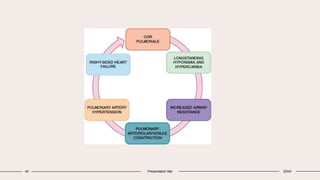
pulmonary hypertension,
sometimes leading to right-sided
heart failure (cor pulmonale).
A history of hoarseness may
signal recurrent laryngeal nerve
injury or worse, whereas the
presence of stridor is always a
cause for immediate concern.
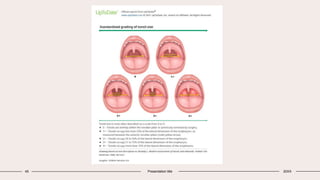
A history of head and neck
radiation for malignancy treatment
frequently makes intubation
difficult because the structures
may become tough and fibrotic
they are predisposed to bleeding
with instrumentation.
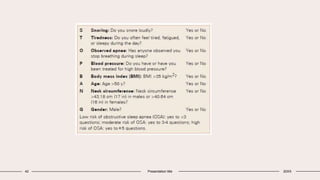
A history of snoring may signal
that the patient has undiagnosed
sleep apnea and is prone to
airway obstruction.
4 Presentation title 20XX
Physical
examination:
Airway
assessment:
1. voice quality respiratory
rate
2. Auscultation for
breathsounds to detect
stridor and wheezing
3. Checking for dysphagia.
4. A history of radiation to the
head and neck could imply
airway fragility.
5. Assessment of visible
anatomic landmarks,
including the Mallampati
scale predicting difficult
intubation.
6. Lingual tonsil hyperplasia
may interfere with
facemask ventilation and
rigid laryngoscopic
intubation despite a
promising examination on
the Mallampati scale.
7. Congenital syndromes
often have associated
difficult airways, which
need extra attention. For
example, patients with
trisomy 21 (Down
syndrome) often have a
large tongue with relative
hypotonia curved
Macintosh blade may
provide a better view for
intubation in such an
instance.
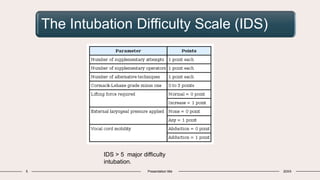
The Intubation Difficulty Scale (IDS)
5 Presentation title 20XX
IDS > 5 major difficulty
intubation.
Anaesthetic management in Otolaryngology
6 Presentation title 20XX
The following general management options exist
(1)general endotracheal anesthesia
(2) general anesthesia using a supraglottic airway (SGA) device (e.g., laryngeal mask airway
[LMA])
(3) general anesthesia using an ENT laryngoscope (to expose the airway) in conjunction with
jet ventilation;
(4) use of intermittent apnea
(5) general anesthesia using the patient’s natural airway, with or without adjuncts such as jaw
positioning devices or nasopharyngeal airways.
(6) local anesthesia in conjunction with intravenous sedation, with the patient breathing
spontaneously.
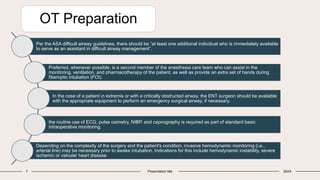
OT Preparation
7 Presentation title 20XX
Per the ASA difficult airway guidelines, there should be “at least one additional individual who is immediately available
to serve as an assistant in difficult airway management”.
Preferred, whenever possible, is a second member of the anesthesia care team who can assist in the
monitoring, ventilation, and pharmacotherapy of the patient, as well as provide an extra set of hands during
fiberoptic intubation (FOI).
In the case of a patient in extremis or with a critically obstructed airway, the ENT surgeon should be available
with the appropriate equipment to perform an emergency surgical airway, if necessary.
the routine use of ECG, pulse oximetry, NIBP, and capnography is required as part of standard basic
intraoperative monitoring.
Depending on the complexity of the surgery and the patient's condition, invasive hemodynamic monitoring (i.e.,
arterial line) may be necessary prior to awake intubation. Indications for this include hemodynamic instability, severe
ischemic or valvular heart disease
8
Presentation title
20XX
Adequate preoxygenation and the use of supplemental O2 throughout airway management (including
sedation, topicalization, intubation, and extubation) is encouraged in all patients undergoing awake
intubation.
In addition to the standard methods of supplemental O2 delivery (nasal cannula or face mask), other
include,
• deliveringO2 through the suction port of the fiberoptic bronchoscope through the atomizer or
nebulizer during topicalization, or
• by elective transtracheal jet ventilation (TTJV)
No matter which technique is selected, all necessary equipment should be prepared ahead of time and be
readily available, when needed.
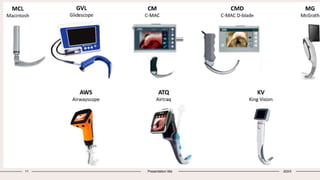
• Direct laryngoscopy,
• video laryngoscopy,
• intubating LMAs,
• flexible fiberoptic bronchoscopy,
• rigid fiberoptic laryngoscopy,
• retrograde intubation,
• lighted stylets,
9 Presentation title 20XX
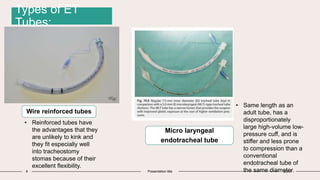
Wire reinforced tubes
• Same length as an
adult tube, has a
disproportionately
large high-volume low-
pressure cuff, and is
stiffer and less prone
to compression than a
conventional
endotracheal tube of
the same diameter.
Micro laryngeal
endotracheal tube
• Reinforced tubes have
the advantages that they
are unlikely to kink and
they fit especially well
into tracheostomy
stomas because of their
excellent flexibility.
Types of ET
Tubes:
10 Presentation title 20XX
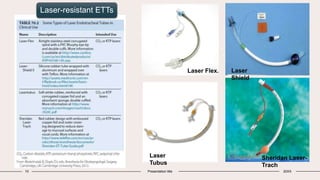
Laser-resistant ETTs
Laser Flex. Laser
Shield
Laser
Tubus
Sheridan Laser-
Trach
11 Presentation title 20XX
12 Presentation title 20XX
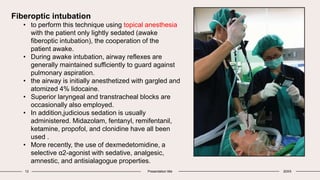
Fiberoptic intubation
• to perform this technique using topical anesthesia
with the patient only lightly sedated (awake
fiberoptic intubation), the cooperation of the
patient awake.
• During awake intubation, airway reflexes are
generally maintained sufficiently to guard against
pulmonary aspiration.
• the airway is initially anesthetized with gargled and
atomized 4% lidocaine.
• Superior laryngeal and transtracheal blocks are
occasionally also employed.
• In addition,judicious sedation is usually
administered. Midazolam, fentanyl, remifentanil,
ketamine, propofol, and clonidine have all been
used .
• More recently, the use of dexmedetomidine, a
selective α2-agonist with sedative, analgesic,
amnestic, and antisialagogue properties.
13 Presentation title 20XX
Premedication
• They should be administered as early as possible for maximal effect (at least 30
minutes in advance), as they do not eliminate existing secretions but rather prevent
new secretion formation.
• The anticholinergics most often used in clinical practice are glycopyrrolate,
scopolamine, and atropine
• Glycopyrrolate (0.1–0.3 mg IV) is the anticholinergic of choice for most clinical
circumstances due to its marked antisialagogue effect and rapid onset of 1 to 2
minutes after IV dosing.
• Scopolamine (0.4 mg IV) is the least vagolytic of the anticholinergics may be the
drug of choice for patients in whom tachycardia is undesirable (e.g., a patient with
advanced coronary artery disease in whom the us of glycopyrrolate would be
relatively contraindicated).
• It has potent CNS effects, with sedative and amnestic properties. In some
patients,this may lead to restlessness, delirium, and difficulty waking after short
procedures.
• Atropine (0.4–0.6 mg IV) produces only a mild antisialagogic effect, but causes
significant tachycardia due to its potent vagolytic effects.
Antisialagogues:
14 Presentation title 20XX
• Nasal mucosal vasoconstrictor should be applied 15 minutes
prior to nasal intubation.
• 4% cocaine ,which has both vasoconstrictive and local
anesthetic effects. It can be applied to the nasal mucosa
using cotton-tipped applicators. The maximum dose is 1.5–
3 mg/kg.
• Mixture of lidocaine 3% and phenylephrine 0.25% can
be made by combining lidocaine 4% and phenylephrine 1%
in a 3:1 ratio . This mixture can be either sprayed
intranasally or applied with cotton tipped applicators.
• Commercially available nasal decongestants containing
either oxymetazoline 0.05% (Afrin) or phenylephrine 0.5%
(Neo-Synephrine) may also be applied to nasal mucosa.
The usual dose is two sprays in each nostril.
Nasal mucosal vasoconstrictors:
15 Presentation title 20XX
Sedation:
• Benzodiazepines, opioids,
hypnotics, a2 agonists, and
neuroleptics can be use alone or in
combination
• have hypnotic, sedative, anxiolytic, and amnestic properties.
• They have also been shown to depress upper airway reflex
sensitivity a property that is desirable for awake intubation.
• Sedation with midazolam is achieved with doses of 1 to 2
mg IV repeated until the desired level of sedation is
achieved. The IM dose is 0.07 to 0.1 mg/kg.
• Oversedation with benzodiazepines can cause respiratory
depression, which may lead to hypoxemia or apnea.
Benzodiazepines:
16 Presentation title 20XX
• analgesia, depress airway reflexes, and prevent hyperventilation associated with
pain or anxiety.
• These properties make them a useful addition to the sedation regimen for awake
intubation.
• Fentanyl is widely used in anesthetic practice, and is the most commonly used
opioid for awake intubation. The sedative dose ranges from 0.5 to 2 mg/kg IV.
• Alfentanil has an even quicker onset (1.5 to 2 minutes) and a more rapid
recovery after a single bolus dose (10 to 15 minutes) than fentanyl.The sedative
dose rangesfrom 10 to 30 mg/kg IV.
• Remifentanil is an ultrashort-acting opioid that is that it is metabolized by
nonspecific plasma esterases, with a half-life of 3 minutes. A bolus of 0.5 mg/kg
followed by an infusion of 0.1 mg/kg/min, adequate sedation with preservation of
spontaneous ventilation in most patients.
Opioids
17 Presentation title 20XX
• After an induction dose of 1.5 to 2.5 mg/kg IV, propofol has a
quick onset (60 to 90 s) with recovery in 4 to 5 minutes
• For awake intubation, intermittent doses of 0.25 mg/kg IV or a
continuous IV infusion of 25 to 75 mg/kg/min provide an easily
titratable level of sedation with rapid recovery.
Propofol:
• It has sedative, analgesic, anxiolytic, antitussive, and antisialagogue
effects while causing minimal respiratory impairment, even at high
doses.
• It provides unique conditions in which the patient is asleep, but is
easily arousable and cooperative when stimulated.
• Dosing for awake intubation is a 1 mg/kg load over 10 minutes(loading
dose), followed by a continuous infusion of 0.2 to 1 mg/kg/h.
• Central a2A-mediated sympatholysis eventually leads to bradycardia,
hypotension, and decreased cardiac output.
Dexmedetomidine:
18 Presentation title 20XX
• produces dissociative anesthesia, which manifests
clinically as a cataleptic state with many reflexes intact,
including the corneal, cough, and swallow reflexes.
• Usual doses for sedation range from 0.2 to 0.8 mg/kg IV,
• Its use in awake intubation in combination with
benzodiazepines and dexmedetomidine.
• Patients receiving ketamine sedation should always be
pretreated with an antisialagogue.
Ketamine:
Airway Disorders
in Otolaryngology
19
20 Presentation title 20XX
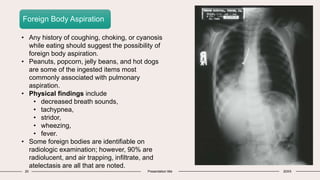
Foreign Body Aspiration
• Any history of coughing, choking, or cyanosis
while eating should suggest the possibility of
foreign body aspiration.
• Peanuts, popcorn, jelly beans, and hot dogs
are some of the ingested items most
commonly associated with pulmonary
aspiration.
• Physical findings include
• decreased breath sounds,
• tachypnea,
• stridor,
• wheezing,
• fever.
• Some foreign bodies are identifiable on
radiologic examination; however, 90% are
radiolucent, and air trapping, infiltrate, and
atelectasis are all that are noted.
21 Presentation title 20XX
• If the patient has full-stomach precautions must be taken, and anesthesia should be
induced intravenously by rapid sequence, with gentle cricoid pressure maintained
during intubation of the trachea.
• N2O should be avoided to prevent air trapping distal to the obstruction.
• Spontaneous ventilation should be preserved until the location and nature of the
foreign body have been determined. Ventilation via the bronchoscope requires careful
attention.
• Bronchospasm may occur during examination of the respiratory tract and should be
treated with increasing depths of anesthesia, nebulized albuterol, or intravenous
bronchodilators.
• Once the foreign body has been removed, examination of the entire tracheobronchial
tree is carried out to detect any additional objects or fragments.
• vigorous irrigation and suctioning distal to the obstruction are required to remove
secretions and prevent the possibility of post obstructive pneumonia.
• Steroids are administered if inflammation of the airway mucosa is observed.
• Close postoperative observation of the patient is required so that early intervention
may be instituted
22 Presentation title 20XX
RETROPHARYNGEAL ABSCESS
• Retropharyngeal abscess formation may occur from
bacterial infection of the retropharyngeal space following
dental or tonsillar infections. If the condition is untreated,
the posterior pharyngeal wall may advance anteriorly into
the oropharynx, with resulting dyspnea and airway
obstruction.
Clinical
findings:
• Difficulty in swallowing,
• Trismus,
• Fluctuant posterior pharyngeal mass.
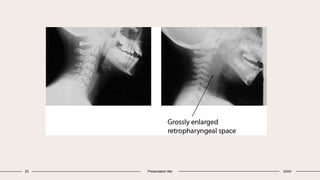
Neck radiographs:
• Abscess cavity may be evident on lateral neck
radiographs, andanterior displacement of the
esophagus and upper pharynx may be present.
23 Presentation title 20XX
24 Presentation title 20XX
Airway management:
• Complicated by trismus or partial airway obstruction.
• Because abscess rupture can lead to tracheal soiling, contact
with the posterior pharyngeal wall during laryngoscopy and
intubation should be minimized.
• Incision and drainage are the mainstays of treatment.
• Tracheostomy is often required.
25 Presentation title 20XX
LUDWIG ANGINA
• Ludwig angina is a multispace infection of the floor of
the mouth. The infection usually starts with infected
mandibular molars and spreads to submandibular,
sublingual, submental, and buccal spaces.
• The tongue becomes elevated and displaced
posteriorly, which may lead to loss of the airway,
especially when the patient is in the supine position.
Airway
management
• Depend on clinical severity, imaging findings (e.g.,
computed tomography [CT] or magnetic resonance
imaging [MRI] findings), and surgical preferences.
• Elective tracheostomy before incision and drainage
remains a classic.
• Ludwig angina is often associated with trismus, nasal
fiberoptic intubation is frequently needed.
26 Presentation title 20XX
AIRWAY TUMORS, POLYPS, AND
GRANULOMAS
• Discussion with the surgical team concerning the size
and location of the tumor, along with a review of any
video-recorded nasopharyngeal video examinations,
will help determine whether awake endotracheal
intubation is needed.
• Polyps may also be found throughout the airway and
can lead to partial or complete airway obstruction.
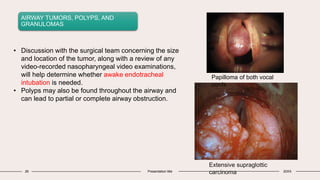
Extensive supraglottic
carcinoma
Papilloma of both vocal
cords
27 Presentation title 20XX
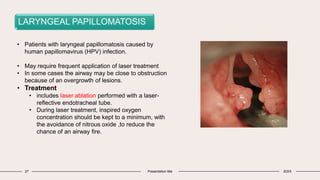
LARYNGEAL PAPILLOMATOSIS
• Patients with laryngeal papillomatosis caused by
human papillomavirus (HPV) infection.
• May require frequent application of laser treatment
• In some cases the airway may be close to obstruction
because of an overgrowth of lesions.
• Treatment
• includes laser ablation performed with a laser-
reflective endotracheal tube.
• During laser treatment, inspired oxygen
concentration should be kept to a minimum, with
the avoidance of nitrous oxide ,to reduce the
chance of an airway fire.
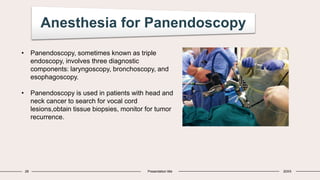
Anesthesia for Panendoscopy
28 Presentation title 20XX
• Panendoscopy, sometimes known as triple
endoscopy, involves three diagnostic
components: laryngoscopy, bronchoscopy, and
esophagoscopy.
• Panendoscopy is used in patients with head and
neck cancer to search for vocal cord
lesions,obtain tissue biopsies, monitor for tumor
recurrence.
29 Presentation title 20XX
Five airway options for Panendoscopy:
Use of an ETT, typically a
narrow-bore MLT that
provides the surgeon with a
superior glottic view.
Jet ventilation in conjunction
with a rigid ENT
laryngoscope, without the
use of an ETT.
Hybrid methods, such as the
intermittent use of an SGA
or an MLT tube in
conjunction with a rigid
laryngoscope, jet ventilation,
or intermittent apnea.
Tracheostomy using local
anesthesia before inducing
general anesthesia .
Elective placement of a
specially designed
transtracheal jet ventilation
cannula.
Panendoscopy is generally done while the patient is under general anesthesia with
the patient’s neck flexed and the head extended, usually employing a shoulder roll and
a head ring (Jackson position).
30 Presentation title 20XX
Preoperative Considerations
Patients presenting for upper airway endoscopic procedures are frequently being
evaluated for
• Voice disorders (often presenting as hoarseness), stridor, or hemoptysis.
• Possible diagnoses include
• foreign body aspiration,
• trauma to the aerodigestive tract,
• papillomas,
• tracheal stenosis,
• tumors,
• vocal cord dysfunction.
• Flow–volume loop ,radiographic, computed tomography, ultrasound, or
magnetic resonance imaging studies may be available for review or need to
be requested.
• Patients will have undergone preoperative indirect laryngoscopy or fiberoptic
nasopharyngoscopy, and the information gained from these procedures is
often of critical importance.
31 Presentation title 20XX
Intraoperative Considerations
Anaesthetic goals for laryngeal endoscopy include an
• Immobile surgical field and adequate masseter muscle relaxation for
the introduction of the suspension laryngoscope (typically profound
muscle paralysis will be sought)
• Adequate oxygenation and ventilation
• Cardiovascular stability despite rapidly varying levels of procedural
stimulation.
A. Muscle Relaxation
• Intraoperative muscle relaxation can be achieved by intermittent
boluses or infusion of intermediate duration nondepolarizing
neuromuscular blocking agents (NMBs) (eg, rocuronium, vecuronium,
cisatracurium) or with a succinylcholine infusion.
32 Presentation title 20XX
B. Oxygenation &
Ventilation
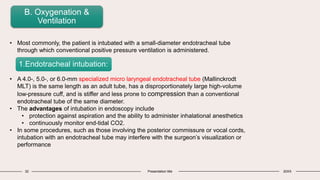
• Most commonly, the patient is intubated with a small-diameter endotracheal tube
through which conventional positive pressure ventilation is administered.
• A 4.0-, 5.0-, or 6.0-mm specialized micro laryngeal endotracheal tube (Mallinckrodt
MLT) is the same length as an adult tube, has a disproportionately large high-volume
low-pressure cuff, and is stiffer and less prone to compression than a conventional
endotracheal tube of the same diameter.
• The advantages of intubation in endoscopy include
• protection against aspiration and the ability to administer inhalational anesthetics
• continuously monitor end-tidal CO2.
• In some procedures, such as those involving the posterior commissure or vocal cords,
intubation with an endotracheal tube may interfere with the surgeon’s visualization or
performance
1.Endotracheal intubation:
33 Presentation title 20XX
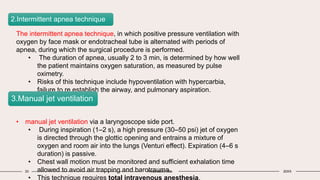
The intermittent apnea technique, in which positive pressure ventilation with
oxygen by face mask or endotracheal tube is alternated with periods of
apnea, during which the surgical procedure is performed.
• The duration of apnea, usually 2 to 3 min, is determined by how well
the patient maintains oxygen saturation, as measured by pulse
oximetry.
• Risks of this technique include hypoventilation with hypercarbia,
failure to re establish the airway, and pulmonary aspiration.
• manual jet ventilation via a laryngoscope side port.
• During inspiration (1–2 s), a high pressure (30–50 psi) jet of oxygen
is directed through the glottic opening and entrains a mixture of
oxygen and room air into the lungs (Venturi effect). Expiration (4–6 s
duration) is passive.
• Chest wall motion must be monitored and sufficient exhalation time
allowed to avoid air trapping and barotrauma.
• This technique requires total intravenous anesthesia.
2.Intermittent apnea technique
3.Manual jet ventilation
34 Presentation title 20XX
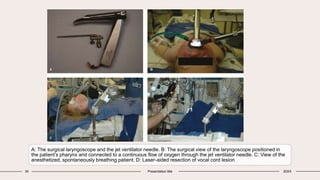
A: The surgical laryngoscope and the jet ventilator needle. B: The surgical view of the laryngoscope positioned in
the patient’s pharynx and connected to a continuous flow of oxygen through the jet ventilator needle. C: View of the
anesthetized, spontaneously breathing patient. D: Laser-aided resection of vocal cord lesion
35 Presentation title 20XX
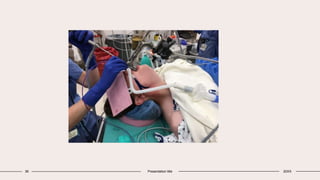
• Trans nasal humidified rapid-insufflation ventilatory exchange (THRIVE)
using high flow nasal oxygen (HFNO) through a specialized nasal
cannula,
• may be of clinical utility before securing a definitive airway in patients
with reduced time to apnea (apneic window) and unfavorable pharyngeal
anatomy.
• The use of THRIVE has allowed for up to 17 minutes of apneic time
without signs of carbon dioxide toxicity.
• The rate of carbon dioxide accumulation is 0.15 kPa.min with the use of
THRIVE compared to 0.45 kPa.min in patients undergoing traditional
apneic oxygenation or those with airway obstruction.
4.Trans nasal humidified rapid-insufflation
ventilatory exchange (THRIVE) :
36 Presentation title 20XX
37 Presentation title 20XX
C. Cardiovascular
Stability
• Blood pressure and heart rate often fluctuate markedly during
endoscopic procedures for two reasons:
1. older adults with a long history of heavy tobacco and alcohol
use that predisposes them to cardiovascular disease.
2. a series of physiologically stressful laryngoscopies and
interventions, separated by varying periods of minimal
surgical stimulation.
• modest baseline level of anesthesia allows supplementation with
short-acting anesthetics (eg, propofol, remifentanil) or sympathetic
antagonists (eg, esmolol), during periods of intense stimulation.
• Less commonly, regional nerve block of the glossopharyngeal
nerve and superior laryngeal nerve to help minimize
intraoperative swings in blood pressure
38 Presentation title 20XX
TONSILLECTOMY &
ADENOIDECTOMY
Pathophysiology
• Lymphoid hyperplasia can lead to upper airway
obstruction, obligate mouth breathing, and even
pulmonary hypertension with cor pulmonale.
• All children undergoing tonsillectomy or
adenoidectomy should be considered to be at
increased risk for perioperative airway problems.
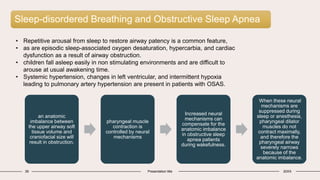
Sleep-disordered Breathing and Obstructive Sleep Apnea
39 Presentation title 20XX
• Repetitive arousal from sleep to restore airway patency is a common feature,
• as are episodic sleep-associated oxygen desaturation, hypercarbia, and cardiac
dysfunction as a result of airway obstruction.
• children fall asleep easily in non stimulating environments and are difficult to
arouse at usual awakening time.
• Systemic hypertension, changes in left ventricular, and intermittent hypoxia
leading to pulmonary artery hypertension are present in patients with OSAS.
an anatomic
imbalance between
the upper airway soft
tissue volume and
craniofacial size will
result in obstruction.
pharyngeal muscle
contraction is
controlled by neural
mechanisms
Increased neural
mechanisms can
compensate for the
anatomic imbalance
in obstructive sleep
apnea patients
during wakefulness.
When these neural
mechanisms are
suppressed during
sleep or anesthesia,
pharyngeal dilator
muscles do not
contract maximally,
and therefore the
pharyngeal airway
severely narrows
because of the
anatomic imbalance.
40 Presentation title 20XX
41 Presentation title 20XX
42 Presentation title 20XX
43 Presentation title 20XX
• The mainstay of the management is surgical removal of tonsils and
adenoids, which carries an 85% success rate in resolving OSAS.
• Recurrence may occur in children with craniofacial abnormalities and in
others.
• If surgical intervention does not resolve the problem, nocturnal CPAP is
the next treatment modality.
44 Presentation title 20XX
Preoperative Considerations
A history of sleep-disordered
breathing (SDB).
The presence of audible
respirations, mouth breathing,
nasal quality of the speech,
and chest retractions.
An elongated face, a
retrognathic mandible, and a
high-arched palate may be
present.
The oropharynx should be
inspected for evaluation of
tonsillar size to determine the
ease of mask ventilation and
tracheal intubation.
The presence of wheezing or
rales on auscultation of the
chest may be a lower
respiratory component of upper
airway infection.
The presence of inspiratory
stridor or prolonged expiration
may indicate partial airway
obstruction from hypertrophied
tonsils or adenoids.
Many non prescription cold
medications and antihistamines
contain aspirin, which may
affect platelet function, and this
potential anticoagulation
should be taken into
consideration.
45 Presentation title 20XX
46 Presentation title 20XX
Anesthetic Considerations
The goals of the anesthetic management for tonsillectomy and
adenoidectomy are
to render the child unconscious,
to provide the surgeon with optimal operating conditions
to establish intravenous access to provide a route for volume expansion and medications when necessary,
to provide rapid emergence so that the patient is awake and able to protect the recently instrumented
airway.
• Anesthesia is commonly induced with a volatile anesthetic agent, oxygen,and
nitrous oxide (N2O) by mask.
• Tracheal intubation is best accomplished under deep inhalation anesthesia or
aided by a short-acting nondepolarizing muscle relaxant.
• The addition of 0.5 to 1μg/kg of dexmedetomidine infused during the procedure
may help to attenuate emergence delirium in toddlers at the conclusion of the
anesthetic.
47 Presentation title 20XX
•Blood in the pharynx may enter the trachea during the surgical procedure. For this
reason, the supraglottic area may be packed with petroleum gauze, or a cuffed
endotracheal tube may be used.
•The flexible model of LMA is routinely used
•has a soft, reinforced shaft that easily fits under the mouth gag without becoming
dislodged or compressed.
•Adequate surgical access can be achieved and the lower airway is protected from
exposure to blood during the procedure.
•Insertion is possible either after the intravenous administration of 3 mg/kg of propofol
or when sufficient depth of anesthesia is achieved using a volatile agent administered
by face mask.
•Positive-pressure ventilation should be avoided when the LMA is used during
tonsillectomy, although gentle assisted ventilation is both safe and effective if peak
inspiratory pressure is kept below 20 cm H2O
48 Presentation title 20XX
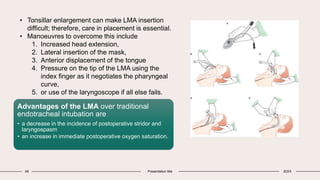
• Tonsillar enlargement can make LMA insertion
difficult; therefore, care in placement is essential.
• Manoeuvres to overcome this include
1. Increased head extension,
2. Lateral insertion of the mask,
3. Anterior displacement of the tongue
4. Pressure on the tip of the LMA using the
index finger as it negotiates the pharyngeal
curve,
5. or use of the laryngoscope if all else fails.
Advantages of the LMA over traditional
endotracheal intubation are
• a decrease in the incidence of postoperative stridor and
laryngospasm
• an increase in immediate postoperative oxygen saturation.
49 Presentation title 20XX
Emergence from anesthesia
• Should be rapid, and the child should be alert before transfer to the
recovery area.
• The child should be awake and able to clear blood or secretions from
the oropharynx as efficiently as possible before removal of the
endotracheal tube.
• Maintenance of airway and pharyngeal reflexes is essential in the
prevention of aspiration, laryngospasm, and airway obstruction.
50 Presentation title 20XX
Post Op Complications
1. The incidence of Vomitings after tonsillectomy ranges from 30% to 65%.
• Emesis is due
• to irritant blood in the stomach or
• stimulation of the gag reflex by inflammation and edema at the surgical site.
• Central nervous system stimulation from the gastrointestinal tract, due to
gastric distention from the introduction of swallowed or insufflated air.
• Decompressing the stomach with an orogastric tube may be helpful in preventing
this response.
• Treatment with ondansetron, 0.10 to 0.15 mg/kg, either with or without
dexamethasone, 0.5mg/kg, has been shown to be very effective in reducing post
tonsillectomy nausea and vomiting.
2. Dehydration secondary to poor oral intake as a result of nausea, vomiting, or pain
can occur after tonsillectomy.Vigorous intravenous hydration during surgery can
offset the physiologic effects of lower postoperative fluid intake
51 Presentation title 20XX
The most serious complication of tonsillectomy is Postoperative Hemorrhage,
• Primary bleeding occurs within 24 hours postoperatively and is more brisk than secondary
bleeding.
• Secondary bleeding usually occurs beyond 24 hours postoperatively (usually between 7
and10 days postoperatively)
• Intravenous access should be established preoperatively for volume resuscitation and possible
blood transfusion to compensate for significant hemorrhage preoperatively.
• The child should be adequately volume-resuscitated before induction of anesthesia. The
surgeon should be at the bedside during induction as the bleeding may obstruct the airway and
a surgical airway may be necessary.
• Rapid sequence induction with propofol (2 mg/kg), etomidate (0.3 mg/kg),or ketamine (1–2
mg/kg), with selection and dosage guided by the patient's hemodynamic status, and
succinylcholine (1–2 mg/kg) or rocuronium (1.2mg/kg) are appropriate.
• Two large suctions should be available to help visualize the airway.
• A cuffed ETT should be used to prevent aspiration of blood.
• The ETT should be directed to the site where bubbles are seen escaping from the glottic
opening when not visible during laryngoscopy.
• The child should be extubated awake at the end of the procedure
52 Presentation title 20XX
4.Pain after adenoidectomy is usually minimal, but pain after tonsillectomy
may be severe.
5.The rapid relief of airway obstruction results in decreased airway pressure,
an increase in venous return, an increase in pulmonary hydrostatic pressure,
hyperemia, and finally pulmonary edema.
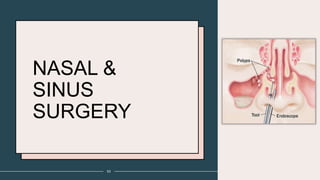
NASAL &
SINUS
SURGERY
53
NASAL & SINUS SURGERY
54 Presentation title 20XX
• Common nasal and sinus surgeries include
1. Polypectomy,
2. Endoscopic sinus surgery,
3. Maxillary sinusotomy (Caldwell–Luc
procedure),
4. Rhinoplasty
5. Septoplasty.
55 Presentation title 20XX
Preoperative Considerations
Patients undergoing nasal or sinus
surgery
preoperative nasal
obstruction caused
by polyps, a
deviated septum,
or mucosal
congestion from
infection.
This may make
face mask
ventilation difficult,
particularly if
combined with
other causes of
difficult ventilation.
Nasal polyps are
often associated
with allergic
disorders, such as
asthma.
Patients who also
have a history of
allergic reactions
to aspirin should
not be given any
nonsteroidal anti-
inflammatory drugs
(including
ketorolac) for
postoperative
analgesia.
Nasal polyps are a
common feature of
cystic fibrosis.
Because of the
rich vascular
supply of the nasal
mucosa, the
preoperative
should concentrate
on questions
concerning
medication use
(eg,aspirin,
clopidogrel) and
any history of
bleeding problems.
56 Presentation title 20XX
Intraoperative Considerations
Many nasal procedures can be satisfactorily performed under LOCAL
ANAESTHESIA with sedation.
• The anterior ethmoidal nerve and sphenopalatine nerves provide
sensory innervation to the nasal septum and lateral walls. Both can be
blocked by packing the nose with gauze or cotton-tipped applicators
soaked with local anesthetic. The topical anesthetic should be allowed
to remain in place at least 10 min before instrumentation is attempted.
Supplementation with submucosal injections of local anesthetic is often
required.
• Use of an epinephrine-containing or cocaine solution will shrink the
nasal mucosa and potentially decrease intraoperative blood loss.
57 Presentation title 20XX
General anesthesia is often preferred for nasal surgery because of the
discomfort and incomplete block that may accompany topical
anesthesia.
• following induction include using an oral airway during face mask
ventilation to mitigate the effects of nasal obstruction,
• intubating with a reinforced or preformed Mallinckrodt oral RAE (Ring–
Adair–Elwyn) endotracheal tube
• tucking the patient’s padded arms, with protection of the fingers, to the
side.
• is important to tape the patient’s eyes closed to avoid corneal abrasion.
• One exception to this occurs during dissection in endoscopic sinus
surgery, when the surgeon may wish to periodically check for eye
movement because of the close proximity of thesinuses and orbit
58 Presentation title 20XX
Techniques to minimize
intraoperative blood loss include
1.Topical vasoconstriction
with cocaine or an
epinephrine-containing
local anesthetic,
2. Maintaining a slightly
head-up position and
providing a mild degree of
controlled hypotension.
3.A posterior pharyngeal
pack is often placed to
limit the risk of aspiration
of blood.
4.Despite these
precautions, the
anesthesia provider must
be prepared for major
blood loss, especially
during resection of
vascular tumors (eg,
juvenile nasopharyngeal
angiofibroma).
59 Presentation title 20XX
• Coughing or straining during emergence from anesthesia and
extubation should be avoided as these events will increase venous
pressure and increase postoperative bleeding.
• However, relatively deep extubation strategies that are commonly and
appropriately utilized to accomplish this goal may increase the risk of
aspiration.
Emergenc
e
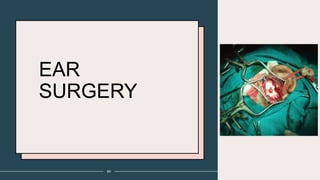
EAR
SURGERY
60
EAR SURGERIES
61 Presentation title 20XX
Frequently performed ear surgeries include
• Stapedectomy or stapedotomy
• Tympanoplasty,
• Mastoidectomy.
• Myringotomy with insertion of tympanostomy tubes is the
most common pediatric surgical procedure
62 Presentation title 20XX
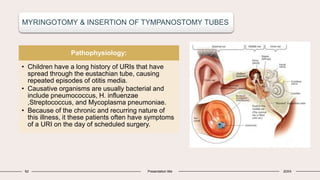
MYRINGOTOMY & INSERTION OF TYMPANOSTOMY TUBES
Pathophysiology:
• Children have a long history of URIs that have
spread through the eustachian tube, causing
repeated episodes of otitis media.
• Causative organisms are usually bacterial and
include pneumococcus, H. influenzae
,Streptococcus, and Mycoplasma pneumoniae.
• Because of the chronic and recurring nature of
this illness, it these patients often have symptoms
of a URI on the day of scheduled surgery.
63 Presentation title 20XX
• These are typically very short (10–15 min)
outpatient procedures.
• Inhalational induction is a common technique
• nitrous oxide diffusion into the middle ear is not
a concern during myringotomy because of the
brief period of anesthetic exposure before the
middle ear is vented.
• Because most of these patients are otherwise
healthy and there is no blood loss,
• intravenous access is usually not necessary.
• Ventilation with a face mask or LMA minimizes
the risk of perioperative respiratory
complications (eg, laryngospasm) associated
with intubation.
Anesthetic Considerations:
Middle Ear and Mastoid
64 Presentation title 20XX
Intra OP considerations
•Tympanoplasty and mastoidectomy are two of the most common procedures
performed on the middle ear and accessory structures.
•To gain access to the surgical site,
•the head is positioned on a head rest,
•which may be lower than the operative table,
•and extreme degrees of lateral rotation maybe required.
•Extreme tension on the heads of the sternocleidomastoid muscles must be
avoided.
•Ear surgery often involves surgical identification and preservation of the facial nerve,
which requires isolation of the nerve by the surgeon and verification of its function by
means of electrical stimulation.
•brainstem auditory evoked potential and
•electrocochleogram monitoring, which requires that complete muscle relaxation
be avoided.
65 Presentation title 20XX
• Nitrous oxide is not often used in anesthesia for ear surgery. Because nitrous oxide is
more soluble than nitrogen in blood, it diffuses into air-containing cavities more rapidly
than nitrogen (the major component of air) can be absorbed by the bloodstream..
• patients with a history of chronic ear problems such as otitis media or sinusitis often have
obstructed eustachian tubes and may, on rare occasions, experience hearing loss or
tympanic membrane rupture from the administration of nitrous oxide.
Nitrous Oxide:
• the middle ear is open to the atmosphere, and there is no pressure buildup.
• once the surgeon has placed a tympanic membrane graft, the middle ear becomes a
closed space, and if nitrous oxide is allowed to diffuse into any gas remaining in this
space,middle ear pressure will rise, and the graft may be displaced.
• discontinuing nitrous oxide after graft placement will create a negative middle ear
pressure that could also cause graft dislodgment.
• Therefore ,nitrous oxide is either entirely avoided during tympanoplasty or discontinued
prior to graft placement.
During tympanoplasty,
Nitrous Oxide
66 Presentation title 20XX
Hemostasis
• Techniques to minimize blood loss during ear surgery include
 mild (15°) head elevation,
 infiltration or topical application of epinephrine (1:50,000–1:200,000)
 moderate controlled hypotension.
 Because coughing on the endotracheal tube during emergence will increase venous
pressure and may cause bleeding and increased middle ear pressure, deep extubation is
often utilized
• the middle ear is open to the atmosphere, and there is no pressure buildup.
• once the surgeon has placed a tympanic membrane graft, the middle ear becomes
a closed space, and if nitrous oxide is allowed to diffuse into any gas remaining in
this space,middle ear pressure will rise, and the graft may be displaced.
• discontinuing nitrous oxide after graft placement will create a negative middle ear
pressure that could also cause graft dislodgment.
• Therefore ,nitrous oxide is either entirely avoided during tympanoplasty or
discontinued prior to graft placement.
During tympanoplasty,
67 Presentation title 20XX
Postoperative Vertigo, Nausea, &
Vomiting
• Because the inner ear is involved with the sense of balance, ear
surgery may cause postoperative dizziness (vertigo) and
postoperative nausea and vomiting (PONV).
• Induction and maintenance with propofol have been shown to
decrease PONV in patients undergoing middle ear surgery.
• Prophylaxis with decadron prior to induction and a 5-HT3
blocker prior to emergence should be considered.

Anesthesia for ENT surgeries (2).pptx

  • 1.
    Anesthesia for ENT surgeries Speaker:DR BHAVANI, DR S.KHAN Moderator: DR ARUNA
  • 2.
    Introduction Anaesthesia for ENTsurgery encompasses a vast range of procedures varying enormously in complexity, duration,and potential for complications. • Simple cases, such as myringotomies and tonsillectomies, • Day care procedures. • severely distorted airway anatomy, sometimes even causing airway obstruction, as well as procedures involving tracheal, glottic, or subglottic surgery that require sharing of the airway in conjunction with the use of special equipment such as surgical lasers. • Nasal procedures which require airway protection from blood and secretions, • Gentle emergence from anesthesia. • Intraoral ENT procedures, such as tonsillectomies, may employ instruments intended to keep the mouth open but that may also unintentionally obstruct the airway. • Extreme lateral rotation of the head may be required for some ear procedures ENT anesthesiologists may be assigned to 2 Presentation title 20XX
  • 3.
    Preoperative Evaluation forEar, Nose, and Throat Surgery 3 Presentation title 20XX Malignant head and neck diseases, History of prolonged tobacco and alcohol use, obesity or obstructive sleep apnea (OSA). Patients with chronic airway obstruction may develop pulmonary hypertension, sometimes leading to right-sided heart failure (cor pulmonale). A history of hoarseness may signal recurrent laryngeal nerve injury or worse, whereas the presence of stridor is always a cause for immediate concern. A history of head and neck radiation for malignancy treatment frequently makes intubation difficult because the structures may become tough and fibrotic they are predisposed to bleeding with instrumentation. A history of snoring may signal that the patient has undiagnosed sleep apnea and is prone to airway obstruction.
  • 4.
    4 Presentation title20XX Physical examination: Airway assessment: 1. voice quality respiratory rate 2. Auscultation for breathsounds to detect stridor and wheezing 3. Checking for dysphagia. 4. A history of radiation to the head and neck could imply airway fragility. 5. Assessment of visible anatomic landmarks, including the Mallampati scale predicting difficult intubation. 6. Lingual tonsil hyperplasia may interfere with facemask ventilation and rigid laryngoscopic intubation despite a promising examination on the Mallampati scale. 7. Congenital syndromes often have associated difficult airways, which need extra attention. For example, patients with trisomy 21 (Down syndrome) often have a large tongue with relative hypotonia curved Macintosh blade may provide a better view for intubation in such an instance.
  • 5.
    The Intubation DifficultyScale (IDS) 5 Presentation title 20XX IDS > 5 major difficulty intubation.
  • 6.
    Anaesthetic management inOtolaryngology 6 Presentation title 20XX The following general management options exist (1)general endotracheal anesthesia (2) general anesthesia using a supraglottic airway (SGA) device (e.g., laryngeal mask airway [LMA]) (3) general anesthesia using an ENT laryngoscope (to expose the airway) in conjunction with jet ventilation; (4) use of intermittent apnea (5) general anesthesia using the patient’s natural airway, with or without adjuncts such as jaw positioning devices or nasopharyngeal airways. (6) local anesthesia in conjunction with intravenous sedation, with the patient breathing spontaneously.
  • 7.
    OT Preparation 7 Presentationtitle 20XX Per the ASA difficult airway guidelines, there should be “at least one additional individual who is immediately available to serve as an assistant in difficult airway management”. Preferred, whenever possible, is a second member of the anesthesia care team who can assist in the monitoring, ventilation, and pharmacotherapy of the patient, as well as provide an extra set of hands during fiberoptic intubation (FOI). In the case of a patient in extremis or with a critically obstructed airway, the ENT surgeon should be available with the appropriate equipment to perform an emergency surgical airway, if necessary. the routine use of ECG, pulse oximetry, NIBP, and capnography is required as part of standard basic intraoperative monitoring. Depending on the complexity of the surgery and the patient's condition, invasive hemodynamic monitoring (i.e., arterial line) may be necessary prior to awake intubation. Indications for this include hemodynamic instability, severe ischemic or valvular heart disease
  • 8.
    8 Presentation title 20XX Adequate preoxygenationand the use of supplemental O2 throughout airway management (including sedation, topicalization, intubation, and extubation) is encouraged in all patients undergoing awake intubation. In addition to the standard methods of supplemental O2 delivery (nasal cannula or face mask), other include, • deliveringO2 through the suction port of the fiberoptic bronchoscope through the atomizer or nebulizer during topicalization, or • by elective transtracheal jet ventilation (TTJV) No matter which technique is selected, all necessary equipment should be prepared ahead of time and be readily available, when needed. • Direct laryngoscopy, • video laryngoscopy, • intubating LMAs, • flexible fiberoptic bronchoscopy, • rigid fiberoptic laryngoscopy, • retrograde intubation, • lighted stylets,
  • 9.
    9 Presentation title20XX Wire reinforced tubes • Same length as an adult tube, has a disproportionately large high-volume low- pressure cuff, and is stiffer and less prone to compression than a conventional endotracheal tube of the same diameter. Micro laryngeal endotracheal tube • Reinforced tubes have the advantages that they are unlikely to kink and they fit especially well into tracheostomy stomas because of their excellent flexibility. Types of ET Tubes:
  • 10.
    10 Presentation title20XX Laser-resistant ETTs Laser Flex. Laser Shield Laser Tubus Sheridan Laser- Trach
  • 11.
  • 12.
    12 Presentation title20XX Fiberoptic intubation • to perform this technique using topical anesthesia with the patient only lightly sedated (awake fiberoptic intubation), the cooperation of the patient awake. • During awake intubation, airway reflexes are generally maintained sufficiently to guard against pulmonary aspiration. • the airway is initially anesthetized with gargled and atomized 4% lidocaine. • Superior laryngeal and transtracheal blocks are occasionally also employed. • In addition,judicious sedation is usually administered. Midazolam, fentanyl, remifentanil, ketamine, propofol, and clonidine have all been used . • More recently, the use of dexmedetomidine, a selective α2-agonist with sedative, analgesic, amnestic, and antisialagogue properties.
  • 13.
    13 Presentation title20XX Premedication • They should be administered as early as possible for maximal effect (at least 30 minutes in advance), as they do not eliminate existing secretions but rather prevent new secretion formation. • The anticholinergics most often used in clinical practice are glycopyrrolate, scopolamine, and atropine • Glycopyrrolate (0.1–0.3 mg IV) is the anticholinergic of choice for most clinical circumstances due to its marked antisialagogue effect and rapid onset of 1 to 2 minutes after IV dosing. • Scopolamine (0.4 mg IV) is the least vagolytic of the anticholinergics may be the drug of choice for patients in whom tachycardia is undesirable (e.g., a patient with advanced coronary artery disease in whom the us of glycopyrrolate would be relatively contraindicated). • It has potent CNS effects, with sedative and amnestic properties. In some patients,this may lead to restlessness, delirium, and difficulty waking after short procedures. • Atropine (0.4–0.6 mg IV) produces only a mild antisialagogic effect, but causes significant tachycardia due to its potent vagolytic effects. Antisialagogues:
  • 14.
    14 Presentation title20XX • Nasal mucosal vasoconstrictor should be applied 15 minutes prior to nasal intubation. • 4% cocaine ,which has both vasoconstrictive and local anesthetic effects. It can be applied to the nasal mucosa using cotton-tipped applicators. The maximum dose is 1.5– 3 mg/kg. • Mixture of lidocaine 3% and phenylephrine 0.25% can be made by combining lidocaine 4% and phenylephrine 1% in a 3:1 ratio . This mixture can be either sprayed intranasally or applied with cotton tipped applicators. • Commercially available nasal decongestants containing either oxymetazoline 0.05% (Afrin) or phenylephrine 0.5% (Neo-Synephrine) may also be applied to nasal mucosa. The usual dose is two sprays in each nostril. Nasal mucosal vasoconstrictors:
  • 15.
    15 Presentation title20XX Sedation: • Benzodiazepines, opioids, hypnotics, a2 agonists, and neuroleptics can be use alone or in combination • have hypnotic, sedative, anxiolytic, and amnestic properties. • They have also been shown to depress upper airway reflex sensitivity a property that is desirable for awake intubation. • Sedation with midazolam is achieved with doses of 1 to 2 mg IV repeated until the desired level of sedation is achieved. The IM dose is 0.07 to 0.1 mg/kg. • Oversedation with benzodiazepines can cause respiratory depression, which may lead to hypoxemia or apnea. Benzodiazepines:
  • 16.
    16 Presentation title20XX • analgesia, depress airway reflexes, and prevent hyperventilation associated with pain or anxiety. • These properties make them a useful addition to the sedation regimen for awake intubation. • Fentanyl is widely used in anesthetic practice, and is the most commonly used opioid for awake intubation. The sedative dose ranges from 0.5 to 2 mg/kg IV. • Alfentanil has an even quicker onset (1.5 to 2 minutes) and a more rapid recovery after a single bolus dose (10 to 15 minutes) than fentanyl.The sedative dose rangesfrom 10 to 30 mg/kg IV. • Remifentanil is an ultrashort-acting opioid that is that it is metabolized by nonspecific plasma esterases, with a half-life of 3 minutes. A bolus of 0.5 mg/kg followed by an infusion of 0.1 mg/kg/min, adequate sedation with preservation of spontaneous ventilation in most patients. Opioids
  • 17.
    17 Presentation title20XX • After an induction dose of 1.5 to 2.5 mg/kg IV, propofol has a quick onset (60 to 90 s) with recovery in 4 to 5 minutes • For awake intubation, intermittent doses of 0.25 mg/kg IV or a continuous IV infusion of 25 to 75 mg/kg/min provide an easily titratable level of sedation with rapid recovery. Propofol: • It has sedative, analgesic, anxiolytic, antitussive, and antisialagogue effects while causing minimal respiratory impairment, even at high doses. • It provides unique conditions in which the patient is asleep, but is easily arousable and cooperative when stimulated. • Dosing for awake intubation is a 1 mg/kg load over 10 minutes(loading dose), followed by a continuous infusion of 0.2 to 1 mg/kg/h. • Central a2A-mediated sympatholysis eventually leads to bradycardia, hypotension, and decreased cardiac output. Dexmedetomidine:
  • 18.
    18 Presentation title20XX • produces dissociative anesthesia, which manifests clinically as a cataleptic state with many reflexes intact, including the corneal, cough, and swallow reflexes. • Usual doses for sedation range from 0.2 to 0.8 mg/kg IV, • Its use in awake intubation in combination with benzodiazepines and dexmedetomidine. • Patients receiving ketamine sedation should always be pretreated with an antisialagogue. Ketamine:
  • 19.
  • 20.
    20 Presentation title20XX Foreign Body Aspiration • Any history of coughing, choking, or cyanosis while eating should suggest the possibility of foreign body aspiration. • Peanuts, popcorn, jelly beans, and hot dogs are some of the ingested items most commonly associated with pulmonary aspiration. • Physical findings include • decreased breath sounds, • tachypnea, • stridor, • wheezing, • fever. • Some foreign bodies are identifiable on radiologic examination; however, 90% are radiolucent, and air trapping, infiltrate, and atelectasis are all that are noted.
  • 21.
    21 Presentation title20XX • If the patient has full-stomach precautions must be taken, and anesthesia should be induced intravenously by rapid sequence, with gentle cricoid pressure maintained during intubation of the trachea. • N2O should be avoided to prevent air trapping distal to the obstruction. • Spontaneous ventilation should be preserved until the location and nature of the foreign body have been determined. Ventilation via the bronchoscope requires careful attention. • Bronchospasm may occur during examination of the respiratory tract and should be treated with increasing depths of anesthesia, nebulized albuterol, or intravenous bronchodilators. • Once the foreign body has been removed, examination of the entire tracheobronchial tree is carried out to detect any additional objects or fragments. • vigorous irrigation and suctioning distal to the obstruction are required to remove secretions and prevent the possibility of post obstructive pneumonia. • Steroids are administered if inflammation of the airway mucosa is observed. • Close postoperative observation of the patient is required so that early intervention may be instituted
  • 22.
    22 Presentation title20XX RETROPHARYNGEAL ABSCESS • Retropharyngeal abscess formation may occur from bacterial infection of the retropharyngeal space following dental or tonsillar infections. If the condition is untreated, the posterior pharyngeal wall may advance anteriorly into the oropharynx, with resulting dyspnea and airway obstruction. Clinical findings: • Difficulty in swallowing, • Trismus, • Fluctuant posterior pharyngeal mass. Neck radiographs: • Abscess cavity may be evident on lateral neck radiographs, andanterior displacement of the esophagus and upper pharynx may be present.
  • 23.
  • 24.
    24 Presentation title20XX Airway management: • Complicated by trismus or partial airway obstruction. • Because abscess rupture can lead to tracheal soiling, contact with the posterior pharyngeal wall during laryngoscopy and intubation should be minimized. • Incision and drainage are the mainstays of treatment. • Tracheostomy is often required.
  • 25.
    25 Presentation title20XX LUDWIG ANGINA • Ludwig angina is a multispace infection of the floor of the mouth. The infection usually starts with infected mandibular molars and spreads to submandibular, sublingual, submental, and buccal spaces. • The tongue becomes elevated and displaced posteriorly, which may lead to loss of the airway, especially when the patient is in the supine position. Airway management • Depend on clinical severity, imaging findings (e.g., computed tomography [CT] or magnetic resonance imaging [MRI] findings), and surgical preferences. • Elective tracheostomy before incision and drainage remains a classic. • Ludwig angina is often associated with trismus, nasal fiberoptic intubation is frequently needed.
  • 26.
    26 Presentation title20XX AIRWAY TUMORS, POLYPS, AND GRANULOMAS • Discussion with the surgical team concerning the size and location of the tumor, along with a review of any video-recorded nasopharyngeal video examinations, will help determine whether awake endotracheal intubation is needed. • Polyps may also be found throughout the airway and can lead to partial or complete airway obstruction. Extensive supraglottic carcinoma Papilloma of both vocal cords
  • 27.
    27 Presentation title20XX LARYNGEAL PAPILLOMATOSIS • Patients with laryngeal papillomatosis caused by human papillomavirus (HPV) infection. • May require frequent application of laser treatment • In some cases the airway may be close to obstruction because of an overgrowth of lesions. • Treatment • includes laser ablation performed with a laser- reflective endotracheal tube. • During laser treatment, inspired oxygen concentration should be kept to a minimum, with the avoidance of nitrous oxide ,to reduce the chance of an airway fire.
  • 28.
    Anesthesia for Panendoscopy 28Presentation title 20XX • Panendoscopy, sometimes known as triple endoscopy, involves three diagnostic components: laryngoscopy, bronchoscopy, and esophagoscopy. • Panendoscopy is used in patients with head and neck cancer to search for vocal cord lesions,obtain tissue biopsies, monitor for tumor recurrence.
  • 29.
    29 Presentation title20XX Five airway options for Panendoscopy: Use of an ETT, typically a narrow-bore MLT that provides the surgeon with a superior glottic view. Jet ventilation in conjunction with a rigid ENT laryngoscope, without the use of an ETT. Hybrid methods, such as the intermittent use of an SGA or an MLT tube in conjunction with a rigid laryngoscope, jet ventilation, or intermittent apnea. Tracheostomy using local anesthesia before inducing general anesthesia . Elective placement of a specially designed transtracheal jet ventilation cannula. Panendoscopy is generally done while the patient is under general anesthesia with the patient’s neck flexed and the head extended, usually employing a shoulder roll and a head ring (Jackson position).
  • 30.
    30 Presentation title20XX Preoperative Considerations Patients presenting for upper airway endoscopic procedures are frequently being evaluated for • Voice disorders (often presenting as hoarseness), stridor, or hemoptysis. • Possible diagnoses include • foreign body aspiration, • trauma to the aerodigestive tract, • papillomas, • tracheal stenosis, • tumors, • vocal cord dysfunction. • Flow–volume loop ,radiographic, computed tomography, ultrasound, or magnetic resonance imaging studies may be available for review or need to be requested. • Patients will have undergone preoperative indirect laryngoscopy or fiberoptic nasopharyngoscopy, and the information gained from these procedures is often of critical importance.
  • 31.
    31 Presentation title20XX Intraoperative Considerations Anaesthetic goals for laryngeal endoscopy include an • Immobile surgical field and adequate masseter muscle relaxation for the introduction of the suspension laryngoscope (typically profound muscle paralysis will be sought) • Adequate oxygenation and ventilation • Cardiovascular stability despite rapidly varying levels of procedural stimulation. A. Muscle Relaxation • Intraoperative muscle relaxation can be achieved by intermittent boluses or infusion of intermediate duration nondepolarizing neuromuscular blocking agents (NMBs) (eg, rocuronium, vecuronium, cisatracurium) or with a succinylcholine infusion.
  • 32.
    32 Presentation title20XX B. Oxygenation & Ventilation • Most commonly, the patient is intubated with a small-diameter endotracheal tube through which conventional positive pressure ventilation is administered. • A 4.0-, 5.0-, or 6.0-mm specialized micro laryngeal endotracheal tube (Mallinckrodt MLT) is the same length as an adult tube, has a disproportionately large high-volume low-pressure cuff, and is stiffer and less prone to compression than a conventional endotracheal tube of the same diameter. • The advantages of intubation in endoscopy include • protection against aspiration and the ability to administer inhalational anesthetics • continuously monitor end-tidal CO2. • In some procedures, such as those involving the posterior commissure or vocal cords, intubation with an endotracheal tube may interfere with the surgeon’s visualization or performance 1.Endotracheal intubation:
  • 33.
    33 Presentation title20XX The intermittent apnea technique, in which positive pressure ventilation with oxygen by face mask or endotracheal tube is alternated with periods of apnea, during which the surgical procedure is performed. • The duration of apnea, usually 2 to 3 min, is determined by how well the patient maintains oxygen saturation, as measured by pulse oximetry. • Risks of this technique include hypoventilation with hypercarbia, failure to re establish the airway, and pulmonary aspiration. • manual jet ventilation via a laryngoscope side port. • During inspiration (1–2 s), a high pressure (30–50 psi) jet of oxygen is directed through the glottic opening and entrains a mixture of oxygen and room air into the lungs (Venturi effect). Expiration (4–6 s duration) is passive. • Chest wall motion must be monitored and sufficient exhalation time allowed to avoid air trapping and barotrauma. • This technique requires total intravenous anesthesia. 2.Intermittent apnea technique 3.Manual jet ventilation
  • 34.
    34 Presentation title20XX A: The surgical laryngoscope and the jet ventilator needle. B: The surgical view of the laryngoscope positioned in the patient’s pharynx and connected to a continuous flow of oxygen through the jet ventilator needle. C: View of the anesthetized, spontaneously breathing patient. D: Laser-aided resection of vocal cord lesion
  • 35.
    35 Presentation title20XX • Trans nasal humidified rapid-insufflation ventilatory exchange (THRIVE) using high flow nasal oxygen (HFNO) through a specialized nasal cannula, • may be of clinical utility before securing a definitive airway in patients with reduced time to apnea (apneic window) and unfavorable pharyngeal anatomy. • The use of THRIVE has allowed for up to 17 minutes of apneic time without signs of carbon dioxide toxicity. • The rate of carbon dioxide accumulation is 0.15 kPa.min with the use of THRIVE compared to 0.45 kPa.min in patients undergoing traditional apneic oxygenation or those with airway obstruction. 4.Trans nasal humidified rapid-insufflation ventilatory exchange (THRIVE) :
  • 36.
  • 37.
    37 Presentation title20XX C. Cardiovascular Stability • Blood pressure and heart rate often fluctuate markedly during endoscopic procedures for two reasons: 1. older adults with a long history of heavy tobacco and alcohol use that predisposes them to cardiovascular disease. 2. a series of physiologically stressful laryngoscopies and interventions, separated by varying periods of minimal surgical stimulation. • modest baseline level of anesthesia allows supplementation with short-acting anesthetics (eg, propofol, remifentanil) or sympathetic antagonists (eg, esmolol), during periods of intense stimulation. • Less commonly, regional nerve block of the glossopharyngeal nerve and superior laryngeal nerve to help minimize intraoperative swings in blood pressure
  • 38.
    38 Presentation title20XX TONSILLECTOMY & ADENOIDECTOMY Pathophysiology • Lymphoid hyperplasia can lead to upper airway obstruction, obligate mouth breathing, and even pulmonary hypertension with cor pulmonale. • All children undergoing tonsillectomy or adenoidectomy should be considered to be at increased risk for perioperative airway problems.
  • 39.
    Sleep-disordered Breathing andObstructive Sleep Apnea 39 Presentation title 20XX • Repetitive arousal from sleep to restore airway patency is a common feature, • as are episodic sleep-associated oxygen desaturation, hypercarbia, and cardiac dysfunction as a result of airway obstruction. • children fall asleep easily in non stimulating environments and are difficult to arouse at usual awakening time. • Systemic hypertension, changes in left ventricular, and intermittent hypoxia leading to pulmonary artery hypertension are present in patients with OSAS. an anatomic imbalance between the upper airway soft tissue volume and craniofacial size will result in obstruction. pharyngeal muscle contraction is controlled by neural mechanisms Increased neural mechanisms can compensate for the anatomic imbalance in obstructive sleep apnea patients during wakefulness. When these neural mechanisms are suppressed during sleep or anesthesia, pharyngeal dilator muscles do not contract maximally, and therefore the pharyngeal airway severely narrows because of the anatomic imbalance.
  • 40.
  • 41.
  • 42.
  • 43.
    43 Presentation title20XX • The mainstay of the management is surgical removal of tonsils and adenoids, which carries an 85% success rate in resolving OSAS. • Recurrence may occur in children with craniofacial abnormalities and in others. • If surgical intervention does not resolve the problem, nocturnal CPAP is the next treatment modality.
  • 44.
    44 Presentation title20XX Preoperative Considerations A history of sleep-disordered breathing (SDB). The presence of audible respirations, mouth breathing, nasal quality of the speech, and chest retractions. An elongated face, a retrognathic mandible, and a high-arched palate may be present. The oropharynx should be inspected for evaluation of tonsillar size to determine the ease of mask ventilation and tracheal intubation. The presence of wheezing or rales on auscultation of the chest may be a lower respiratory component of upper airway infection. The presence of inspiratory stridor or prolonged expiration may indicate partial airway obstruction from hypertrophied tonsils or adenoids. Many non prescription cold medications and antihistamines contain aspirin, which may affect platelet function, and this potential anticoagulation should be taken into consideration.
  • 45.
  • 46.
    46 Presentation title20XX Anesthetic Considerations The goals of the anesthetic management for tonsillectomy and adenoidectomy are to render the child unconscious, to provide the surgeon with optimal operating conditions to establish intravenous access to provide a route for volume expansion and medications when necessary, to provide rapid emergence so that the patient is awake and able to protect the recently instrumented airway. • Anesthesia is commonly induced with a volatile anesthetic agent, oxygen,and nitrous oxide (N2O) by mask. • Tracheal intubation is best accomplished under deep inhalation anesthesia or aided by a short-acting nondepolarizing muscle relaxant. • The addition of 0.5 to 1μg/kg of dexmedetomidine infused during the procedure may help to attenuate emergence delirium in toddlers at the conclusion of the anesthetic.
  • 47.
    47 Presentation title20XX •Blood in the pharynx may enter the trachea during the surgical procedure. For this reason, the supraglottic area may be packed with petroleum gauze, or a cuffed endotracheal tube may be used. •The flexible model of LMA is routinely used •has a soft, reinforced shaft that easily fits under the mouth gag without becoming dislodged or compressed. •Adequate surgical access can be achieved and the lower airway is protected from exposure to blood during the procedure. •Insertion is possible either after the intravenous administration of 3 mg/kg of propofol or when sufficient depth of anesthesia is achieved using a volatile agent administered by face mask. •Positive-pressure ventilation should be avoided when the LMA is used during tonsillectomy, although gentle assisted ventilation is both safe and effective if peak inspiratory pressure is kept below 20 cm H2O
  • 48.
    48 Presentation title20XX • Tonsillar enlargement can make LMA insertion difficult; therefore, care in placement is essential. • Manoeuvres to overcome this include 1. Increased head extension, 2. Lateral insertion of the mask, 3. Anterior displacement of the tongue 4. Pressure on the tip of the LMA using the index finger as it negotiates the pharyngeal curve, 5. or use of the laryngoscope if all else fails. Advantages of the LMA over traditional endotracheal intubation are • a decrease in the incidence of postoperative stridor and laryngospasm • an increase in immediate postoperative oxygen saturation.
  • 49.
    49 Presentation title20XX Emergence from anesthesia • Should be rapid, and the child should be alert before transfer to the recovery area. • The child should be awake and able to clear blood or secretions from the oropharynx as efficiently as possible before removal of the endotracheal tube. • Maintenance of airway and pharyngeal reflexes is essential in the prevention of aspiration, laryngospasm, and airway obstruction.
  • 50.
    50 Presentation title20XX Post Op Complications 1. The incidence of Vomitings after tonsillectomy ranges from 30% to 65%. • Emesis is due • to irritant blood in the stomach or • stimulation of the gag reflex by inflammation and edema at the surgical site. • Central nervous system stimulation from the gastrointestinal tract, due to gastric distention from the introduction of swallowed or insufflated air. • Decompressing the stomach with an orogastric tube may be helpful in preventing this response. • Treatment with ondansetron, 0.10 to 0.15 mg/kg, either with or without dexamethasone, 0.5mg/kg, has been shown to be very effective in reducing post tonsillectomy nausea and vomiting. 2. Dehydration secondary to poor oral intake as a result of nausea, vomiting, or pain can occur after tonsillectomy.Vigorous intravenous hydration during surgery can offset the physiologic effects of lower postoperative fluid intake
  • 51.
    51 Presentation title20XX The most serious complication of tonsillectomy is Postoperative Hemorrhage, • Primary bleeding occurs within 24 hours postoperatively and is more brisk than secondary bleeding. • Secondary bleeding usually occurs beyond 24 hours postoperatively (usually between 7 and10 days postoperatively) • Intravenous access should be established preoperatively for volume resuscitation and possible blood transfusion to compensate for significant hemorrhage preoperatively. • The child should be adequately volume-resuscitated before induction of anesthesia. The surgeon should be at the bedside during induction as the bleeding may obstruct the airway and a surgical airway may be necessary. • Rapid sequence induction with propofol (2 mg/kg), etomidate (0.3 mg/kg),or ketamine (1–2 mg/kg), with selection and dosage guided by the patient's hemodynamic status, and succinylcholine (1–2 mg/kg) or rocuronium (1.2mg/kg) are appropriate. • Two large suctions should be available to help visualize the airway. • A cuffed ETT should be used to prevent aspiration of blood. • The ETT should be directed to the site where bubbles are seen escaping from the glottic opening when not visible during laryngoscopy. • The child should be extubated awake at the end of the procedure
  • 52.
    52 Presentation title20XX 4.Pain after adenoidectomy is usually minimal, but pain after tonsillectomy may be severe. 5.The rapid relief of airway obstruction results in decreased airway pressure, an increase in venous return, an increase in pulmonary hydrostatic pressure, hyperemia, and finally pulmonary edema.
  • 53.
  • 54.
    NASAL & SINUSSURGERY 54 Presentation title 20XX • Common nasal and sinus surgeries include 1. Polypectomy, 2. Endoscopic sinus surgery, 3. Maxillary sinusotomy (Caldwell–Luc procedure), 4. Rhinoplasty 5. Septoplasty.
  • 55.
    55 Presentation title20XX Preoperative Considerations Patients undergoing nasal or sinus surgery preoperative nasal obstruction caused by polyps, a deviated septum, or mucosal congestion from infection. This may make face mask ventilation difficult, particularly if combined with other causes of difficult ventilation. Nasal polyps are often associated with allergic disorders, such as asthma. Patients who also have a history of allergic reactions to aspirin should not be given any nonsteroidal anti- inflammatory drugs (including ketorolac) for postoperative analgesia. Nasal polyps are a common feature of cystic fibrosis. Because of the rich vascular supply of the nasal mucosa, the preoperative should concentrate on questions concerning medication use (eg,aspirin, clopidogrel) and any history of bleeding problems.
  • 56.
    56 Presentation title20XX Intraoperative Considerations Many nasal procedures can be satisfactorily performed under LOCAL ANAESTHESIA with sedation. • The anterior ethmoidal nerve and sphenopalatine nerves provide sensory innervation to the nasal septum and lateral walls. Both can be blocked by packing the nose with gauze or cotton-tipped applicators soaked with local anesthetic. The topical anesthetic should be allowed to remain in place at least 10 min before instrumentation is attempted. Supplementation with submucosal injections of local anesthetic is often required. • Use of an epinephrine-containing or cocaine solution will shrink the nasal mucosa and potentially decrease intraoperative blood loss.
  • 57.
    57 Presentation title20XX General anesthesia is often preferred for nasal surgery because of the discomfort and incomplete block that may accompany topical anesthesia. • following induction include using an oral airway during face mask ventilation to mitigate the effects of nasal obstruction, • intubating with a reinforced or preformed Mallinckrodt oral RAE (Ring– Adair–Elwyn) endotracheal tube • tucking the patient’s padded arms, with protection of the fingers, to the side. • is important to tape the patient’s eyes closed to avoid corneal abrasion. • One exception to this occurs during dissection in endoscopic sinus surgery, when the surgeon may wish to periodically check for eye movement because of the close proximity of thesinuses and orbit
  • 58.
    58 Presentation title20XX Techniques to minimize intraoperative blood loss include 1.Topical vasoconstriction with cocaine or an epinephrine-containing local anesthetic, 2. Maintaining a slightly head-up position and providing a mild degree of controlled hypotension. 3.A posterior pharyngeal pack is often placed to limit the risk of aspiration of blood. 4.Despite these precautions, the anesthesia provider must be prepared for major blood loss, especially during resection of vascular tumors (eg, juvenile nasopharyngeal angiofibroma).
  • 59.
    59 Presentation title20XX • Coughing or straining during emergence from anesthesia and extubation should be avoided as these events will increase venous pressure and increase postoperative bleeding. • However, relatively deep extubation strategies that are commonly and appropriately utilized to accomplish this goal may increase the risk of aspiration. Emergenc e
  • 60.
  • 61.
    EAR SURGERIES 61 Presentationtitle 20XX Frequently performed ear surgeries include • Stapedectomy or stapedotomy • Tympanoplasty, • Mastoidectomy. • Myringotomy with insertion of tympanostomy tubes is the most common pediatric surgical procedure
  • 62.
    62 Presentation title20XX MYRINGOTOMY & INSERTION OF TYMPANOSTOMY TUBES Pathophysiology: • Children have a long history of URIs that have spread through the eustachian tube, causing repeated episodes of otitis media. • Causative organisms are usually bacterial and include pneumococcus, H. influenzae ,Streptococcus, and Mycoplasma pneumoniae. • Because of the chronic and recurring nature of this illness, it these patients often have symptoms of a URI on the day of scheduled surgery.
  • 63.
    63 Presentation title20XX • These are typically very short (10–15 min) outpatient procedures. • Inhalational induction is a common technique • nitrous oxide diffusion into the middle ear is not a concern during myringotomy because of the brief period of anesthetic exposure before the middle ear is vented. • Because most of these patients are otherwise healthy and there is no blood loss, • intravenous access is usually not necessary. • Ventilation with a face mask or LMA minimizes the risk of perioperative respiratory complications (eg, laryngospasm) associated with intubation. Anesthetic Considerations:
  • 64.
    Middle Ear andMastoid 64 Presentation title 20XX Intra OP considerations •Tympanoplasty and mastoidectomy are two of the most common procedures performed on the middle ear and accessory structures. •To gain access to the surgical site, •the head is positioned on a head rest, •which may be lower than the operative table, •and extreme degrees of lateral rotation maybe required. •Extreme tension on the heads of the sternocleidomastoid muscles must be avoided. •Ear surgery often involves surgical identification and preservation of the facial nerve, which requires isolation of the nerve by the surgeon and verification of its function by means of electrical stimulation. •brainstem auditory evoked potential and •electrocochleogram monitoring, which requires that complete muscle relaxation be avoided.
  • 65.
    65 Presentation title20XX • Nitrous oxide is not often used in anesthesia for ear surgery. Because nitrous oxide is more soluble than nitrogen in blood, it diffuses into air-containing cavities more rapidly than nitrogen (the major component of air) can be absorbed by the bloodstream.. • patients with a history of chronic ear problems such as otitis media or sinusitis often have obstructed eustachian tubes and may, on rare occasions, experience hearing loss or tympanic membrane rupture from the administration of nitrous oxide. Nitrous Oxide: • the middle ear is open to the atmosphere, and there is no pressure buildup. • once the surgeon has placed a tympanic membrane graft, the middle ear becomes a closed space, and if nitrous oxide is allowed to diffuse into any gas remaining in this space,middle ear pressure will rise, and the graft may be displaced. • discontinuing nitrous oxide after graft placement will create a negative middle ear pressure that could also cause graft dislodgment. • Therefore ,nitrous oxide is either entirely avoided during tympanoplasty or discontinued prior to graft placement. During tympanoplasty, Nitrous Oxide
  • 66.
    66 Presentation title20XX Hemostasis • Techniques to minimize blood loss during ear surgery include  mild (15°) head elevation,  infiltration or topical application of epinephrine (1:50,000–1:200,000)  moderate controlled hypotension.  Because coughing on the endotracheal tube during emergence will increase venous pressure and may cause bleeding and increased middle ear pressure, deep extubation is often utilized • the middle ear is open to the atmosphere, and there is no pressure buildup. • once the surgeon has placed a tympanic membrane graft, the middle ear becomes a closed space, and if nitrous oxide is allowed to diffuse into any gas remaining in this space,middle ear pressure will rise, and the graft may be displaced. • discontinuing nitrous oxide after graft placement will create a negative middle ear pressure that could also cause graft dislodgment. • Therefore ,nitrous oxide is either entirely avoided during tympanoplasty or discontinued prior to graft placement. During tympanoplasty,
  • 67.
    67 Presentation title20XX Postoperative Vertigo, Nausea, & Vomiting • Because the inner ear is involved with the sense of balance, ear surgery may cause postoperative dizziness (vertigo) and postoperative nausea and vomiting (PONV). • Induction and maintenance with propofol have been shown to decrease PONV in patients undergoing middle ear surgery. • Prophylaxis with decadron prior to induction and a 5-HT3 blocker prior to emergence should be considered.

Editor's Notes

  • #12 Video laryngoscopes such as the GlideScope , the McGrath video laryngoscope, the Storz video laryngoscope and the Pentax AWS are used especially in patients with an “anterior” larynx.
  • #22 inadequate ventilation caused by an excessively large leak around the bronchoscope or, more commonly, inability to provide adequate gas exchange through a narrow-lumen bronchoscope fitted with an internal telescope.