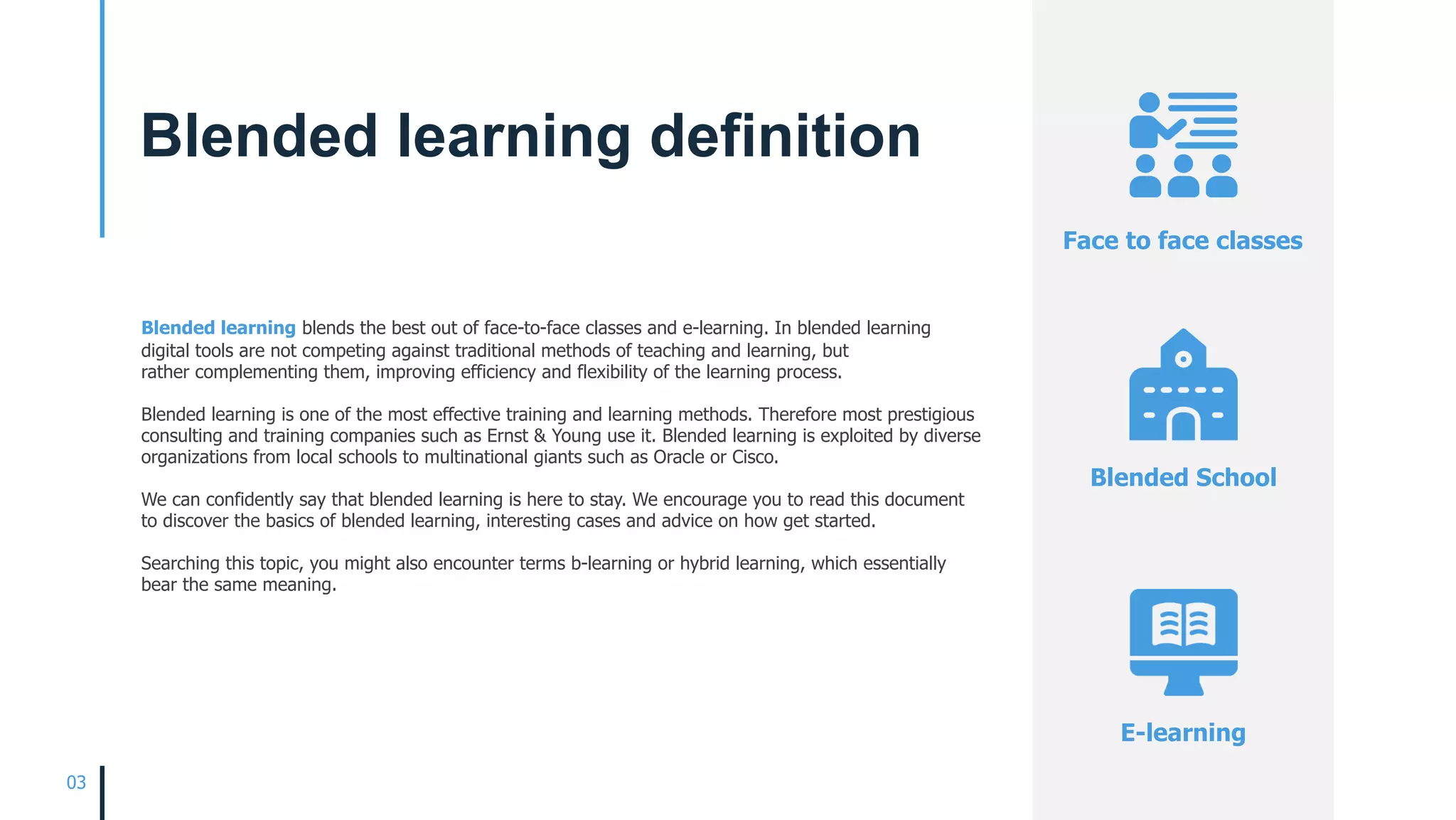
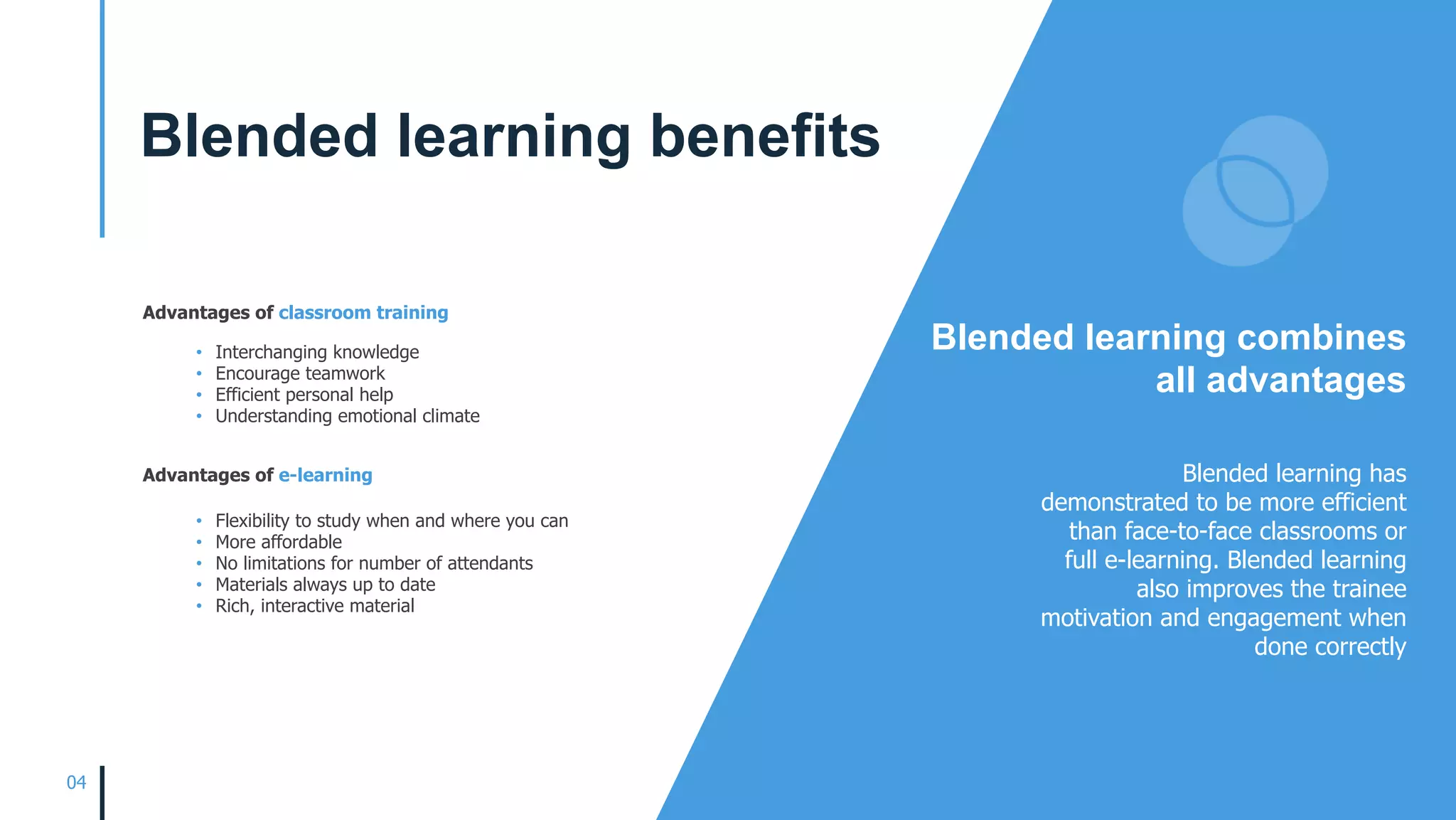
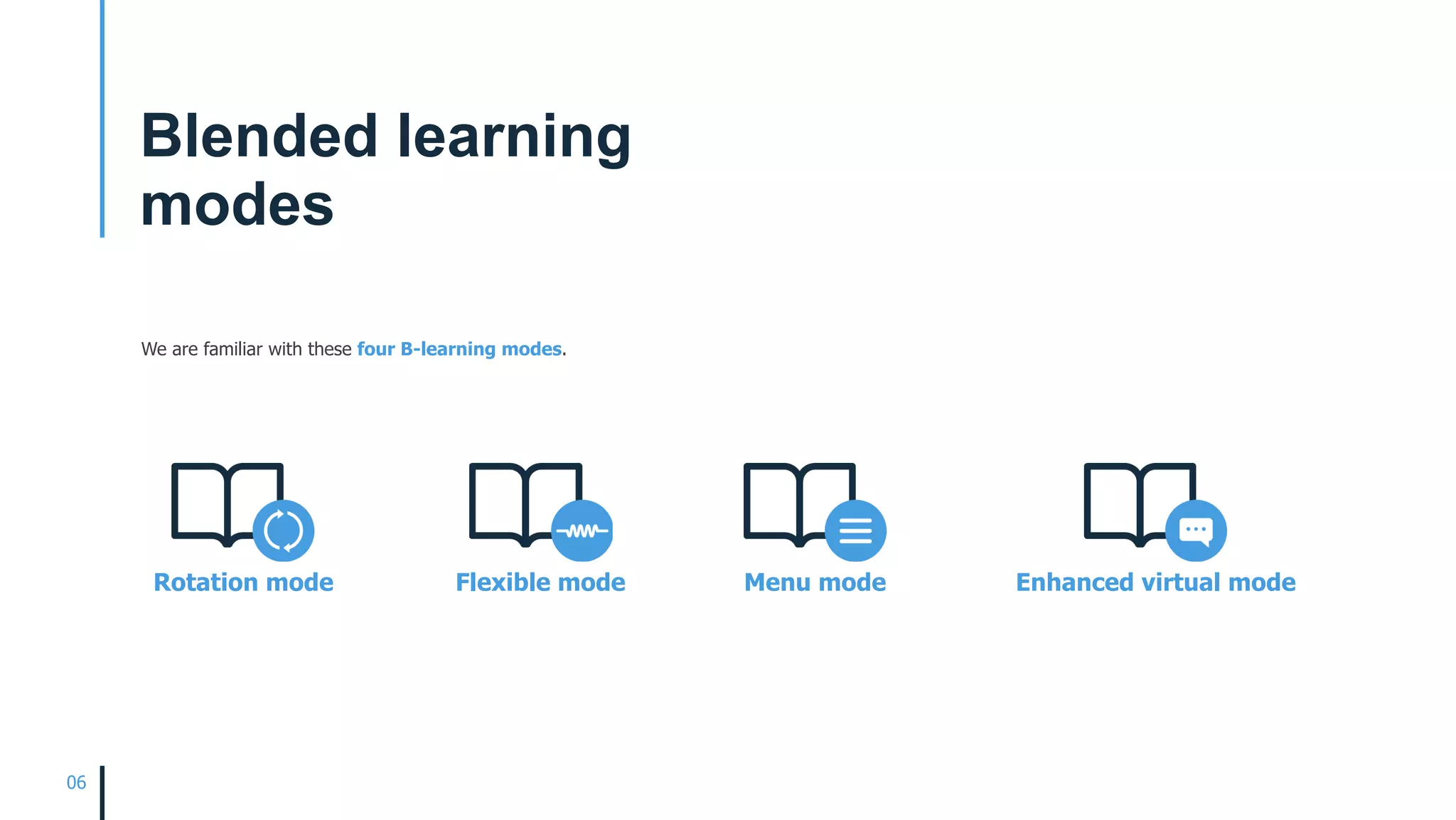
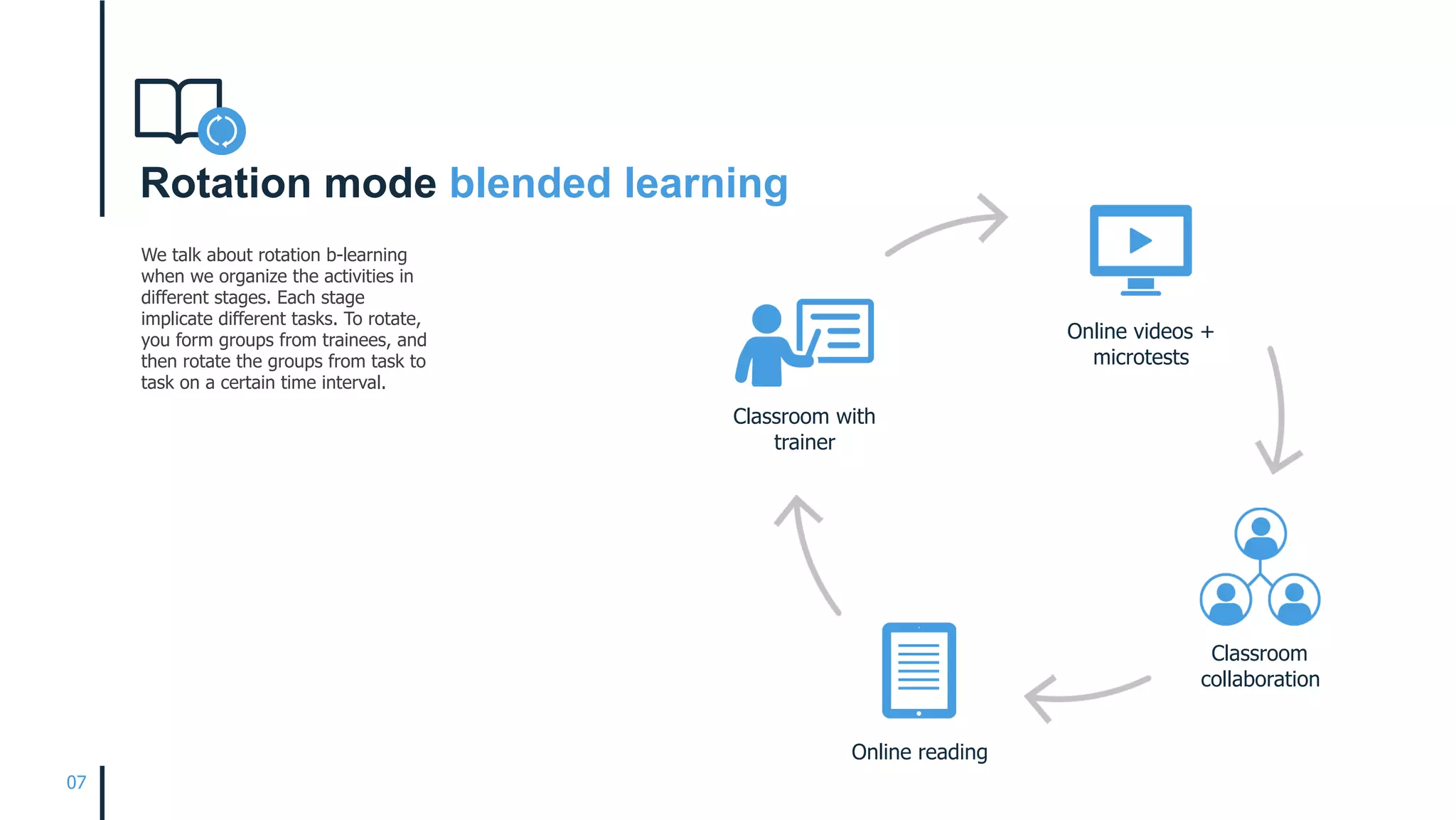
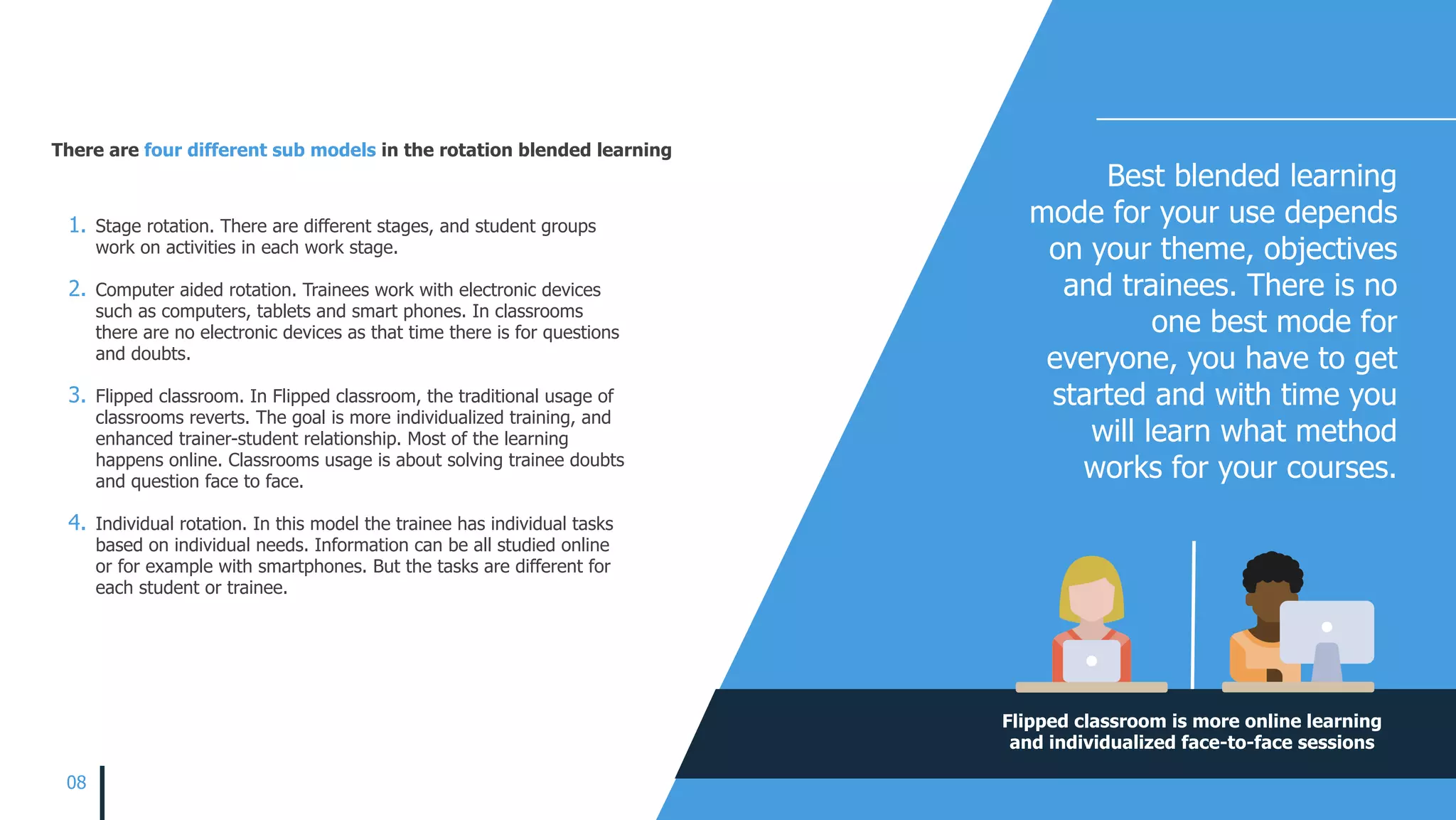
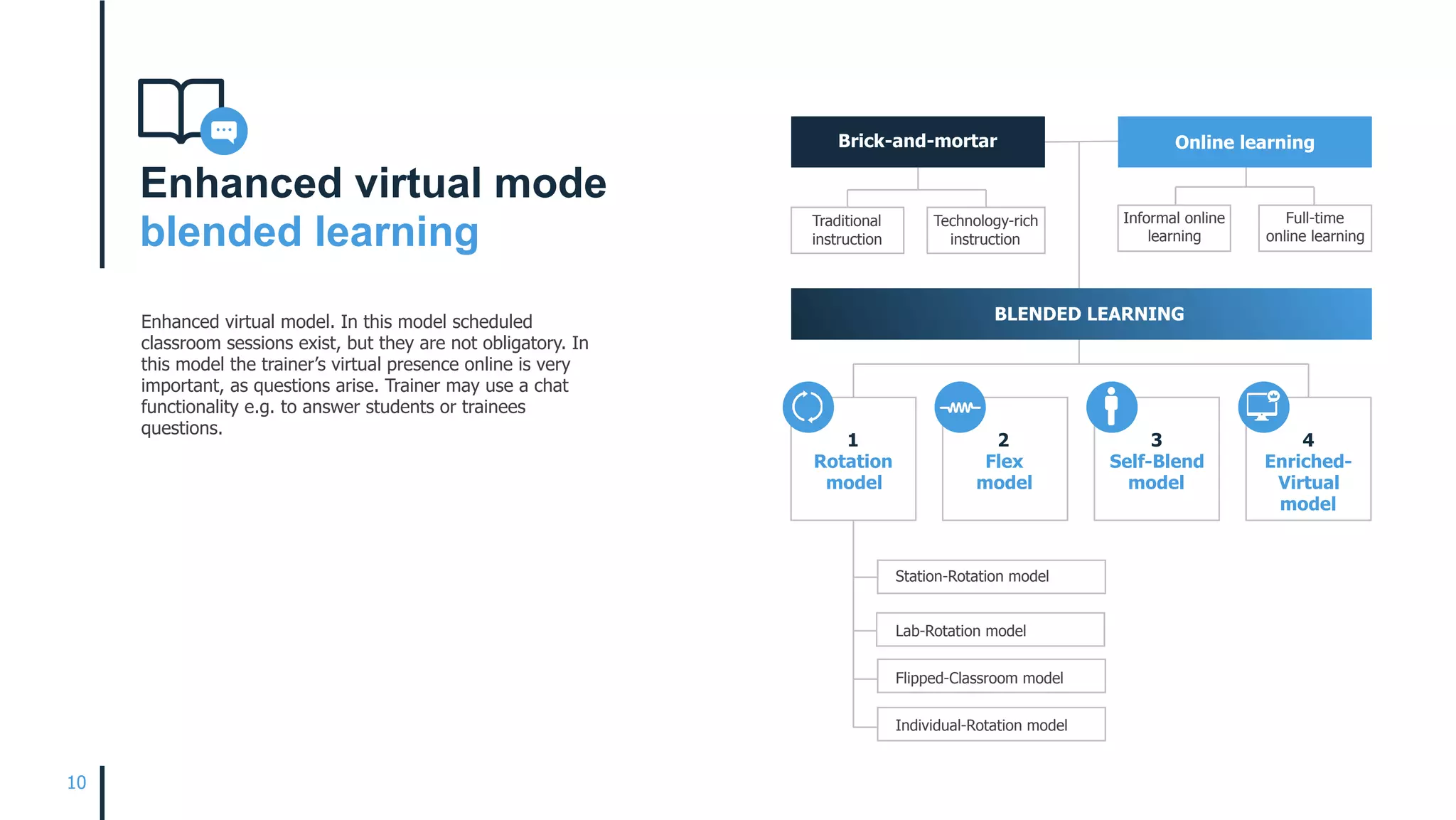
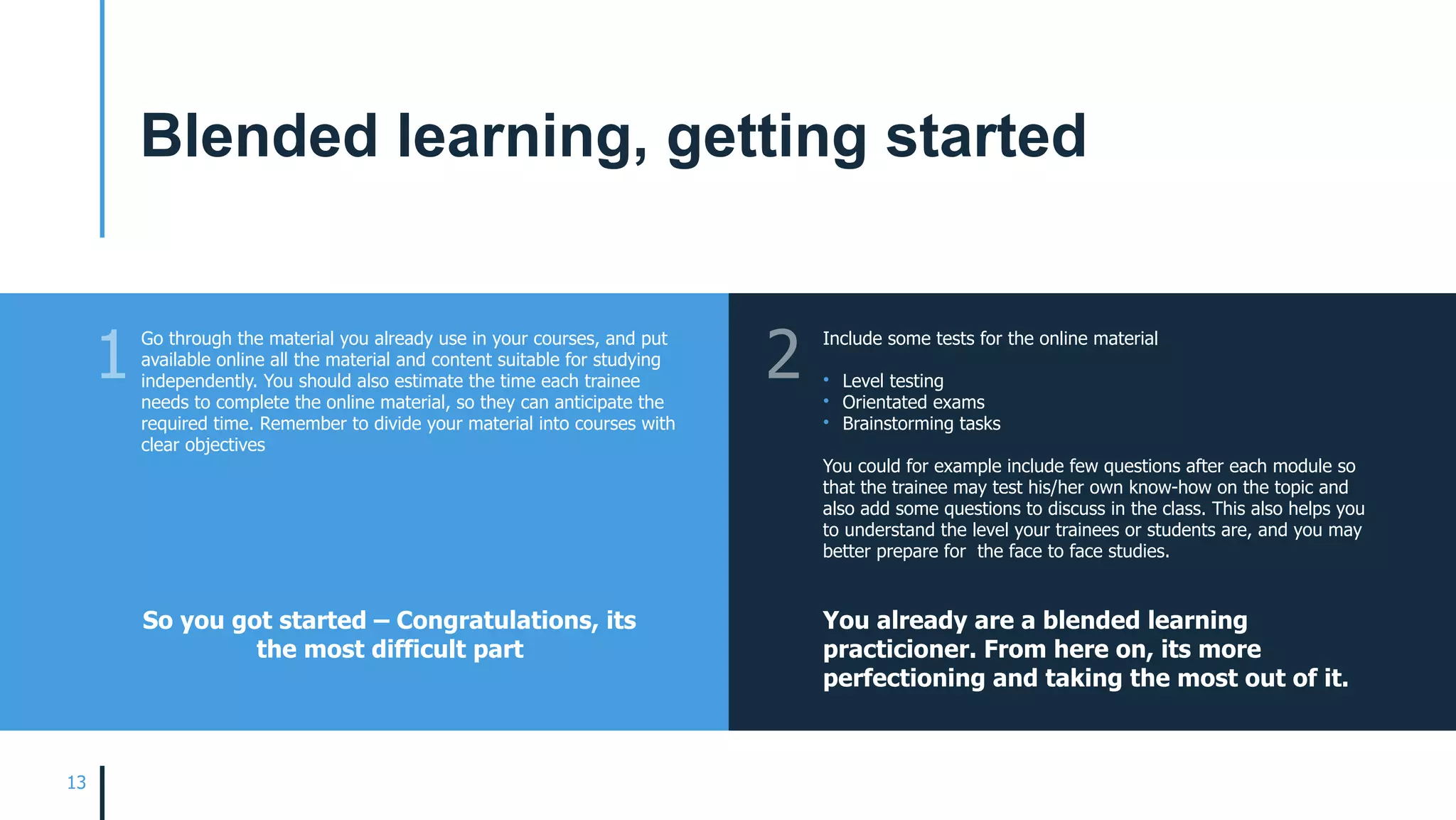
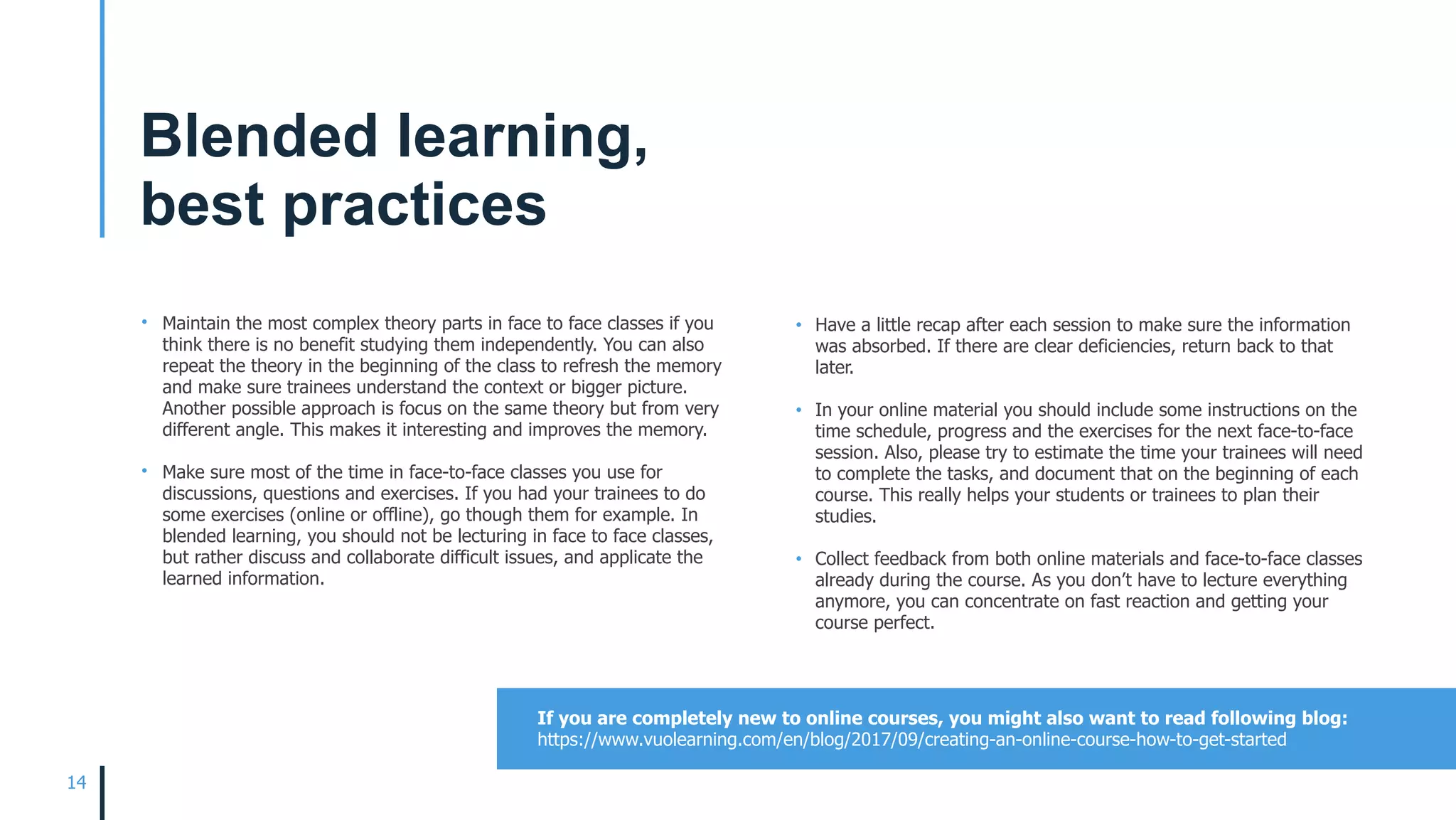
This document provides an overview of blended learning, including definitions, benefits, modes, examples, and best practices. Blended learning combines face-to-face instruction with online learning to blend the strengths of each. It allows flexibility for students to learn both in the classroom and online. The four main blended learning modes are rotation, flexible, menu, and enhanced virtual. Examples of successful blended learning implementations include the Electrical Training Alliance, schools in San Diego, Cisco, and Ernst & Young. The document provides tips for getting started with blended learning and best practices like focusing face-time on discussions and exercises.