BLADDER PHYSIOLOGY
AND DISORDERS.
DR SUHAIL RAFIK
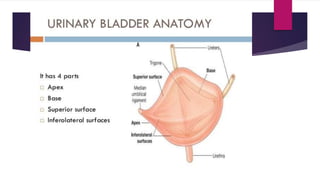
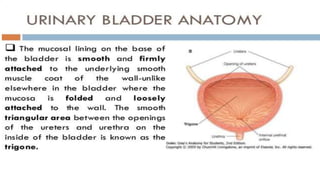
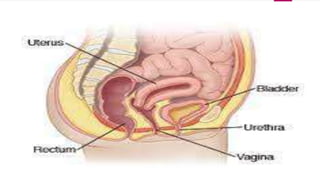
ANATOMY
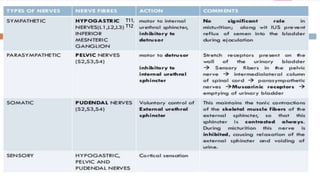
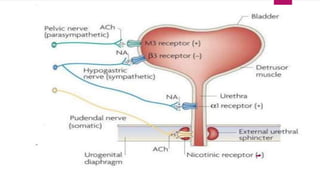
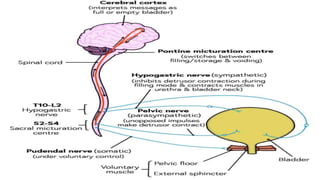
NERVE SUPPLY OF BLADDER
T11,
T12
NERVE SUPPLY
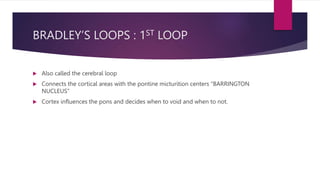
BRADLEY’S LOOPS : 1ST LOOP
 Also called the cerebral loop
 Connects the cortical areas with the pontine micturition centers “BARRINGTON
NUCLEUS”
 Cortex influences the pons and decides when to void and when to not.
BRADLEY’S LOOP
BRADLEY’S LOOP
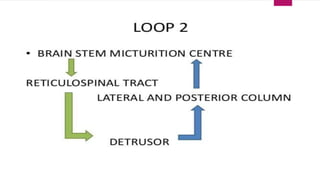
LOOP 2
 Functions between the pons and the bladder
 Gets affected in any lesion involving the spinal cord above the sacral center
BRADLEY’S LOOP
LOOP 3
 Detrusor contraction sends
Afferent to Pudendal Nerve nucleus i.e.Onuff’s nucleus(somatic)
Inhibits external urethral sphincter
Hence the sphincter relaxes and allows voiding
LOOP 4
 “Urethral reflex”
 Flow of urine into the urethra stimulates the local plexuses and further helps in
relaxation of the external sphincter
 Helps in voiding
5th LOOP
 Cortex influences the Onuff’s nucleus
 Which sends signals via somatic pudendal nerve
 Relaxes the external sphincter and helps voiding
 “Meaning everyone can voluntarily void even without a full bladder” because your
cortex decided so.
BLADDER CONTROL CENTERS
BARRINGTONS NUCLEUS
FIRST SIGNAL
AT 150 ML
STIMULATES A
FIBRES
SECOND SIGNAL
AT 400ML
STIMULATES BOTH
A FIBRES AND PAIN
FIBRES
BLADDER DISORDERS
EAU GUIDELINES ON NEURO-UROLOGY
PRE VOID :
frequency
Urgency
Urge incontinence
NORMAL VOIDING
NO POST VOID
RESIDUE
PREVOID:
UMN features
VOID:
Hesitancy
Cannot hold in between
Detrussor-sphincter
dysynergia
Double void
POST VOID:
Residual urine present
PRE VOID:
Normal
VOID:
Hesitancy
Poor or absent flow
Overflow
incontinence
POST VOID:
Increased residual
urine
1
2
3
LAPIDES CLASSIFICATION OF BLADDER DISORDERS
UNINHIBITED CORTICAL BLADDER
 Suprapontine lesion
 Bradley’s loop 1 affected
 Cortical pons pathway affected
 No social inhibiton
 Voids at wrong time, wrong place
 Small, spastic bladder
 Increased frequency
 Seen in :
 Cerebrovascular accidents
 Frontal tumors
 Parasaggital meningiomas
 Normal Pressure Hydrocephalus : gait disturbance, cognitive impairment, impaired bladder control.
 ACA aneurysm
 Parkinsons disease
 Demyelinating conditions
AUTOMATIC / REFLEX BLADDER
 Infrapontine lesions
 Sacral Reflex arc intact
 The Pons decision over switching between bladder filling and voiding- lost
 Frequent small voids
 Small bladder
 Seen in Multiple sclerosis / spinal cord tumours / spinal cord trauma.
AUTONOMOUS BLADDER
 Sacral or infrasacral lesion
 No nervous control over bladder
 Acts independently
 LMN bladder
 Large volume residual urine present
 Seen in conus medularis / cauda equine syndrome / peripheral neuropathy
SENSORY PARALYTIC BLADDER
 Isolated afferent denervation lesions
 No sensation of bladder filling
 Bladder overdistended
 Overflow incontinence
 Voluntary voiding needed
 Motor innervation intact
 Saddle anaesthesia present (s2,s3,s4 afferent lost)
 Seen In : multiple sclerosis / diabetes mellitus / tabes dorsalis
MOTOR PARALYTIC BLADDER
 LMN bladder
 Isolated motor denervation lesions
 Bladder sensation present
 Painful urine retention
 Bulbocavernous and anal reflex absent
 Has to void by Credes’ maneuver - pressure over distended bladder /lower abdomen
 Seen in lumbosacral meningomyelocoele / lumbar canal stenosis / extensive pelvic surgery / poliomyelitis /
polyradiculopathy
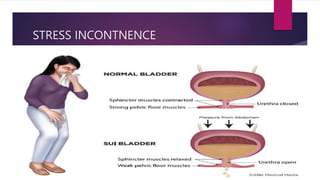
STRESS INCONTNENCE
 Normally during coughing/ sneezing intra abdominal pressure increases
 However urinary continence is maintained as the Nucleus retroambiguous sends signals to
ventrolateral medulla
 Stimulates the Onuff’s nucleus
 Contracts the external sphincter and pelvic floor muscles
 Multiple pregnancy and childbirth with instrumentation damages the pelvic integrity – stress
incontinence
TREATMENT
 The primary aims in treating neurourological disorders are:
 1. protection of the upper urinary tract;
 2. improvement of urinary continence;
 3. restoration of (parts of) the LUT function;
 4. improvement of the patient’s QoL.
 Further considerations are the patient’s disability, cost-effectiveness, technical
complexity, and possible complications
 Conservative treatment
 Assisted bladder emptying Triggered reflex voiding is not recommended as there
is a risk of pathologically elevated bladder pressures. Only in the case of absence,
or surgically reduced outlet obstruction it may be an option.
 Caution: bladder compression techniques to expel urine (Credé) and voiding by
abdominal straining (Valsalva manoeuvre) create high pressures and are
potentially hazardous, and their use should be discouraged
 Rehabilitation
 In selected patients, pelvic floor muscle exercises, pelvic floor electro-stimulation,
and biofeedback might be beneficial
 External appliances
 Social continence for the incontinent patient can be achieved using an appropriate
appropriate method of urine collection.
 Medical therapy
 A single, optimal, medical therapy for patients with neurourological symptoms is
not yet available. Muscarinic receptor antagonists are the first-line choice for
treating neurourological disorders.
REFERENCES
 EAU guidelines on neurourology
 DeJong’s The Neurologic Examination
 Localization in Clinical neurology
THANK YOU
 THANK YOU

BLADDER PHYSIOLOGY AND DISORDERS-1.pptx

  • 1.
  • 2.
  • 8.
  • 9.
  • 10.
  • 11.
    BRADLEY’S LOOPS :1ST LOOP  Also called the cerebral loop  Connects the cortical areas with the pontine micturition centers “BARRINGTON NUCLEUS”  Cortex influences the pons and decides when to void and when to not.
  • 12.
  • 13.
  • 14.
    LOOP 2  Functionsbetween the pons and the bladder  Gets affected in any lesion involving the spinal cord above the sacral center
  • 15.
  • 16.
    LOOP 3  Detrusorcontraction sends Afferent to Pudendal Nerve nucleus i.e.Onuff’s nucleus(somatic) Inhibits external urethral sphincter Hence the sphincter relaxes and allows voiding
  • 17.
    LOOP 4  “Urethralreflex”  Flow of urine into the urethra stimulates the local plexuses and further helps in relaxation of the external sphincter  Helps in voiding
  • 18.
    5th LOOP  Cortexinfluences the Onuff’s nucleus  Which sends signals via somatic pudendal nerve  Relaxes the external sphincter and helps voiding  “Meaning everyone can voluntarily void even without a full bladder” because your cortex decided so.
  • 19.
  • 20.
    BARRINGTONS NUCLEUS FIRST SIGNAL AT150 ML STIMULATES A FIBRES SECOND SIGNAL AT 400ML STIMULATES BOTH A FIBRES AND PAIN FIBRES
  • 23.
  • 24.
    EAU GUIDELINES ONNEURO-UROLOGY PRE VOID : frequency Urgency Urge incontinence NORMAL VOIDING NO POST VOID RESIDUE PREVOID: UMN features VOID: Hesitancy Cannot hold in between Detrussor-sphincter dysynergia Double void POST VOID: Residual urine present PRE VOID: Normal VOID: Hesitancy Poor or absent flow Overflow incontinence POST VOID: Increased residual urine 1 2 3
  • 25.
    LAPIDES CLASSIFICATION OFBLADDER DISORDERS
  • 26.
    UNINHIBITED CORTICAL BLADDER Suprapontine lesion  Bradley’s loop 1 affected  Cortical pons pathway affected  No social inhibiton  Voids at wrong time, wrong place  Small, spastic bladder  Increased frequency
  • 28.
     Seen in:  Cerebrovascular accidents  Frontal tumors  Parasaggital meningiomas  Normal Pressure Hydrocephalus : gait disturbance, cognitive impairment, impaired bladder control.  ACA aneurysm  Parkinsons disease  Demyelinating conditions
  • 29.
    AUTOMATIC / REFLEXBLADDER  Infrapontine lesions  Sacral Reflex arc intact  The Pons decision over switching between bladder filling and voiding- lost  Frequent small voids  Small bladder  Seen in Multiple sclerosis / spinal cord tumours / spinal cord trauma.
  • 30.
    AUTONOMOUS BLADDER  Sacralor infrasacral lesion  No nervous control over bladder  Acts independently  LMN bladder  Large volume residual urine present  Seen in conus medularis / cauda equine syndrome / peripheral neuropathy
  • 31.
    SENSORY PARALYTIC BLADDER Isolated afferent denervation lesions  No sensation of bladder filling  Bladder overdistended  Overflow incontinence  Voluntary voiding needed  Motor innervation intact  Saddle anaesthesia present (s2,s3,s4 afferent lost)  Seen In : multiple sclerosis / diabetes mellitus / tabes dorsalis
  • 32.
    MOTOR PARALYTIC BLADDER LMN bladder  Isolated motor denervation lesions  Bladder sensation present  Painful urine retention  Bulbocavernous and anal reflex absent  Has to void by Credes’ maneuver - pressure over distended bladder /lower abdomen  Seen in lumbosacral meningomyelocoele / lumbar canal stenosis / extensive pelvic surgery / poliomyelitis / polyradiculopathy
  • 34.
  • 35.
     Normally duringcoughing/ sneezing intra abdominal pressure increases  However urinary continence is maintained as the Nucleus retroambiguous sends signals to ventrolateral medulla  Stimulates the Onuff’s nucleus  Contracts the external sphincter and pelvic floor muscles  Multiple pregnancy and childbirth with instrumentation damages the pelvic integrity – stress incontinence
  • 36.
    TREATMENT  The primaryaims in treating neurourological disorders are:  1. protection of the upper urinary tract;  2. improvement of urinary continence;  3. restoration of (parts of) the LUT function;  4. improvement of the patient’s QoL.  Further considerations are the patient’s disability, cost-effectiveness, technical complexity, and possible complications
  • 37.
     Conservative treatment Assisted bladder emptying Triggered reflex voiding is not recommended as there is a risk of pathologically elevated bladder pressures. Only in the case of absence, or surgically reduced outlet obstruction it may be an option.  Caution: bladder compression techniques to expel urine (Credé) and voiding by abdominal straining (Valsalva manoeuvre) create high pressures and are potentially hazardous, and their use should be discouraged
  • 38.
     Rehabilitation  Inselected patients, pelvic floor muscle exercises, pelvic floor electro-stimulation, and biofeedback might be beneficial
  • 39.
     External appliances Social continence for the incontinent patient can be achieved using an appropriate appropriate method of urine collection.  Medical therapy  A single, optimal, medical therapy for patients with neurourological symptoms is not yet available. Muscarinic receptor antagonists are the first-line choice for treating neurourological disorders.
  • 40.
    REFERENCES  EAU guidelineson neurourology  DeJong’s The Neurologic Examination  Localization in Clinical neurology
  • 41.