 A paraprotein is a monoclonal immunoglobulin or light chain present in the blood or
urine ( Bence Jones protein); it is produced by a clonal population of mature B cells, most
commonly plasma cells.
 Major causes of paraproteinemias include:
 Malignant B‐cell disorders
Multiple myeloma (IgG, IgA, IgD, IgE, or κ, λ free light chains). Symptomatic myeloma
Asymptomatic myeloma, Plasma cell leukaemia, Non‐secretory myeloma
POEMS: Polyneuropathy, organomegaly, endocrinopathy, M‐protein, skin changes
Plasmacytoma: Solitary plasmacytoma of bone.
Lymphoproliferative disorders: Chronic lymphocytic leukaemia, Non‐Hodgkin
lymphomas including lymphoplasmacytic lymphoma(Waldenstrom
macroglobulinaemia)
Heavy chain diseaseγ, α, μ
Amyloidosis (AL)
 MGUS
Paraprotein detected with no evidence of other B cell disorder
 Non‐malignant systemic disease
Autoimmune disease: Rheumatoid arthritis, Scleroderma, Hashimoto thyroiditis
Cutaneous disease: Pyoderma gangrenosum, Necrobiotic xanthogranulomatosis
Liver disease: Hepatitis/cirrhosis
Infectious disease: Mycobacterium tuberculosis, Bacterial endocarditis
 Satyan a 68 yr old male presented with chief complaint of lower abdominal pain. He
was being evaluated in the Surgery department for the same where they found that
he had a ureteric stone. He was being prepared for surgery when they found that the
patient had anemia. He was referred to the medicine department for evaluation of the
anemia.
 The patient has a history of generalized aches and pains since the past 2 years
especially in the back and over the ribs. However there was no persistent pain over
any specific area. There was no history of any associated trauma.
 He has no history of any comorbidities.
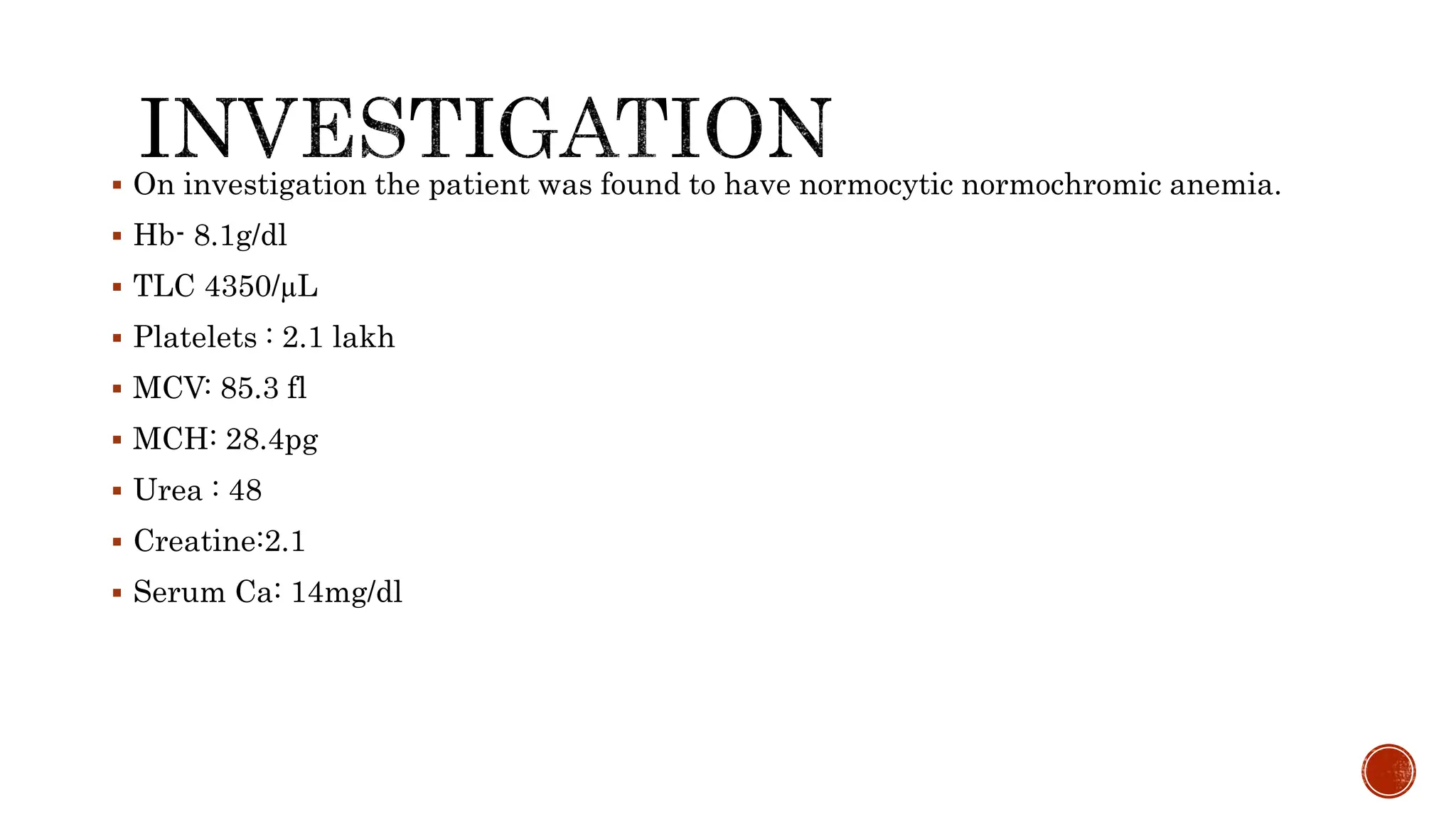
 On investigation the patient was found to have normocytic normochromic anemia.
 Hb- 8.1g/dl
 TLC 4350/µL
 Platelets : 2.1 lakh
 MCV: 85.3 fl
 MCH: 28.4pg
 Urea : 48
 Creatine:2.1
 Serum Ca: 14mg/dl
 Urine for BJP: Positive
 Serum Protein electrophoresis : M Band
 Bone Marrow biopsy showed: Clonal proliferation of plasma cells >60%
 A malignant proliferation of plasma cells derived from a single clone.
 Cause is not known
 More frequently seen among farmers, wood workers and those exposed to
petroleum products.
 Errors in switch recombination, the genetic mechanism to change antibody heavy
chain isotype participate in the early tranasformation process.
 Myeloma increases in incidence with age
 The median age at diagnosis was 69, it is uncommon under the age of 40.
 Males are more commonly affected than females, and blacks have nearly twice the
incidence of whites.
 MM cells bind via cell-surface adhesion molecules to bone marrow stromal cells
(BMSCs) and extracellular matrix (ECM), which triggers MM cell growth, survival,
drug resistance, and migration into the bone marrow.
 Bone pain: Most common symptom. The bone lesions of myeloma are caused by the
proliferation of tumor cells, activation of osteoclasts that destroy bone,and
suppression of osteoblasts that form new bone. The increased osteoclast activity is
mediated by osteoclast activating factors (OAFs) produced by the myeloma cells
(mediated by several cytokines, includingIL-1, lymphotoxin, vascular endothelial
growth factor [VEGF],receptor activator of nuclear factor-κB [RANK] ligand,
macrophageinhibitory factor [MIP]-1α, and tumor necrosis factor [TNF]). The bone
lesions are lytic in nature. Localized bone lesions may cause the collapse of vertebrae, leading
to spinal cord compression.
 Hypercalcemia: The bony lysis results in substantial mobilization of calcium from bone, and
serious acute and chronic complications of hypercalcemia
 Infections: The most common infections are pneumonias and pyelonephritis, and the most
frequent pathogens are Streptococcus pneumoniae, Staphylococcus aureus, and Klebsiella
pneumoniae in the lungs and Escherichia coli and other gram-negative organisms in the urinary
tract.
 The susceptibility to infection has several contributing causes. First, patients with myeloma have
diffuse hypogammaglobulinemia if the M component is excluded. The hypogammaglobulinemia is
related to both decreased production and increased destruction of normal antibodies. Some patients
generate circulating regulatory cells in response to their myeloma that can suppress normal
antibody synthesis. Various abnormalities in T-cell function are also observed including decreased
TH1 response, increase in TH17 cells producing proinflammatory cytokines, and aberrant T
regulatory cell function. Granulocyte lysozyme content is low, and granulocyte migration is not as
rapid as normal in patients with myeloma, probably the result of a tumour product. There are also a
variety of abnormalities in complement functions in myeloma patients.
 Renal Failure: Hypercalcemia is the most common cause of renal failure. Glomerular deposits of
amyloid, hyperuricemia, recurrent infections, frequent use of nonsteroidal anti-inflammatory agents
for pain control, use of iodinated contrast dye for imaging, bisphosphonate use, and occasional
infiltration of the kidney by myeloma cells all may contribute to renal dysfunction.
 Tubular damage associated with the excretion of light chains is almost always present. Normally,
light chains are filtered, reabsorbed in the tubules, and catabolized. With the increase in the amount
of light chains presented to the tubule, the tubular cells become overloaded with these proteins, and
tubular damage results either directly from light chain toxic effects or indirectly from the release of
intracellular lysosomal enzymes. The earliest manifestation of this tubular damage is the adult
Fanconi’s syndrome (a type 2 proximal renal tubular acidosis), with loss of glucose and amino acids,
as well as defects in the ability of the kidney to acidify and concentrate the urine. The proteinuria is
not accompanied by hypertension, and the protein is nearly all light chains. Generally, very little
albumin is in the urine because glomerular function is usually normal. Patients with myeloma also
have a decreased anion gap [i.e., Na+ – (Cl− + HCO3−)] because the M component is cationic,
resulting in retention of chloride. Renal dysfunction due to light chain deposition disease, light chain
cast nephropathy, and amyloidosis is partially reversible with effective therapy
Anemia: Normocytic and normochromic anemia occurs in ~80% of myeloma
patients. It is usually related to the replacement of normal marrow by expanding
tumor cells, to the inhibition of hematopoiesis by factors made by the tumor, to
reduced production of erythropoietin by the kidney, and to the effects of long-term
therapy.
 Granulocytopenia and thrombocytopenia are rare except when therapy-induced.
 Clotting abnormalities may be seen due to the failure ofantibody-coated platelets to function
properly; the interaction of the M component with clotting factors I, II, V, VII, or VIII; antibody to
clotting factors; or amyloid damage of endothelium. Raynaud’s phenomenon and impaired
circulation may result if the M component forms cryoglobulins, and hyperviscosity syndromes may
develop depending on the physical properties of the M component (most common with IgM, IgG3,
and IgA paraproteins)
 Neuropathy associated with monoclonal gammopathy of undetermined significance (MGUS) and
myeloma is more frequently sensory than motor neuropathy and is associated with IgM more than
other isotypes.
 Three important classes of agents approved for treatment of newly diagnosed MM are
immunomodulatory agents, proteasome inhibitors, and targeted antibodies.
 Lenalidomide, an immunomodulatory derivative of thalidomide, and bortezomib, a proteasome
inhibitor, have each been combined with dexamethasone with high response rates (>80%) in newly
diagnosed patients with MM.
 Usually between four and six cycles of these combination regimens are utilized to achieve initial
deep cytoreduction before consideration of high-dose therapy with autologous stem cell
transplantation.
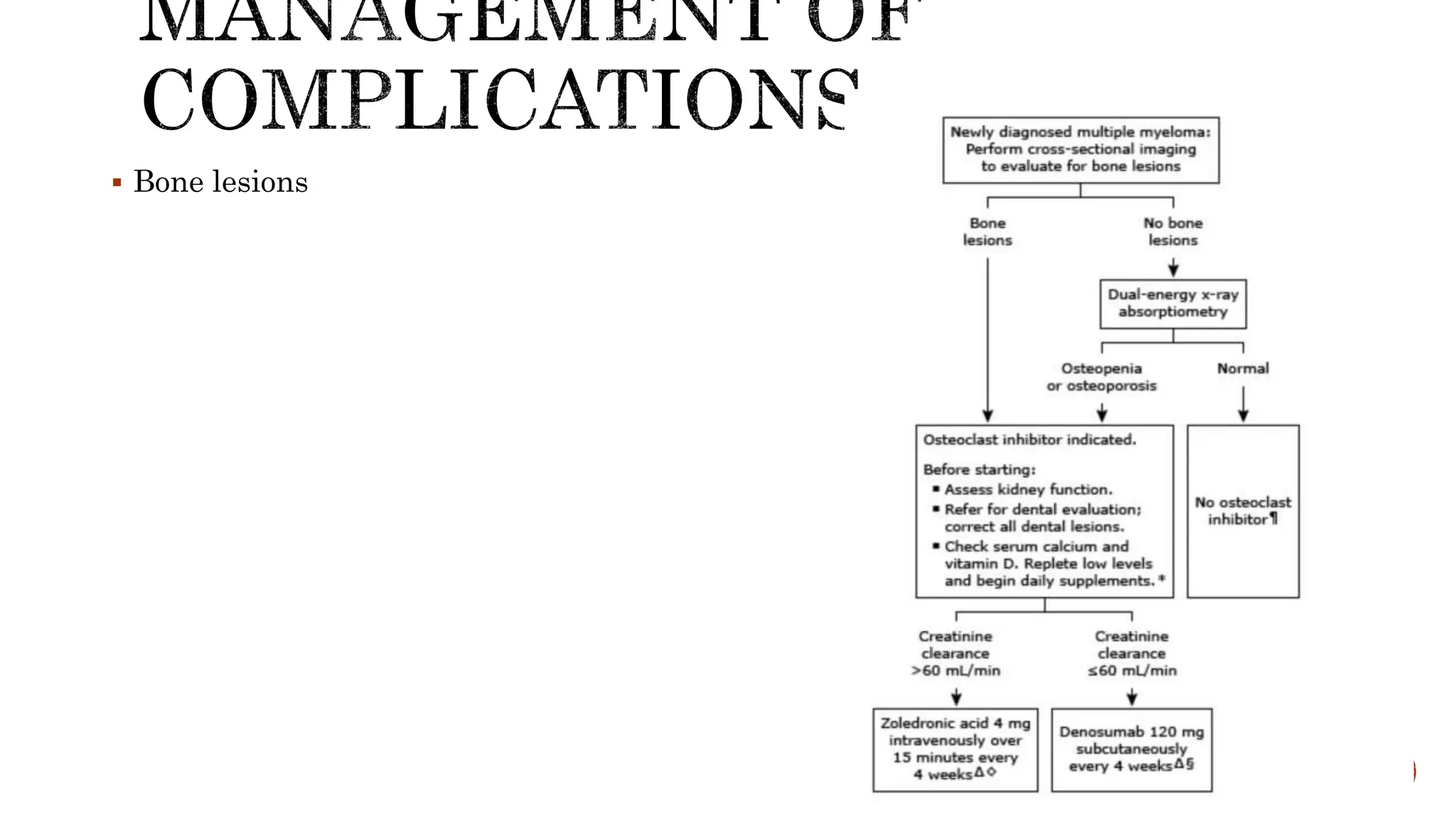
 Bone lesions
 Herpes zoster prophylaxis is indicated if bortezomib is used. Lenalidomide use requires prophylaxis
for deep-vein thrombosis (DVT) with either aspirin or, if patients are at a greater risk of DVT,
warfarin, low-molecular-weight heparin, or direct acting anticoagulants.
 Hypercalcemia generally responds well to bisphosphonates, glucocorticoid therapy, hydration, and
natriuresis and rarely requires calcitonin as well.
 Kyphoplasty or vertebroplasty should be considered in patients with painful collapsed vertebra.
 Renal Failure: Plasmapheresis is better then hemodialysis or peritoneal dialysis in reversing the
acute kidney injury. Reducing the protein load by effective antitumor therapy with agents such as
bortezomib may result in improvement in renal function in over half of the patients.
 The anemia associated with myeloma may respond to erythropoietin along with hematinics (iron,
folate, cobalamin).
 Plasmapheresis may be the treatment of choice for hyperviscosity
 syndromes
 Achieving clinical remission, defined as disappearance of serum and urine monoclonal protein with
normal bone marrow by light microscopy, has been a standard goal of therapy.
 The median overall survival of patients with myeloma is 8+ years, with subsets of younger patients
surviving >10 years. The major causes of death are progressive myeloma, renal failure, sepsis, or
therapy-related myelodysplasia. Nearly a quarter of patients die of myocardial infarction, chronic
lung disease, diabetes, or stroke, which are all intercurrent illnesses related more to the age of the
patient group than to the tumor.
 Relapsed myeloma can be treated with a number of agents including lenalidomide and/or
bortezomib, if previously not used. The second-generation proteasome inhibitor carfilzomib
and immunomodulatory agent pomalidomide have shown efficacy in relapsed and refractory
MM, even MM refractory to lenalidomide and bortezomib.
multiple myeloma features and findings including treatment

multiple myeloma features and findings including treatment

  • 2.
     A paraproteinis a monoclonal immunoglobulin or light chain present in the blood or urine ( Bence Jones protein); it is produced by a clonal population of mature B cells, most commonly plasma cells.
  • 3.
     Major causesof paraproteinemias include:  Malignant B‐cell disorders Multiple myeloma (IgG, IgA, IgD, IgE, or κ, λ free light chains). Symptomatic myeloma Asymptomatic myeloma, Plasma cell leukaemia, Non‐secretory myeloma POEMS: Polyneuropathy, organomegaly, endocrinopathy, M‐protein, skin changes Plasmacytoma: Solitary plasmacytoma of bone. Lymphoproliferative disorders: Chronic lymphocytic leukaemia, Non‐Hodgkin lymphomas including lymphoplasmacytic lymphoma(Waldenstrom macroglobulinaemia) Heavy chain diseaseγ, α, μ Amyloidosis (AL)  MGUS Paraprotein detected with no evidence of other B cell disorder  Non‐malignant systemic disease Autoimmune disease: Rheumatoid arthritis, Scleroderma, Hashimoto thyroiditis Cutaneous disease: Pyoderma gangrenosum, Necrobiotic xanthogranulomatosis Liver disease: Hepatitis/cirrhosis Infectious disease: Mycobacterium tuberculosis, Bacterial endocarditis
  • 4.
     Satyan a68 yr old male presented with chief complaint of lower abdominal pain. He was being evaluated in the Surgery department for the same where they found that he had a ureteric stone. He was being prepared for surgery when they found that the patient had anemia. He was referred to the medicine department for evaluation of the anemia.  The patient has a history of generalized aches and pains since the past 2 years especially in the back and over the ribs. However there was no persistent pain over any specific area. There was no history of any associated trauma.  He has no history of any comorbidities.
  • 5.
     On investigationthe patient was found to have normocytic normochromic anemia.  Hb- 8.1g/dl  TLC 4350/µL  Platelets : 2.1 lakh  MCV: 85.3 fl  MCH: 28.4pg  Urea : 48  Creatine:2.1  Serum Ca: 14mg/dl
  • 6.
     Urine forBJP: Positive  Serum Protein electrophoresis : M Band  Bone Marrow biopsy showed: Clonal proliferation of plasma cells >60%
  • 11.
     A malignantproliferation of plasma cells derived from a single clone.
  • 12.
     Cause isnot known  More frequently seen among farmers, wood workers and those exposed to petroleum products.  Errors in switch recombination, the genetic mechanism to change antibody heavy chain isotype participate in the early tranasformation process.
  • 13.
     Myeloma increasesin incidence with age  The median age at diagnosis was 69, it is uncommon under the age of 40.  Males are more commonly affected than females, and blacks have nearly twice the incidence of whites.
  • 14.
     MM cellsbind via cell-surface adhesion molecules to bone marrow stromal cells (BMSCs) and extracellular matrix (ECM), which triggers MM cell growth, survival, drug resistance, and migration into the bone marrow.  Bone pain: Most common symptom. The bone lesions of myeloma are caused by the proliferation of tumor cells, activation of osteoclasts that destroy bone,and suppression of osteoblasts that form new bone. The increased osteoclast activity is mediated by osteoclast activating factors (OAFs) produced by the myeloma cells (mediated by several cytokines, includingIL-1, lymphotoxin, vascular endothelial growth factor [VEGF],receptor activator of nuclear factor-κB [RANK] ligand, macrophageinhibitory factor [MIP]-1α, and tumor necrosis factor [TNF]). The bone lesions are lytic in nature. Localized bone lesions may cause the collapse of vertebrae, leading to spinal cord compression.
  • 15.
     Hypercalcemia: Thebony lysis results in substantial mobilization of calcium from bone, and serious acute and chronic complications of hypercalcemia  Infections: The most common infections are pneumonias and pyelonephritis, and the most frequent pathogens are Streptococcus pneumoniae, Staphylococcus aureus, and Klebsiella pneumoniae in the lungs and Escherichia coli and other gram-negative organisms in the urinary tract.  The susceptibility to infection has several contributing causes. First, patients with myeloma have diffuse hypogammaglobulinemia if the M component is excluded. The hypogammaglobulinemia is related to both decreased production and increased destruction of normal antibodies. Some patients generate circulating regulatory cells in response to their myeloma that can suppress normal antibody synthesis. Various abnormalities in T-cell function are also observed including decreased TH1 response, increase in TH17 cells producing proinflammatory cytokines, and aberrant T regulatory cell function. Granulocyte lysozyme content is low, and granulocyte migration is not as rapid as normal in patients with myeloma, probably the result of a tumour product. There are also a variety of abnormalities in complement functions in myeloma patients.
  • 16.
     Renal Failure:Hypercalcemia is the most common cause of renal failure. Glomerular deposits of amyloid, hyperuricemia, recurrent infections, frequent use of nonsteroidal anti-inflammatory agents for pain control, use of iodinated contrast dye for imaging, bisphosphonate use, and occasional infiltration of the kidney by myeloma cells all may contribute to renal dysfunction.  Tubular damage associated with the excretion of light chains is almost always present. Normally, light chains are filtered, reabsorbed in the tubules, and catabolized. With the increase in the amount of light chains presented to the tubule, the tubular cells become overloaded with these proteins, and tubular damage results either directly from light chain toxic effects or indirectly from the release of intracellular lysosomal enzymes. The earliest manifestation of this tubular damage is the adult Fanconi’s syndrome (a type 2 proximal renal tubular acidosis), with loss of glucose and amino acids, as well as defects in the ability of the kidney to acidify and concentrate the urine. The proteinuria is not accompanied by hypertension, and the protein is nearly all light chains. Generally, very little albumin is in the urine because glomerular function is usually normal. Patients with myeloma also have a decreased anion gap [i.e., Na+ – (Cl− + HCO3−)] because the M component is cationic, resulting in retention of chloride. Renal dysfunction due to light chain deposition disease, light chain cast nephropathy, and amyloidosis is partially reversible with effective therapy
  • 17.
    Anemia: Normocytic andnormochromic anemia occurs in ~80% of myeloma patients. It is usually related to the replacement of normal marrow by expanding tumor cells, to the inhibition of hematopoiesis by factors made by the tumor, to reduced production of erythropoietin by the kidney, and to the effects of long-term therapy.  Granulocytopenia and thrombocytopenia are rare except when therapy-induced.  Clotting abnormalities may be seen due to the failure ofantibody-coated platelets to function properly; the interaction of the M component with clotting factors I, II, V, VII, or VIII; antibody to clotting factors; or amyloid damage of endothelium. Raynaud’s phenomenon and impaired circulation may result if the M component forms cryoglobulins, and hyperviscosity syndromes may develop depending on the physical properties of the M component (most common with IgM, IgG3, and IgA paraproteins)
  • 18.
     Neuropathy associatedwith monoclonal gammopathy of undetermined significance (MGUS) and myeloma is more frequently sensory than motor neuropathy and is associated with IgM more than other isotypes.
  • 21.
     Three importantclasses of agents approved for treatment of newly diagnosed MM are immunomodulatory agents, proteasome inhibitors, and targeted antibodies.  Lenalidomide, an immunomodulatory derivative of thalidomide, and bortezomib, a proteasome inhibitor, have each been combined with dexamethasone with high response rates (>80%) in newly diagnosed patients with MM.  Usually between four and six cycles of these combination regimens are utilized to achieve initial deep cytoreduction before consideration of high-dose therapy with autologous stem cell transplantation.
  • 23.
  • 24.
     Herpes zosterprophylaxis is indicated if bortezomib is used. Lenalidomide use requires prophylaxis for deep-vein thrombosis (DVT) with either aspirin or, if patients are at a greater risk of DVT, warfarin, low-molecular-weight heparin, or direct acting anticoagulants.  Hypercalcemia generally responds well to bisphosphonates, glucocorticoid therapy, hydration, and natriuresis and rarely requires calcitonin as well.  Kyphoplasty or vertebroplasty should be considered in patients with painful collapsed vertebra.  Renal Failure: Plasmapheresis is better then hemodialysis or peritoneal dialysis in reversing the acute kidney injury. Reducing the protein load by effective antitumor therapy with agents such as bortezomib may result in improvement in renal function in over half of the patients.  The anemia associated with myeloma may respond to erythropoietin along with hematinics (iron, folate, cobalamin).  Plasmapheresis may be the treatment of choice for hyperviscosity  syndromes
  • 25.
     Achieving clinicalremission, defined as disappearance of serum and urine monoclonal protein with normal bone marrow by light microscopy, has been a standard goal of therapy.  The median overall survival of patients with myeloma is 8+ years, with subsets of younger patients surviving >10 years. The major causes of death are progressive myeloma, renal failure, sepsis, or therapy-related myelodysplasia. Nearly a quarter of patients die of myocardial infarction, chronic lung disease, diabetes, or stroke, which are all intercurrent illnesses related more to the age of the patient group than to the tumor.
  • 26.
     Relapsed myelomacan be treated with a number of agents including lenalidomide and/or bortezomib, if previously not used. The second-generation proteasome inhibitor carfilzomib and immunomodulatory agent pomalidomide have shown efficacy in relapsed and refractory MM, even MM refractory to lenalidomide and bortezomib.

Editor's Notes

  • #8 Eccentric nucleus, basophilic cytoplasm and a perinuclear clear