NAME : DEEP ANAND
CLASS : 4th – C
ROLL NO.: 15
   INTRODUCTION

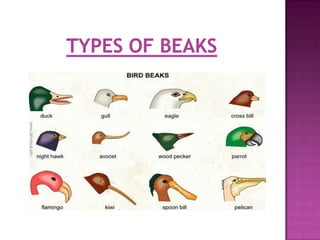
   BEAKS AND THEIR DIFFERENT TYPES

   FEET AND CLAWS
Birds  live at different places according to
their needs and body features.
 They have wings and most of them can
fly.
 They have light hollow bones and strong
muscles.
All the birds have two feet and a beak.
Their feet have claws.
Birds do not have any teeth, Therefore,
beak is used to tear, bite, chisel or crush the
food.
The shape of the beak is according to the
food habit of the bird.
Some birds use their beaks to fight with the
enemy or catch the prey or use it for
preening their feathers.
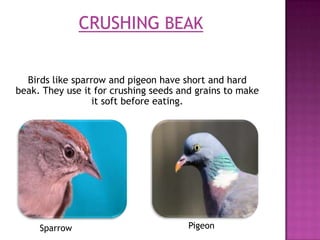
Birds like sparrow and pigeon have short and hard
beak. They use it for crushing seeds and grains to make
                 it soft before eating.


     Sparrow                           Pigeon
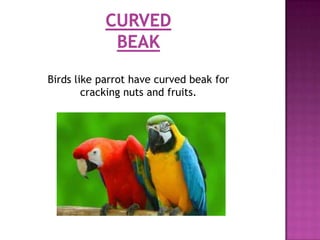
Birds like parrot have curved beak for
        cracking nuts and fruits.
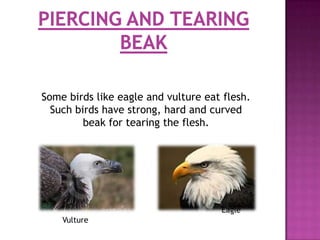
Some birds like eagle and vulture eat flesh.
  Such birds have strong, hard and curved
         beak for tearing the flesh.


                                     Eagle
    Vulture
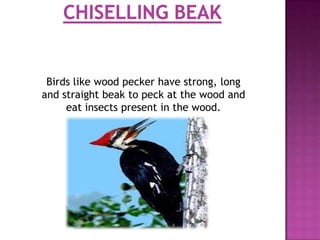
Birds like wood pecker have strong, long
and straight beak to peck at the wood and
     eat insects present in the wood.
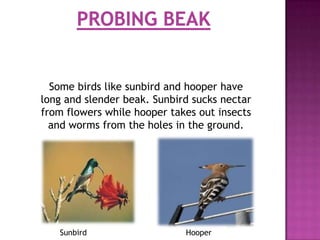
Some birds like sunbird and hooper have
long and slender beak. Sunbird sucks nectar
from flowers while hooper takes out insects
  and worms from the holes in the ground.


   Sunbird                   Hooper
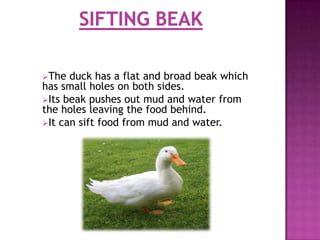
The  duck has a flat and broad beak which
has small holes on both sides.
Its beak pushes out mud and water from
the holes leaving the food behind.
It can sift food from mud and water.
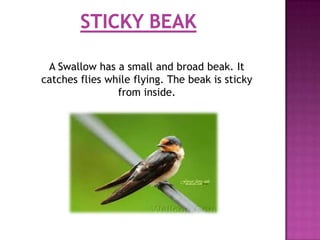
A Swallow has a small and broad beak. It
catches flies while flying. The beak is sticky
                from inside.
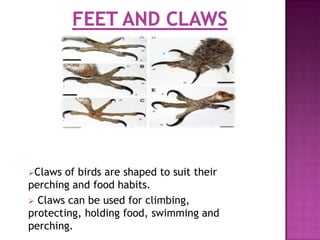
Claws of birds are shaped to suit their
perching and food habits.
 Claws can be used for climbing,
protecting, holding food, swimming and
perching.
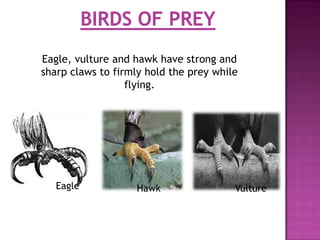
Eagle, vulture and hawk have strong and
sharp claws to firmly hold the prey while
                  flying.


   Eagle           Hawk                 Vulture
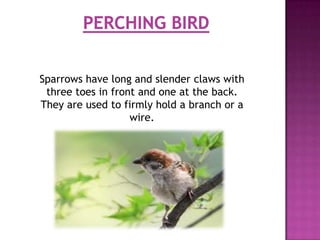
Sparrows have long and slender claws with
 three toes in front and one at the back.
They are used to firmly hold a branch or a
                   wire.
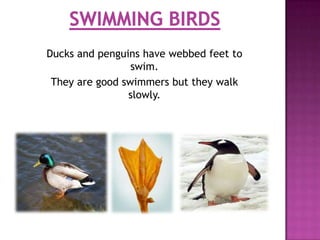
Ducks and penguins have webbed feet to
                 swim.
 They are good swimmers but they walk
                slowly.
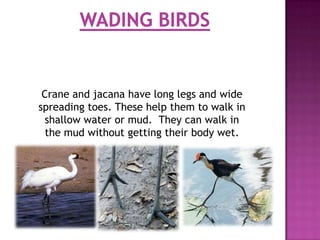
Crane and jacana have long legs and wide
spreading toes. These help them to walk in
  shallow water or mud. They can walk in
  the mud without getting their body wet.
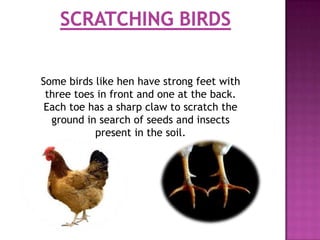
Some birds like hen have strong feet with
 three toes in front and one at the back.
 Each toe has a sharp claw to scratch the
  ground in search of seeds and insects
           present in the soil.
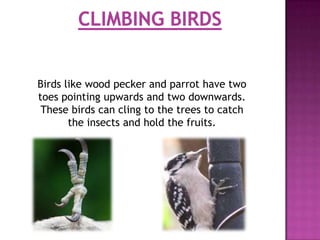
Birds like wood pecker and parrot have two
toes pointing upwards and two downwards.
 These birds can cling to the trees to catch
       the insects and hold the fruits.

Birds

  • 1.
    NAME : DEEPANAND CLASS : 4th – C ROLL NO.: 15
  • 2.
    INTRODUCTION  BEAKS AND THEIR DIFFERENT TYPES  FEET AND CLAWS
  • 3.
    Birds liveat different places according to their needs and body features.  They have wings and most of them can fly.  They have light hollow bones and strong muscles. All the birds have two feet and a beak. Their feet have claws.
  • 4.
    Birds do nothave any teeth, Therefore, beak is used to tear, bite, chisel or crush the food. The shape of the beak is according to the food habit of the bird. Some birds use their beaks to fight with the enemy or catch the prey or use it for preening their feathers.
  • 6.
    Birds like sparrowand pigeon have short and hard beak. They use it for crushing seeds and grains to make it soft before eating. Sparrow Pigeon
  • 7.
    Birds like parrothave curved beak for cracking nuts and fruits.
  • 8.
    Some birds likeeagle and vulture eat flesh. Such birds have strong, hard and curved beak for tearing the flesh. Eagle Vulture
  • 9.
    Birds like woodpecker have strong, long and straight beak to peck at the wood and eat insects present in the wood.
  • 10.
    Some birds likesunbird and hooper have long and slender beak. Sunbird sucks nectar from flowers while hooper takes out insects and worms from the holes in the ground. Sunbird Hooper
  • 11.
    The duckhas a flat and broad beak which has small holes on both sides. Its beak pushes out mud and water from the holes leaving the food behind. It can sift food from mud and water.
  • 12.
    A Swallow hasa small and broad beak. It catches flies while flying. The beak is sticky from inside.
  • 13.
    Claws of birdsare shaped to suit their perching and food habits.  Claws can be used for climbing, protecting, holding food, swimming and perching.
  • 14.
    Eagle, vulture andhawk have strong and sharp claws to firmly hold the prey while flying. Eagle Hawk Vulture
  • 15.
    Sparrows have longand slender claws with three toes in front and one at the back. They are used to firmly hold a branch or a wire.
  • 16.
    Ducks and penguinshave webbed feet to swim. They are good swimmers but they walk slowly.
  • 17.
    Crane and jacanahave long legs and wide spreading toes. These help them to walk in shallow water or mud. They can walk in the mud without getting their body wet.
  • 18.
    Some birds likehen have strong feet with three toes in front and one at the back. Each toe has a sharp claw to scratch the ground in search of seeds and insects present in the soil.
  • 19.
    Birds like woodpecker and parrot have two toes pointing upwards and two downwards. These birds can cling to the trees to catch the insects and hold the fruits.