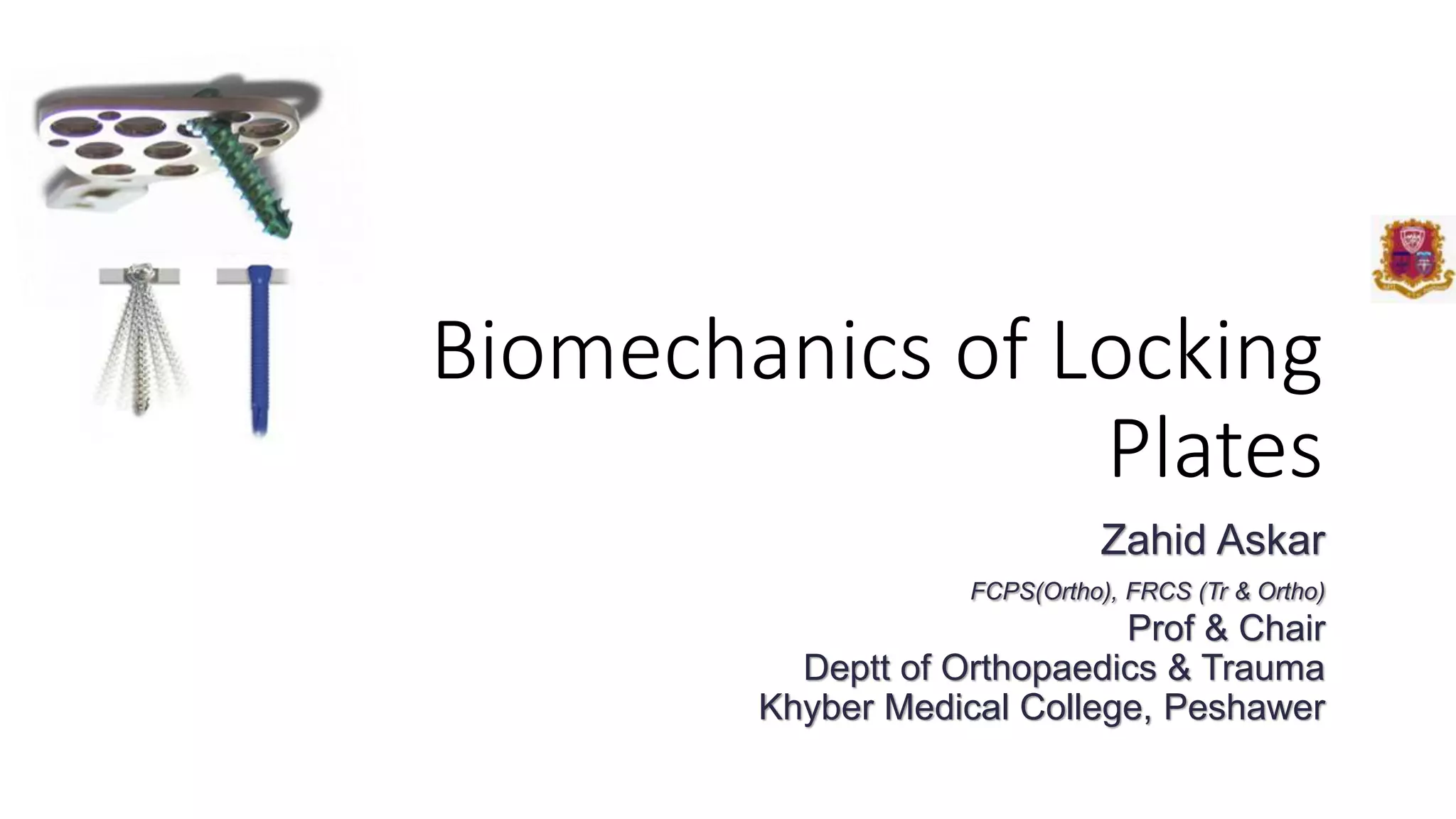
Biomechanics of Locking
Plates
Zahid Askar
FCPS(Ortho), FRCS (Tr & Ortho)
Prof & Chair
Deptt of Orthopaedics & Trauma
Khyber Medical College, Peshawer
Pre-requisites for a good fixation system
• Minimal operative dissection
• Minimal periosteal contact
• Resist physiological loads to allow fracture union
• Provide sufficient stability to permit early limb motion,
The forces that must be
overcome by any
method of fracture
fixation.
AXIAL
BENDING
TORSIONAL
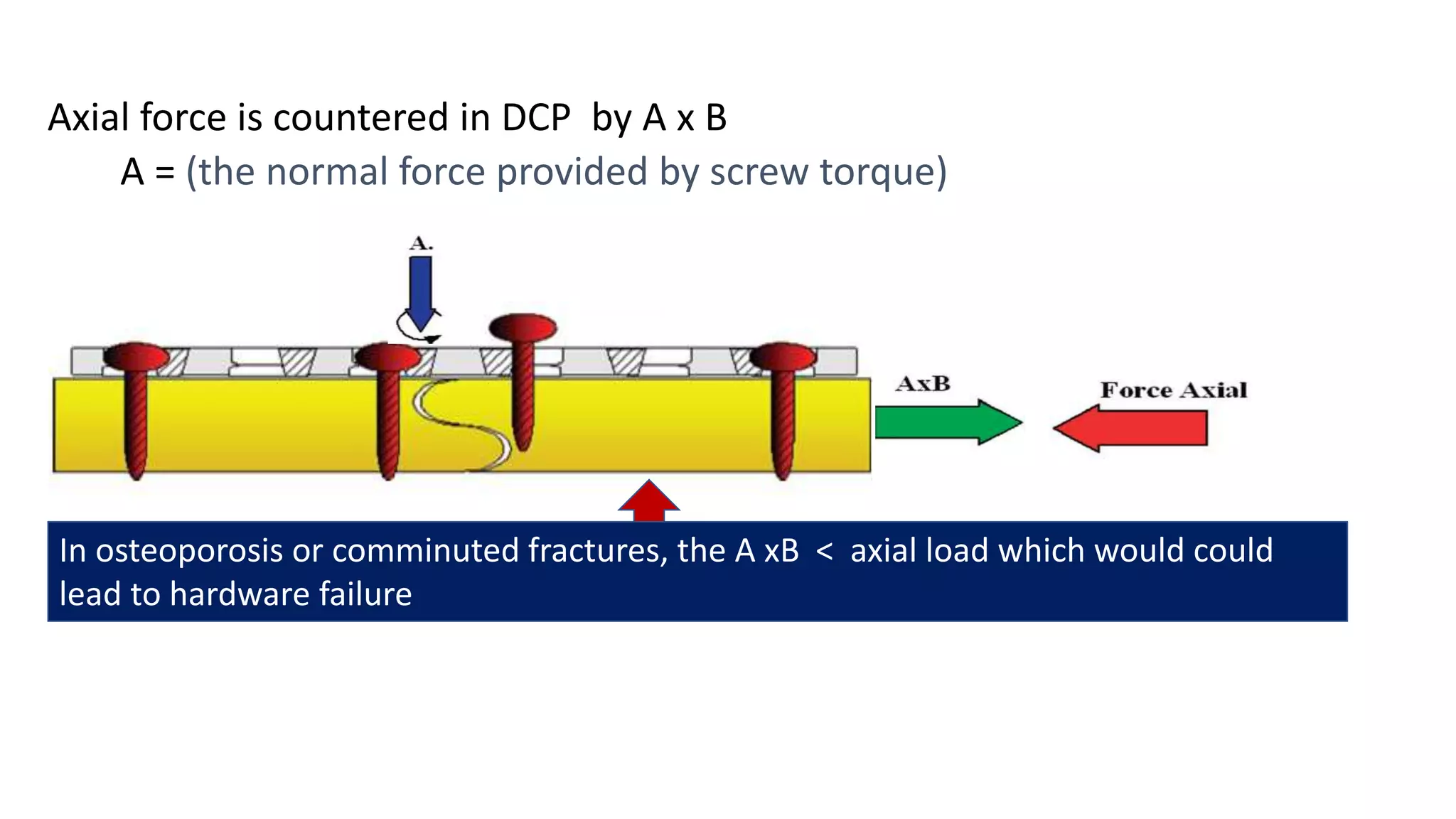
Axial force is countered in DCP by A x B
B
A = (the normal force provided by screw torque)
B = (the coefficient of friction between the plate and bone)In osteoporosis or comminuted fractures, the A xB < axial load which would could
lead to hardware failure
Limitations of Conventional Plates
• Failure in Osteopenic Bone------ Geriatrics
• Periosteal Avascularity --- ------- Tissue necrosis underneath the plate
• Percutaneous Plate ???
In the majority of fractures, conventional plating will do well
Locking Plates
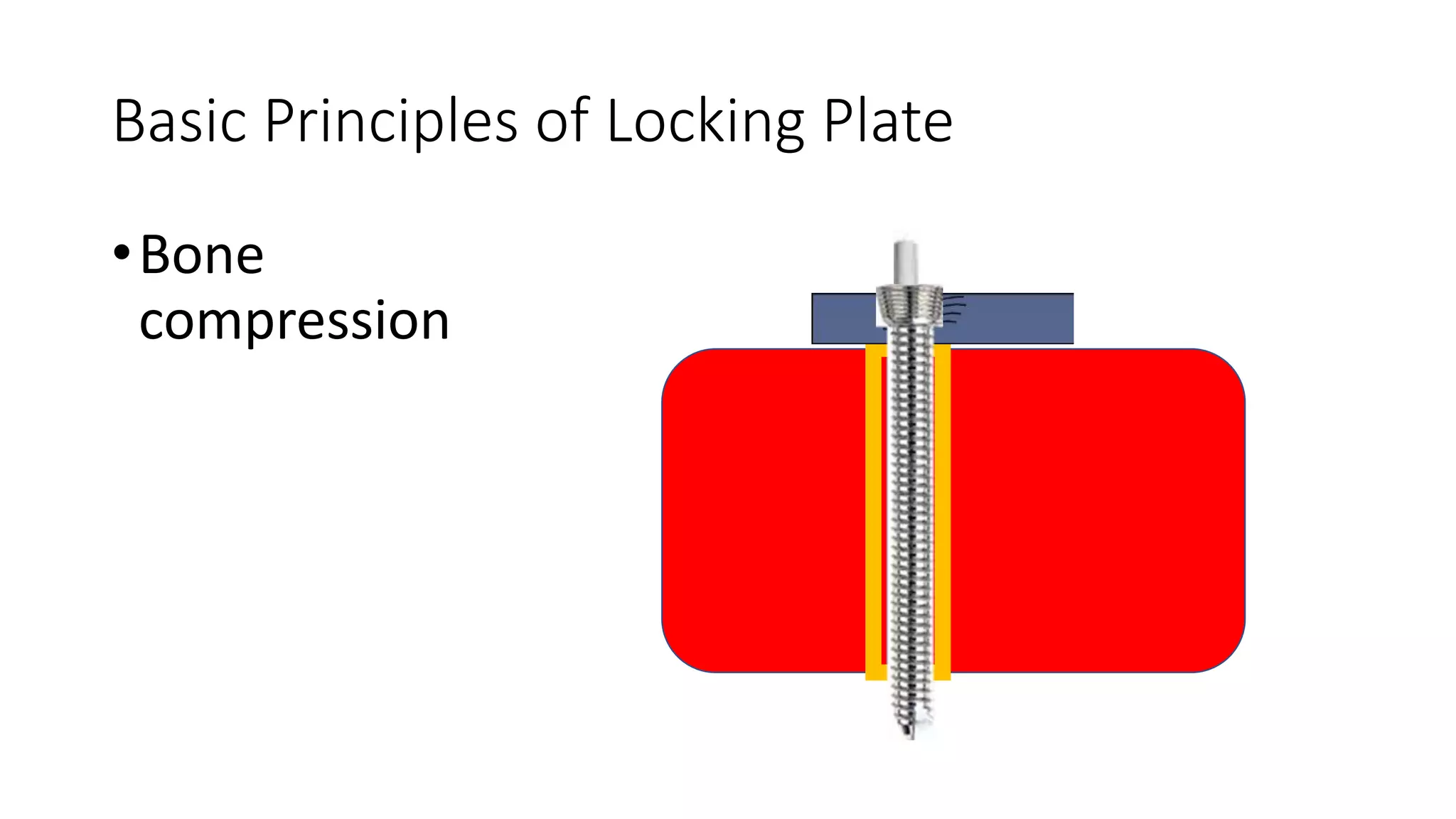
Basic Principles of Locking Plate
•Bone
compression
WORK AS A UNIT !!!!
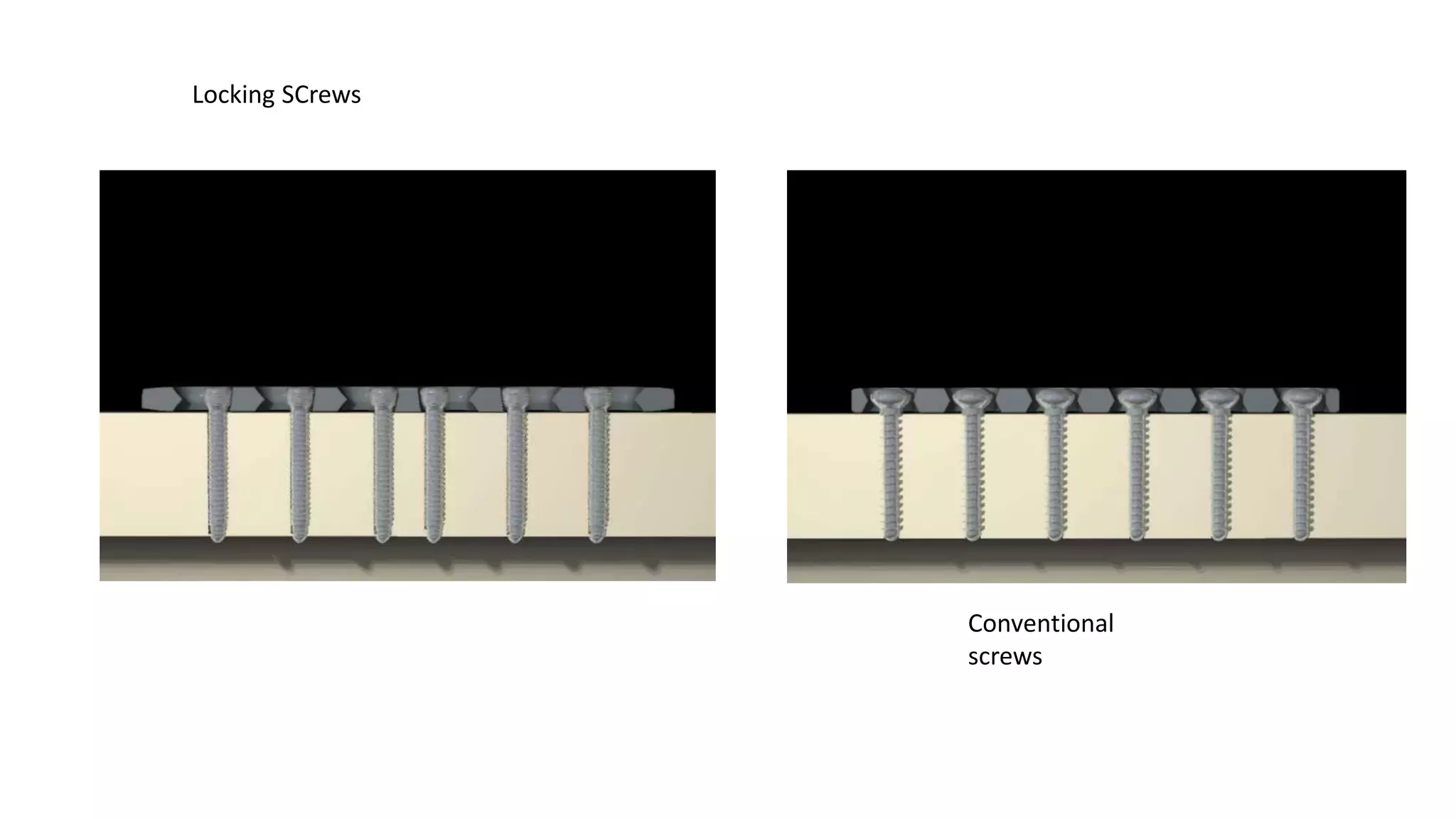
Locking SCrews
Conventional
screws
Less
problems
with the
blood
supply
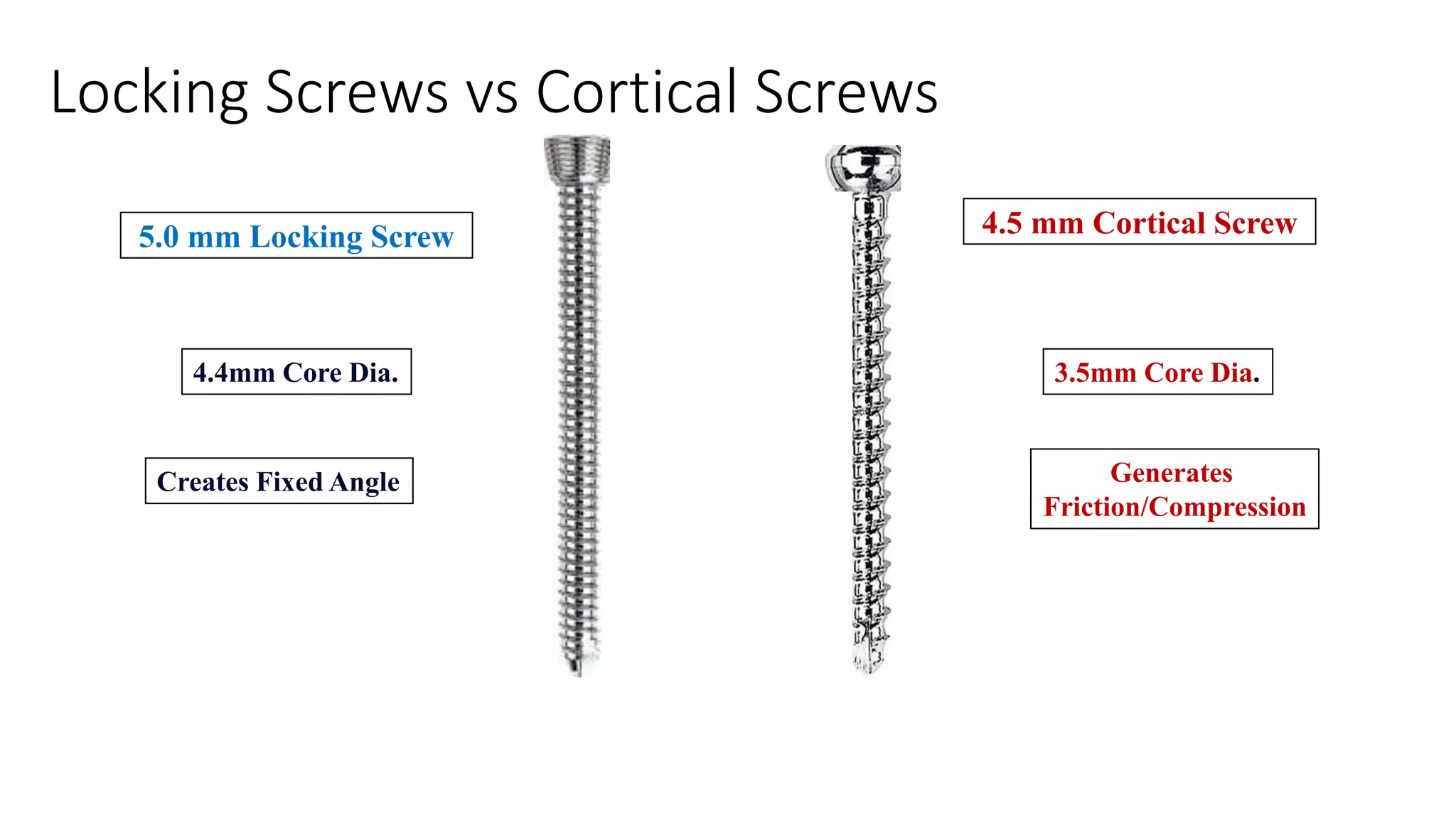
Locking Screws vs Cortical Screws
Creates Fixed Angle Generates
Friction/Compression
4.4mm Core Dia. 3.5mm Core Dia.
5.0 mm Locking Screw 4.5 mm Cortical Screw
Mechanics/biomechanics of plate/screw fixation
Plate fixation with conventional screws
Plate fixation with locking head screws
• A locked plate converts an axial load shear force into a
compressive stress at the screw bone interface
• The strength of fixation is equal to the sum of the entire
screw bone interface of all the screws as opposed to a
single screw as in unlocked screws
Techniqual Advantage
• Axial and angular stability
• Not preloaded
• Cannot be over-tightened
• Higher resistance against bending loads
• Monocortical insertion is possible
• No primary loss of reduction
• No or less screw loosening, no or less secondary loss of
reduction
Biological Advantages
• Reduced compression of the periosteum
• Protects blood supply to the bone
• Callus formation/bone healing under the plate
bone after plating with a DCP
bone after plating with a LCP
Type of locking plates
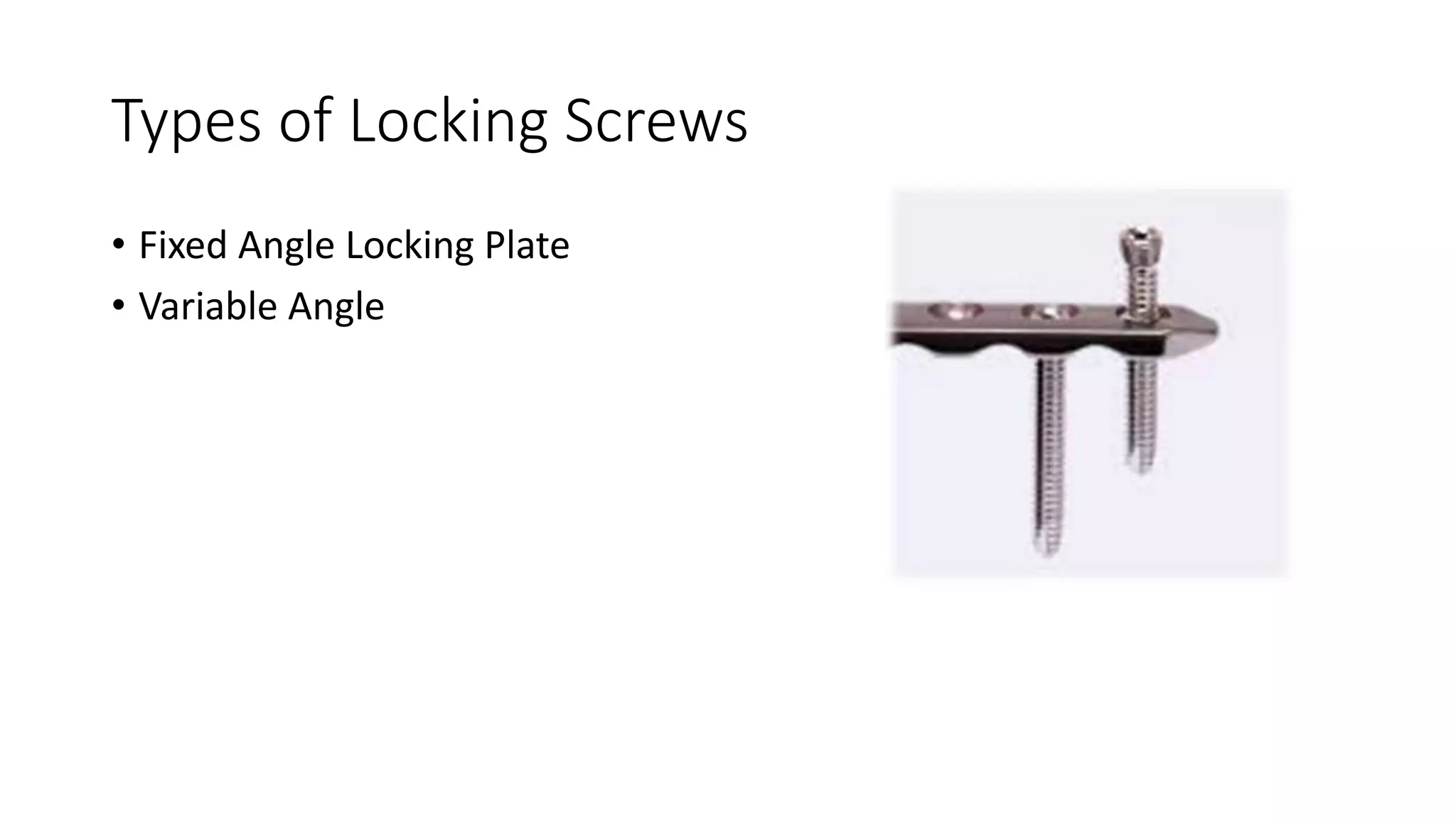
Types of Locking Screws
• Fixed Angle Locking Plate
• Variable Angle
Indications for Locking
• Biological Fixation
• Spanning Comminution (bridging)
• Percutaneous Techniques
• Metaphyseal / Bicondylar Articular Fractures
• Short Articular Segment
• Periprosthetic Fractures
• Osteoporosis
Short Segment Fixation In Osteoporotic Bone
Short Segment Fixation with Conventional
Fixation
Number of Screws
• More locking screws will make the fixation very rigid
• YOU DO NOT NEED TO FILL ALL HOLES
• Conventional and locking screws can be combined 1:2
Bridge Plating
Stiffness of the construct
Two many screws decreases strain
Non-union
To decrease the stiffness and increase the
flexibility ……..
• Far Cortex Locking
screws
Construct Strength
Order of Attack
1. Reduce the fracture first
2. For reduction, if you need put to conventional screws - they
should be put before the Locking Screws
3. Then fix it with Locking Screws.
4. For Articular Fractures, the articular portion of the fracture is
reduced first .
5. Reduce the shaft to the articular block
Lag screws can be used to help reduce fragments
and construct stability improved w/ locking
screws
Lab Exercise
Metaphyseal
Fixation
Lab Exercise
Metaphyseal
Fixation
Lab Exercise
Metaphyseal
Fixation
Lab Exercise
Metaphyseal
Fixation
Reduction of Shaft
Metaphyseal
Fixation
Reduction of Shaft
Metaphyseal
Fixation
Reduction of Shaft
Metaphyseal
Fixation
Reduction of Shaft
Metaphyseal
Fixation
Reduction of Shaft
• Too many screws
• Wrong bone
• Wrong fracture
Problems ---- too many screws
Partial Articular fractures
Problems
• Plate bending;
• Plate fracture;
• Plate pull-off; and
• Locking screw failure
• Difficult to remove
• NON-UNION
Summary
• Locking is a principle
• Mostly for Osteoporotic bones
• Beware of too rigid fixations
• Need Reduction
• Good for multifragmentary fracture and
MIPO
• Biomechanics should be understood
Biomechanics of locking plates

Biomechanics of locking plates