BioabsorbableBioabsorbable
implants inimplants in
orthopaedicsorthopaedics
Dept of Orthopaedics , J.N. Medical College
and
Dr. Prabhakar Kore Hospital and MRC,
Belgaum
INDIAN JOURNAL OF ORTHOPAEDICS
October 2006 Volume 40 : Number 4 : P. 205-209
Definition
• The implants which undergo
gradual degradation by
biological process and absorbed
and excreted by the body are
called Biodegradable Implants.
Introduction
• Implants for the internal fixation of fractures are needed
temporarily, until the fracture is united.
• There will be need for a second operation for removal of
metallic implants, with considerable additional
inconvenience, expense and at some risk of operative
complication.
• This led to the development of so called Biodegradable /
Bioabsorbable / Biologically inert implants which
undergo gradual degradation after their purpose is been
served.
Shortcomings of metallic implants
• Inherent problems existing with the use of these
metallic devices like ‘Stress shielding phenomenon’,
pain, local irritation.
• Retained metallic implants are always at the risk of
endogenous infection.
• Release of metallic ions from these implants has been
documented.
• Because of these reasons there is need for a second
surgery for implant removal after the bone has
healed.
History
• Low molecular weight Polyglycolic acid was synthesized by
Bischoff and Walden in 1893.
• The first synthetic absorbable suture was developed from
polyglycolic acid (PGA) by American Cyanamid Co. in 1962.
• The 90:10 copolymer of glycolide and lactide –polygalactin 910
– has been applied as the competitive suture ‘Vicryl’ since 1975.
• Since then sutures of polyglycolide and polylactide have been
used for many years and no carcinogenic, teratogenic, toxic, or
allergic side effects have been observed.
• Use of PGA as reinforcing pins, screws, and plates for bone
surgery was first suggested by Schmitt and Polistinain 1969.
Structure, strength and properties
• Polyglycolic acid (PGA) is a hard, tough, crystalline polymer with
an average molecular weight of 20,000 to 145,000 and a melting
point of 224-230°C.
• Polylactic acid is a polymer with initial molecular weights of
180,000 to 530,000 and a melting point of about 174°C.
• In orthopaedic implants Poly-L-lactic acid (PLLA) has been used
more extensively because it retains its initial strength longer than
Poly-D-lactic acid (PDLA).
• PGA belongs to the category of fast degrading polymers, and
intraosseously implanted PGA screws have been shown to
completely disappear within 6 months. PLLA on the other hand
has a very long degradation time and has been shown to persist in
tissues for as long as 5 years post implantation.
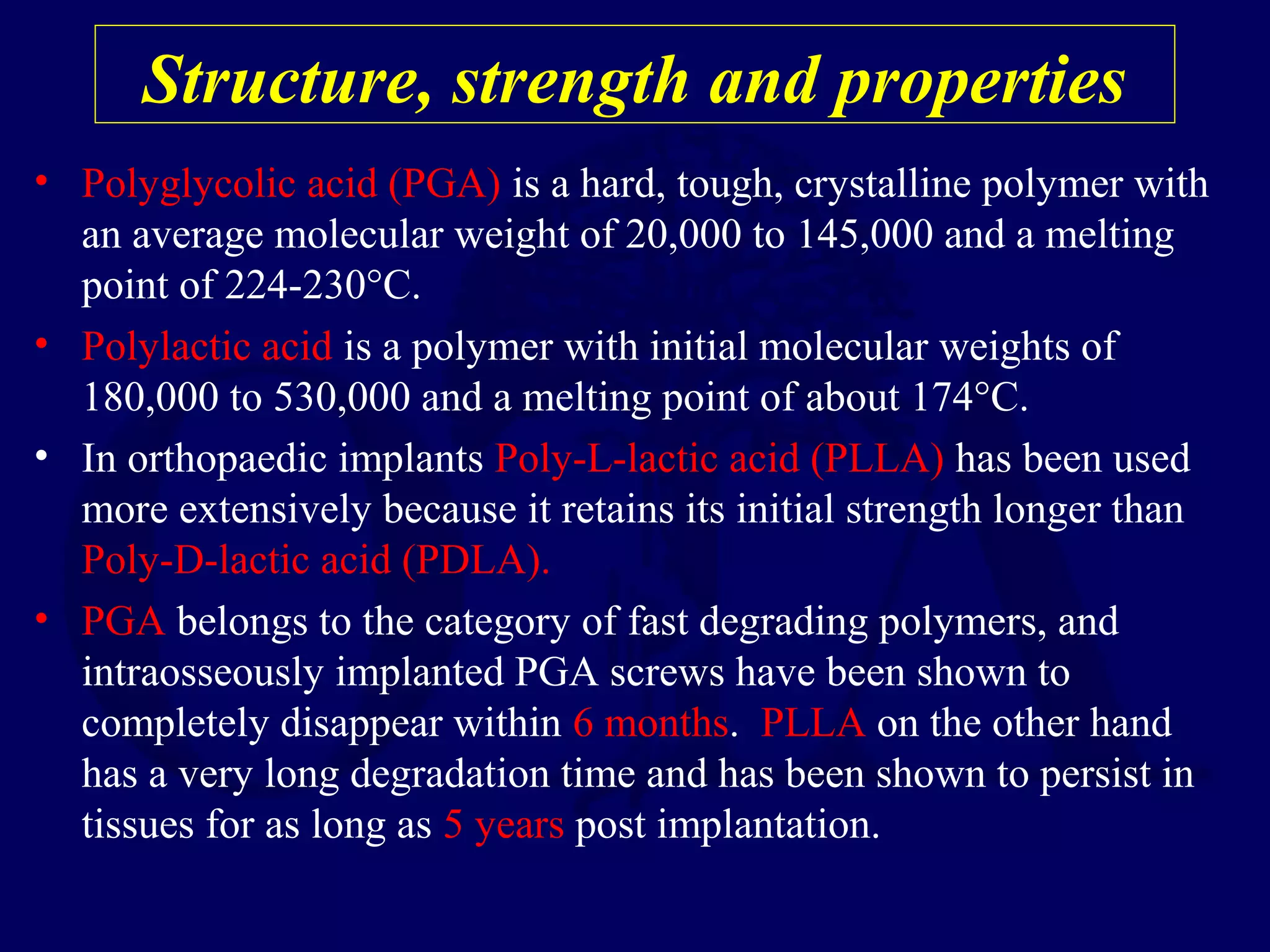
Chemical Composition
 Commonly available organic components
used in preparing bio-degradable implants
are -
• Polyglycolic acid
• Polylactic acid
• Polyparadiaxonone
• Chemically these compounds are Alpha poly-
esters.
• Polyglycolic acid and polylactic acid
copolymers in a ratio of 90:10 and
polydiaxonose are used as absorbable
sutures world wide.
Currently Available Implants
 The commercially available resorbable polymers
include pure Polyglycolic acid (PGA) in the form
of PINS and SCREWS. Pure Poly-L-lactic acid
(PLLA) and a co-polymer of PLLA and PGA.
 The fixation devices made from this copolymer
maintain most of their strength for 8 weeks and will
completely resorb in the body in 12–15 months.
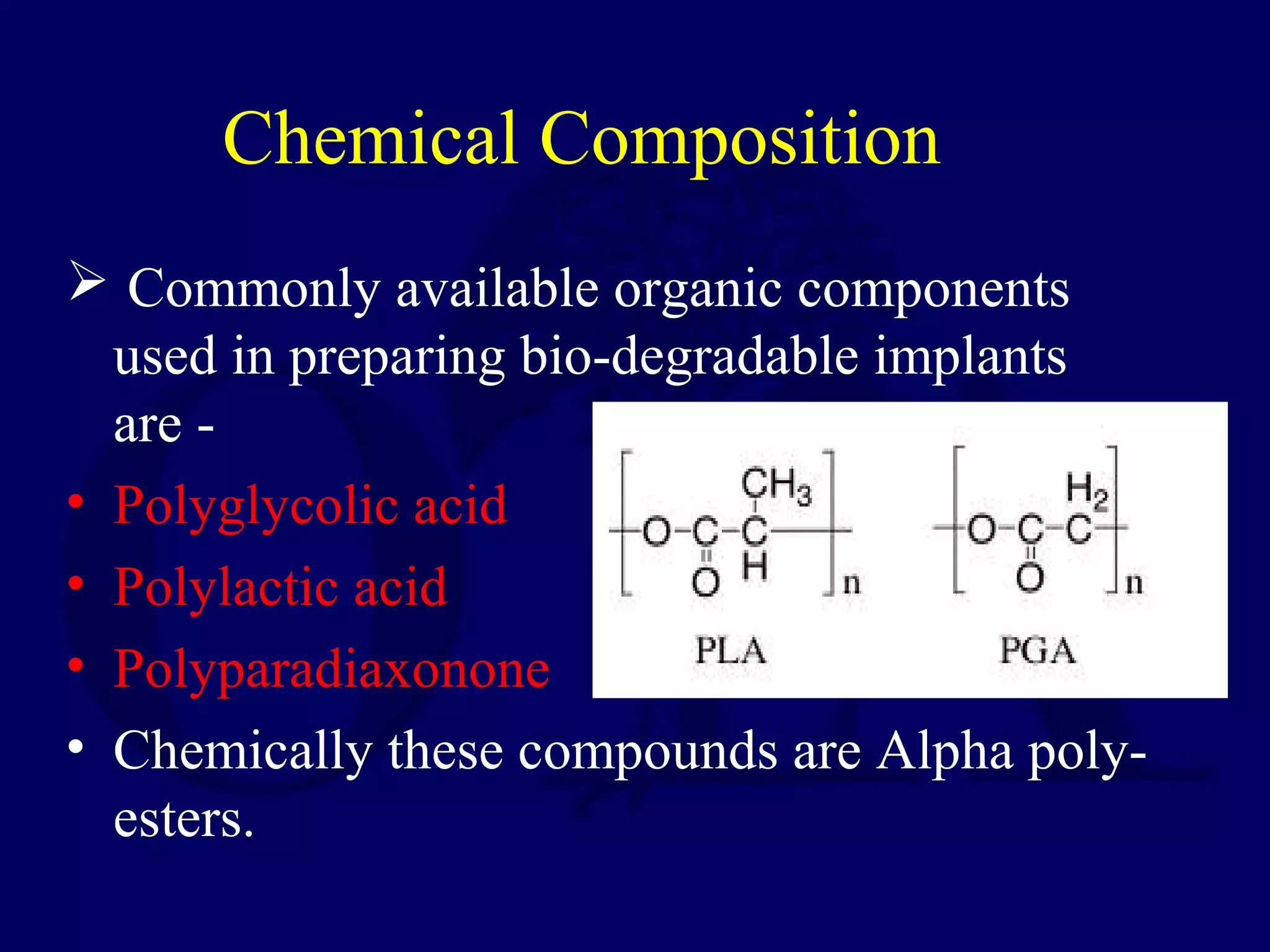
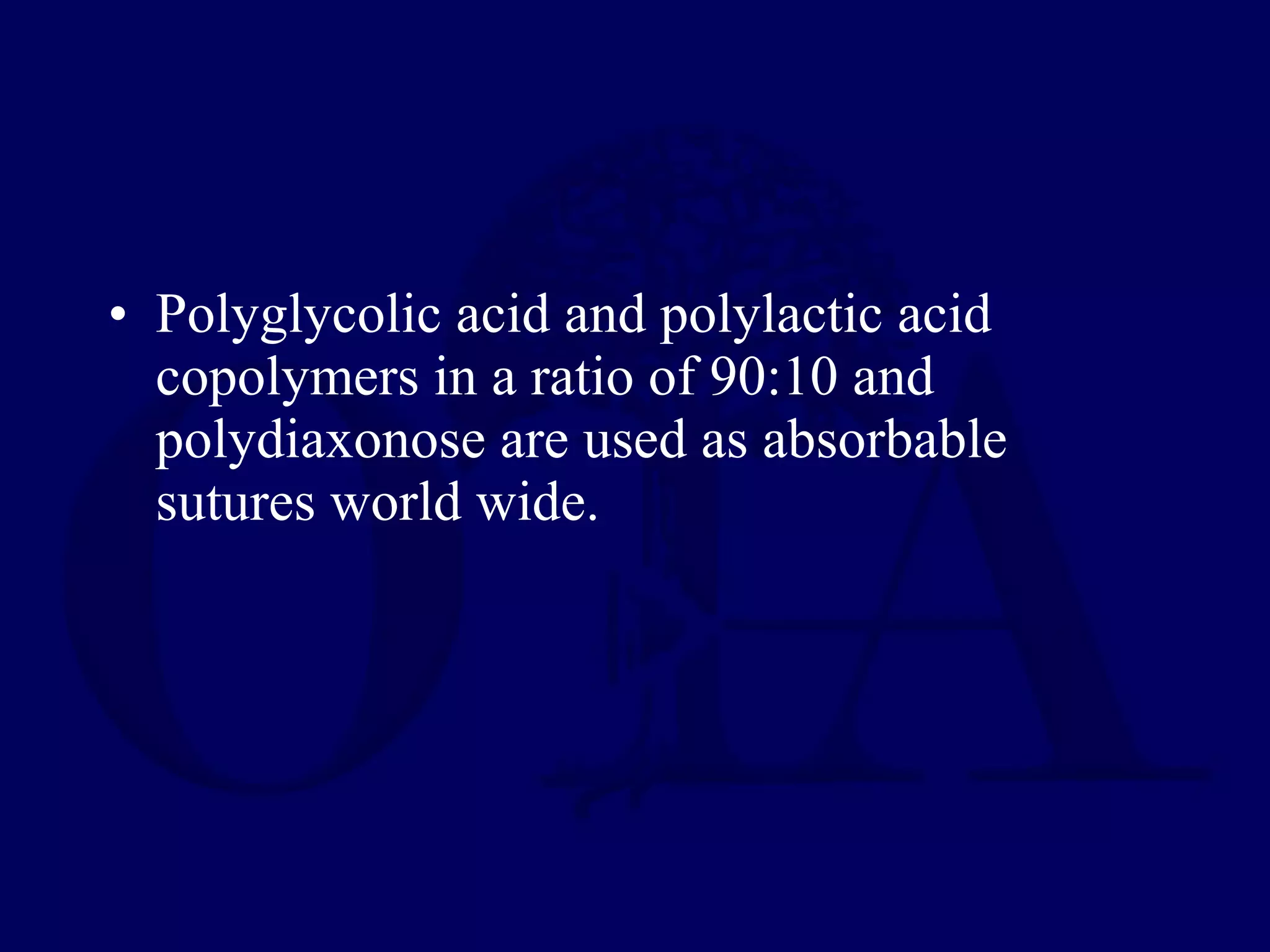
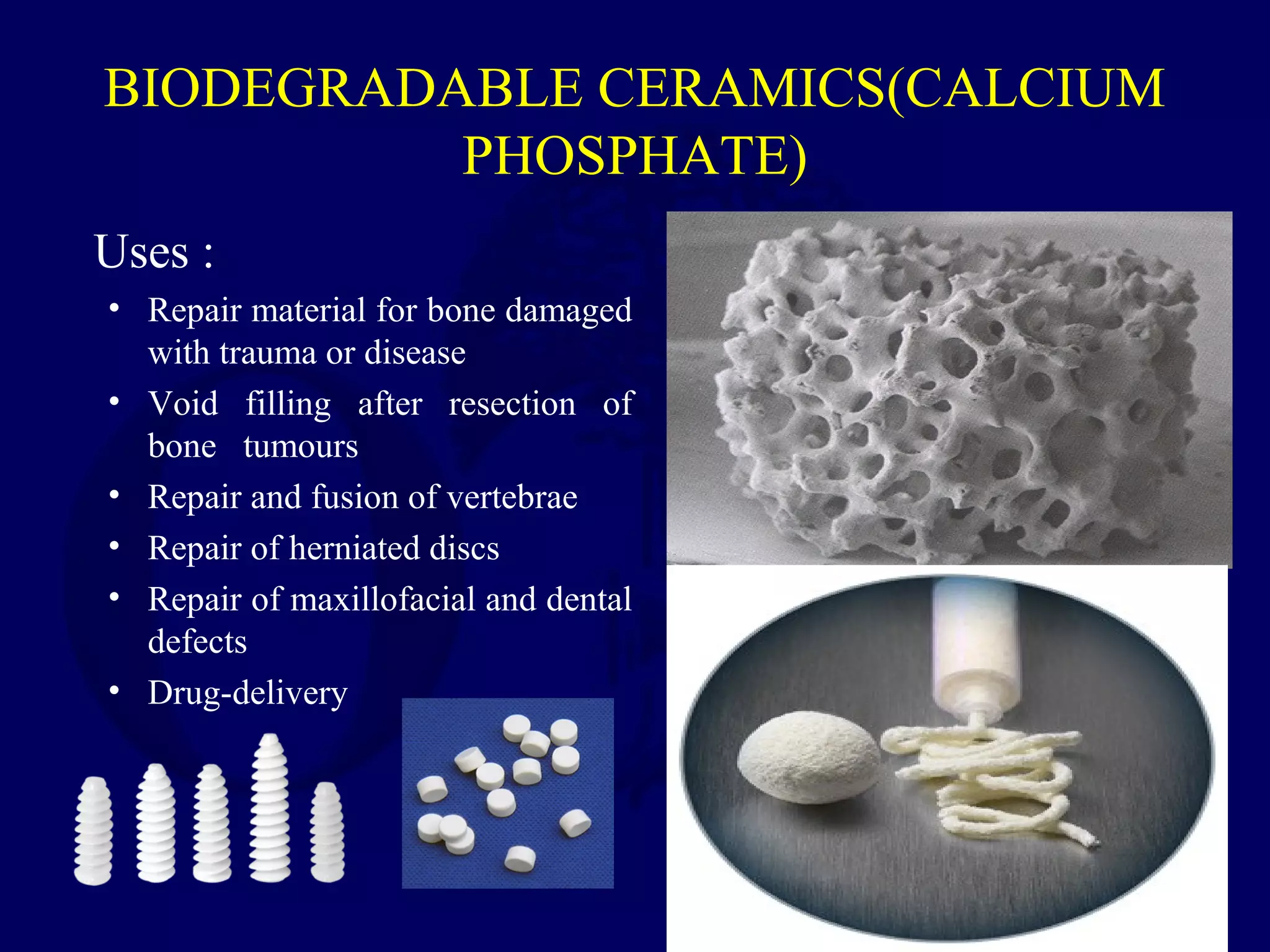
BIODEGRADABLE CERAMICS(CALCIUM
PHOSPHATE)
Uses :
• Repair material for bone damaged
with trauma or disease
• Void filling after resection of
bone tumours
• Repair and fusion of vertebrae
• Repair of herniated discs
• Repair of maxillofacial and dental
defects
• Drug-delivery
Features of this system
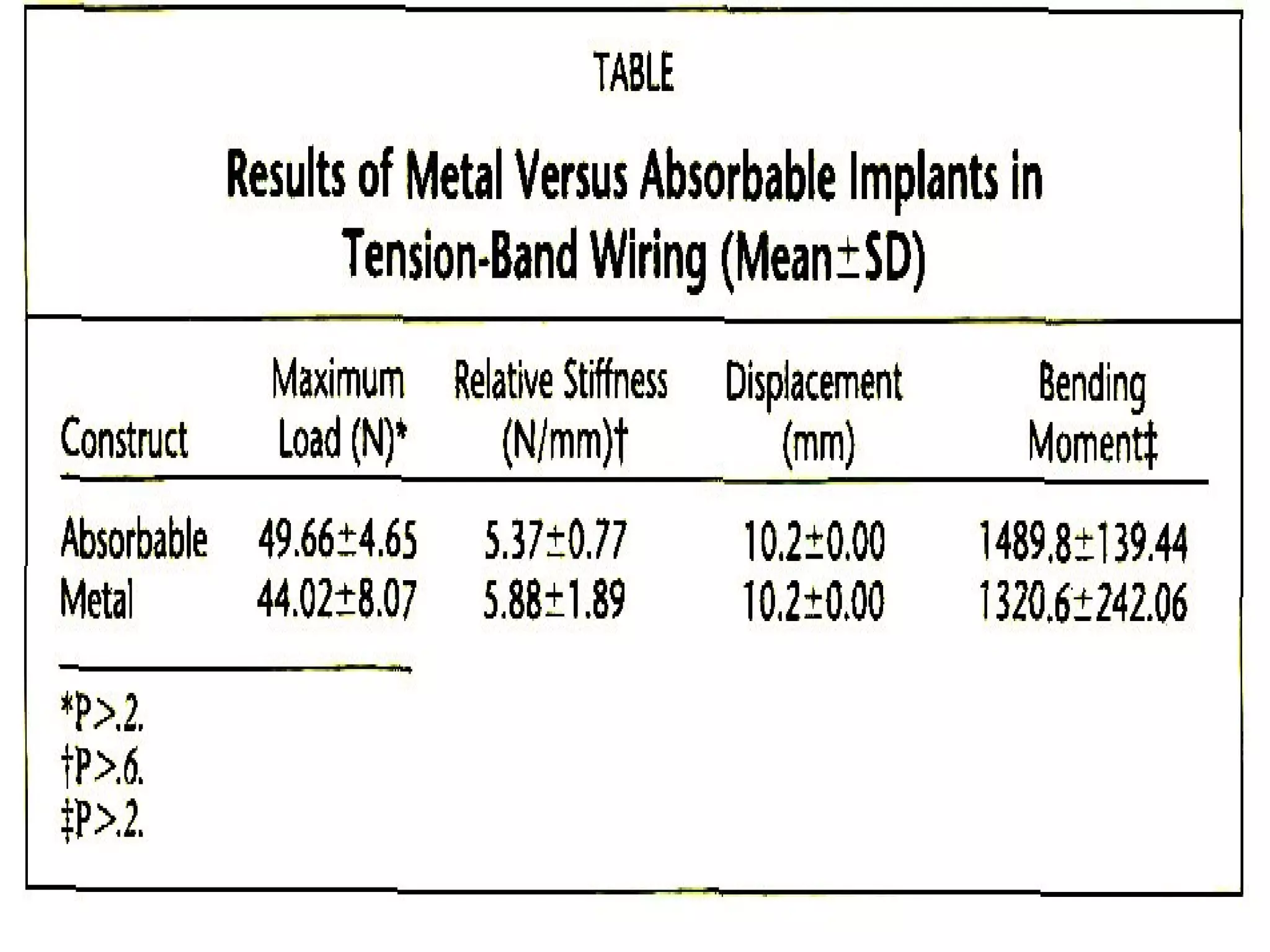
• Tensile and flex strength are comparable to titanium plating system .
• As stiffness of polymer decreases, stiffness of callus increases, so gradual
load transfer to the healing tissue.
• Eliminates growth restriction and implant migration for paediatric
craniofacial reconstruction.
• Resorbs completely and may eliminate the need for second operation.
• Biodegradable polymers are light-weight materials with low elastic moduli
between 0.4 – 7 GPa. Bone is a complex and dynamic living tissue that
provides mechanical support for the body and exhibits elastic modulus
between 10 - 30 Gpa. The elastic moduli of titanium alloy (Ti6Al4V),
stainless steel and chrome-cobalt alloys are 120 , 200 and 230 Gpa
respectively.
Degradation and Elimination
 The degradation of these polymers occurs
1.Mainly by hydrolysis
2.And to lesser extent through non specific
enzymatic action.
Factors which influence the degradation process are
1.Molecular weight
2.Crystallinity
3.Thermal history
4.Geometry
 Poly-lactic acid copolymers have the slowest rate of degradation
(half-life 6months)
 Degradation of the co-polymers of polyglycolyic acid and poly
paradiaxonone are much more rapid.
 The principal route of elimination is respiration and to lesser
exent in urine and faeces.
Indications
• Biodegradable implants are available for
stabilization of fractures, osteotomies, bone
grafts and fusions particularly in cancellous
bones, as well as for reattachment of
ligaments, tendons, meniscal tears and other
soft tissue structures
• The fact that the interfragmentary
compression as with metalic screws cannot
be achieved with polyester pins or rods.
Knee
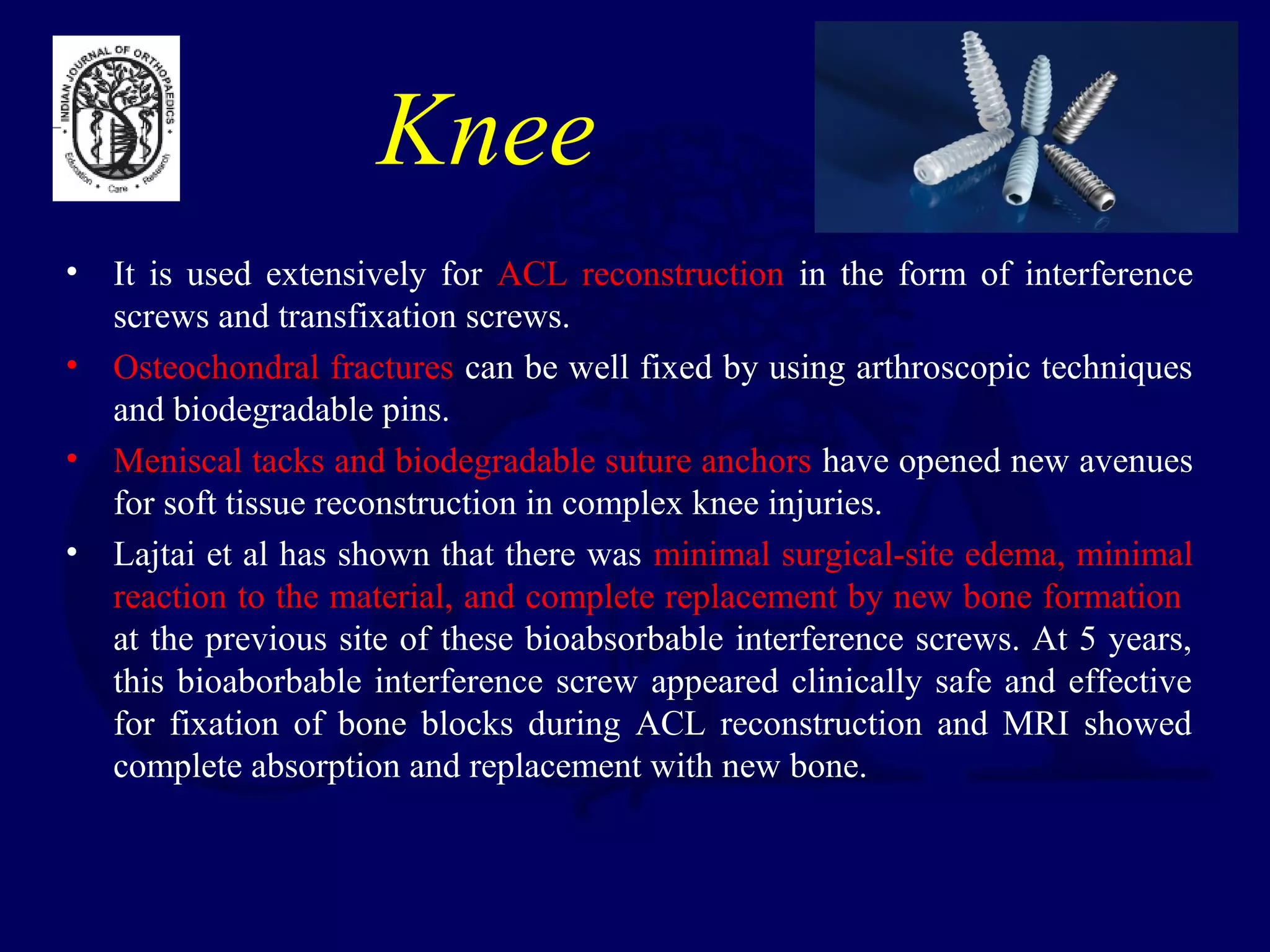
• It is used extensively for ACL reconstruction in the form of interference
screws and transfixation screws.
• Osteochondral fractures can be well fixed by using arthroscopic techniques
and biodegradable pins.
• Meniscal tacks and biodegradable suture anchors have opened new avenues
for soft tissue reconstruction in complex knee injuries.
• Lajtai et al has shown that there was minimal surgical-site edema, minimal
reaction to the material, and complete replacement by new bone formation
at the previous site of these bioabsorbable interference screws. At 5 years,
this bioaborbable interference screw appeared clinically safe and effective
for fixation of bone blocks during ACL reconstruction and MRI showed
complete absorption and replacement with new bone.
Shoulder
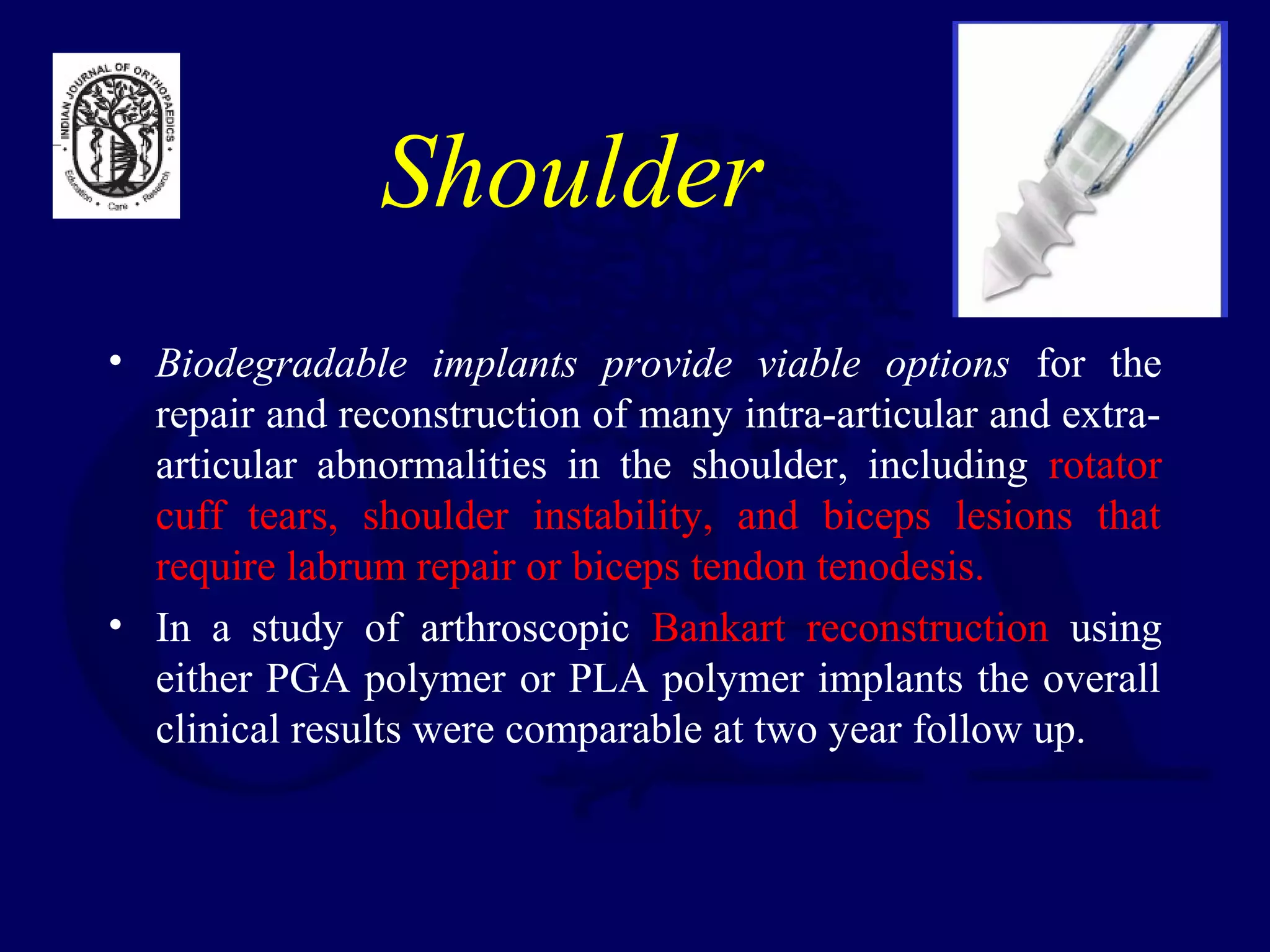
• Biodegradable implants provide viable options for the
repair and reconstruction of many intra-articular and extra-
articular abnormalities in the shoulder, including rotator
cuff tears, shoulder instability, and biceps lesions that
require labrum repair or biceps tendon tenodesis.
• In a study of arthroscopic Bankart reconstruction using
either PGA polymer or PLA polymer implants the overall
clinical results were comparable at two year follow up.
Spine
• Coe and Vaccaro published the first clinical series using bioresorbable implants
as interbody spacers in lumbar interbody fusion; at follow-up beyond 2 years,
they were pleasantly surprised by the fact that the implant materials significantly
exceeded the biologic “life expectancy” of 12-18 months. The clinical and
radiographic results allowed them to recommend the use of bioresorbable
devices in structural interbody support in the TLIF procedure.
• In a study by Kandziora et al, tricortical bone grafts and the bioabsorbable
polymer-calcium phosphate composite cages were implanted in sheep cervical
spines; the latter showed significantly better distractive properties, a
significantly higher biomechanical stiffness, and an advanced interbody fusion.
• Bioabsorbable anterior cervical plates have been used and studied as alternatives
to metal plates when a graft containment device is required. Ames at al found
that bioabsorbable plates provided better stability than resorbable mesh.
Paediatric Orthopaedics
• Bostman et al showed that self reinforced absorbable rods
were suitable for fixation of physeal fractures in children.
• In 1991, Hope et al had compared the self reinforced
absorbable rods with metallic fixation of elbow fractures in
children.
• Partio et al found SR-PLLA screws firm enough for
fixation of subtalar extraarticular arthrodesis in children.
• Bioabsorbable fixation technique for pediatric olecranon
fractures has been described.
*SR-PLLA: Self Reinforced Poly L Lactic Acid
Foot and Ankle
• The first series of fixation of ankle fractures with absorbable rods was
reported by Rokkanen et al in 1985.
• Subsequently, successful results with self reinforced absorbable rods have
been reported by Leixnering et al in medial malleolar fractures, Ruf et al in
ankle fractures, and Kristensen et al in intra articular osteochondral
fractures of talus.
• Brunetti et al used bioresorbale implants in the fixation of osteotomies for
hallux valgus.
• Bioabsorbable implants offer specific advantages in the foot where removal
of the hardware is mandatory in some fixations like syndesmotic disruptions
and Lisfranc’s dislocations.
• Partio et al reported 95% good results in 152 patients managed operatively
at a mean follow up of 2 years.
Hand
• Mini-plating systems are available for
fixation of fractures, osteotomies and
arthrodesis in the wrist and hand.
• Preliminary reports have found usage of
self-reinforced PolyL/ DL-Lactide 70/30
miniplate and 1.5-mm or 2.0-mm screws in
fractures and osteotomies leading to bone
union uneventful.
Miscellaneous
• There are bioabsorbable implants now available
for use in humeral condyle, distal radius and ulna,
radial head and other metaphyseal areas.
• Bioabsorbable meshes are available for acetabular
reconstructions.
• Bioabsorbable implants are also variously used in
craniomaxillofacial surgery and dental surgery.
Advantages of absorbable implants
1. No irritation of soft tissue
2. No osteopenia
3. No need of secondary operation to remove the
implants.
4. Useful in pediatric fracture fixation.
5. No interference with the callus formation and
fracture healing.
6. Anti-biotic releasing Bioabsorbable screws to
reduce implant related infection.
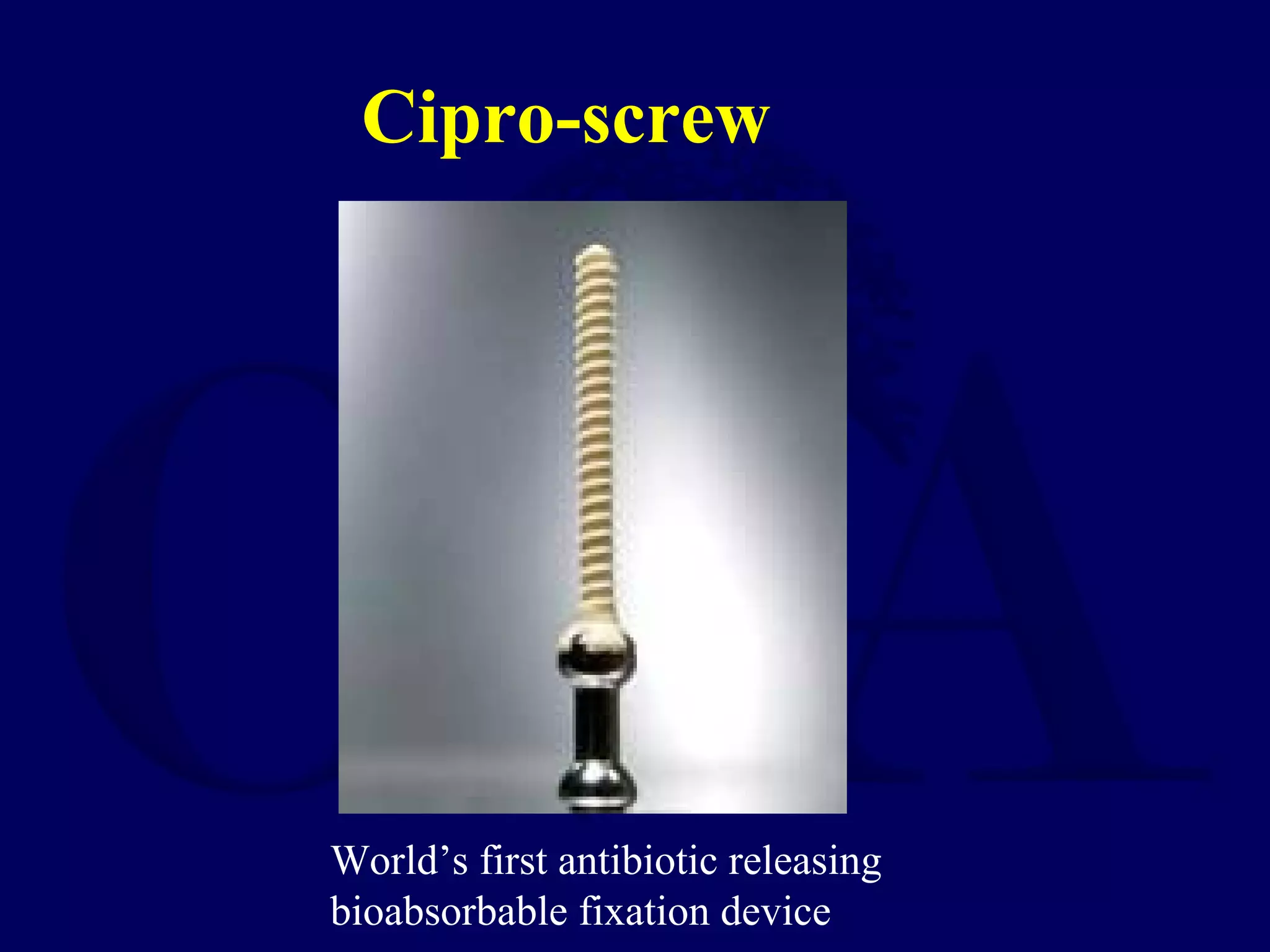
Cipro-screw
World’s first antibiotic releasing
bioabsorbable fixation device
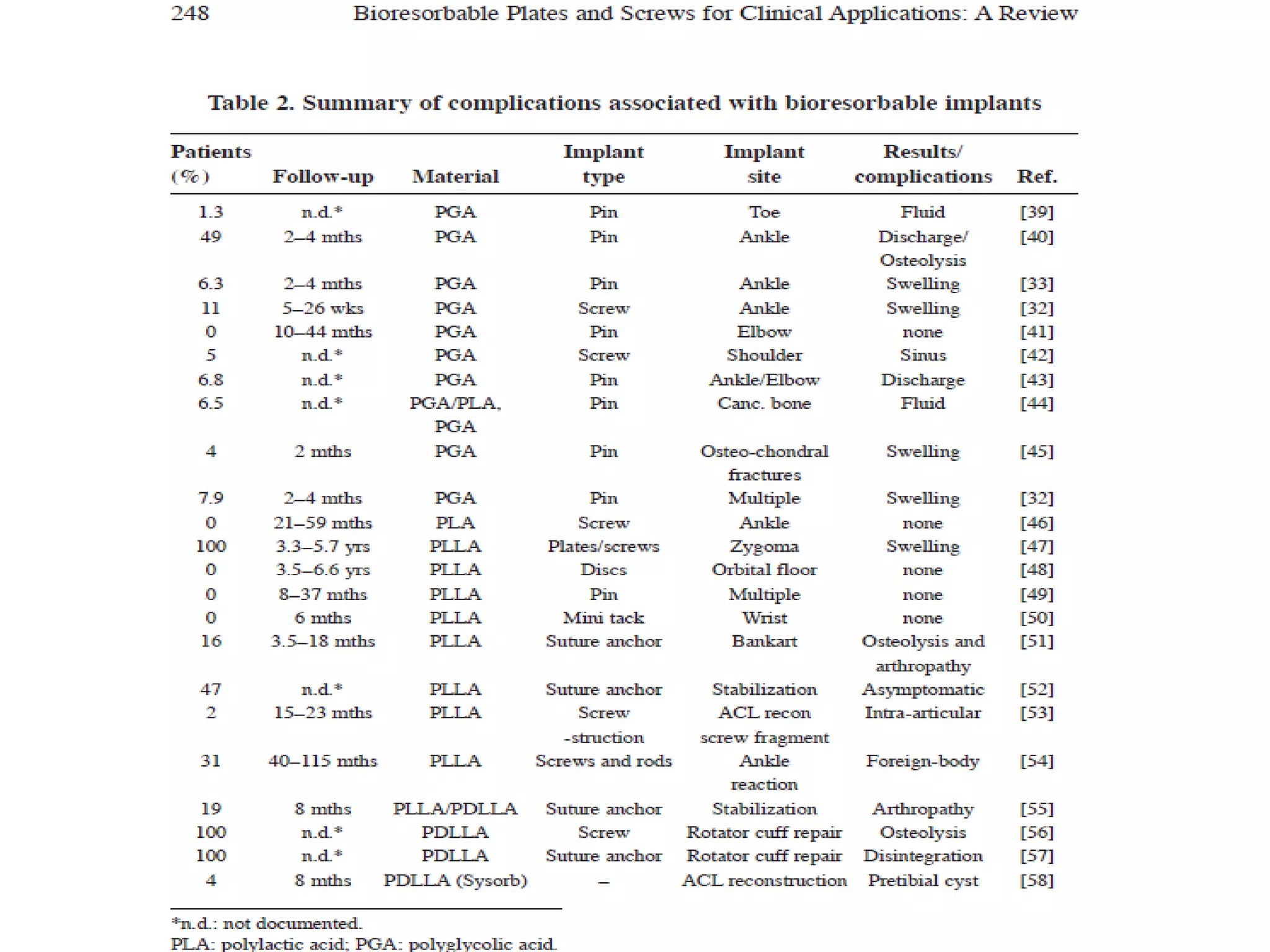
Complications
 The unique complication of these implants is the
delayed inflammatory reaction or sterile
inflammatory foreign body reaction. Clinically
painful erythematous, fluctuant swelling suddenly
develops about the healed wound. The mean
interval between the fixation of fracture and
clinical manifesation of reaction is twelve weeks.
 Failure of fixation
 Postoperative wound infection
Drawbacks
1. Primarily the inadequate stiffness of the device and weakness
compared to metal implant can pose implantation difficulties
like screw breakage during insertion and also make early
mobilization precarious.
2. Cast support and use of cruthces for lower extremity fractures
has been recommended, which limits their further use.
3. Bioabsorbable Implants have excessively low elastic moduli
resulting in backing out of screws.
4. The price of 45/50 mm fibre reinforced rod is approximately
15 times that of a metallic cancellous screw.
Future
• Resorbable plates can be covalently linked with compounds such as
HRP, IL-2, and BMP-2 and represents a novel protein delivery
technique. BMP-2 covalently linked to resorbable plates has been used
to facilitate bone healing.
• Covalent linking of compounds to plates represents a novel method for
delivering concentrated levels of growth factors to a specific site and
potentially extending their half-life.
• An area for future development would have to focus on developing
implants that degrade at the “medium term”. Since the screw that
persists in its track for 5 years or more does not offer the advantage of
bioresorbability.
• In vitro studies have shown promising results of antibiotic elution from
bioabsorbable microspheres and beads.
HRP : Horseraddish Peroxidase
BMP-2 : Bone Morphogeneic Protein
ConclusionConclusion
• Bioresorbable fracture implants are effective
fixation devices offering significant
advantages over the traditional metal implants.
• All in all, this is a concept that has perhaps
come to stay.
• What the future holds in this sphere, is
something we will have to wait and see.
Bioabsorbable Implants in Orthopaedics - Dr Chintan N Patel

Bioabsorbable Implants in Orthopaedics - Dr Chintan N Patel

  • 1.
    BioabsorbableBioabsorbable implants inimplants in orthopaedicsorthopaedics Deptof Orthopaedics , J.N. Medical College and Dr. Prabhakar Kore Hospital and MRC, Belgaum INDIAN JOURNAL OF ORTHOPAEDICS October 2006 Volume 40 : Number 4 : P. 205-209
  • 2.
    Definition • The implantswhich undergo gradual degradation by biological process and absorbed and excreted by the body are called Biodegradable Implants.
  • 3.
    Introduction • Implants forthe internal fixation of fractures are needed temporarily, until the fracture is united. • There will be need for a second operation for removal of metallic implants, with considerable additional inconvenience, expense and at some risk of operative complication. • This led to the development of so called Biodegradable / Bioabsorbable / Biologically inert implants which undergo gradual degradation after their purpose is been served.
  • 4.
    Shortcomings of metallicimplants • Inherent problems existing with the use of these metallic devices like ‘Stress shielding phenomenon’, pain, local irritation. • Retained metallic implants are always at the risk of endogenous infection. • Release of metallic ions from these implants has been documented. • Because of these reasons there is need for a second surgery for implant removal after the bone has healed.
  • 5.
    History • Low molecularweight Polyglycolic acid was synthesized by Bischoff and Walden in 1893. • The first synthetic absorbable suture was developed from polyglycolic acid (PGA) by American Cyanamid Co. in 1962. • The 90:10 copolymer of glycolide and lactide –polygalactin 910 – has been applied as the competitive suture ‘Vicryl’ since 1975. • Since then sutures of polyglycolide and polylactide have been used for many years and no carcinogenic, teratogenic, toxic, or allergic side effects have been observed. • Use of PGA as reinforcing pins, screws, and plates for bone surgery was first suggested by Schmitt and Polistinain 1969.
  • 6.
    Structure, strength andproperties • Polyglycolic acid (PGA) is a hard, tough, crystalline polymer with an average molecular weight of 20,000 to 145,000 and a melting point of 224-230°C. • Polylactic acid is a polymer with initial molecular weights of 180,000 to 530,000 and a melting point of about 174°C. • In orthopaedic implants Poly-L-lactic acid (PLLA) has been used more extensively because it retains its initial strength longer than Poly-D-lactic acid (PDLA). • PGA belongs to the category of fast degrading polymers, and intraosseously implanted PGA screws have been shown to completely disappear within 6 months. PLLA on the other hand has a very long degradation time and has been shown to persist in tissues for as long as 5 years post implantation.
  • 7.
    Chemical Composition  Commonlyavailable organic components used in preparing bio-degradable implants are - • Polyglycolic acid • Polylactic acid • Polyparadiaxonone • Chemically these compounds are Alpha poly- esters.
  • 8.
    • Polyglycolic acidand polylactic acid copolymers in a ratio of 90:10 and polydiaxonose are used as absorbable sutures world wide.
  • 9.
    Currently Available Implants The commercially available resorbable polymers include pure Polyglycolic acid (PGA) in the form of PINS and SCREWS. Pure Poly-L-lactic acid (PLLA) and a co-polymer of PLLA and PGA.  The fixation devices made from this copolymer maintain most of their strength for 8 weeks and will completely resorb in the body in 12–15 months.
  • 10.
    BIODEGRADABLE CERAMICS(CALCIUM PHOSPHATE) Uses : •Repair material for bone damaged with trauma or disease • Void filling after resection of bone tumours • Repair and fusion of vertebrae • Repair of herniated discs • Repair of maxillofacial and dental defects • Drug-delivery
  • 11.
    Features of thissystem • Tensile and flex strength are comparable to titanium plating system . • As stiffness of polymer decreases, stiffness of callus increases, so gradual load transfer to the healing tissue. • Eliminates growth restriction and implant migration for paediatric craniofacial reconstruction. • Resorbs completely and may eliminate the need for second operation. • Biodegradable polymers are light-weight materials with low elastic moduli between 0.4 – 7 GPa. Bone is a complex and dynamic living tissue that provides mechanical support for the body and exhibits elastic modulus between 10 - 30 Gpa. The elastic moduli of titanium alloy (Ti6Al4V), stainless steel and chrome-cobalt alloys are 120 , 200 and 230 Gpa respectively.
  • 14.
    Degradation and Elimination The degradation of these polymers occurs 1.Mainly by hydrolysis 2.And to lesser extent through non specific enzymatic action.
  • 15.
    Factors which influencethe degradation process are 1.Molecular weight 2.Crystallinity 3.Thermal history 4.Geometry  Poly-lactic acid copolymers have the slowest rate of degradation (half-life 6months)  Degradation of the co-polymers of polyglycolyic acid and poly paradiaxonone are much more rapid.  The principal route of elimination is respiration and to lesser exent in urine and faeces.
  • 16.
    Indications • Biodegradable implantsare available for stabilization of fractures, osteotomies, bone grafts and fusions particularly in cancellous bones, as well as for reattachment of ligaments, tendons, meniscal tears and other soft tissue structures • The fact that the interfragmentary compression as with metalic screws cannot be achieved with polyester pins or rods.
  • 17.
    Knee • It isused extensively for ACL reconstruction in the form of interference screws and transfixation screws. • Osteochondral fractures can be well fixed by using arthroscopic techniques and biodegradable pins. • Meniscal tacks and biodegradable suture anchors have opened new avenues for soft tissue reconstruction in complex knee injuries. • Lajtai et al has shown that there was minimal surgical-site edema, minimal reaction to the material, and complete replacement by new bone formation at the previous site of these bioabsorbable interference screws. At 5 years, this bioaborbable interference screw appeared clinically safe and effective for fixation of bone blocks during ACL reconstruction and MRI showed complete absorption and replacement with new bone.
  • 18.
    Shoulder • Biodegradable implantsprovide viable options for the repair and reconstruction of many intra-articular and extra- articular abnormalities in the shoulder, including rotator cuff tears, shoulder instability, and biceps lesions that require labrum repair or biceps tendon tenodesis. • In a study of arthroscopic Bankart reconstruction using either PGA polymer or PLA polymer implants the overall clinical results were comparable at two year follow up.
  • 19.
    Spine • Coe andVaccaro published the first clinical series using bioresorbable implants as interbody spacers in lumbar interbody fusion; at follow-up beyond 2 years, they were pleasantly surprised by the fact that the implant materials significantly exceeded the biologic “life expectancy” of 12-18 months. The clinical and radiographic results allowed them to recommend the use of bioresorbable devices in structural interbody support in the TLIF procedure. • In a study by Kandziora et al, tricortical bone grafts and the bioabsorbable polymer-calcium phosphate composite cages were implanted in sheep cervical spines; the latter showed significantly better distractive properties, a significantly higher biomechanical stiffness, and an advanced interbody fusion. • Bioabsorbable anterior cervical plates have been used and studied as alternatives to metal plates when a graft containment device is required. Ames at al found that bioabsorbable plates provided better stability than resorbable mesh.
  • 20.
    Paediatric Orthopaedics • Bostmanet al showed that self reinforced absorbable rods were suitable for fixation of physeal fractures in children. • In 1991, Hope et al had compared the self reinforced absorbable rods with metallic fixation of elbow fractures in children. • Partio et al found SR-PLLA screws firm enough for fixation of subtalar extraarticular arthrodesis in children. • Bioabsorbable fixation technique for pediatric olecranon fractures has been described. *SR-PLLA: Self Reinforced Poly L Lactic Acid
  • 21.
    Foot and Ankle •The first series of fixation of ankle fractures with absorbable rods was reported by Rokkanen et al in 1985. • Subsequently, successful results with self reinforced absorbable rods have been reported by Leixnering et al in medial malleolar fractures, Ruf et al in ankle fractures, and Kristensen et al in intra articular osteochondral fractures of talus. • Brunetti et al used bioresorbale implants in the fixation of osteotomies for hallux valgus. • Bioabsorbable implants offer specific advantages in the foot where removal of the hardware is mandatory in some fixations like syndesmotic disruptions and Lisfranc’s dislocations. • Partio et al reported 95% good results in 152 patients managed operatively at a mean follow up of 2 years.
  • 22.
    Hand • Mini-plating systemsare available for fixation of fractures, osteotomies and arthrodesis in the wrist and hand. • Preliminary reports have found usage of self-reinforced PolyL/ DL-Lactide 70/30 miniplate and 1.5-mm or 2.0-mm screws in fractures and osteotomies leading to bone union uneventful.
  • 23.
    Miscellaneous • There arebioabsorbable implants now available for use in humeral condyle, distal radius and ulna, radial head and other metaphyseal areas. • Bioabsorbable meshes are available for acetabular reconstructions. • Bioabsorbable implants are also variously used in craniomaxillofacial surgery and dental surgery.
  • 25.
    Advantages of absorbableimplants 1. No irritation of soft tissue 2. No osteopenia 3. No need of secondary operation to remove the implants. 4. Useful in pediatric fracture fixation. 5. No interference with the callus formation and fracture healing. 6. Anti-biotic releasing Bioabsorbable screws to reduce implant related infection.
  • 26.
    Cipro-screw World’s first antibioticreleasing bioabsorbable fixation device
  • 27.
    Complications  The uniquecomplication of these implants is the delayed inflammatory reaction or sterile inflammatory foreign body reaction. Clinically painful erythematous, fluctuant swelling suddenly develops about the healed wound. The mean interval between the fixation of fracture and clinical manifesation of reaction is twelve weeks.  Failure of fixation  Postoperative wound infection
  • 28.
    Drawbacks 1. Primarily theinadequate stiffness of the device and weakness compared to metal implant can pose implantation difficulties like screw breakage during insertion and also make early mobilization precarious. 2. Cast support and use of cruthces for lower extremity fractures has been recommended, which limits their further use. 3. Bioabsorbable Implants have excessively low elastic moduli resulting in backing out of screws. 4. The price of 45/50 mm fibre reinforced rod is approximately 15 times that of a metallic cancellous screw.
  • 30.
    Future • Resorbable platescan be covalently linked with compounds such as HRP, IL-2, and BMP-2 and represents a novel protein delivery technique. BMP-2 covalently linked to resorbable plates has been used to facilitate bone healing. • Covalent linking of compounds to plates represents a novel method for delivering concentrated levels of growth factors to a specific site and potentially extending their half-life. • An area for future development would have to focus on developing implants that degrade at the “medium term”. Since the screw that persists in its track for 5 years or more does not offer the advantage of bioresorbability. • In vitro studies have shown promising results of antibiotic elution from bioabsorbable microspheres and beads. HRP : Horseraddish Peroxidase BMP-2 : Bone Morphogeneic Protein
  • 31.
    ConclusionConclusion • Bioresorbable fractureimplants are effective fixation devices offering significant advantages over the traditional metal implants. • All in all, this is a concept that has perhaps come to stay. • What the future holds in this sphere, is something we will have to wait and see.