Unit 7:
Intro to Evolution
&
Natural Selection
(1) What is Evolution?
• A change in the allele frequency of a
population of living things, over a period of
time.
– “Allele Frequency” = How often a certain trait
shows up in the population.
• Causes for Evolution:
– Genetic variation amongst the population.
– Changes in the environment/resources.
– Changes in sexual preference.
– The dying/extinction of certain populations.
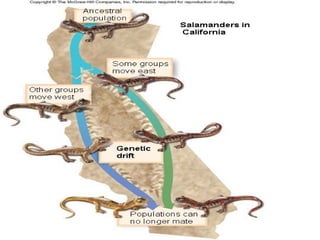
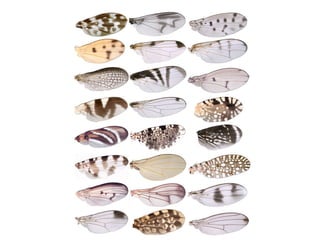
(2) Genetic Variation in the Population
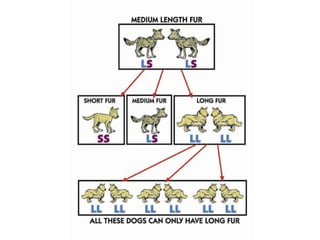
• There must be variety / diversity for
evolution.
• Genetic Variation / Diversity 
Organisms inherited different variations of
traits, giving them different strengths and
weaknesses.
• Genetic Variation allows for some individuals
to succeed + survive.
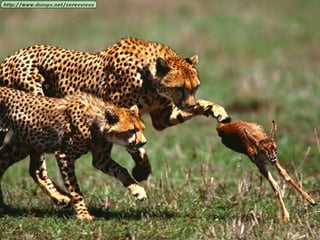
(3) The Struggle for Existence
• Living things are always competing to stay
alive AND pass on their genes:
– Limited food
– Limited water
– Limited shelter
– Changes in climate, disease transmission, etc.
• Those who can survive and reproduce
during tough times are best suited/adapted to
their environment.
(4) What does it mean to Adapt?
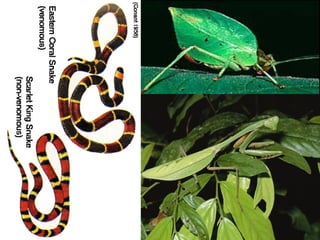
• Evolutionary Adaptation:
Having the traits necessary to remain living and
sexually attractive during times of change.
• It does NOT mean:
To change/grow body parts so that you can
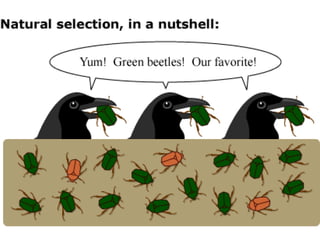
(5) What is Natural Selection?
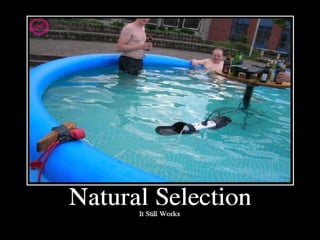
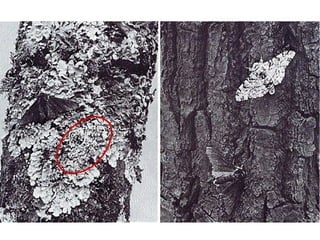
• As the environment changes, certain
characteristics amongst living things will
help them to survive (Survival of the Fittest).
• If you don’t have these characteristics, you will
most likely die, or at least not reproduce.
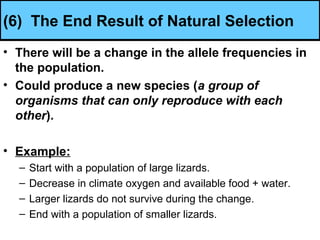
(6) The End Result of Natural Selection
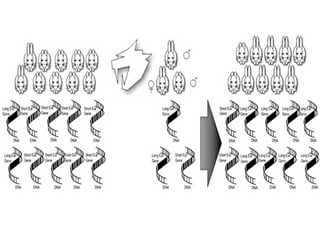
• There will be a change in the allele frequencies in
the population.
• Could produce a new species (a group of
organisms that can only reproduce with each
other).
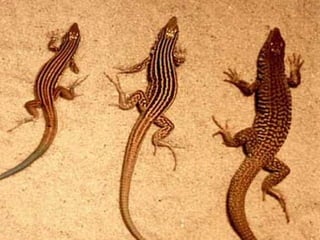
• Example:
– Start with a population of large lizards.
– Decrease in climate oxygen and available food + water.
– Larger lizards do not survive during the change.
– End with a population of smaller lizards.
(7) What About Mutations?
• Organisms CANNOT mutate whole, fully
functioning body parts.
• Organisms can pass on small body
mutations, over thousands of years, leading
to the development of a new body part.
• Mutations can either hurt, or provide an
advantage to individuals during times of
change.
– Both = Evolution
(8) Events Driving Evolution
• All evolutionary changes are still driven my
natural selection.
• There are different events that can promote
evolution:
– Basic Natural Selection
– Mutations
– Genetic Drift
– Genetic Migration
– Geographic Isolation
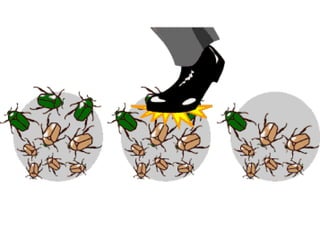
(9) Genetic Drift
• The random removal of certain traits
(alleles) from a population.
• “Wrong Place, Wrong Time.”
• Example:
– You cut your grass and accidentally kill a bunch of
yellow lady-bugs.
– The frequency of yellow lady-bugs decreases.
– There’s now an increase in the # of red lady-bugs.
– Accidental evolution.
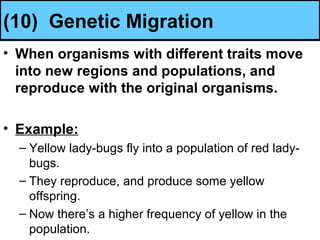
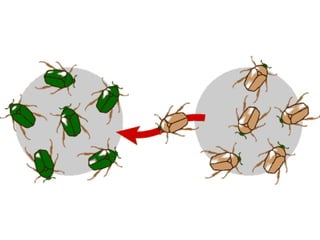
(10) Genetic Migration
• When organisms with different traits move
into new regions and populations, and
reproduce with the original organisms.
• Example:
– Yellow lady-bugs fly into a population of red lady-
bugs.
– They reproduce, and produce some yellow
offspring.
– Now there’s a higher frequency of yellow in the
population.
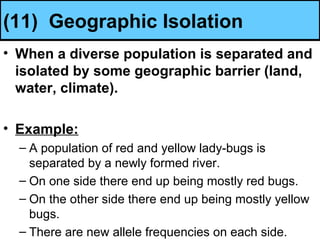
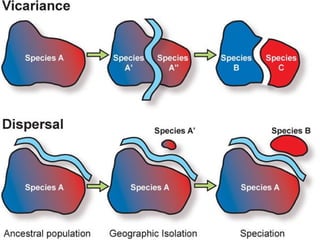
(11) Geographic Isolation
• When a diverse population is separated and
isolated by some geographic barrier (land,
water, climate).
• Example:
– A population of red and yellow lady-bugs is
separated by a newly formed river.
– On one side there end up being mostly red bugs.
– On the other side there end up being mostly yellow
bugs.
– There are new allele frequencies on each side.
Natural Selection video
Hummingbirds
YouTube Video
Now Let’s Watch This Video…

Biology unit 7 evolution intro to evolution and natural selection notes

  • 1.
    Unit 7: Intro toEvolution & Natural Selection
  • 2.
    (1) What isEvolution? • A change in the allele frequency of a population of living things, over a period of time. – “Allele Frequency” = How often a certain trait shows up in the population. • Causes for Evolution: – Genetic variation amongst the population. – Changes in the environment/resources. – Changes in sexual preference. – The dying/extinction of certain populations.
  • 3.
    (2) Genetic Variationin the Population • There must be variety / diversity for evolution. • Genetic Variation / Diversity  Organisms inherited different variations of traits, giving them different strengths and weaknesses. • Genetic Variation allows for some individuals to succeed + survive.
  • 6.
    (3) The Strugglefor Existence • Living things are always competing to stay alive AND pass on their genes: – Limited food – Limited water – Limited shelter – Changes in climate, disease transmission, etc. • Those who can survive and reproduce during tough times are best suited/adapted to their environment.
  • 8.
    (4) What doesit mean to Adapt? • Evolutionary Adaptation: Having the traits necessary to remain living and sexually attractive during times of change. • It does NOT mean: To change/grow body parts so that you can
  • 10.
    (5) What isNatural Selection? • As the environment changes, certain characteristics amongst living things will help them to survive (Survival of the Fittest). • If you don’t have these characteristics, you will most likely die, or at least not reproduce.
  • 13.
    (6) The EndResult of Natural Selection • There will be a change in the allele frequencies in the population. • Could produce a new species (a group of organisms that can only reproduce with each other). • Example: – Start with a population of large lizards. – Decrease in climate oxygen and available food + water. – Larger lizards do not survive during the change. – End with a population of smaller lizards.
  • 17.
    (7) What AboutMutations? • Organisms CANNOT mutate whole, fully functioning body parts. • Organisms can pass on small body mutations, over thousands of years, leading to the development of a new body part. • Mutations can either hurt, or provide an advantage to individuals during times of change. – Both = Evolution
  • 18.
    (8) Events DrivingEvolution • All evolutionary changes are still driven my natural selection. • There are different events that can promote evolution: – Basic Natural Selection – Mutations – Genetic Drift – Genetic Migration – Geographic Isolation
  • 19.
    (9) Genetic Drift •The random removal of certain traits (alleles) from a population. • “Wrong Place, Wrong Time.” • Example: – You cut your grass and accidentally kill a bunch of yellow lady-bugs. – The frequency of yellow lady-bugs decreases. – There’s now an increase in the # of red lady-bugs. – Accidental evolution.
  • 21.
    (10) Genetic Migration •When organisms with different traits move into new regions and populations, and reproduce with the original organisms. • Example: – Yellow lady-bugs fly into a population of red lady- bugs. – They reproduce, and produce some yellow offspring. – Now there’s a higher frequency of yellow in the population.
  • 23.
    (11) Geographic Isolation •When a diverse population is separated and isolated by some geographic barrier (land, water, climate). • Example: – A population of red and yellow lady-bugs is separated by a newly formed river. – On one side there end up being mostly red bugs. – On the other side there end up being mostly yellow bugs. – There are new allele frequencies on each side.
  • 26.
    Natural Selection video Hummingbirds YouTubeVideo Now Let’s Watch This Video…