
Ingrida Olendraitė
        Molecular biologist
       University of Vilnius


2012
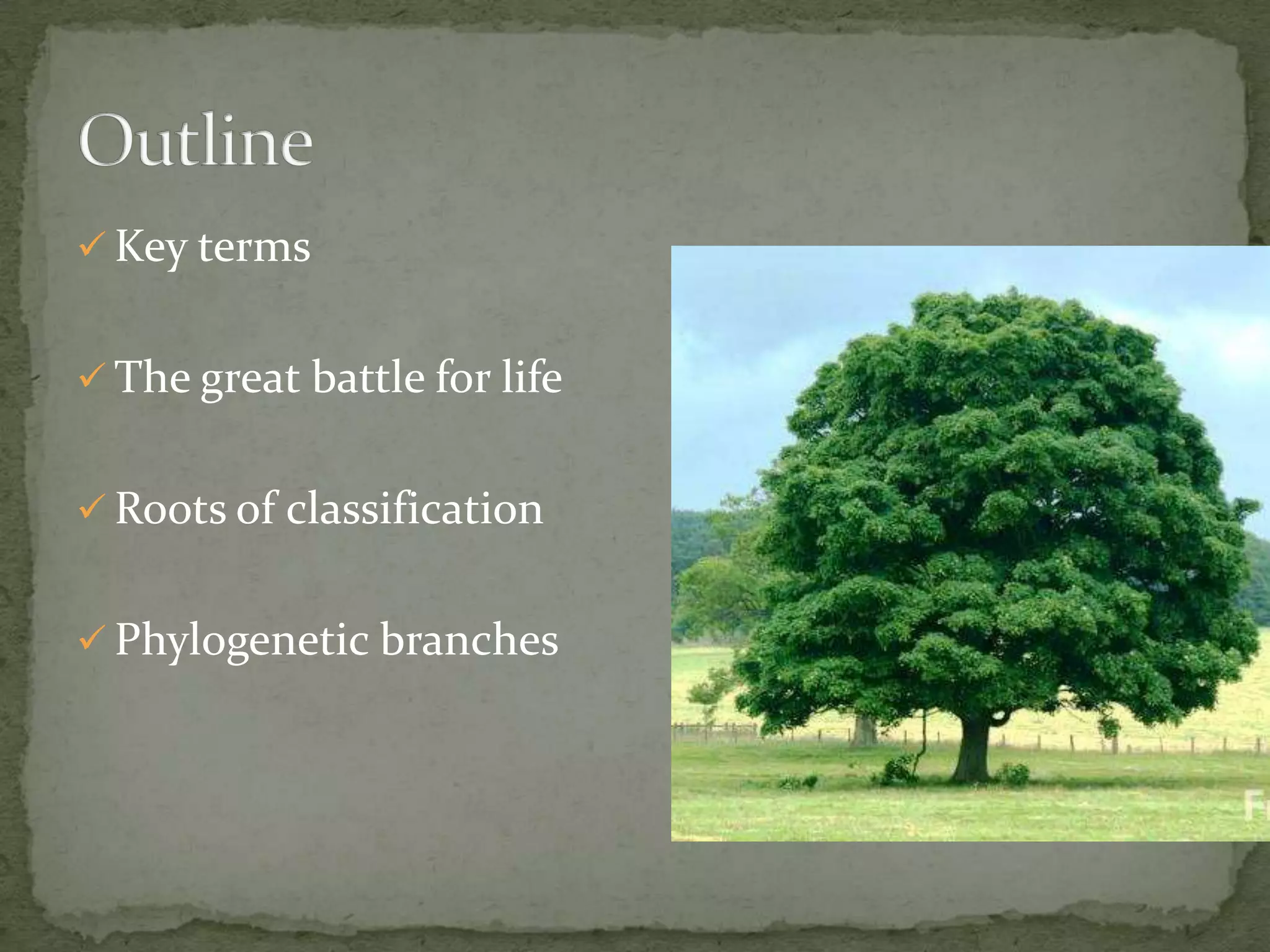
 Key terms


 The great battle for life


 Roots of classification


 Phylogenetic branches
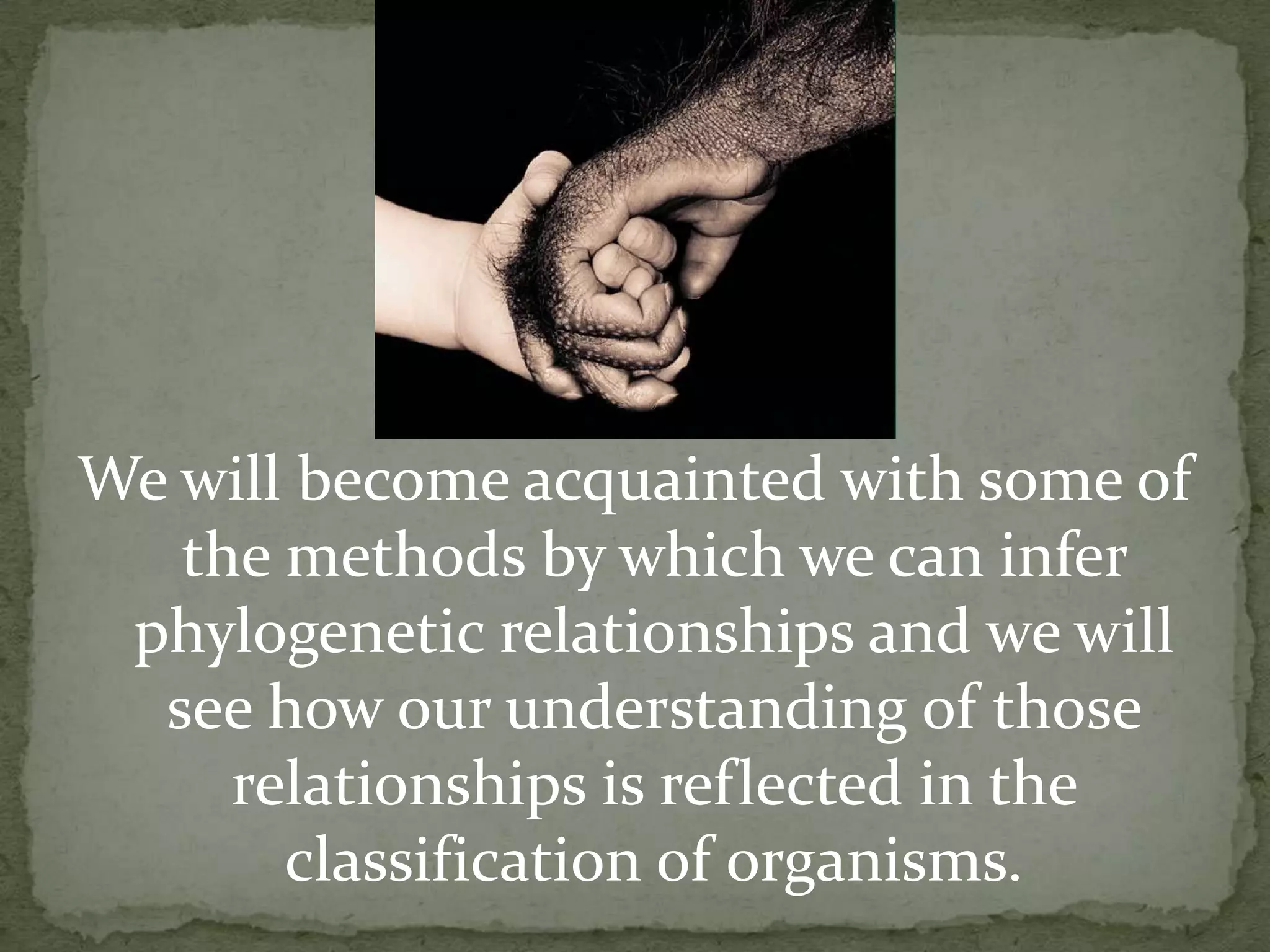
We will become acquainted with some of
   the methods by which we can infer
 phylogenetic relationships and we will
  see how our understanding of those
     relationships is reflected in the
       classification of organisms.
 is a method of taxonomy used to group and
 categorize organisms into groups such as
 genus or species.

 it took on an entirely different significance
 (compared with 17-18’s) after The Origin of
 Species was published in 1859.
 is the study of evolutionary relation among
 groups of organisms, which is discovered
 through molecular sequencing data and
 morphological data matrices.
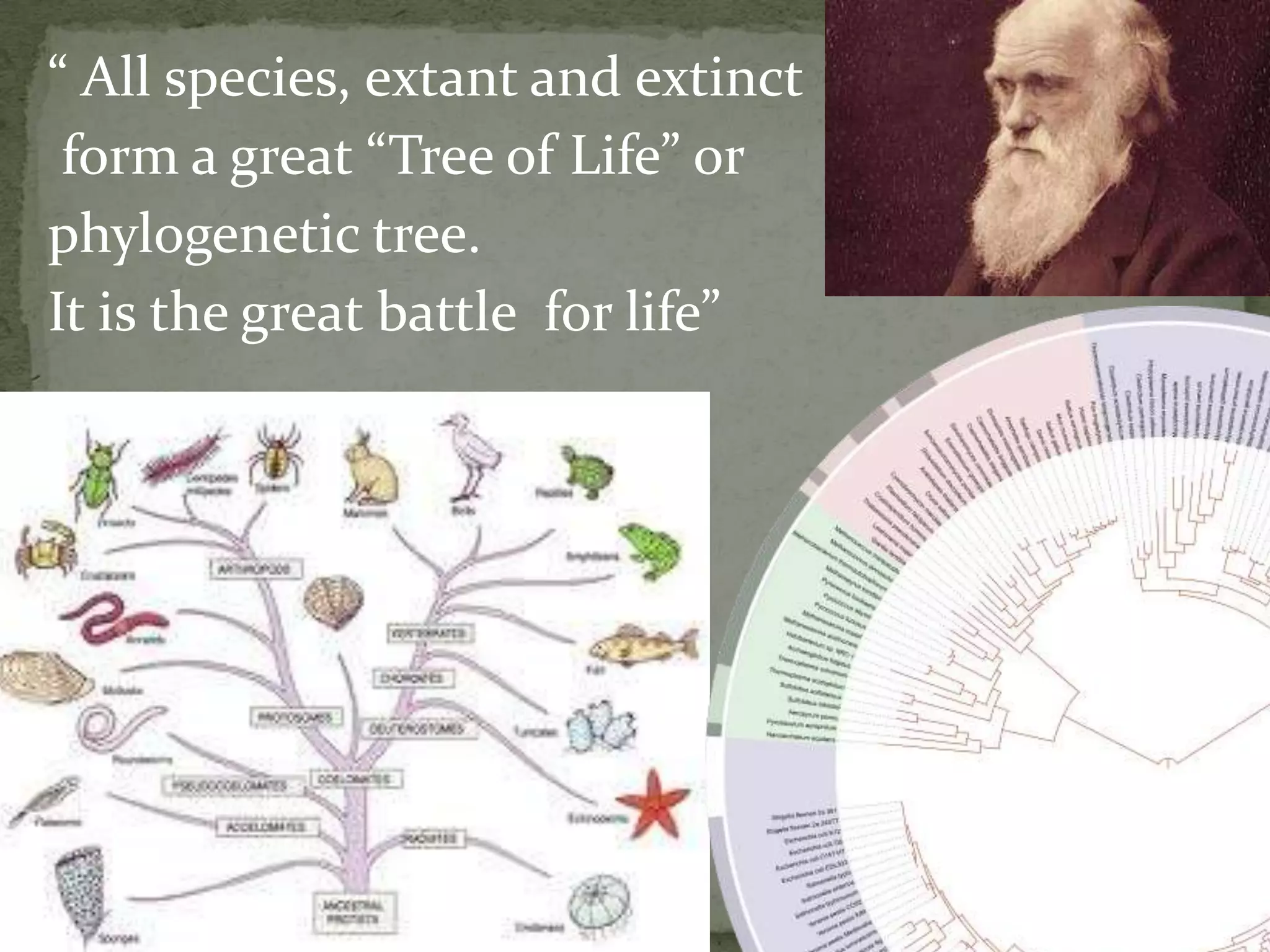
“ All species, extant and extinct
 form a great “Tree of Life” or
phylogenetic tree.
It is the great battle for life”
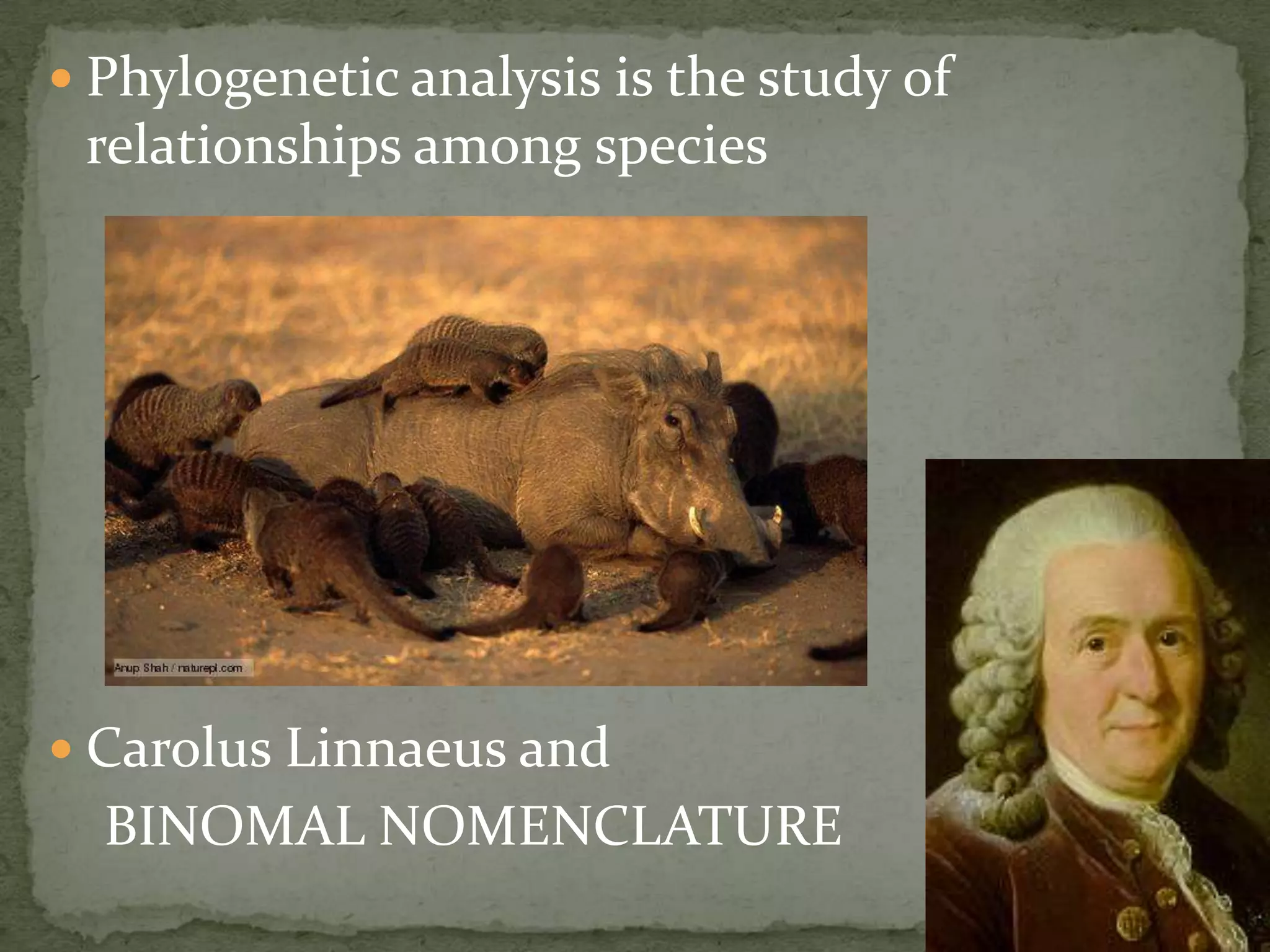
 Phylogenetic analysis is the study of
 relationships among species


 Carolus Linnaeus and
  BINOMAL NOMENCLATURE
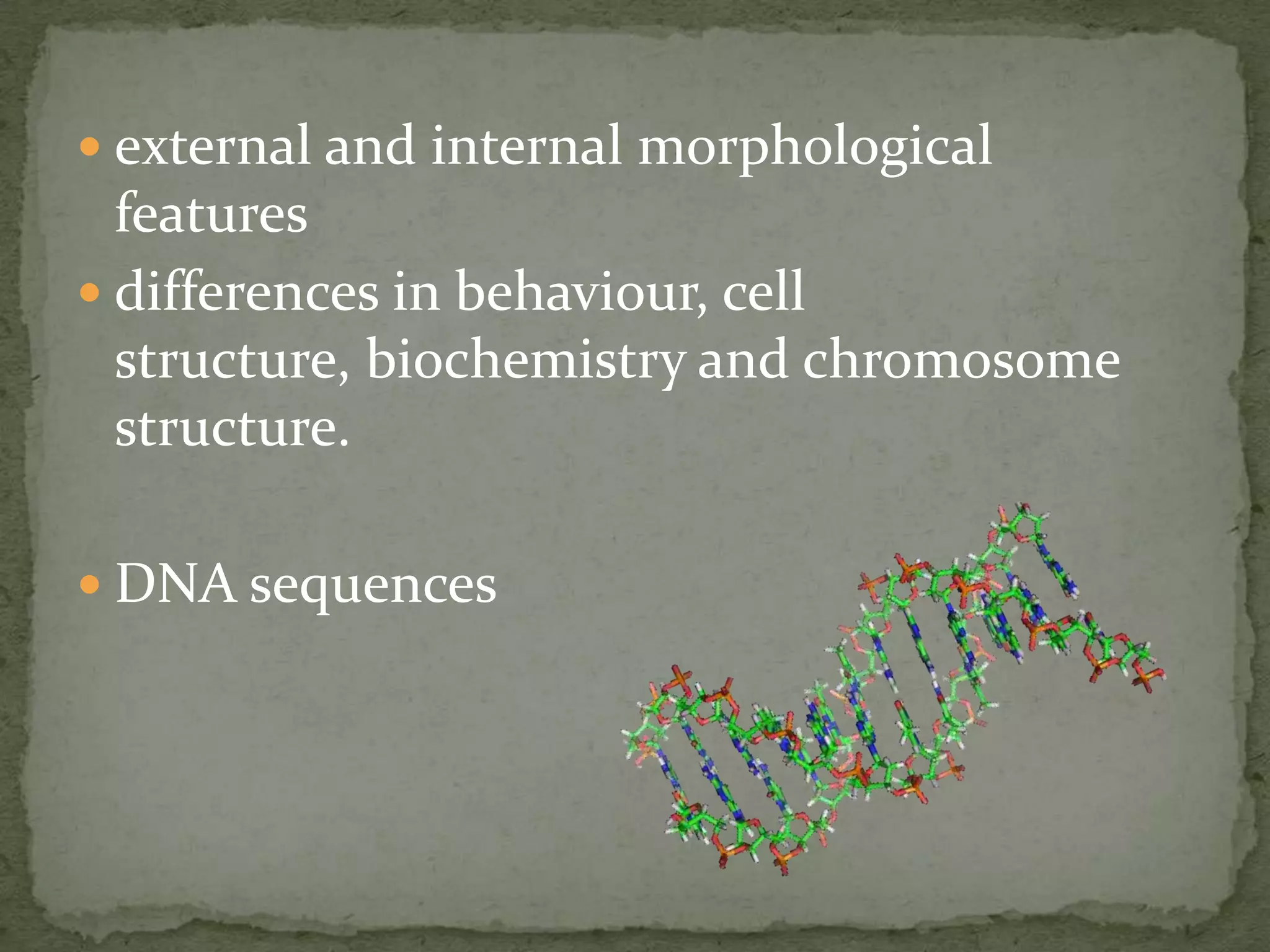
 external and internal morphological
  features
 differences in behaviour, cell
  structure, biochemistry and chromosome
  structure.

 DNA sequences
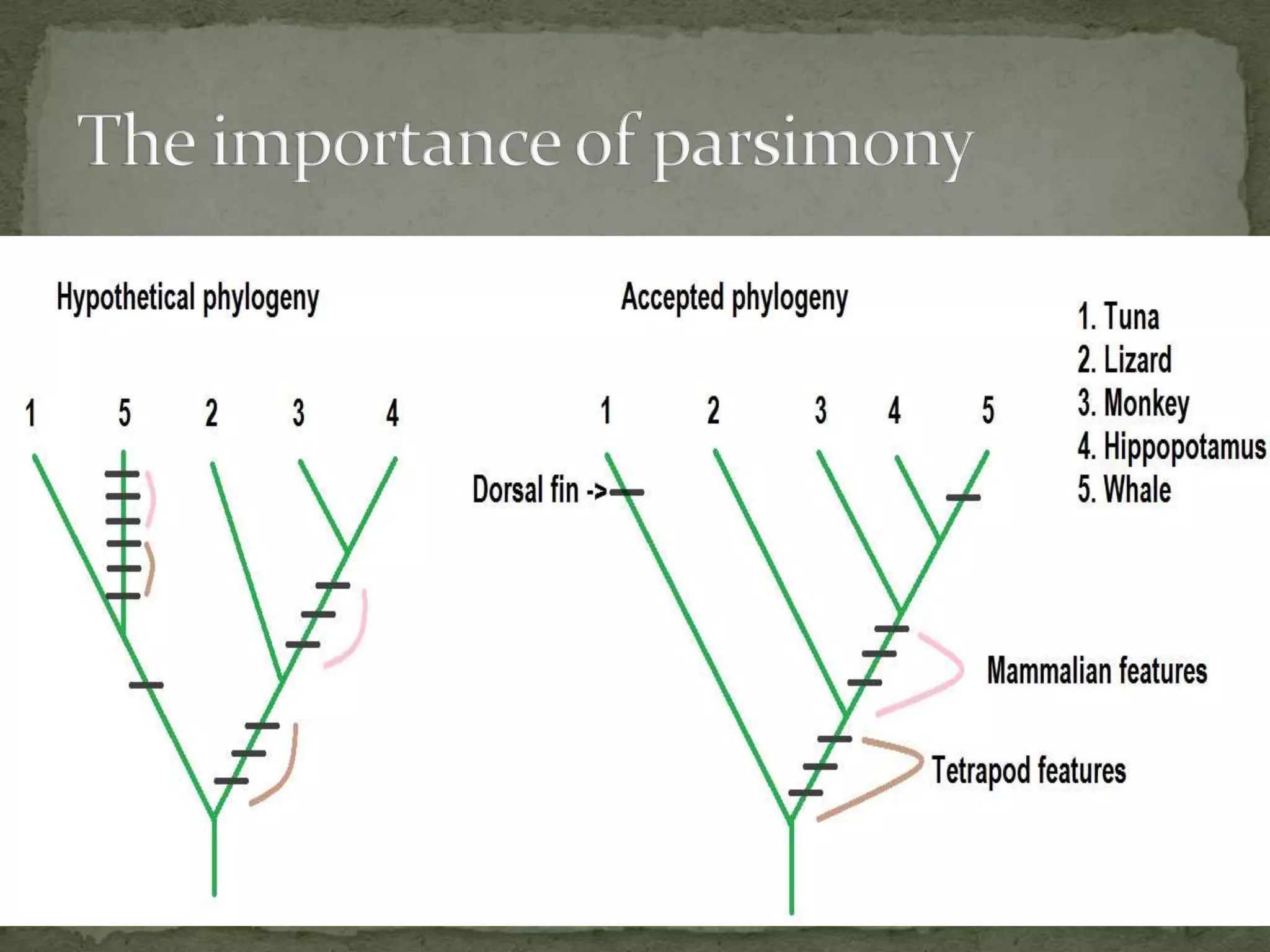
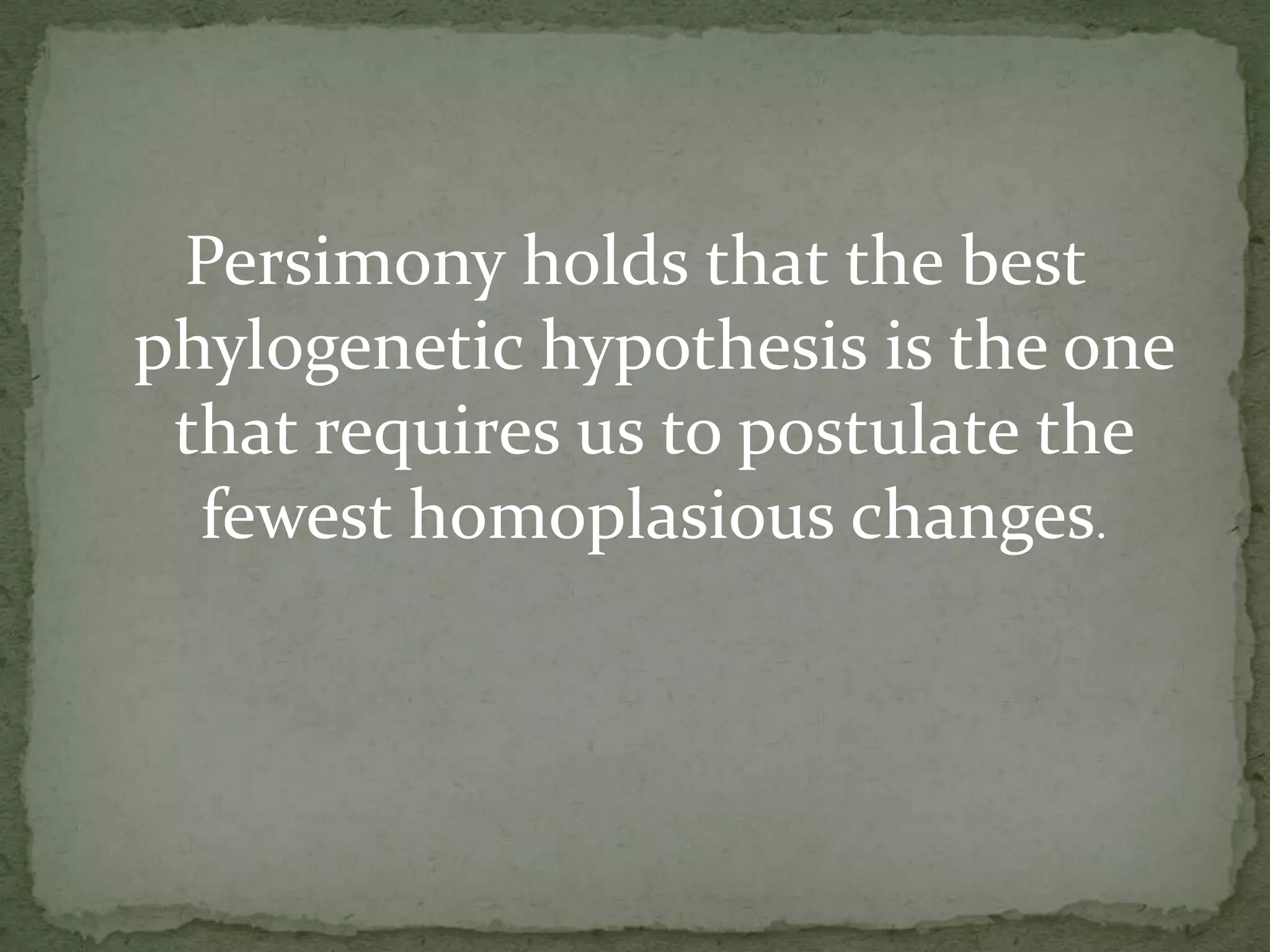
Persimony holds that the best
phylogenetic hypothesis is the one
 that requires us to postulate the
  fewest homoplasious changes.
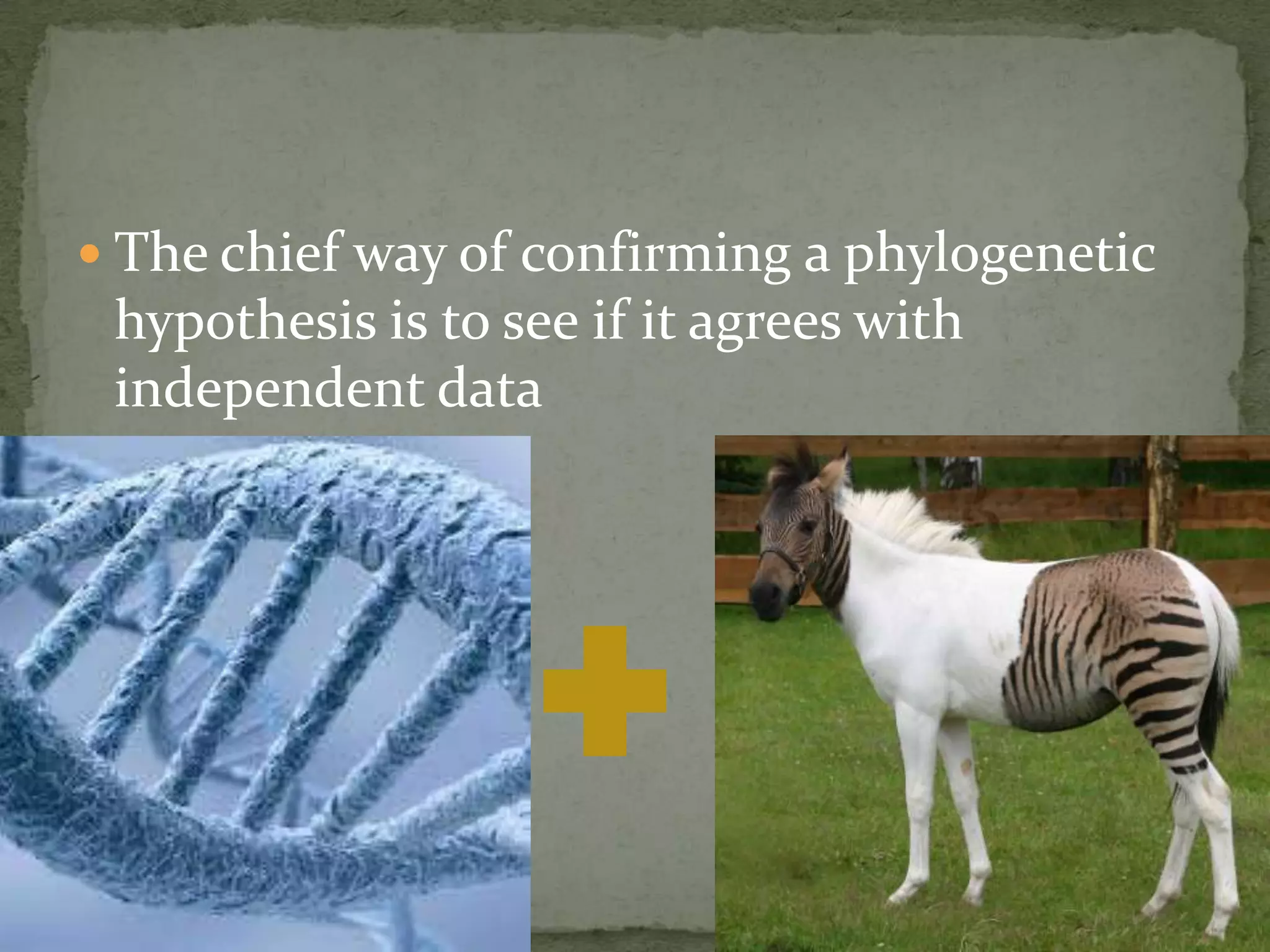
 The chief way of confirming a phylogenetic
 hypothesis is to see if it agrees with
 independent data
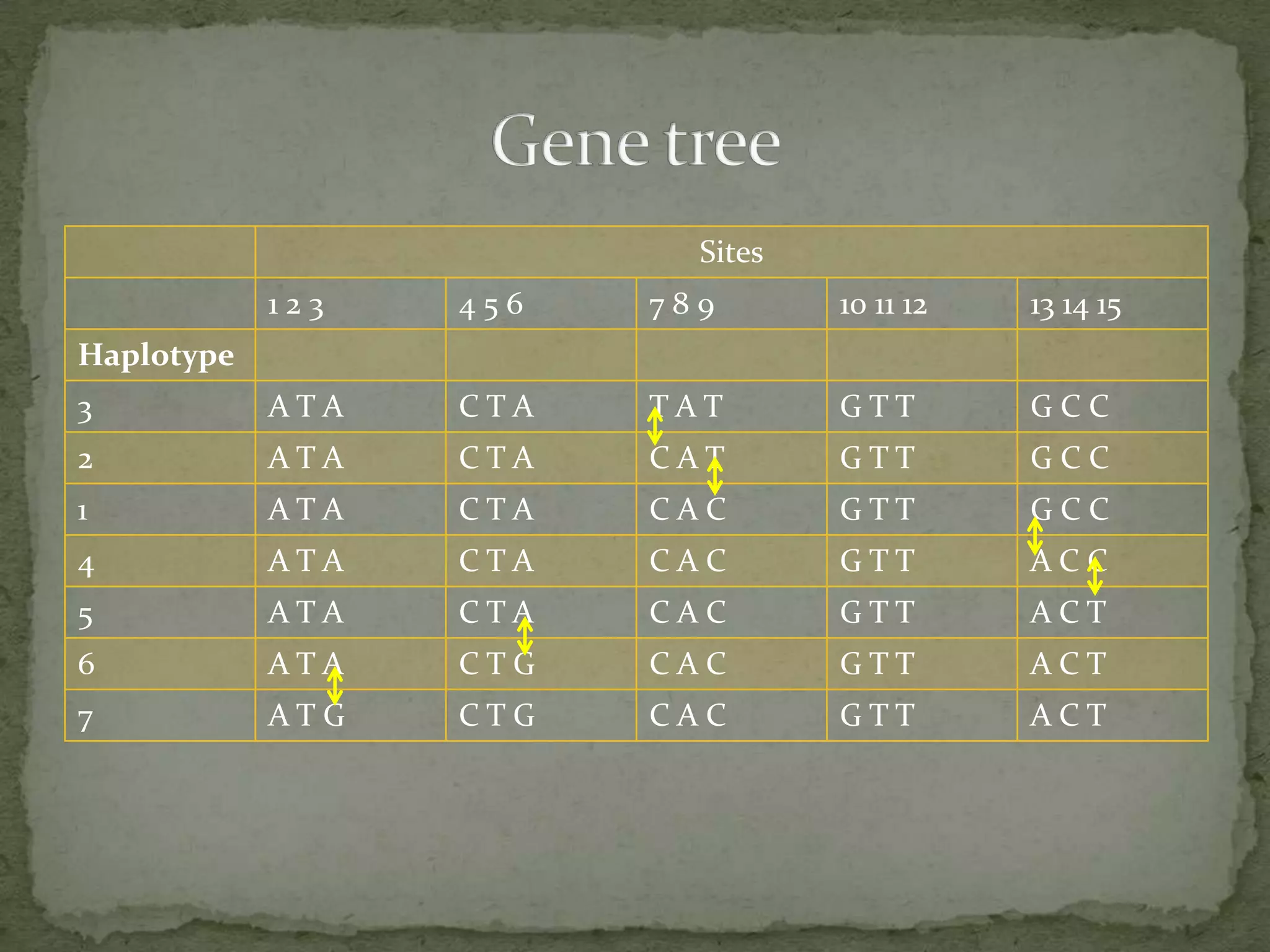
Sites
            123   456   789       10 11 12   13 14 15
Haplotype
3           ATA   CTA   TAT       GTT        GCC
2           ATA   CTA   CAT       GTT        GCC
1           ATA   CTA   CAC       GTT        GCC
4           ATA   CTA   CAC       GTT        ACC
5           ATA   CTA   CAC       GTT        ACT
6           ATA   CTG   CAC       GTT        ACT
7           ATG   CTG   CAC       GTT        ACT
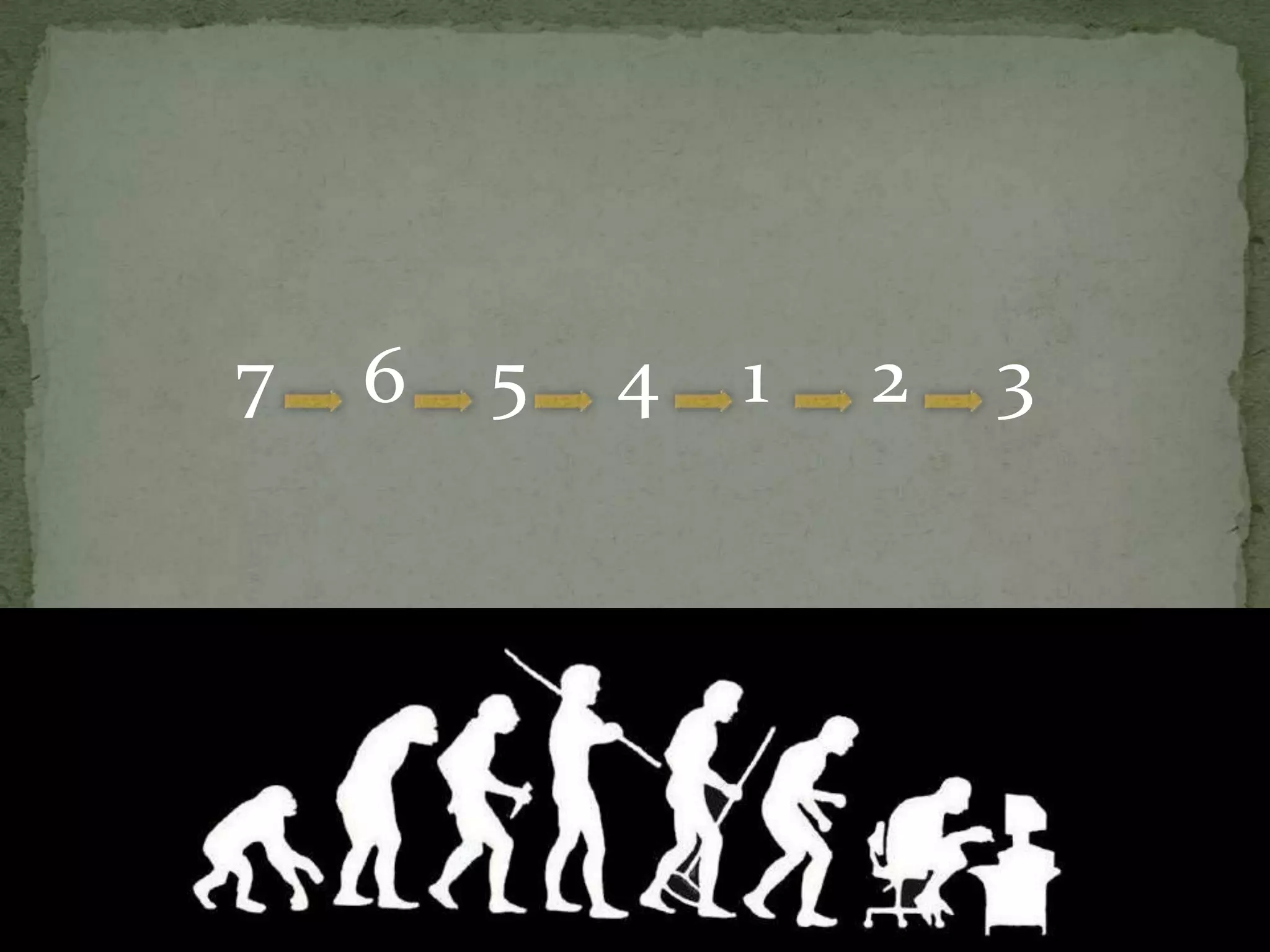
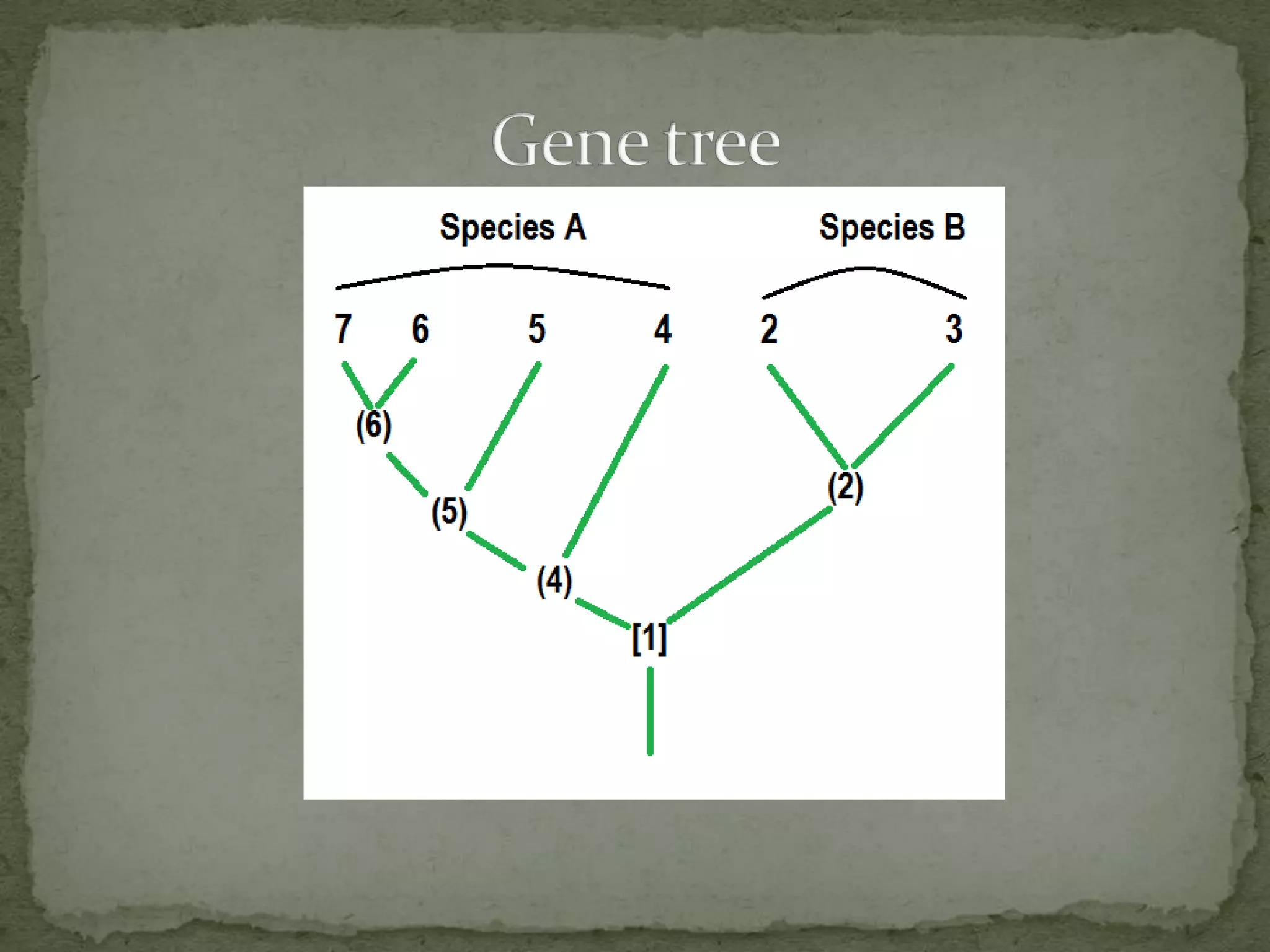
7   6   5   4   1   2   3
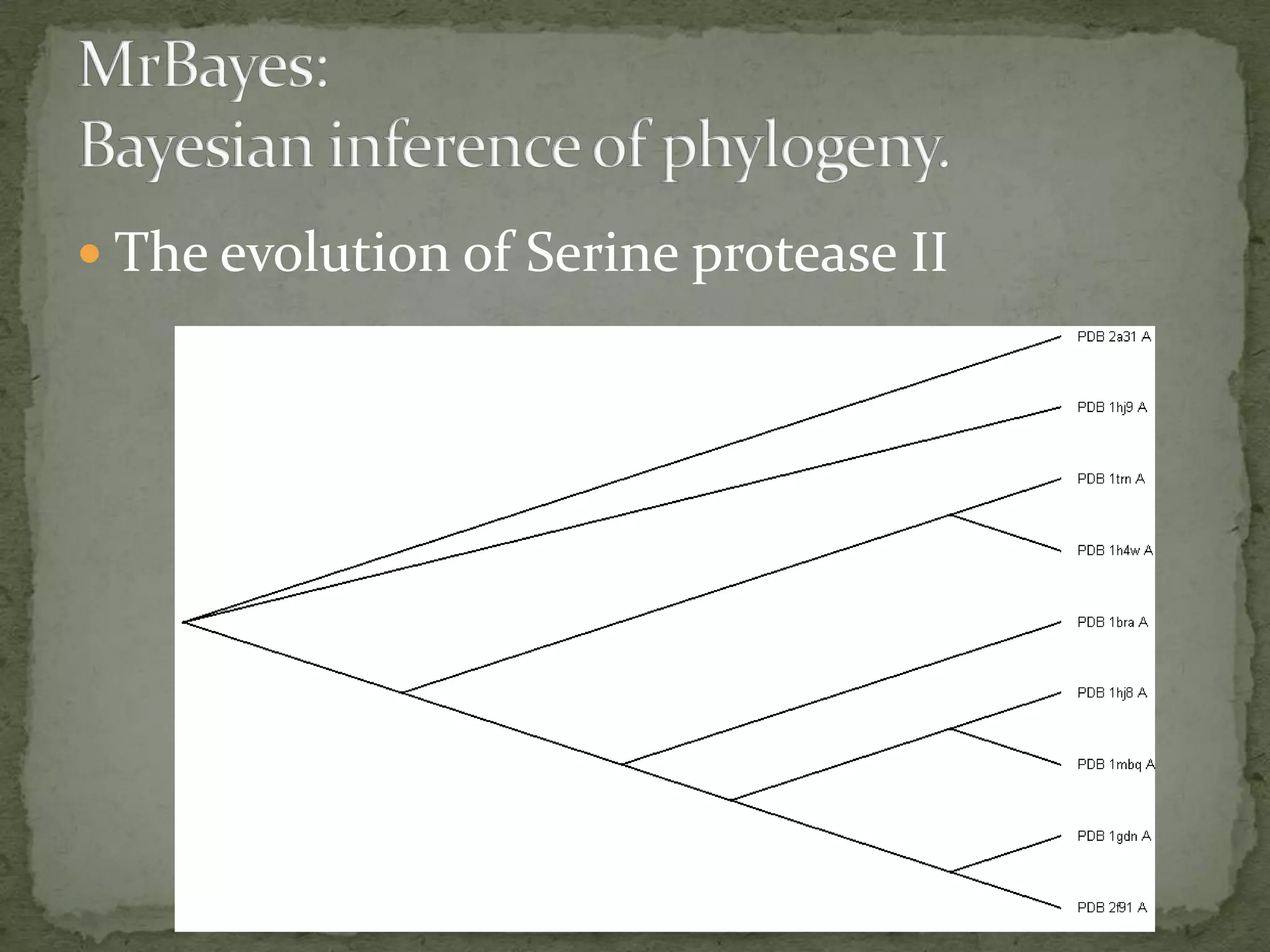
 The evolution of Serine protease II
 A phylogeny is the history by which species or other taxa
  have successively originated from common ancestors.
 A phylogenetic tree is a statement about evolutionary
  relationships and like all scientific statements it is a
  hypothesis
 Phylogenetic trees, estimated from the characteristics of
  the taxa, represent evolutionary relationships and provide a
  framework for analyzing many aspects of evolution.
 Both morphological and molecular data are used in
  phylogenetic analysis.
 “Evolution”, Douglas J. Futuyma, 2005


 http://evolution.berkeley.edu/evolibrary/article/phylo
  genetics_01
 http://www.ebi.ac.uk/pdbsum/
Questions?

The tree of life

  • 1.
    Ingrida Olendraitė Molecular biologist University of Vilnius 2012
  • 2.
     Key terms The great battle for life  Roots of classification  Phylogenetic branches
  • 3.
    We will becomeacquainted with some of the methods by which we can infer phylogenetic relationships and we will see how our understanding of those relationships is reflected in the classification of organisms.
  • 4.
     is amethod of taxonomy used to group and categorize organisms into groups such as genus or species.  it took on an entirely different significance (compared with 17-18’s) after The Origin of Species was published in 1859.
  • 5.
     is thestudy of evolutionary relation among groups of organisms, which is discovered through molecular sequencing data and morphological data matrices.
  • 6.
    “ All species,extant and extinct form a great “Tree of Life” or phylogenetic tree. It is the great battle for life”
  • 7.
     Phylogenetic analysisis the study of relationships among species  Carolus Linnaeus and BINOMAL NOMENCLATURE
  • 9.
     external andinternal morphological features  differences in behaviour, cell structure, biochemistry and chromosome structure.  DNA sequences
  • 11.
    Persimony holds thatthe best phylogenetic hypothesis is the one that requires us to postulate the fewest homoplasious changes.
  • 14.
     The chiefway of confirming a phylogenetic hypothesis is to see if it agrees with independent data
  • 15.
    Sites 123 456 789 10 11 12 13 14 15 Haplotype 3 ATA CTA TAT GTT GCC 2 ATA CTA CAT GTT GCC 1 ATA CTA CAC GTT GCC 4 ATA CTA CAC GTT ACC 5 ATA CTA CAC GTT ACT 6 ATA CTG CAC GTT ACT 7 ATG CTG CAC GTT ACT
  • 16.
    7 6 5 4 1 2 3
  • 18.
     The evolutionof Serine protease II
  • 19.
     A phylogenyis the history by which species or other taxa have successively originated from common ancestors.  A phylogenetic tree is a statement about evolutionary relationships and like all scientific statements it is a hypothesis  Phylogenetic trees, estimated from the characteristics of the taxa, represent evolutionary relationships and provide a framework for analyzing many aspects of evolution.  Both morphological and molecular data are used in phylogenetic analysis.
  • 20.
     “Evolution”, DouglasJ. Futuyma, 2005  http://evolution.berkeley.edu/evolibrary/article/phylo genetics_01  http://www.ebi.ac.uk/pdbsum/
  • 21.