Answers 
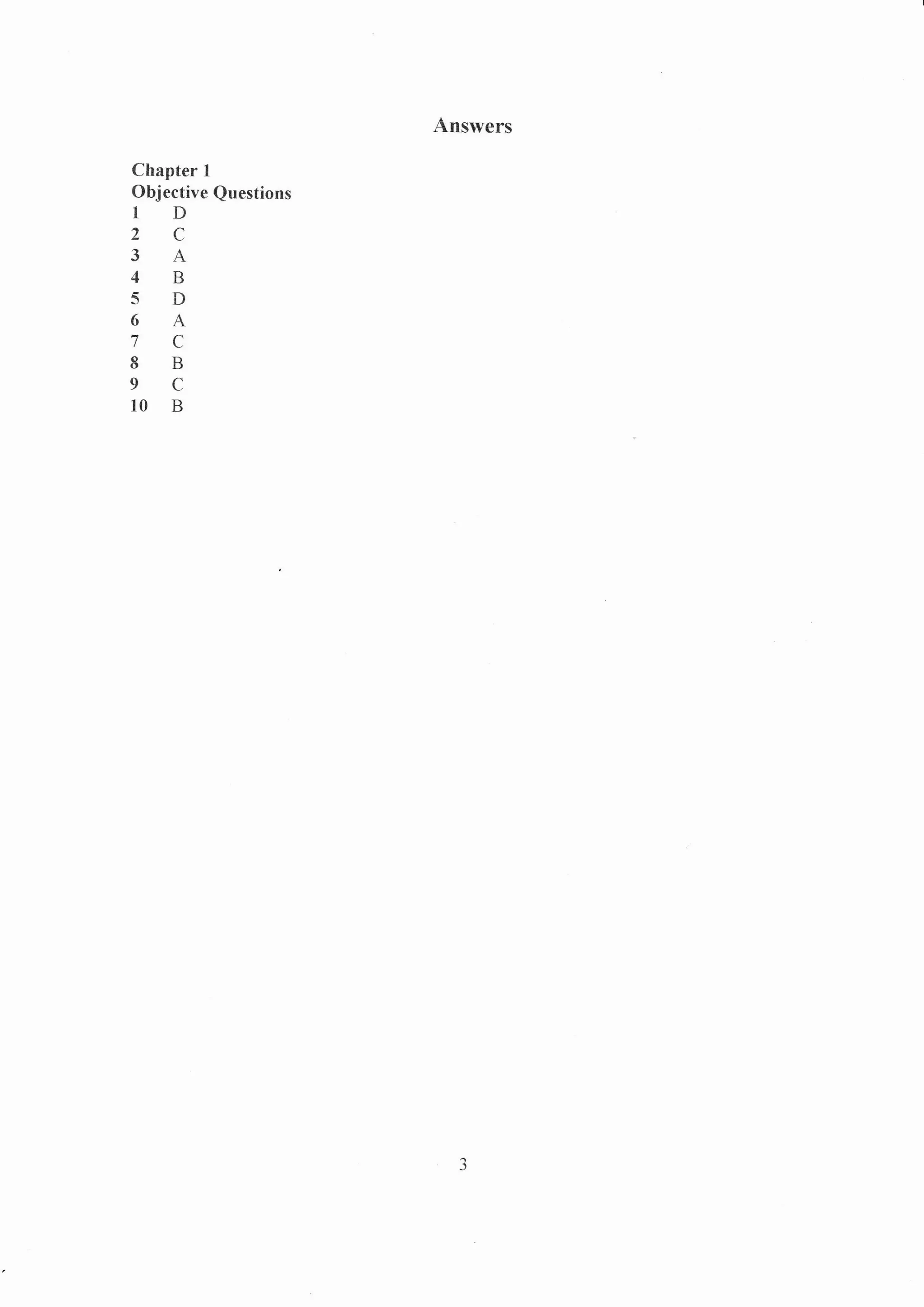
Chapter 1 
Objective Questions 1D 
2C 
3A 
4B 
5D 
6A 
7C 
8B 
9C 
108
Answers 
Objective Questions 
1D 
2B 
3B 
4A 
5D 
6B 
7B 
8B 
Structured Questions 
(a) (i) A- Vacuole 
B - Plasma membrane 
C - Chloroplast 
D - Cell u'all 
E - Mitochondrion 
F - Crtoplasm 
(ii) C - carry, out the photosynthetic process 
E - generate energ)- in the cell 
(b) 
nucleus 
cyloplasm 
cell rnembrane 
(c) The plant cell comprises the cell 
animai cells. 
r,vall, chloroplast and a trig vacuole that is not found in 
- has cellulose fibre and gives shape to the plant cell 
- surrounded b_v tonoplast and contains cell sap 
- contains chlorophl'Il pigments and carries out the photosyntheiic 
process 
- controls the substances that enter and move out of the cell 
- control centre of all cell activities 
- substances in the cell that are located between the plasma 
membrane and the nucleus 
Ntitochondiion- the main site of energy generation, resulting from the oxidation of 
lood 
9D 
l0B 
11 A 
t2B 
138 
14A 
158 
Essay Question 
1 (a) Cell wall 
Vacuole 
Chioropiast 
Membrane 
Nucleus 
Cytoplasm 
(b) r Put i.wo drops of distiiled water on the glass slide by using a dropper. o Use a small blade to cut a slice of red onion peel. o Use a forceps to remove the epidermis in the onion peel. o Place the epidermis in the drop of distilled water on the glass slide that is 
prepared.
o 
o 
With the help of the perch needle, cover the epidermis with the glass slide cover. 
By using a light microscopg study the structure of the epidermis cell, first at a low 
power, and then at a high power. 
Transfer the glass slide from the microscope and place a piece of filter paper on 
one end ofthe glass slide cover. 
Drop iodine solution on the side of the glass slide cover while absorbing the 
solution at the other end of the slide using filter paper. 
observe the glass slide again through the microscope at a low power in order to 
focus at the cell. before changing to a higher power. 
Draw and label the onion cell structure that you observed through the microscope.
Answers 
Objective Questicns 1C 
2D 
ln 
4C 
5B 
6B 
7B 
8D 
9C 
108 
Structured Question 
(a) (i) 0 4 9/100 cm3 (ii) The solution is isotonic. The rate of water moving in and out of the cell is the same. 
As such, the red blood cell does not burst. (iii) I Sweating 
2Urinating a lot and unne is dilute 
(b) The salt solutiolr is hypotonic towards the liquid in the red blood cell. As such, the ivater 
enters the red blood cell by osmosis and causes the volume of the cl.toplasm to increase. 
The plasma membrane is stretched beyond its elastic limit causing the red blood cell to 
burs1. 
(c) This is because the onion cell has a hard cell wall and can prevent excess water from 
entering. 
(d) Excess fertilisers causes the soil solution to become a hypertonic solution compared with 
the hair root cell sap. The water moves out from the root hair cell by osmosis causing the 
plant cell to suffer from a lack of water until the enzyme in the cell can no longer 
lunction. 
Essay'Question 
(a) (D The intake of mineral salts occurs through active transportation, lvhich requires energy 
from cell respiration. A condition with a lack of o"yg"n or the presence of respiration 
poison stops/slows down the rate of cell respirahon to produce biological energy'. 
When the plant is transferred to a new location, part of its main root s"ystem is cut 
of?injured. As such, the rate of water absorption from the soil by the small plant 
decreases. Cutting parts of the leaf helps io reduce the loss of water thrbugh 
transpiration.
(b) 
palisade 
mesoptryll 
spongy 
mesoph)rll 
I 
cuticle 
upper epidermis 
chloroplasts 
racuole 
cytoplasm 
nucleus 
rylem tissue ' 
ve.trn I nscular 
{ bundle 
floem tissue J 
lower epidermis 
guard cell

Biology form 4 chapter 1 2 3

  • 1.
    Answers Chapter 1 Objective Questions 1D 2C 3A 4B 5D 6A 7C 8B 9C 108
  • 2.
    Answers Objective Questions 1D 2B 3B 4A 5D 6B 7B 8B Structured Questions (a) (i) A- Vacuole B - Plasma membrane C - Chloroplast D - Cell u'all E - Mitochondrion F - Crtoplasm (ii) C - carry, out the photosynthetic process E - generate energ)- in the cell (b) nucleus cyloplasm cell rnembrane (c) The plant cell comprises the cell animai cells. r,vall, chloroplast and a trig vacuole that is not found in - has cellulose fibre and gives shape to the plant cell - surrounded b_v tonoplast and contains cell sap - contains chlorophl'Il pigments and carries out the photosyntheiic process - controls the substances that enter and move out of the cell - control centre of all cell activities - substances in the cell that are located between the plasma membrane and the nucleus Ntitochondiion- the main site of energy generation, resulting from the oxidation of lood 9D l0B 11 A t2B 138 14A 158 Essay Question 1 (a) Cell wall Vacuole Chioropiast Membrane Nucleus Cytoplasm (b) r Put i.wo drops of distiiled water on the glass slide by using a dropper. o Use a small blade to cut a slice of red onion peel. o Use a forceps to remove the epidermis in the onion peel. o Place the epidermis in the drop of distilled water on the glass slide that is prepared.
  • 3.
    o o Withthe help of the perch needle, cover the epidermis with the glass slide cover. By using a light microscopg study the structure of the epidermis cell, first at a low power, and then at a high power. Transfer the glass slide from the microscope and place a piece of filter paper on one end ofthe glass slide cover. Drop iodine solution on the side of the glass slide cover while absorbing the solution at the other end of the slide using filter paper. observe the glass slide again through the microscope at a low power in order to focus at the cell. before changing to a higher power. Draw and label the onion cell structure that you observed through the microscope.
  • 4.
    Answers Objective Questicns1C 2D ln 4C 5B 6B 7B 8D 9C 108 Structured Question (a) (i) 0 4 9/100 cm3 (ii) The solution is isotonic. The rate of water moving in and out of the cell is the same. As such, the red blood cell does not burst. (iii) I Sweating 2Urinating a lot and unne is dilute (b) The salt solutiolr is hypotonic towards the liquid in the red blood cell. As such, the ivater enters the red blood cell by osmosis and causes the volume of the cl.toplasm to increase. The plasma membrane is stretched beyond its elastic limit causing the red blood cell to burs1. (c) This is because the onion cell has a hard cell wall and can prevent excess water from entering. (d) Excess fertilisers causes the soil solution to become a hypertonic solution compared with the hair root cell sap. The water moves out from the root hair cell by osmosis causing the plant cell to suffer from a lack of water until the enzyme in the cell can no longer lunction. Essay'Question (a) (D The intake of mineral salts occurs through active transportation, lvhich requires energy from cell respiration. A condition with a lack of o"yg"n or the presence of respiration poison stops/slows down the rate of cell respirahon to produce biological energy'. When the plant is transferred to a new location, part of its main root s"ystem is cut of?injured. As such, the rate of water absorption from the soil by the small plant decreases. Cutting parts of the leaf helps io reduce the loss of water thrbugh transpiration.
  • 5.
    (b) palisade mesoptryll spongy mesoph)rll I cuticle upper epidermis chloroplasts racuole cytoplasm nucleus rylem tissue ' ve.trn I nscular { bundle floem tissue J lower epidermis guard cell