Cellular Processes
Standard 7-2.4
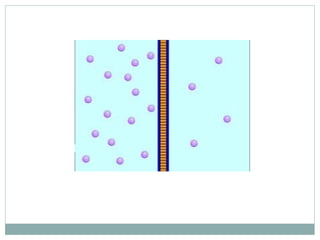
Diffusion
One way in which materials move across the cellular
membrane
Materials move from area of higher concentration to
area of lower concentration
Osmosis
The diffusion of water across the cellular membrane
PHOTOSYNTHESIS
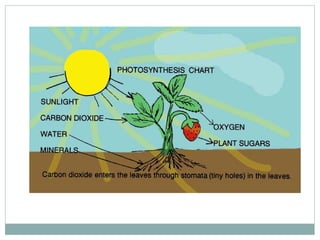
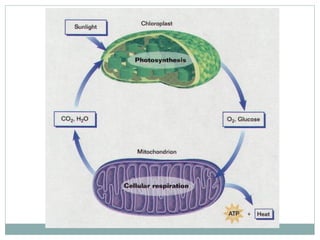
Plants use light energy (for example sunlight)
to combine carbon dioxide and water to make
simple sugars.
Plant cells also release oxygen gas.
Once the sugars are formed, they are either
used by the plant or stored in the vacuoles.
Photosynthesis occurs in the chloroplasts.
RESPIRATION
All organisms, including plants and animals,
break down simple sugars into carbon
dioxide and water and release energy.
The cell uses the energy to build, repair, and
reproduce cells.
Respiration occurs in the mitochondria of
cells.
WASTE ELIMINATION
Organisms rid the cells of waste products that could
be harmful to the cell.
As waste particles accumulate in a cell, the waste will
move out of the cell and be eliminated.
The waste particles will move from a more
concentrated area to a less concentrated area.
(diffusion)
MITOSIS
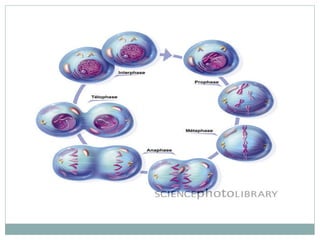
Cell reproduction is called mitosis and occurs in
the nucleus of the cell.
Mitosis enables a cell to make an exact copy of it.
Mitosis is a process of cell division, which results
in the production of two daughter cells from a
single parent cell.
The daughter cells are identical to one another and
to the original parent cell.
Mitosis is needed for growth, replacement, and
Asexual reproduction.
Cellular processes

Cellular processes

  • 1.
  • 2.
    Diffusion One way inwhich materials move across the cellular membrane Materials move from area of higher concentration to area of lower concentration
  • 4.
    Osmosis The diffusion ofwater across the cellular membrane
  • 5.
    PHOTOSYNTHESIS Plants use lightenergy (for example sunlight) to combine carbon dioxide and water to make simple sugars. Plant cells also release oxygen gas. Once the sugars are formed, they are either used by the plant or stored in the vacuoles. Photosynthesis occurs in the chloroplasts.
  • 7.
    RESPIRATION All organisms, includingplants and animals, break down simple sugars into carbon dioxide and water and release energy. The cell uses the energy to build, repair, and reproduce cells. Respiration occurs in the mitochondria of cells.
  • 9.
    WASTE ELIMINATION Organisms ridthe cells of waste products that could be harmful to the cell. As waste particles accumulate in a cell, the waste will move out of the cell and be eliminated. The waste particles will move from a more concentrated area to a less concentrated area. (diffusion)
  • 10.
    MITOSIS Cell reproduction iscalled mitosis and occurs in the nucleus of the cell. Mitosis enables a cell to make an exact copy of it. Mitosis is a process of cell division, which results in the production of two daughter cells from a single parent cell. The daughter cells are identical to one another and to the original parent cell. Mitosis is needed for growth, replacement, and Asexual reproduction.
Editor's Notes

  • #11 Video under MITOSIS- right click to view