EZHILMATHI. S
2015006015
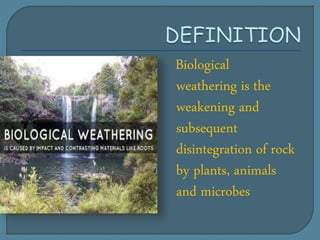
Biological
weathering is the
weakening and
subsequent
disintegration of rock
by plants, animals
and microbes
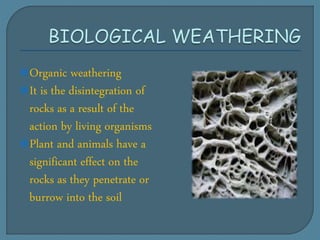
Organic weathering
It is the disintegration of
rocks as a result of the
action by living organisms
Plant and animals have a
significant effect on the
rocks as they penetrate or
burrow into the soil
Biological weathering can work with physical weathering,
for example root exert pressure which helps to weakening
rocks
It can also produce chemical weathering, for example where
microorganisms produce organic acids which help to
dissolve minerals
Microscopic organisms can produce organic chemicals that
can contribute to the rock’s mineral weathering
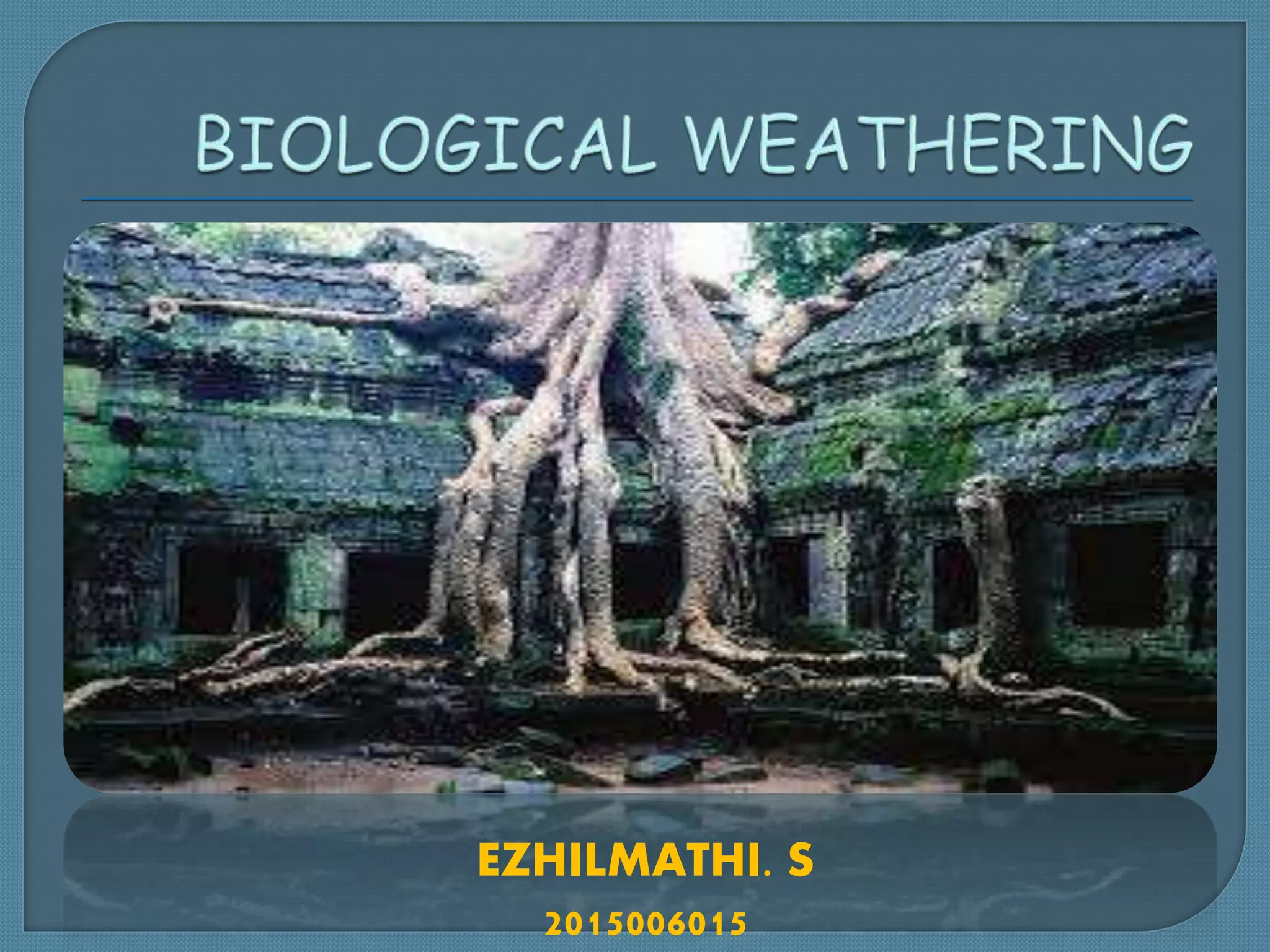
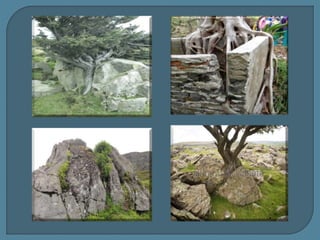
The roots penetrate into the soil in search of
nutrients and water
They go through cracks or joints in the rocks and as
they grow they progressively crack the rock apart
They also emit organic acids that aid to dissolve the
rock’s minerals
Although the process is physical, the pressure is
exerted by a biological process
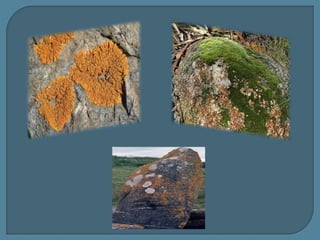
Algae, moss, lichens and bacteria break down rock
minerals by altering the rock’s chemical composition
Lichen is fungi and algae living together in a
symbiotic relationship
Fungi release chemicals that break down rock
minerals; the minerals thus released from rock
consumed by algae
These compounds can break down iron and aluminum
minerals in the rocks
They release acidifying molecules and chelating compounds
The amount of biological activity that breaks down
minerals depends on how much life is in that area
They arise out of bio-chemical reactions
They also bring about moist chemical micro-environments
This can move rock fragments to the surface
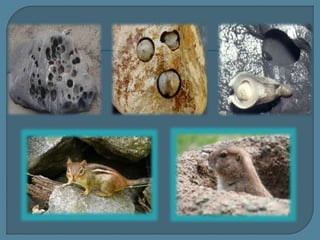
Moles, squirrels and rabbits can speed up the development
of fissures
Piddock shells drill into rocks for protection by releasing
acids to dissolve the rocks
There are many small animals that eat away the rock’s
minerals and bore hole so as live inside it
This equally dig, crash, and widen the
cracks and wind up fragmenting the
rocks apart
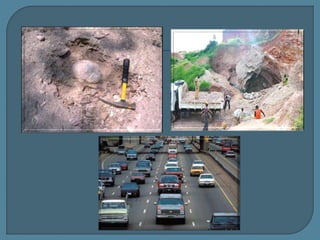
These activities include mining, road
construction, and housing developments
Historically, scientists have studied weathering as an abiotic
process.
In the mid 1980’s, scientists studying geothermal sediments
from Yellowstone found the some of the first evidence of
biological weathering when they discovered iron-silicate
minerals in association with bacterial remains.
The first application that included biological weathering in
LAPSUS was Temme and Veldkamp’s study in South Africa.
The original implementation of biological weathering was
developed by Minasny and McBratney, 2006.
Biological weathering and the long-term carbon
cycle: integrating mycorrhizal evolution and
function into the current paradigm
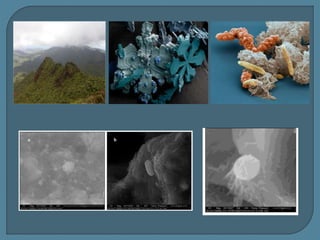
Crystalline nanotube-forming bacteria help
crumble mountains in a tropical rainforest
http://www.eartheclipse.com
Das, Dilip kumar/ 1996/ introductory soil science
http://www.thelonelyspore.com
Thank u

Biological weathering

  • 1.
  • 2.
    Biological weathering is the weakeningand subsequent disintegration of rock by plants, animals and microbes
  • 3.
    Organic weathering It isthe disintegration of rocks as a result of the action by living organisms Plant and animals have a significant effect on the rocks as they penetrate or burrow into the soil
  • 4.
    Biological weathering canwork with physical weathering, for example root exert pressure which helps to weakening rocks It can also produce chemical weathering, for example where microorganisms produce organic acids which help to dissolve minerals Microscopic organisms can produce organic chemicals that can contribute to the rock’s mineral weathering
  • 5.
    The roots penetrateinto the soil in search of nutrients and water They go through cracks or joints in the rocks and as they grow they progressively crack the rock apart They also emit organic acids that aid to dissolve the rock’s minerals Although the process is physical, the pressure is exerted by a biological process
  • 7.
    Algae, moss, lichensand bacteria break down rock minerals by altering the rock’s chemical composition Lichen is fungi and algae living together in a symbiotic relationship Fungi release chemicals that break down rock minerals; the minerals thus released from rock consumed by algae
  • 9.
    These compounds canbreak down iron and aluminum minerals in the rocks They release acidifying molecules and chelating compounds The amount of biological activity that breaks down minerals depends on how much life is in that area They arise out of bio-chemical reactions They also bring about moist chemical micro-environments
  • 10.
    This can moverock fragments to the surface Moles, squirrels and rabbits can speed up the development of fissures Piddock shells drill into rocks for protection by releasing acids to dissolve the rocks There are many small animals that eat away the rock’s minerals and bore hole so as live inside it
  • 12.
    This equally dig,crash, and widen the cracks and wind up fragmenting the rocks apart These activities include mining, road construction, and housing developments
  • 14.
    Historically, scientists havestudied weathering as an abiotic process. In the mid 1980’s, scientists studying geothermal sediments from Yellowstone found the some of the first evidence of biological weathering when they discovered iron-silicate minerals in association with bacterial remains. The first application that included biological weathering in LAPSUS was Temme and Veldkamp’s study in South Africa. The original implementation of biological weathering was developed by Minasny and McBratney, 2006.
  • 15.
    Biological weathering andthe long-term carbon cycle: integrating mycorrhizal evolution and function into the current paradigm Crystalline nanotube-forming bacteria help crumble mountains in a tropical rainforest
  • 17.
    http://www.eartheclipse.com Das, Dilip kumar/1996/ introductory soil science http://www.thelonelyspore.com
  • 18.