
-J.Delince
BSA-11-409
*
*Metamorphism – A transformation
*Those rocks which undergone various chemical and physical
changes
*They are formed from the parent material protolith
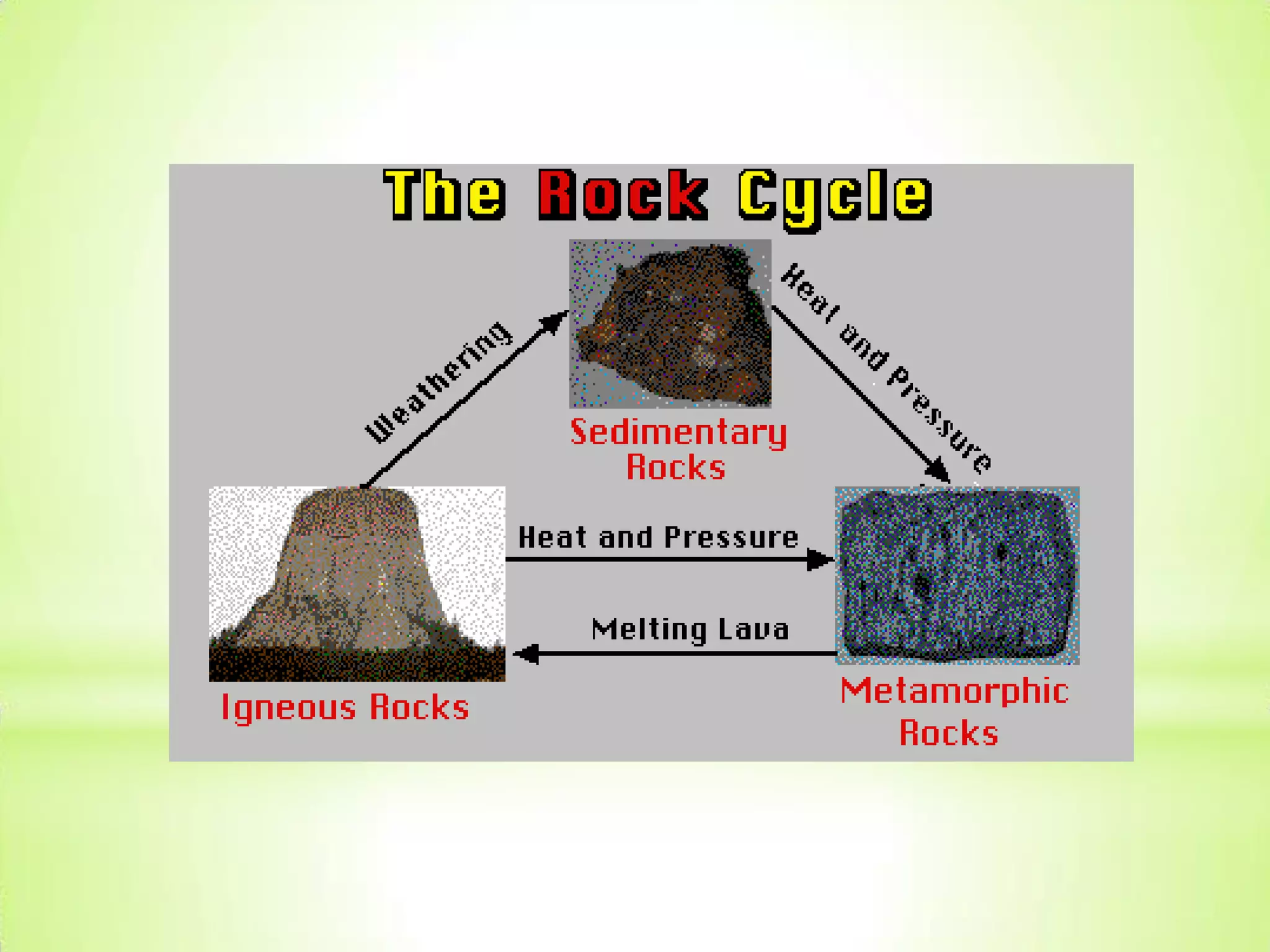
*The protolith may be igneous , sedimentary , metamorphic
*The minerals forming metamorphic rocks due to
metamorphism is called as index minerals
*
*Classification based on location of action by agents
*Contact metamorphism – due to magma
*Regional metamorphism –Due to heat and pressure
*Most of the crust rocks are metamorphic
*The metamorphic rocks also form important ores
*It is the evolution of rock to suit the new environment
*
*The actions of chemically active fluids, heat, pressure
make the protolith to become destabilize and
converted to metamorphic rocks.
*Each element has own temperature to destabilize.
*Using this property we can find the age of rocks
*During the formation the igneous and sedimentary
rocks get changed in composition, structure etc
*If it occurs due to heat it is called as thermal
metamorphism
*If it is occurring due to both heat and pressure it is
dynamo thermal metamorphism
*
*Heat is dominant factor.
*It increase with increase in depth and also the
intruding of magma in the crystal layer of rocks
*A contact metamorphosis
*The gas emissions also reacts with rock and
changes the property
*There is addition of magmatic material
*In this case both the heat and the pressure acts.
*Recrystallization of minerals occurs
*Schist and gneiss
*Here whole rock get metamorphosed – a regional
metamorphosis
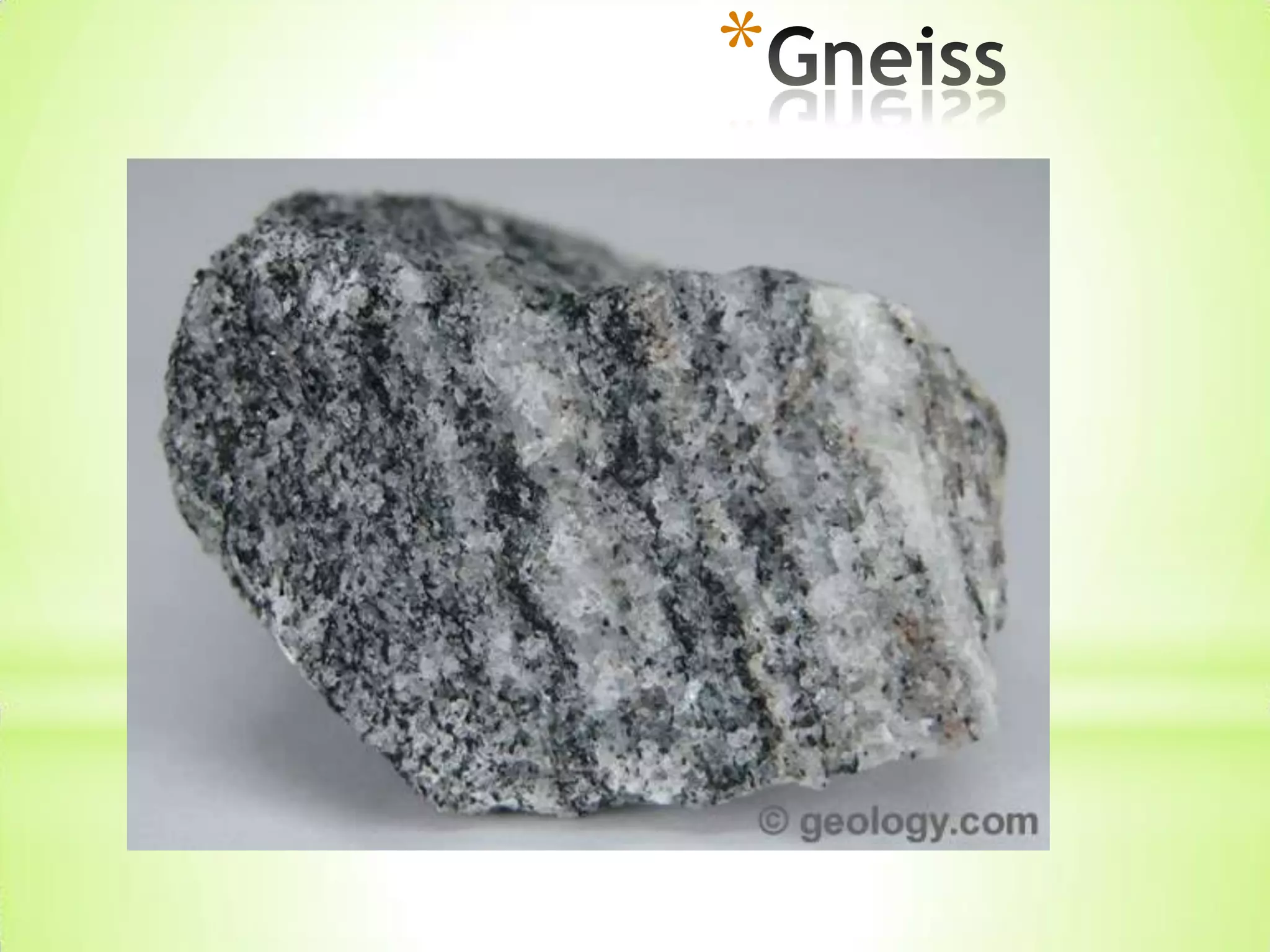
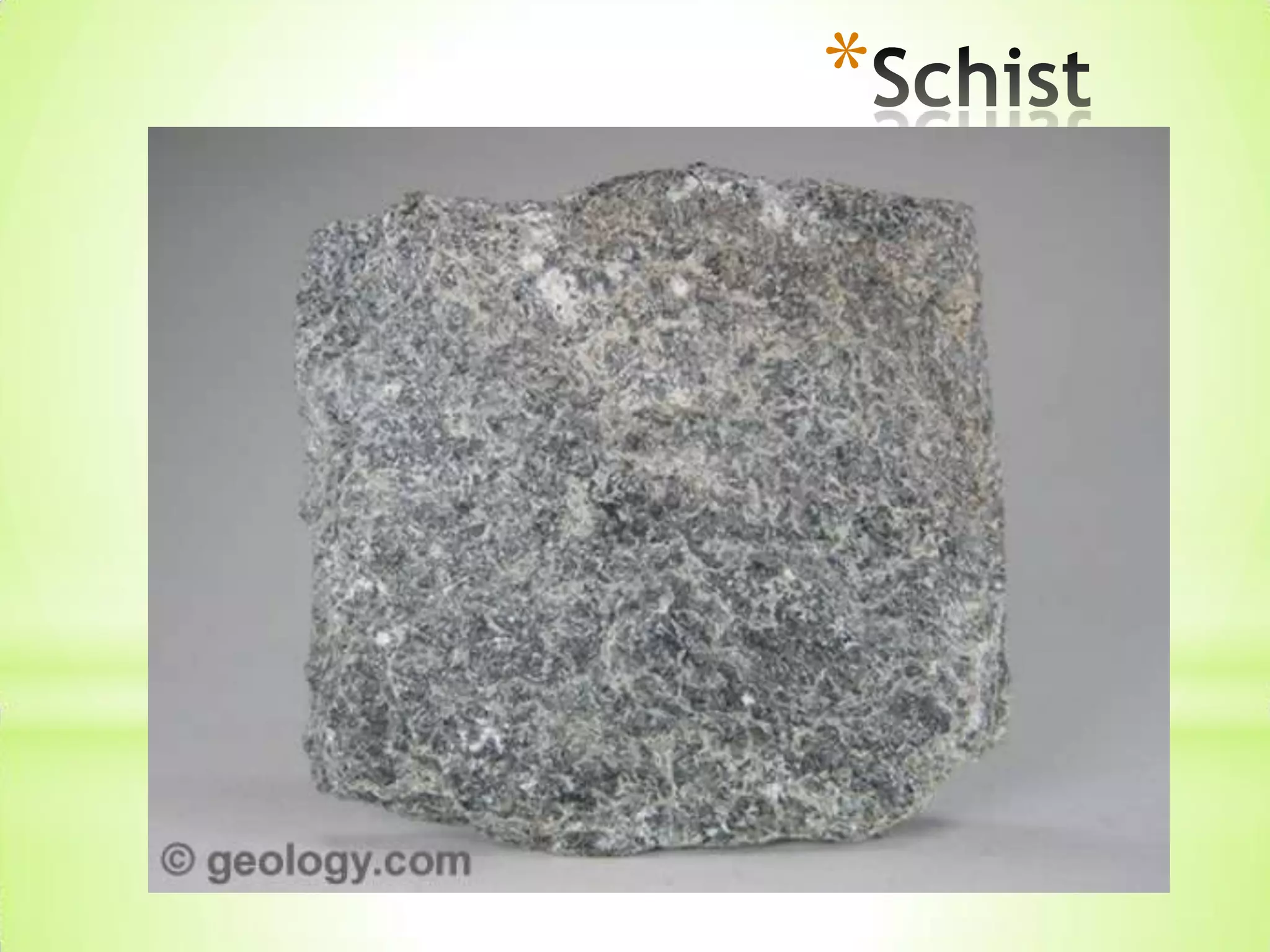
*Granite to gneiss and on further to schist
*The first conversion due to thermal metamorphism and
second due to dynamo-thermal metamorphism
*
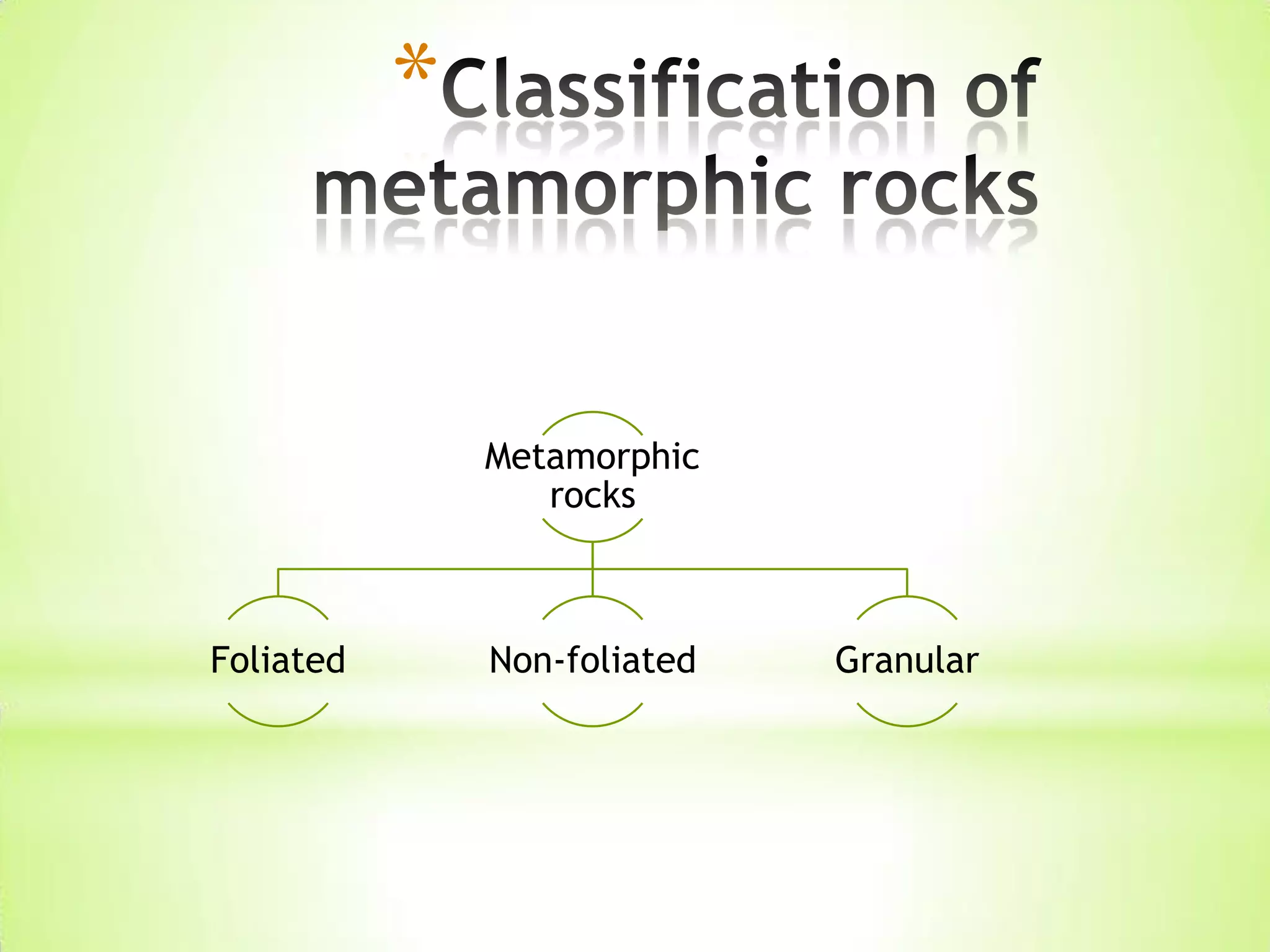
Metamorphic
rocks
Foliated Non-foliated Granular
*
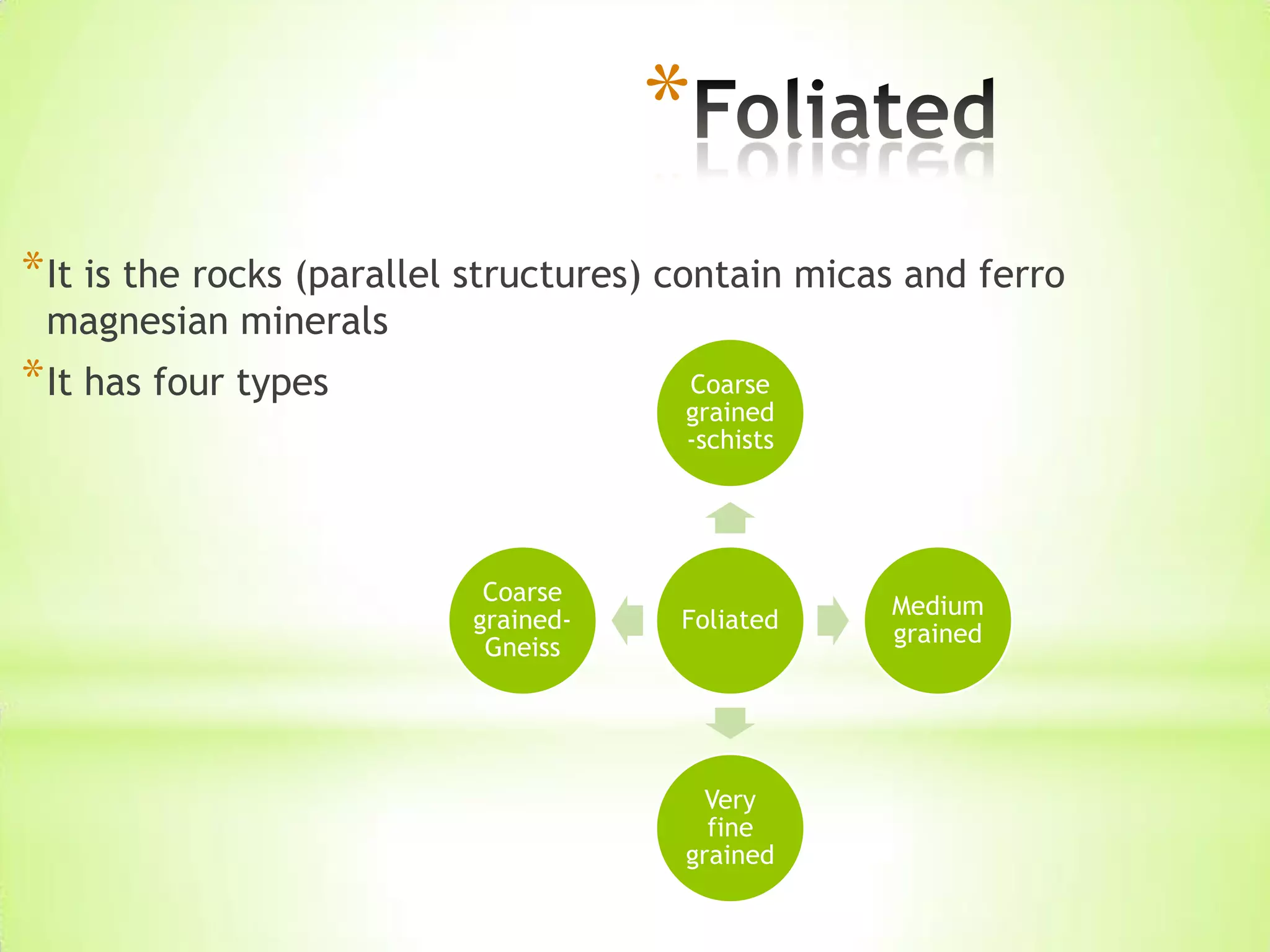
*It is the rocks (parallel structures) contain micas and ferro
magnesian minerals
*It has four types
Foliated
Coarse
grained
-schists
Medium
grained
Very
fine
grained
Coarse
grained-
Gneiss
*Coarse grained- gneiss –they are formed from
granite and contains quartz, mica, feldspars,
amphiboles
*Coarse grained –schist - they are granite ,basalt
Having mica and silicates
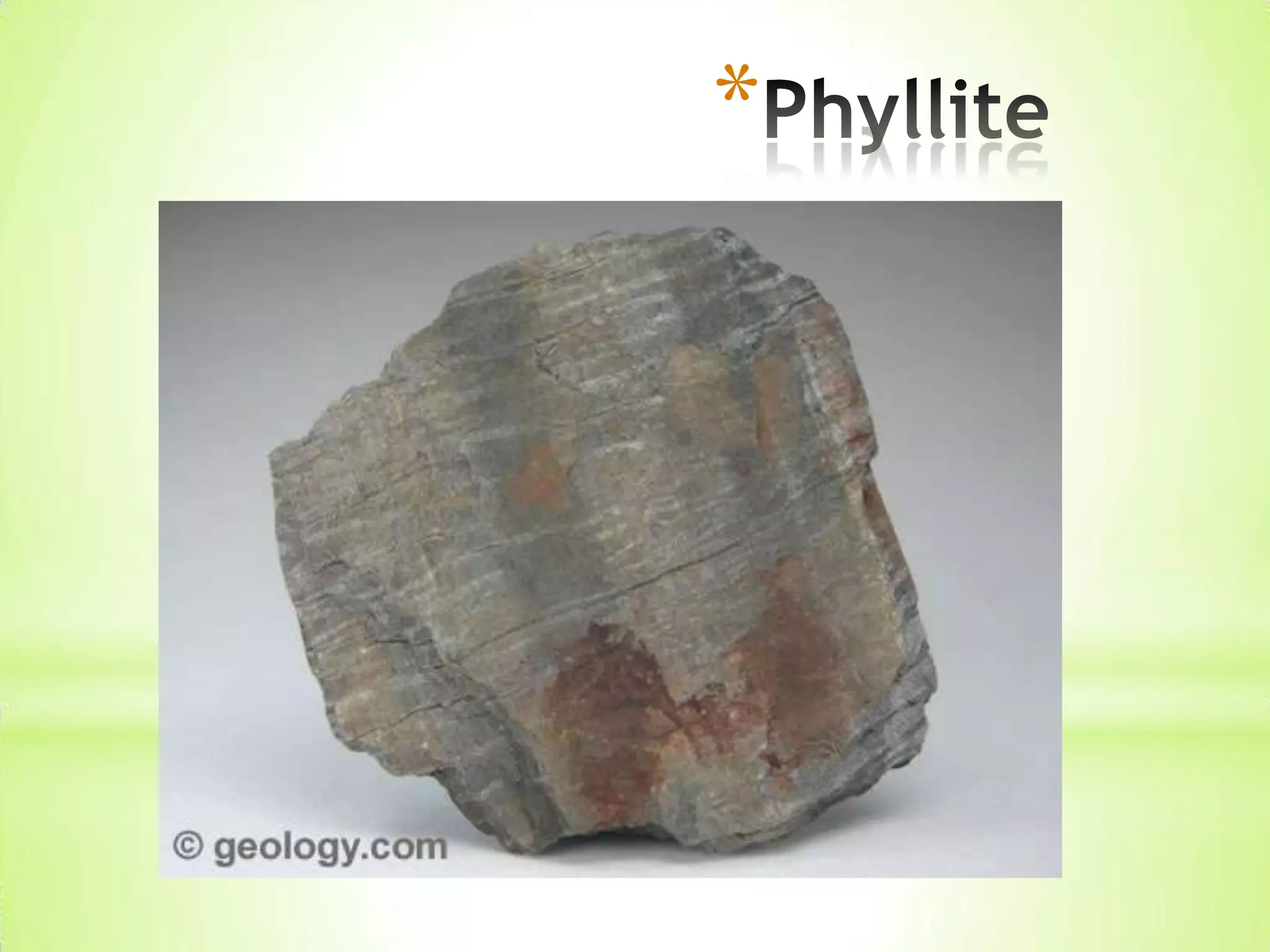
*Medium grained phyllite- from shale –micaceous –
transition of schist to slate
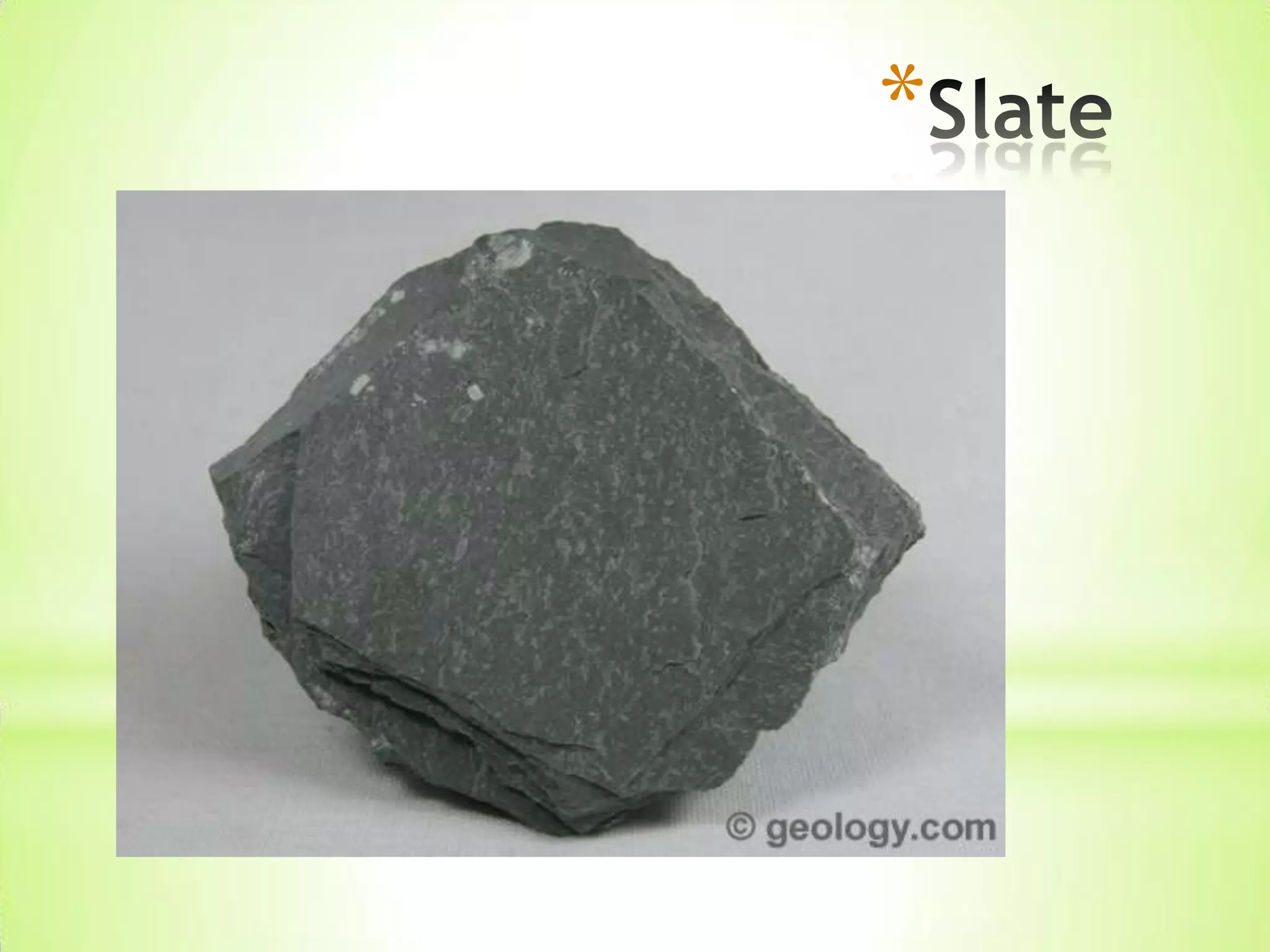
*Very fine grained- shale – micaceous with quartz-
slate
*
*
*
*
*
*They are massive structures with quartz and
feldspars
*Fine grained peat , coal –anthracite ,
Amphibolite
*They won’t create foliation even under
pressure due to large sized particles
*
*Formed from eqidimensional grains
*Quartzite from sandstone –medium to coarse
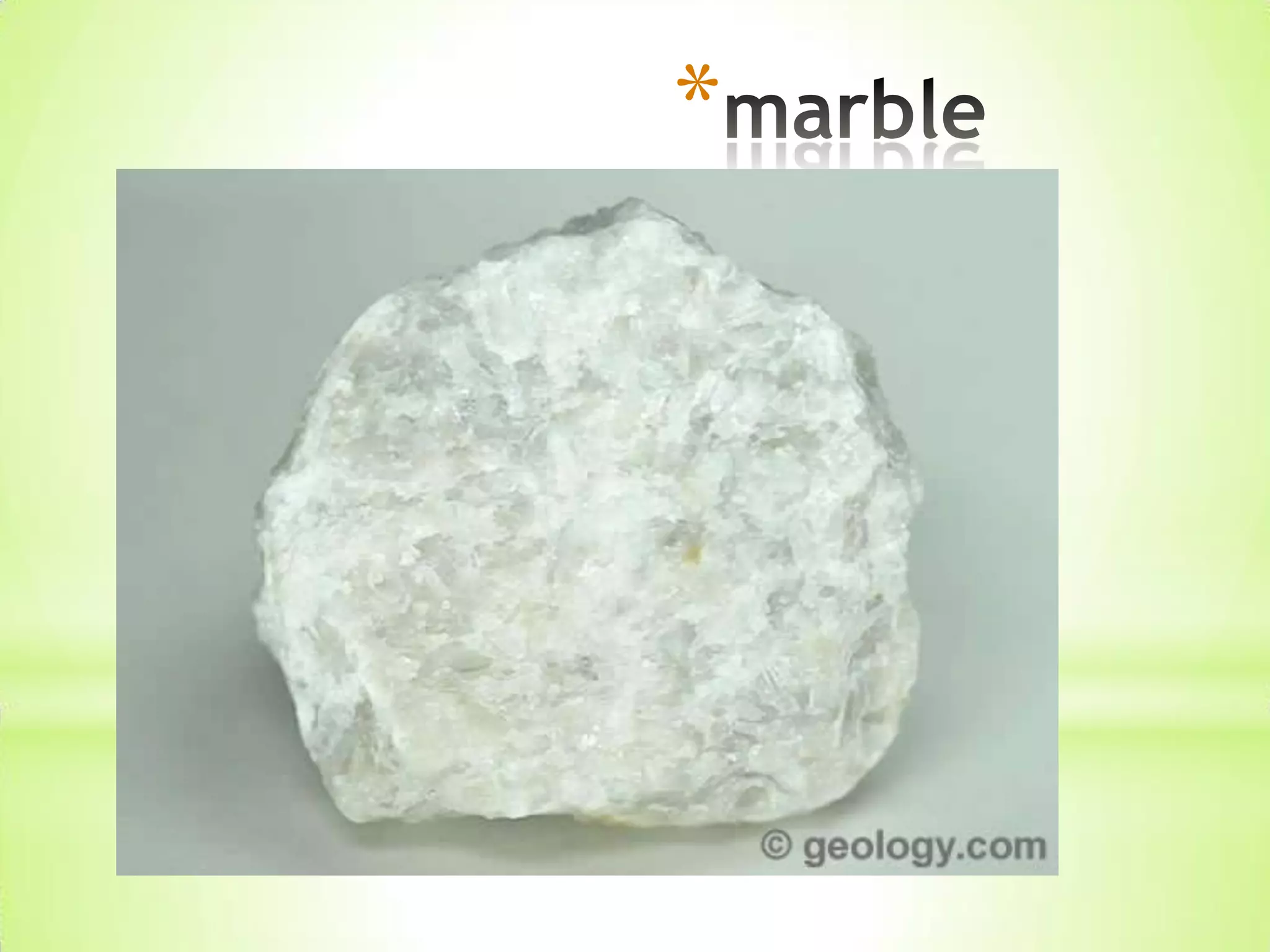
*Marble from dolomite and calcite –fine grained
*
*
*A text book of pedology- J.Sehgal
*www.geology.com/rocks/metamorphic
rocks.html
*

Metamorphic rocks-Definition, Formation, Classification

  • 1.
  • 2.
    * *Metamorphism – Atransformation *Those rocks which undergone various chemical and physical changes *They are formed from the parent material protolith *The protolith may be igneous , sedimentary , metamorphic *The minerals forming metamorphic rocks due to metamorphism is called as index minerals
  • 3.
    * *Classification based onlocation of action by agents *Contact metamorphism – due to magma *Regional metamorphism –Due to heat and pressure *Most of the crust rocks are metamorphic *The metamorphic rocks also form important ores *It is the evolution of rock to suit the new environment
  • 5.
    * *The actions ofchemically active fluids, heat, pressure make the protolith to become destabilize and converted to metamorphic rocks. *Each element has own temperature to destabilize. *Using this property we can find the age of rocks *During the formation the igneous and sedimentary rocks get changed in composition, structure etc *If it occurs due to heat it is called as thermal metamorphism *If it is occurring due to both heat and pressure it is dynamo thermal metamorphism
  • 6.
    * *Heat is dominantfactor. *It increase with increase in depth and also the intruding of magma in the crystal layer of rocks *A contact metamorphosis *The gas emissions also reacts with rock and changes the property *There is addition of magmatic material
  • 7.
    *In this caseboth the heat and the pressure acts. *Recrystallization of minerals occurs *Schist and gneiss *Here whole rock get metamorphosed – a regional metamorphosis *Granite to gneiss and on further to schist *The first conversion due to thermal metamorphism and second due to dynamo-thermal metamorphism
  • 8.
  • 9.
    * *It is therocks (parallel structures) contain micas and ferro magnesian minerals *It has four types Foliated Coarse grained -schists Medium grained Very fine grained Coarse grained- Gneiss
  • 10.
    *Coarse grained- gneiss–they are formed from granite and contains quartz, mica, feldspars, amphiboles *Coarse grained –schist - they are granite ,basalt Having mica and silicates *Medium grained phyllite- from shale –micaceous – transition of schist to slate *Very fine grained- shale – micaceous with quartz- slate
  • 11.
  • 12.
  • 13.
  • 14.
  • 15.
    * *They are massivestructures with quartz and feldspars *Fine grained peat , coal –anthracite , Amphibolite *They won’t create foliation even under pressure due to large sized particles
  • 16.
    * *Formed from eqidimensionalgrains *Quartzite from sandstone –medium to coarse *Marble from dolomite and calcite –fine grained
  • 17.
  • 18.
    * *A text bookof pedology- J.Sehgal *www.geology.com/rocks/metamorphic rocks.html
  • 19.