CHEMISTRY
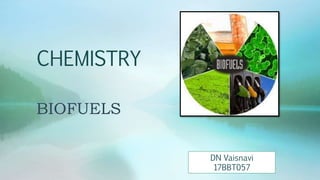
BIOFUELS
DN Vaisnavi
17BBT057
CONTENTS:
 INTRODUCTION
 WHAT ARE BIOFUELS?
 BIOFUEL GENERATIONS
 TYPES OF BIOFUELS
 BIOFUEL LIFECYCLE
 CROPS USED AS BIOFUEL
 SUGARCANE AS BIOFUEL
 ETHANOL FROM CORN
 REFERENCES
INTRODUCTION
 Usage of fossil fuels may lead to various health hazards.
 As it is non renewable source of energy , it takes long time to
recover.
 As well as cost are very high
 Usage of fossil fuels like petroleum , disel etc ……..
Leads to various Environment defects like Global warming , Acid
rain…..etc……
 So why cant we step into another alternative which is called
biofuel?
WHAT ARE BIOFUELS?
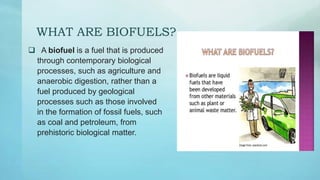
 A biofuel is a fuel that is produced
through contemporary biological
processes, such as agriculture and
anaerobic digestion, rather than a
fuel produced by geological
processes such as those involved
in the formation of fossil fuels, such
as coal and petroleum, from
prehistoric biological matter.
GENERATION OF BIOFUELS:
First-generation biofuels:
 "First-generation" or conventional biofuels are biofuels
made from food crops grown on arable land.
 With this biofuel production generation, food crops are
thus explicitly grown for fuel production, and not
anything else.
 The sugar, starch, or vegetable oil obtained from the
crops is converted into biodiesel or ethanol, using
transesterification, or yeast fermentation.[6]
GENERATION OF BIOFUELS:
Second-generation biofuels:
 Second generation biofuels are fuels manufactured from
various types of biomass.
 Biomass is a wide-ranging term meaning any source of
organic carbon that is renewed rapidly as part of the
carbon cycle.
 Biomass is derived from plant materials, but can also
include animal materials.
Third-generation biofuels:
 From 1978 to 1996, the US NREL experimented with using algae as
a biofuels source in the "Aquatic Species Program".
 A self-published article by Michael Briggs, at the UNH Biofuels
Group, offers estimates for the realistic replacement of all vehicular
fuel with biofuels by using algae that have a natural oil content
greater than 50%, which Briggs suggests can be grown on algae
ponds at wastewater treatment plants.
Fourth-generation biofuels:
 fourth-generation biofuels are made using non-arable land.
 This class of biofuels includes electrofuels.[6] and photobiological
solar fuels.
GENERATIONS OF BIOFUELS:
TYPES OF BIOFUELS:
Ethanol:
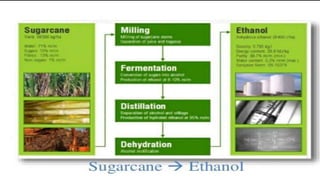
 Biologically produced alcohols, most commonly ethanol, are produced by
the action of microorganisms and enzymes through the fermentation of
sugars or starches (easiest), or cellulose (which is more difficult).
 ethanol fuel is slightly cheaper per distance traveled in the United States.
Biodiesel:
 Is the most common biofuel in Europe
 It is produced from oils or fats using transesterification and is a liquid
similar in composition to fossil/mineral diesel.
 Pure biodiesel (B100, also known as "neat" biodiesel) currently reduces
emissions with up to 60% compared to diesel Second generation B100.[23]
TYPES OF BIOFUELS:
Green diesel:
 is produced through hydrocracking biological oil feedstocks, such as
vegetable oils and animal fats.
 Hydrocracking is a refinery method that uses elevated temperatures
and pressure in the presence of a catalyst to break down larger
molecules, such as those found in vegetable oils, into shorter
hydrocarbon chains used in diesel engines.
Biofuel gasoline:
 In 2013 UK researchers developed a genetically modified strain of
Escherichia coli (E.Coli), which could transform glucose into biofuel
gasoline that does not need to be blended.
 It is believed that in the future it will be possible to "tweak" the genes
to make gasoline from straw or animal manure.
TYPES OF BIOFUELS:
Biogas:
 Biogas is methane produced by the process of anaerobic
digestion of organic material by anaerobes.
 Landfill gas, a less clean form of biogas, is produced in
landfills through naturally occurring anaerobic digestion. If it
escapes into the atmosphere, it is a potential greenhouse gas.
 Farmers can produce biogas from manure from their cattle by
using anaerobic digesters.
REFERENCES:
1. "What is biofuel? definition and meaning".
BusinessDictionary.com. Retrieved 30 May 2015.
2.^ Jump up to: a b "Biofuels Make a Comeback Despite Tough
Economy". Worldwatch Institute. 2011-08-31. Retrieved 2011-08-
31.
3.Jump up ^ REN21 (2011). "Renewables 2011: Global Status
Report" (PDF). pp. 13–14. Archived from the original (PDF) on
2011-09-05. Retrieved 2015-01-03.
4.Jump up ^ "Technology Roadmap, Biofuels for Transport" (PDF).
2011.
5.WIKIPEDIA…………………
Biofuels - CHEMISTRY

Biofuels - CHEMISTRY

  • 1.
  • 2.
    CONTENTS:  INTRODUCTION  WHATARE BIOFUELS?  BIOFUEL GENERATIONS  TYPES OF BIOFUELS  BIOFUEL LIFECYCLE  CROPS USED AS BIOFUEL  SUGARCANE AS BIOFUEL  ETHANOL FROM CORN  REFERENCES
  • 3.
    INTRODUCTION  Usage offossil fuels may lead to various health hazards.  As it is non renewable source of energy , it takes long time to recover.  As well as cost are very high  Usage of fossil fuels like petroleum , disel etc …….. Leads to various Environment defects like Global warming , Acid rain…..etc……  So why cant we step into another alternative which is called biofuel?
  • 4.
    WHAT ARE BIOFUELS? A biofuel is a fuel that is produced through contemporary biological processes, such as agriculture and anaerobic digestion, rather than a fuel produced by geological processes such as those involved in the formation of fossil fuels, such as coal and petroleum, from prehistoric biological matter.
  • 5.
    GENERATION OF BIOFUELS: First-generationbiofuels:  "First-generation" or conventional biofuels are biofuels made from food crops grown on arable land.  With this biofuel production generation, food crops are thus explicitly grown for fuel production, and not anything else.  The sugar, starch, or vegetable oil obtained from the crops is converted into biodiesel or ethanol, using transesterification, or yeast fermentation.[6]
  • 6.
    GENERATION OF BIOFUELS: Second-generationbiofuels:  Second generation biofuels are fuels manufactured from various types of biomass.  Biomass is a wide-ranging term meaning any source of organic carbon that is renewed rapidly as part of the carbon cycle.  Biomass is derived from plant materials, but can also include animal materials.
  • 7.
    Third-generation biofuels:  From1978 to 1996, the US NREL experimented with using algae as a biofuels source in the "Aquatic Species Program".  A self-published article by Michael Briggs, at the UNH Biofuels Group, offers estimates for the realistic replacement of all vehicular fuel with biofuels by using algae that have a natural oil content greater than 50%, which Briggs suggests can be grown on algae ponds at wastewater treatment plants. Fourth-generation biofuels:  fourth-generation biofuels are made using non-arable land.  This class of biofuels includes electrofuels.[6] and photobiological solar fuels. GENERATIONS OF BIOFUELS:
  • 8.
    TYPES OF BIOFUELS: Ethanol: Biologically produced alcohols, most commonly ethanol, are produced by the action of microorganisms and enzymes through the fermentation of sugars or starches (easiest), or cellulose (which is more difficult).  ethanol fuel is slightly cheaper per distance traveled in the United States. Biodiesel:  Is the most common biofuel in Europe  It is produced from oils or fats using transesterification and is a liquid similar in composition to fossil/mineral diesel.  Pure biodiesel (B100, also known as "neat" biodiesel) currently reduces emissions with up to 60% compared to diesel Second generation B100.[23]
  • 9.
    TYPES OF BIOFUELS: Greendiesel:  is produced through hydrocracking biological oil feedstocks, such as vegetable oils and animal fats.  Hydrocracking is a refinery method that uses elevated temperatures and pressure in the presence of a catalyst to break down larger molecules, such as those found in vegetable oils, into shorter hydrocarbon chains used in diesel engines. Biofuel gasoline:  In 2013 UK researchers developed a genetically modified strain of Escherichia coli (E.Coli), which could transform glucose into biofuel gasoline that does not need to be blended.  It is believed that in the future it will be possible to "tweak" the genes to make gasoline from straw or animal manure.
  • 10.
    TYPES OF BIOFUELS: Biogas: Biogas is methane produced by the process of anaerobic digestion of organic material by anaerobes.  Landfill gas, a less clean form of biogas, is produced in landfills through naturally occurring anaerobic digestion. If it escapes into the atmosphere, it is a potential greenhouse gas.  Farmers can produce biogas from manure from their cattle by using anaerobic digesters.
  • 20.
    REFERENCES: 1. "What isbiofuel? definition and meaning". BusinessDictionary.com. Retrieved 30 May 2015. 2.^ Jump up to: a b "Biofuels Make a Comeback Despite Tough Economy". Worldwatch Institute. 2011-08-31. Retrieved 2011-08- 31. 3.Jump up ^ REN21 (2011). "Renewables 2011: Global Status Report" (PDF). pp. 13–14. Archived from the original (PDF) on 2011-09-05. Retrieved 2015-01-03. 4.Jump up ^ "Technology Roadmap, Biofuels for Transport" (PDF). 2011. 5.WIKIPEDIA…………………