AGreenSteptowardsSustainableWorld
BIO-PLASTIC
Content
Introduction
Bioplastic
History
Types of Bioplastic
Application of Bioplastic
Bioplastic and Environment
Researches on Bioplastic
Future aspect
Conclusion
Imaginary World
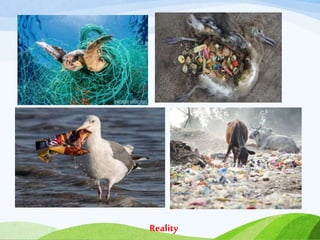
Reality
Introduction
• Common plastics, such as fossil-fuel plastics (also called petro
based polymers) are derived from petroleum or natural gas
• India is the third largest plastic consumer in the world, with a
total consumption of plastics of about four million tons and a
resulting waste production of about two million tons
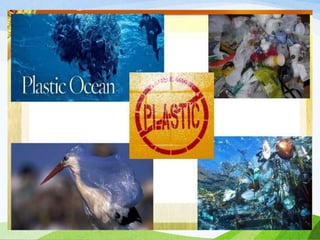
• More than 8 million tons of plastic is dumped into our
oceans every year
• Produce greenhouse gases, thus causing an environment
problems( climate change, global warming)
• Plastic use affects the human life, wild life as well as aquatic life
• It can take 1000 of years to decompose
Bioplastic
What is Bioplastic???
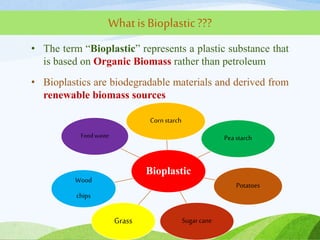
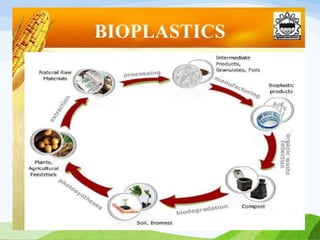
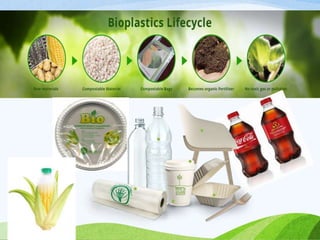
• The term “Bioplastic” represents a plastic substance that
is based on Organic Biomass rather than petroleum
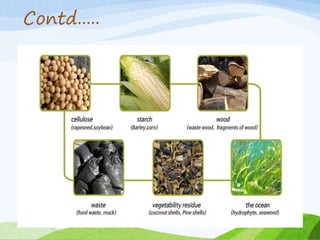
• Bioplastics are biodegradable materials and derived from
renewable biomass sources
Bioplastic
Cornstarch
Pea starch
Potatoes
SugarcaneGrass
Wood
chips
Food waste
Contd.....
Bioplastic Discovery or
Development
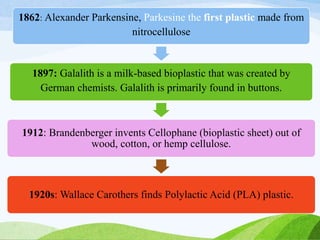
1862: Alexander Parkensine, Parkesine the first plastic made from
nitrocellulose
1897: Galalith is a milk-based bioplastic that was created by
German chemists. Galalith is primarily found in buttons.
1912: Brandenberger invents Cellophane (bioplastic sheet) out of
wood, cotton, or hemp cellulose.
1920s: Wallace Carothers finds Polylactic Acid (PLA) plastic.
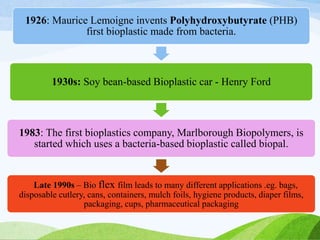
1926: Maurice Lemoigne invents Polyhydroxybutyrate (PHB)
first bioplastic made from bacteria.
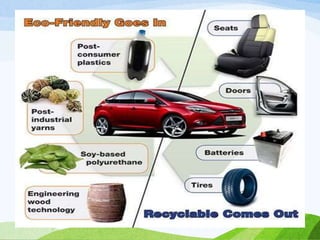
1930s: Soy bean-based Bioplastic car - Henry Ford
1983: The first bioplastics company, Marlborough Biopolymers, is
started which uses a bacteria-based bioplastic called biopal.
Late 1990s – Bio flex film leads to many different applications .eg. bags,
disposable cutlery, cans, containers, mulch foils, hygiene products, diaper films,
packaging, cups, pharmaceutical packaging
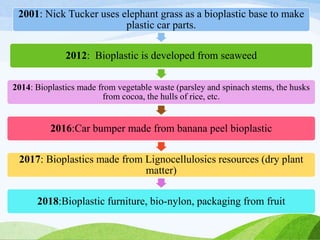
2001: Nick Tucker uses elephant grass as a bioplastic base to make
plastic car parts.
2012: Bioplastic is developed from seaweed
2014: Bioplastics made from vegetable waste (parsley and spinach stems, the husks
from cocoa, the hulls of rice, etc.
2016:Car bumper made from banana peel bioplastic
2017: Bioplastics made from Lignocellulosics resources (dry plant
matter)
2018:Bioplastic furniture, bio-nylon, packaging from fruit
Plastic v/s Bioplastic
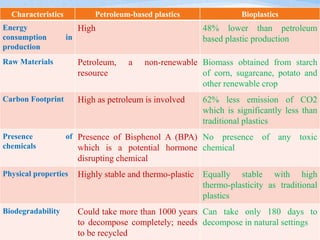
Characteristics Petroleum-based plastics Bioplastics
Energy
consumption in
production
High 48% lower than petroleum
based plastic production
Raw Materials Petroleum, a non-renewable
resource
Biomass obtained from starch
of corn, sugarcane, potato and
other renewable crop
Carbon Footprint High as petroleum is involved 62% less emission of CO2
which is significantly less than
traditional plastics
Presence of
chemicals
Presence of Bisphenol A (BPA)
which is a potential hormone
disrupting chemical
No presence of any toxic
chemical
Physical properties Highly stable and thermo-plastic Equally stable with high
thermo-plasticity as traditional
plastics
Biodegradability Could take more than 1000 years
to decompose completely; needs
to be recycled
Can take only 180 days to
decompose in natural settings
Types of Bioplastics
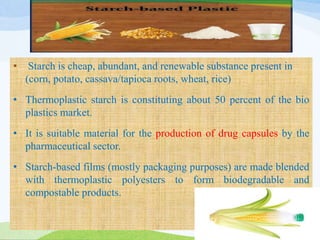
• Starch is cheap, abundant, and renewable substance present in
(corn, potato, cassava/tapioca roots, wheat, rice)
• Thermoplastic starch is constituting about 50 percent of the bio
plastics market.
• It is suitable material for the production of drug capsules by the
pharmaceutical sector.
• Starch-based films (mostly packaging purposes) are made blended
with thermoplastic polyesters to form biodegradable and
compostable products.
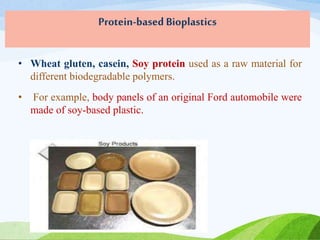
Protein-based Bioplastics
• Wheat gluten, casein, Soy protein used as a raw material for
different biodegradable polymers.
• For example, body panels of an original Ford automobile were
made of soy-based plastic.
Polylactic acid (PLA)
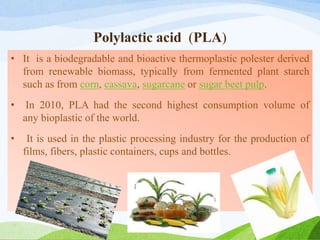
• It is a biodegradable and bioactive thermoplastic polester derived
from renewable biomass, typically from fermented plant starch
such as from corn, cassava, sugarcane or sugar beet pulp.
• In 2010, PLA had the second highest consumption volume of
any bioplastic of the world.
• It is used in the plastic processing industry for the production of
films, fibers, plastic containers, cups and bottles.
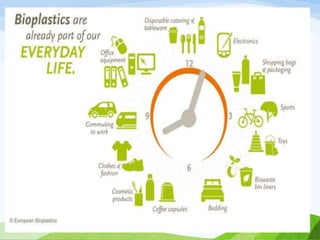
Application of Bioplastic
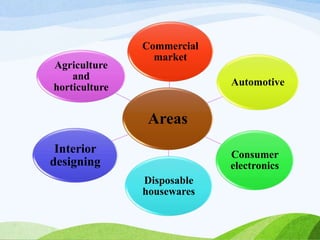
Areas
Commercial
market
Automotive
Consumer
electronics
Disposable
housewares
Interior
designing
Agriculture
and
horticulture
Bioplastics in Commercialmarket
Packaging
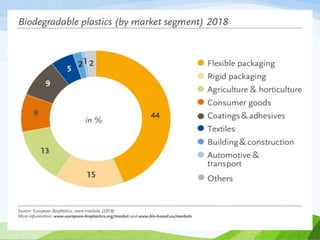
• Packing is the largest field of application for bio
plastic with almost 60 percent (1.2 million tonnes) of
the total bio plastics market in 2017.
• There’s a big demand for bioplastic packaging and it is
the largest segment of the European bioplastic market –
estimated at around 44% of 2.05 million tonnes in 2017
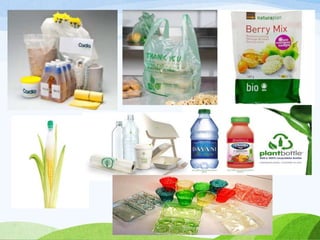
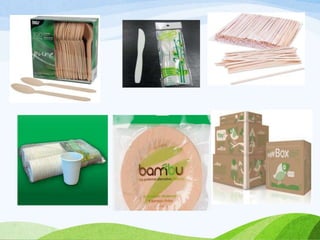
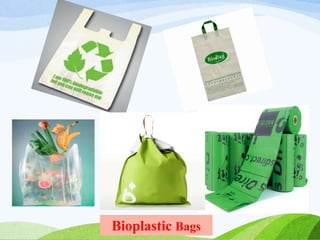
• Some of the packaging options include bags for compost,
agricultural foils, horticultures, nursery products, toys,
cutlery, drinking cups, salad cups, plates, straws, lids and
cups, plates and containers.
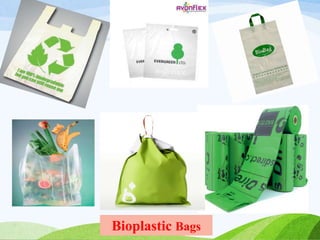
Bioplastic Bags
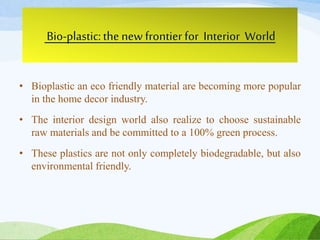
Bio-plastic:the new frontier for Interior World
• Bioplastic an eco friendly material are becoming more popular
in the home decor industry.
• The interior design world also realize to choose sustainable
raw materials and be committed to a 100% green process.
• These plastics are not only completely biodegradable, but also
environmental friendly.
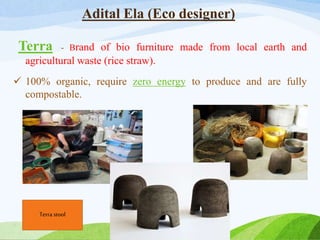
Adital Ela (Eco designer)
Terra - Brand of bio furniture made from local earth and
agricultural waste (rice straw).
 100% organic, require zero energy to produce and are fully
compostable.
Terra stool
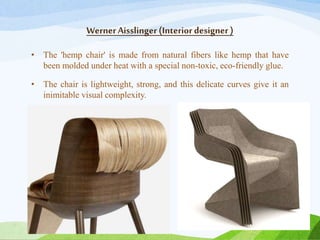
WernerAisslinger(Interior designer)
• The 'hemp chair' is made from natural fibers like hemp that have
been molded under heat with a special non-toxic, eco-friendly glue.
• The chair is lightweight, strong, and this delicate curves give it an
inimitable visual complexity.
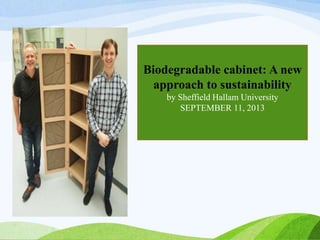
Biodegradable cabinet: A new
approach to sustainability
by Sheffield Hallam University
SEPTEMBER 11, 2013
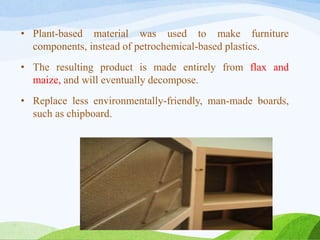
• Plant-based material was used to make furniture
components, instead of petrochemical-based plastics.
• The resulting product is made entirely from flax and
maize, and will eventually decompose.
• Replace less environmentally-friendly, man-made boards,
such as chipboard.
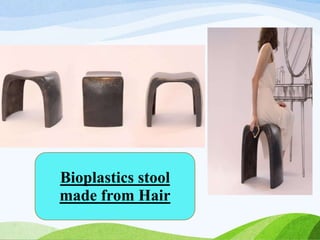
Bioplastics stool
made from Hair
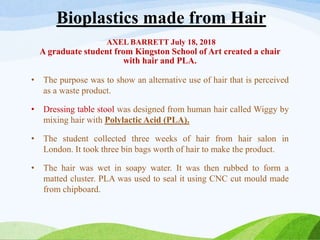
Bioplastics made from Hair
AXEL BARRETT July 18, 2018
A graduate student from Kingston School of Art created a chair
with hair and PLA.
• The purpose was to show an alternative use of hair that is perceived
as a waste product.
• Dressing table stool was designed from human hair called Wiggy by
mixing hair with Polylactic Acid (PLA).
• The student collected three weeks of hair from hair salon in
London. It took three bin bags worth of hair to make the product.
• The hair was wet in soapy water. It was then rubbed to form a
matted cluster. PLA was used to seal it using CNC cut mould made
from chipboard.
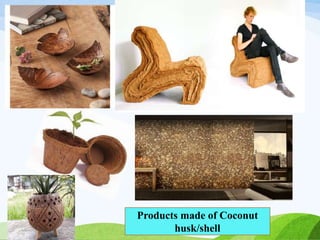
Products made of Coconut
husk/shell
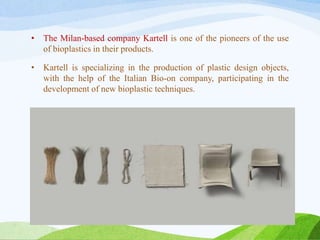
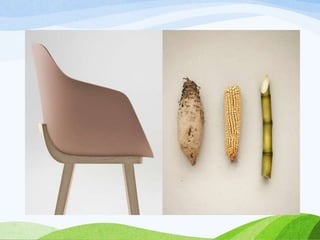
• The Milan-based company Kartell is one of the pioneers of the use
of bioplastics in their products.
• Kartell is specializing in the production of plastic design objects,
with the help of the Italian Bio-on company, participating in the
development of new bioplastic techniques.
Disposable House wares
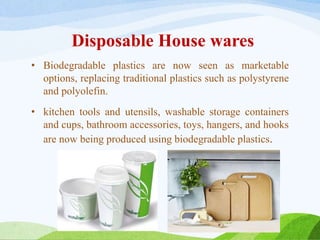
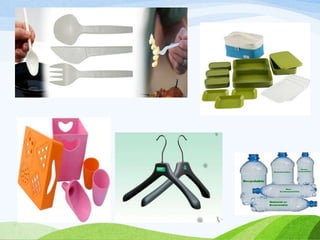
• Biodegradable plastics are now seen as marketable
options, replacing traditional plastics such as polystyrene
and polyolefin.
• kitchen tools and utensils, washable storage containers
and cups, bathroom accessories, toys, hangers, and hooks
are now being produced using biodegradable plastics.
Agriculture andHorticulture
• Bioplastics can be converted into fully opaque or semi-
transparent films that provide the ideal growing environment
yet can be ploughed into the ground at the end of the growth
cycle, providing soil nutrition for future seasons.
• Foils, yarns, and nets made out of bioplastics help to secure
freshly created slopes and mounds and protect them from
erosion until the roots of the plants have developed
sufficiently.
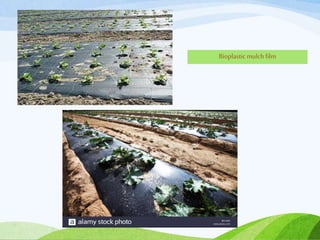
• Bioplastic mulch films are used to give the new seedlings a
head start in the spring.
• Reduce evaporation and conserve moisture, increases soil
temperature and keeps control on the weeds.
Bioplasticmulch film
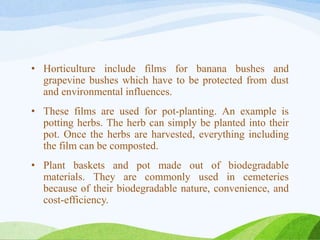
• Horticulture include films for banana bushes and
grapevine bushes which have to be protected from dust
and environmental influences.
• These films are used for pot-planting. An example is
potting herbs. The herb can simply be planted into their
pot. Once the herbs are harvested, everything including
the film can be composted.
• Plant baskets and pot made out of biodegradable
materials. They are commonly used in cemeteries
because of their biodegradable nature, convenience, and
cost-efficiency.
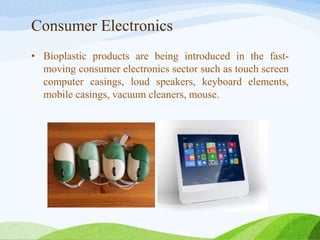
Consumer Electronics
• Bioplastic products are being introduced in the fast-
moving consumer electronics sector such as touch screen
computer casings, loud speakers, keyboard elements,
mobile casings, vacuum cleaners, mouse.
Bioplasticand Environment
Positive Aspect of Bioplastic
 Reduces CO2 emissions and decreases non-renewable energy
consumption.
 Save more nonrenewable energy than conventional plastics and
emit less Green house gases.
 Biodegradable, meaning that the material returns to its natural
state when buried in the ground.
• Take three to six months to decompose.
• Reduce the amount of toxic runoff generated by the oil-based
alternatives.
• Eco friendly in nature than petroleum based plastics.
Acidification
• Excessive usage of fertilizers and pesticides in production
process
Eutrophication
• Industrial farming practices in biomass production
Negative aspect of Bioplastic
Globalmarketfor Bioplastic
Bioplastic Production Capacity
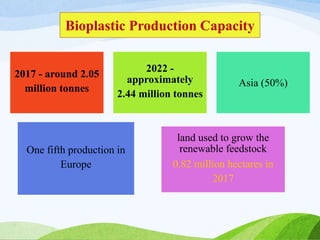
• In 2017 - around 2.05 million tonnes
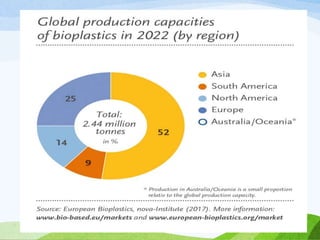
• In 2022 - approximately 2.44 million tonnes
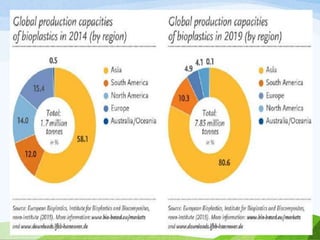
• Asia is a major production hub for producing 50% of the
Bioplastic currently
• One fifth of the production capacity is located in europe.
predicted to grow to 25 percent by 2022
• The land used to grow the renewable feedstock for the
production of bio plastics 0.82 million hectares in 2017,
which accounted for less than 0.02 % of the global
agriculture are of 5 billion hectares, 97 % of which were
used for feed and food.
2017 - around 2.05
million tonnes
2022 -
approximately
2.44 million tonnes
Asia (50%)
One fifth production in
Europe
land used to grow the
renewable feedstock
0.82 million hectares in
2017
Bioplastic Production Capacity
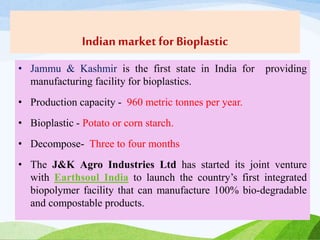
Indian marketfor Bioplastic
• Jammu & Kashmir is the first state in India for providing
manufacturing facility for bioplastics.
• Production capacity - 960 metric tonnes per year.
• Bioplastic - Potato or corn starch.
• Decompose- Three to four months
• The J&K Agro Industries Ltd has started its joint venture
with Earthsoul India to launch the country’s first integrated
biopolymer facility that can manufacture 100% bio-degradable
and compostable products.
• Products- Flower pots and trays for floriculture,
carry bags for shopping, packaging material for
foodstuff and meats, bin liners for hotels, etc.
• Ravi Industries in Maharashtra, Harita NTI
Ltd and Biotec Bags in Tamilnadu are also the
pioneers in Bio-plastics in India.
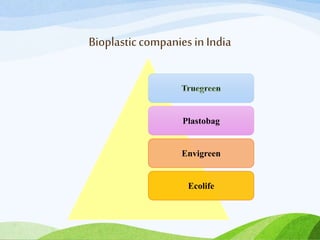
Bioplasticcompaniesin India
Plastobag
Envigreen
Ecolife
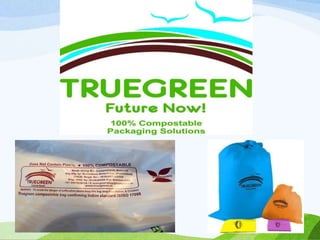
• Trugreen is one of the first large-scale producers of Bioplastics
• In Ahmedabad, India, first fully dedicated Compostable
products manufacturing factory in the world.
• Producing 5,000 tons of bioplastics every year.
• Truegreen' is manufactured and marketed exclusively
by Greendiamz Biotech . Ltd. in India .
• A large variety of packaging solutions with bioplastics in the
form of cutlery, garbage bags, food gloves, shrink films and
other packaging and laminating materials made out of
bioplastics,
• Fully biodegradable in 180 days.
• fully Compostable and 100% Biodegradable polymer.
• Manufactured from naturally grown cereals, a renewable
resource, complies with the European Norm EN 13432,
U.S Norm ASTM D 6400 and International Norm
ISO 17088.
• These standards imply that soil bacteria will decompose
95% of the material to carbon, oxygen and non-toxic
Biomass within a maximum of 180 days.
• Truegreen' film for custom-printed carry bags, Bags on rolls
for garbage, garden waste and Dog Littere bags and other
tailor-made bags
• 'Truegreen' fast-food utensils and boxes in tailor-made shapes
and sizes
• 'Truegreen' clamshells and other thermoformed products
• 'Truegreen' mulch film for use in agriculture and horticulture
• 'Truegreen' lining material for jute bags, canvas bags and
paper bags to give a truly "Biodegradable" tag to these natural
fibres
• Plastobags is an established company that primarily
started in the business of conventional plastics but
recently has diversified its product portfolio and
expanded into bioplastics.
• Carry bags, hygiene gloves to disposable waste bags and
security bags are manufactured.
Bioplastic Bags
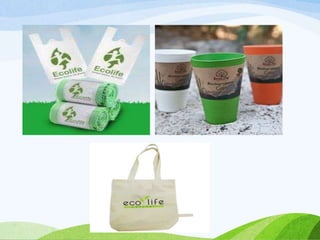
Ecolife
• It is a firm based out of Chennai
• Produces Bioplastics for industrial packaging like
perforation films and lamination films
• These Bioplastics do not contain polyethylene or poly
propylene
• sell both single-use and reusable plastic bags made out of
Bioplastics that can both be ultimately used as bio waste
bag.
• Envigreen is the latest startup entering the Indian bioplastics market.
• In 2016, Envigreen opened its operations in Bengaluru and its production
facility is already capable of producing 1,000 tonnes of bioplastics every
year.
• The carry bags manufactured by Envigreen are made out of 12-14
biological ingredients like potato, tapioca, organic oil extracted from
banana, flowers and other vegetables along with natural starch.
• Manufacturing cost is a little high because of the expensive raw materials
and thus the bags are priced 35% higher than a normal plastic bag.
• A medium-sized carry bag would cost INR3, whereas the same plastic bag
would cost INR2.
• The bag if discarded decomposes within 180 days and can dissolve within
a day in water at room temperature.
Researches onBioplastics
Bioplastics from vegetable waste viaan eco-
friendly water-basedprocess
Perotto et al. (2018). Green
chemistry.
DOI:10.1039/C7GC03368K
Objective of the study
To convert a variety of vegetable
waste materials into bioplastic films.
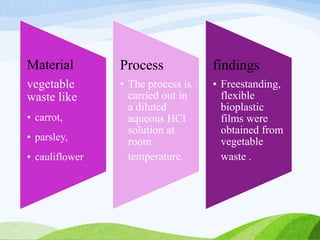
Material
vegetable
waste like
• carrot,
• parsley,
• cauliflower
Process
• The process is
carried out in
a diluted
aqueous HCl
solution at
room
temperature.
findings
• Freestanding,
flexible
bioplastic
films were
obtained from
vegetable
waste .
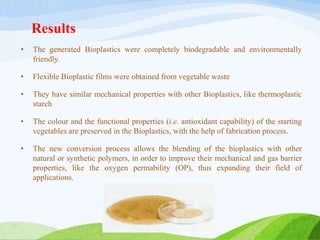
Results
• The generated Bioplastics were completely biodegradable and environmentally
friendly.
• Flexible Bioplastic films were obtained from vegetable waste
• They have similar mechanical properties with other Bioplastics, like thermoplastic
starch
• The colour and the functional properties (i.e. antioxidant capability) of the starting
vegetables are preserved in the Bioplastics, with the help of fabrication process.
• The new conversion process allows the blending of the bioplastics with other
natural or synthetic polymers, in order to improve their mechanical and gas barrier
properties, like the oxygen permability (OP), thus expanding their field of
applications.
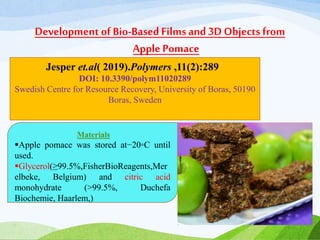
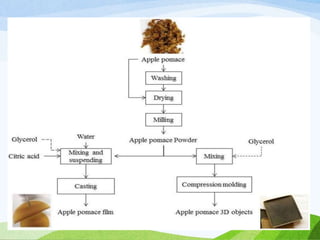
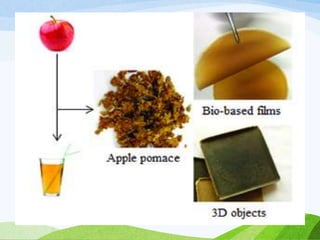
Development of Bio-BasedFilmsand 3D Objects from
Apple Pomace
Jesper et.al( 2019).Polymers ,11(2):289
DOI: 10.3390/polym11020289
Swedish Centre for Resource Recovery, University of Boras, 50190
Boras, Sweden
Materials
Apple pomace was stored at−20◦C until
used.
Glycerol(≥99.5%,FisherBioReagents,Mer
elbeke, Belgium) and citric acid
monohydrate (>99.5%, Duchefa
Biochemie, Haarlem,)
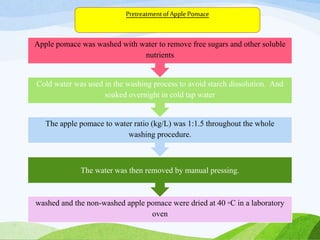
washed and the non-washed apple pomace were dried at 40 ◦C in a laboratory
oven
The water was then removed by manual pressing.
The apple pomace to water ratio (kg/L) was 1:1.5 throughout the whole
washing procedure.
Cold water was used in the washing process to avoid starch dissolution. And
soaked overnight in cold tap water
Apple pomace was washed with water to remove free sugars and other soluble
nutrients
PretreatmentofApplePomace
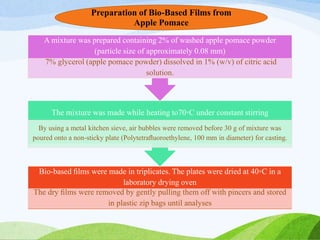
Bio-based films were made in triplicates. The plates were dried at 40◦C in a
laboratory drying oven
The dry films were removed by gently pulling them off with pincers and stored
in plastic zip bags until analyses
The mixture was made while heating to70◦C under constant stirring
By using a metal kitchen sieve, air bubbles were removed before 30 g of mixture was
poured onto a non-sticky plate (Polytetrafluoroethylene, 100 mm in diameter) for casting.
A mixture was prepared containing 2% of washed apple pomace powder
(particle size of approximately 0.08 mm)
7% glycerol (apple pomace powder) dissolved in 1% (w/v) of citric acid
solution.
Preparation of Bio-Based Films from
Apple Pomace
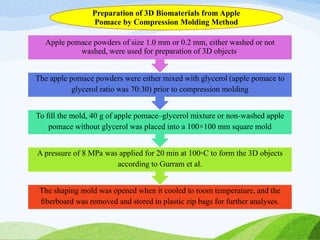
The shaping mold was opened when it cooled to room temperature, and the
fiberboard was removed and stored in plastic zip bags for further analyses.
A pressure of 8 MPa was applied for 20 min at 100◦C to form the 3D objects
according to Gurram et al.
To fill the mold, 40 g of apple pomace–glycerol mixture or non-washed apple
pomace without glycerol was placed into a 100×100 mm square mold
The apple pomace powders were either mixed with glycerol (apple pomace to
glycerol ratio was 70:30) prior to compression molding
Apple pomace powders of size 1.0 mm or 0.2 mm, either washed or not
washed, were used for preparation of 3D objects.
Preparation of 3D Biomaterials from Apple
Pomace by Compression Molding Method
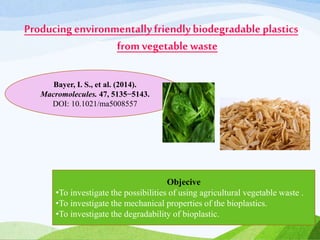
Producing environmentallyfriendlybiodegradable plastics
from vegetable waste
Bayer, I. S., et al. (2014).
Macromolecules. 47, 5135−5143.
DOI: 10.1021/ma5008557
Objecive
•To investigate the possibilities of using agricultural vegetable waste .
•To investigate the mechanical properties of the bioplastics.
•To investigate the degradability of bioplastic.
• Material used –
 The researchers used parsley and spinach stems, cocoa
pod husks and rice hulls from local industrial
producers.
• Method-
 These vegetables were dried and then soaked in
trifluoroacetic acid.
 Then, this solutions was used to produce both plastic
film coatings and plastic which can be used, for example,
to make carrier bags.
 Trifluoroacetic acid occurs naturally, has low toxicity
and biodegradable under the right conditions.
Findings
Mechanical properties of the bioplastics-
Strain measurements (the amount a material can be stretched)
 Parsley and spinach bioplastics had the best stretch properties, with strains of 45%
and 60% respectively.
 Cocoa and rice bioplastics had less stretch properties with strain of only 10% and 3%.
Strength measurement (the amount of stress a material can take before breaking)
 It was highest for cocoa pod husks, at 30 megapascals (MPa).
 Rice, parsley, and spinach films displayed 7, 5 and approximately 1 MPa, respectively.
Stiffness measurement (how much a material will stretch under a given amount of
stress)
 Parsley, spinach and rice bioplastics were comparable to low-density polyethylene
thermoplastic, which is commonly used to make plastic carrier bags, bottles, tubing
and some computer components.
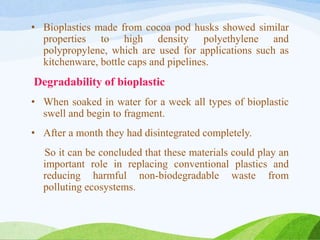
• Bioplastics made from cocoa pod husks showed similar
properties to high density polyethylene and
polypropylene, which are used for applications such as
kitchenware, bottle caps and pipelines.
Degradability of bioplastic
• When soaked in water for a week all types of bioplastic
swell and begin to fragment.
• After a month they had disintegrated completely.
So it can be concluded that these materials could play an
important role in replacing conventional plastics and
reducing harmful non-biodegradable waste from
polluting ecosystems.
Utilization of
Waste Banana Peels for Synthesis of Polymeric Films.
Mohapatra, A. Prasad, S And Sharma,H.(2015) .
D.J.SANGHVI COLLEGE OF ENGINEERING VILE PARLE (W), Mumbai-400056
Project Report
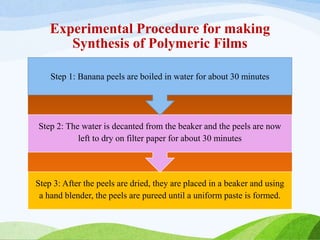
Experimental Procedure for making
Synthesis of Polymeric Films
Step 3: After the peels are dried, they are placed in a beaker and using
a hand blender, the peels are pureed until a uniform paste is formed.
Step 2: The water is decanted from the beaker and the peels are now
left to dry on filter paper for about 30 minutes
Step 1: Banana peels are boiled in water for about 30 minutes
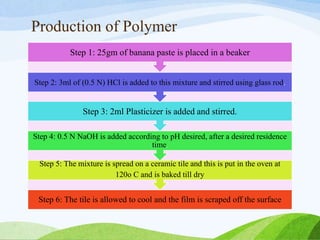
Production of Polymer
Step 6: The tile is allowed to cool and the film is scraped off the surface
Step 5: The mixture is spread on a ceramic tile and this is put in the oven at
120o C and is baked till dry
Step 4: 0.5 N NaOH is added according to pH desired, after a desired residence
time.
Step 3: 2ml Plasticizer is added and stirred.
Step 2: 3ml of (0.5 N) HCl is added to this mixture and stirred using glass rod.
Step 1: 25gm of banana paste is placed in a beaker
Findings
• Bioplastic film can sustain the weight near about 2 kg
and which have enough tensile strength.
• The bioplastic prepared from banana peels that can be
used as packaging material or as a carrying bag. Glycerol
is added as plasticizer that increases its flexibility.
• To prevent growth of bacteria and fungi sodium meta
bisulphite is used.
• The degradation of bioplastic starts after 3 to 4 months
from the date of manufacture.
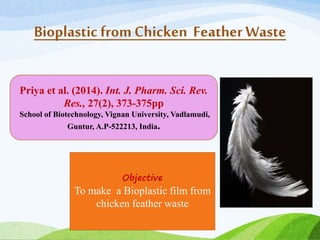
Bioplastic fromChicken Feather Waste
Priya et al. (2014). Int. J. Pharm. Sci. Rev.
Res., 27(2), 373-375pp
School of Biotechnology, Vignan University, Vadlamudi,
Guntur, A.P-522213, India.
Objective
To make a Bioplastic film from
chicken feather waste
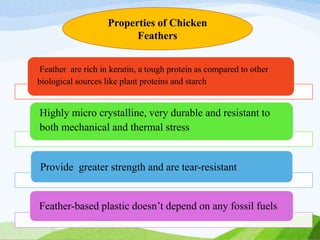
Feather are rich in keratin, a tough protein as compared to other
biological sources like plant proteins and starch
Highly micro crystalline, very durable and resistant to
both mechanical and thermal stress
Provide greater strength and are tear-resistant
Feather-based plastic doesn’t depend on any fossil fuels
Properties of Chicken
Feathers
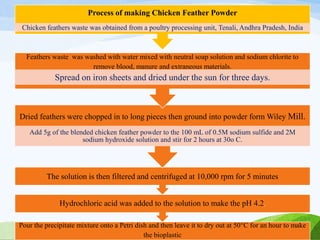
Process ofMaking a BioplasticFilmfrom Chicken
Feathers
Pour the precipitate mixture onto a Petri dish and then leave it to dry out at 50°C for an hour to make
the bioplastic
Hydrochloric acid was added to the solution to make the pH 4.2.
The solution is then filtered and centrifuged at 10,000 rpm for 5 minutes
Dried feathers were chopped in to long pieces then ground into powder form Wiley Mill.
Add 5g of the blended chicken feather powder to the 100 mL of 0.5M sodium sulfide and 2M
sodium hydroxide solution and stir for 2 hours at 30o C.
Feathers waste was washed with water mixed with neutral soap solution and sodium chlorite to
remove blood, manure and extraneous materials.
Spread on iron sheets and dried under the sun for three days.
Process of making Chicken Feather Powder
Chicken feathers waste was obtained from a poultry processing unit, Tenali, Andhra Pradesh, India
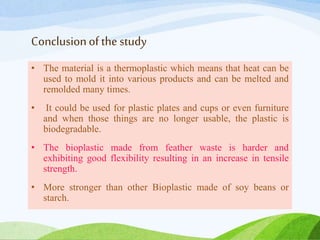
Conclusionof the study
• The material is a thermoplastic which means that heat can be
used to mold it into various products and can be melted and
remolded many times.
• It could be used for plastic plates and cups or even furniture
and when those things are no longer usable, the plastic is
biodegradable.
• The bioplastic made from feather waste is harder and
exhibiting good flexibility resulting in an increase in tensile
strength.
• More stronger than other Bioplastic made of soy beans or
starch.
• Bioplastic production technology should be refined so
that it does not affect the environment
• The researchers determined that bioplastics production
resulted in greater amounts of pollutants, due to the
fertilizers and pesticides used in growing the crops and
the chemical processing needed to turn organic material
into plastic.
Future Aspect
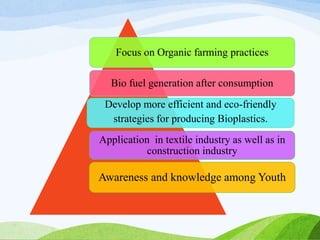
Focus on Organic farming practices
Bio fuel generation after consumption
Develop more efficient and eco-friendly
strategies for producing Bioplastics.
Application in textile industry as well as in
construction industry
Awareness and knowledge among Youth
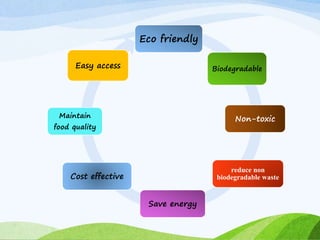
CONCLUSION
Eco friendly
Biodegradable
Non-toxic
reduce non
biodegradable waste
Save energy
Cost effective
Maintain
food quality
Easy access
References
• http://scitechconnect.elsevier.com/wpcontent/uploads/2016/10/Commercial
applications-of-bioplastics.pdf retrieved on 10-04 2019
• http://www.keyplastics.ie/6-common-applications-bioplastics/ retrieved on 11-04
2019
• https://en.wikipedia.org/wiki/Bioplastic retrieved on 11-04 2019
• https://www.researchgate.net/publication/272351686_Bioplastics-
_utilization_of_waste_banana_peels_for_synthesis_of_polymeric_films retrieved on
12-04 2019
• http://www.truegreen.in/index.php?option=com_content&view=article&id=60
• http://www.ecoideaz.com/expert-corner/bioplastics-in-india retrieved on 12-04 2019
• https://blogs.ei.columbia.edu/2017/12/13/the-truth-about-bioplastics/ retrieved on 15-
04 2019
• http://www.ecoideaz.com/expert-corner/pioneering-bioplastic-companies-india-bring-
positive-change retrieved on 15-04 2019
• https://phys.org/news/2013-09-biodegradable-cabinet-approach-sustainability.html
retrieved on 15-04 2019
Perotto,G.;Ceseracciu,L.;Roberto.;Simonutti.;Guzman,C.;andAthanassia,A(2014).Bioplastics
from vegetable waste via an eco-friendly water-based process .Green Chemistry.
Gustafsson,J.; Landberg,M.; Bátori,V.; and Akesson,D.;Mohammad J. and Zamani,A.(2019).
Development of Bio-Based Films and 3D Objects from Apple Pomace.Polymers,
11(2):289
DOI: 10.3390/polym11020289
Boonnite,J.; Pitivuta,S.; Tongjoya,S.; and Lapnonkawowa,S.(2014).Evaluation of Carbon Footprint
of Bioplastic Straw compared to Petroleum based Straw Products.ScienceDirect.
doi: 10.1016/j.egypro.2014.07.187
Priya Kota,K.; , Shaik,S.; Krishna .R.; Karlapudi, A.(2014). Bioplastic from Chicken Feather
Waste. International Journal of Pharmaceutical Sciences Review and Research,27(2)373-375pp
Care for two
You & Earth
Thank you...

Bioplastic

  • 1.
  • 2.
    Content Introduction Bioplastic History Types of Bioplastic Applicationof Bioplastic Bioplastic and Environment Researches on Bioplastic Future aspect Conclusion
  • 3.
  • 4.
  • 5.
    Introduction • Common plastics,such as fossil-fuel plastics (also called petro based polymers) are derived from petroleum or natural gas • India is the third largest plastic consumer in the world, with a total consumption of plastics of about four million tons and a resulting waste production of about two million tons • More than 8 million tons of plastic is dumped into our oceans every year • Produce greenhouse gases, thus causing an environment problems( climate change, global warming) • Plastic use affects the human life, wild life as well as aquatic life • It can take 1000 of years to decompose
  • 7.
  • 8.
    What is Bioplastic??? •The term “Bioplastic” represents a plastic substance that is based on Organic Biomass rather than petroleum • Bioplastics are biodegradable materials and derived from renewable biomass sources Bioplastic Cornstarch Pea starch Potatoes SugarcaneGrass Wood chips Food waste
  • 9.
  • 12.
  • 13.
    1862: Alexander Parkensine,Parkesine the first plastic made from nitrocellulose 1897: Galalith is a milk-based bioplastic that was created by German chemists. Galalith is primarily found in buttons. 1912: Brandenberger invents Cellophane (bioplastic sheet) out of wood, cotton, or hemp cellulose. 1920s: Wallace Carothers finds Polylactic Acid (PLA) plastic.
  • 14.
    1926: Maurice Lemoigneinvents Polyhydroxybutyrate (PHB) first bioplastic made from bacteria. 1930s: Soy bean-based Bioplastic car - Henry Ford 1983: The first bioplastics company, Marlborough Biopolymers, is started which uses a bacteria-based bioplastic called biopal. Late 1990s – Bio flex film leads to many different applications .eg. bags, disposable cutlery, cans, containers, mulch foils, hygiene products, diaper films, packaging, cups, pharmaceutical packaging
  • 15.
    2001: Nick Tuckeruses elephant grass as a bioplastic base to make plastic car parts. 2012: Bioplastic is developed from seaweed 2014: Bioplastics made from vegetable waste (parsley and spinach stems, the husks from cocoa, the hulls of rice, etc. 2016:Car bumper made from banana peel bioplastic 2017: Bioplastics made from Lignocellulosics resources (dry plant matter) 2018:Bioplastic furniture, bio-nylon, packaging from fruit
  • 16.
  • 17.
    Characteristics Petroleum-based plasticsBioplastics Energy consumption in production High 48% lower than petroleum based plastic production Raw Materials Petroleum, a non-renewable resource Biomass obtained from starch of corn, sugarcane, potato and other renewable crop Carbon Footprint High as petroleum is involved 62% less emission of CO2 which is significantly less than traditional plastics Presence of chemicals Presence of Bisphenol A (BPA) which is a potential hormone disrupting chemical No presence of any toxic chemical Physical properties Highly stable and thermo-plastic Equally stable with high thermo-plasticity as traditional plastics Biodegradability Could take more than 1000 years to decompose completely; needs to be recycled Can take only 180 days to decompose in natural settings
  • 20.
  • 21.
    • Starch ischeap, abundant, and renewable substance present in (corn, potato, cassava/tapioca roots, wheat, rice) • Thermoplastic starch is constituting about 50 percent of the bio plastics market. • It is suitable material for the production of drug capsules by the pharmaceutical sector. • Starch-based films (mostly packaging purposes) are made blended with thermoplastic polyesters to form biodegradable and compostable products.
  • 22.
    Protein-based Bioplastics • Wheatgluten, casein, Soy protein used as a raw material for different biodegradable polymers. • For example, body panels of an original Ford automobile were made of soy-based plastic.
  • 24.
    Polylactic acid (PLA) •It is a biodegradable and bioactive thermoplastic polester derived from renewable biomass, typically from fermented plant starch such as from corn, cassava, sugarcane or sugar beet pulp. • In 2010, PLA had the second highest consumption volume of any bioplastic of the world. • It is used in the plastic processing industry for the production of films, fibers, plastic containers, cups and bottles.
  • 25.
  • 27.
  • 28.
    Bioplastics in Commercialmarket Packaging •Packing is the largest field of application for bio plastic with almost 60 percent (1.2 million tonnes) of the total bio plastics market in 2017. • There’s a big demand for bioplastic packaging and it is the largest segment of the European bioplastic market – estimated at around 44% of 2.05 million tonnes in 2017 • Some of the packaging options include bags for compost, agricultural foils, horticultures, nursery products, toys, cutlery, drinking cups, salad cups, plates, straws, lids and cups, plates and containers.
  • 30.
  • 31.
    Bio-plastic:the new frontierfor Interior World • Bioplastic an eco friendly material are becoming more popular in the home decor industry. • The interior design world also realize to choose sustainable raw materials and be committed to a 100% green process. • These plastics are not only completely biodegradable, but also environmental friendly.
  • 32.
    Adital Ela (Ecodesigner) Terra - Brand of bio furniture made from local earth and agricultural waste (rice straw).  100% organic, require zero energy to produce and are fully compostable. Terra stool
  • 33.
    WernerAisslinger(Interior designer) • The'hemp chair' is made from natural fibers like hemp that have been molded under heat with a special non-toxic, eco-friendly glue. • The chair is lightweight, strong, and this delicate curves give it an inimitable visual complexity.
  • 34.
    Biodegradable cabinet: Anew approach to sustainability by Sheffield Hallam University SEPTEMBER 11, 2013
  • 35.
    • Plant-based materialwas used to make furniture components, instead of petrochemical-based plastics. • The resulting product is made entirely from flax and maize, and will eventually decompose. • Replace less environmentally-friendly, man-made boards, such as chipboard.
  • 36.
  • 37.
    Bioplastics made fromHair AXEL BARRETT July 18, 2018 A graduate student from Kingston School of Art created a chair with hair and PLA. • The purpose was to show an alternative use of hair that is perceived as a waste product. • Dressing table stool was designed from human hair called Wiggy by mixing hair with Polylactic Acid (PLA). • The student collected three weeks of hair from hair salon in London. It took three bin bags worth of hair to make the product. • The hair was wet in soapy water. It was then rubbed to form a matted cluster. PLA was used to seal it using CNC cut mould made from chipboard.
  • 38.
    Products made ofCoconut husk/shell
  • 39.
    • The Milan-basedcompany Kartell is one of the pioneers of the use of bioplastics in their products. • Kartell is specializing in the production of plastic design objects, with the help of the Italian Bio-on company, participating in the development of new bioplastic techniques.
  • 42.
    Disposable House wares •Biodegradable plastics are now seen as marketable options, replacing traditional plastics such as polystyrene and polyolefin. • kitchen tools and utensils, washable storage containers and cups, bathroom accessories, toys, hangers, and hooks are now being produced using biodegradable plastics.
  • 44.
    Agriculture andHorticulture • Bioplasticscan be converted into fully opaque or semi- transparent films that provide the ideal growing environment yet can be ploughed into the ground at the end of the growth cycle, providing soil nutrition for future seasons. • Foils, yarns, and nets made out of bioplastics help to secure freshly created slopes and mounds and protect them from erosion until the roots of the plants have developed sufficiently. • Bioplastic mulch films are used to give the new seedlings a head start in the spring. • Reduce evaporation and conserve moisture, increases soil temperature and keeps control on the weeds.
  • 45.
  • 46.
    • Horticulture includefilms for banana bushes and grapevine bushes which have to be protected from dust and environmental influences. • These films are used for pot-planting. An example is potting herbs. The herb can simply be planted into their pot. Once the herbs are harvested, everything including the film can be composted. • Plant baskets and pot made out of biodegradable materials. They are commonly used in cemeteries because of their biodegradable nature, convenience, and cost-efficiency.
  • 47.
    Consumer Electronics • Bioplasticproducts are being introduced in the fast- moving consumer electronics sector such as touch screen computer casings, loud speakers, keyboard elements, mobile casings, vacuum cleaners, mouse.
  • 48.
  • 49.
    Positive Aspect ofBioplastic  Reduces CO2 emissions and decreases non-renewable energy consumption.  Save more nonrenewable energy than conventional plastics and emit less Green house gases.  Biodegradable, meaning that the material returns to its natural state when buried in the ground. • Take three to six months to decompose. • Reduce the amount of toxic runoff generated by the oil-based alternatives. • Eco friendly in nature than petroleum based plastics.
  • 50.
    Acidification • Excessive usageof fertilizers and pesticides in production process Eutrophication • Industrial farming practices in biomass production Negative aspect of Bioplastic
  • 51.
  • 52.
    Bioplastic Production Capacity •In 2017 - around 2.05 million tonnes • In 2022 - approximately 2.44 million tonnes • Asia is a major production hub for producing 50% of the Bioplastic currently • One fifth of the production capacity is located in europe. predicted to grow to 25 percent by 2022 • The land used to grow the renewable feedstock for the production of bio plastics 0.82 million hectares in 2017, which accounted for less than 0.02 % of the global agriculture are of 5 billion hectares, 97 % of which were used for feed and food.
  • 53.
    2017 - around2.05 million tonnes 2022 - approximately 2.44 million tonnes Asia (50%) One fifth production in Europe land used to grow the renewable feedstock 0.82 million hectares in 2017 Bioplastic Production Capacity
  • 57.
    Indian marketfor Bioplastic •Jammu & Kashmir is the first state in India for providing manufacturing facility for bioplastics. • Production capacity - 960 metric tonnes per year. • Bioplastic - Potato or corn starch. • Decompose- Three to four months • The J&K Agro Industries Ltd has started its joint venture with Earthsoul India to launch the country’s first integrated biopolymer facility that can manufacture 100% bio-degradable and compostable products.
  • 58.
    • Products- Flowerpots and trays for floriculture, carry bags for shopping, packaging material for foodstuff and meats, bin liners for hotels, etc. • Ravi Industries in Maharashtra, Harita NTI Ltd and Biotec Bags in Tamilnadu are also the pioneers in Bio-plastics in India.
  • 59.
  • 61.
    • Trugreen isone of the first large-scale producers of Bioplastics • In Ahmedabad, India, first fully dedicated Compostable products manufacturing factory in the world. • Producing 5,000 tons of bioplastics every year. • Truegreen' is manufactured and marketed exclusively by Greendiamz Biotech . Ltd. in India . • A large variety of packaging solutions with bioplastics in the form of cutlery, garbage bags, food gloves, shrink films and other packaging and laminating materials made out of bioplastics, • Fully biodegradable in 180 days.
  • 62.
    • fully Compostableand 100% Biodegradable polymer. • Manufactured from naturally grown cereals, a renewable resource, complies with the European Norm EN 13432, U.S Norm ASTM D 6400 and International Norm ISO 17088. • These standards imply that soil bacteria will decompose 95% of the material to carbon, oxygen and non-toxic Biomass within a maximum of 180 days.
  • 63.
    • Truegreen' filmfor custom-printed carry bags, Bags on rolls for garbage, garden waste and Dog Littere bags and other tailor-made bags • 'Truegreen' fast-food utensils and boxes in tailor-made shapes and sizes • 'Truegreen' clamshells and other thermoformed products • 'Truegreen' mulch film for use in agriculture and horticulture • 'Truegreen' lining material for jute bags, canvas bags and paper bags to give a truly "Biodegradable" tag to these natural fibres
  • 64.
    • Plastobags isan established company that primarily started in the business of conventional plastics but recently has diversified its product portfolio and expanded into bioplastics. • Carry bags, hygiene gloves to disposable waste bags and security bags are manufactured.
  • 65.
  • 66.
    Ecolife • It isa firm based out of Chennai • Produces Bioplastics for industrial packaging like perforation films and lamination films • These Bioplastics do not contain polyethylene or poly propylene • sell both single-use and reusable plastic bags made out of Bioplastics that can both be ultimately used as bio waste bag.
  • 68.
    • Envigreen isthe latest startup entering the Indian bioplastics market. • In 2016, Envigreen opened its operations in Bengaluru and its production facility is already capable of producing 1,000 tonnes of bioplastics every year. • The carry bags manufactured by Envigreen are made out of 12-14 biological ingredients like potato, tapioca, organic oil extracted from banana, flowers and other vegetables along with natural starch. • Manufacturing cost is a little high because of the expensive raw materials and thus the bags are priced 35% higher than a normal plastic bag. • A medium-sized carry bag would cost INR3, whereas the same plastic bag would cost INR2. • The bag if discarded decomposes within 180 days and can dissolve within a day in water at room temperature.
  • 69.
  • 70.
    Bioplastics from vegetablewaste viaan eco- friendly water-basedprocess Perotto et al. (2018). Green chemistry. DOI:10.1039/C7GC03368K Objective of the study To convert a variety of vegetable waste materials into bioplastic films.
  • 71.
    Material vegetable waste like • carrot, •parsley, • cauliflower Process • The process is carried out in a diluted aqueous HCl solution at room temperature. findings • Freestanding, flexible bioplastic films were obtained from vegetable waste .
  • 72.
    Results • The generatedBioplastics were completely biodegradable and environmentally friendly. • Flexible Bioplastic films were obtained from vegetable waste • They have similar mechanical properties with other Bioplastics, like thermoplastic starch • The colour and the functional properties (i.e. antioxidant capability) of the starting vegetables are preserved in the Bioplastics, with the help of fabrication process. • The new conversion process allows the blending of the bioplastics with other natural or synthetic polymers, in order to improve their mechanical and gas barrier properties, like the oxygen permability (OP), thus expanding their field of applications.
  • 73.
    Development of Bio-BasedFilmsand3D Objects from Apple Pomace Jesper et.al( 2019).Polymers ,11(2):289 DOI: 10.3390/polym11020289 Swedish Centre for Resource Recovery, University of Boras, 50190 Boras, Sweden Materials Apple pomace was stored at−20◦C until used. Glycerol(≥99.5%,FisherBioReagents,Mer elbeke, Belgium) and citric acid monohydrate (>99.5%, Duchefa Biochemie, Haarlem,)
  • 74.
    washed and thenon-washed apple pomace were dried at 40 ◦C in a laboratory oven The water was then removed by manual pressing. The apple pomace to water ratio (kg/L) was 1:1.5 throughout the whole washing procedure. Cold water was used in the washing process to avoid starch dissolution. And soaked overnight in cold tap water Apple pomace was washed with water to remove free sugars and other soluble nutrients PretreatmentofApplePomace
  • 75.
    Bio-based films weremade in triplicates. The plates were dried at 40◦C in a laboratory drying oven The dry films were removed by gently pulling them off with pincers and stored in plastic zip bags until analyses The mixture was made while heating to70◦C under constant stirring By using a metal kitchen sieve, air bubbles were removed before 30 g of mixture was poured onto a non-sticky plate (Polytetrafluoroethylene, 100 mm in diameter) for casting. A mixture was prepared containing 2% of washed apple pomace powder (particle size of approximately 0.08 mm) 7% glycerol (apple pomace powder) dissolved in 1% (w/v) of citric acid solution. Preparation of Bio-Based Films from Apple Pomace
  • 76.
    The shaping moldwas opened when it cooled to room temperature, and the fiberboard was removed and stored in plastic zip bags for further analyses. A pressure of 8 MPa was applied for 20 min at 100◦C to form the 3D objects according to Gurram et al. To fill the mold, 40 g of apple pomace–glycerol mixture or non-washed apple pomace without glycerol was placed into a 100×100 mm square mold The apple pomace powders were either mixed with glycerol (apple pomace to glycerol ratio was 70:30) prior to compression molding Apple pomace powders of size 1.0 mm or 0.2 mm, either washed or not washed, were used for preparation of 3D objects. Preparation of 3D Biomaterials from Apple Pomace by Compression Molding Method
  • 79.
    Producing environmentallyfriendlybiodegradable plastics fromvegetable waste Bayer, I. S., et al. (2014). Macromolecules. 47, 5135−5143. DOI: 10.1021/ma5008557 Objecive •To investigate the possibilities of using agricultural vegetable waste . •To investigate the mechanical properties of the bioplastics. •To investigate the degradability of bioplastic.
  • 80.
    • Material used–  The researchers used parsley and spinach stems, cocoa pod husks and rice hulls from local industrial producers. • Method-  These vegetables were dried and then soaked in trifluoroacetic acid.  Then, this solutions was used to produce both plastic film coatings and plastic which can be used, for example, to make carrier bags.  Trifluoroacetic acid occurs naturally, has low toxicity and biodegradable under the right conditions.
  • 81.
    Findings Mechanical properties ofthe bioplastics- Strain measurements (the amount a material can be stretched)  Parsley and spinach bioplastics had the best stretch properties, with strains of 45% and 60% respectively.  Cocoa and rice bioplastics had less stretch properties with strain of only 10% and 3%. Strength measurement (the amount of stress a material can take before breaking)  It was highest for cocoa pod husks, at 30 megapascals (MPa).  Rice, parsley, and spinach films displayed 7, 5 and approximately 1 MPa, respectively. Stiffness measurement (how much a material will stretch under a given amount of stress)  Parsley, spinach and rice bioplastics were comparable to low-density polyethylene thermoplastic, which is commonly used to make plastic carrier bags, bottles, tubing and some computer components.
  • 82.
    • Bioplastics madefrom cocoa pod husks showed similar properties to high density polyethylene and polypropylene, which are used for applications such as kitchenware, bottle caps and pipelines. Degradability of bioplastic • When soaked in water for a week all types of bioplastic swell and begin to fragment. • After a month they had disintegrated completely. So it can be concluded that these materials could play an important role in replacing conventional plastics and reducing harmful non-biodegradable waste from polluting ecosystems.
  • 83.
    Utilization of Waste BananaPeels for Synthesis of Polymeric Films. Mohapatra, A. Prasad, S And Sharma,H.(2015) . D.J.SANGHVI COLLEGE OF ENGINEERING VILE PARLE (W), Mumbai-400056 Project Report
  • 84.
    Experimental Procedure formaking Synthesis of Polymeric Films Step 3: After the peels are dried, they are placed in a beaker and using a hand blender, the peels are pureed until a uniform paste is formed. Step 2: The water is decanted from the beaker and the peels are now left to dry on filter paper for about 30 minutes Step 1: Banana peels are boiled in water for about 30 minutes
  • 85.
    Production of Polymer Step6: The tile is allowed to cool and the film is scraped off the surface Step 5: The mixture is spread on a ceramic tile and this is put in the oven at 120o C and is baked till dry Step 4: 0.5 N NaOH is added according to pH desired, after a desired residence time. Step 3: 2ml Plasticizer is added and stirred. Step 2: 3ml of (0.5 N) HCl is added to this mixture and stirred using glass rod. Step 1: 25gm of banana paste is placed in a beaker
  • 86.
    Findings • Bioplastic filmcan sustain the weight near about 2 kg and which have enough tensile strength. • The bioplastic prepared from banana peels that can be used as packaging material or as a carrying bag. Glycerol is added as plasticizer that increases its flexibility. • To prevent growth of bacteria and fungi sodium meta bisulphite is used. • The degradation of bioplastic starts after 3 to 4 months from the date of manufacture.
  • 87.
    Bioplastic fromChicken FeatherWaste Priya et al. (2014). Int. J. Pharm. Sci. Rev. Res., 27(2), 373-375pp School of Biotechnology, Vignan University, Vadlamudi, Guntur, A.P-522213, India. Objective To make a Bioplastic film from chicken feather waste
  • 88.
    Feather are richin keratin, a tough protein as compared to other biological sources like plant proteins and starch Highly micro crystalline, very durable and resistant to both mechanical and thermal stress Provide greater strength and are tear-resistant Feather-based plastic doesn’t depend on any fossil fuels Properties of Chicken Feathers
  • 89.
    Process ofMaking aBioplasticFilmfrom Chicken Feathers
  • 90.
    Pour the precipitatemixture onto a Petri dish and then leave it to dry out at 50°C for an hour to make the bioplastic Hydrochloric acid was added to the solution to make the pH 4.2. The solution is then filtered and centrifuged at 10,000 rpm for 5 minutes Dried feathers were chopped in to long pieces then ground into powder form Wiley Mill. Add 5g of the blended chicken feather powder to the 100 mL of 0.5M sodium sulfide and 2M sodium hydroxide solution and stir for 2 hours at 30o C. Feathers waste was washed with water mixed with neutral soap solution and sodium chlorite to remove blood, manure and extraneous materials. Spread on iron sheets and dried under the sun for three days. Process of making Chicken Feather Powder Chicken feathers waste was obtained from a poultry processing unit, Tenali, Andhra Pradesh, India
  • 91.
    Conclusionof the study •The material is a thermoplastic which means that heat can be used to mold it into various products and can be melted and remolded many times. • It could be used for plastic plates and cups or even furniture and when those things are no longer usable, the plastic is biodegradable. • The bioplastic made from feather waste is harder and exhibiting good flexibility resulting in an increase in tensile strength. • More stronger than other Bioplastic made of soy beans or starch.
  • 92.
    • Bioplastic productiontechnology should be refined so that it does not affect the environment • The researchers determined that bioplastics production resulted in greater amounts of pollutants, due to the fertilizers and pesticides used in growing the crops and the chemical processing needed to turn organic material into plastic.
  • 93.
  • 94.
    Focus on Organicfarming practices Bio fuel generation after consumption Develop more efficient and eco-friendly strategies for producing Bioplastics. Application in textile industry as well as in construction industry Awareness and knowledge among Youth
  • 95.
  • 96.
    Eco friendly Biodegradable Non-toxic reduce non biodegradablewaste Save energy Cost effective Maintain food quality Easy access
  • 97.
    References • http://scitechconnect.elsevier.com/wpcontent/uploads/2016/10/Commercial applications-of-bioplastics.pdf retrievedon 10-04 2019 • http://www.keyplastics.ie/6-common-applications-bioplastics/ retrieved on 11-04 2019 • https://en.wikipedia.org/wiki/Bioplastic retrieved on 11-04 2019 • https://www.researchgate.net/publication/272351686_Bioplastics- _utilization_of_waste_banana_peels_for_synthesis_of_polymeric_films retrieved on 12-04 2019 • http://www.truegreen.in/index.php?option=com_content&view=article&id=60 • http://www.ecoideaz.com/expert-corner/bioplastics-in-india retrieved on 12-04 2019 • https://blogs.ei.columbia.edu/2017/12/13/the-truth-about-bioplastics/ retrieved on 15- 04 2019 • http://www.ecoideaz.com/expert-corner/pioneering-bioplastic-companies-india-bring- positive-change retrieved on 15-04 2019 • https://phys.org/news/2013-09-biodegradable-cabinet-approach-sustainability.html retrieved on 15-04 2019
  • 98.
    Perotto,G.;Ceseracciu,L.;Roberto.;Simonutti.;Guzman,C.;andAthanassia,A(2014).Bioplastics from vegetable wastevia an eco-friendly water-based process .Green Chemistry. Gustafsson,J.; Landberg,M.; Bátori,V.; and Akesson,D.;Mohammad J. and Zamani,A.(2019). Development of Bio-Based Films and 3D Objects from Apple Pomace.Polymers, 11(2):289 DOI: 10.3390/polym11020289 Boonnite,J.; Pitivuta,S.; Tongjoya,S.; and Lapnonkawowa,S.(2014).Evaluation of Carbon Footprint of Bioplastic Straw compared to Petroleum based Straw Products.ScienceDirect. doi: 10.1016/j.egypro.2014.07.187 Priya Kota,K.; , Shaik,S.; Krishna .R.; Karlapudi, A.(2014). Bioplastic from Chicken Feather Waste. International Journal of Pharmaceutical Sciences Review and Research,27(2)373-375pp
  • 99.
    Care for two You& Earth Thank you...

Editor's Notes

  • #6 First plastic consumer