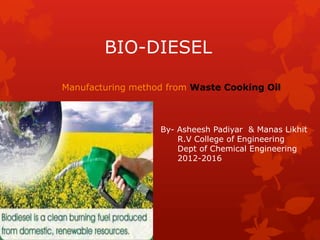
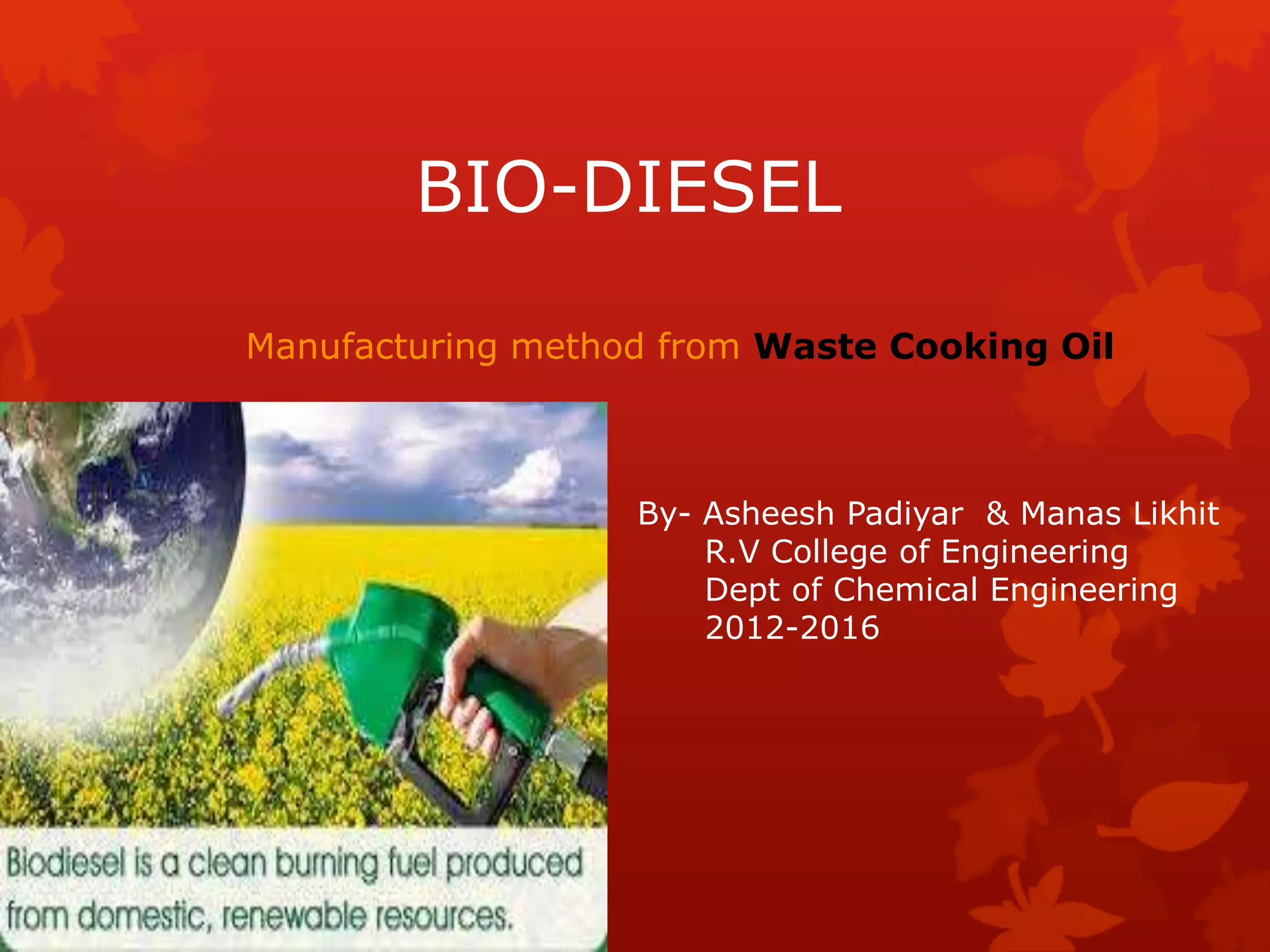
BIO-DIESEL
Manufacturing method from Waste Cooking Oil
By- Asheesh Padiyar & Manas Likhit
R.V College of Engineering
Dept of Chemical Engineering
2012-2016
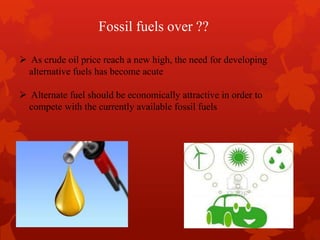
 As crude oil price reach a new high, the need for developing
alternative fuels has become acute
 Alternate fuel should be economically attractive in order to
compete with the currently available fossil fuels
Fossil fuels over ??
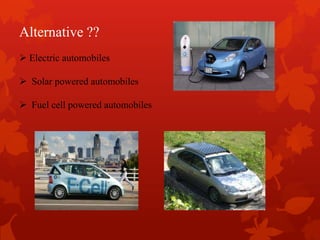
Alternative ??
 Electric automobiles
 Solar powered automobiles
 Fuel cell powered automobiles
Procedure
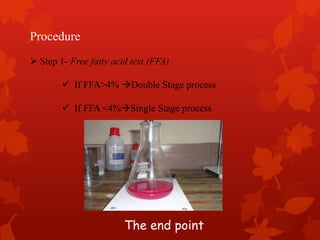
 Step 1- Free fatty acid test (FFA)
 If FFA>4% Double Stage process
 If FFA <4%Single Stage process
The end point
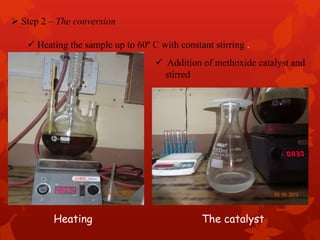
 Step 2 – The conversion
 Heating the sample up to 60º C with constant stirring .
 Addition of methoxide catalyst and
stirred
Heating The catalyst
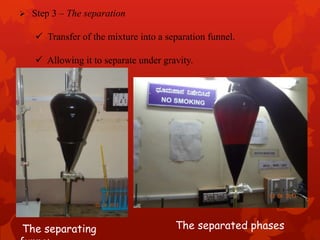
 Step 3 – The separation
 Transfer of the mixture into a separation funnel.
 Allowing it to separate under gravity.
The separating The separated phases
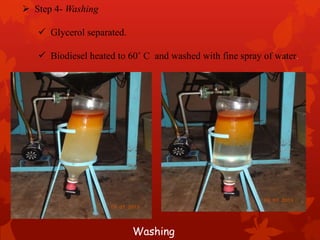
 Step 4- Washing
 Glycerol separated.
 Biodiesel heated to 60˚ C and washed with fine spray of water.
Washing
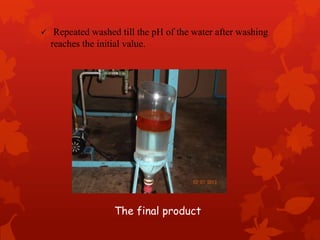
 Repeated washed till the pH of the water after washing
reaches the initial value.
The final product
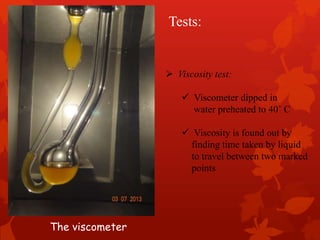
 Viscosity test:
 Viscometer dipped in
water preheated to 40˚ C
 Viscosity is found out by
finding time taken by liquid
to travel between two marked
points
Tests:
The viscometer
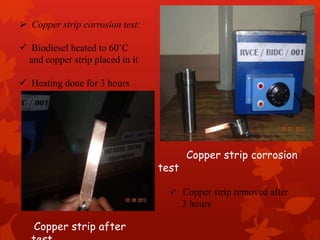
 Copper strip corrosion test:
 Biodiesel heated to 60˚C
and copper strip placed in it
 Heating done for 3 hours
 Copper strip removed after
3 hours
Copper strip corrosion
test
Copper strip after
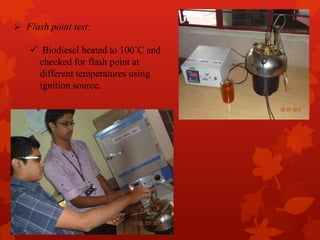
 Flash point test:
 Biodiesel heated to 100˚C and
checked for flash point at
different temperatures using
ignition source.
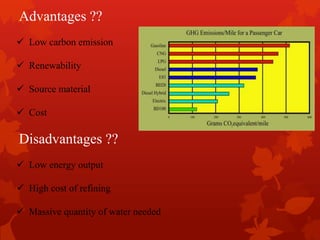
Advantages ??
 Low carbon emission
 Renewability
 Source material
 Cost
Disadvantages ??
 Low energy output
 High cost of refining
 Massive quantity of water needed
Asheesh Padiyar Manas Likhit
Chemical Engineering(2012-2016)
R.V College of Engineering
Thank you ……. 

Bio-diesel from Waste Cooking Oil

  • 1.
    BIO-DIESEL Manufacturing method fromWaste Cooking Oil By- Asheesh Padiyar & Manas Likhit R.V College of Engineering Dept of Chemical Engineering 2012-2016
  • 2.
     As crudeoil price reach a new high, the need for developing alternative fuels has become acute  Alternate fuel should be economically attractive in order to compete with the currently available fossil fuels Fossil fuels over ??
  • 3.
    Alternative ??  Electricautomobiles  Solar powered automobiles  Fuel cell powered automobiles
  • 4.
    Procedure  Step 1-Free fatty acid test (FFA)  If FFA>4% Double Stage process  If FFA <4%Single Stage process The end point
  • 5.
     Step 2– The conversion  Heating the sample up to 60º C with constant stirring .  Addition of methoxide catalyst and stirred Heating The catalyst
  • 6.
     Step 3– The separation  Transfer of the mixture into a separation funnel.  Allowing it to separate under gravity. The separating The separated phases
  • 7.
     Step 4-Washing  Glycerol separated.  Biodiesel heated to 60˚ C and washed with fine spray of water. Washing
  • 8.
     Repeated washedtill the pH of the water after washing reaches the initial value. The final product
  • 9.
     Viscosity test: Viscometer dipped in water preheated to 40˚ C  Viscosity is found out by finding time taken by liquid to travel between two marked points Tests: The viscometer
  • 10.
     Copper stripcorrosion test:  Biodiesel heated to 60˚C and copper strip placed in it  Heating done for 3 hours  Copper strip removed after 3 hours Copper strip corrosion test Copper strip after
  • 11.
     Flash pointtest:  Biodiesel heated to 100˚C and checked for flash point at different temperatures using ignition source.
  • 12.
    Advantages ??  Lowcarbon emission  Renewability  Source material  Cost Disadvantages ??  Low energy output  High cost of refining  Massive quantity of water needed
  • 13.
    Asheesh Padiyar ManasLikhit Chemical Engineering(2012-2016) R.V College of Engineering
  • 14.