BIOCHIPS
By
C.SATISH KUMAR
Contents:
 Introduction
 Definition
 History
 Components present
 Working
 Applications
 Advantages
 Future scope
Introduction
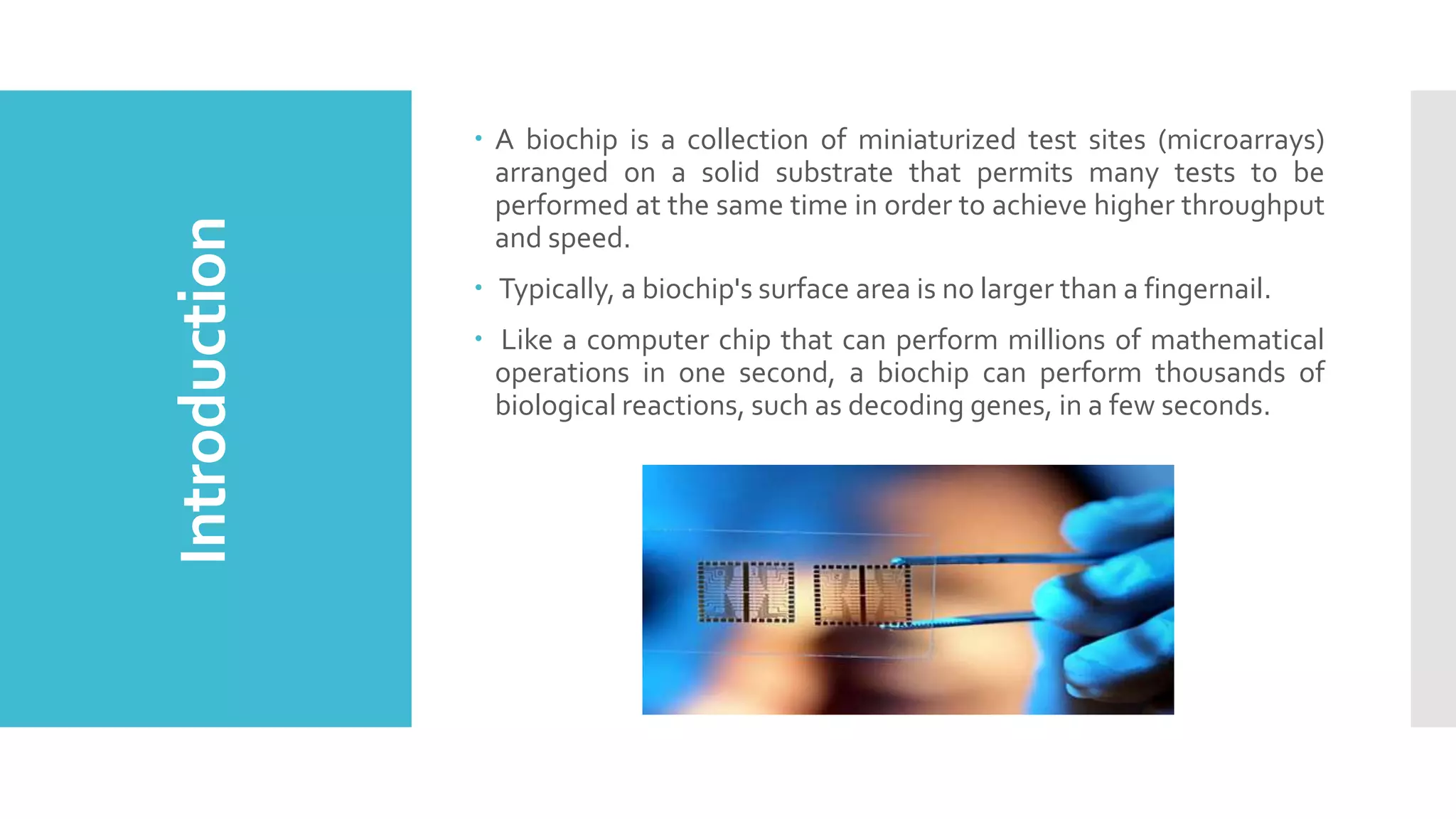
 A biochip is a collection of miniaturized test sites (microarrays)
arranged on a solid substrate that permits many tests to be
performed at the same time in order to achieve higher throughput
and speed.
 Typically, a biochip's surface area is no larger than a fingernail.
 Like a computer chip that can perform millions of mathematical
operations in one second, a biochip can perform thousands of
biological reactions, such as decoding genes, in a few seconds.
Whatisabiochips?  Biochips can be defined as ‘microelectronic-inspired devices that
are used for delivery, processing, analysis, or detection of
biological molecules and species’.
 These devices are used to detect cells, microorganisms, viruses,
proteins, DNA and related nucleic acids, and small molecules of
biochemical importance and interest.
History
 The development started with early work on the
underlying sensor technology.
 The first portable, chemistry-based sensors was glass pH
electrode, invented in 1922 by Hughes.
 In 1983 Kary Mullis invented the polymerase chain reaction
(PCR) technique.
 Typical biochip platform
Components
present
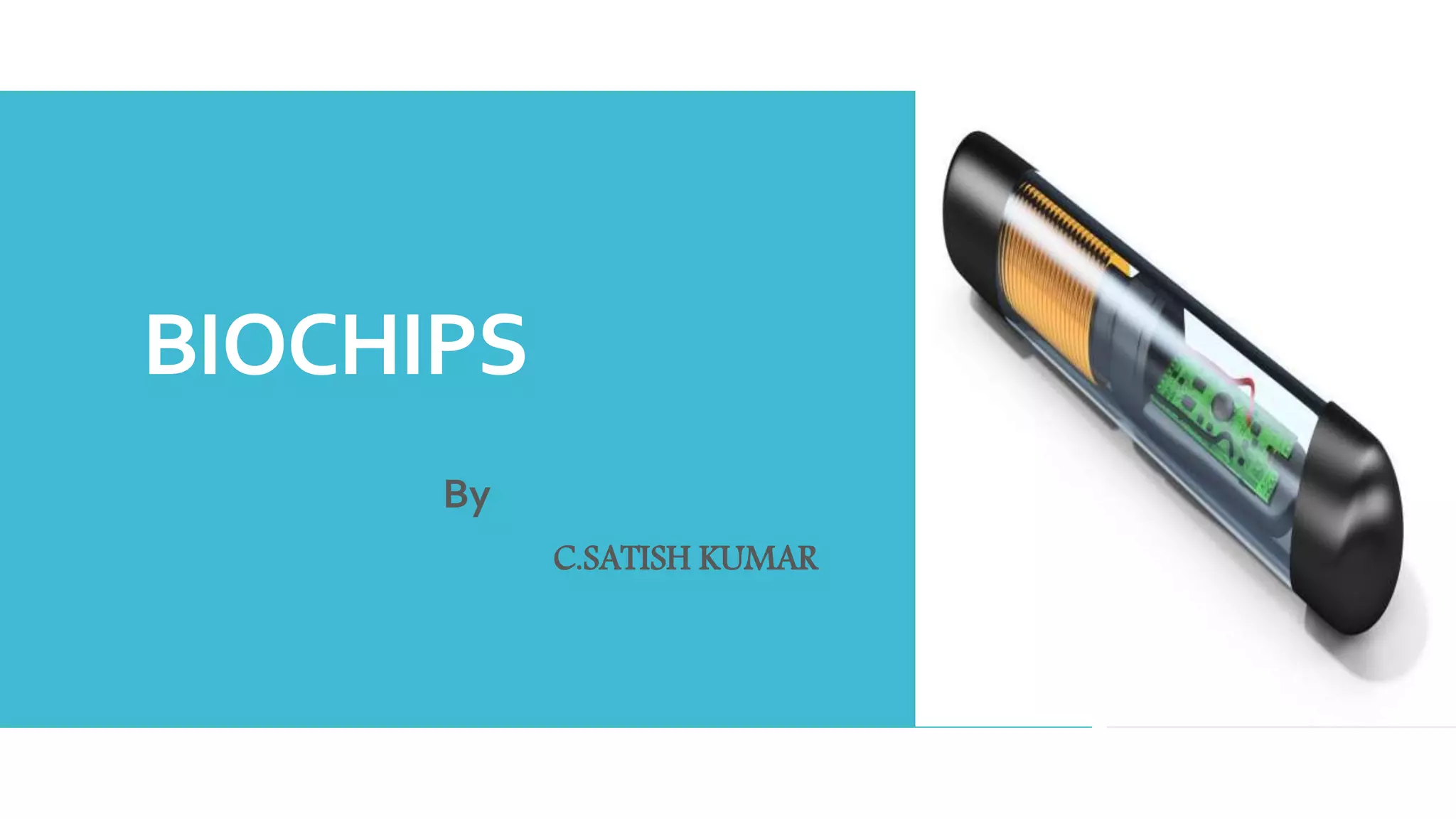
 The biochip basically consists of two components transponder and
reader.
Transponder
Microchip:
Antenna coil:
Tuning capacitor:
Glass capsule:
This is a passive transponder, activates it by giving it a low electrical
charge.
The computer microchip stores a unique identification (UID) number
that ranges from 10 digits to 15 digits long.
The antenna coil is very small, primitive and this type of antenna is
used to send and receive the signals from the scanner or reader.
Charging capacitor can be tuned using small signal of 1/1000 watts.
Holds the antenna coil, capacitor, and microchip made with a
biocompatible material namely soda lime glass.
Reader: The reader comprises of a coil namely “exciter” and it forms an
electromagnetic field through radio signals. It offers the required energy
(<1/1000 of a watt) to activate the biochip. The reader carries a receiving
coil for receiving the ID number or transmitted code sent back from the
excited implanted biochip.
Working
Applications  Used to trace a person or animal anywhere in the world.
 Used to store and update the information of a person like
medical financial and demographics.
 A biochip leads to safe E-commerce systems
 Used effectively in restoring the records of medical, cash,
passport, etc.
 It can be applicable in the medical field as a BP sensor,
glucose detector, and oxygen sensor.
Advantages
 The biochip is used to rescue the sick
 Very small in size, powerful and faster.
 Biochips are useful in finding the lost people
 Biochips can be used to identify the persons individually
 Biochips perform thousands of biological reactions in a few
seconds.
Futurescope  Can be further modified and can be used in the stores or any
complex malls.
 From the above presented information finally, we can
conclude that biochips are accurate, fast, and miniaturized.
 The biochip space lies at the intersection between chip
manufacturing, molecule biology, genomics, and signal
processing.
 The market for Biochips and its applications has been
increased in a number of core research regions.
THANKYOU
ANY QUERIES……..?

Biochips

  • 1.
  • 2.
    Contents:  Introduction  Definition History  Components present  Working  Applications  Advantages  Future scope
  • 3.
    Introduction  A biochipis a collection of miniaturized test sites (microarrays) arranged on a solid substrate that permits many tests to be performed at the same time in order to achieve higher throughput and speed.  Typically, a biochip's surface area is no larger than a fingernail.  Like a computer chip that can perform millions of mathematical operations in one second, a biochip can perform thousands of biological reactions, such as decoding genes, in a few seconds.
  • 4.
    Whatisabiochips?  Biochipscan be defined as ‘microelectronic-inspired devices that are used for delivery, processing, analysis, or detection of biological molecules and species’.  These devices are used to detect cells, microorganisms, viruses, proteins, DNA and related nucleic acids, and small molecules of biochemical importance and interest.
  • 5.
    History  The developmentstarted with early work on the underlying sensor technology.  The first portable, chemistry-based sensors was glass pH electrode, invented in 1922 by Hughes.  In 1983 Kary Mullis invented the polymerase chain reaction (PCR) technique.  Typical biochip platform
  • 6.
    Components present  The biochipbasically consists of two components transponder and reader.
  • 7.
    Transponder Microchip: Antenna coil: Tuning capacitor: Glasscapsule: This is a passive transponder, activates it by giving it a low electrical charge. The computer microchip stores a unique identification (UID) number that ranges from 10 digits to 15 digits long. The antenna coil is very small, primitive and this type of antenna is used to send and receive the signals from the scanner or reader. Charging capacitor can be tuned using small signal of 1/1000 watts. Holds the antenna coil, capacitor, and microchip made with a biocompatible material namely soda lime glass.
  • 8.
    Reader: The readercomprises of a coil namely “exciter” and it forms an electromagnetic field through radio signals. It offers the required energy (<1/1000 of a watt) to activate the biochip. The reader carries a receiving coil for receiving the ID number or transmitted code sent back from the excited implanted biochip.
  • 9.
  • 10.
    Applications  Usedto trace a person or animal anywhere in the world.  Used to store and update the information of a person like medical financial and demographics.  A biochip leads to safe E-commerce systems  Used effectively in restoring the records of medical, cash, passport, etc.  It can be applicable in the medical field as a BP sensor, glucose detector, and oxygen sensor.
  • 12.
    Advantages  The biochipis used to rescue the sick  Very small in size, powerful and faster.  Biochips are useful in finding the lost people  Biochips can be used to identify the persons individually  Biochips perform thousands of biological reactions in a few seconds.
  • 13.
    Futurescope  Canbe further modified and can be used in the stores or any complex malls.  From the above presented information finally, we can conclude that biochips are accurate, fast, and miniaturized.  The biochip space lies at the intersection between chip manufacturing, molecule biology, genomics, and signal processing.  The market for Biochips and its applications has been increased in a number of core research regions.
  • 15.