BIOCHIP
PRESENTED BY-
ARIFA SIDDIQUI
INTRODUCTION
It is basically a bio- microarray device.
The biochip is a microarray (a
collection of miniaturized test sites)
arranged on a solid substrate that
permits many simultaneous tests to be
performed, allowing higher throughput
volume and speed.
It enables large-scale genomic,
proteomic and functional genomic
analysis.
HISTORY
The evolution of biochips occured early
when glucose sensor was invented by
clarks & lyons in 1962.
In 1980, Sanger and Gilbert got Nobel
Prize for DNA sequencing.
Originally biochip was developed by
Fisheries in 1983.
First commercial biochip was invented by
Affymetrix by photolithography in mid
1990s.
BIOCHIP IMPLANT
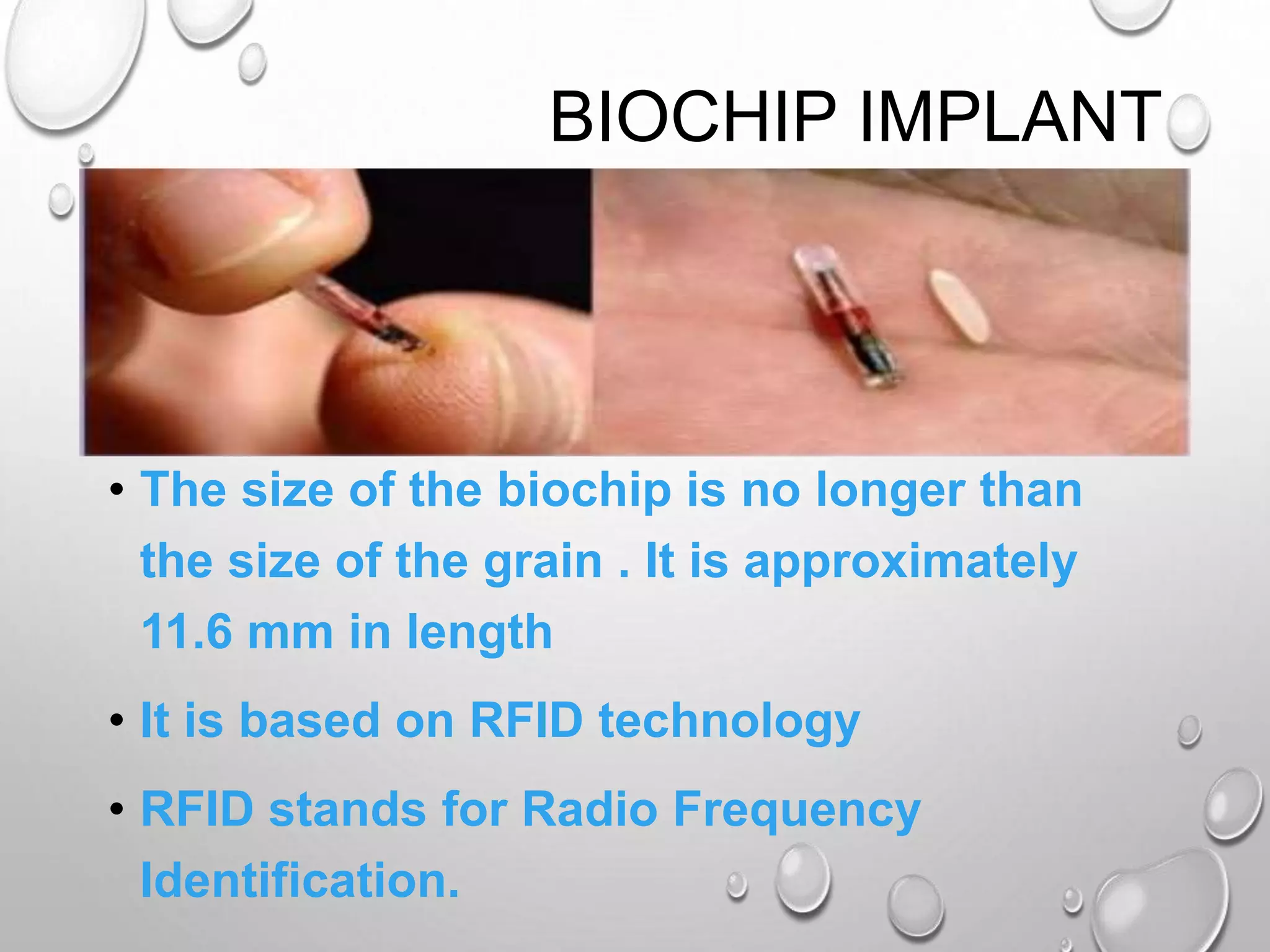
• The size of the biochip is no longer than
the size of the grain . It is approximately
11.6 mm in length
• It is based on RFID technology
• RFID stands for Radio Frequency
Identification.
BIOCHIP IMPLANTATION
Biochip is implanted by a hypodermic
syringe beneath the skin
 Implanted behind the neck in animals
while at right hand at right hand/forehead
in humans.
COMPONENTS OF BIOCHIP
The biochip consist of two
components:
• Transponder
• Reader or Scanner
Transponder:
It is the actual biochip implant.
It is passive transponder as it contains
no battery.
Communication between biochip and
reader occurs through low frequency radio
waves.
Scanner or Reader:
It consist an exciter coil which generates
electromagnetic field that via radio signals
provide necessary energy to activate
implanted biochip.
It contains software that decode the
received code and display the result.
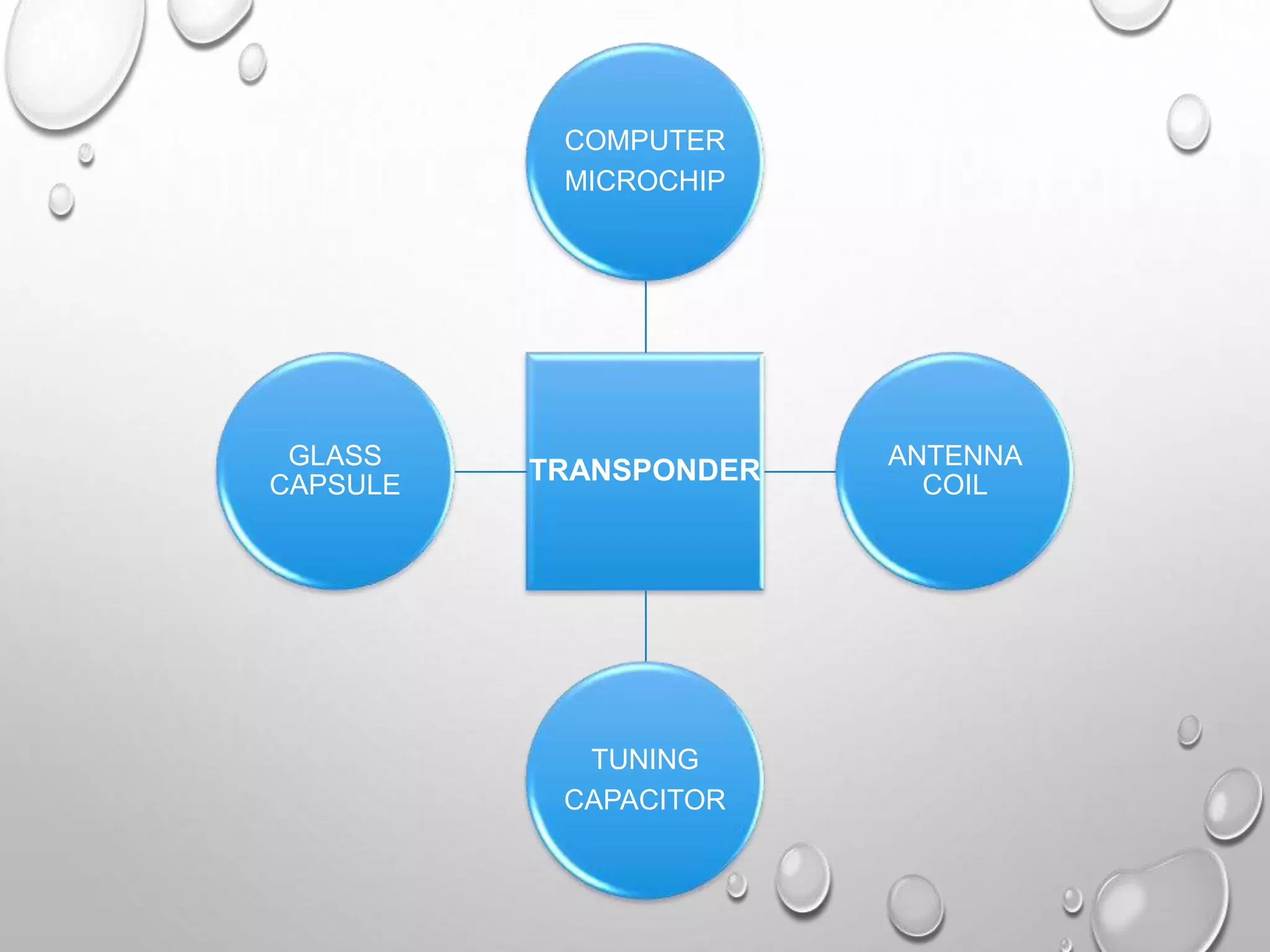
TRANSPONDER
COMPUTER
MICROCHIP
ANTENNA
COIL
TUNING
CAPACITOR
GLASS
CAPSULE
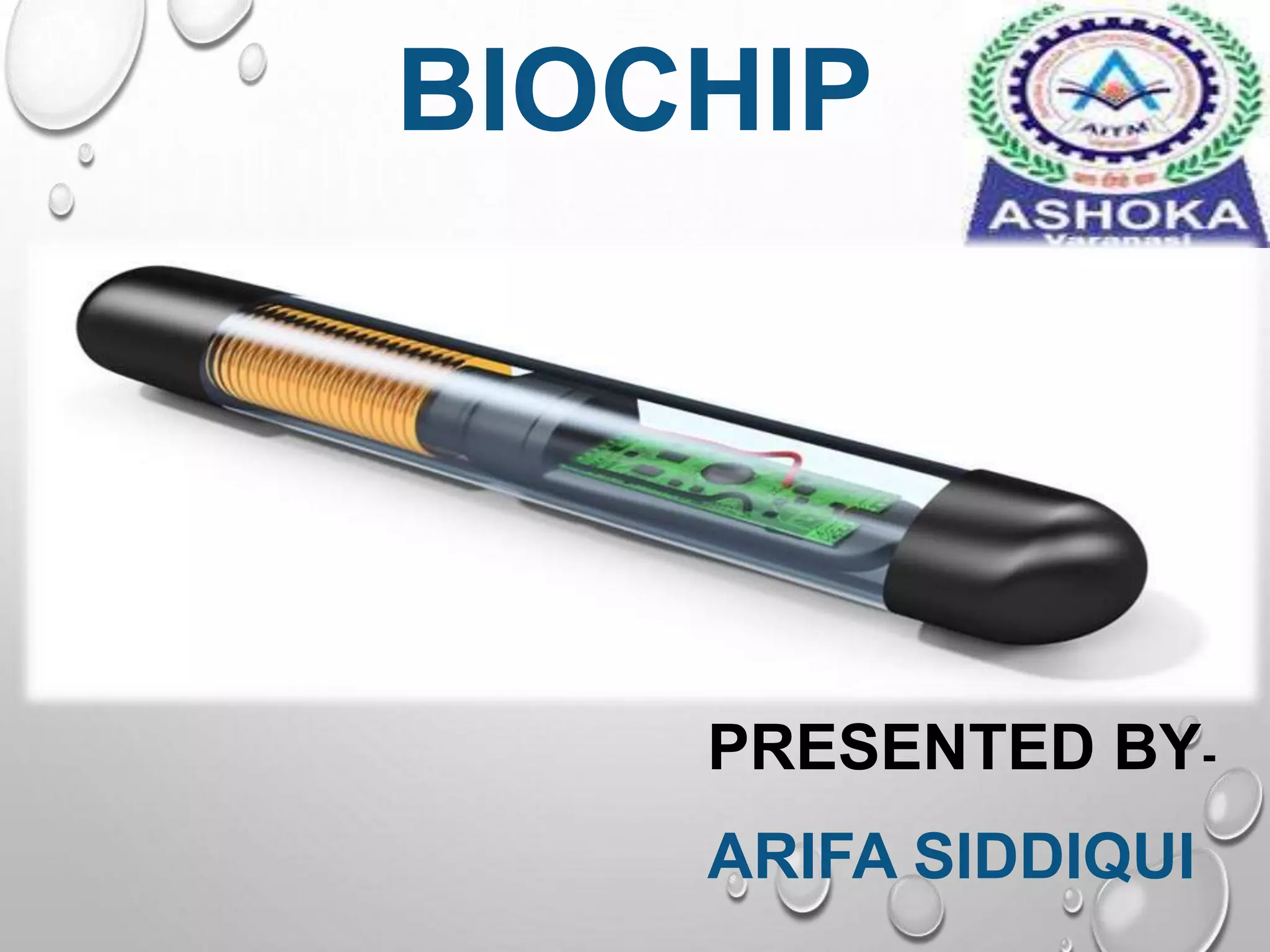
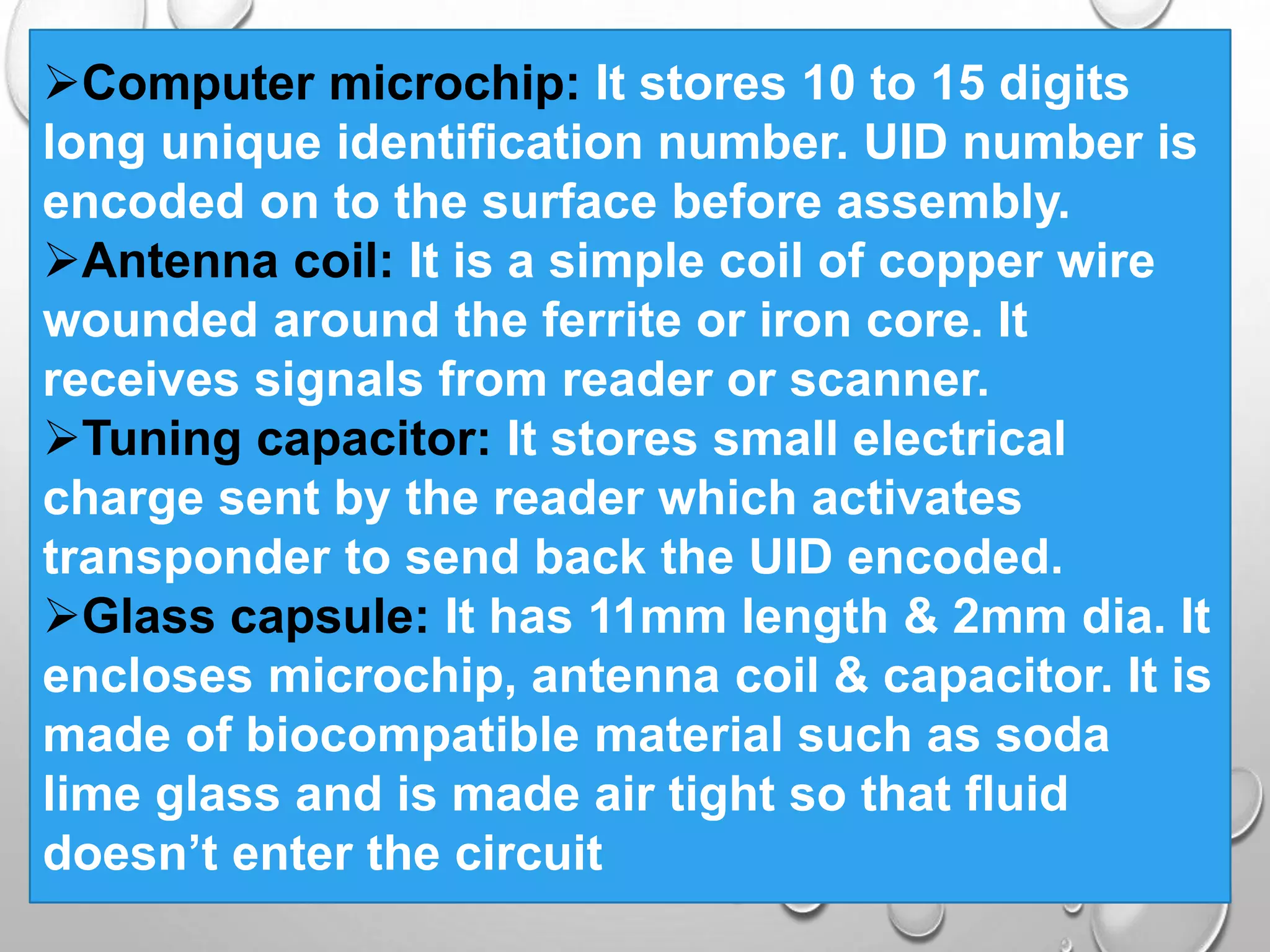
Computer microchip: It stores 10 to 15 digits
long unique identification number. UID number is
encoded on to the surface before assembly.
Antenna coil: It is a simple coil of copper wire
wounded around the ferrite or iron core. It
receives signals from reader or scanner.
Tuning capacitor: It stores small electrical
charge sent by the reader which activates
transponder to send back the UID encoded.
Glass capsule: It has 11mm length & 2mm dia. It
encloses microchip, antenna coil & capacitor. It is
made of biocompatible material such as soda
lime glass and is made air tight so that fluid
doesn’t enter the circuit
WORKING
The reader generates a
low frequency radio
signal
Activation of implanted
biochip
Biochip sends UID
code back to the reader
through radio signals
Reader decodes the
UID then converts it
into digital format &
display it on monitor
APPLICATIONS
Can be used for investigation purpose
in case of tracking someone.
Can trace animal/ human anywhere in
the world.
Can store and update financial,
medical as well as demographic
information of any person.
Performs thousands of biological
operations.
SIGNIFICANCE OF BIOCHIP IN
MEDICAL FIELD
Helpful for the patients suffering from dementia &
Alzheimer’s disease.
Used as glucose detector, blood pressure sensor,
oxygen sensor.
Helps in prognosis of any disease.
Helpful for diabetic patients as there is no loss of
blood and less painful.
BIOCHIP AS GLUCOSE
DETECTOR
Biochip can be integrated with glucose
sensor.
Diabetics still use hand prick & hand held
blood test but biochips are the easy methods
for frequent monitoring of glucose level in
body.
It causes no loss of blood and frequent
medication can be done.
The S4MS chip by implanting under the skin
can easily check the glucose level and send
WORKING
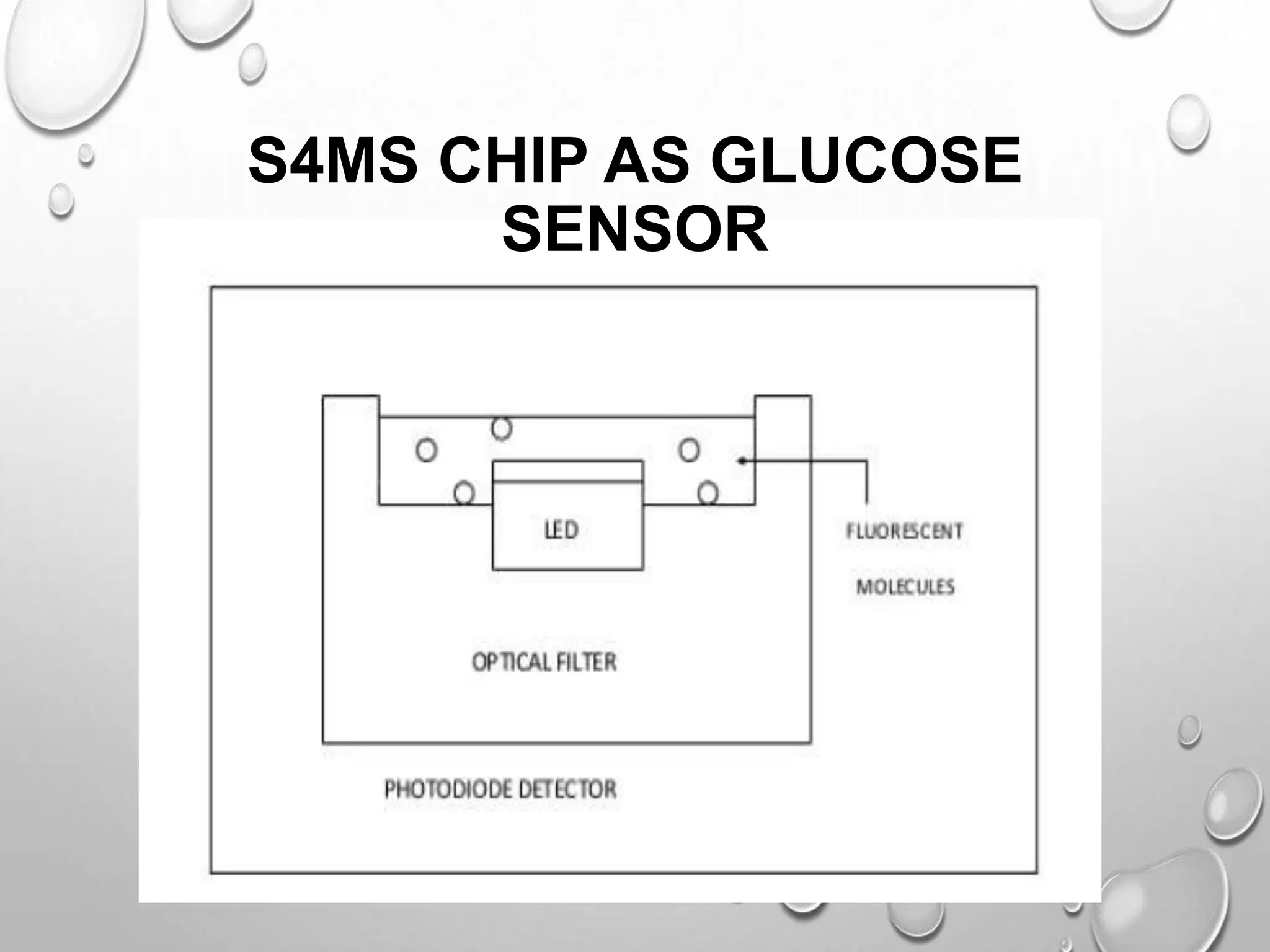
THE DETECTION PROCESS IS INITIATED BY
LIGHT EMITTING DIODE.
THE LIGHT PRODUCED BY LED HITS THE
FLUORESCENT CHEMICAL THAT ABSORBS AND
RE EMITS THE LIGHT.
THE LONGER WAVELENGTH LIGHT IS DETECTED
AND SEND TO THE CONTROL PANEL OUTSIDE
THE BODY.
GLUCOSE IS DETECTED AS SUGAR REDUCE
THE AMOUNT OF LIGHT THAT THE
FLUORESCENT MATERIAL RE EMITS.
S4MS CHIP AS GLUCOSE
SENSOR
BIOCHIP AS OXYGEN SENSOR
An integration of biochip and oxygen
sensor.
The oxygen sensing chip sends out light
pulses out into the body.
The light is absorbed at varying extents as
it depends how much oxygen is carried out
by blood, the chip detects the light that is
left.
It can also act blood pressure detector
PROS
Insertion is as simple as injecting
vaccine.
Anaesthesia is not required while
insertion.
Can be used for investigation purposes.
Monitoring health conditions whenever
required.
To rescue the patients of dementia.
CONS
A great threat to someone’s privacy.
Can turn large number of population
into controlled slave.
If implanted unknowingly it can cause
threat to personal information such as
financial records, demographic details,
etc.
Human monitoring is an end to freedom
and violation of human rights.
FUTURE IMPLEMENTATION
Can act as multifunctional biochip
with personal details and health
monitoring.
Capability of replacing passport,
medical report, financial record, etc.
In India it has the capability of
replacing Aadhar card.
Can be implemented for veterinary
purpose.
REFERENCE
CHANG MING LI, HUADONG, QIN
ZHOU, KAI H. GOH
HTTPS://DOI.ORG/10.1016/B978-012373738-
0.50013-1CHAPTER 11 – BIOCHIPS –
FUNDAMENTALS AND APPLICATION.
https://www.slideshare.net/mohitgarg69/biochi
p-report
BIOCHIP
BIOCHIP

BIOCHIP

  • 1.
  • 2.
    INTRODUCTION It is basicallya bio- microarray device. The biochip is a microarray (a collection of miniaturized test sites) arranged on a solid substrate that permits many simultaneous tests to be performed, allowing higher throughput volume and speed. It enables large-scale genomic, proteomic and functional genomic analysis.
  • 3.
    HISTORY The evolution ofbiochips occured early when glucose sensor was invented by clarks & lyons in 1962. In 1980, Sanger and Gilbert got Nobel Prize for DNA sequencing. Originally biochip was developed by Fisheries in 1983. First commercial biochip was invented by Affymetrix by photolithography in mid 1990s.
  • 4.
    BIOCHIP IMPLANT • Thesize of the biochip is no longer than the size of the grain . It is approximately 11.6 mm in length • It is based on RFID technology • RFID stands for Radio Frequency Identification.
  • 5.
    BIOCHIP IMPLANTATION Biochip isimplanted by a hypodermic syringe beneath the skin  Implanted behind the neck in animals while at right hand at right hand/forehead in humans.
  • 6.
    COMPONENTS OF BIOCHIP Thebiochip consist of two components: • Transponder • Reader or Scanner
  • 7.
    Transponder: It is theactual biochip implant. It is passive transponder as it contains no battery. Communication between biochip and reader occurs through low frequency radio waves. Scanner or Reader: It consist an exciter coil which generates electromagnetic field that via radio signals provide necessary energy to activate implanted biochip. It contains software that decode the received code and display the result.
  • 9.
  • 10.
    Computer microchip: Itstores 10 to 15 digits long unique identification number. UID number is encoded on to the surface before assembly. Antenna coil: It is a simple coil of copper wire wounded around the ferrite or iron core. It receives signals from reader or scanner. Tuning capacitor: It stores small electrical charge sent by the reader which activates transponder to send back the UID encoded. Glass capsule: It has 11mm length & 2mm dia. It encloses microchip, antenna coil & capacitor. It is made of biocompatible material such as soda lime glass and is made air tight so that fluid doesn’t enter the circuit
  • 11.
  • 12.
    The reader generatesa low frequency radio signal Activation of implanted biochip Biochip sends UID code back to the reader through radio signals Reader decodes the UID then converts it into digital format & display it on monitor
  • 13.
    APPLICATIONS Can be usedfor investigation purpose in case of tracking someone. Can trace animal/ human anywhere in the world. Can store and update financial, medical as well as demographic information of any person. Performs thousands of biological operations.
  • 14.
    SIGNIFICANCE OF BIOCHIPIN MEDICAL FIELD Helpful for the patients suffering from dementia & Alzheimer’s disease. Used as glucose detector, blood pressure sensor, oxygen sensor. Helps in prognosis of any disease. Helpful for diabetic patients as there is no loss of blood and less painful.
  • 15.
    BIOCHIP AS GLUCOSE DETECTOR Biochipcan be integrated with glucose sensor. Diabetics still use hand prick & hand held blood test but biochips are the easy methods for frequent monitoring of glucose level in body. It causes no loss of blood and frequent medication can be done. The S4MS chip by implanting under the skin can easily check the glucose level and send
  • 16.
    WORKING THE DETECTION PROCESSIS INITIATED BY LIGHT EMITTING DIODE. THE LIGHT PRODUCED BY LED HITS THE FLUORESCENT CHEMICAL THAT ABSORBS AND RE EMITS THE LIGHT. THE LONGER WAVELENGTH LIGHT IS DETECTED AND SEND TO THE CONTROL PANEL OUTSIDE THE BODY. GLUCOSE IS DETECTED AS SUGAR REDUCE THE AMOUNT OF LIGHT THAT THE FLUORESCENT MATERIAL RE EMITS.
  • 17.
    S4MS CHIP ASGLUCOSE SENSOR
  • 18.
    BIOCHIP AS OXYGENSENSOR An integration of biochip and oxygen sensor. The oxygen sensing chip sends out light pulses out into the body. The light is absorbed at varying extents as it depends how much oxygen is carried out by blood, the chip detects the light that is left. It can also act blood pressure detector
  • 19.
    PROS Insertion is assimple as injecting vaccine. Anaesthesia is not required while insertion. Can be used for investigation purposes. Monitoring health conditions whenever required. To rescue the patients of dementia.
  • 20.
    CONS A great threatto someone’s privacy. Can turn large number of population into controlled slave. If implanted unknowingly it can cause threat to personal information such as financial records, demographic details, etc. Human monitoring is an end to freedom and violation of human rights.
  • 21.
    FUTURE IMPLEMENTATION Can actas multifunctional biochip with personal details and health monitoring. Capability of replacing passport, medical report, financial record, etc. In India it has the capability of replacing Aadhar card. Can be implemented for veterinary purpose.
  • 22.
    REFERENCE CHANG MING LI,HUADONG, QIN ZHOU, KAI H. GOH HTTPS://DOI.ORG/10.1016/B978-012373738- 0.50013-1CHAPTER 11 – BIOCHIPS – FUNDAMENTALS AND APPLICATION. https://www.slideshare.net/mohitgarg69/biochi p-report