Nutrition and HealthBiochemistry of Food
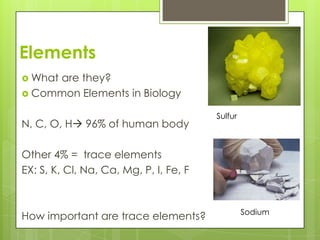
ElementsWhat are they?Common Elements in BiologyN, C, O, H 96% of human bodyOther 4% =  trace elementsEX: S, K, Cl, Na, Ca, Mg, P, I, Fe, FHow important are trace elements?SulfurSodium
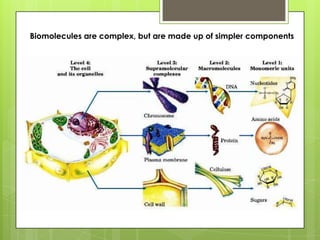
Biomolecules are complex, but are made up of simpler components
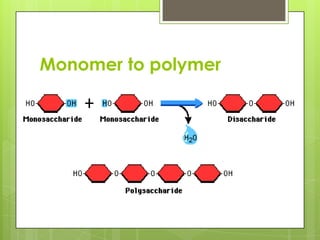
Monomer to polymer
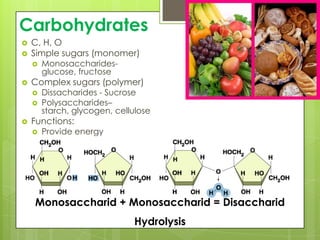
CarbohydratesC, H, OSimple sugars (monomer)Monosaccharides-  glucose, fructoseComplex sugars (polymer)Dissacharides - SucrosePolysaccharides– starch, glycogen, celluloseFunctions:Provide energy Monosaccharid + Monosaccharid = DisaccharidHydrolysis
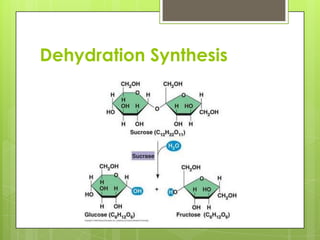
Dehydration Synthesis
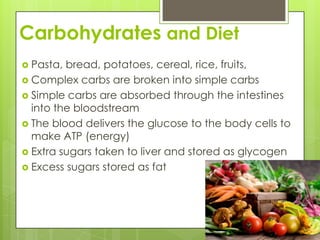
Carbohydrates and DietPasta, bread, potatoes, cereal, rice, fruits,Complex carbs are broken into simple carbsSimple carbs are absorbed through the intestines into the bloodstreamThe blood delivers the glucose to the body cells to make ATP (energy)Extra sugars taken to liver and stored as glycogenExcess sugars stored as fat
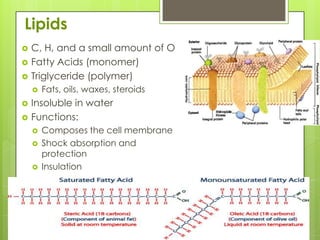
Lipids C, H, and a small amount of OFatty Acids (monomer)Triglyceride (polymer)Fats, oils, waxes, steroidsInsoluble in waterFunctions:Composes the cell membraneShock absorption and protectionInsulation
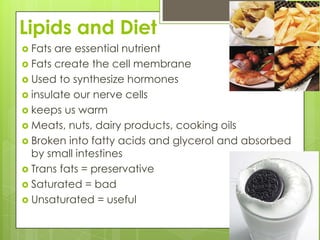
Lipids and DietFats are essential nutrientFats create the cell membraneUsed to synthesize hormonesinsulate our nerve cellskeeps us warmMeats, nuts, dairy products, cooking oilsBroken into fatty acids and glycerol and absorbed by small intestinesTrans fats = preservativeSaturated = badUnsaturated = useful
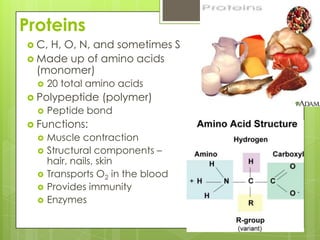
ProteinsC, H, O, N, and sometimes SMade up of amino acids (monomer)20 total amino acidsPolypeptide (polymer)Peptide bondFunctions:Muscle contractionStructural components – hair, nails, skinTransports O2 in the bloodProvides immunityEnzymes
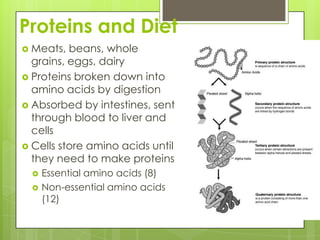
Proteins and DietMeats, beans, whole grains, eggs, dairyProteins broken down into amino acids by digestionAbsorbed by intestines, sent through blood to liver and cellsCells store amino acids until they need to make proteinsEssential amino acids (8)Non-essential amino acids (12)
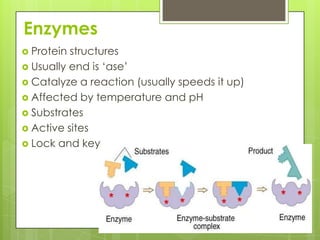
EnzymesProtein structuresUsually end is ‘ase’Catalyze a reaction (usually speeds it up)Affected by temperature and pHSubstratesActive sitesLock and key
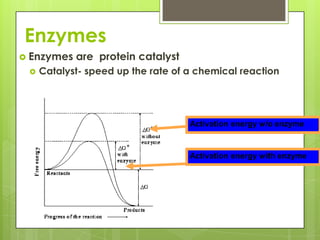
EnzymesEnzymes are  protein catalystCatalyst- speed up the rate of a chemical reactionActivation energy w/o enzymeActivation energy with enzyme
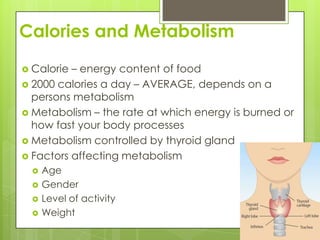
Calories and MetabolismCalorie – energy content of food2000 calories a day – AVERAGE, depends on a persons metabolismMetabolism – the rate at which energy is burned or how fast your body processes Metabolism controlled by thyroid glandFactors affecting metabolismAgeGenderLevel of activityWeight
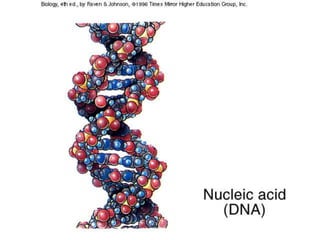
Nucleic AcidsDNA and RNA
Building blocks are nucleotides
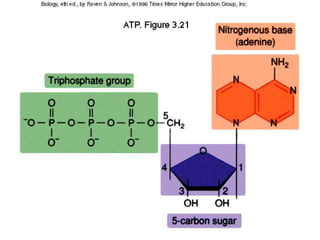
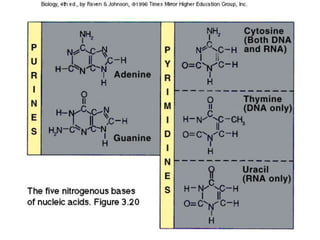
Nucleotides – phosphate, sugar, nitrogen base
Store hereditary information that is translated into proteins- ATP	- Energy molecule of cell
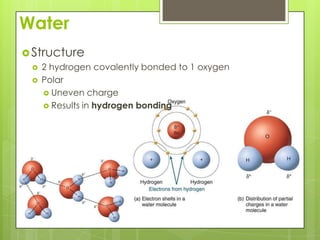
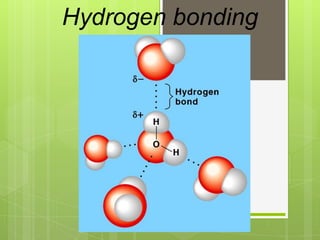
WaterStructure2 hydrogen covalently bonded to 1 oxygenPolarUneven chargeResults in hydrogen bonding
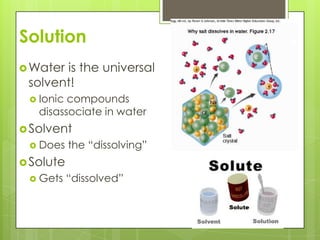
SolutionWater is the universal solvent!Ionic compounds disassociate in waterSolventDoes the “dissolving”SoluteGets “dissolved”
Hydrogen bonding
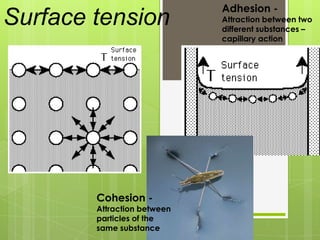
Surface tensionAdhesion - Attraction between two different substances – capillary actionCohesion - Attraction between particles of the same substance

Biochemistry and nutrition 2011

  • 1.
  • 2.
    ElementsWhat are they?CommonElements in BiologyN, C, O, H 96% of human bodyOther 4% = trace elementsEX: S, K, Cl, Na, Ca, Mg, P, I, Fe, FHow important are trace elements?SulfurSodium
  • 3.
    Biomolecules are complex,but are made up of simpler components
  • 4.
  • 5.
    CarbohydratesC, H, OSimplesugars (monomer)Monosaccharides- glucose, fructoseComplex sugars (polymer)Dissacharides - SucrosePolysaccharides– starch, glycogen, celluloseFunctions:Provide energy Monosaccharid + Monosaccharid = DisaccharidHydrolysis
  • 6.
  • 7.
    Carbohydrates and DietPasta,bread, potatoes, cereal, rice, fruits,Complex carbs are broken into simple carbsSimple carbs are absorbed through the intestines into the bloodstreamThe blood delivers the glucose to the body cells to make ATP (energy)Extra sugars taken to liver and stored as glycogenExcess sugars stored as fat
  • 8.
    Lipids C, H,and a small amount of OFatty Acids (monomer)Triglyceride (polymer)Fats, oils, waxes, steroidsInsoluble in waterFunctions:Composes the cell membraneShock absorption and protectionInsulation
  • 9.
    Lipids and DietFatsare essential nutrientFats create the cell membraneUsed to synthesize hormonesinsulate our nerve cellskeeps us warmMeats, nuts, dairy products, cooking oilsBroken into fatty acids and glycerol and absorbed by small intestinesTrans fats = preservativeSaturated = badUnsaturated = useful
  • 10.
    ProteinsC, H, O,N, and sometimes SMade up of amino acids (monomer)20 total amino acidsPolypeptide (polymer)Peptide bondFunctions:Muscle contractionStructural components – hair, nails, skinTransports O2 in the bloodProvides immunityEnzymes
  • 11.
    Proteins and DietMeats,beans, whole grains, eggs, dairyProteins broken down into amino acids by digestionAbsorbed by intestines, sent through blood to liver and cellsCells store amino acids until they need to make proteinsEssential amino acids (8)Non-essential amino acids (12)
  • 12.
    EnzymesProtein structuresUsually endis ‘ase’Catalyze a reaction (usually speeds it up)Affected by temperature and pHSubstratesActive sitesLock and key
  • 13.
    EnzymesEnzymes are protein catalystCatalyst- speed up the rate of a chemical reactionActivation energy w/o enzymeActivation energy with enzyme
  • 14.
    Calories and MetabolismCalorie– energy content of food2000 calories a day – AVERAGE, depends on a persons metabolismMetabolism – the rate at which energy is burned or how fast your body processes Metabolism controlled by thyroid glandFactors affecting metabolismAgeGenderLevel of activityWeight
  • 16.
  • 17.
  • 18.
    Nucleotides – phosphate,sugar, nitrogen base
  • 19.
    Store hereditary informationthat is translated into proteins- ATP - Energy molecule of cell
  • 23.
    WaterStructure2 hydrogen covalentlybonded to 1 oxygenPolarUneven chargeResults in hydrogen bonding
  • 24.
    SolutionWater is theuniversal solvent!Ionic compounds disassociate in waterSolventDoes the “dissolving”SoluteGets “dissolved”
  • 25.
  • 26.
    Surface tensionAdhesion -Attraction between two different substances – capillary actionCohesion - Attraction between particles of the same substance