Respiration


 OXYGEN- one of the most important requirements
  of animals.
    CONSTANT & ABUNDANT SUPPLY
    Necessary for metabolic processes
         CO2 – released as waste product


Gaseous exchange that occurs between an organism and its environment.
Respiratory System


 All respiratory processes involve diffusion of gases
  through moist and semi-permeable membranes to
  hasten respiration
 Simple organisms
    Direct diffusion of gases in and out of their
     integument

 Larger more complex animals
    Presence of a system which functions mainly to
     transport gases reciprocally between the cells and the
     external environment
Respiratory
                        Systems of different
                            organisms

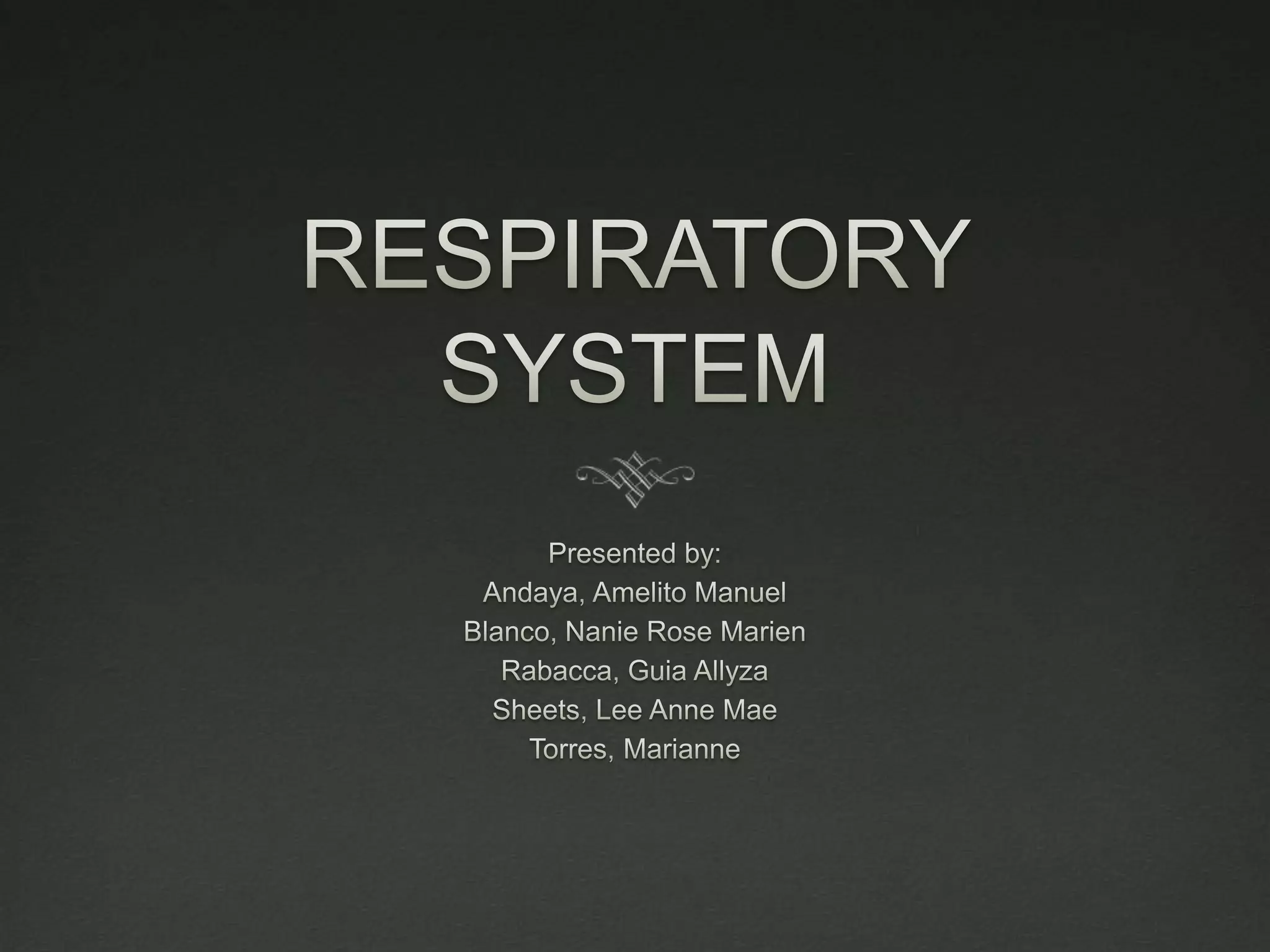
AQUATIC Animals
• Gills that extract oxygen that is dissolved in water

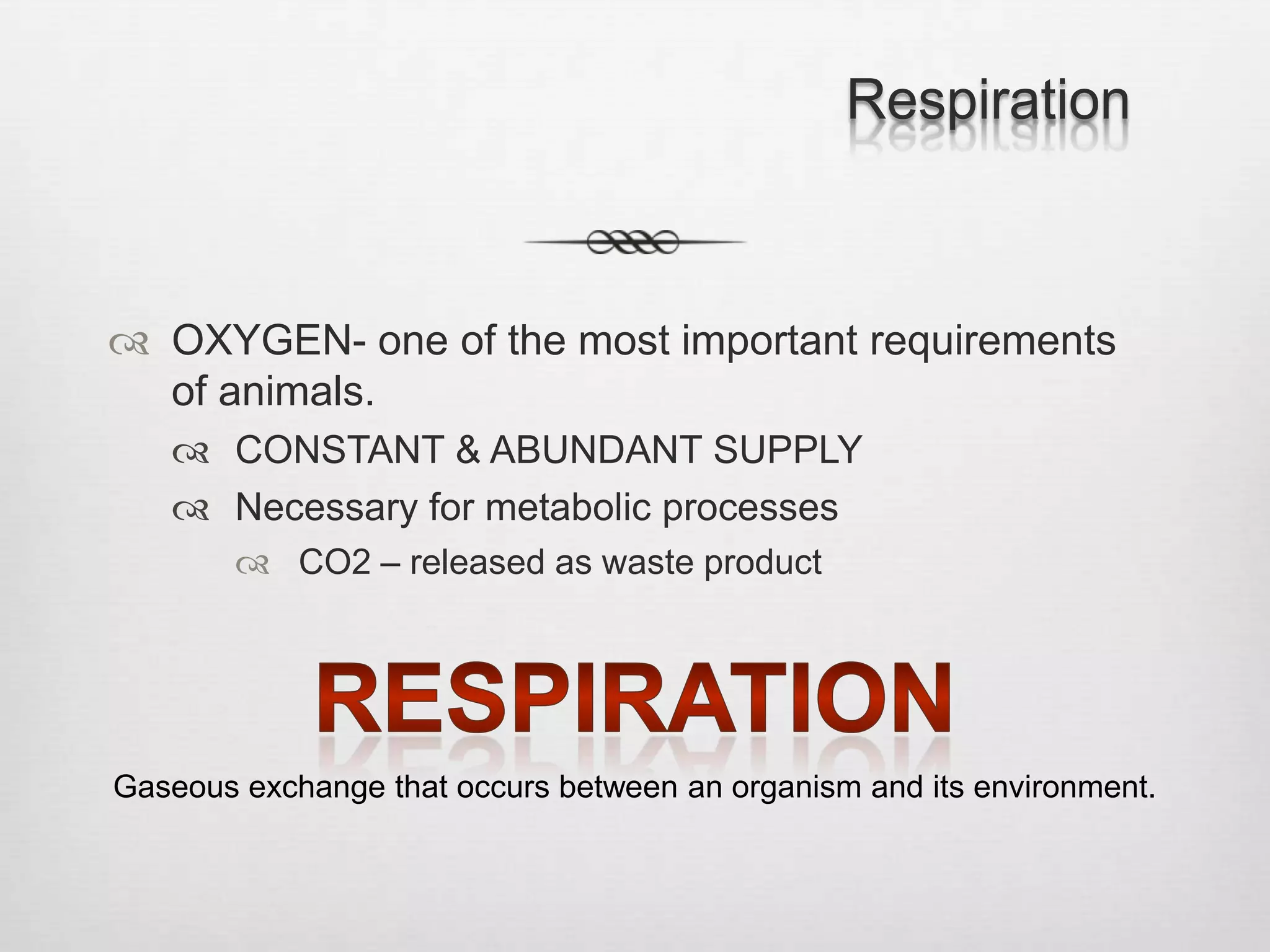
ARTHROPODS
• Tracheal system

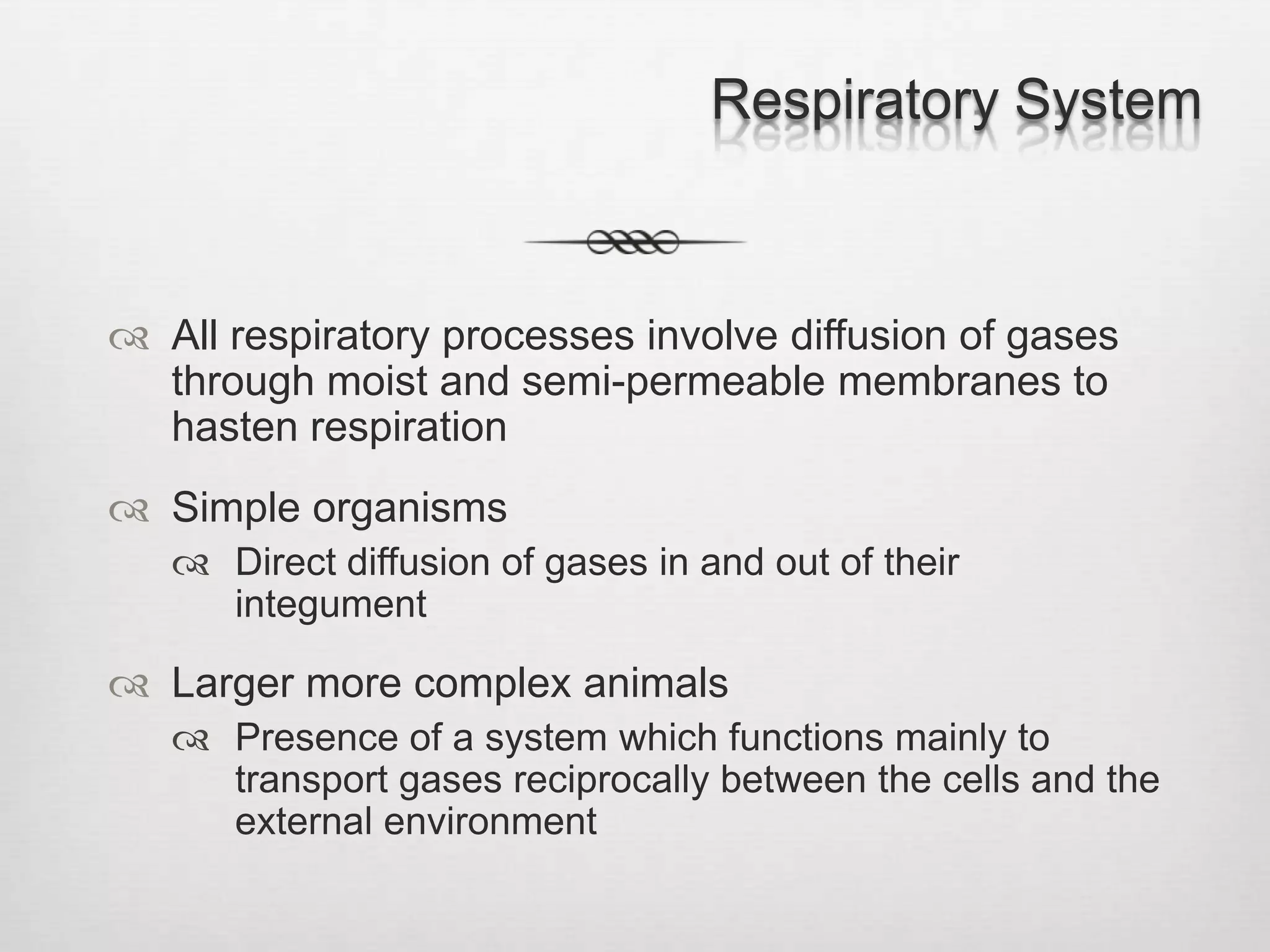
ARACHNIDS
• Book lungs

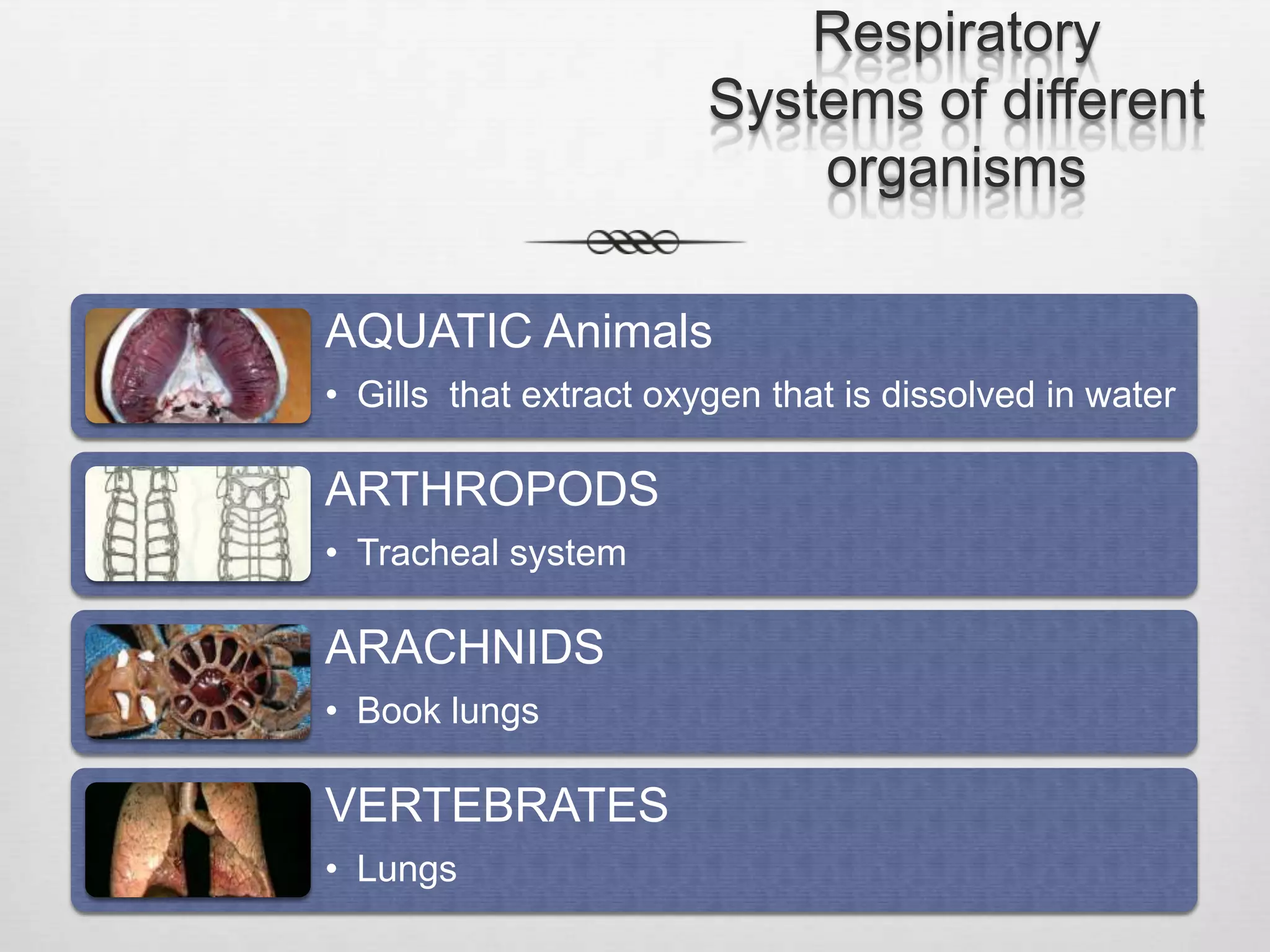
VERTEBRATES
• Lungs
Amphibians


AMPHIBIANS
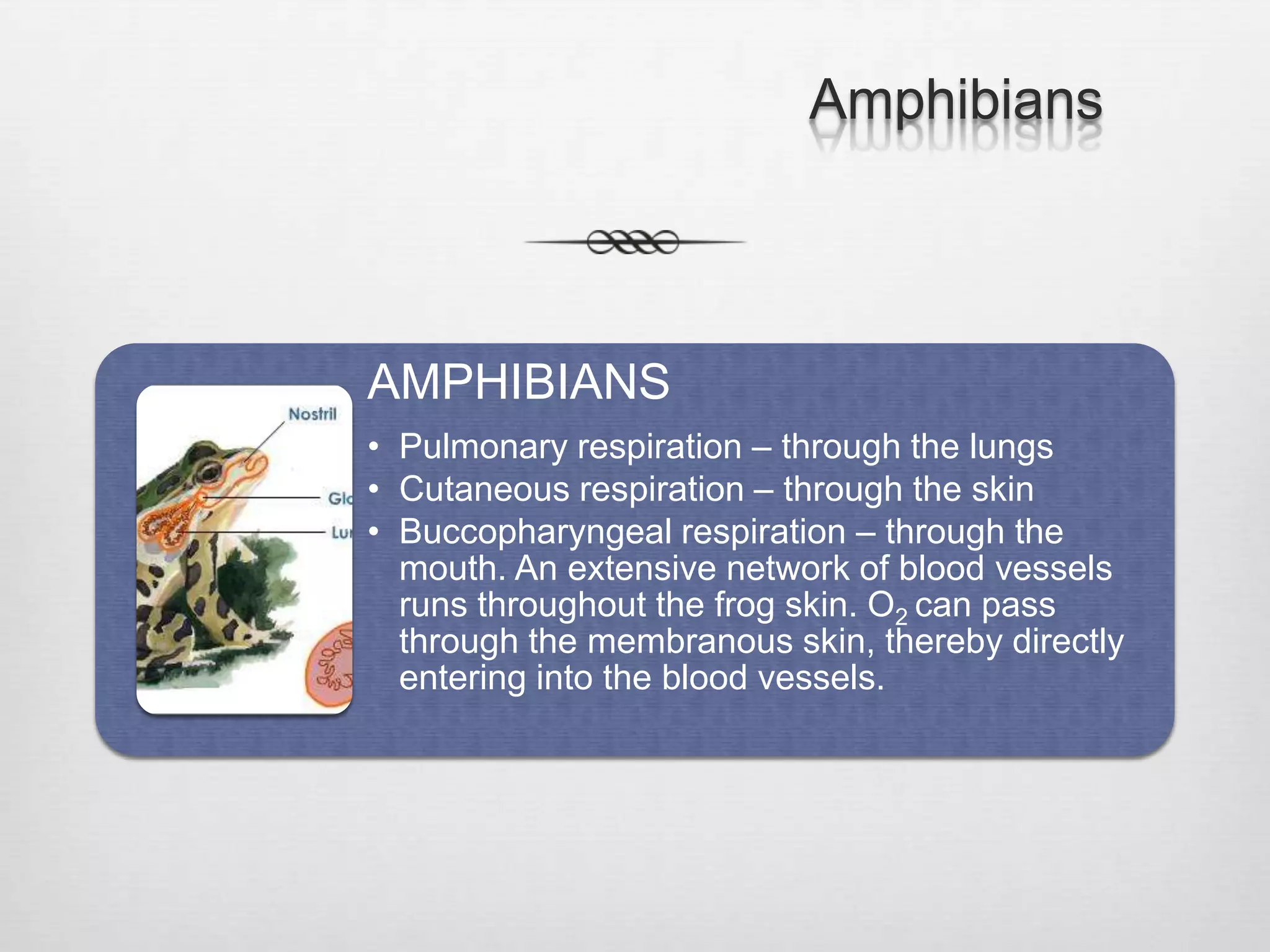
• Pulmonary respiration – through the lungs
• Cutaneous respiration – through the skin
• Buccopharyngeal respiration – through the
  mouth. An extensive network of blood vessels
  runs throughout the frog skin. O2 can pass
  through the membranous skin, thereby directly
  entering into the blood vessels.
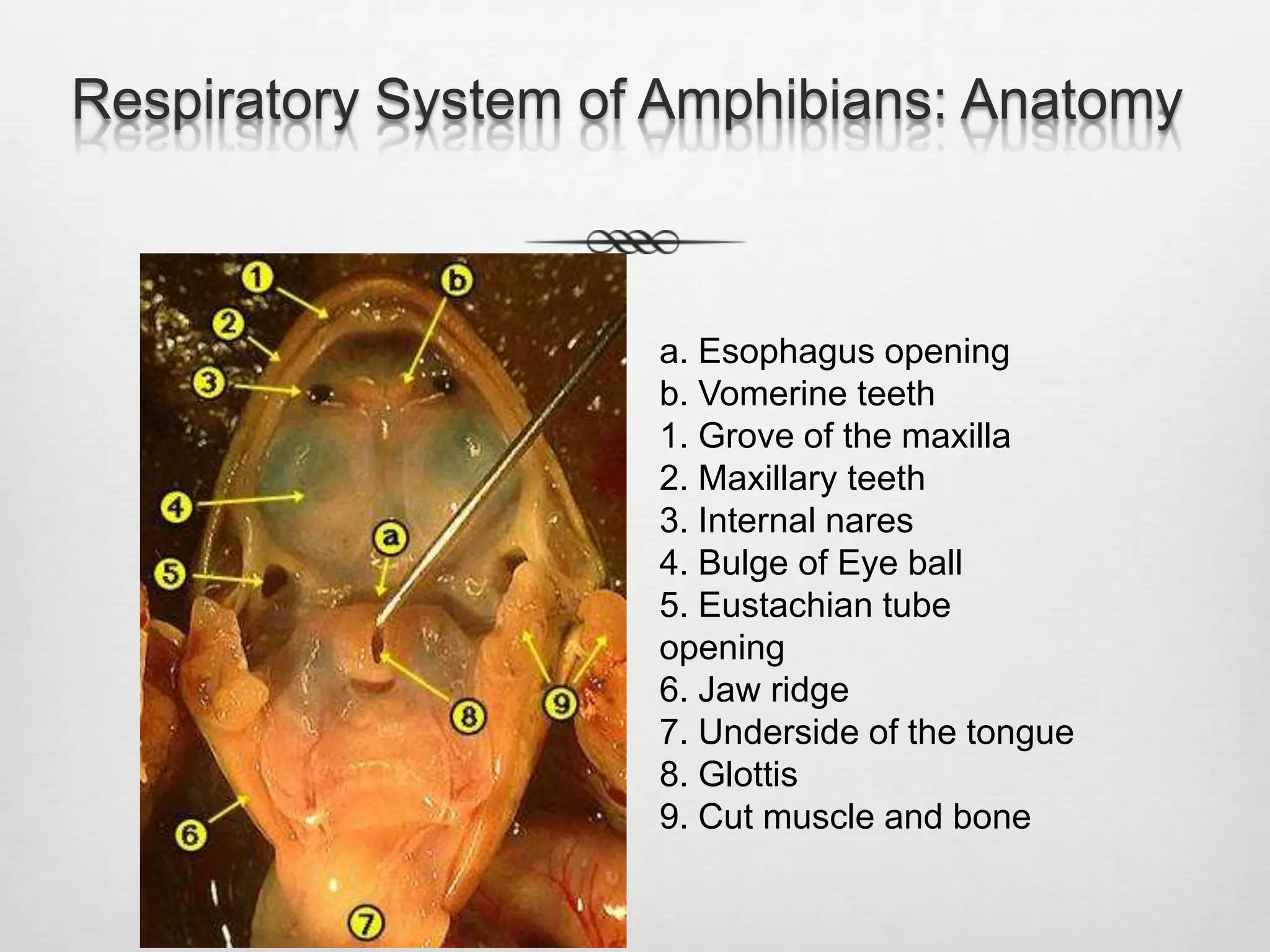
Respiratory System of Amphibians: Anatomy


                     a. Esophagus opening
                     b. Vomerine teeth
                     1. Grove of the maxilla
                     2. Maxillary teeth
                     3. Internal nares
                     4. Bulge of Eye ball
                     5. Eustachian tube
                     opening
                     6. Jaw ridge
                     7. Underside of the tongue
                     8. Glottis
                     9. Cut muscle and bone
Respiratory System of Amphibians: Anatomy


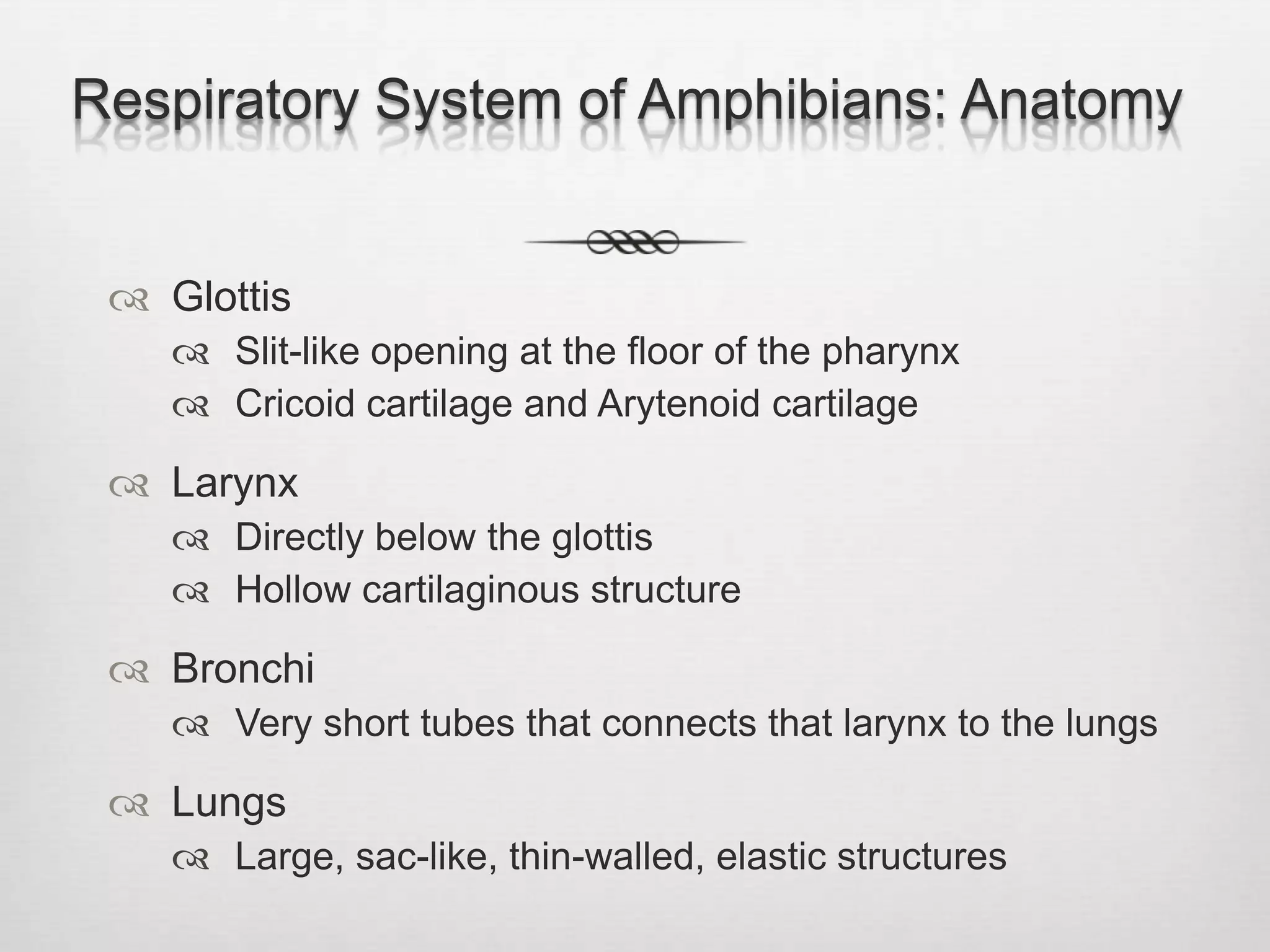
  Glottis
     Slit-like opening at the floor of the pharynx
     Cricoid cartilage and Arytenoid cartilage

  Larynx
     Directly below the glottis
     Hollow cartilaginous structure

  Bronchi
     Very short tubes that connects that larynx to the lungs

  Lungs
     Large, sac-like, thin-walled, elastic structures
Guide Questions


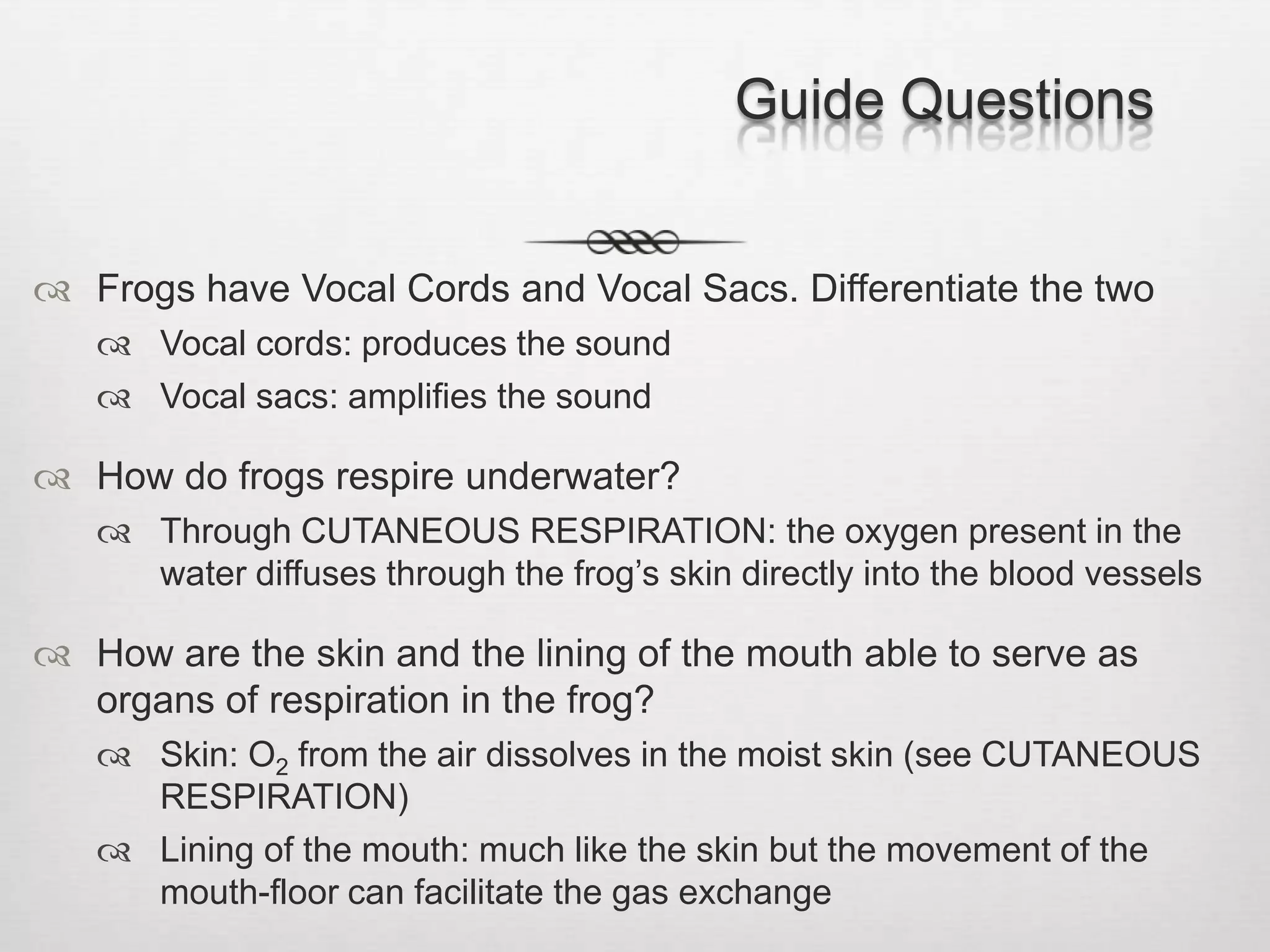
 Frogs have Vocal Cords and Vocal Sacs. Differentiate the two
    Vocal cords: produces the sound
    Vocal sacs: amplifies the sound

 How do frogs respire underwater?
    Through CUTANEOUS RESPIRATION: the oxygen present in the
     water diffuses through the frog’s skin directly into the blood vessels

 How are the skin and the lining of the mouth able to serve as
  organs of respiration in the frog?
    Skin: O2 from the air dissolves in the moist skin (see CUTANEOUS
     RESPIRATION)
    Lining of the mouth: much like the skin but the movement of the
     mouth-floor can facilitate the gas exchange
Guide Questions

 Breathing in frogs is called positive pressure breathing. Describe
  this type of breathing.
    Valves in the nostrils close and the throat pouch pushes upwards
     forcing the air into the lungs. As the frog raises the floor of it’s
     mouth, air is forced down the trachea

 Differentiate positive pressure breathing from negative pressure
  breathing
    Positive: air is PUSHED down via PRESSURE pump
    Negative: air is PULLED down via SUCTION pump

 What is the significance of a moist semi-permeable membrane in
  the respiratory process?
    The moist surface allows the O2 to dissolve from the air
    The semi-permeable membrane allows the O2 to diffuse form the
     external to the internal environment
Guide Questions


 Why are respiratory organs closely associated with the circulatory
  system?
    The circulatory system transports the gases that are acquired and
     expelled through the respiratory system

 Differentiate between external and internal respiration, and
  between inhalation and exhalation.
    External respiration: exchange of gases between the lungs of the
     organism and the external environment
    Internal respiration: exchange of gases between the blood vessels
     and the tissue cells (the gases then diffuse into or out of the cells)
    Inhalation: diaphragm relaxes, lungs inflate, O2 is taken into the body
    Exhalation: diaphragm contracts, lungs deflate, CO2 is expelled from
     the body
References


Biology 22 General Zoology Laboratory Manual
Hallare, A.V. Student Handbook in General Zoology Part 2
www. Biology-resources.com/frogs.html
www.science.jrank.org/pages/5827/Respiration.html

Bio 22 Lab Respiratory System

  • 2.
    Respiration  OXYGEN- oneof the most important requirements of animals.  CONSTANT & ABUNDANT SUPPLY  Necessary for metabolic processes  CO2 – released as waste product Gaseous exchange that occurs between an organism and its environment.
  • 3.
    Respiratory System  Allrespiratory processes involve diffusion of gases through moist and semi-permeable membranes to hasten respiration  Simple organisms  Direct diffusion of gases in and out of their integument  Larger more complex animals  Presence of a system which functions mainly to transport gases reciprocally between the cells and the external environment
  • 4.
    Respiratory Systems of different organisms AQUATIC Animals • Gills that extract oxygen that is dissolved in water ARTHROPODS • Tracheal system ARACHNIDS • Book lungs VERTEBRATES • Lungs
  • 5.
    Amphibians AMPHIBIANS • Pulmonary respiration– through the lungs • Cutaneous respiration – through the skin • Buccopharyngeal respiration – through the mouth. An extensive network of blood vessels runs throughout the frog skin. O2 can pass through the membranous skin, thereby directly entering into the blood vessels.
  • 6.
    Respiratory System ofAmphibians: Anatomy a. Esophagus opening b. Vomerine teeth 1. Grove of the maxilla 2. Maxillary teeth 3. Internal nares 4. Bulge of Eye ball 5. Eustachian tube opening 6. Jaw ridge 7. Underside of the tongue 8. Glottis 9. Cut muscle and bone
  • 7.
    Respiratory System ofAmphibians: Anatomy  Glottis  Slit-like opening at the floor of the pharynx  Cricoid cartilage and Arytenoid cartilage  Larynx  Directly below the glottis  Hollow cartilaginous structure  Bronchi  Very short tubes that connects that larynx to the lungs  Lungs  Large, sac-like, thin-walled, elastic structures
  • 8.
    Guide Questions  Frogshave Vocal Cords and Vocal Sacs. Differentiate the two  Vocal cords: produces the sound  Vocal sacs: amplifies the sound  How do frogs respire underwater?  Through CUTANEOUS RESPIRATION: the oxygen present in the water diffuses through the frog’s skin directly into the blood vessels  How are the skin and the lining of the mouth able to serve as organs of respiration in the frog?  Skin: O2 from the air dissolves in the moist skin (see CUTANEOUS RESPIRATION)  Lining of the mouth: much like the skin but the movement of the mouth-floor can facilitate the gas exchange
  • 9.
    Guide Questions  Breathingin frogs is called positive pressure breathing. Describe this type of breathing.  Valves in the nostrils close and the throat pouch pushes upwards forcing the air into the lungs. As the frog raises the floor of it’s mouth, air is forced down the trachea  Differentiate positive pressure breathing from negative pressure breathing  Positive: air is PUSHED down via PRESSURE pump  Negative: air is PULLED down via SUCTION pump  What is the significance of a moist semi-permeable membrane in the respiratory process?  The moist surface allows the O2 to dissolve from the air  The semi-permeable membrane allows the O2 to diffuse form the external to the internal environment
  • 10.
    Guide Questions  Whyare respiratory organs closely associated with the circulatory system?  The circulatory system transports the gases that are acquired and expelled through the respiratory system  Differentiate between external and internal respiration, and between inhalation and exhalation.  External respiration: exchange of gases between the lungs of the organism and the external environment  Internal respiration: exchange of gases between the blood vessels and the tissue cells (the gases then diffuse into or out of the cells)  Inhalation: diaphragm relaxes, lungs inflate, O2 is taken into the body  Exhalation: diaphragm contracts, lungs deflate, CO2 is expelled from the body
  • 11.
    References Biology 22 GeneralZoology Laboratory Manual Hallare, A.V. Student Handbook in General Zoology Part 2 www. Biology-resources.com/frogs.html www.science.jrank.org/pages/5827/Respiration.html