This document discusses regional dialects and social dialects. It defines regional dialects as varieties of a language associated with a particular geographical area. Regional dialects can differ in pronunciation, word choices, and syntax. Social dialects are varieties associated with particular social groups or classes defined by factors like occupation, education, income, and ethnicity. The way people speak can provide clues to their social background. Certain linguistic features are used more frequently by some social groups than others.
Introduction
The way youspeak is usually a good
indicator of your social background and
there are many speech features which
can be used as clues. Sociolinguistic
have found that is most any linguistic
features in a community which shows
variation will different frequancy from
one social group to another is a
patterned and predict the way. Some
features are stable and their pattern of
use seem to have or and with
membership of particular social group in
predictable way from many years.
3.
Douglas Biber distinguishestwo main
kinds of dialects in linguistics: "geographic
dialects are varieties associated with
speakers living in a particular location, while
social dialects are varieties associated with
speakers belonging to a given demographic
group .
Dialect : Variety of a languange that is a
characteristic of a particular group of the
languange
‘s speaker.
http://grammar.about.com/od/rs/g/Regional-Dialect.htm
4.
Regional dialect
• Aregional dialect is a distinct form of a language spoken
in a particular geographical area. Also known as
a regiolect or topolect.
• Regional dialect is a variaty of language that is spoken in
a geographical area for many hundred of years as seen
in differences in pronouncations , in the choices and
form of the word, and syntax.
http://grammar.about.com/od/rs/g/Regional-Dialect.htm
5.
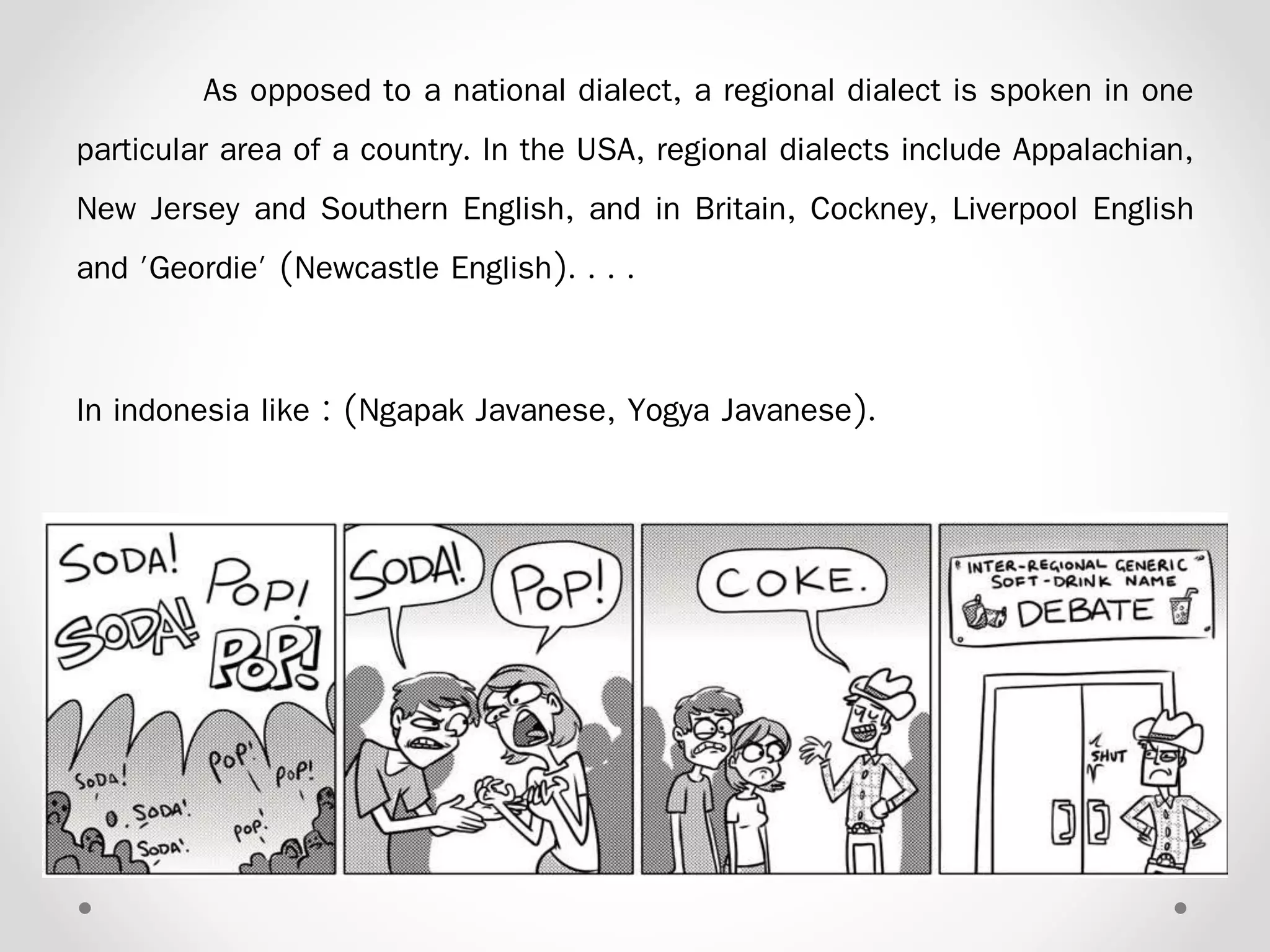
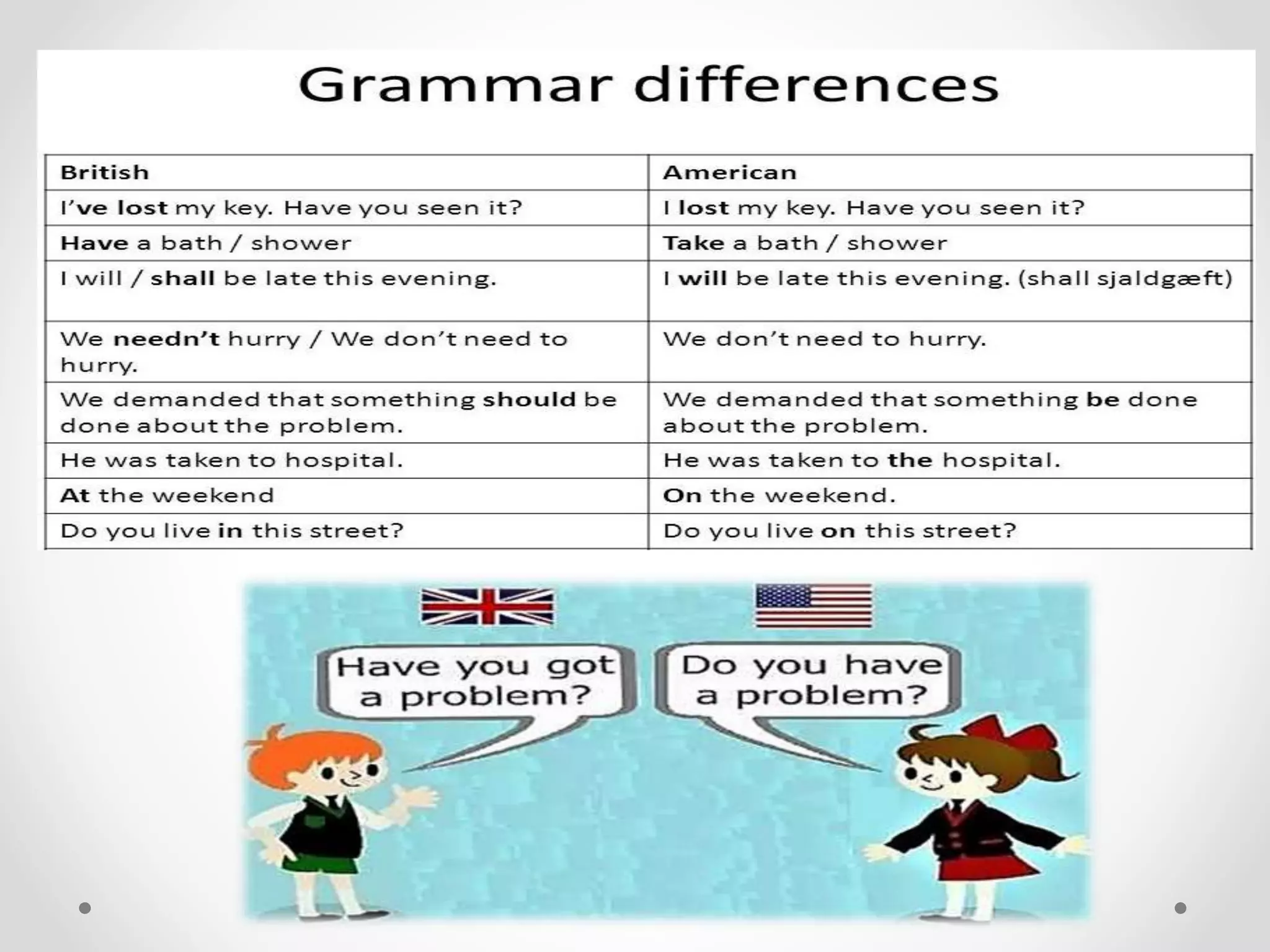
As opposed toa national dialect, a regional dialect is spoken in one
particular area of a country. In the USA, regional dialects include Appalachian,
New Jersey and Southern English, and in Britain, Cockney, Liverpool English
and 'Geordie' (Newcastle English). . . .
In indonesia like : (Ngapak Javanese, Yogya Javanese).
7
a. French Fries(U.S)
b. Chips (G.B)
8
a. Restroom (U.S)
b. Lavatory (g.B)
9
a. Gas station (U.S)
b. Petrol Station (G.B)
11.
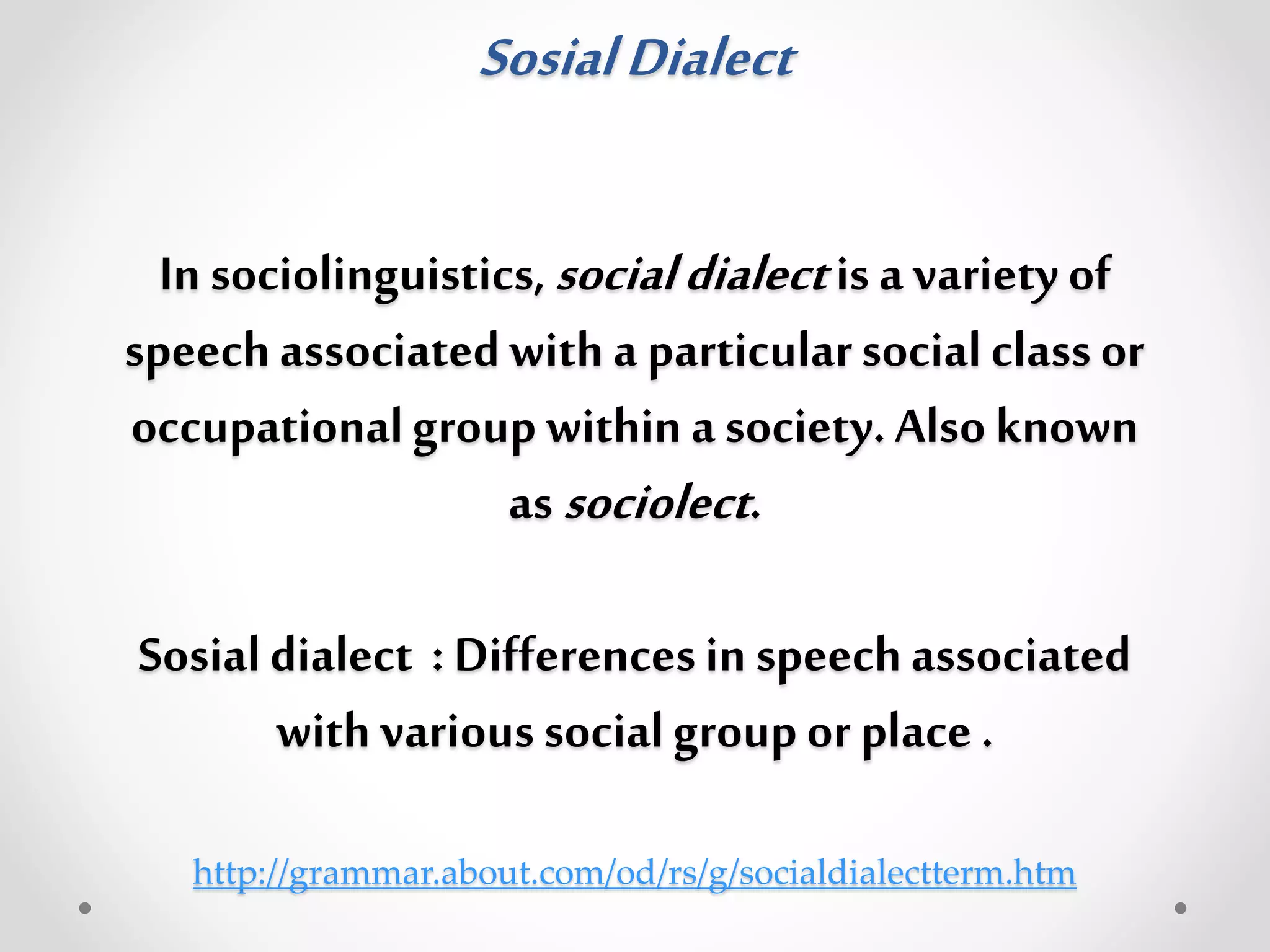
SosialDialect
In sociolinguistics,socialdialectis avariety of
speechassociatedwith a particularsocialclassor
occupationalgroup within a society.Also known
as sociolect.
Sosialdialect : Differencesin speechassociated
with various socialgroupor place.
http://grammar.about.com/od/rs/g/socialdialectterm.htm
12.
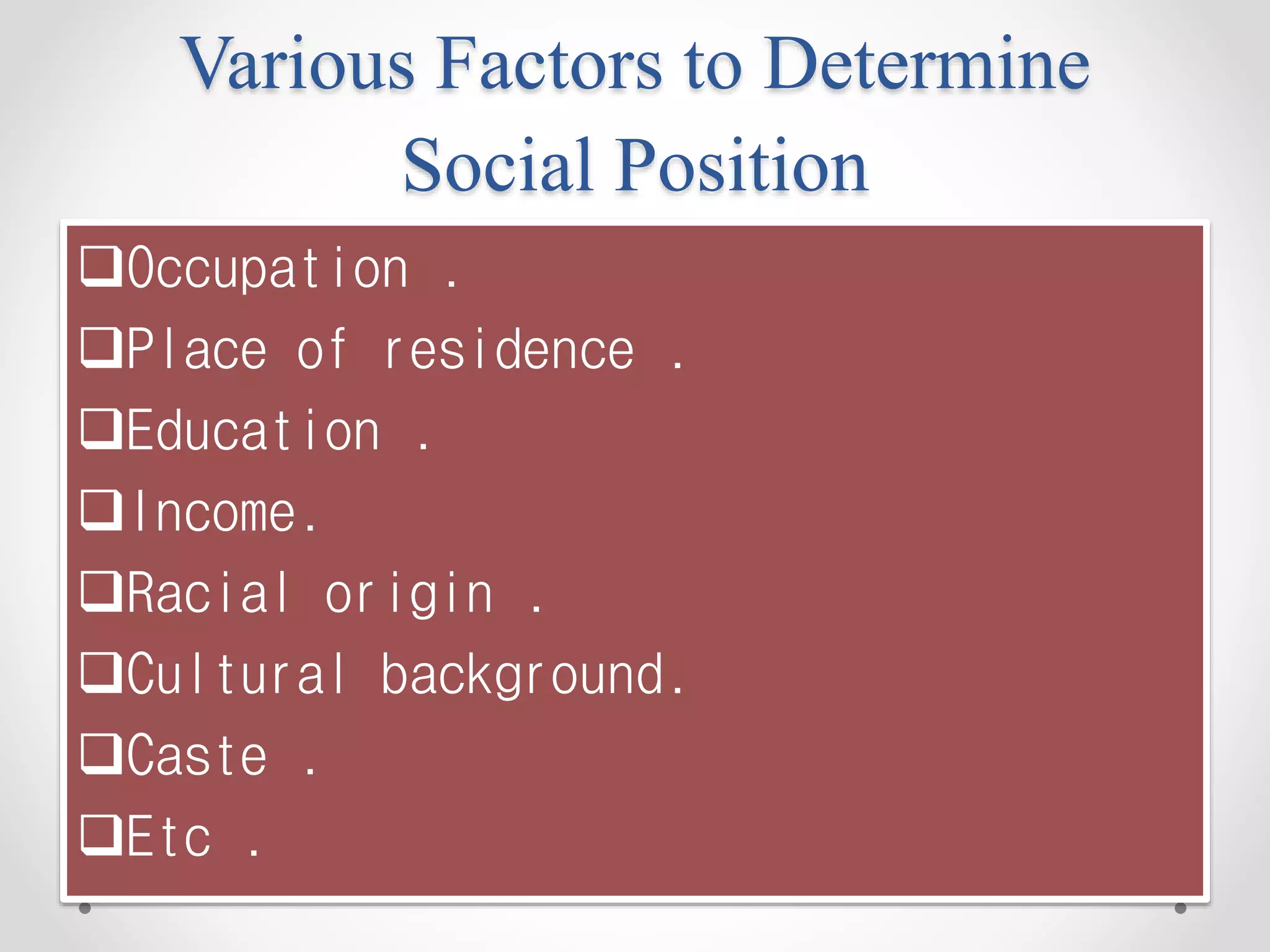
Various Factors toDetermine
Social Position
Occupation .
Place of residence .
Education .
Income.
Racial origin .
Cultural background.
Caste .
Etc .
13.
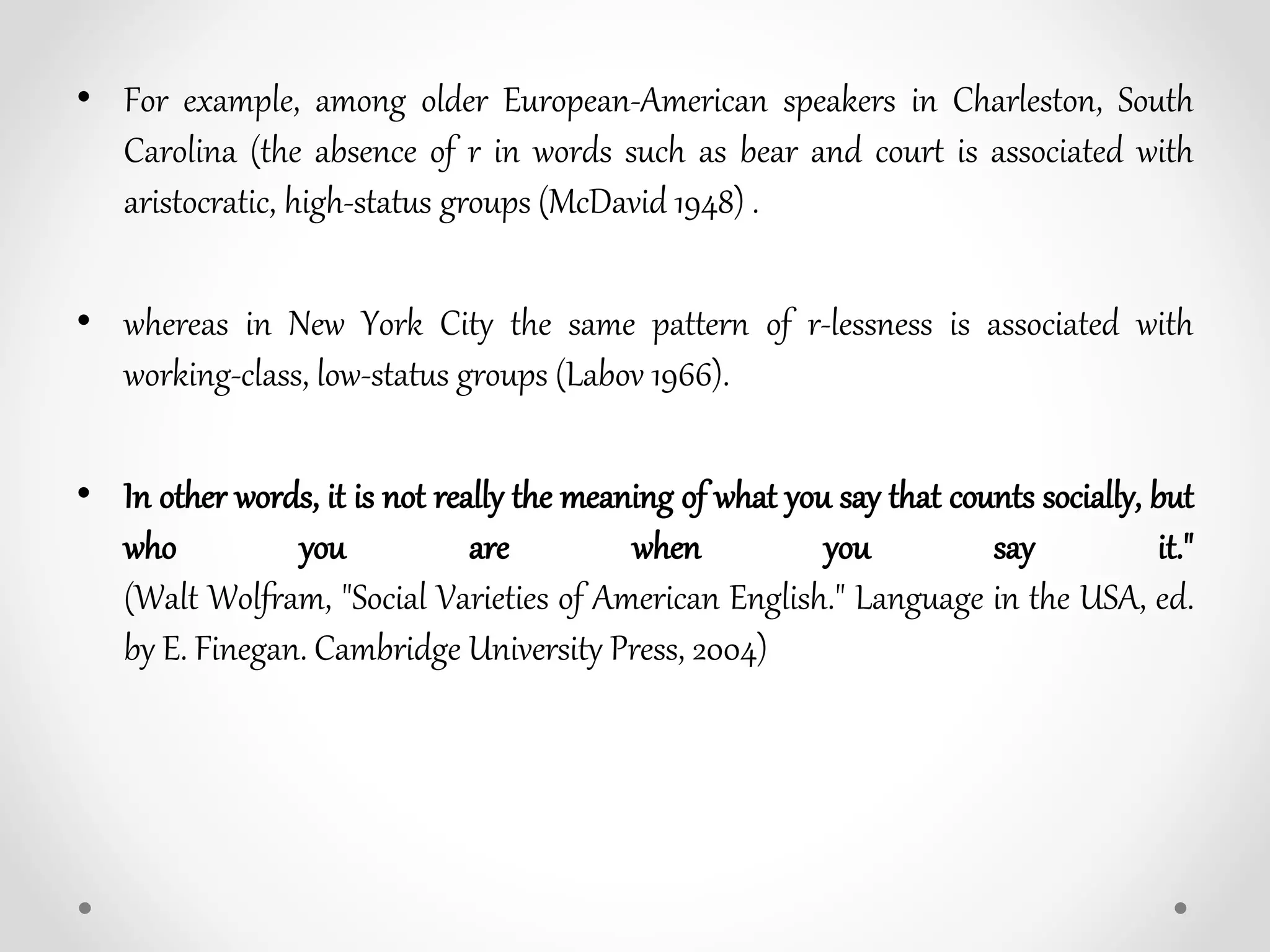
• For example,among older European-American speakers in Charleston, South
Carolina (the absence of r in words such as bear and court is associated with
aristocratic, high-status groups (McDavid 1948) .
• whereas in New York City the same pattern of r-lessness is associated with
working-class, low-status groups (Labov 1966).
• In other words, it is not really the meaning of what you say that counts socially, but
who you are when you say it."
(Walt Wolfram, "Social Varieties of American English." Language in the USA, ed.
by E. Finegan. Cambridge University Press, 2004)
14.
CONCLUSION
• Accents aredistinguished from each other by
pronunciation alone. Different dialects are generally
distinguishable in pronunciation, vocabulary and
grammar.
• Regional dialect are geographically based ; social dialect
originate from social group and depend on a variety of
factor.