Downloaded 539 times

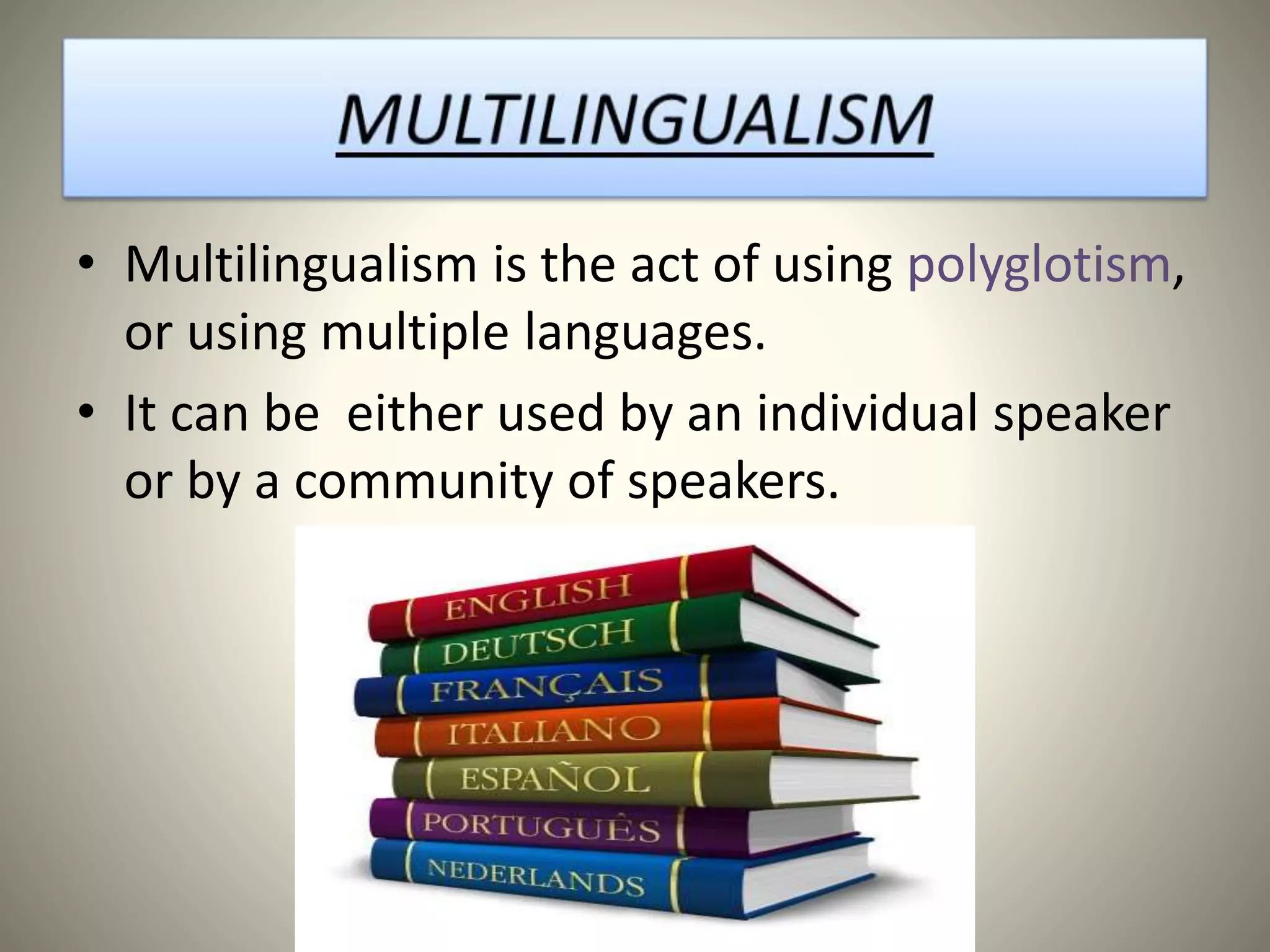


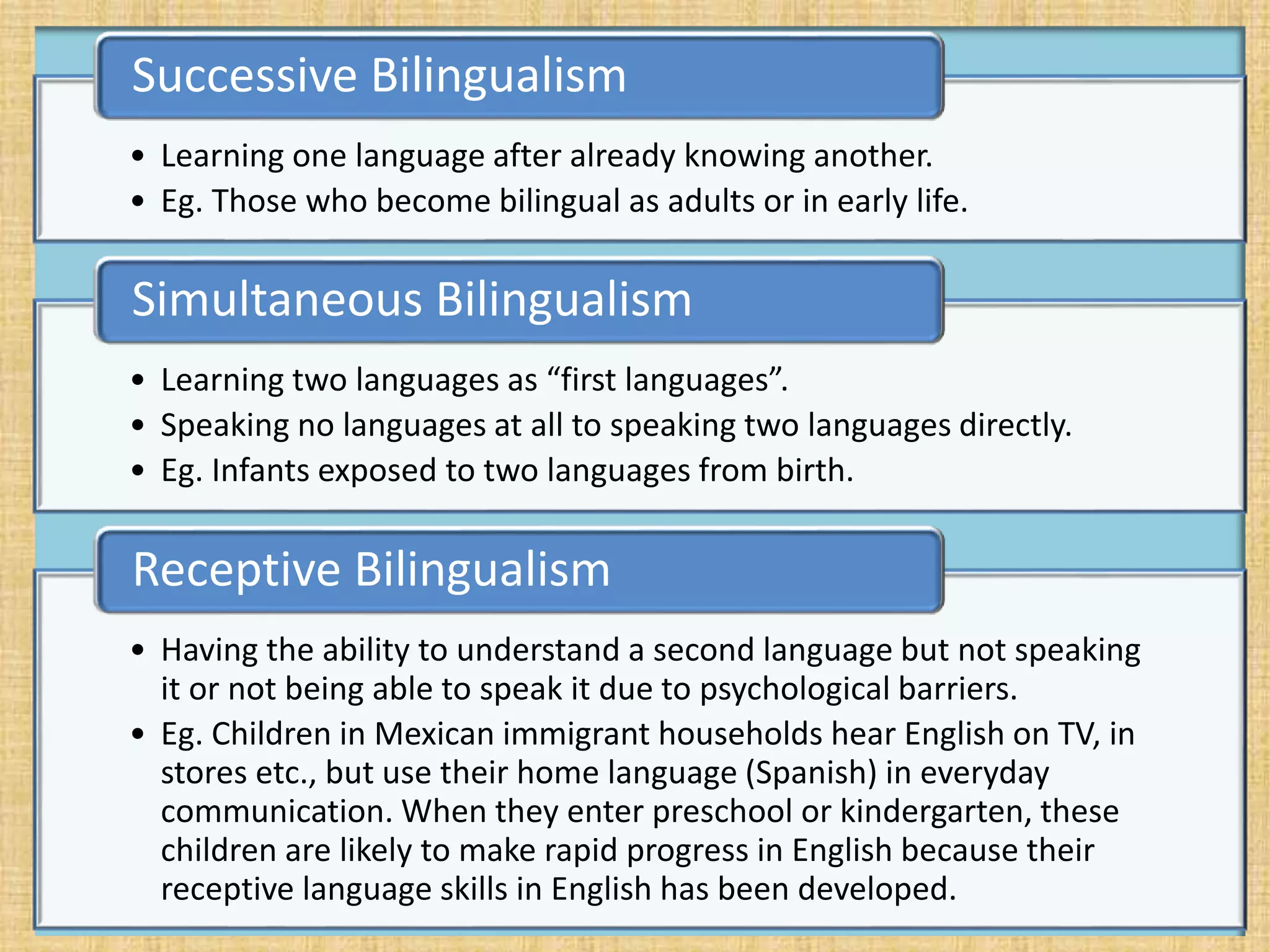

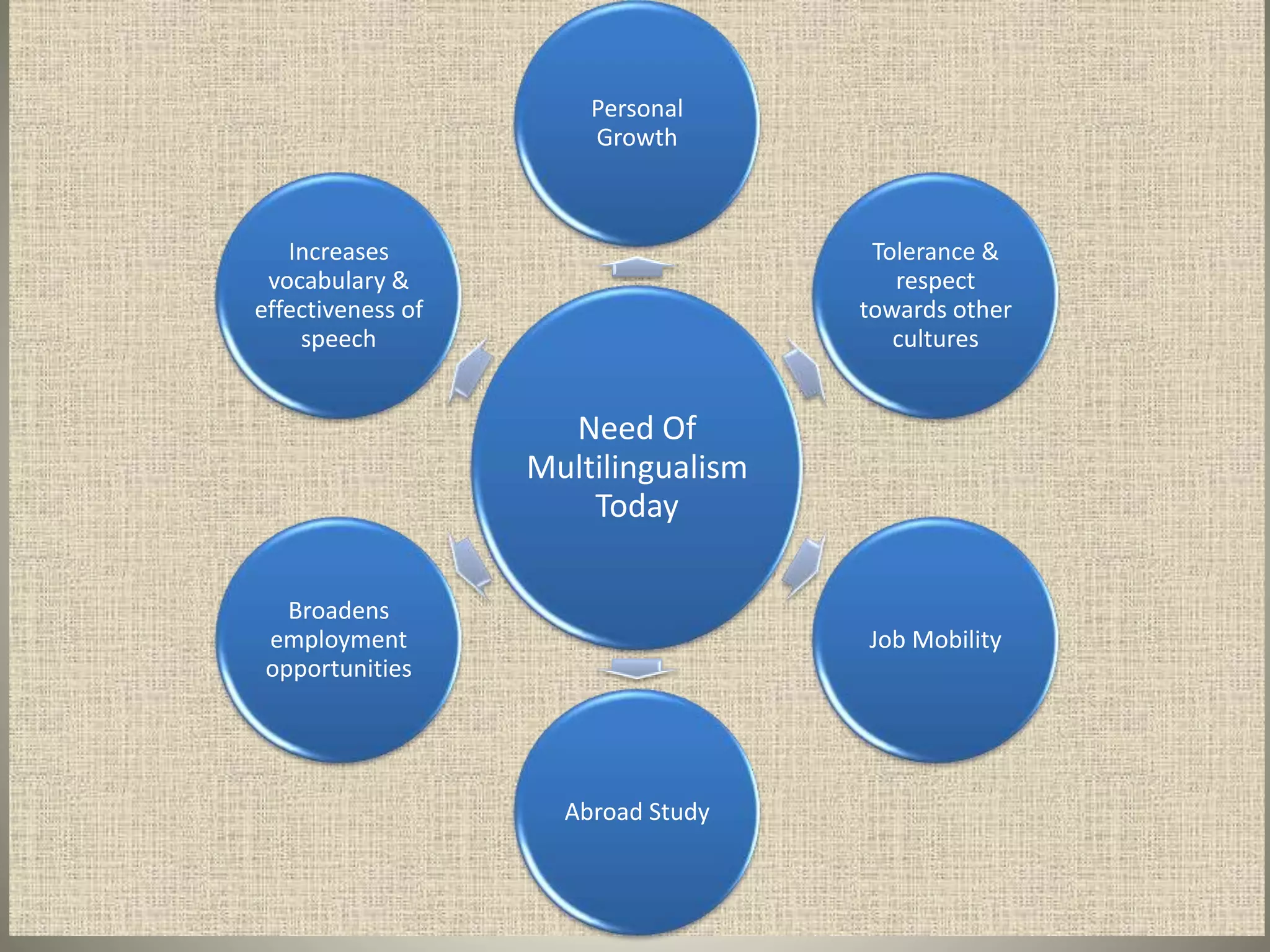


Multilingualism refers to using multiple languages either by an individual or community. There is a debate around how much language knowledge is needed - complete mastery or basic skills. Most multilingual speakers fall in between. Learning a second language can either not interfere or replace the first language. Ways of acquiring languages include successively learning one after another, simultaneously learning two from birth, or receptively understanding a language without speaking it. Benefits of multilingualism include personal growth, tolerance of other cultures, job mobility abroad, increased study opportunities, a broader vocabulary, and more employment opportunities.


![David Dodick[email protected]Bilingualism.docx](https://cdn.slidesharecdn.com/ss_thumbnails/daviddodickemailprotectedbilingualism-230109150017-6c439d90-thumbnail.jpg?width=640&height=640&fit=bounds)


