BIG TICKET
ITEMS FOR
LITERACY
INSTRUCTIONL I S A K I N G , C K E C L I T E R A C Y C O N S U L T A N T
L I S A . K I N G @ C K E C . O R G
SESSION OVERVIEW
• What are the big ticket items in literacy instruction?
• What student and teacher behaviors should I see?
• How do I coach teachers around these behaviors?
“EFFECTIVE TEACHERS MATTER MUCH
MORE THAN CURRICULUM MATERIALS,
PEDAGOGICAL APPROACHES OR PROVEN
PROGRAMS”
RICHARD ALLINGTON, 2001
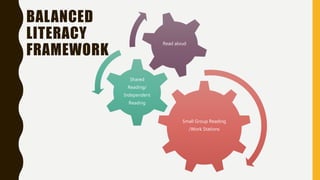
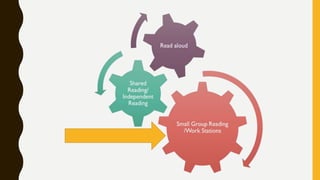
Small Group Reading
/Work Stations
Shared
Reading/
Independent
Reading
Read aloud
BALANCED
LITERACY
FRAMEWORK
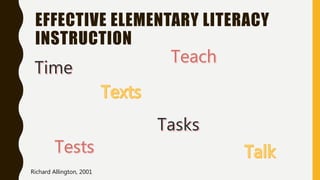
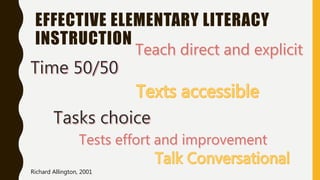
EFFECTIVE ELEMENTARY LITERACY
INSTRUCTION
Richard Allington, 2001
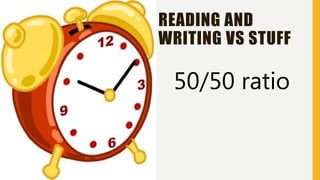
READING AND
WRITING VS STUFF
50/50 ratio
*WORKSHEETS
*TEST PREP
*COPYING
DEFINITIONS
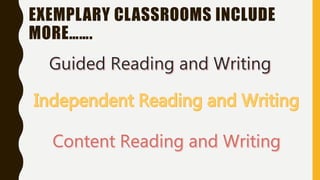
EXEMPLARY CLASSROOMS INCLUDE
MORE…….
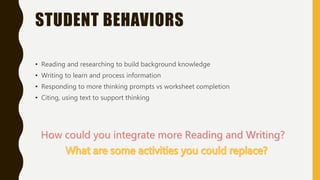
STUDENT BEHAVIORS
• Reading and researching to build background knowledge
• Writing to learn and process information
• Responding to more thinking prompts vs worksheet completion
• Citing, using text to support thinking
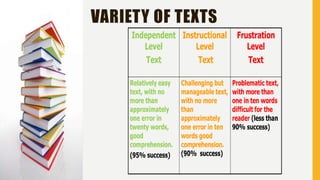
VARIETY OF TEXTS
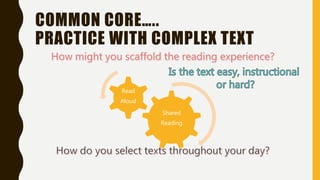
COMMON CORE…..
PRACTICE WITH COMPLEX TEXT
Shared
Reading
Read
Aloud
HOW TEACHERS TEACH
WHAT TEACHERS TEACH
A FEW COACHING QUESTIONS….
• What is the focus for today’s lesson? What standard
are you working toward mastering?
• How did the activities you use support your focus?
• What is an example of ways you scaffolded or
supported individual learners?
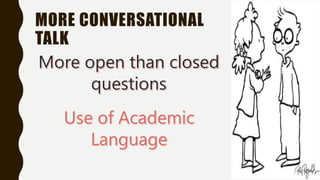
MORE CONVERSATIONAL
TALK
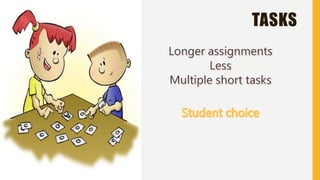
TASKS
A FEW COACHING QUESTIONS
• In what ways are kids given choice and responsibility during the lesson?
• How could you integrate more choice?
• What structures and routines do you teach your students to facilitate productive
learning experiences?
• What is the focus of the project, lesson exercise? What standards does it cover?
• How does this project, activity scaffold students towards mastery of content?
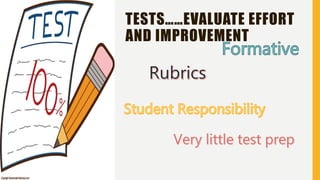
TESTS……EVALUATE EFFORT
AND IMPROVEMENT
A FEW COACHING QUESTIONS
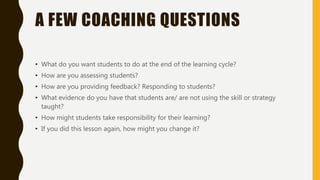
• What do you want students to do at the end of the learning cycle?
• How are you assessing students?
• How are you providing feedback? Responding to students?
• What evidence do you have that students are/ are not using the skill or strategy
taught?
• How might students take responsibility for their learning?
• If you did this lesson again, how might you change it?
EFFECTIVE ELEMENTARY LITERACY
INSTRUCTION
Richard Allington, 2001
“EFFECTIVE TEACHERS MATTER MUCH
MORE THAN CURRICULUM MATERIALS,
PEDAGOGICAL APPROACHES OR PROVEN
PROGRAMS”
RICHARD ALLINGTON, 2001
WEBSITE: WWW.CKEC.ORG
TWITTER: @CKYEC
FACEBOOK: CENTRAL KENTUCKY EDUCATIONAL COOPERATIVE
INSTAGRAM: CENTRAL_KY_EDUCATIONAL_COOP
PINTEREST: CENTRAL KENTUCKY EDUCATIONAL COOPERATIVE
Connect with
CKEC
#CKECguidedreading

Big ticket items for literacy instruction

Editor's Notes

  • #5 Core Instruction 90 minute to 2 hour block of time Read Aloud: Interest, motivation, fluency ,discussion of text, model comprehension strategies, CCSS connection Shared Reading: Whole group using grade level text, teach skills and strategies, students read along, close reading, text dependent questions, CCSS connection Guided Reading Small Group: Differintiated based on student need, data Work Stations: Practice skills only
  • #6 First through fourth grade teachers in 6 states for at least ten full instructional days Observing, video taping and interviewing Significantly better standardized test scores Common features of their classrooms
  • #7 Compared to many classrooms only 10% of day ( including other content areas) 90 minute reading blocks often only include 10 -15 minutes of actual reading and writing text.
  • #8 Critical to developing reading proficiency is extensive practice Consolidate skills and strategie we wan them to develop
  • #9 What we want teachers doing
  • #11 Steady diet of easy and instructional books Some students spend 80% of day in books that are too hard Multi level text for science and ss or content area Motivation is influenced by success.
  • #12 Academic language…… Close Reading of complex text
  • #13 Modeling and explicit teaching of the strategies proficient readers Doug fisher Gradual release Effective approach to literacy achievement ( 2007)
  • #14 Reduced redundancy, precision in their teaching Know the content Know where students are and teach in a scaffolded way
  • #17 How we process information and remember “Reading and writing float on the sea of talk” Users of the language become more proficient and therefore reading and writing become more fluent Using textual evidence, text dependent questions
  • #18 Text choice Everyone selects a text, does a character analysis, timeline of events and summary of how character changed or was impacted by events in the story Present a project at the end for display. Greater ownership and engagement with their work
  • #20 Less achievement based grading Good instruction all year long Students know where they are and what their goal is, goal setting, self reflection Clear articulation of expectations, ongoing effective feedback
  • #22 First through fourth grade teachers in 6 states for at least ten full instructional days Observing, video taping and interviewing Significantly better standardized test scores Common features of their classrooms