


















Using Data to Drive
Guided Reading
Instruction
Lisa King, CKEC Literacy Consultant
Summer 2015
As part of this Professional Learning opportunity, how would you rate
your knowledge and comfort level with assessing and monitoring
Guided Reading progress?
Total Newcomer
Beginner
Intermediate
Advanced
Think of a time
when you learned
a new skill, sport,
ect. What did your
teacher, coach,
instructor do to
improve your
performance?
Today’s Understanding: How to make effective
instructional decisions for Guided Reading
• You will learn to use a variety of tools for data collection.
• You will learn how to analyze data to make instructional decisions
about grouping students, selecting text and lesson focus when
planning Guided Reading.
Improve student performance by 15 -
25 percentile points, 2-4 grade
equivalents
Increase in achievement is four to five
times greater than reduced class size.
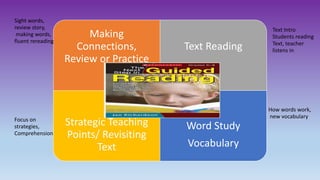
Making
Connections,
Review or Practice
Text Reading
Strategic Teaching
Points/ Revisiting
Text
Word Study
Vocabulary
Guided
Reading
Common Core
• Comprehension
• Foundational Skills
• Vocabulary
Sight words,
review story,
making words,
fluent rereading
Text Intro
Students reading
Text, teacher
listens in
How words work,
new vocabulary
Focus on
strategies,
Comprehension
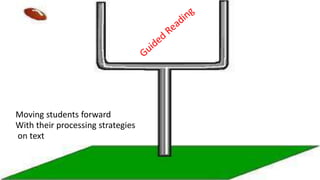
Moving students forward
With their processing strategies
on text
Big Understanding: I can use a variety of
strategies to read and make meaning from a
text.
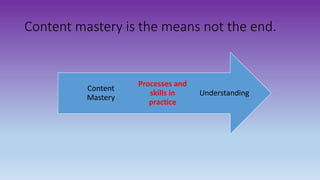
Content mastery is the means not the end.
Understanding
Processes and
skills in
practice
Content
Mastery
Think Photo Album not Snapshot
•How should I group students?
•What text should I use with each group?
•What strategy should I teach next?
Jan Richardson “The Next
Step in GR”
Begin with Assessment
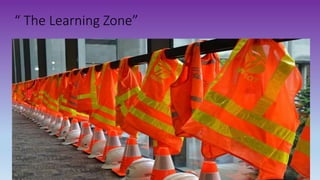
“ The Learning Zone”
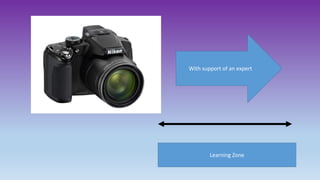
What they can do
independently
With support of an expert
Learning Zone
Acceleration
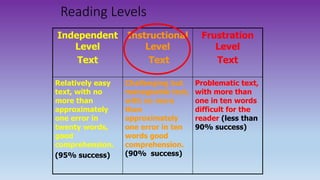
Reading Levels
Independent
Level
Text
Instructional
Level
Text
Frustration
Level
Text
Relatively easy
text, with no
more than
approximately
one error in
twenty words,
good
comprehension.
(95% success)
Challenging but
manageable text,
with no more
than
approximately
one error in ten
words good
comprehension.
(90% success)
Problematic text,
with more than
one in ten words
difficult for the
reader (less than
90% success)
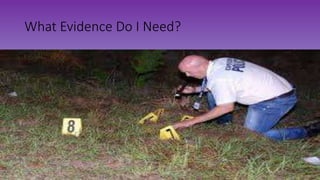
What Evidence Do I Need?
What does the reader know and do at the….
Early Reading Behaviors
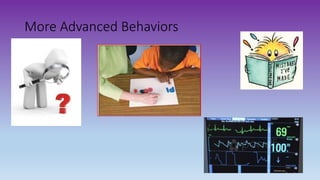
More Advanced Behaviors
Observing Oral Reading Behaviors
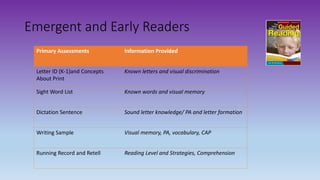
Emergent and Early Readers
Primary Assessments Information Provided
Letter ID (K-1)and Concepts
About Print
Known letters and visual discrimination
Sight Word List Known words and visual memory
Dictation Sentence Sound letter knowledge/ PA and letter formation
Writing Sample Visual memory, PA, vocabulary, CAP
Running Record and Retell Reading Level and Strategies, Comprehension
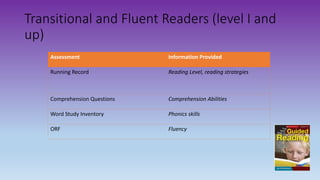
Transitional and Fluent Readers (level I and
up)
Assessment Information Provided
Running Record Reading Level, reading strategies
Comprehension Questions Comprehension Abilities
Word Study Inventory Phonics skills
ORF Fluency
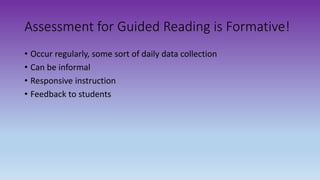
Assessment for Guided Reading is Formative!
• Occur regularly, some sort of daily data collection
• Can be informal
• Responsive instruction
• Feedback to students
Concepts About Print
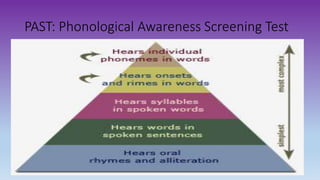
PAST: Phonological Awareness Screening Test
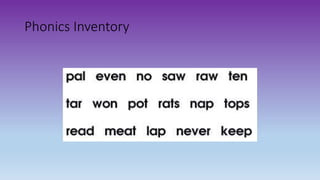
Phonics Inventory
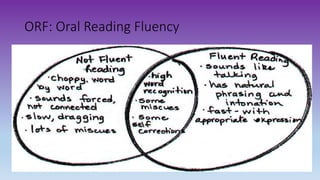
ORF: Oral Reading Fluency
Why Take Running Records?
• Systematic way of collecting evidence of how a child is processing on
text and how well they are directing their knowledge of letter, sound
HO
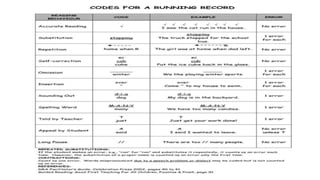
Running Record Conventions
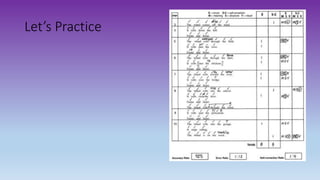
Let’s Practice
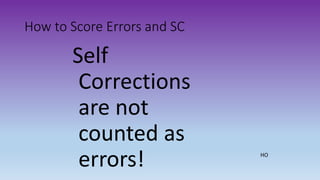
How to Score Errors and SC
Self
Corrections
are not
counted as
errors! HO
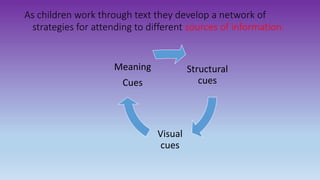
As children work through text they develop a network of
strategies for attending to different sources of information.
Structural
cues
Visual
cues
Meaning
Cues
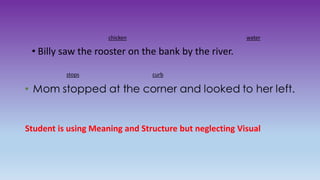
• Billy saw the rooster on the bank by the river.
chicken water
stops curb
Student is using Meaning and Structure but neglecting Visual
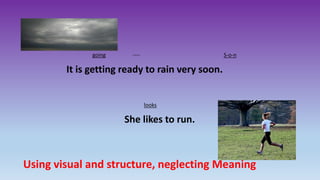
It is getting ready to rain very soon.
going ---- S-o-n
She likes to run.
looks
Using visual and structure, neglecting Meaning
How to Score Errors and SC
• Look at your record form.
• Record MSV in the error column
• Look at error up to the point of
error.
• For SC, analyze both the error
and SC.
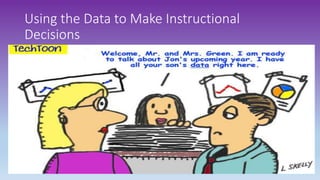
Using the Data to Make Instructional
Decisions
Planning a lesson
• Know the reading level of the group
• Know their strength and weaknesses with strategies
• Choose your focus based on data
• Pick a book that matches reading level and will build on
processing strengths
• Read through the lens of your students
• Plan intro, word work and teaching points
• Reflect: What did the students learn to do today that they
couldn’t do yesterday?
Strategies are
• Unobservable
• In the head processes
• A complex “network”
• They allow the learner to use, transform, relate,
interpret and reproduce information for
communication
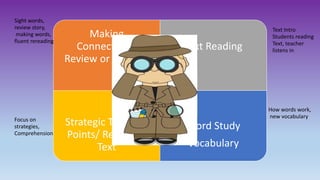
Making
Connections,
Review or Practice
Text Reading
Strategic Teaching
Points/ Revisiting
Text
Word Study
Vocabulary
Guided
Reading
Common Core
• Comprehension
• Foundational Skills
• Vocabulary
Sight words,
review story,
making words,
fluent rereading
Text Intro
Students reading
Text, teacher
listens in
How words work,
new vocabulary
Focus on
strategies,
Comprehension
Using the Lesson Plan
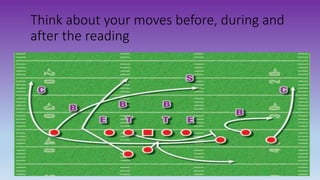
Think about your moves before, during and
after the reading
Using Assessment to Set a Focus for your
Groups
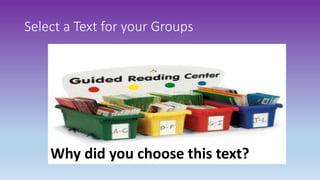
Select a Text for your Groups
Why did you choose this text?
Teacher Prompts are a Call to Action
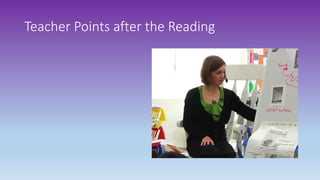
Teacher Points after the Reading
Sight Word Review and Working with
Words
Fluency and Comprehension
Using data to drive guided reading instruction @ CKEC 2015

Using data to drive guided reading instruction @ CKEC 2015

  • 1.
    Using Data toDrive Guided Reading Instruction Lisa King, CKEC Literacy Consultant Summer 2015
  • 2.
    As part ofthis Professional Learning opportunity, how would you rate your knowledge and comfort level with assessing and monitoring Guided Reading progress? Total Newcomer Beginner Intermediate Advanced
  • 3.
    Think of atime when you learned a new skill, sport, ect. What did your teacher, coach, instructor do to improve your performance?
  • 4.
    Today’s Understanding: Howto make effective instructional decisions for Guided Reading • You will learn to use a variety of tools for data collection. • You will learn how to analyze data to make instructional decisions about grouping students, selecting text and lesson focus when planning Guided Reading.
  • 5.
    Improve student performanceby 15 - 25 percentile points, 2-4 grade equivalents
  • 6.
    Increase in achievementis four to five times greater than reduced class size.
  • 7.
    Making Connections, Review or Practice TextReading Strategic Teaching Points/ Revisiting Text Word Study Vocabulary Guided Reading Common Core • Comprehension • Foundational Skills • Vocabulary Sight words, review story, making words, fluent rereading Text Intro Students reading Text, teacher listens in How words work, new vocabulary Focus on strategies, Comprehension
  • 8.
    Moving students forward Withtheir processing strategies on text
  • 9.
    Big Understanding: Ican use a variety of strategies to read and make meaning from a text.
  • 10.
    Content mastery isthe means not the end. Understanding Processes and skills in practice Content Mastery
  • 13.
    Think Photo Albumnot Snapshot
  • 14.
    •How should Igroup students? •What text should I use with each group? •What strategy should I teach next? Jan Richardson “The Next Step in GR” Begin with Assessment
  • 15.
  • 16.
    What they cando independently With support of an expert Learning Zone
  • 17.
  • 18.
    Reading Levels Independent Level Text Instructional Level Text Frustration Level Text Relatively easy text,with no more than approximately one error in twenty words, good comprehension. (95% success) Challenging but manageable text, with no more than approximately one error in ten words good comprehension. (90% success) Problematic text, with more than one in ten words difficult for the reader (less than 90% success)
  • 20.
  • 21.
    What does thereader know and do at the….
  • 22.
  • 23.
  • 24.
  • 25.
    Emergent and EarlyReaders Primary Assessments Information Provided Letter ID (K-1)and Concepts About Print Known letters and visual discrimination Sight Word List Known words and visual memory Dictation Sentence Sound letter knowledge/ PA and letter formation Writing Sample Visual memory, PA, vocabulary, CAP Running Record and Retell Reading Level and Strategies, Comprehension
  • 26.
    Transitional and FluentReaders (level I and up) Assessment Information Provided Running Record Reading Level, reading strategies Comprehension Questions Comprehension Abilities Word Study Inventory Phonics skills ORF Fluency
  • 27.
    Assessment for GuidedReading is Formative! • Occur regularly, some sort of daily data collection • Can be informal • Responsive instruction • Feedback to students
  • 28.
  • 30.
  • 31.
  • 32.
  • 35.
    Why Take RunningRecords? • Systematic way of collecting evidence of how a child is processing on text and how well they are directing their knowledge of letter, sound HO
  • 36.
  • 37.
  • 38.
    How to ScoreErrors and SC Self Corrections are not counted as errors! HO
  • 39.
    As children workthrough text they develop a network of strategies for attending to different sources of information. Structural cues Visual cues Meaning Cues
  • 40.
    • Billy sawthe rooster on the bank by the river. chicken water stops curb Student is using Meaning and Structure but neglecting Visual
  • 41.
    It is gettingready to rain very soon. going ---- S-o-n She likes to run. looks Using visual and structure, neglecting Meaning
  • 42.
    How to ScoreErrors and SC • Look at your record form. • Record MSV in the error column • Look at error up to the point of error. • For SC, analyze both the error and SC.
  • 44.
    Using the Datato Make Instructional Decisions
  • 45.
    Planning a lesson •Know the reading level of the group • Know their strength and weaknesses with strategies • Choose your focus based on data • Pick a book that matches reading level and will build on processing strengths • Read through the lens of your students • Plan intro, word work and teaching points • Reflect: What did the students learn to do today that they couldn’t do yesterday?
  • 46.
    Strategies are • Unobservable •In the head processes • A complex “network” • They allow the learner to use, transform, relate, interpret and reproduce information for communication
  • 49.
    Making Connections, Review or Practice TextReading Strategic Teaching Points/ Revisiting Text Word Study Vocabulary Guided Reading Common Core • Comprehension • Foundational Skills • Vocabulary Sight words, review story, making words, fluent rereading Text Intro Students reading Text, teacher listens in How words work, new vocabulary Focus on strategies, Comprehension
  • 50.
  • 51.
    Think about yourmoves before, during and after the reading
  • 52.
    Using Assessment toSet a Focus for your Groups
  • 53.
    Select a Textfor your Groups Why did you choose this text?
  • 54.
    Teacher Prompts area Call to Action
  • 55.
  • 56.
    Sight Word Reviewand Working with Words
  • 57.