BEHAVIORAL
COMPETENCIES
A competency framework defines the attributes and ways of strategically implement the process which are required for the
organisational growth.
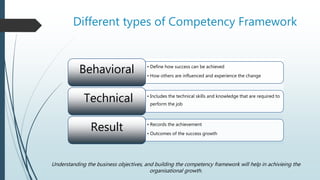
Different types of Competency Framework
• Define how success can be achieved
• How others are influenced and experience the change
Behavioral
• Includes the technical skills and knowledge that are required to
perform the job
Technical
• Records the achievement
• Outcomes of the success growth
Result
Understanding the business objectives, and building the competency framework will help in achivieing the
organisational growth.
Categories
Behavioral
Competencies
Individual
competencies
Interpersonal
competencies
Motivational
competencie
s
Managerial
competencies
Analytical
competencies
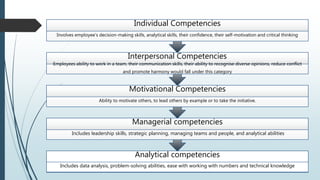
Analytical competencies
Includes data analysis, problem-solving abilities, ease with working with numbers and technical knowledge
Managerial competencies
Includes leadership skills, strategic planning, managing teams and people, and analytical abilities
Motivational Competencies
Ability to motivate others, to lead others by example or to take the initiative.
Interpersonal Competencies
Employees ability to work in a team, their communication skills, their ability to recognise diverse opinions, reduce conflict
and promote harmony would fall under this category
Individual Competencies
Involves employee’s decision-making skills, analytical skills, their confidence, their self-motivation and critical thinking
Implementation
 Communication: a common language to communicate with employees on how
change will be impacting their job role and why it is important to the organisation
 Selection: recruit right candidate with compentencies that are required to perform
specific job
 Development: use appraisal strategies and create a plan for employees development
in the areas that they change their career path or improve on the skills which is most
necessarily required for the job
 Evaluate staff potential: measure potential candidates abilities to perform the job for
higher level position
 Career Improvement: improve on logical career progression and help staff identify
transferrable skills.
THANK YOU
PRESENTED BY: SUMA VENKATAGIRI

Behavioral competencies

  • 1.
    BEHAVIORAL COMPETENCIES A competency frameworkdefines the attributes and ways of strategically implement the process which are required for the organisational growth.
  • 2.
    Different types ofCompetency Framework • Define how success can be achieved • How others are influenced and experience the change Behavioral • Includes the technical skills and knowledge that are required to perform the job Technical • Records the achievement • Outcomes of the success growth Result Understanding the business objectives, and building the competency framework will help in achivieing the organisational growth.
  • 3.
  • 4.
    Analytical competencies Includes dataanalysis, problem-solving abilities, ease with working with numbers and technical knowledge Managerial competencies Includes leadership skills, strategic planning, managing teams and people, and analytical abilities Motivational Competencies Ability to motivate others, to lead others by example or to take the initiative. Interpersonal Competencies Employees ability to work in a team, their communication skills, their ability to recognise diverse opinions, reduce conflict and promote harmony would fall under this category Individual Competencies Involves employee’s decision-making skills, analytical skills, their confidence, their self-motivation and critical thinking
  • 5.
    Implementation  Communication: acommon language to communicate with employees on how change will be impacting their job role and why it is important to the organisation  Selection: recruit right candidate with compentencies that are required to perform specific job  Development: use appraisal strategies and create a plan for employees development in the areas that they change their career path or improve on the skills which is most necessarily required for the job  Evaluate staff potential: measure potential candidates abilities to perform the job for higher level position  Career Improvement: improve on logical career progression and help staff identify transferrable skills.
  • 6.
    THANK YOU PRESENTED BY:SUMA VENKATAGIRI