Personal and Managerial
Effectiveness
Introduction
• The term 'managerial effectiveness' could mean
achievement of organizational goals, increase in
productivity, profit, workers' satisfaction, growth,
diversification etc. Managerial effectiveness aims at
optimum allocation and utilization of scarce
organizational resources in order to achieve the goals
at minimum cost. Managerial effectives means
performing managerial activities effectively.
An effective manager performs activities effectively
and efficiently. This
means doing the right things and doing these right.
Many people believe that
successful managers are intelligent, imaginative and
knowledgeable.
However, only effectiveness translates the intelligence,
imagination and
knowledge into results and makes a manager
successful.
Qualities of
An Effective
Manager
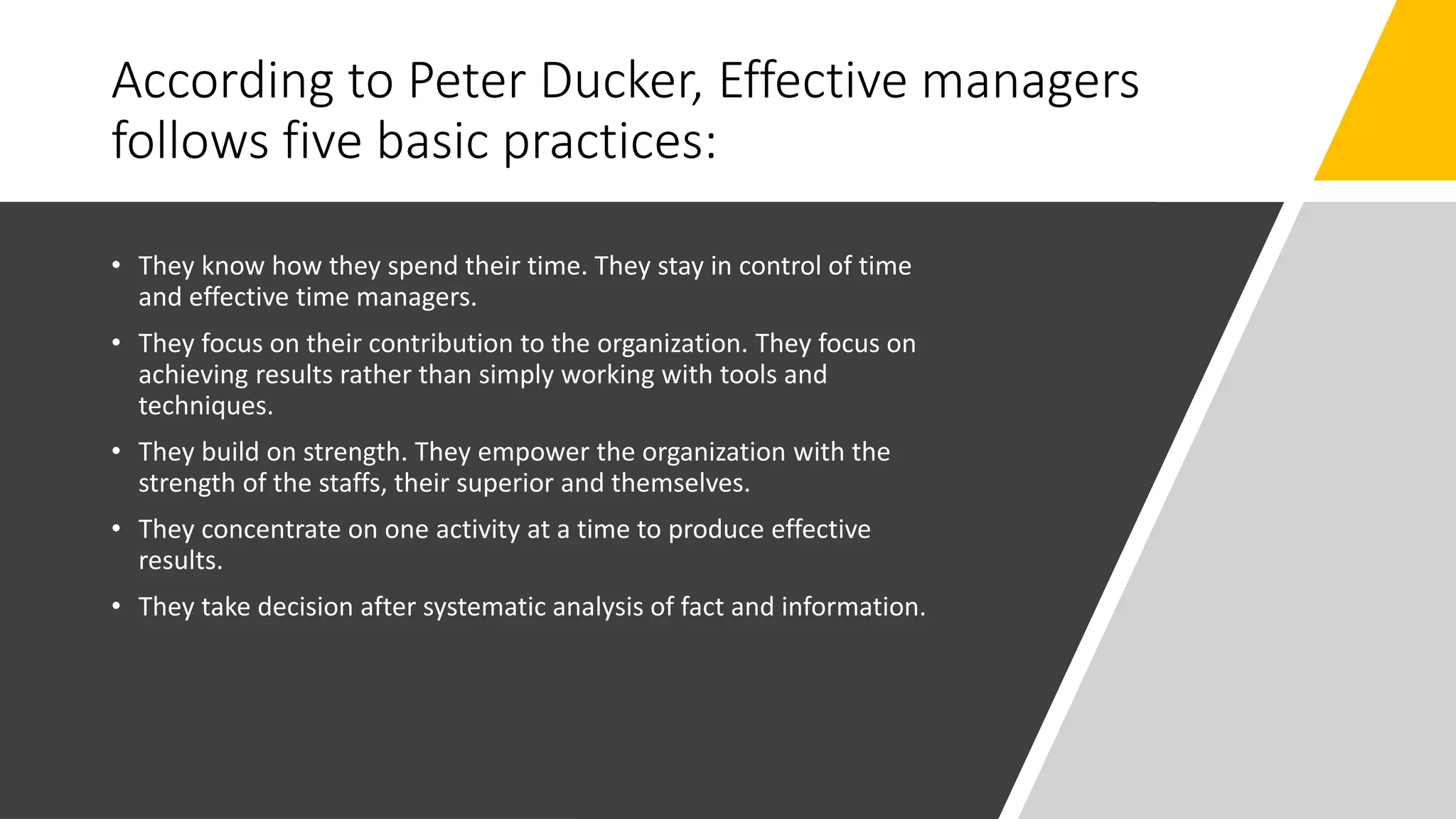
According to Peter Ducker, Effective managers
follows five basic practices:
• They know how they spend their time. They stay in control of time
and effective time managers.
• They focus on their contribution to the organization. They focus on
achieving results rather than simply working with tools and
techniques.
• They build on strength. They empower the organization with the
strength of the staffs, their superior and themselves.
• They concentrate on one activity at a time to produce effective
results.
• They take decision after systematic analysis of fact and information.
Managerial Skills
• CONCEPTUAL SKILLS
• HUMAN RELATIONSHIP SKILLS
• TECHNICAL SKILLS
• MANAGERIAL SKILLS REQUIRED FOR A MANAGER
• INTERPERSONAL SKILLS
• ORGANIZATIONAL CONTEXT
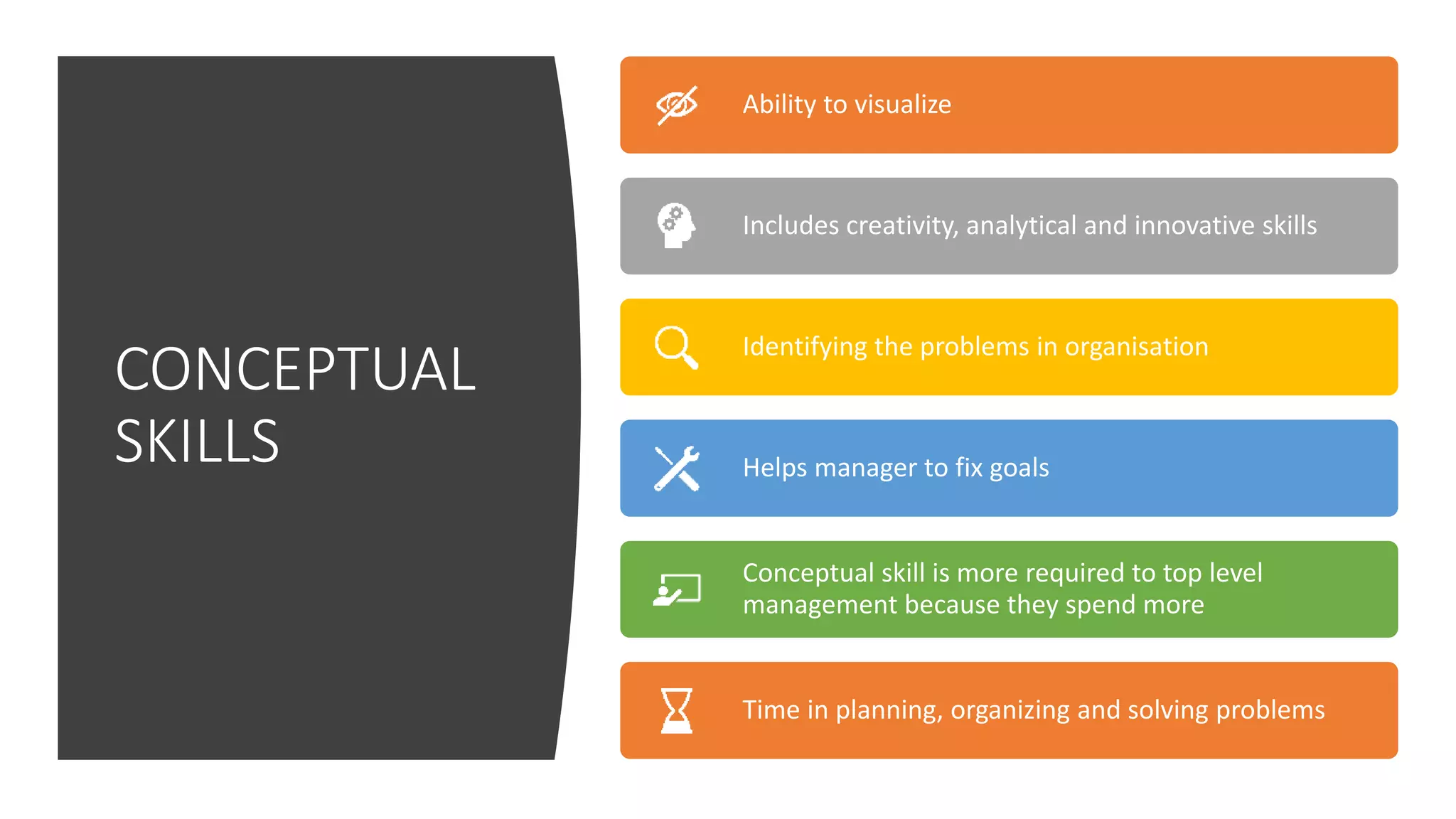
CONCEPTUAL
SKILLS
Ability to visualize
Includes creativity, analytical and innovative skills
Identifying the problems in organisation
Helps manager to fix goals
Conceptual skill is more required to top level
management because they spend more
Time in planning, organizing and solving problems
HUMAN
RELATIONSHIP
SKILLS
• Also known as interpersonal skill
• Ability to work with people
• Helps managers to understand, communicate
and work with others
• It helps the managers to motivate, lead and
develop team spirit
• Required at all level of management
• Required by managers to interact
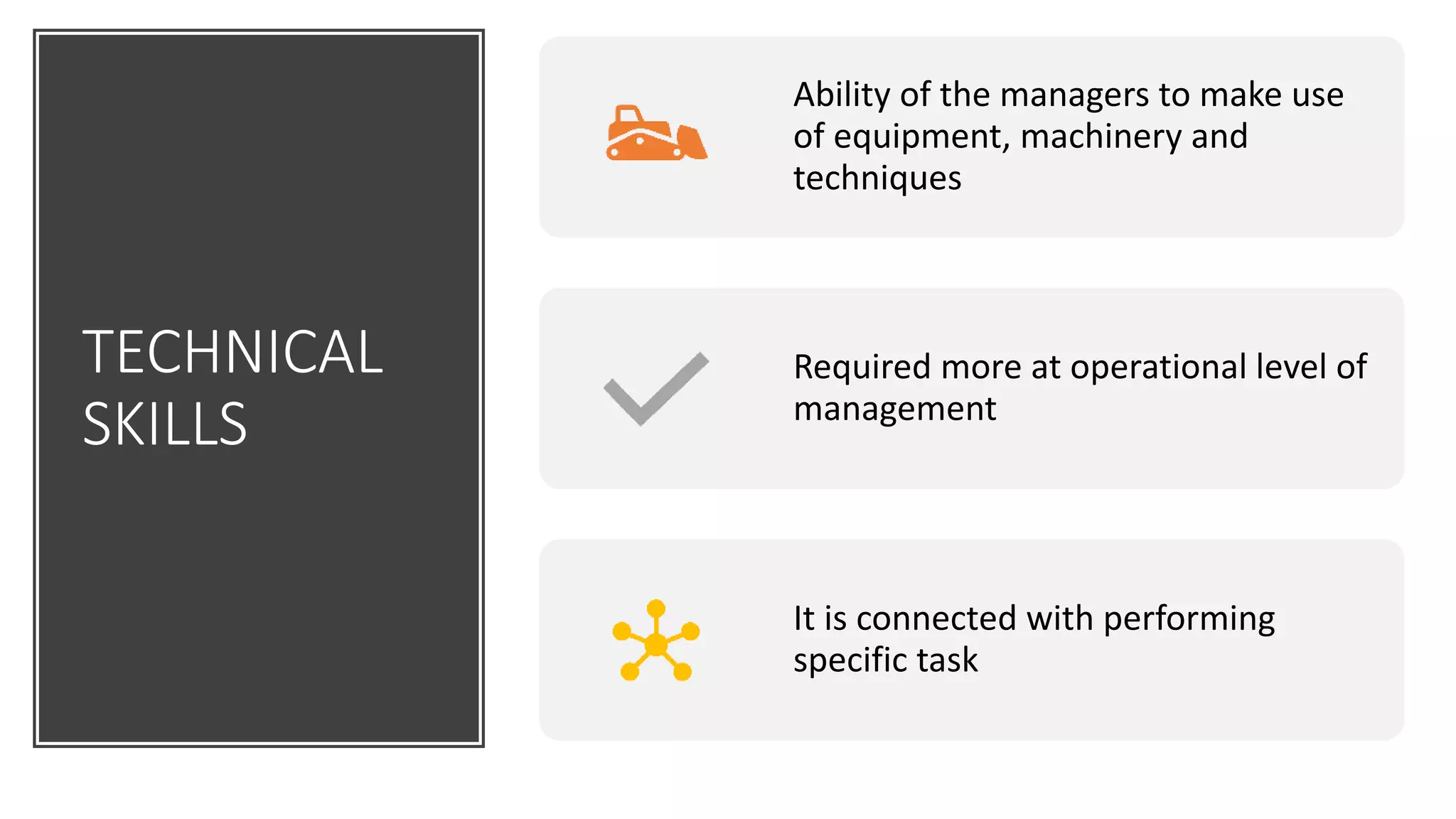
TECHNICAL
SKILLS
Ability of the managers to make use
of equipment, machinery and
techniques
Required more at operational level of
management
It is connected with performing
specific task
MANAGERIAL SKILLS REQUIRED FOR A
MANAGER
Communication
skills
Leadership
skills
Decision
making skills
Problem
solving skills
Administrative
skills
INTERPERSONAL SKILLS
• Interpersonal skills are also crucial soft skill Required for
effective social communication.
• Johnson defines interpersonal skills as the “ sum total of
your ability to interact with other people”.
• Characteristics traits like Manners, attitude, courtesy,
habits, behavior and appearance which helps us to
communicate and maintain relationship with others
ORGANIZATIONAL
CONTEXT
The organizational
context of how
interpersonal skills
are used can be
shown by the vast
number of
interpersonal
interaction.
Interpersonal skills while
working
• Effective relationships within
the organization
• Effective relationship with
suppliers
• Effective relationship with
competitors
Internally-
• In teams
• Across teams
• Within and between
departments and business
units
Externally-
• With suppliers
• With customers
Thank you

Managerial effectiveness

  • 1.
  • 2.
    Introduction • The term'managerial effectiveness' could mean achievement of organizational goals, increase in productivity, profit, workers' satisfaction, growth, diversification etc. Managerial effectiveness aims at optimum allocation and utilization of scarce organizational resources in order to achieve the goals at minimum cost. Managerial effectives means performing managerial activities effectively. An effective manager performs activities effectively and efficiently. This means doing the right things and doing these right. Many people believe that successful managers are intelligent, imaginative and knowledgeable. However, only effectiveness translates the intelligence, imagination and knowledge into results and makes a manager successful.
  • 3.
  • 4.
    According to PeterDucker, Effective managers follows five basic practices: • They know how they spend their time. They stay in control of time and effective time managers. • They focus on their contribution to the organization. They focus on achieving results rather than simply working with tools and techniques. • They build on strength. They empower the organization with the strength of the staffs, their superior and themselves. • They concentrate on one activity at a time to produce effective results. • They take decision after systematic analysis of fact and information.
  • 5.
    Managerial Skills • CONCEPTUALSKILLS • HUMAN RELATIONSHIP SKILLS • TECHNICAL SKILLS • MANAGERIAL SKILLS REQUIRED FOR A MANAGER • INTERPERSONAL SKILLS • ORGANIZATIONAL CONTEXT
  • 6.
    CONCEPTUAL SKILLS Ability to visualize Includescreativity, analytical and innovative skills Identifying the problems in organisation Helps manager to fix goals Conceptual skill is more required to top level management because they spend more Time in planning, organizing and solving problems
  • 7.
    HUMAN RELATIONSHIP SKILLS • Also knownas interpersonal skill • Ability to work with people • Helps managers to understand, communicate and work with others • It helps the managers to motivate, lead and develop team spirit • Required at all level of management • Required by managers to interact
  • 8.
    TECHNICAL SKILLS Ability of themanagers to make use of equipment, machinery and techniques Required more at operational level of management It is connected with performing specific task
  • 9.
    MANAGERIAL SKILLS REQUIREDFOR A MANAGER Communication skills Leadership skills Decision making skills Problem solving skills Administrative skills
  • 10.
    INTERPERSONAL SKILLS • Interpersonalskills are also crucial soft skill Required for effective social communication. • Johnson defines interpersonal skills as the “ sum total of your ability to interact with other people”. • Characteristics traits like Manners, attitude, courtesy, habits, behavior and appearance which helps us to communicate and maintain relationship with others
  • 11.
    ORGANIZATIONAL CONTEXT The organizational context ofhow interpersonal skills are used can be shown by the vast number of interpersonal interaction. Interpersonal skills while working • Effective relationships within the organization • Effective relationship with suppliers • Effective relationship with competitors Internally- • In teams • Across teams • Within and between departments and business units Externally- • With suppliers • With customers
  • 12.