International
OPEN

Journal

ACCESS

Of Modern Engineering Research (IJMER)

Seismic Pounding Effect in Framed Structures
N. N. Gulhane1, Prof. M. V. Mohod2
1

2

Post graduate student in structural engineering,
Department of Civil engineering, Prof. Ram Meghe Institute of Technology and Research Badnera, Sant Gadge
Baba Amravati University, Amravati, Maharashtra 444602 India

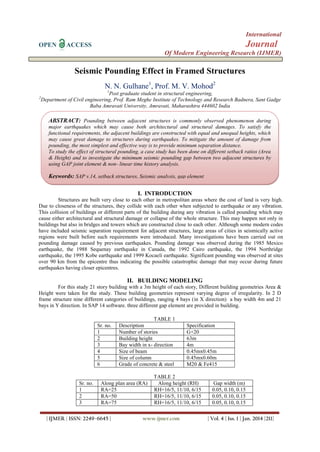
ABSTRACT: Pounding between adjacent structures is commonly observed phenomenon during
major earthquakes which may cause both architectural and structural damages. To satisfy the
functional requirements, the adjacent buildings are constructed with equal and unequal heights, which
may cause great damage to structures during earthquakes. To mitigate the amount of damage from
pounding, the most simplest and effective way is to provide minimum separation distance.
To study the effect of structural pounding, a case study has been done on different setback ratios (Area
& Height) and to investigate the minimum seismic pounding gap between two adjacent structures by
using GAP joint element & non- linear time history analysis.

Keywords: SAP v.14, setback structures, Seismic analysis, gap element
I. INTRODUCTION
Structures are built very close to each other in metropolitan areas where the cost of land is very high.
Due to closeness of the structures, they collide with each other when subjected to earthquake or any vibration.
This collision of buildings or different parts of the building during any vibration is called pounding which may
cause either architectural and structural damage or collapse of the whole structure. This may happen not only in
buildings but also in bridges and towers which are constructed close to each other. Although some modern codes
have included seismic separation requirement for adjacent structures, large areas of cities in seismically active
regions were built before such requirements were introduced. Many investigations have been carried out on
pounding damage caused by previous earthquakes. Pounding damage was observed during the 1985 Mexico
earthquake, the 1988 Sequenay earthquake in Canada, the 1992 Cairo earthquake, the 1994 Northridge
earthquake, the 1995 Kobe earthquake and 1999 Kocaeli earthquake. Significant pounding was observed at sites
over 90 km from the epicentre thus indicating the possible catastrophic damage that may occur during future
earthquakes having closer epicentres.

II. BUILDING MODELING
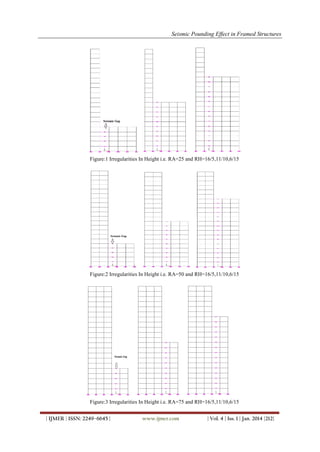
For this study 21 story building with a 3m height of each story, Different building geometries Area &
Height were taken for the study. These building geometries represent varying degree of irregularity. In 2 D
frame structure nine different categories of buildings, ranging 4 bays (in X direction) a bay width 4m and 21
bays in Y direction. In SAP 14 software. three different gap element are provided in building.

Sr. no.
1
2
3
4
5
6

Sr. no.
1
2
3

TABLE 1
Description
Number of stories
Building height
Bay width in x- direction
Size of beam
Size of column
Grade of concrete & steel

Along plan area (RA)
RA=25
RA=50
RA=75

| IJMER | ISSN: 2249–6645 |

Specification
G+20
63m
4m
0.45mx0.45m
0.45mx0.60m
M20 & Fe415

TABLE 2
Along height (RH)
RH=16/5, 11/10, 6/15

www.ijmer.com

Gap width (m)
0.05, 0.10, 0.15
0.05, 0.10, 0.15
0.05, 0.10, 0.15
| Vol. 4 | Iss. 1 | Jan. 2014 |211|
Seismic Pounding Effect in Framed Structures

Figure:1 Irregularities In Height i.e. RA=25 and RH=16/5,11/10,6/15

Figure:2 Irregularities In Height i.e. RA=50 and RH=16/5,11/10,6/15

Figure:3 Irregularities In Height i.e. RA=75 and RH=16/5,11/10,6/15
| IJMER | ISSN: 2249–6645 |

www.ijmer.com

| Vol. 4 | Iss. 1 | Jan. 2014 |212|
Seismic Pounding Effect in Framed Structures
III. RESULTS AND DISCUSSION
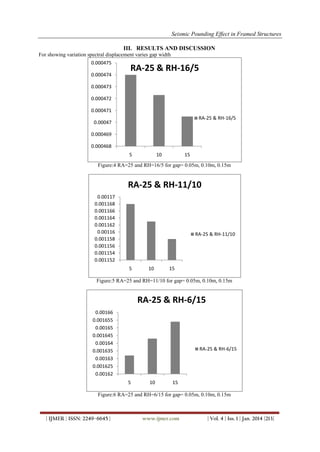
For showing variation spectral displacement varies gap width
0.000475
0.000474

RA-25 & RH-16/5

0.000473
0.000472
0.000471
RA-25 & RH-16/5

0.00047
0.000469
0.000468
5

10

15

Figure:4 RA=25 and RH=16/5 for gap= 0.05m, 0.10m, 0.15m

RA-25 & RH-11/10
0.00117
0.001168
0.001166
0.001164
0.001162
0.00116
0.001158
0.001156
0.001154
0.001152

RA-25 & RH-11/10

5

10

15

Figure:5 RA=25 and RH=11/10 for gap= 0.05m, 0.10m, 0.15m

RA-25 & RH-6/15
0.00166
0.001655
0.00165
0.001645
0.00164
0.001635
0.00163
0.001625
0.00162

RA-25 & RH-6/15

5

10

15

Figure:6 RA=25 and RH=6/15 for gap= 0.05m, 0.10m, 0.15m

| IJMER | ISSN: 2249–6645 |

www.ijmer.com

| Vol. 4 | Iss. 1 | Jan. 2014 |213|
Seismic Pounding Effect in Framed Structures
0.000489

RA-50 & RH-16/5

0.000488
0.000487
0.000486
0.000485

RA-50 & RH-16/5

0.000484
0.000483
0.000482
5

10

15

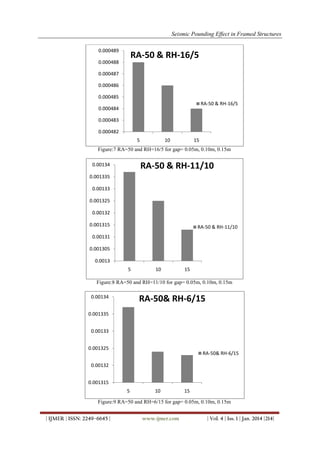
Figure:7 RA=50 and RH=16/5 for gap= 0.05m, 0.10m, 0.15m

RA-50 & RH-11/10

0.00134
0.001335
0.00133
0.001325
0.00132
0.001315

RA-50 & RH-11/10

0.00131
0.001305
0.0013
5

10

15

Figure:8 RA=50 and RH=11/10 for gap= 0.05m, 0.10m, 0.15m

RA-50& RH-6/15

0.00134
0.001335
0.00133
0.001325

RA-50& RH-6/15

0.00132
0.001315
5

10

15

Figure:9 RA=50 and RH=6/15 for gap= 0.05m, 0.10m, 0.15m
| IJMER | ISSN: 2249–6645 |

www.ijmer.com

| Vol. 4 | Iss. 1 | Jan. 2014 |214|
Seismic Pounding Effect in Framed Structures

RA-75 & RH-16/5

0.000516
0.000514
0.000512
0.00051
0.000508
0.000506

RA-75 & RH-16/5

0.000504
0.000502
0.0005
0.000498
5

10

15

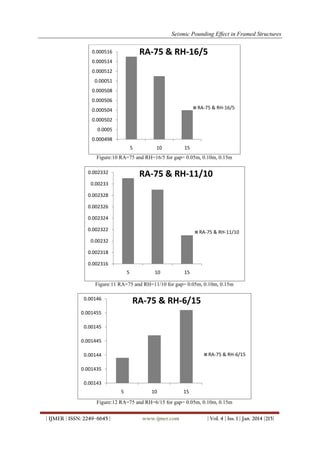
Figure:10 RA=75 and RH=16/5 for gap= 0.05m, 0.10m, 0.15m

RA-75 & RH-11/10

0.002332
0.00233
0.002328
0.002326
0.002324
0.002322

RA-75 & RH-11/10

0.00232
0.002318
0.002316
5

10

15

Figure:11 RA=75 and RH=11/10 for gap= 0.05m, 0.10m, 0.15m

RA-75 & RH-6/15

0.00146
0.001455
0.00145
0.001445

RA-75 & RH-6/15

0.00144
0.001435
0.00143
5

10

15

Figure:12 RA=75 and RH=6/15 for gap= 0.05m, 0.10m, 0.15m
| IJMER | ISSN: 2249–6645 |

www.ijmer.com

| Vol. 4 | Iss. 1 | Jan. 2014 |215|
Seismic Pounding Effect in Framed Structures
Time history results clearly depict the need of seismic gap between adjoining structures. The initial models
of RA=25%, RA=75% variation along the height shows the need of seismic gap between the range 5cm to 15cm.
whereas for RA=50% and variation along height a seismic gap between 5cm to 10cm is suggested.

IV. CONCLUSIONS
The analytical studies involved design of different building geometries were taken for the study .the
building geometries represent varying degree of irregularity or amount of setback.
Following conclusion can be draw from the obtaining result,
1) when RA=25,75 and RH=16/5,11/10 in that case response linearly increases then seismic gap width 15 cm have
found to be sufficient. RA=25, 75 and RH=6/15 in that case seismic gap width more than 15 cm is needed.
2) RA=50 and RH=16/5,11/10 is show similar variation in seismic gap width 15 cm have found to be sufficient. But
for RA=50 and RH=6/15 the seismic gap width 10 cm is sufficient.

REFERENCES
[1].
[2].
[3].
[4].
[5].
[6].
[7].
[8].
[9].
[10].
[11].

IS 1893 (Part 1) : 2002 Indian Standard Criteria for Earthquake Resistant Design of Structures, Part 1 General Provisions
and Buildings, (Fifth Revision).
IS 456 : 2000 Indian Standard Plain and Reinforced Concrete Code of Practice ( Fourth Revision)
I. J. Sharma “Seismic pounding effect in buildings” Thesis in national institute of technology Rourkela
4.Shehata E.Abdel Raheem Seismic Pounding between Adjacent Building Structures Electronic Journal of Structural
Engineering, 6 (2006)
H. Shakib and M. pirizade Seismic analysis of setback building by using probabilistic approach method- (ASCE)ST.1943
6.Rajaram Chenna, Pradeep Kumar Ramancharla “Three Dimensional Modeling Of Pounding Between Adjacent
Building” Indian Concrete Journal Report No: IIIT/TR/2012/-1
7.Robert Jankowski ” Non-linear Modelling of Earthquake Induced Pounding of Buildings published on ICTAM, 15-21
August 2004, Warsaw, Poland
8. G. L. Cole, R.P.Dhakal, A.J.Carr & D.K. Bull Building pounding state of the art: Identifying structures vulnerable to
pounding damage. 2010 NZSEE Conference
9.SAP 2000 Nonlinear Version 14 Software Package.
10. SAP2000 Nonlinear Manuals.
11. SAP Video Tutorial.

| IJMER | ISSN: 2249–6645 |

www.ijmer.com

| Vol. 4 | Iss. 1 | Jan. 2014 |216|

Seismic Pounding Effect in Framed Structures

  • 1.
    International OPEN Journal ACCESS Of Modern EngineeringResearch (IJMER) Seismic Pounding Effect in Framed Structures N. N. Gulhane1, Prof. M. V. Mohod2 1 2 Post graduate student in structural engineering, Department of Civil engineering, Prof. Ram Meghe Institute of Technology and Research Badnera, Sant Gadge Baba Amravati University, Amravati, Maharashtra 444602 India ABSTRACT: Pounding between adjacent structures is commonly observed phenomenon during major earthquakes which may cause both architectural and structural damages. To satisfy the functional requirements, the adjacent buildings are constructed with equal and unequal heights, which may cause great damage to structures during earthquakes. To mitigate the amount of damage from pounding, the most simplest and effective way is to provide minimum separation distance. To study the effect of structural pounding, a case study has been done on different setback ratios (Area & Height) and to investigate the minimum seismic pounding gap between two adjacent structures by using GAP joint element & non- linear time history analysis. Keywords: SAP v.14, setback structures, Seismic analysis, gap element I. INTRODUCTION Structures are built very close to each other in metropolitan areas where the cost of land is very high. Due to closeness of the structures, they collide with each other when subjected to earthquake or any vibration. This collision of buildings or different parts of the building during any vibration is called pounding which may cause either architectural and structural damage or collapse of the whole structure. This may happen not only in buildings but also in bridges and towers which are constructed close to each other. Although some modern codes have included seismic separation requirement for adjacent structures, large areas of cities in seismically active regions were built before such requirements were introduced. Many investigations have been carried out on pounding damage caused by previous earthquakes. Pounding damage was observed during the 1985 Mexico earthquake, the 1988 Sequenay earthquake in Canada, the 1992 Cairo earthquake, the 1994 Northridge earthquake, the 1995 Kobe earthquake and 1999 Kocaeli earthquake. Significant pounding was observed at sites over 90 km from the epicentre thus indicating the possible catastrophic damage that may occur during future earthquakes having closer epicentres. II. BUILDING MODELING For this study 21 story building with a 3m height of each story, Different building geometries Area & Height were taken for the study. These building geometries represent varying degree of irregularity. In 2 D frame structure nine different categories of buildings, ranging 4 bays (in X direction) a bay width 4m and 21 bays in Y direction. In SAP 14 software. three different gap element are provided in building. Sr. no. 1 2 3 4 5 6 Sr. no. 1 2 3 TABLE 1 Description Number of stories Building height Bay width in x- direction Size of beam Size of column Grade of concrete & steel Along plan area (RA) RA=25 RA=50 RA=75 | IJMER | ISSN: 2249–6645 | Specification G+20 63m 4m 0.45mx0.45m 0.45mx0.60m M20 & Fe415 TABLE 2 Along height (RH) RH=16/5, 11/10, 6/15 RH=16/5, 11/10, 6/15 RH=16/5, 11/10, 6/15 www.ijmer.com Gap width (m) 0.05, 0.10, 0.15 0.05, 0.10, 0.15 0.05, 0.10, 0.15 | Vol. 4 | Iss. 1 | Jan. 2014 |211|
  • 2.
    Seismic Pounding Effectin Framed Structures Figure:1 Irregularities In Height i.e. RA=25 and RH=16/5,11/10,6/15 Figure:2 Irregularities In Height i.e. RA=50 and RH=16/5,11/10,6/15 Figure:3 Irregularities In Height i.e. RA=75 and RH=16/5,11/10,6/15 | IJMER | ISSN: 2249–6645 | www.ijmer.com | Vol. 4 | Iss. 1 | Jan. 2014 |212|
  • 3.
    Seismic Pounding Effectin Framed Structures III. RESULTS AND DISCUSSION For showing variation spectral displacement varies gap width 0.000475 0.000474 RA-25 & RH-16/5 0.000473 0.000472 0.000471 RA-25 & RH-16/5 0.00047 0.000469 0.000468 5 10 15 Figure:4 RA=25 and RH=16/5 for gap= 0.05m, 0.10m, 0.15m RA-25 & RH-11/10 0.00117 0.001168 0.001166 0.001164 0.001162 0.00116 0.001158 0.001156 0.001154 0.001152 RA-25 & RH-11/10 5 10 15 Figure:5 RA=25 and RH=11/10 for gap= 0.05m, 0.10m, 0.15m RA-25 & RH-6/15 0.00166 0.001655 0.00165 0.001645 0.00164 0.001635 0.00163 0.001625 0.00162 RA-25 & RH-6/15 5 10 15 Figure:6 RA=25 and RH=6/15 for gap= 0.05m, 0.10m, 0.15m | IJMER | ISSN: 2249–6645 | www.ijmer.com | Vol. 4 | Iss. 1 | Jan. 2014 |213|
  • 4.
    Seismic Pounding Effectin Framed Structures 0.000489 RA-50 & RH-16/5 0.000488 0.000487 0.000486 0.000485 RA-50 & RH-16/5 0.000484 0.000483 0.000482 5 10 15 Figure:7 RA=50 and RH=16/5 for gap= 0.05m, 0.10m, 0.15m RA-50 & RH-11/10 0.00134 0.001335 0.00133 0.001325 0.00132 0.001315 RA-50 & RH-11/10 0.00131 0.001305 0.0013 5 10 15 Figure:8 RA=50 and RH=11/10 for gap= 0.05m, 0.10m, 0.15m RA-50& RH-6/15 0.00134 0.001335 0.00133 0.001325 RA-50& RH-6/15 0.00132 0.001315 5 10 15 Figure:9 RA=50 and RH=6/15 for gap= 0.05m, 0.10m, 0.15m | IJMER | ISSN: 2249–6645 | www.ijmer.com | Vol. 4 | Iss. 1 | Jan. 2014 |214|
  • 5.
    Seismic Pounding Effectin Framed Structures RA-75 & RH-16/5 0.000516 0.000514 0.000512 0.00051 0.000508 0.000506 RA-75 & RH-16/5 0.000504 0.000502 0.0005 0.000498 5 10 15 Figure:10 RA=75 and RH=16/5 for gap= 0.05m, 0.10m, 0.15m RA-75 & RH-11/10 0.002332 0.00233 0.002328 0.002326 0.002324 0.002322 RA-75 & RH-11/10 0.00232 0.002318 0.002316 5 10 15 Figure:11 RA=75 and RH=11/10 for gap= 0.05m, 0.10m, 0.15m RA-75 & RH-6/15 0.00146 0.001455 0.00145 0.001445 RA-75 & RH-6/15 0.00144 0.001435 0.00143 5 10 15 Figure:12 RA=75 and RH=6/15 for gap= 0.05m, 0.10m, 0.15m | IJMER | ISSN: 2249–6645 | www.ijmer.com | Vol. 4 | Iss. 1 | Jan. 2014 |215|
  • 6.
    Seismic Pounding Effectin Framed Structures Time history results clearly depict the need of seismic gap between adjoining structures. The initial models of RA=25%, RA=75% variation along the height shows the need of seismic gap between the range 5cm to 15cm. whereas for RA=50% and variation along height a seismic gap between 5cm to 10cm is suggested. IV. CONCLUSIONS The analytical studies involved design of different building geometries were taken for the study .the building geometries represent varying degree of irregularity or amount of setback. Following conclusion can be draw from the obtaining result, 1) when RA=25,75 and RH=16/5,11/10 in that case response linearly increases then seismic gap width 15 cm have found to be sufficient. RA=25, 75 and RH=6/15 in that case seismic gap width more than 15 cm is needed. 2) RA=50 and RH=16/5,11/10 is show similar variation in seismic gap width 15 cm have found to be sufficient. But for RA=50 and RH=6/15 the seismic gap width 10 cm is sufficient. REFERENCES [1]. [2]. [3]. [4]. [5]. [6]. [7]. [8]. [9]. [10]. [11]. IS 1893 (Part 1) : 2002 Indian Standard Criteria for Earthquake Resistant Design of Structures, Part 1 General Provisions and Buildings, (Fifth Revision). IS 456 : 2000 Indian Standard Plain and Reinforced Concrete Code of Practice ( Fourth Revision) I. J. Sharma “Seismic pounding effect in buildings” Thesis in national institute of technology Rourkela 4.Shehata E.Abdel Raheem Seismic Pounding between Adjacent Building Structures Electronic Journal of Structural Engineering, 6 (2006) H. Shakib and M. pirizade Seismic analysis of setback building by using probabilistic approach method- (ASCE)ST.1943 6.Rajaram Chenna, Pradeep Kumar Ramancharla “Three Dimensional Modeling Of Pounding Between Adjacent Building” Indian Concrete Journal Report No: IIIT/TR/2012/-1 7.Robert Jankowski ” Non-linear Modelling of Earthquake Induced Pounding of Buildings published on ICTAM, 15-21 August 2004, Warsaw, Poland 8. G. L. Cole, R.P.Dhakal, A.J.Carr & D.K. Bull Building pounding state of the art: Identifying structures vulnerable to pounding damage. 2010 NZSEE Conference 9.SAP 2000 Nonlinear Version 14 Software Package. 10. SAP2000 Nonlinear Manuals. 11. SAP Video Tutorial. | IJMER | ISSN: 2249–6645 | www.ijmer.com | Vol. 4 | Iss. 1 | Jan. 2014 |216|