YourSkillDevelopmentToday
Battle of Minds 2013
Agenda
Introduction
Skills Development
Build yourself
Mind Mapping
Story Building Sample
Who will we be working with today
Lets form Teams…
Introduction
About Us
 Who am I
 Why am I here
About You (Take 2 minutes to tell the members of your group)
 Pick one of 2 themes (Season/ Colour)
 In the context of the theme, who are you (What’s your story)
 Why are you here
 What are your strengths
 What are your key gaps
 About Today
 How are we going to learn today
 What are your expectations from today
Lets Warm Up
A clerk at a butcher shop stands five feet ten inches tall and wears
size 13 sneakers. What does he weigh?
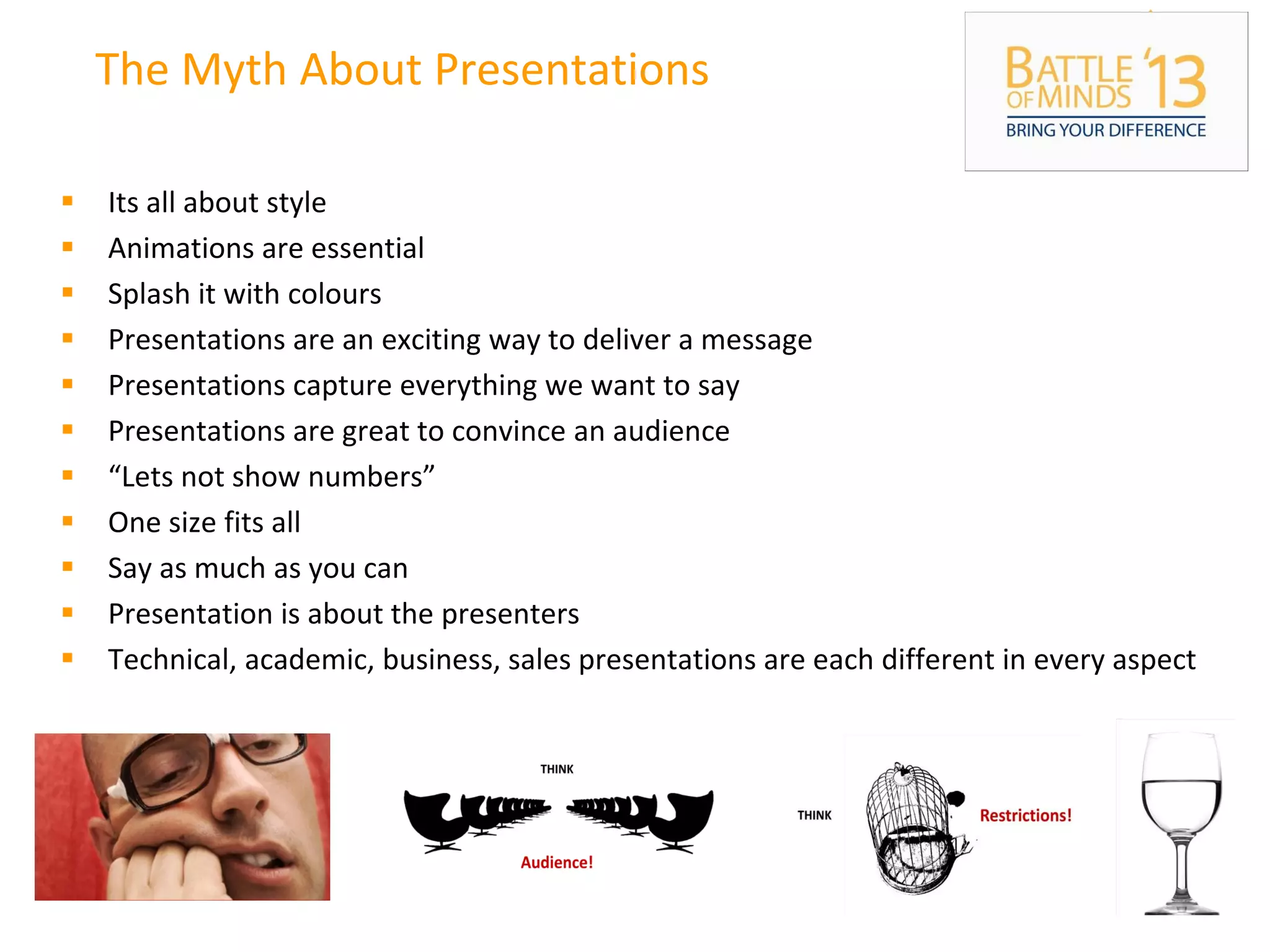
The Myth About Presentations
 Its all about style
 Animations are essential
 Splash it with colours
 Presentations are an exciting way to deliver a message
 Presentations capture everything we want to say
 Presentations are great to convince an audience
 “Lets not show numbers”
 One size fits all
 Say as much as you can
 Presentation is about the presenters
 Technical, academic, business, sales presentations are each different in every aspect
What is a presentation
Communication tool for
 What we want to achieve (Objective)
 Where will we achieve this (Location, process, people, systems)
 Why we need this (Case for change)
 How the objective will be realised (Method)
 What resources will be spent realising it (Resourcing – financial, human capital)
 When will we get this done (Time)
Essentially a presentation is:
 A Story
 A Case for Change
 A convincing argument
 A sequence/flow of logic
 Note: Prequel to any presentation is an elevator pitch!
 What does an elevator pitch have?
 “Here’s what our project is about…”
 “Here’s why it is important to do it…”
 “Here’s what success will look like…”
 “Here’s what we need from you…”
Lets convince Steve Jobs
 Steve Jobs has just returned back to earth for 20 minutes and he is not happy
with Apple’s board or the performance of the company. He has executive
power for these 20 minutes.
 Prepare a 2 minute elevator pitch as a group to Steve Jobs as to why you
should be in his Top Team to drive the Business.
 Time to Prepare : 10 Minutes
 Time to Present: 2 minutes
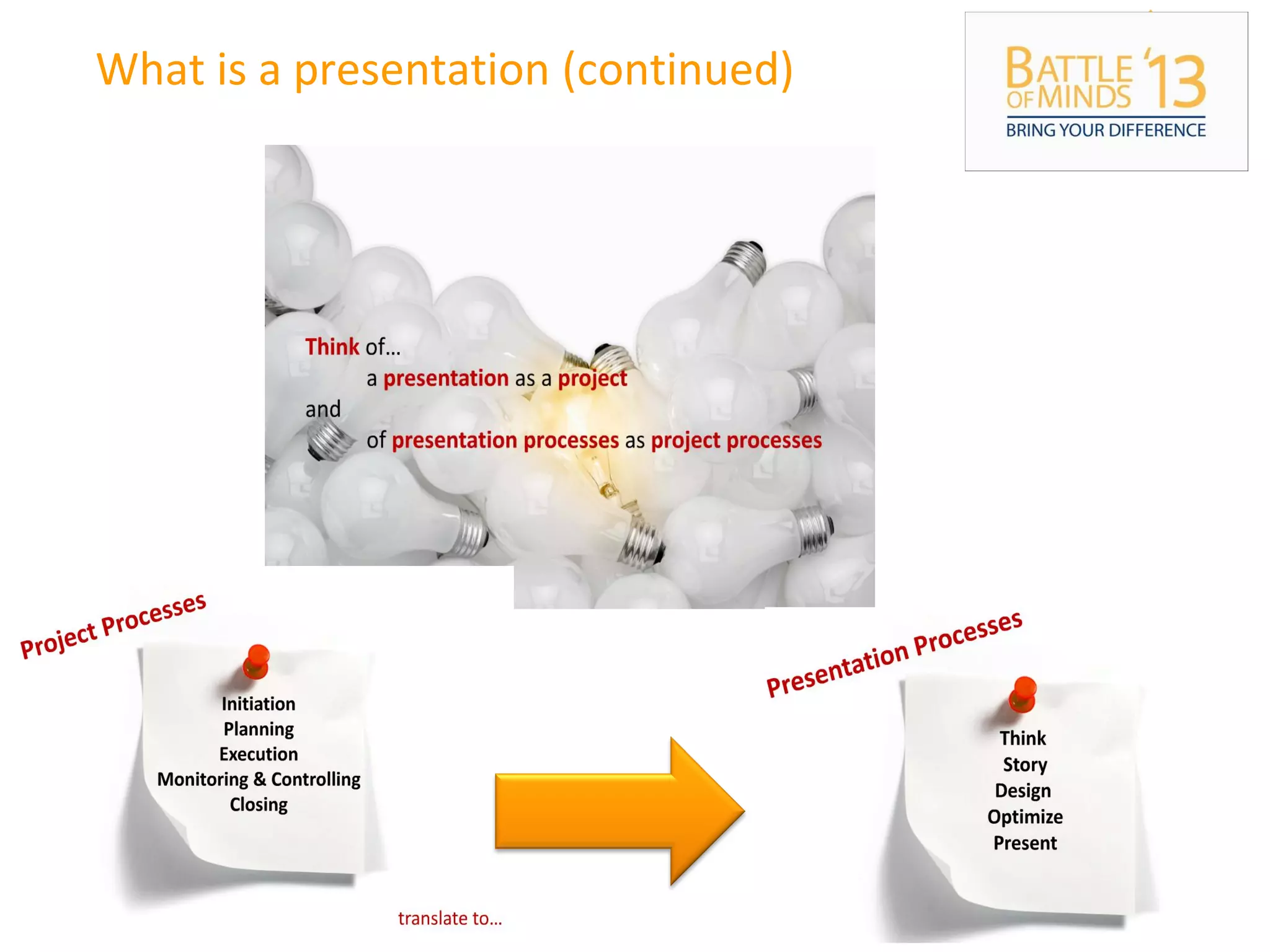
What is a presentation (continued)
What are core presentation skills
 Interpreting the Audience
 Body Language
 Voice Modality
 Eye Contact
 Content
 What’s in your slide?
 What do your slides look like?
 Are you making people read a lot?
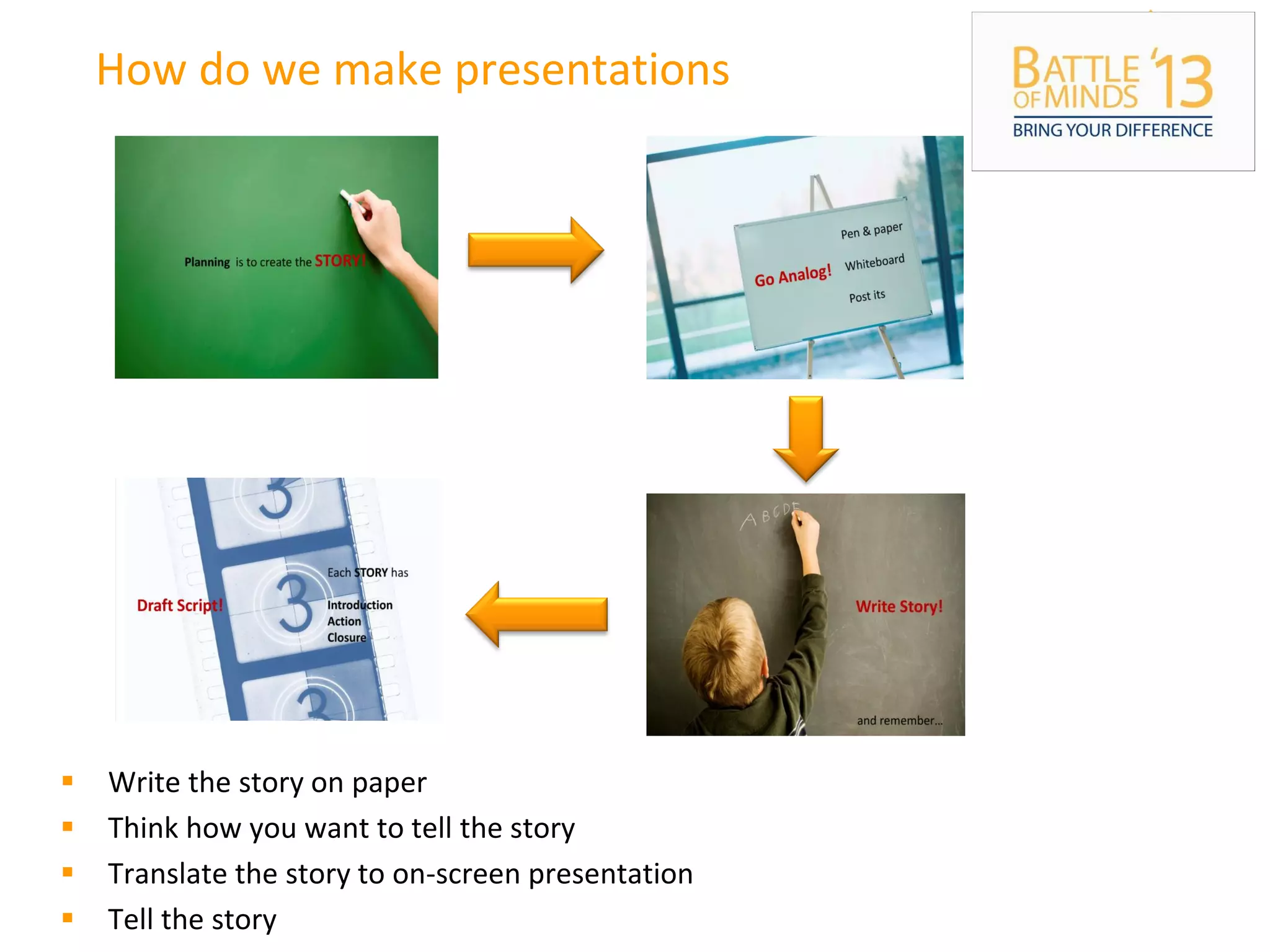
How do we make presentations
 Write the story on paper
 Think how you want to tell the story
 Translate the story to on-screen presentation
 Tell the story
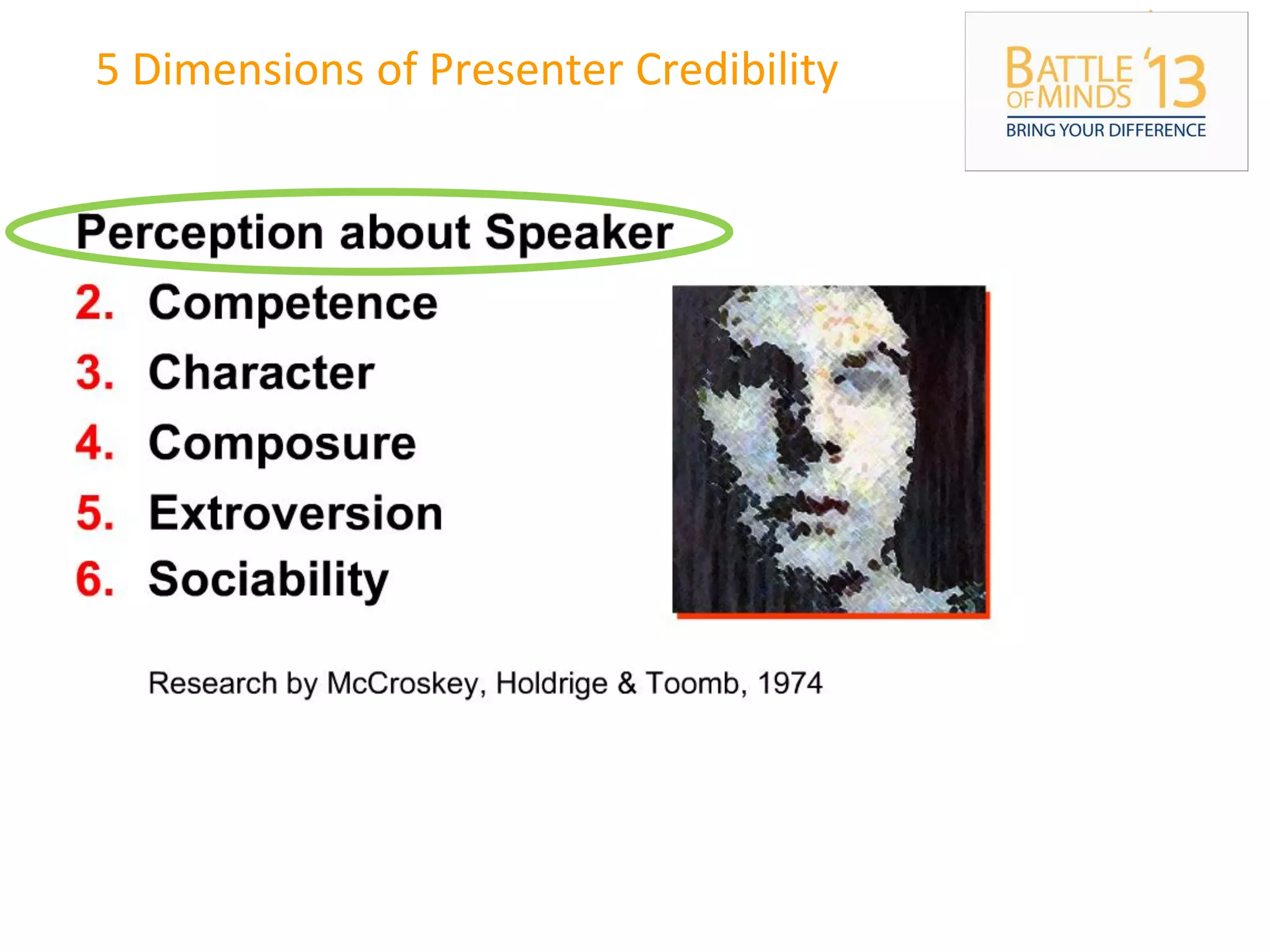
5 Dimensions of Presenter Credibility
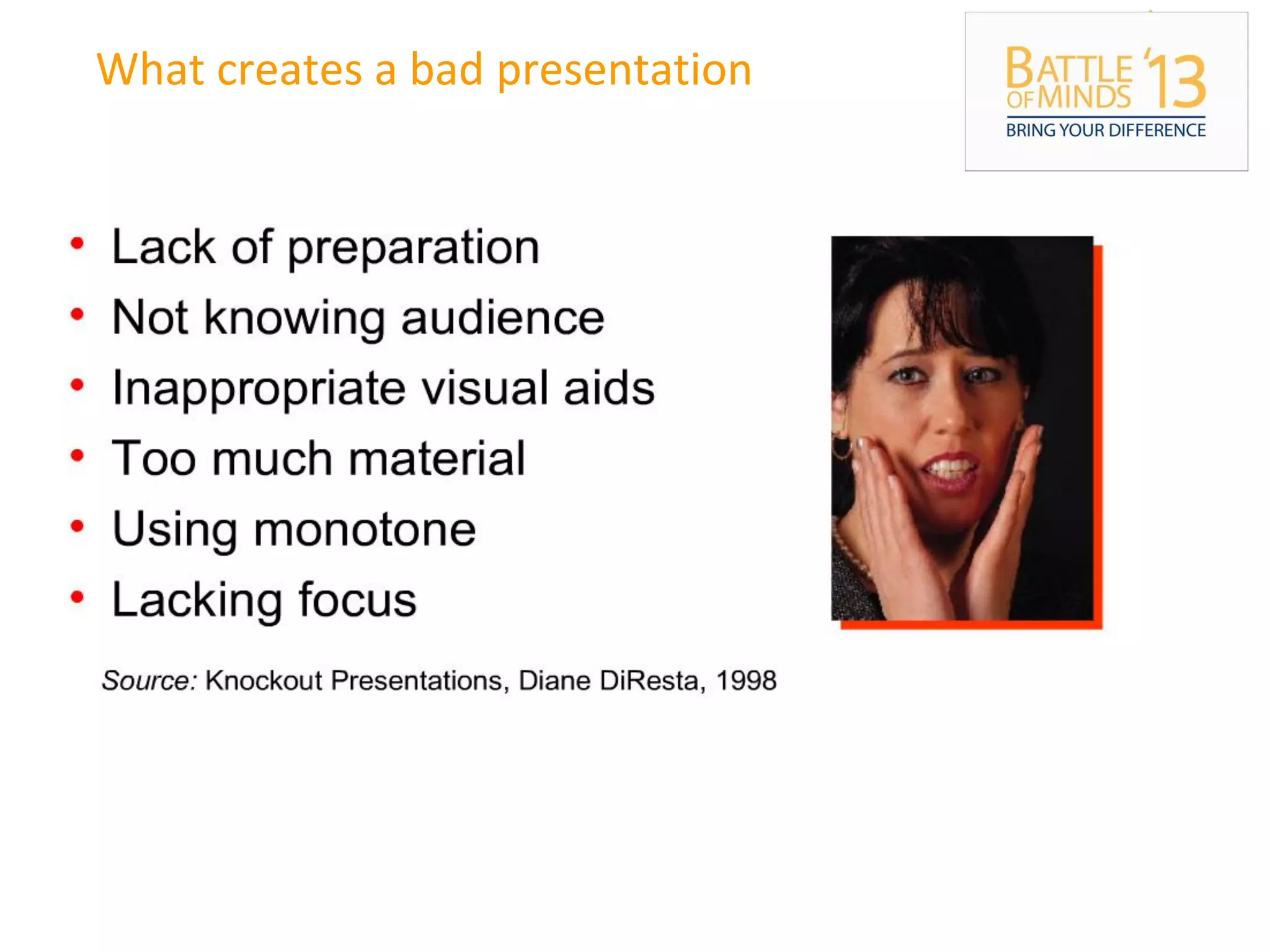
What creates a bad presentation
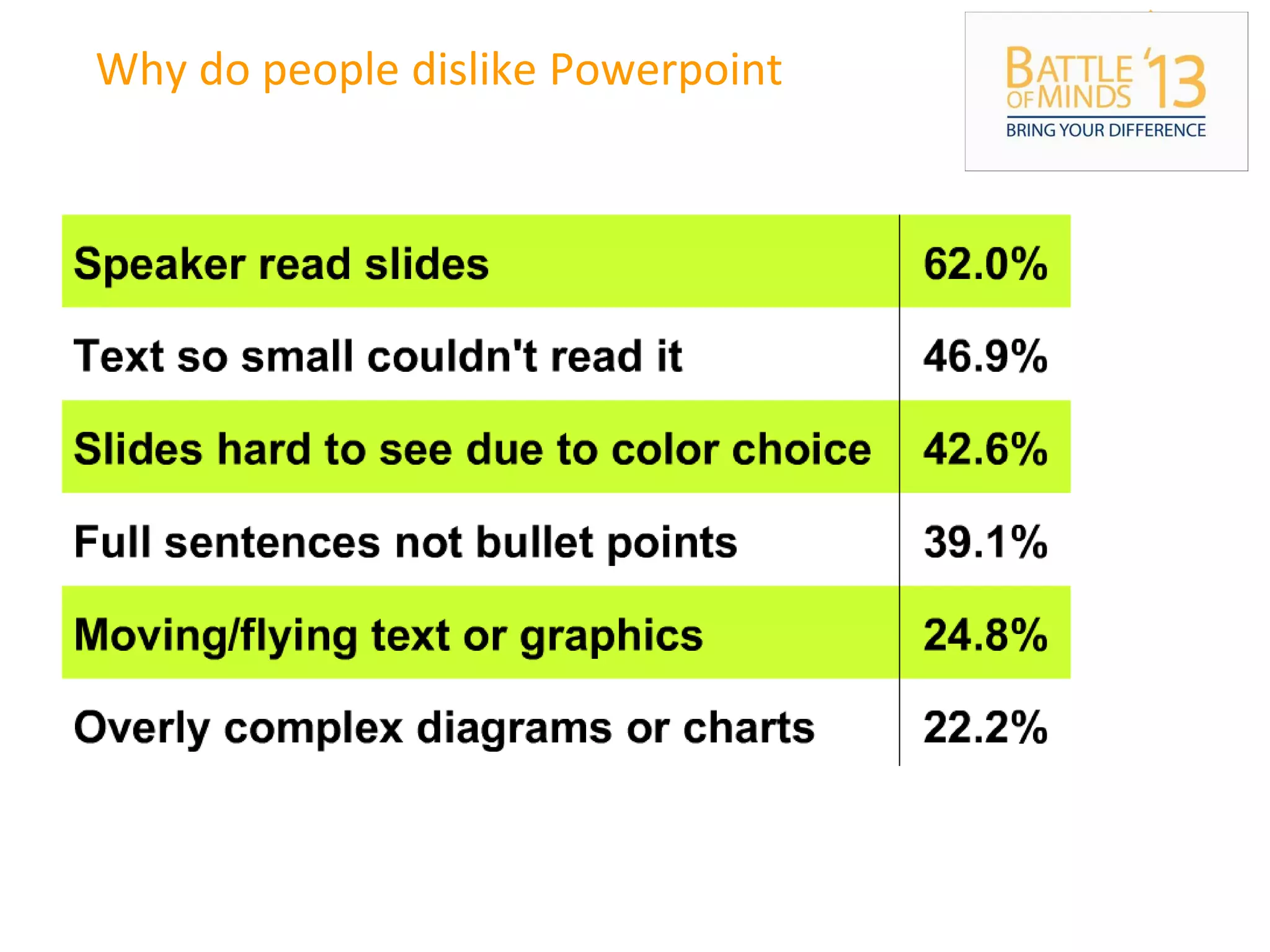
Why do people dislike Powerpoint
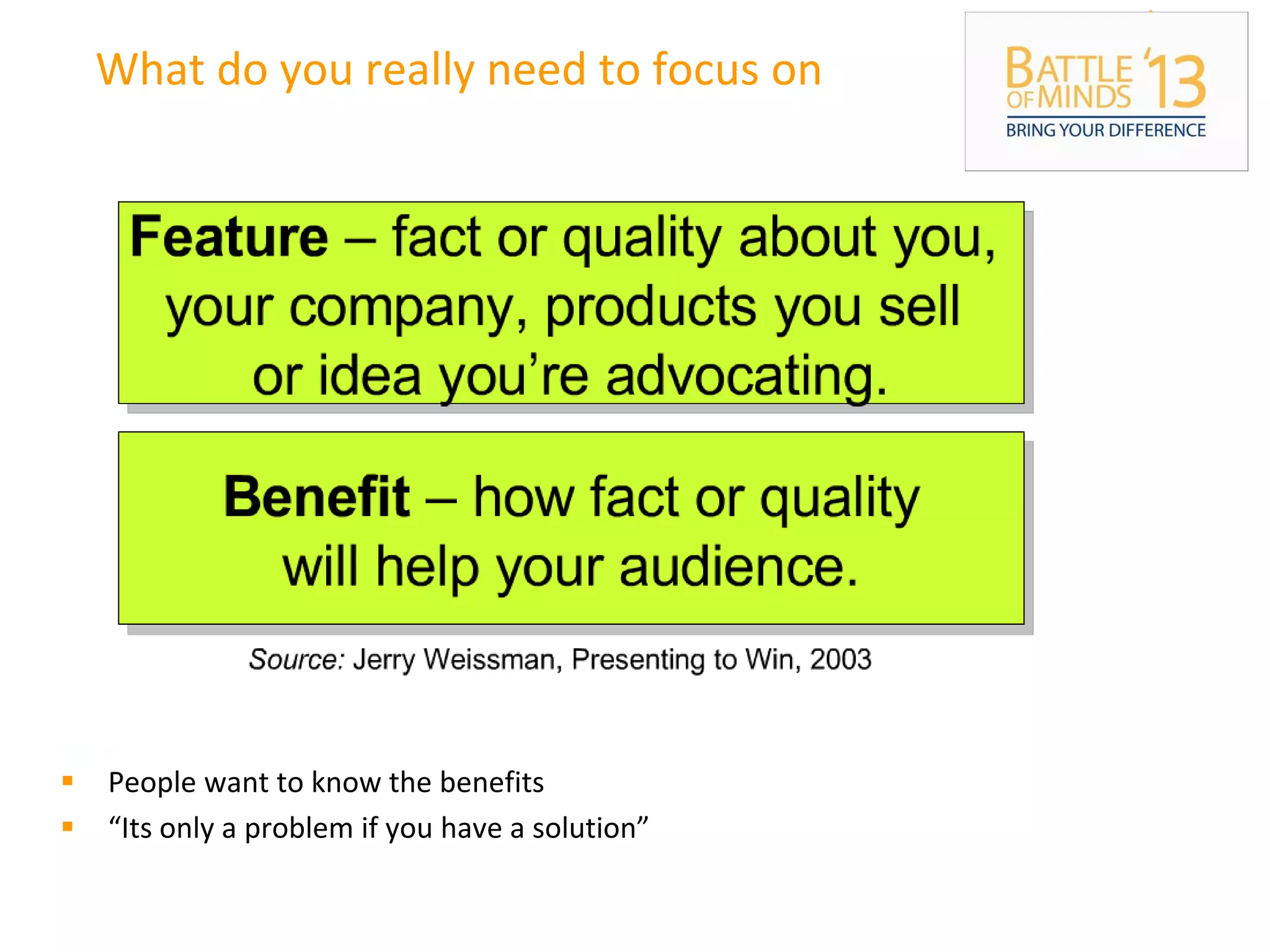
What do you really need to focus on
 People want to know the benefits
 “Its only a problem if you have a solution”
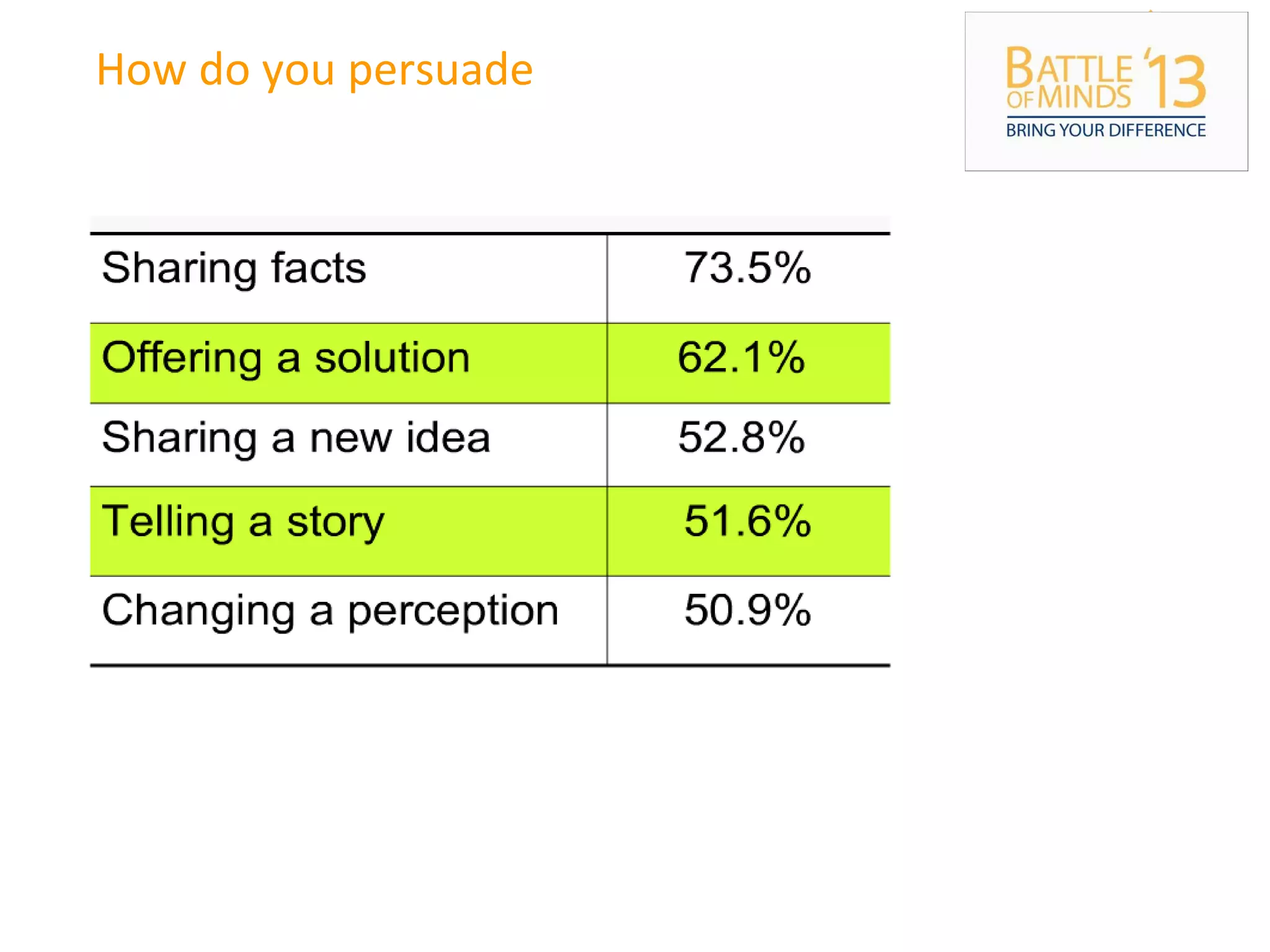
How do you persuade
I get it but…
…how do I solve the case?!?
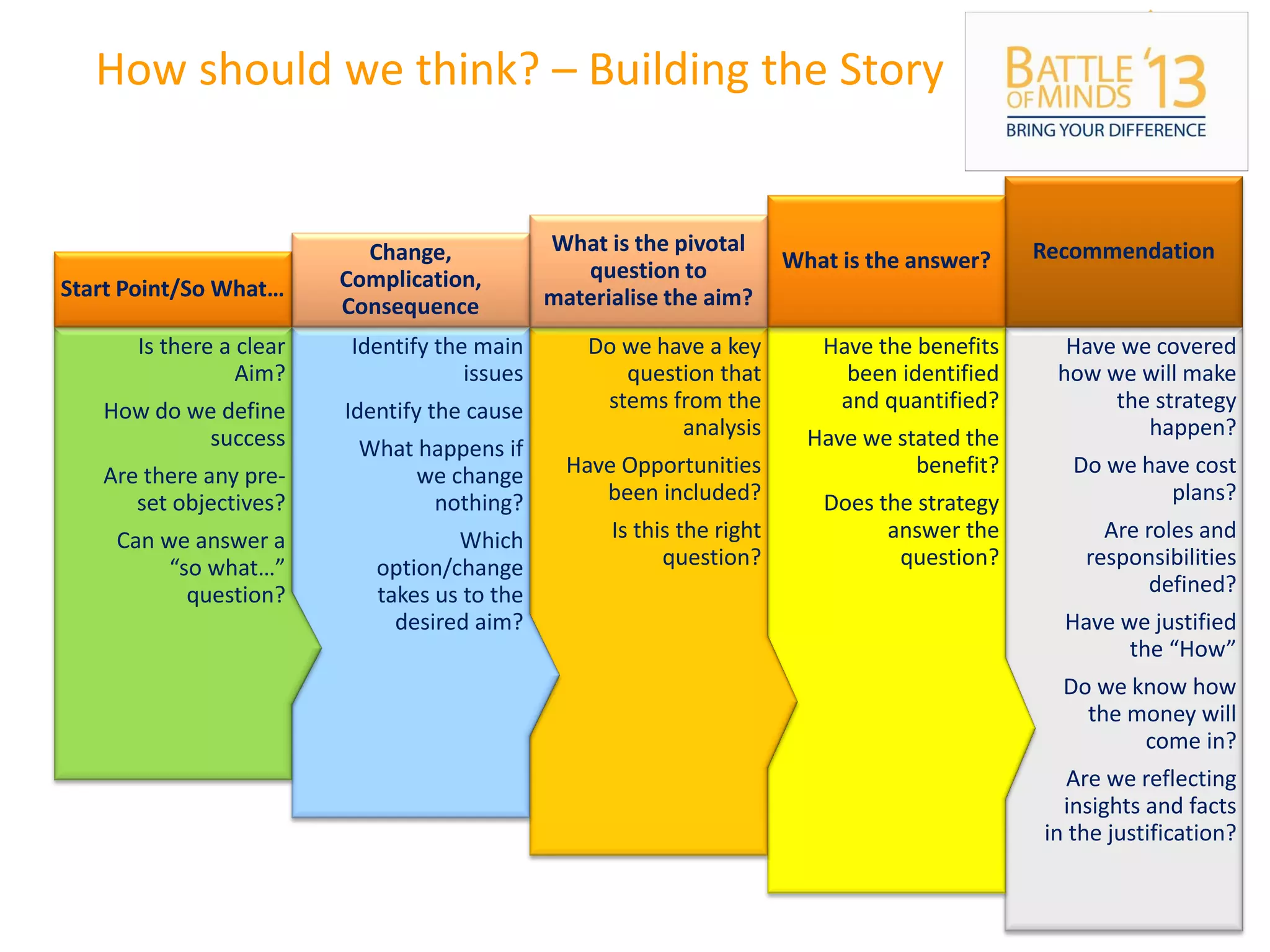
How should we think? – Building the Story
Have we covered
how we will make
the strategy
happen?
Do we have cost
plans?
Are roles and
responsibilities
defined?
Have we justified
the “How”
Do we know how
the money will
come in?
Are we reflecting
insights and facts
in the justification?
Recommendation
Have the benefits
been identified
and quantified?
Have we stated the
benefit?
Does the strategy
answer the
question?
What is the answer?
Do we have a key
question that
stems from the
analysis
Have Opportunities
been included?
Is this the right
question?
What is the pivotal
question to
materialise the aim?
Identify the main
issues
Identify the cause
What happens if
we change
nothing?
Which
option/change
takes us to the
desired aim?
Change,
Complication,
Consequence
Is there a clear
Aim?
How do we define
success
Are there any pre-
set objectives?
Can we answer a
“so what…”
question?
Start Point/So What…
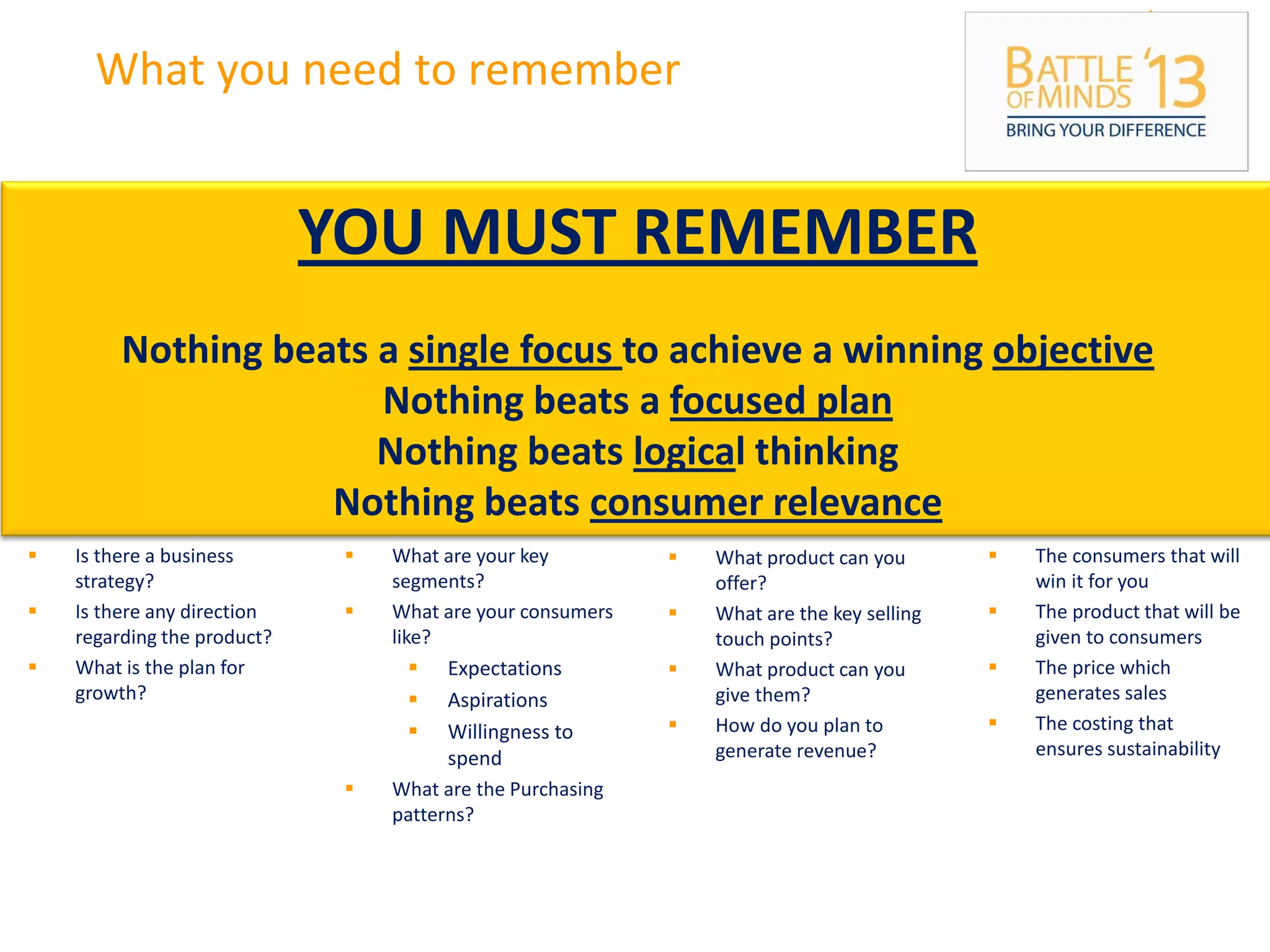
What you need to remember
Where is the
issue
• What is the objective
of the business
• Business context
• Size of the issues
What are the
facts
• What do we know?
• What are the trends?
• What is the market
like?
• Who are in the
target?
How do we want
to approach the
solution
• What are the
options?
• What is feasible?
• Where is the
performance
impact?
• Where is the wealth
impact?
What is the
solution and
how do we make
it work
• Which option do we
take?
• How are we rolling it
out?
• How do we keep it
alive?
 What are your key
segments?
 What are your consumers
like?
 Expectations
 Aspirations
 Willingness to
spend
 What are the Purchasing
patterns?
 What product can you
offer?
 What are the key selling
touch points?
 What product can you
give them?
 How do you plan to
generate revenue?
 Is there a business
strategy?
 Is there any direction
regarding the product?
 What is the plan for
growth?
 The consumers that will
win it for you
 The product that will be
given to consumers
 The price which
generates sales
 The costing that
ensures sustainability
YOU MUST REMEMBER
Nothing beats a single focus to achieve a winning objective
Nothing beats a focused plan
Nothing beats logical thinking
Nothing beats consumer relevance
Ready for more?

Battle of minds 2013 - Your Skills Development Today

  • 1.
    YourSkillDevelopmentToday Battle of Minds2013 Agenda Introduction Skills Development Build yourself Mind Mapping Story Building Sample
  • 2.
    Who will webe working with today Lets form Teams…
  • 3.
    Introduction About Us  Whoam I  Why am I here About You (Take 2 minutes to tell the members of your group)  Pick one of 2 themes (Season/ Colour)  In the context of the theme, who are you (What’s your story)  Why are you here  What are your strengths  What are your key gaps  About Today  How are we going to learn today  What are your expectations from today
  • 4.
    Lets Warm Up Aclerk at a butcher shop stands five feet ten inches tall and wears size 13 sneakers. What does he weigh?
  • 5.
    The Myth AboutPresentations  Its all about style  Animations are essential  Splash it with colours  Presentations are an exciting way to deliver a message  Presentations capture everything we want to say  Presentations are great to convince an audience  “Lets not show numbers”  One size fits all  Say as much as you can  Presentation is about the presenters  Technical, academic, business, sales presentations are each different in every aspect
  • 6.
    What is apresentation Communication tool for  What we want to achieve (Objective)  Where will we achieve this (Location, process, people, systems)  Why we need this (Case for change)  How the objective will be realised (Method)  What resources will be spent realising it (Resourcing – financial, human capital)  When will we get this done (Time) Essentially a presentation is:  A Story  A Case for Change  A convincing argument  A sequence/flow of logic  Note: Prequel to any presentation is an elevator pitch!  What does an elevator pitch have?  “Here’s what our project is about…”  “Here’s why it is important to do it…”  “Here’s what success will look like…”  “Here’s what we need from you…”
  • 7.
    Lets convince SteveJobs  Steve Jobs has just returned back to earth for 20 minutes and he is not happy with Apple’s board or the performance of the company. He has executive power for these 20 minutes.  Prepare a 2 minute elevator pitch as a group to Steve Jobs as to why you should be in his Top Team to drive the Business.  Time to Prepare : 10 Minutes  Time to Present: 2 minutes
  • 8.
    What is apresentation (continued)
  • 9.
    What are corepresentation skills  Interpreting the Audience  Body Language  Voice Modality  Eye Contact  Content  What’s in your slide?  What do your slides look like?  Are you making people read a lot?
  • 10.
    How do wemake presentations  Write the story on paper  Think how you want to tell the story  Translate the story to on-screen presentation  Tell the story
  • 11.
    5 Dimensions ofPresenter Credibility
  • 12.
    What creates abad presentation
  • 13.
    Why do peopledislike Powerpoint
  • 14.
    What do youreally need to focus on  People want to know the benefits  “Its only a problem if you have a solution”
  • 15.
    How do youpersuade
  • 16.
    I get itbut… …how do I solve the case?!?
  • 17.
    How should wethink? – Building the Story Have we covered how we will make the strategy happen? Do we have cost plans? Are roles and responsibilities defined? Have we justified the “How” Do we know how the money will come in? Are we reflecting insights and facts in the justification? Recommendation Have the benefits been identified and quantified? Have we stated the benefit? Does the strategy answer the question? What is the answer? Do we have a key question that stems from the analysis Have Opportunities been included? Is this the right question? What is the pivotal question to materialise the aim? Identify the main issues Identify the cause What happens if we change nothing? Which option/change takes us to the desired aim? Change, Complication, Consequence Is there a clear Aim? How do we define success Are there any pre- set objectives? Can we answer a “so what…” question? Start Point/So What…
  • 18.
    What you needto remember Where is the issue • What is the objective of the business • Business context • Size of the issues What are the facts • What do we know? • What are the trends? • What is the market like? • Who are in the target? How do we want to approach the solution • What are the options? • What is feasible? • Where is the performance impact? • Where is the wealth impact? What is the solution and how do we make it work • Which option do we take? • How are we rolling it out? • How do we keep it alive?  What are your key segments?  What are your consumers like?  Expectations  Aspirations  Willingness to spend  What are the Purchasing patterns?  What product can you offer?  What are the key selling touch points?  What product can you give them?  How do you plan to generate revenue?  Is there a business strategy?  Is there any direction regarding the product?  What is the plan for growth?  The consumers that will win it for you  The product that will be given to consumers  The price which generates sales  The costing that ensures sustainability YOU MUST REMEMBER Nothing beats a single focus to achieve a winning objective Nothing beats a focused plan Nothing beats logical thinking Nothing beats consumer relevance
  • 19.