UNIT 3 MODULE 4
 Biodiversity
 The variety of life forms in a particular
ecosystem.
 Describes how varied living things are in a
specific area.
 Think of a place in your community…
 Identify organisms that are valuable to your
life.
 Organisms are part of biodiversity and may
be economically and ecologically valuable.
 Their products are source of:
 Food
 Medicine
 Clothing
 Shelter
 Energy
 Organisms are important in maintaining
balance in the ecosystem as they perform
their specific roles.
 Direct economic value
 Their products are sources of food,
medicine, clothing, shelter, and
energy. (medicines have formulations
extracted from plants or animals)
Vinblastine and vincristine – are
extracted from rosy periwinkle
(tsitsirika) and used in chemotherapy
for Hodgkin’s disease and some form
of cancer, including lymphocytic
leukemia. Vitex negundo (lagundi) is
extracted for cough syrup production.
 Indirect economic value
 There are benefits produced by the organism
without using them. (Certain species maintain
the chemical quality of natural bodies of water,
prevent soil erosion and floods, cycle materials
in the soil, and absorb pollutants)
 Aesthetic value
 Provides visual or artistic enjoyment. (Forested
landscape or for spiritual meditation like the
Prayer Mountains)
 Is important because ….
 Sustains the flow of energy in the food web on
earth and contributes to environmental
STABILITY.
 Can be described as the resilience to withstand
changes (result of natural or human activities)
that may occur in the environment.
 Population – a group of organisms of the
same species that live in a certain area.
 Ecologists need to know why the number of
organisms is increasing or decreasing.
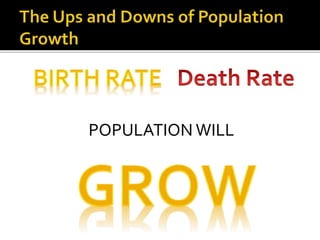
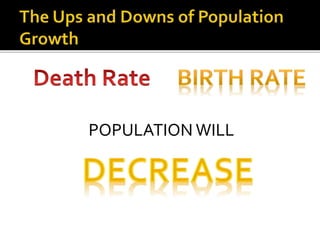
 Birth rate (natality) – the number of births in
a population.
 Death rate (mortality) – the number of
organisms that are dying in a population.
POPULATION WILL
POPULATION WILL
 Refers to the number of organisms per unit
area.
 The human population is currently growing at
an exponential rate. How can this be
explained in terms of birth and death rates?
 The monkey-eating eagle is considered an
endangered species. What does this mean in
terms of the birth and the death rate of
monkey-eating eagles?
 Refers to the number of organisms per unit
area.
 Factor that regulates population’s growth
and is influenced by population density
 E.g. when a population reaches a certain size,
there won’t be enough resources for all of the
organisms. This could cause the population
to stop growing when it reaches the
maximum number of organisms that can be
supported or “carried” by the environment.
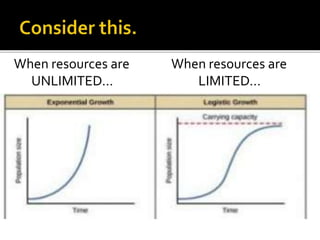
CARRYING CAPACITY
 Natural disasters, temperature, sunlight, and
the activities of humans in the environment.
When resources are
UNLIMITED…
When resources are
LIMITED…
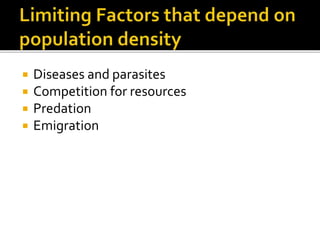
 Diseases and parasites
 Competition for resources
 Predation
 Emigration
The Philippines is considered as one of the
biologically richest country in the world
because of its high biodiversity at various
levels… But we have not protected them.
Forests are destroyed, natural habitats are lost,
coral reefs are damaged, people hunt
animals, collect plants, sell corals and exotic
animals for livelihood…

Biodiversity and stability

  • 1.
  • 2.
     Biodiversity  Thevariety of life forms in a particular ecosystem.  Describes how varied living things are in a specific area.  Think of a place in your community…  Identify organisms that are valuable to your life.
  • 3.
     Organisms arepart of biodiversity and may be economically and ecologically valuable.  Their products are source of:  Food  Medicine  Clothing  Shelter  Energy
  • 4.
     Organisms areimportant in maintaining balance in the ecosystem as they perform their specific roles.
  • 5.
     Direct economicvalue  Their products are sources of food, medicine, clothing, shelter, and energy. (medicines have formulations extracted from plants or animals) Vinblastine and vincristine – are extracted from rosy periwinkle (tsitsirika) and used in chemotherapy for Hodgkin’s disease and some form of cancer, including lymphocytic leukemia. Vitex negundo (lagundi) is extracted for cough syrup production.
  • 6.
     Indirect economicvalue  There are benefits produced by the organism without using them. (Certain species maintain the chemical quality of natural bodies of water, prevent soil erosion and floods, cycle materials in the soil, and absorb pollutants)
  • 7.
     Aesthetic value Provides visual or artistic enjoyment. (Forested landscape or for spiritual meditation like the Prayer Mountains)
  • 8.
     Is importantbecause ….  Sustains the flow of energy in the food web on earth and contributes to environmental STABILITY.  Can be described as the resilience to withstand changes (result of natural or human activities) that may occur in the environment.
  • 9.
     Population –a group of organisms of the same species that live in a certain area.  Ecologists need to know why the number of organisms is increasing or decreasing.  Birth rate (natality) – the number of births in a population.  Death rate (mortality) – the number of organisms that are dying in a population.
  • 10.
  • 11.
  • 12.
     Refers tothe number of organisms per unit area.
  • 13.
     The humanpopulation is currently growing at an exponential rate. How can this be explained in terms of birth and death rates?  The monkey-eating eagle is considered an endangered species. What does this mean in terms of the birth and the death rate of monkey-eating eagles?
  • 14.
     Refers tothe number of organisms per unit area.
  • 16.
     Factor thatregulates population’s growth and is influenced by population density  E.g. when a population reaches a certain size, there won’t be enough resources for all of the organisms. This could cause the population to stop growing when it reaches the maximum number of organisms that can be supported or “carried” by the environment. CARRYING CAPACITY
  • 17.
     Natural disasters,temperature, sunlight, and the activities of humans in the environment.
  • 18.
    When resources are UNLIMITED… Whenresources are LIMITED…
  • 19.
     Diseases andparasites  Competition for resources  Predation  Emigration
  • 20.
    The Philippines isconsidered as one of the biologically richest country in the world because of its high biodiversity at various levels… But we have not protected them. Forests are destroyed, natural habitats are lost, coral reefs are damaged, people hunt animals, collect plants, sell corals and exotic animals for livelihood…